

Plot Summary
Prologue
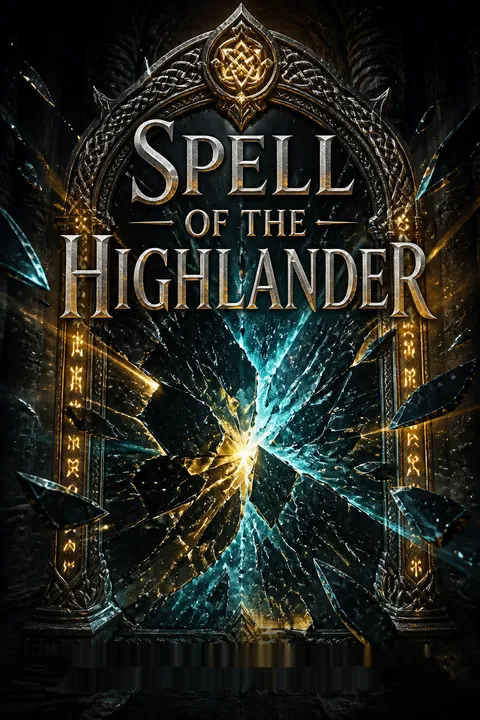
Aoibheal, queen of the Fae, uses her power to extinguish mortal magic across Britain, breaking protections and setting several hidden events in motion. One result is the theft of an ancient mirror from Lucan Trevayne, an immortal sorcerer.
The second opening looks back to Cian MacKeltar, a ninth-century Druid and laird whose confidence in his magic once seemed unshakable. On Samhain, Lucan trapped Cian inside the mirror and used the binding to prolong his own life. More than eleven centuries later, Cian remains imprisoned, waiting for the chance to exact revenge.
The two openings make the story’s apparent coincidence feel deliberately engineered, though the characters cannot yet see the hand behind it. Aoibheal’s intervention operates on a scale beyond individual intention, while Cian’s imprisonment reduces an exceptionally powerful man to a spectator of history. That contrast establishes the novel’s central tension between agency and confinement: people may possess immense power yet remain caught in consequences they cannot reverse. Cian’s past also complicates the revenge plot before it begins. His legend promises a formidable warrior, but his long captivity has made survival itself an uncertain emotional achievement.
The Mirror Takes Notice
Jessi St. James, a cash-strapped archaeology doctoral student, has built her life around work, study, and a future career in excavation. When her injured professor asks her to receive a private delivery, she opens the huge crate in his office and finds a gold-framed mirror whose markings defy her expertise.
On her next late visit, a blond stranger named Roman corners her, asks who has seen the artifact, then prepares to kill her. Jessi threatens to smash the mirror.
A voice from its glass tells her how to summon Cian MacKeltar, a half-dressed Highland warrior imprisoned inside it. Believing the danger is a dream, she speaks the spell. Cian steps out, shields her, and Roman vanishes. Jessi leaves convinced exhaustion has invented the impossible.
Jessi’s first response to danger is not belief but method: she treats the mirror as an artifact to inspect and the attacker as a problem she can delay. Her threat to destroy the object turns scholarly respect for the past into a survival tactic. Cian’s emergence reverses the expected roles of relic and observer. He is not a fragment of history but a person trapped by it, and Jessi’s impulsive choice gives him temporary agency. Her insistence that the event must be a dream is psychologically credible: disbelief protects her ordinary identity at the moment her evidence can no longer support it.
Three Bodies, One Bargain
The news identifies Roman as the man found dead on campus, his neck broken. Then Jessi learns that Professor Keene has been murdered too. His death occurred before she entered his office, and her memory of Roman’s pointed questions makes the mirror’s danger suddenly concrete. A call to the delivery company adds another warning: the two men who brought the crate have also been killed.
Jessi can no longer dismiss the events as hallucination, but she has no credible story to take to police and no safe way to return the artifact. She goes back to Keene’s office and accepts Cian’s offer. He knows who is hunting her and promises protection; in exchange, she must release him from the glass.
The accumulating deaths convert Jessi’s private uncertainty into a pattern with consequences. Each victim is connected to the mirror’s movement, making her decision less a leap into fantasy than a response to converging evidence. Her training gives her a useful habit, but not the institutional authority to make anyone believe her account. The bargain is therefore shaped by a familiar imbalance: she must trust a stranger because the supposedly legitimate systems around her cannot protect her. Her choice is neither romantic surrender nor blind faith. It is a practical act made under coercion, with danger narrowing her options.
Chicago Becomes a Trap
Cian leaves the mirror and uses a forceful Druid ability called Voice to make campus employees and hotel staff obey him. Jessi’s fellow graduate student Mark catches them leaving the professor’s office, making her fear that she will be blamed for taking the artifact.
At their hotel, Cian’s brief freedom ends when the mirror reclaims him. A room-service worker then arrives with a syringe and attacks Jessi. Cian breaks through the mirror’s barrier long enough to throw his knife, killing the assailant before Jessi can be drugged.
He hides the body, finds clothes for them, and erases the hotel’s records through Voice. Because Lucan can trace ordinary transactions, Cian decides their only chance is to leave the country without creating a paper trail.
This escape exposes the difference between power and safety. Cian can compel people and kill a trained attacker, but the mirror can still remove him at any moment, while modern records allow Lucan to find Jessi through ordinary activity. Jessi’s vulnerability is consequently practical as well as magical. The killing also tests her moral categories: Cian saves her through lethal force, yet his willingness to act does not make him a simple hero or a simple villain. Their uneasy partnership forms around repeated acts of dependence, not trust already earned.
Crossing Without Papers
To avoid Chicago’s airports, Jessi drives Cian to Indianapolis. He uses Voice to get them past security and onto a flight to Scotland without tickets or the usual records. Jessi discovers that his compulsion cannot control her: a metal plate inserted after a teenage climbing accident seems to block his magic.
Cian disappears into the mirror during the Atlantic crossing, leaving Jessi to continue alone. At Edinburgh Airport, she cannot claim the unmarked crate containing the mirror because she has no ticket.
When an employee refuses even to check, Jessi vaults the counter, races into the warehouse, and knocks the woman unconscious with her overloaded backpack. She finds the crate and repeats the spell. Cian bursts through its wooden side, free again.
The airport sequence turns Jessi’s accident from a private misfortune into an unexpected boundary against magical control. Her immunity matters not because it makes her invulnerable, but because it preserves choice in a world where Cian can otherwise command strangers with a sentence. At Edinburgh, she applies the same resourcefulness to a bureaucratic obstacle that she used against Roman: she identifies the obstacle, finds a physical route around it, and acts before fear can paralyze her. Cian’s return depends on her initiative. Their partnership is beginning to depend on capacities he cannot supply himself.
The Keltar Standoff
In Inverness, Cian uses Voice to acquire camping equipment and food. At an outdoor shop, he clashes with Dageus MacKeltar, a powerful Druid who recognizes that Cian carries dangerous magic but does not know who he is. Jessi spots the family resemblance between them before Cian confirms that they share the Keltar name.
Dageus sees the Dark Glass in their stolen SUV and takes the vehicle, carrying the mirror back to Castle Keltar while Jessi is left alone in town. She searches the streets for hours, hungry and frightened, until Dageus finds her. Apologizing for separating her from Cian, he brings her to the castle, where his twin Drustan and their wives await them.
Dageus’s arrival changes the story from a fugitive pair’s flight into a family history that has been interrupted by the past. The resemblance between him and Cian makes kinship visible before either man accepts it; their hostile meeting shows how easily shared power can be mistaken for a threat. Dageus’s choice to take the mirror is protective in intention but careless in consequence, and Jessi pays the immediate cost. His return for her matters because responsibility is demonstrated through repair. The castle offers not just physical shelter but a community capable of challenging Cian’s solitary assumptions.
Shelter at Castle Keltar
Once Dageus brings the mirror and Jessi back, she summons Cian, who emerges and draws her into a passionate reunion. Drustan and Dageus, both Druids from the sixteenth century, and their wives, Gwen and Chloe, offer the couple clothes, food, and a place to stay. Cian explains that Lucan is searching for the Unseelie Dark Book, a dangerous source of spells capable of altering time and commanding Fae.
The family recognizes the mirror as an Unseelie Hallow, one of several ancient objects of power. Jessi also learns that Cian’s abilities cannot reach her mind or compel her. With the Keltars’ protection and new knowledge of the threat, she and Cian begin to build a life together in the days they have left.
The castle gives the lovers a pause from pursuit, but it also makes their private crisis part of a collective inheritance. The Keltars’ welcome contrasts with the secrecy and violence surrounding Lucan’s artifacts. Jessi’s immunity to Cian’s magic creates a rare relationship in which his usual means of control fail; intimacy must be negotiated rather than imposed. The Dark Book widens the stakes beyond the couple without erasing their immediate danger. Family knowledge becomes a resource, but the Druids’ expertise is incomplete, and their disagreements foreshadow how difficult it will be to distinguish sacrifice from a needless repetition of past mistakes.
The Price of Midnight
Dageus finally tells Jessi what Cian has withheld: the mirror’s binding requires Lucan to pass pure gold through it every century on Samhain. If he fails, the contract collapses and the stolen centuries catch up with both men at once. Cian has chosen to stay out of Lucan’s reach until the deadline, accepting his own death as the price of ending the sorcerer’s immortality before Lucan can obtain the Dark Book.
Jessi understands that their shared days were never leading toward Cian’s freedom as he had let her believe. She is devastated by the deception, then furious that he has made the choice for her as well as himself. Cian does not deny it; he insists that Lucan’s power must be stopped.
The revelation changes the meaning of Cian’s urgency. What Jessi read as a temporary escape plan was, for him, a carefully timed death sentence. His concealment protects his resolve from interference, but it also denies Jessi informed consent in their relationship. The conflict is not simply whether self-sacrifice is noble. Cian’s plan contains both a protective motive and the old appetite for vengeance, so death can function as an escape from captivity as well as a weapon against Lucan. Jessi’s anger restores her agency: she refuses to treat his willingness to die as a decision that belongs only to him.
Lucan Tests the Wards
Cian strengthens the castle’s protections with wardstones, spells, and fresh protective tattoos. Lucan reaches the edge of the guarded grounds but cannot cross into the castle or use sorcery there. He taunts Cian from the boundary and makes Jessi understand that he intends to exploit her once the tithe is paid.
Jessi sees Lucan’s true, grotesquely tattooed form, while the others see a handsome man. His offer to preserve his own life by paying the tithe gives her a possible way to reach him through email. Cian believes Lucan’s appearance proves the sorcerer knows he has already won. Jessi sees something different: Lucan is frightened enough to bargain, and the bargain could keep Cian alive.
The warded boundary turns magical conflict into a visible geography: each man can threaten the other, but neither can cross without surrendering an advantage. Lucan’s attention to Jessi exposes the emotional vulnerability Cian has tried to conceal from his enemy. Jessi’s ability to see Lucan’s real appearance separates her from the other witnesses and intensifies her knowledge of the threat. More importantly, Lucan’s offer destabilizes Cian’s settled narrative of inevitable death. The possibility of a bargain does not guarantee salvation, but it makes his sacrifice a choice rather than a law of nature.
The Vow He Kept Alone
With Samhain approaching, Jessi and Cian marry in the castle chapel, with Drustan, Gwen, and Chloe as witnesses. Cian gives the ancient Keltar binding vows, promising his honor, soul, and life, but prevents Jessi from returning them. She believes they have made a solemn promise as husband and wife, unaware that the vows bind him to her even if she remains free.
Later, he explains how Lucan deceived him into casting what he believed was a sleep spell. Cian’s power turned it lethal, killing everyone in the Irish village of Capscorth, including women and children. He carries the guilt but will not let Lucan gain the Dark Book. He asks Jessi not to watch when the mirror’s contract ends.
Marriage offers Jessi a form of permanence she has long wanted, yet Cian’s unilateral vow makes that permanence ethically uneven. He gives himself completely while withholding the choice that would bind her in return. His confession about Capscorth complicates the simple division between innocent victim and evil captor: Cian was deceived, but his power caused mass death. His willingness to bear responsibility is not the same as believing he deserves punishment forever. By asking Jessi to look away at the end, he tries to control the final image she keeps of him, even as she is learning to insist on her own choices.
Jessi Risks the Bargain
Dageus privately admits that the inherited memories of the Draghar contain one uncertain possibility: a binding might be voided by a truly selfless act. He believes Cian could break the contract by choosing Jessi over vengeance, though he cannot promise the theory will work.
Jessi agrees to contact Lucan and offer herself as the means of getting him into the castle, while Dageus secretly prepares to release Cian at the decisive moment. She maintains the appearance of accepting Cian’s death, even promising not to watch it, because Dageus fears Cian will disrupt the plan if he knows. On Samhain, Jessi opens the castle door to Lucan with a concealed knife and lets him take her as a hostage.
Dageus’s plan depends on an emotionally demanding distinction: an act may look sacrificial yet remain contaminated by revenge or self-interest. His theory gives the lovers a chance, but no certainty, and he involves Jessi without removing the danger she faces. Jessi’s willingness to deceive Cian mirrors his earlier concealment, though her aim is to preserve his life rather than direct his choices. That parallel prevents the plan from becoming an easy moral correction. Her promise to look away is strategic, not surrender; she is trying to create a future in which Cian survives long enough to choose for himself.
The Mirror Falls at Midnight
With minutes left before the tithe, Dageus secretly summons Cian out of the mirror. Lucan, already inside the hall, tightens a garrote around Jessi’s throat and orders Cian back into the glass. Cian recognizes that he can no longer save her by pursuing revenge. He lifts the mirror and hurls it down the staircase, forcing Lucan to choose between catching it and holding Jessi.
The glass shatters before Lucan can reach it. Cian’s choice voids the binding, so neither man dies when the deadline passes. Lucan is now mortal; he lunges at Jessi, who uses Dageus’s knife, while Cian’s thrown dirk pierces Lucan’s heart. Dageus questions the dying sorcerer about the Dark Book, but Lucan refuses to answer.
The climax makes the story’s moral test physical. Cian can preserve his revenge by keeping the mirror intact, or save Jessi by destroying the object that has governed both his captivity and Lucan’s immortality. He chooses her without bargaining for a later reward, which distinguishes this act from his earlier pursuit of vengeance. Jessi is not merely the object of rescue: armed and alert, she helps kill Lucan once the broken contract removes his invulnerability. The shattered mirror ends the mechanism that bound them, but it cannot recover the lives or years already lost. Freedom arrives through a choice, not through mastery of magic.
A Future Beyond Vengeance
After Lucan falls, Dageus explains that the contract was voided by Cian’s selfless choice, not merely broken by destroying the mirror. Cian and Jessi have survived the deadline, and the danger of the Dark Glass is ended. Jessi realizes that Cian had given her the binding vows at their wedding, and now returns them freely, joining their lives beyond death.
The Keltars recognize that Dageus’s uncertain plan placed everyone at risk, while Gwen points out that Cian himself made the decisive choice. As the family discusses the strange convergence of events, Cian senses an unseen presence watching from above but keeps silent. The lovers’ future begins not with revenge fulfilled, but with a promise they have finally made together.
The resolution does not reward Cian for being willing to die; it changes the conditions under which he understands what he wants. Jessi’s return of the vows matters because it converts his unilateral commitment into a mutual one. The distinction between breaking and voiding the contract also gives the ending a precise ethical logic: force can damage the prison, but only a choice free of the old motive can release its hold. Dageus creates the opportunity, yet cannot dictate its outcome. By crediting Cian’s decision, the novel preserves responsibility and agency rather than treating love as a spell that automatically fixes harm.
Epilogue
Unseen by the MacKeltars, Aoibheal has been adjusting events from a future in which the boundary between the human world and Faery has collapsed and the Unseelie threaten both. She has repeatedly altered the past to preserve powerful Druid bloodlines and bring several formidable Druids into position as potential allies.
Cian notices her hidden presence, though no one else does. Aoibheal silently asks him not to expose her, and he agrees. The lovers’ victory has therefore settled their immediate danger while leaving the queen’s larger purpose concealed.
The closing scene reframes the novel’s improbable chain of events as part of a larger intervention. Aoibheal can alter the past, but she cannot reliably predict the consequences of human love, which she recognizes as a force beyond her own calculations. Her effort to assemble allies reveals the limits of power that seemed almost absolute: she can position people, but cannot simply command their emotional choices. Cian’s perception of her gives the ending a quiet counterpoint to the book’s earlier imprisonment. He does not confront the unseen queen or expose her; he chooses silence, preserving the fragile balance she is trying to create.
Analysis
Spell of the Highlander links romance to the ethics of power by asking whether love can interrupt a pattern of control without becoming another form of control itself. Cian has been imprisoned by Lucan, but his own habits echo the sorcerer’s: he commands, withholds information, and assumes that deciding for Jessi is a form of protection. Jessi’s resistance is therefore not a decorative modern counterpoint to an archaic hero. It forces Cian to confront the difference between possession and mutual commitment.
The novel makes that distinction concrete through repeated choices. Jessi releases Cian because she has no safe alternative, then continues to make decisions that he cannot compel. Cian’s secret vows offer devotion without consent; Jessi’s return of them later transforms devotion into reciprocity. The story’s magical rules mirror this ethical structure. Voice can produce obedience, but it cannot create trust. The Dark Glass can hold a person and preserve a life, but its contract cannot be escaped through force alone.
Cian’s past also prevents the resolution from becoming a simple celebration of a wronged hero. He was deceived into killing Capscorth, yet the deaths remain his responsibility and shape his conviction that he must stop Lucan. His planned death is simultaneously a defense of the world and a continuation of his private hunger for revenge. Only when he abandons that hunger in the moment Jessi is threatened does the binding lose its hold. Love matters here not as a magical reward for suffering, but as a change in what Cian values enough to act for.
The wider Fae plot gives this intimate decision larger consequences while preserving uncertainty. Aoibheal can alter the past but cannot fully calculate human attachment. The novel’s final irony is that a queen who can rearrange events still needs people to choose freely. Its strongest claim is modest but consequential: power may create the conditions for action, but only accountable choices can make those conditions humane.
Review Summary
Spell of the Highlander receives mostly positive reviews, with readers praising the romantic storyline, steamy scenes, and well-developed characters. Many enjoy the Scottish highland setting and the time-travel elements. Some readers find the plot predictable but still entertaining. The book is often cited as a favorite in the Highlander series, with particular praise for the protagonist Cian MacKeltar. A few readers criticize the repetitive nature of the series and the portrayal of gender roles. Overall, fans of paranormal romance appreciate the blend of history, magic, and passion.
Characters
Jessi St. James
The artifact-minded survivorJessi is a twenty-four-year-old archaeology doctoral student in Chicago, balancing demanding work with a stubborn commitment to her studies. She approaches the world as a researcher: she gathers evidence, tests explanations, and resists conclusions that cannot be supported. That discipline coexists with humor, physical courage, and a private longing for lasting love. Her family history, especially her mother’s serial marriages, has made her cautious about commitment, while her work has made her attentive to the lives hidden in objects. Jessi is not fearless; she is most compelling when frightened and still able to act. Her curiosity can distract her from immediate danger, but it also helps her recognize patterns others overlook.
Cian MacKeltar
The imprisoned Highland DruidCian is a ninth-century Keltar laird and Druid whose commanding presence reflects a lifetime of authority, physical danger, and extraordinary magical ability. He is proud, forceful, and accustomed to making decisions for others, but his confidence is balanced by deep loyalty to his homeland and a capacity for tenderness he rarely displays in public. Centuries of confinement have sharpened his patience and hardened his sense of purpose. Cian’s relationship with power is complicated: it makes him formidable, but it also tempts him to treat control as a substitute for trust. Jessi’s independence unsettles him because his usual methods cannot govern her, forcing him to meet her as an equal.
Lucan Trevayne
The immortal dark sorcererLucan is an ancient sorcerer who has accumulated wealth, knowledge, and influence while pursuing greater magical power. He treats people and artifacts as instruments, and his ability to conceal his true appearance reflects his broader habit of making reality serve his aims. His fixation on immortality is practical as well as symbolic: he refuses to accept limits, aging, or dependence on anyone else. Lucan understands Cian well enough to exploit his pride and appetite for power, but his confidence makes him underestimate the emotional loyalties he cannot control. He represents a form of intelligence severed from responsibility, using knowledge not to understand the world but to dominate it.
Dageus MacKeltar
The wary descendantDageus is Drustan’s twin brother, a Keltar Druid, and Chloe’s husband. His experience with dangerous magic has made him cautious about the costs of power, though he remains willing to take risks for people he loves. He is curious, sharp-minded, and capable of recognizing when inherited knowledge might offer a way forward. Dageus often acts before he has secured everyone’s agreement, a habit that can create harm even when his motives are protective. His exchanges with Cian expose both men’s pride, while his care for Jessi helps turn an accidental encounter into a genuine family alliance.
Drustan MacKeltar
The clan's steady guardianDrustan is Dageus’s twin brother and a Keltar Druid who values the safety of his household and the integrity of his clan. Married to Gwen, he is protective without being emotionally distant, and his practical judgment often checks the more impulsive choices of the men around him. He distrusts Cian’s unexplained power and demands answers before accepting him into the castle’s protection. Drustan’s skepticism is not cowardice; it reflects responsibility for a family and community that could be harmed by another Druid’s private war.
Gwen
The clear-eyed physicistGwen is Drustan’s wife, a physicist whose analytical habits help her remain steady amid supernatural events. She welcomes Jessi into Castle Keltar and offers comfort without pretending that the danger is smaller than it is. Gwen can explain complicated matters plainly, but she also understands that emotional grief cannot be resolved by information alone. Her mixture of intellectual rigor and practical kindness gives Jessi a trusted ally within the family.
Chloe
The historian and Druid's wifeChloe is Dageus’s wife, a historian, and a careful student of Keltar lore. Pregnant during the events, she brings both scholarly curiosity and personal warmth to the household. She helps Jessi feel welcome, supplies clothing, and contributes knowledge about protective runes and ancient magic. Chloe’s research-mindedness complements Dageus’s more instinctive approach, while her affection for him reflects a partnership built on loyalty and hard-won trust.
Aoibheal
The hidden Fae queenAoibheal is queen of the Tuatha Dé Danaan, a powerful Fae presence whose perspective reaches beyond ordinary human time. She watches events unfold while concealing herself behind layers of illusion. Aoibheal is strategic and patient, accustomed to moving through the past in order to influence what may come. Yet human choices, especially those shaped by love, remain difficult for her to predict. Her distance from mortal life gives her power, but also limits her understanding of the people whose actions she hopes to guide.
Roman
Lucan's hired assassinRoman is a blond, Russian-accented operative in Lucan’s service. He investigates the mirror’s location and tries to eliminate Jessi because she has seen the artifact. His polished manner masks practiced violence, making him the first visible sign that Lucan’s supernatural conflict has lethal human agents.
Professor Liam Keene
Jessi's archaeology mentorKeene is Jessi’s archaeology professor and employer, an Irish academic with a deep interest in history and artifacts. He entrusts her with a delivery he does not explain, drawing her into the danger surrounding the mirror. His absence leaves Jessi with few trustworthy sources for understanding what she has received.
Mark Troudeau
The resentful colleagueMark is a fellow graduate student who has taken over Keene’s classes. He resents Jessi after she rejects his advances and treats her labor as something he can assign without asking. By seeing her leave the office with Cian and the mirror, he makes Jessi fear that the university will connect her to the theft.
Lilly St. James
Jessi's restless motherLilly is Jessi’s mother, a commercial realtor whose several marriages have shaped Jessi’s cautious ideas about commitment. She loves her daughters and wants them to build families, but her own approach to marriage is more changeable than Jessi can understand. Though she is not present in the central events, Lilly’s example helps explain why Jessi values permanence.
Plot Devices
The Dark Glass
Prison, doorway, and threatThe Dark Glass is an ancient Unseelie Hallow disguised as a tall, ornate mirror. Its inner realm imprisons Cian, while a summoning spell lets someone outside release him for an unpredictable span of time. The artifact also sustains Lucan’s immortality through a binding contract and recurring gold tithe. Its blackened edges signal its dangerous magic, and its uncertain rules shape the couple’s movements, their flight from Chicago, and the deadline at the novel’s climax. The mirror is not merely transport or scenery: it makes intimacy intermittent and gives Lucan leverage over both Cian’s life and Jessi’s safety.
The Samhain Tithe
A deadline with a costLucan must pass pure gold through the Dark Glass at midnight on Samhain, following the contract that bound Cian and granted Lucan immortality. If the tithe is not paid, the accumulated years come due. This rule gives the story a fixed calendar and explains why Cian chooses to remain beyond Lucan’s reach rather than simply flee. The deadline also makes Jessi’s choices more painful: preserving Cian’s life appears to require helping the man who imprisoned him, while refusing the bargain seems to accept Cian’s death. The contract’s hidden weakness becomes central to the resolution.
Voice and the Metal Plate
Compulsion meets resistanceVoice is a Druid art that compels listeners to obey spoken commands. Cian uses it to move through airports, hotels, shops, and other places without attracting ordinary resistance. Jessi is immune, apparently because a metal plate in her skull from a teenage accident blocks the magic. That protection prevents Cian from controlling her, but it also means she cannot rely on his abilities to solve every problem. The contrast turns a physical injury into a safeguard for her autonomy and gives the relationship a necessary limit: Cian must persuade, trust, and listen where command would work on nearly everyone else.
The Keltar Binding Vows
Love made bindingKeltar tradition holds that a Druid may exchange vows with a true mate, binding their souls beyond death. If only one person gives the vows, that person remains bound while the other is free to choose. Cian uses this custom at his wedding to pledge himself to Jessi without letting her return the promise. The vow gives his love a lasting form, but his refusal to explain its full meaning also repeats the pattern of making a major choice on Jessi’s behalf. Her later decision to return the vows turns an unequal promise into a mutual commitment.
The Unseelie Dark Book
A larger magical catastropheThe Dark Book is a lost Unseelie artifact containing dangerous spells, including methods for manipulating time and opening realms, as well as the True Names of powerful Fae. Lucan has pursued it for centuries and recently found evidence that it has resurfaced. Cian’s urgency is therefore not only personal: if Lucan gains the Book, his power could reach far beyond the mirror and the people around it. The Book remains outside the lovers’ immediate conflict, but its presence explains why Cian believes stopping Lucan cannot wait and why Dageus and Drustan take the threat seriously.
Highlander Series Series
About the Author
Other books by Karen Marie Moning

Download PDF
Download EPUB
.epub digital book format is ideal for reading ebooks on phones, tablets, and e-readers.








