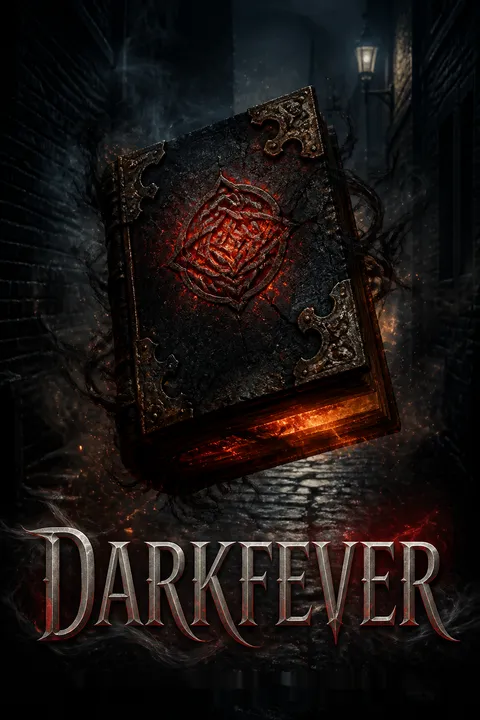


Plot Summary
Prologue
MacKayla Lane1 looks back on a world where the barriers between humans and Faery have fallen, leaving the Unseelie free to hunt people and the Seelie to prey on human desire. Sidhe-seers, who can see through Fae disguises, have become a target.
Mac1 explains that she once knew nothing about this hidden war, or even about her own abilities. Her story begins a year earlier, before her sister3 Alina’s3 murder draws her from Georgia to Dublin. By the time Mac1 understands the danger, she has become part of the effort to contain it.
The prologue gives the reader knowledge Mac herself lacks at the story’s start, creating dramatic irony without making her later confusion feel foolish. Its account of a breached boundary turns the supernatural threat into a civic and bodily one: the Fae are not distant folklore but predators sharing human streets. Mac’s brisk, sardonic voice also signals the psychological distance she must travel. She begins with a settled identity and an ordinary life; the prologue’s retrospective frame shows that both have already been dismantled.
The Call From Dublin
In Ashford, Georgia, MacKayla Lane1 is mourning her older sister3 Alina,3 whose murder in Dublin has gone unsolved. When a replacement phone restores a message Alina3 left shortly before her death, Mac1 hears her sister’s3 panic, her confession that she trusted a dangerous man,6 and her insistence that Mac1 find the Sinsar Dubh.
Alina3 also hints that Mac1 does not know what she is. The Dublin police have abandoned the case, so Mac1 decides to travel there herself, despite her parents’11 protests. She quits her job, spends her savings on a one-way flight, and arrives with no contacts beyond Alina’s3 address and a handful of unanswered questions.
The inciting force is not simply grief, but grief sharpened by evidence that Alina had hidden a life from Mac. The message makes Mac’s absence at the moment of need feel personal, even though she could not have known to answer. Her choice to go to Dublin turns guilt into action, but the action is also a way to avoid the helplessness of mourning. The missing object gives that pursuit a concrete target, while Alina’s warning about Mac’s identity quietly destabilizes the self she believes she is trying to defend.
A Book Behind Glamour
On her first night in Dublin, Mac1 sees a stunning stranger steal whisky from a pub, then glimpses a decaying creature beneath his beauty. An elderly woman10 strikes Mac1 for staring and warns her not to expose herself. The next day, after failing to get immediate help from the Garda, Mac1 reaches Barrons Books and Baubles while lost in the fog.
Its owner, Jericho Barrons,2 and his associate Fiona4 react sharply when Mac1 mentions the Sinsar Dubh. Barrons2 visits her room that night and identifies it as an ancient book of lethal magic, sought by many factions. Mac1 plays Alina’s3 message, but gives him little else. He threatens her, yet she refuses to leave Dublin.
Mac’s first encounter with glamour establishes that perception itself is dangerous: the beautiful figure is not merely deceptive, but able to make a witness vulnerable by drawing her attention. The old woman’s rough intervention contrasts with Barrons’s calculated intimidation, leaving Mac without a trustworthy guide. Barrons offers usable knowledge but insists on control, and Mac answers by withholding information. Their alliance begins not in confidence, but in mutual need and resistance, a pattern that will shape nearly every later decision.
The Sister Who Changed
Mac1 questions Alina’s3 professors and classmates at Trinity College, expecting to find the diligent, sociable sister3 she remembers. Instead, they describe someone whose attendance collapsed, who became secretive and exhausted, and who seemed to have an older, wealthy boyfriend6 no one had met.
Inspector O’Duffy13 dismisses Alina’s3 final message as evidence of drug trouble and refuses to reopen the case, pointing to unexplained wounds on her body as support for his suspicion. Mac1 then goes to Alina’s3 ransacked apartment and begins packing her belongings, unable to throw anything away. The investigation has yielded no name for the boyfriend,6 but it has shown Mac1 that her sister’s3 last months were hidden from her.
The contradiction between remembered sister and witnessed stranger makes bereavement epistemic as well as emotional: Mac must mourn someone whose private choices she cannot reconstruct. The official account offers a neat explanation, but it depends on treating Alina’s fear as pathology rather than testimony. Mac rejects that interpretation partly from love, partly because accepting it would close the case. Her refusal to discard even broken possessions reflects the same impulse: preserving fragments becomes a substitute for recovering the whole person.
Beauty Being Devoured
After Barrons2 explains that the Sinsar Dubh belongs to Fae legend, Mac1 assumes he has invented a story to mislead her. But in a pub she watches a beautiful blond man touch a woman while her face and body visibly lose their beauty. Through the glamour, Mac1 sees the Gray Man, a grotesque Unseelie creature feeding on its victim.
She keeps eating rather than reveal that she sees it, then runs to Barrons’s2 shop. He identifies the predator and explains that Mac1 is a sidhe-seer, someone able to see through Fae disguises. Faced with evidence she cannot dismiss, Mac1 stops pretending the supernatural is a delusion and agrees to learn enough to survive.
The Gray Man’s feeding makes glamour a social as well as magical violence: the victim experiences the predator as desirable while everyone around her remains insulated by illusion. Mac’s decision to stay seated and conceal her vision is a first act of tactical self-control, though it leaves her helpless to intervene. Barrons’s explanation converts private terror into a rule-bound danger she can study. The transition from denial to training is not faith in Barrons; it is Mac choosing reality because refusing it would make her easier to kill.
A Null’s Unwanted Gift
Mac1 encounters another Unseelie, a many-mouthed creature that grabs her but hesitates when she strikes it, giving her time to escape. Barrons2 recognizes that her hands can freeze Fae, a rare sidhe-seer ability called being a Null. He also tests photocopied pages of the Sinsar Dubh against her, and Mac’s1 sickness reveals that she can sense the book.
Barrons2 has her cut and darken her hair so the Unseelie that saw her cannot easily find her. He then takes her to the guarded estate of wealthy collector McCabe.8 Mac1 detects no book there, but sees Unseelie posing as guards and learns a powerful hidden figure called the Lord Master6 is also seeking the relic.
Mac’s ability is both defense and exposure. Touch can interrupt a Fae’s power, but the fact that she is a Null makes her conspicuous to beings who have reason to hunt her. Her physical reaction to the book gives Barrons a way to use her, and her dependence on him grows even as she distrusts his motives. The haircut marks a small but costly surrender of her former self-image. At McCabe’s estate, the supernatural threat becomes organized: the monsters are not isolated intruders but agents embedded in human power networks.
Mallucé’s Black Box
Barrons2 takes Mac1 to Mallucé,7 a wealthy man who has built a following by presenting himself as a vampire. His followers and armed guards fill a lavish Goth mansion where Unseelie move among the guests. Barrons2 confronts Mallucé7 about the Sinsar Dubh, but the collector denies knowing anything.
While the men argue, Mac’s ability to sense Fae objects leads her to a black box. She steals it, then smuggles it out among her belongings. Inside is a blue-black stone marked with runes, one of four said to help decipher the Sinsar Dubh. Barrons2 reveals that he already possesses its mate. Mac1 has gained a valuable relic, but Mallucé7 now has reason to hunt her.
The theft shifts Mac from witness to participant. She acts without fully understanding the object’s value, and her success comes from an ability Barrons cannot duplicate. That makes her useful while also increasing the danger attached to her. Mallucé’s world of staged vampirism and real Fae predation blurs performance with threat: the human crowd chooses to believe in a monster, while the actual monsters remain unnoticed. The stone offers a practical route toward reading the book, but it also binds Mac more deeply to a contest she did not choose.
V’l ane’s Golden Cuff
A beautiful Fae prince named V’l ane5 approaches Mac1 in the street and triggers an overwhelming sexual compulsion that nearly makes her undress in public. He identifies himself as a Seelie emissary and offers the Cuff of Cruce, a relic said to protect her from many Unseelie, including the Royal Hunters.
In exchange, he wants Mac1 to report what she learns about the Sinsar Dubh and other missing Fae objects. Mac1 refuses the cuff and the assignment because she has no reason to trust him or his queen. V’l ane5 leaves, but his power has already shown Mac1 that even a supposedly diplomatic Fae can invade her body and distort her will.
V’l ane’s offer is coercive even when framed as diplomacy. The compulsion makes consent difficult to separate from bodily response, and Mac’s refusal becomes an effort to preserve authorship over her choices. Her suspicion is warranted, but it also leaves her without the protection the cuff might provide. The encounter complicates the simple opposition between Light and Dark: the Seelie prince can speak of cooperation while exploiting a vulnerability that makes ordinary negotiation impossible. Mac’s instinct is to distrust power that demands trust before earning it.
The Spear Beneath Dublin
Barrons2 takes Mac1 to meet Roark O’Bannion,9 a powerful former boxer who now controls criminal businesses and surrounds himself with religious objects. Mac1 senses an Object of Power beneath his headquarters. After navigating the city’s sewers, she and Barrons2 break into a flooded vault and remove a spear.
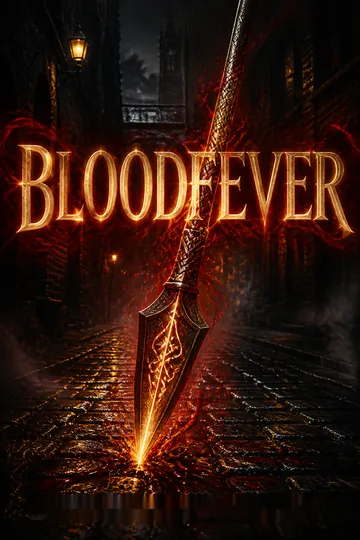
Barrons2 identifies it as the Spear of Luisne, also called the Spear of Destiny, a Seelie weapon capable of killing any Fae. He gives the spearhead to Mac,1 making it her first reliable means of attack. Their theft puts them directly against O’Bannion,9 whose men will not accept the loss quietly, while Mac1 now carries a weapon that can change the balance of a supernatural fight.
The spear translates Mac’s emerging agency into a material form: she can now do more than see danger or freeze it briefly. Yet the weapon arrives through a choice Barrons largely directs, and the cost is imposed on people around them. O’Bannion’s devotion to religious relics also shows how human institutions can accumulate supernatural power without understanding it. The sacred object’s history does not make its use morally clean. Mac gains a means of defense, but the act of taking it makes her responsible for consequences beyond the Fae she hopes to fight.
Sixteen Men in Darkness
O’Bannion9 sends men to Barrons’s2 property after the spear is stolen. Barrons2 extinguishes the exterior lights, and the Shades that haunt the abandoned district attack the group in the darkness. By morning, sixteen men have been drained, leaving clothes and dry human remains beside their cars.
Mac1 sees the aftermath and understands that her theft helped set the violence in motion, even though the dead were armed criminals. Barrons2 gives her no comfort or explanation; instead, he sends her to search Dublin’s National Museum for more Fae relics. Mac’s1 guilt remains unresolved, but the assignment keeps her moving, and the search soon brings her into contact with V’l ane5 again.
The massacre forces Mac to confront consequential responsibility without the reassurance of a clean moral category. O’Bannion’s men are dangerous, but their families and histories do not disappear because they were criminals. Barrons treats survival as the only relevant outcome, while Mac continues to imagine the human costs he excludes. The scene also exposes the city’s hidden geography: darkness is not an absence but territory held by predators. Mac’s guilt becomes part of her developing moral judgment, a burden she cannot simply hand to Barrons.
The Museum’s Public Trap
At the National Museum, Mac1 searches the displays for Fae objects and again encounters V’l ane.5 His erotic power overwhelms her until she begins stripping and nearly submits in front of visitors. She breaks free long enough to wield the spear, and the prince vanishes rather than face it.
The elderly sidhe-seer10 from the pub confronts Mac1 afterward, astonished that she could resist a prince and convinced she belongs to the O’Connor family. Mac1 rejects the claim but checks her birth records. The hospital finds no record of Mac1 or Alina3 being born there. The discovery unsettles Mac’s1 belief that she knows her family, even as the old woman10 refuses to explain more.
The museum scene turns public spectatorship into another form of exposure: strangers watch Mac’s crisis instead of understanding or interrupting it. Her spear gives her a momentary defense, but it does not undo the violation of her autonomy. The old woman’s claim attacks a different kind of security, the belief that family identity is settled fact. Mac’s investigative habits, usually directed outward toward Alina’s killer, now turn inward. The absence of records does not prove the old woman right, but it makes denial harder to sustain.
A Gray Man’s Last Hunt
That night, Barrons2 takes Mac1 out to learn how to kill a Fae. In a crowded pub, she spots the Gray Man feeding on another woman, whose beauty has been reduced to a dying shell. Barrons2 judges that the victim cannot be saved and sends Mac1 after the predator when it leaves. Mac1 pretends to be Pri-ya, a human addicted to Fae, to draw the Gray Man close.
It recognizes that she can see it and grabs her before she can reach her spear. Mac1 freezes it, but the creature holds her suspended by her hair. Barrons2 arrives, criticizes her mistakes, and uses the spear to kill it. Mac1 stabs the body again herself, refusing to remain a helpless observer.
Mac’s first kill is not a clean triumph. She acts from rage at the Gray Man’s repeated predation, but her improvised deception nearly gives the monster control of her. Barrons’s rescue confirms both her dependence and her capacity to learn from danger. His tactical criticism is harsh, yet the weapon remains with Mac, and she chooses to strike after he has already ended the immediate threat. That final gesture matters psychologically: she is beginning to take responsibility for violence rather than leaving it entirely to a stronger protector.
LaRuhe’s Forgotten Door
After Mac’s father11 confirms that she and Alina3 were adopted, Mac1 goes to the alley where Alina3 died and finds her damaged cosmetic case. Nearby, Alina3 scratched an address, 1247 LaRuhe, into the stone. The address appears on an older map but has vanished from current ones, deep inside the Shade-infested Dark Zone.
Mac1 also sees Barrons2 walk into that darkness without a light, deepening her suspicion of him. She goes anyway, reaches the address, and finds a grand house containing Alina’s3 planner and photographs. The pictures identify her sister’s secret lover:6 a copper-haired man6 who appears human and whose identity remains unknown to Mac.1
The adoption revelation removes the family story that had anchored Mac through grief, but it also changes how she understands Alina’s secrecy. Their shared vulnerability may explain why Alina kept her danger at a distance. The carved address is a literal trace of a sister whose life has otherwise been erased or misread. Mac’s decision to enter the Dark Zone shows how grief now overrides the self-preservation Barrons tries to teach. The photographs offer intimacy without explanation: they restore Alina’s happiness in Dublin while making the betrayal behind it more difficult to comprehend.
The Prison Gate Opens
Following the pull of an unseen Fae presence beyond the house, Mac1 enters a warehouse and discovers a stone dolmen used as a portal. A red-robed Lord Master6 has brought hundreds of Unseelie from their prison into Dublin, with Rhino-boy guards assigned to acclimate them. Mallucé7 catches Mac1 before she can escape.
The Lord Master6 recognizes her as Alina’s sister1 and orders her taken alive. When he lowers his hood, Mac1 recognizes the copper-haired man from the photographs:6 Alina’s lover.6 He is not Fae, but he has commanded the invasion and knows Alina’s3 role in it. Barrons2 drops into the warehouse to help, and the portal begins to stir again as the fight erupts.
The revelation joins the intimate and the geopolitical without making either one secondary. The man in Alina’s photographs is both the person she loved and a strategist unleashing a prison population on the human world. Mac’s discovery answers who Alina trusted, but not every question about her death or what she began. The portal literalizes the book’s broken boundary: invasion is engineered, organized, and directed by someone who understands human systems. Mac’s family grief now sits inside a conflict too large for private vengeance alone.
The Fight at LaRuhe
As the Lord Master’s6 followers close in, Mac1 freezes six Rhino-boys with her hands and fights through the Unseelie using the spear. She has become faster and more deliberate, but she forgets Mallucé,7 who is not Fae and cannot be frozen. The vampire7 strikes her hard enough to break her arm, ribs, and fingers.
Barrons2 fights Mallucé,7 then carries Mac1 through the sewers while the Unseelie pursue them. Before losing consciousness, Mac1 knows she has found the man connected to Alina’s betrayal,6 but she has neither killed him nor stopped the larger plan. Barrons2 sets her injuries and keeps her from a hospital, leaving her alive but badly damaged as the conflict remains unresolved.
The climax demonstrates both the reach and limits of Mac’s new power. Against Fae, her touch and the spear make her formidable; against Mallucé, a different kind of supernatural threat, her assumptions fail. Her injury is not evidence that she has learned nothing, but proof that competence cannot erase uncertainty. Barrons’s rescue deepens their bond through action while leaving his own nature obscure. The battle interrupts the portal plan without resolving it, so the novel’s emotional victory is narrower than its threat: Mac survives and has found a central enemy, but cannot yet avenge Alina or protect the world.
The Book Is Moving
While Mac1 recovers in Barrons’s2 rooftop conservatory, she needles him into painting the nails on her uninjured hand and asks why the Shades do not attack him. Barrons2 gives no clear answer, only insisting that he is not her enemy. He also tells her that V’l ane5 has reported their meeting, confirming that he knows more about the Seelie prince than he admits.
Then Mac1 is struck by a wave of nausea and cold as the Sinsar Dubh passes nearby in a moving vehicle. She realizes the book is not safely hidden and that the newly arrived Unseelie are only the beginning. Mac1 calls for more sidhe-seers, accepting that the coming conflict will demand more than her private search for revenge.
The ending leaves Mac with more capacity but less certainty. She can detect the Dark Book and read the city’s supernatural dangers, yet Barrons still withholds the explanation she most wants about his relationship to the Shades. The book’s movement turns the search from a static hunt into an immediate threat, while the invasion raises the stakes beyond one sister’s murder. Mac’s call for other sidhe-seers marks a shift from isolated grief toward collective action. It is not closure, but a new understanding of scale and responsibility.
Analysis
Darkfever makes the act of seeing both Mac’s1 new power and her central burden. Fae glamour hides predators in plain sight, but the ability to see through it does not automatically confer safety or moral clarity. Mac1 can recognize a monster and still be outmatched, manipulated, or forced to watch someone suffer. Her progress therefore depends less on acquiring a clean heroic identity than on learning to act while afraid, correct mistakes, and live with consequences.
The parallel between Alina’s3 hidden life and Mac’s1 emerging supernatural identity gives the mystery emotional weight. Mac1 initially treats knowledge as a route to justice: identify the man in Alina’s message,6 find the book, and return home. Each answer alters the question. The sister she mourns3 had concealed her danger to protect Mac,1 while Mac’s1 own family history proves less settled than she believed. Knowledge does not restore the lost family world; it makes Mac1 responsible for navigating what remains.
Barrons2 embodies the book’s uneasy relationship between protection and power. He trains Mac1 and repeatedly saves her, yet he also withholds information and uses her abilities for his search. His help is genuine in its effects without becoming transparent in motive. This ambiguity prevents the partnership from resolving into a simple romance or mentor bond. Mac’s1 growing competence depends on collaboration, but her survival also requires resisting the claim that anyone else gets to decide what she can bear.
The city itself becomes an ethical landscape. The Dark Zone expands where institutions cease to recognize a place, and the Shades feed where light and civic attention fail. Meanwhile, collectors, criminals, and Fae princes all treat people or relics as instruments. Against that world, Mac’s1 insistence on remembering individual victims, including people she did not know, is a form of resistance. The ending refuses closure: the Lord Master6 remains active, the Sinsar Dubh is moving, and an invasion has begun. Mac’s1 arc ends not with victory, but with a widened sense of responsibility and the first credible prospect of collective resistance.
Review Summary
Darkfever receives mixed reviews, with some readers praising its addictive storytelling, intriguing world-building, and compelling characters, particularly Jericho Barrons. Others criticize the protagonist Mac's initial shallowness and the slow pacing. The book's unique take on Fae mythology and the Dublin setting are widely appreciated. While some find the sexual content and alpha male tropes problematic, many readers become invested in the series despite its flaws. Overall, Darkfever is seen as a promising start to the Fever series, with potential for character growth and an engaging plot.
People Also Read

Characters
MacKayla Lane
Reluctant Fae-seerMac is a young woman from Georgia who takes pride in her family, her appearance, music, and an ordinary life she assumes will continue. Her sister Alina’s3 death drives her to Dublin, where her instinct to investigate collides with a world she cannot explain. She is stubborn, quick to bluff, and often uses humor or careful grooming to steady herself when frightened. Her first response to danger is not heroic certainty but denial, followed by an increasingly practical willingness to learn. Mac’s attachment to Alina3 remains her emotional compass, even as her abilities and choices pull her into a conflict far larger than the search that brought her overseas.
Jericho Barrons
Predatory book hunterBarrons owns a Dublin bookstore filled with rare volumes and knows the hidden rules of the Fae world. He pursues the Sinsar Dubh with relentless focus and treats information as currency, revealing only what serves his immediate purpose. His intimidating control, physical force, and refusal to explain himself make him difficult to trust; his decisions nevertheless repeatedly keep Mac1 alive and give her tools to survive. He sees Mac’s1 unusual abilities as useful, but also invests in training her rather than abandoning her to dangers she cannot yet understand. Their connection rests on necessity, conflict, and an uneasy recognition of each other’s competence.
Alina Lane
Protective older sisterAlina is Mac’s1 older sister and closest companion, a gifted student whose plans include advanced study and a future in literature. She is loving and protective, but her time in Dublin reveals a capacity for secrecy that Mac1 never suspected. Her classmates remember a confident young woman who becomes increasingly distracted and withdrawn. The mystery surrounding her choices gives the story its emotional pressure: Mac1 must reconcile the sister she knew with the person Alina became while away from home. Alina’s longing for knowledge and her devotion to Mac1 remain intertwined, even when protection requires keeping painful truths from her.
Fiona
Unsettling confidanteFiona is Barrons’s2 elegant associate at the bookstore, knowledgeable about rare books and artifacts that ordinary scholars dismiss. She helps place Mac1 in the dangerous world Barrons2 controls, though she is wary of Mac’s1 presence and often keeps her distance. Her attachment to Barrons2 is evident in the way she challenges his choices, even when he refuses to yield. Fiona’s composure and practical help suggest that the bookstore is not merely a business but part of a long-standing life with rules Mac1 has not yet learned.
V’l ane
Seelie emissaryV’l ane is a prince of the Seelie Court who approaches Mac1 as an envoy for the missing queen. His beauty is accompanied by a sexual influence that can overwhelm human judgment, making his offers difficult to separate from coercion. He wants Mac1 to locate the Sinsar Dubh and report what she discovers, presenting the task as necessary to both worlds. Mac1 has little reason to trust his motives, and his power demonstrates that the supposedly fair court can be dangerous even when it claims to seek cooperation.
The Lord Master
Hidden power brokerThe Lord Master is a concealed leader whose commands organize the Unseelie activity in Dublin. He speaks with authority and directs the movement of creatures from their prison into the human world. His red robes conceal his identity, while his plans connect the hunt for the Sinsar Dubh to a broader attempt to alter the balance between realms. He is patient enough to use intermediaries and human vulnerabilities rather than relying on open force alone.
Mallucé
Vampire collectorMallucé is a wealthy collector who has cultivated a following by presenting himself as an undead aristocrat. His mansion mixes theatrical Gothic excess with genuine supernatural danger, and his interest in ancient artifacts brings him into conflict with Barrons2. Beneath his cultivated manners is a capacity for sudden violence. He is ambitious and possessive, treating people and objects as extensions of his own power.
McCabe
White-suited kingpinMcCabe is a rich Dublin collector whose stark, monochrome estate hosts a carefully guarded social world. He is accustomed to treating women as possessions and other people as instruments, while Unseelie guards stand close enough to threaten anyone who crosses him. His conversation with Barrons2 reveals a calculating interest in power and a place among those competing for the Sinsar Dubh.
Roark O’Bannion
Criminal patriarchO’Bannion is a former champion boxer who has built wealth and influence through Dublin’s criminal underworld. His imposing presence is matched by a strict personal code and conspicuous religious devotion, a contrast that does not erase the violence behind his rise. His holdings include a hidden collection of sacred objects, making his world an unexpected part of Barrons2 and Mac’s1 search.
The elderly sidhe-seer
Watchful sidhe-seerThis elderly woman recognizes Mac’s1 ability before Mac1 understands it herself. Blunt, suspicious, and protective of the few sidhe-seers she knows, she believes survival depends on secrecy and restraint. Her warnings often arrive as scolding rather than comfort, which makes her difficult for Mac1 to accept. She carries knowledge of bloodlines and the danger of revealing oneself, but gives Mac1 only fragments when they meet.
Jack Lane
Grief-struck fatherJack is Mac1 and Alina’s father3, a tax attorney and steady presence who has long shared Mac’s1 interests in cars and family life. Alina’s3 death leaves him withdrawn and exhausted, while his efforts to protect his remaining daughter turn into pressure for her to come home. He loves Mac1 deeply, but grief makes it difficult for him to speak honestly about the family’s past.
Rainey Lane
Southern anchorRainey is Mac1 and Alina’s mother3, a warm, capable woman whose instinct in grief is to cook, clean, and care for others. Her home and habits represent the stable family world Mac1 believes she can return to. Alina’s3 death devastates her, and her distress reinforces Mac’s1 fear that pursuing answers may harm those she loves.
Inspector O’Duffy
Dismissive detectiveO’Duffy handled Alina’s3 murder investigation in Dublin. He is overworked and skeptical of Mac’s1 interpretation of her sister’s3 behavior, preferring an explanation based on drug use to an unverified threat. His refusal to reopen the case leaves Mac1 convinced she must pursue the evidence herself.
Plot Devices
Sidhe-seer and Null abilities
See and stop the FaeSidhe-seers can see through Fae glamour, exposing the creatures’ true forms to themselves while ordinary people remain deceived. Mac’s1 particular ability as a Null lets her freeze a Fae briefly by touching it, though the effect weakens against more powerful beings. This power lets her escape an attack, steal objects, and fight in the warehouse, but it is not a simple guarantee of safety. Freezing an enemy without a weapon ready can leave her trapped when it moves again. Her ability to sense Objects of Power, including the Sinsar Dubh, gives Barrons2 a reason to keep her close and makes Mac1 a target for competing factions.
The Sinsar Dubh
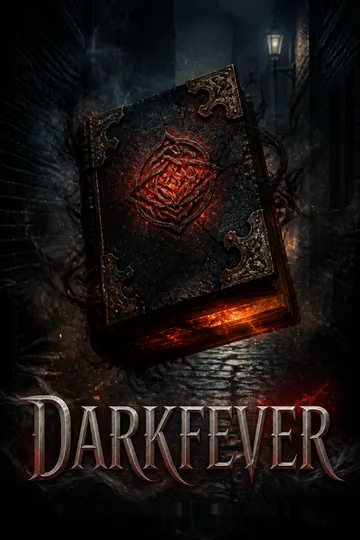
The prize behind the huntThe Sinsar Dubh is an ancient Dark Hallow, a book said to contain the deadliest Fae magic. Many factions seek it, but its location is unknown, and Mac’s1 ability to sense it makes her indispensable to Barrons2 and potentially useful to the Seelie. Four rune-marked stones are said to reveal its encrypted text when reunited. The book is not merely a valuable artifact: its proximity makes Mac1 physically ill, and the text is dangerous even to approach. Near the novel’s end, she senses it moving through Dublin, showing that the central object remains unsecured and the hunt is still active.
Fae glamour and compulsion
Make danger look desirableGlamour allows the Fae to disguise their inhuman bodies and influence how humans perceive them. Most people are subtly repelled from touching a glamoured Fae, while sidhe-seers can see past the illusion. Some Fae also exert a more intimate form of influence: V’l ane’s5 erotic power overwhelms Mac’s1 senses and nearly takes control of her behavior. These effects make ordinary social encounters unsafe, because a victim may perceive a predator as beautiful, welcome, or even irresistible. The device connects bodily vulnerability to the larger struggle over who controls perception and choice.
Fae Objects of Power
Turn legend into weaponObjects of Power are Fae relics that can pass unnoticed among ordinary museum pieces, private collections, and religious artifacts. Mac’s1 ability to sense them leads her and Barrons2 to a rune-marked stone, the Spear of Luisne, and the trail of other missing Hallows. The spear gives Mac1 a weapon capable of killing Fae across castes, transforming her from a witness into a combatant. The relics also create practical consequences: stealing them draws the attention of collectors and criminals, while possessing them forces Mac1 to choose how much violence she is willing to use.
The Dark Zone
Make darkness into territoryShades inhabit unlit districts where city records and maps have effectively erased the streets. At night they drain people, leaving clothes and dried remains behind; direct light keeps them at bay. Mac’s1 discovery that older maps show streets missing from current ones reveals that the danger is expanding beyond one abandoned Dublin neighborhood. Barrons’s2 floodlights make his bookstore a protected boundary, while the darkness outside becomes a lethal perimeter. The Dark Zone makes supernatural invasion visible through urban neglect and turns maps, streetlights, and safe routes into survival tools.
FAQ
Synopsis & Basic Details
What is Darkfever about?
- A Southern Belle's Ordeal: MacKayla Lane, a seemingly ordinary Southern girl, is thrust into a hidden, perilous Dublin when her sister, Alina, is brutally murdered. Her quest for justice quickly unravels a world teeming with ancient, dangerous Fae creatures and powerful artifacts.
- Unveiling True Vision: Mac discovers she possesses "True Vision," making her a rare sidhe-seer capable of perceiving the Fae's true, often horrific, forms beyond their glamours. This unwelcome ability forces her to confront a reality far more sinister than she ever imagined.
- Reluctant Alliance for Survival: Drawn into the orbit of the enigmatic and ruthless Jericho Barrons, Mac forms a tense, co-dependent alliance. Their shared goal of finding the ancient, deadly Sinsar Dubh, a book of immense dark magic, becomes her only path to understanding Alina's death and surviving the escalating war between the Fae courts.
Why should I read Darkfever?
- Unique Narrative Voice: Experience a gritty urban fantasy through the eyes of Mac, a protagonist whose Southern charm and seemingly superficial interests (fashion, pop music) clash humorously and poignantly with the dark, brutal world she's forced to navigate. Her internal monologue is both witty and deeply vulnerable.
- Intriguing World-Building: Moning masterfully blends Irish mythology with a contemporary setting, creating a Dublin where ancient Fae lurk in shadows, unseen by most humans. The concept of the "Dark Zone" and the various Fae castes adds layers of chilling realism to the supernatural elements.
- Complex Character Dynamics: The evolving, often volatile, relationship between Mac and Jericho Barrons is a central draw. Their mutual distrust, forced reliance, and undeniable chemistry create a compelling dynamic that drives the story and promises deeper exploration in subsequent books.
What is the background of Darkfever?
- Fae-Human Compact Broken: The story is set in a world where "The Compact" between Man and Fae, established around 4000 B.C., has recently shattered. This ancient agreement forbade Fae from spilling human blood, but with the disappearance of the Seelie Queen, Aoibheal, the Unseelie are now free to hunt and kill sidhe-seers and prey on humans.
- Dublin as a Battleground: The city of Dublin itself becomes a character, a decaying urban landscape where the war between the Seelie (Light) and Unseelie (Dark) Fae is spilling into the human realm. Areas like the "abandoned neighborhood" (Dark Zone) are literal manifestations of this encroaching chaos, forgotten by human authorities.
- Ancient Relics and Power Struggles: The narrative is underpinned by the search for the Sinsar Dubh and other "Hallows"—eight ancient relics of immense power (four Light, four Dark). These artifacts are coveted by various factions, including Barrons, the Seelie Queen, and the mysterious Lord Master, indicating a larger, escalating conflict for control.
What are the most memorable quotes in Darkfever?
- "My philosophy is pretty simple—any day nobody's trying to kill me is a good day in my book." (Prologue): This opening line immediately establishes Mac's pragmatic, slightly cynical, yet ultimately resilient outlook, setting the tone for her unexpected journey into a world where good days are rare. It highlights her initial desire for normalcy against the backdrop of encroaching supernatural chaos.
- "There are two kinds of people in this world, Ms. Lane: those who survive no matter the cost, and those who are walking victims." (Chapter 4): Barrons' brutal assessment of humanity, delivered during a moment of physical intimidation, encapsulates his ruthless philosophy and the stark reality Mac must confront. It foreshadows her transformation from a naive "victim" to a determined "survivor" in the Fae-infested world.
- "You underestimate the pricelessness of brevity, Ms. Lane." (Chapter 19): Barrons' chilling comment regarding the Gray Man's victim, implying that a quick death is a mercy compared to prolonged suffering, reveals his dark pragmatism and the horrific nature of the Fae's cruelty. It underscores the novel's exploration of suffering and the value (or lack thereof) of human life in this new reality.
- "I used to walk on my feet. Now all I knew how to do was crawl." (Chapter 20): This poignant reflection from Mac after the adoption revelation perfectly captures her profound loss of identity and stability. It symbolizes her complete disorientation and the shattering of her perceived reality, marking a critical turning point in her psychological journey.
What writing style, narrative choices, and literary techniques does Karen Marie Moning use?
- First-Person, Conversational POV: The story is told entirely from Mac's perspective, characterized by her distinct, often humorous, and highly internal monologue. This allows readers direct access to her thoughts, fears, and evolving understanding, creating a strong sense of intimacy and immediacy, as seen in her frequent asides and self-corrections.
- Juxtaposition of Mundane and Mythic: Moning frequently contrasts Mac's "normal" Southern upbringing and consumerist interests (manicures, pop music, fashion) with the horrific supernatural reality she encounters. This juxtaposition highlights the absurdity and terror of her situation, making the Fae's intrusion into her familiar world even more jarring.
- Sensory and Visceral Detail: The author employs vivid, often grotesque, sensory descriptions, particularly when Mac encounters the Fae in their true forms. The "stench of decay," "oozing, open sores," and "slimy, reptilian" skin of the Unseelie are rendered with disturbing clarity, immersing the reader in Mac's revulsion and fear.
- Foreshadowing and Ambiguity: Moning uses subtle hints and unanswered questions to build suspense and mystery. Alina's cryptic voicemail, the old woman's warnings, and Barrons' veiled statements constantly foreshadow future revelations and keep the reader guessing about characters' true motives and the full scope of the Fae threat.
Hidden Details & Subtle Connections
What are some minor details that add significant meaning?
- Mac's "Pink" Aesthetic: Mac's consistent preference for pink, peach, and lavender, and her "I'm-Not-Really-a-Waitress-Pink" manicure, initially portray her as superficial and naive. However, as the story progresses, her refusal to abandon these colors, even when Barrons demands she "lose the Barbie look," becomes a subtle act of defiance and a clinging to her identity amidst chaos, symbolizing her inner resilience.
- The "Paper Husks" of Shades' Victims: The seemingly innocuous detail of "thick husks of porous yellowed parchment" blowing through the abandoned neighborhood (Chapter 3) gains horrifying significance when Mac later discovers they are the desiccated remains of Shades' victims (Chapter 17). This detail subtly foreshadows the true nature of the Dark Zone and the Fae's predatory feeding habits, revealing the hidden dangers of the city.
- Barrons' Car Collection as a Metaphor: Barrons' absurdly expensive and diverse car collection, from a "black Porsche 911 Turbo" to a "1975 Lamborghini Countach," is more than just a sign of wealth. It symbolizes his control, his ability to navigate different "worlds" (fast, dangerous, luxurious), and his predatory nature, as he selects vehicles for specific "hunts" or social engagements, much like a predator choosing its tools.
What are some subtle foreshadowing and callbacks?
- Alina's "You don't even know what you are": Alina's frantic voicemail, stating "You don't even know what you are!" (Chapter 1), subtly foreshadows Mac's sidhe-seer abilities and her true heritage as a Null. This early, unexplained line creates a deep mystery that drives Mac's initial investigation and sets up her later revelations.
- The Old Woman's "O'Connor" Insistence: The "nutty old woman" in the pub repeatedly calls Mac an "O'Connor" and tells her to "honor your bloodline" (Chapter 2). This seemingly random interaction is a direct foreshadowing of Mac's adoption and her true O'Connor lineage, a revelation that profoundly impacts her identity at the end of the book.
- Barrons' "City Beneath the City": Barrons' casual mention of "another city beneath the city" (Chapter 15) while navigating the sewers subtly foreshadows the hidden Fae portals and the deeper, unseen layers of Dublin's supernatural reality. It hints at the vast, concealed world that Mac is only just beginning to uncover.
What are some unexpected character connections?
- Fiona's Unrequited Devotion to Barrons: Fiona, Barrons' seemingly stoic assistant, is revealed to harbor a deep, unrequited love for him. Her fervent declaration, "I have never seen any more in you than I know you could be, if you wanted to, Jericho," (Chapter 14) highlights a hidden emotional depth and a long-standing, complex relationship that goes beyond mere employment, adding a layer of pathos to her character.
- The Old Woman as a Fellow Sidhe-seer: The "hostile crone" from Mac's first night in Dublin is later revealed to be a fellow sidhe-seer, who "had actually saved my life that night" (Chapter 14). This connection transforms a seemingly random, aggressive encounter into a crucial protective act, establishing a hidden network of those with True Vision.
- Alina's Romantic Involvement with the Lord Master: The shocking revelation that Alina's mysterious boyfriend, whom she "thought she was in love with," is none other than the Lord Master, the leader of the Unseelie (Chapter 24), creates a deeply personal and tragic connection between Mac's quest for vengeance and the overarching Fae conflict. This twist recontextualizes Alina's entire secret life and her death.
Who are the most significant supporting characters?
- Fiona: More than just Barrons' assistant, Fiona serves as a quiet guardian and a foil to Mac's impulsiveness. Her deep, unacknowledged affection for Barrons and her subtle attempts to protect Mac (e.g., her distress over Mac's injuries, her call to Barrons when Mac enters the Dark Zone) reveal a complex loyalty and a hidden emotional landscape.
- The Old Woman (Catherine): Initially perceived as a "nutty old woman," she is a crucial early warning system for Mac, demonstrating the existence of sidhe-seers and the dangers of the Fae. Her cryptic warnings and later insistence on Mac's O'Connor lineage provide vital, albeit confusing, clues that propel Mac's personal journey of discovery.
- The Gray Man: This specific Unseelie Fae, encountered twice by Mac, is significant not just as a monster but as a catalyst for Mac's acceptance of her sidhe-seer abilities and the brutal reality of the Fae world. His predatory nature and the horrific fate of his victims underscore the stakes of Mac's fight and her growing resolve to kill Fae.
Psychological, Emotional, & Relational Analysis
What are some unspoken motivations of the characters?
- Barrons' Obsession with the Sinsar Dubh: While Barrons claims to want the Sinsar Dubh because "It is priceless. I am a book collector," (Chapter 4) his extreme ruthlessness, willingness to kill, and the sheer depth of his knowledge about the Fae suggest a motivation far beyond mere acquisition. His unspoken drive hints at a personal stake or a deeper, perhaps darker, purpose tied to the book's power.
- Alina's Secrecy and Sacrifice: Alina's decision to keep her involvement with the Fae and her sidhe-seer abilities a secret from Mac, even to her dying breath, is motivated by a profound desire to protect her sister. Her message, "I thought I could keep you out of it until things were safer for us," (Chapter 1) reveals a self-sacrificing love, even if it ultimately left Mac unprepared.
- Mac's Drive for Control Amidst Chaos: Mac's meticulous list-making, her obsession with maintaining her appearance, and her insistence on "dignity and decorum" (Chapter 15) are unspoken coping mechanisms. These seemingly superficial habits are her way of imposing order and control on a life that has spiraled into terrifying unpredictability, a psychological anchor in her rapidly unraveling reality.
What psychological complexities do the characters exhibit?
- Mac's Denial and Gradual Acceptance: Mac initially exhibits strong denial, dismissing Fae encounters as "hallucinations" or "food poisoning." Her internal struggle to reconcile her "normal" worldview with the supernatural reality is a core psychological journey, culminating in her reluctant acceptance of her sidhe-seer identity and the brutal truth of her world.
- Barrons' Controlled Ruthlessness: Barrons is a study in controlled power and cynicism. His ability to remain detached and pragmatic even when orchestrating deaths (O'Bannion massacre) or inflicting pain (bruising Mac) reveals a deeply ingrained ruthlessness. Yet, fleeting moments, like his "ununguarded humor" (Chapter 15) or his "concern" for Mac's injuries, hint at a suppressed, complex humanity.
- Alina's Hidden Life and Betrayal: Alina's transformation from a diligent student to someone "agitated, edgy, nervous, almost paranoid" (Chapter 7) reveals the psychological toll of her secret life and her relationship with the Lord Master. Her final message, expressing betrayal and self-reproach ("God, I can't believe I was so stupid!"), paints a picture of a woman psychologically tormented by her choices and the deception she endured.
What are the major emotional turning points?
- Alina's Voicemail Revelation: The discovery and playback of Alina's frantic voicemail (Chapter 1) is the primary emotional catalyst for Mac. It shatters her perception of her sister and their relationship, igniting her quest for answers and vengeance, and plunging her into a profound sense of guilt for not being there.
- First Encounter with the Gray Man: Mac's initial "waking vision" of the Gray Man in the pub (Chapter 2) and her subsequent, undeniable second encounter (Chapter 7) force her to confront the reality of the Fae. This emotional shock pushes her past denial and towards seeking Barrons' help, marking her first step into active engagement with the supernatural world.
- The O'Bannion Massacre's Aftermath: Witnessing the "piles of clothing" and "dehydrated rinds of human matter" (Chapter 17) left by the Shades after Barrons' orchestrated trap is a brutal emotional turning point for Mac. It forces her to acknowledge her complicity and the "blood on my hands," irrevocably changing her moral landscape and sense of self.
- The Adoption Revelation: The phone call with her father confirming her adoption (Chapter 20) is a devastating emotional blow, shattering Mac's core identity and sense of belonging. This personal crisis, more than any Fae encounter, leaves her feeling "cold, lost and alone," driving her to seek connection with Alina's memory in the alley where she died.
How do relationship dynamics evolve?
- Mac and Barrons: From Antagonism to Co-dependence: Their relationship begins with intense distrust and open hostility, marked by Barrons' threats and Mac's defiance. It evolves into a reluctant, pragmatic alliance driven by shared goals (finding the Sinsar Dubh, surviving). By the end, they are co-dependent, with Mac relying on Barrons for protection and knowledge, and Barrons needing Mac's unique OOP-sensing abilities, creating a complex, almost symbiotic bond.
- Mac and Alina: Post-Mortem Discovery: Mac's relationship with her deceased sister transforms from one of assumed intimacy to a painful process of discovery. Alina's secrets, particularly her involvement with the Fae and her relationship with the Lord Master, force Mac to re-evaluate everything she thought she knew about her sister, leading to a deeper, albeit tragic, understanding and appreciation for Alina's sacrifices.
- Mac and Her Parents: Fractured by Grief: Alina's death severely strains Mac's relationship with her parents. Their grief manifests as overprotectiveness (Mom's refusal to let Mac go to Dublin) and withdrawal (Dad's drunkenness, his inability to discuss Alina's death). Mac's decision to pursue justice independently, and the later adoption revelation, further fracture these bonds, leaving her feeling isolated and rootless.
Interpretation & Debate
Which parts of the story remain ambiguous or open-ended?
- Barrons' True Nature and Motives: Despite his claims of being a "book collector" and his "other things" comment, Barrons' immense strength, knowledge, longevity, and ability to move unseen by Shades leave his true identity and ultimate goals highly ambiguous. His cryptic statements and lack of emotional transparency fuel ongoing debate about whether he is human, Fae, or something else entirely.
- The Full Extent of the Fae Invasion: While the novel establishes the "walls between Man and Faery came down" and the Unseelie are "smearing their bloody war all over our world," the precise scale and long-term implications of this invasion remain open-ended. The Lord Master's plan to "unleash the entire Unseelie prison" suggests a much larger, apocalyptic threat yet to unfold.
- The Sinsar Dubh's Ultimate Purpose: The Dark Book is described as holding "the deadliest of all magic" and being "so evil it corrupted anyone who touched it." However, its specific powers and the exact reason why so many factions desire it (beyond general power) are not fully revealed, leaving its ultimate role in the coming conflict open to interpretation.
What are some debatable, controversial scenes or moments in Darkfever?
- Barrons' "Training" Methods: Barrons' use of physical intimidation (slamming Mac against a wall, grabbing her throat) and emotional manipulation ("walking victim," "lose the Barbie look") to "train" Mac is highly controversial. Readers debate whether his methods are justifiable given the extreme danger, or if they constitute abuse, highlighting the blurred lines of morality in a desperate situation.
- Mac's "Pri-ya" Act with the Gray Man: Mac's decision to feign being "Pri-ya" (a Fae-addict/whore) to lure the Gray Man (Chapter 19) is a morally ambiguous moment. While it saves her life, it involves a deeply humiliating and sexually charged deception, raising questions about the lengths to which a protagonist should go for survival and the psychological cost of such acts.
- The O'Bannion Massacre: Barrons' deliberate act of turning off the floodlights to allow the Shades to kill O'Bannion and his men (Chapter 17) is a cold-blooded, calculated murder. The debate centers on whether this act, though effective in eliminating a threat and protecting Mac, makes Barrons (and by extension, Mac, through her complicity) as morally reprehensible as the criminals they fight.
Darkfever Ending Explained: How It Ends & What It Means
- The Sinsar Dubh's Corrupting Power Revealed: The novel concludes with Mac experiencing a debilitating, "knife through my skull" nausea upon the close proximity of the Sinsar Dubh, confirming its immense and corrupting power. This final sensory experience solidifies the book's status as a truly dangerous artifact, not just a mythical object, and underscores the immense challenge of its acquisition and control.
- The Lord Master's Identity and Alina's Betrayal: The shocking revelation that Alina's beloved boyfriend is the Lord Master, the Unseelie leader orchestrating the Fae invasion, provides a tragic answer to Alina's murder. It means Alina was not just a victim of circumstance but was intimately involved with and ultimately betrayed by the primary antagonist, adding a deeply personal dimension to Mac's quest for vengeance.
- Mac's Acceptance of Her Identity and the Impending War: Mac fully embraces her sidhe-seer and Null abilities, recognizing her unique role in the coming conflict. Her final realization that "A war was coming. I could feel it in my bones. A war to end all wars. And Mankind didn't even know it," signifies her complete transformation from a naive Southern girl to a hardened warrior, ready to fight for a world that remains oblivious to its impending doom. This ending sets the stage for a larger, apocalyptic struggle in subsequent books.
Fever Series
Download PDF
Download EPUB
.epub digital book format is ideal for reading ebooks on phones, tablets, and e-readers.








