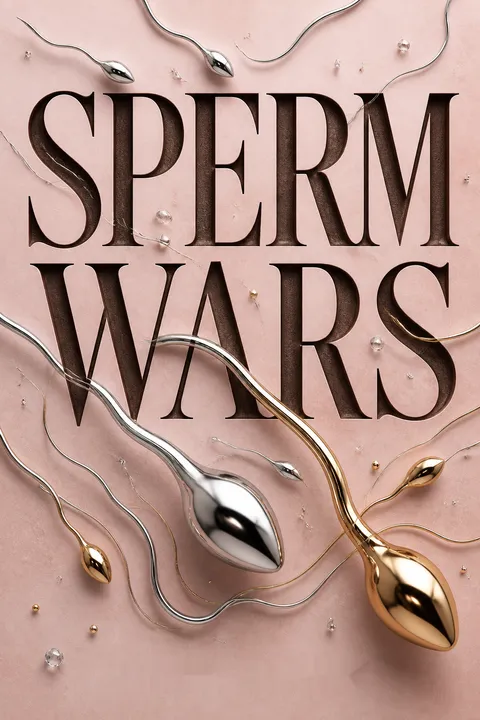


Key Takeaways
See human sex through the book’s lens of sperm competition
The central theory. Robin Baker interprets human sexuality through sperm warfare, his term for sperm from different men competing inside a woman’s reproductive tract to fertilize an egg. In his account, evolutionary pressures shaped not just reproduction, but sexual urges, emotions, and habits that may operate without conscious intent. Fictional scenes, including a woman’s affair shortly before ovulation, bring this argument to life; each is followed by an evolutionary interpretation.
A lens, not a verdict. The book’s claim is sweeping: many seemingly puzzling behaviors, from frequent sex to infidelity, may reflect adaptations to sperm competition. That framing is meant to explain behavior, not approve of it. The fictional episodes illustrate the theory, but they are constructed examples, not direct evidence that a particular person’s motives or actions follow the proposed strategy.
What’s striking is the attempt to connect intimate, everyday behavior to a hidden biological contest. Evolutionary thinking can generate useful questions about why a trait exists, especially when conscious intention seems insufficient. But an explanation of a possible evolutionary function is not a demonstration that the function caused any individual act. Human behavior also reflects learning, culture, attachment, and deliberate choice. The theory is most illuminating as a way to test hypotheses, and least reliable when it treats every desire as evidence for the same reproductive story.
Routine sex can keep sperm present when ovulation is hard to predict
Timing is uncertain. Baker argues that human fertility is difficult for partners to pinpoint. In the account presented here, sperm may remain capable of fertilization for several days, while an egg is viable for a much shorter period. Menstrual cycles vary, and the timing of ovulation can shift, so counting a fixed number of days from a period offers no dependable prediction.
Frequency has a proposed function. The book suggests that regular intercourse may help a man maintain sperm in his partner’s reproductive tract, while a woman’s less predictable fertility makes it harder for him to time intercourse precisely. Baker estimates that people have thousands of penetrative encounters over a lifetime but relatively few children, and argues that routine sex therefore serves purposes beyond conception. These numbers are the book’s framing, not a guide to fertility or contraception.
The useful conceptual move is separating sexual activity from the immediate goal of conception. Sex can carry emotional, relational, and social meanings even when pregnancy is neither intended nor likely. The evolutionary account highlights how uncertainty could favor frequent mating in ancestral populations. Yet the same behavior can arise through bonding, pleasure, habit, or cultural expectations. The book’s model does not establish that concealed fertility evolved specifically to manipulate male partners, and it should not be used to infer an individual woman’s fertile window.
In Baker’s model, ejaculates contain sperm assigned different competitive roles
Different proposed roles. Baker divides sperm into three broad functional types. Egg-getters are the sperm he describes as capable of fertilization. Blockers are proposed to obstruct sperm from another man, while killers are proposed to attack rival sperm. The book says that egg-getters make up less than one per cent of an ejaculate, with most sperm assigned other roles in this competitive account.
The reproductive tract matters. The cervix and its mucus form a changing passage that may impede or admit sperm. Baker calls this a cervical filter, and describes sperm reservoirs in the cervix as a source of later arrivals. He also interprets flowback, the material that exits the vagina after sex, as part of the process affecting sperm retention. These detailed mechanisms are central to the book’s theory, not established as a complete account of human fertilization.
The military metaphor makes a complex biological process easy to picture, and it directs attention to competition rather than treating every sperm as interchangeable. Its weakness is that vivid labels can make a proposed function sound more settled than it is. A reader should distinguish observed variation in sperm from evidence that particular shapes reliably serve as blockers or killers in human reproduction. The framework is valuable when it generates testable predictions, but the narrative itself cannot establish that these microscopic roles operate as described.
Treat infidelity as a risky trade, not a universal reproductive advantage
Possible gains, serious costs. Baker presents infidelity as a potential way to obtain genes from a lover while retaining support from a long-term partner. In one central story, a woman has sex with an ex-boyfriend near ovulation, then returns to her partner. The fictional outcome is a child fathered by the lover, while the partner remains unaware. The scene illustrates the author’s claim that timing, sperm competition, and concealment could affect paternity.
No risk-free strategy. The book also traces costs: sexually transmitted infections, separation, violence, lost support, and the possibility that a man raises a child who is not genetically his. A character who invests his life in a son later learns he is not the biological father. Baker’s point is that fidelity and infidelity can each succeed or fail, depending on circumstances.
The trade-off model is more persuasive than a simple claim that infidelity benefits one sex. It captures how reproductive choices can affect trust, caregiving, and the stability of a family, not merely genetic inheritance. Its limits are equally important: a story about hidden paternity does not establish how common such events are, and a reproductive payoff is not a moral justification. Modern relationships also value intimacy and fairness for reasons that cannot be reduced to reproductive outcomes.
Orgasm may alter sperm retention, but the proposed mechanism remains uncertain
A proposed bodily lever. Baker argues that a woman’s orgasm can change the movement of the cervix and uterus, affecting how many sperm enter the cervix and how many are retained. In this account, an orgasm before intercourse may strengthen the cervical filter, while one during or shortly after intercourse may help sperm pass through it. He also assigns possible effects to masturbation and nocturnal orgasms, proposing that they influence mucus, infection defenses, and sperm already stored in the cervix.
Context shapes the claim. The book uses these ideas to explain why orgasm might occur at different times, or not at all, during sex. It also suggests that a woman’s responses could affect which man’s sperm has an advantage. These are the author’s evolutionary interpretations, not practical instructions or a reliable method of controlling conception.
The chapter asks a genuinely interesting question: if orgasm is not necessary for conception, might it still affect reproductive physiology? That is a stronger starting point than assuming every feature must exist solely for pleasure. But the book moves quickly from physiological observations to elaborate claims about strategic sperm selection. Orgasm also has personal, relational, and pleasurable significance that evolutionary explanations do not erase. The distinction between a measurable bodily effect and an inferred reproductive purpose is crucial here.
Stress can delay reproduction when resources, safety, or health deteriorate
Reproduction has a context. Baker presents stress as one way the body may reduce the chances of conception or pregnancy when conditions are poor. His examples include a couple facing debt and relationship conflict, and a woman whose reproductive plans change as her circumstances shift. The broader principle is that having a child at the wrong time can threaten both the parent’s well-being and the child’s prospects.
Spacing can matter. The book argues that family size is not simply a matter of maximizing births. A parent has limited time, health, and resources, and children may fare better when those resources are not stretched too thin. It describes lactation, changes in ovulation, miscarriage, and other processes as part of natural family planning. However, the account does not make stress a dependable contraceptive method.
This perspective usefully connects reproductive biology to material conditions. Housing, income, health, and caregiving support shape family decisions, whether or not anyone describes them as evolutionary strategy. The caution is that calling stress a natural planning mechanism can make distress sound purposeful or harmless. Stress can impair health without producing a neat reproductive benefit, and its effects differ between people. The argument works best as a reminder that biology responds to context, not as a claim that bodies reliably choose the right family size.
Choose partners by balancing child-rearing support against genetic appeal
Two kinds of value. Baker argues that a woman may weigh a man’s ability to help raise children against traits she sees as desirable in a genetic father. His examples contrast qualities such as stability, resources, and care with traits associated in the book with health, attractiveness, or status. A fictional woman secures a wealthy long-term partner while having affairs with other men she considers genetically promising.
Compromise is unavoidable. The book emphasizes that people rarely find one partner who excels in every category, and that preferences can change with age and circumstance. A potential partner’s resources may matter greatly when raising children, while physical traits may carry more weight in a short-term encounter. Baker presents these patterns as evolved tendencies, but the story does not show that real people consciously sort partners into these roles.
The distinction between genetic appeal and caregiving investment helps explain why partner choice can involve conflicting priorities. It also connects mate selection to social conditions: wealth and status influence who can provide security, while cultural norms influence what counts as desirable. The model risks turning broad averages into rigid rules about women and men. People choose partners for affection, compatibility, shared values, and many other reasons, and those motives cannot be inferred from evolutionary theory alone.
Sexual skill and individual variation make simple scripts unreliable
People learn differently. Baker describes sexual technique as learned rather than fully instinctive. In one story, an inexperienced young man struggles to find a partner’s vagina and ejaculates almost immediately, while a more experienced man is better able to respond to her. The contrast illustrates the book’s argument that learning and practice can shape sexual opportunities.
There is no universal script. The book emphasizes wide variation in women’s orgasm patterns, sensitivity, and preferences. It proposes that this variability makes it harder for men to rely on a single technique, and may allow women to assess potential partners or control sexual encounters. It also discusses bisexuality and other less common patterns as possible reproductive strategies. These are evolutionary interpretations, not a reason to treat diverse sexualities as merely reproductive tools.
The emphasis on variation is a useful antidote to formulaic advice about sex. People differ, and attentive communication matters more than assuming one partner’s response predicts another’s. The book’s learning model also makes social experience visible as part of sexual development. However, describing women’s responses as tests of men can overstate strategic intent and underplay consent, comfort, and mutual pleasure. Sexual difference deserves recognition without needing to be explained as a tactic.
Separate evolutionary accounts of rape from excuses and victim-blaming
A disturbing argument. Baker frames some rape as a reproductive strategy, and discusses whether conception may sometimes follow assault. He also argues that wartime conditions can reduce the risks rapists face. The book presents these claims as part of an evolutionary account of sexual behavior, not as an endorsement of violence. Its discussion is among the most controversial parts of the text.
Explanation is not evidence of benefit. The author suggests that trauma may affect ovulation and that a victim’s body may be more likely to conceive in some circumstances. These claims are speculative within the book’s argument and should not be taken as evidence that assault benefits a victim, that victims invite rape, or that rape is biologically inevitable. A pregnancy after assault reveals nothing about consent, desire, or responsibility.
The distinction between explaining violence and excusing it is essential, but it cannot by itself make a weak explanation sound. Evolutionary accounts of rape risk turning a social and criminal act into a story about reproductive success, while claims about victims’ physiology can be especially vulnerable to misuse. Any such theory must be judged by evidence and should never be used to assign responsibility to a victim. Understanding causes can aid prevention only when it preserves the reality of coercion and harm.
Monogamy can win when reliable care outweighs speculative mating gains
One strategy is not universal. The book closes with a faithful couple who build a large family across several generations. Their story contrasts with characters who pursue affairs or other sexual strategies. Baker’s conclusion is not that everyone should be monogamous, but that a strategy’s success depends on the people and circumstances involved. For this couple, trust, shared care, and a strong partnership outweigh the uncertain gains of infidelity.
Technology changes the stakes. In the 2006 introduction and closing discussion, Baker considers how DNA paternity tests and child-support systems might alter strategies based on hidden paternity or avoiding parental responsibility. He expects sexual behavior to adapt as social conditions change. The durable lesson is narrower: reproductive theories do not dictate a life plan, and no single relationship model is guaranteed to produce the best outcome.
The ending usefully resists the idea that evolutionary theory prescribes promiscuity or infidelity. Long-term care and trust can be consequential forms of success, even when they do not maximize the number of genetic partners. The discussion of paternity testing also shows that biology and institutions interact: technology can change the costs people face. Still, reproductive success is only one possible measure of a life, and the book’s final calculation cannot capture every form of human flourishing.
Analysis
Sperm Wars is a popular evolutionary biology book organized around a single provocative theory. Fictional episodes show ordinary and extreme sexual situations, then explanatory passages interpret them as adaptations shaped by competition between sperm. That structure makes abstract biology vivid and offers readers an unusually unified account of intercourse, infidelity, orgasm, mate choice, and sexual diversity. Its reach is also its main intellectual liability: the more behaviors the theory explains, the easier it becomes to mistake coherence for proof.
The book’s strongest contribution is its insistence that sexual behavior can have consequences beyond conscious intention, and that reproductive interests can conflict between partners. Its weakest move is repeatedly inferring a specific adaptive function from a behavior that might have several causes. A plausible evolutionary story is not evidence that a trait evolved for that purpose, nor that the proposed mechanism currently operates as described. Fictional composites make the arguments memorable, but cannot establish frequency, causality, or motive. The book acknowledges scientific disagreement, yet its popular narrative often sounds more certain than its evidence warrants.
The sperm competition framework also risks making reproduction the master explanation for sexuality. Pleasure, attachment, identity, consent, social learning, and cultural norms are not decorative details around a reproductive contest. They shape behavior and can matter in their own right. The claims about rape and female physiology especially require skepticism: an evolutionary interpretation cannot convert assault into a beneficial strategy for a victim, and claims about conception after trauma must not be used to excuse perpetrators or blame survivors.
Read the book as an ambitious hypothesis generator, not a field guide to hidden motives. Its lasting value lies in making readers ask how biology, uncertainty, and competing interests might shape intimacy. Its claims become more useful when separated into three questions: what behavior has been observed, what mechanism could produce it, and what evidence would establish an evolutionary function. That distinction preserves the book’s curiosity while preventing its most vivid stories from passing as settled science.
Review Summary
Sperm Wars receives mixed reviews. Some find it fascinating and eye-opening, praising its exploration of human sexuality from an evolutionary perspective. Others criticize it for lacking scientific rigor, citing a lack of references and reliance on anecdotal evidence. Many readers express discomfort with the book's controversial theories and explicit content. Critics argue that Baker's ideas are outdated, biased, and promote harmful stereotypes. While some appreciate the book's thought-provoking nature, others caution against accepting its conclusions without further research.
People Also Read







Glossary
Sperm warfare
Competition between men’s spermBaker’s term for competition that may occur when sperm from more than one man are present in a woman’s reproductive tract. In his account, this competition can influence which sperm fertilizes an egg and has shaped many aspects of human sexuality. The book presents detailed mechanisms for this process, some of which should be understood as hypotheses rather than settled explanations.
Cervical filter
The cervix’s sperm-selective passageBaker’s label for the role he assigns to cervical mucus and the cervix in controlling which sperm pass from the vagina toward the uterus. He proposes that the mucus changes over the menstrual cycle and that sperm, cells, and other material can affect its passageways. In the book’s model, this filtering influences both infection defense and the number of sperm retained.
Egg-getters
Sperm proposed to fertilize eggsBaker’s name for the sperm he describes as capable of reaching an egg and participating in fertilization. He contrasts them with sperm he calls blockers and killers, which he assigns different roles in sperm warfare. The book claims egg-getters form a small fraction of an ejaculate, but this role-based division is part of Baker’s explanatory model.
Blockers
Sperm proposed to obstruct rivalsIn Baker’s account, blockers are sperm whose shapes or movement allow them to lodge in channels of cervical mucus and impede later sperm. The author treats this proposed role as one component of sperm warfare, distinct from fertilization and attacks on rival sperm. The summary uses the term as Baker does, without presenting the proposed function as established fact.
Killers
Sperm proposed to disable rivalsBaker’s term for sperm he proposes can damage or kill sperm from another man through substances carried in the sperm head. In his model, these sperm help an ejaculate compete in the female reproductive tract. They are presented as distinct from egg-getters, which may fertilize an egg, and blockers, which may obstruct rival sperm.
Family-planning sperm
Sperm proposed to hinder conceptionBaker’s label for sperm forms that he suggests may reduce the chance of conception when a man is stressed. He proposes that these sperm can interfere with a man’s own egg-getters, while potentially helping them compete against sperm from another man. The term belongs to the book’s speculative explanation of natural contraception in couples.
Flowback
Material exiting after intercourseBaker’s term for the fluid and cellular material that flows from the vagina after intercourse. He describes it as containing seminal fluid, cervical mucus, vaginal cells, and sperm. In his account, the amount of sperm lost in flowback varies and may reflect the changing properties of cervical mucus and other processes in the reproductive tract.
Bypass orgasm
Orgasm proposed to increase sperm passageBaker’s description of an orgasm during or after intercourse that he proposes can weaken the cervical filter and allow more sperm from a recent ejaculate to pass into the cervix. He contrasts this with orgasms before intercourse, which he suggests may strengthen the filter. The term names a mechanism in his theory, not a proven method of influencing conception.
FAQ
What's Sperm Wars about?
- Exploration of Sexual Behavior: Sperm Wars by Robin Baker examines the evolutionary biology behind human sexual behavior, focusing on infidelity and sperm competition.
- Sperm Warfare Concept: The book introduces "sperm warfare," where sperm from different males compete to fertilize a woman's egg, likened to warfare with strategic implications.
- Fictional Scenes and Analysis: It uses fictional scenes to illustrate sexual conflict, followed by evolutionary biology interpretations, making complex ideas accessible.
Why should I read Sperm Wars?
- Understanding Human Behavior: It provides insights into human sexuality, challenging conventional views on fidelity and relationships.
- Engaging Narrative Style: The blend of storytelling with scientific analysis makes it both entertaining and informative.
- Broad Appeal: Appeals to those interested in psychology, biology, and human relationships, offering a fresh perspective on taboo topics.
What are the key takeaways of Sperm Wars?
- Evolutionary Programming: Sexual behaviors are rooted in evolutionary programming, influencing desires and actions subconsciously.
- Infidelity and Reproductive Success: Infidelity can enhance reproductive success, highlighting the interplay between desire, opportunity, and risk.
- Sperm Competition Dynamics: Sperm competition affects paternity and reproductive outcomes, with sperm from different males competing within a woman's reproductive tract.
What is sperm warfare as defined in Sperm Wars?
- Definition of Sperm Warfare: It refers to the competition between sperm from different males to fertilize a woman's egg.
- Mechanisms of Competition: Less than 1% of sperm are "egg-getters," while most are "kamikaze" sperm blocking rivals.
- Implications for Sexual Strategies: It influences male and female sexual strategies, including how women manipulate circumstances for reproductive success.
How does Sperm Wars explain infidelity?
- Infidelity as a Strategy: Infidelity is a reproductive strategy for both genders, enhancing genetic legacy.
- Consequences of Infidelity: It discusses emotional turmoil and risks like STDs, balancing reproductive advantages with risks.
- Female Sexual Strategies: Women may use infidelity to collect sperm from multiple males, increasing chances of conceiving a genetically superior child.
What role does stress play in reproductive success according to Sperm Wars?
- Stress as a Contraceptive: Stress can inhibit ovulation and conception, acting as a natural contraceptive.
- Impact on Sexual Behavior: It influences sexual desire and behavior, affecting reproductive strategies.
- Adaptive Mechanism: Stress response helps navigate challenging environments, ensuring reproduction occurs under favorable conditions.
How does Sperm Wars address the concept of routine sex?
- Routine Sex and Reproductive Success: Routine sex maintains emotional bonds and ensures a steady sperm supply.
- Sexual Dynamics in Relationships: It can become monotonous, affecting sexual satisfaction, requiring navigation for a healthy relationship.
- Female Control Over Fertility: Women may use routine sex to manipulate perceptions of fertility, exerting control over reproductive choices.
What are the implications of sperm competition for paternity?
- Paternity Uncertainty: Sperm competition can lead to uncertainty regarding paternity, with emotional and social implications.
- Evolutionary Perspective on Paternity: Evolutionary pressures shape male behaviors like possessiveness and jealousy to ensure resource investment in offspring.
- Cultural and Social Consequences: It influences societal norms and family structures, providing insights into infidelity and family planning.
How does Sperm Wars illustrate the concept of female choice?
- Female Choice in Mate Selection: Women choose partners based on genetic quality and resource provision, influenced by conscious and subconscious strategies.
- Manipulating Circumstances: Women may time sexual encounters to maximize genetic diversity, reflecting strategic reproduction.
- Impact on Offspring: Partner choices affect children's health, fertility, and social status, shaping future generations.
What strategies do women use in Sperm Wars?
- Masturbation and Orgasms: Women engage in these to prepare for insemination, enhancing cervical mucus and filter.
- Timing of Orgasms: Orgasms after insemination allow higher sperm retention, influencing reproductive success.
- Infidelity as a Tactic: Women may engage in infidelity to collect superior sperm, manipulating sperm warfare outcomes.
How do men’s strategies differ in Sperm Wars?
- Sperm Army Size Matters: Men ejaculate large sperm volumes to increase chances in sperm warfare.
- Testis Size and Production: Larger testes produce more sperm, engaging in sperm warfare, while smaller testes focus on mate guarding.
- Condom Use and Deception: Some men misuse condoms to create opportunities for unprotected intercourse, increasing fertilization chances.
What role does female orgasm play in Sperm Wars?
- Facilitates Sperm Retention: Orgasms alter cervical mucus, favoring sperm retention from recent insemination.
- Biological Signaling: Orgasms serve as signals influencing reproductive success, allowing selection of the best sperm.
- Varied Orgasm Patterns: Understanding orgasm patterns helps predict reproductive outcomes and strategies.
Download PDF
Download EPUB
.epub digital book format is ideal for reading ebooks on phones, tablets, and e-readers.








