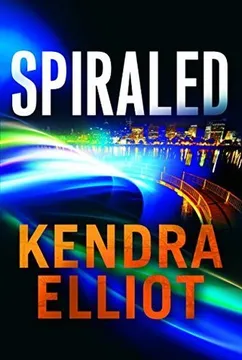


Plot Summary
Ava's Morning Turns Ballistic
FBI agent Ava McLane is leaving an outdoor mall after yoga with Misty, an eighteen-year-old from her class, when a rifle shot tears into Misty's thigh. Ava recognizes arterial bleeding, ties a tourniquet from Misty's purse strap, and drags her behind a sunglasses kiosk. The shooter moves through the mall in black clothing and a mask, firing at people and checking his watch.
Ava spots him aiming toward fleeing women, but her own weapon is locked in her car. She calls emergency services, gives police his description and direction, and stays beside Misty rather than escape alone. When another man is shot nearby, the danger becomes immediate, not distant: the gunman has seen Ava and Misty, and their thin cover may not hold.
Ava's professional training gives her a clear task when panic could otherwise take over: stop the bleeding, find cover, report what she sees. Yet competence does not make her invulnerable. Her weapon is out of reach, and her choices are constrained by Misty's injury. The scene defines courage less as fearless action than as refusing to abandon someone whose survival depends on her. That decision also establishes the emotional cost of Ava's work for Mason, who can only wait outside and imagine the danger.
The Man Who Walked Out
A masked gunman enters the men's room at the end of the mall corridor, where several people are trapped. Police teams advance past Ava and Misty, order the occupants out, and clear the bathroom after the gunman apparently shoots himself.
A medical team carries Misty away; Ava learns that her tourniquet likely saved her life. Outside, her partner Mason Callahan has been terrified by her silence, recalling an earlier kidnapping that left both of them shaken. He embraces her when she emerges, then returns to the investigation.
Four people have died, including the man Ava watched fall, and the incident leaves survivors and witnesses traumatized. Ava later admits the gunman aimed at her but did not fire, a detail she initially withheld to spare Mason further worry.
The apparent suicide offers a clean ending to the immediate emergency, but it cannot answer why the violence happened or restore the people it injured. Ava's withheld detail shows how intimacy can become another site of protection: she tries to manage Mason's fear by limiting what he knows, while he needs honesty to understand the risks they share. Their bond is loving but not insulated from the habits their work encourages. Even after Ava is physically safe, the investigation and the emotional aftermath continue.
A Name Without a Motive
A tattoo description leads Justin Yoder's mother to contact investigators, and dental comparisons confirm that the dead gunman is her twenty-year-old son. Mason and his partner Ray Lusco search Justin's bedroom and interview his parents, finding no weapon or clear plan.
Justin had struggled with depression since his teens and saw psychiatrist Colum Beck, but Beck describes no warning of violence. Justin's parents believed he was taking prescribed medication and attending regular therapy.
His friend Cole Hooper later says Justin often discarded the medication and complained about therapy, while the autopsy finds no medication in his system. Justin had recently talked about moving out with friends, but nothing in these ordinary frustrations accounts for a mass killing. The case gains a name, not an answer.
The investigation resists the comforting idea that catastrophe must have an obvious precursor. Depression, family friction, and uncertain adulthood are real difficulties, but none is proof of violent intent. The conflicting accounts of medication and therapy expose how people can occupy different versions of the same relationship: parents see care being accepted, while a friend sees it being evaded. The absence of a satisfying motive is not a license to invent one. It becomes the investigators' central problem, and it leaves Justin's family with guilt and grief rather than clarity.
Three Shootings, One Uniform
As investigators compare the mall attack with a June shooting in Eugene, another young gunman opens fire at a Troutdale park and kills several people before dying in a restroom. Each case appears to end with its shooter dead, and the latest attacker wore the same black Nike outfit found on Justin Yoder.
Oregon State Police detective Mason and FBI agent Zander Wells help bring the separate county investigations together. Witnesses describe the Troutdale assailant moving calmly, while officials note the similarities in age, weapon, clothing, and apparent suicide.
The Eugene shooter, Joseph Albaugh, had also been treated as the sole perpetrator. The pattern now looks too precise to dismiss, but the investigators still lack evidence that the young men knew one another or that anyone else was involved.
Repetition changes the meaning of the first crime. What looked like three private collapses begins to resemble a designed sequence, and the identical clothing becomes a clue that can be read across jurisdictions. The task force must work against institutional habits that treat each dead suspect as the end of a case. The shootings also show how public fear can make unrelated events feel connected, so the investigators need material evidence rather than resemblance alone. Their collaboration becomes essential because the pattern crosses county lines and exposes the limits of any one department's view.
Clothes Above the Sink
While revisiting the mall with Zander, Ava remembers the third man who emerged from the bathroom and offered help before disappearing without giving a statement. She reasons that someone who left in ordinary clothes must have hidden the black outfit somewhere nearby.
With a janitor's ladder, she and Zander inspect the restroom ceiling and find the missing Nike clothing above the sinks. The discovery overturns the assumption that Justin was the mall shooter: someone else could have changed clothes, killed him, and walked out disguised as a bystander.
The man who spoke to Ava is no longer merely an unhelpful witness. Security footage becomes urgent, and the investigators realize the apparent dead shooters may have been used to absorb blame for a living killer's crimes.
Ava's insight comes from attending to a person everyone else filed away as a witness. Her attention to the gap between the masked attacker entering and the supposed shooter leaving turns a minor irregularity into the case's first physical proof of deception. The hidden clothes are both evidence and a model of the killer's method: a role can be changed, and an audience can be steered toward the wrong actor. The revelation also puts Ava's proximity to the real killer in a new light. He had been close enough to speak to her while she protected Misty.
Jayne's Threat Becomes Real
Ava's twin sister, Jayne, has been sober and living in a halfway house after years of drug use and mental-health crises. During a phone call, Jayne discovers Ava has moved without telling her, spirals into anger, and threatens to kill herself.
Ava, exhausted by repeated threats, argues back and assumes Jayne is manipulating her. The next day, a stranger calls to report that Jayne has been found in a park with cut wrists and a wound to her abdomen after taking narcotics.
At the hospital, doctors stabilize her, but Ava freezes between guilt and the urge to flee. She tells Zander what happened and lets Mason bring her home. Later, seeing Jayne sedated, Ava leaves their mother's ring at her bedside before walking out without knowing what she can promise next.
Jayne's crisis collides with Ava's instinct to rescue, but their history makes rescue feel both compulsory and dangerous. Ava's numbness is not indifference; it is the mind's attempt to stop absorbing a cycle of threat, guilt, and renewed hope. Her choice to leave the ring is a small act of love that does not erase the need for limits. The novel refuses a simple distinction between loyalty and self-preservation. Ava can care about Jayne and still recognize that she cannot control her sister's illness or make every crisis safe.
The Prank That Wasn't
Video confirms Justin entered the mall restroom about ninety minutes before the shooting and later met a tall man who carefully avoided showing his face. Investigators speak with AJ Weiss's girlfriend and acting friend, Simon Goethe, who says AJ had accepted a one-day performance job after seeing a flyer seeking men of a particular height and build.
The recruiter supplied a black outfit and promised a filmed prank. Simon has accepted a similar job and expects to be called to a Starbucks. His description of the recruiter includes scars on the neck, matching the man who offered help to Ava.
Police close the coffee shop before the planned event and keep Simon under protection. The young men were likely lured by the promise of acting work, not knowingly enlisted in murder.
The false-prank premise exploits a familiar social contract: performers consent to staged danger because they believe the audience and outcome are controlled. The killer turns that trust into a weapon, recruiting men who want work and recognition while concealing the real stakes. The victims' apparent participation therefore becomes part of the misdirection, not evidence of shared murderous intent. Simon's cooperation also changes the investigation from retrospective reconstruction to prevention. For the first time, police know where the killer may strike next and can interrupt a plan before another person is placed in danger.
A Decade of Grievance
Ballistics from the Eugene shooting match a bullet used ten years earlier to kill Sharon Silva, a University of Oregon campus police officer. Investigators connect the current victims to women who had worked in law enforcement, including Gabrielle Gower and Anna Luther, while Eugene victim Jennifer Spendlin had taught shooting.
The killer's memories reveal the grievance beneath the pattern. As a boy, he watched his father abuse his mother and blamed the female officer who arrested his father.
Later, after a campus officer named Silva intervened when he harassed a student, he followed her and murdered her. Years on, Spendlin's success at a shooting competition reignited his fury at women who carried authority or skill. His staged attacks turn personal resentment into a public campaign.
The killer's past explains the shape of his grievance without excusing it. He converts childhood exposure to violence into a rigid theory of gender, then treats every woman who contradicts that theory as an offender. His memory of authority is selective: he condemns the officer who intervened, while minimizing the violence that made intervention necessary. The staged mass shootings magnify private resentment into spectacle and exploit familiar assumptions about young male perpetrators. By connecting the victims through their work and competence, the investigation reveals that the apparent randomness was designed to conceal a targeted pattern.
A Trap Without a Target
Police stake out the Starbucks where Simon expects to perform, disguising its closure as a power problem so the killer will not know the plan has been exposed. A text tells Simon to wait because the target is late, but no one arrives. Across town, the scarred killer sees Ava near the closed shop and realizes she may have disrupted his setup.
He abandons the planned prank and follows her to the Rivertown Mall, where she attends yoga. He has already decided that women in authority deserve punishment, and Ava has become the person who exposed his disguise. When she leaves class early, she spots the man who once offered help. He reaches for a weapon; Ava drops her belongings and runs toward the less crowded part of the mall.
The failed sting exposes the danger of partial knowledge. Police have disrupted one location, but the killer can improvise because his motive is not limited to completing a single staged event. Ava's role shifts from investigator and witness to personal target, making the case's gendered violence immediate. Her decision to run is tactical rather than cowardly: she has no weapon and tries to move the gunman away from crowds. The scene also punctures the illusion that planning guarantees control. Both sides are reacting under pressure, and the next outcome depends on seconds of judgment.
The Hardware Store Hunt
The killer shoots a mall security guard while pursuing Ava into a home-improvement store, where she searches the aisles for cover and a weapon. He shoots an employee in the foot and uses her as a hostage while demanding that Ava come out. With police teams advancing through the building, Ava realizes the hostage may die if she waits.
She steps into the aisle and swings a heavy gardening tool into the killer's shoulder. He fires wildly, and the wounded woman escapes. Officers rush in and shoot the killer as Ava falls with a bullet wound in her side. Mason reaches her as paramedics take over. The man is identified as Travis Meijer, ending his attacks, but Ava's injury leads to emergency surgery and a dangerous infection.
Ava's final confrontation is not a clean victory. She acts to protect another woman, but the close-range struggle leaves her wounded and the outcome depends on the police team's intervention. Her improvised tool reverses the killer's fantasy of control: the woman he expected to command makes a choice he did not anticipate. Yet the violence leaves lasting bodily consequences, and survival is not the same as immediate recovery. The scene completes the suspense plot while refusing to treat trauma as a switch that turns off when the assailant is dead.
A Ring After the Ruins
Ava survives surgery and a serious infection, but a month later she has not returned to work and feels detached from Mason. Investigators establish that Travis Meijer used acting-flyer scams to recruit unwitting young men, then murdered them and staged their bodies as the shooters.
His home contains lists and photographs of women officers, while old records show that two victims had contacted his call center before their deaths. Jayne is alive and receiving intensive treatment, with contact restricted during her recovery.
Ava cannot solve her sister's illness or erase what happened at the mall, but she recognizes how much Mason has stayed beside her. At a park overlook, she tells him she wants to marry him. He gives her the ring he bought months earlier, and she accepts.
The resolution is deliberately modest beside the scale of the crimes. The investigation can identify Meijer's method and victims, but it cannot answer every question about his motives or undo the losses. Ava's recovery remains unfinished, and Jayne's treatment proceeds beyond Ava's control. Her engagement to Mason is not a cure for either condition; it is a choice to build a future without demanding certainty first. The book closes by shifting from surveillance and threat toward mutual commitment. Ava's agency now lies not in solving every crisis, but in deciding which relationships and responsibilities she can carry.
Analysis
Spiraled builds its suspense around a manufactured public story. Each attack appears to have a young male perpetrator who commits mass murder and then dies by suicide. The repeated black outfit, the public spectacle, and the familiar news pattern make that explanation feel complete. Ava's discovery of the hidden clothes breaks the frame: the apparent endings were staged, and the person who seemed to leave as a witness was the surviving author of the violence. The novel's procedural mystery is therefore also a study of how easily an audience accepts a visible role as truth.
Travis's misogyny is rooted in a childhood shaped by domestic abuse and his father's arrest, but the narrative does not treat injury as destiny. Travis converts grievance into ideology, then uses that ideology to authorize choices that harm others. His history clarifies his fixation without absolving him. The targeted women are not symbols alone; their work, skill, and ordinary lives matter, and the killer's effort to reduce them to obstacles exposes his need to control the story as much as the people in it.
Ava's personal arc offers a more difficult account of care. She can save Misty, read a crime scene, and help stop a killer, but she cannot make Jayne recover by loving her harder. Jayne's crisis forces Ava to confront the difference between devotion and responsibility without pretending the distinction will feel clean. Mason's steadiness provides companionship rather than a cure. Ava's eventual engagement is meaningful because it comes after fear, injury, and uncertainty, not because those experiences disappear. The novel's central claim is grounded in action: survival depends on help from others, but a life cannot be built by taking responsibility for every person one loves.
Review Summary
Spiraled received mixed reviews, with an average rating of 4.30 out of 5. Many readers praised the suspenseful plot, fast-paced action, and strong character development. The story follows FBI Agent Ava McLane and Detective Mason Callahan as they investigate a series of mass shootings. Some readers found the plot predictable, while others enjoyed the twists. Critics noted issues with Ava's characterization and the recurring theme of her being targeted. The relationship between Ava and Mason was generally well-received, though some felt the romance was underdeveloped.
People Also Read



Characters
Ava McLane
The observant FBI agentAva is a skilled FBI agent whose composure comes from preparation, close observation, and a strong reflex to protect people in immediate danger. Her relationship with Oregon State Police detective Mason Callahan gives her a place to set down some of that vigilance, though she sometimes withholds difficult facts to spare him worry. Her twin Jayne's instability has taught Ava to love cautiously and to distrust temporary calm. Ava is neither detached nor endlessly resilient; she becomes overwhelmed when work, danger, and family demands converge. What drives her is the belief that people deserve practical help, but the story presses her to distinguish helping someone from carrying responsibility for every choice they make.
Mason Callahan
Ava's steadfast state detectiveMason is an Oregon State Police major-crimes detective, Ray Lusco's partner, and Ava's devoted partner. He is patient with victims and meticulous at scenes, but he is most vulnerable when Ava's safety is beyond his control. His past experience as a father and as a partner in dangerous work gives him a practical tenderness, although he can be blunt when he believes Ava is neglecting herself. He tries to make room for her independence without pretending he does not fear losing her. Mason's loyalty is expressed through attention: he notices her exhaustion, remembers what steadies her, and stays present even when he cannot repair what hurts her.
Travis Meijer
A scarred, controlling manTravis is a socially isolated man with visible burn scars and a rigid belief that men should hold authority over women. He interprets correction as humiliation and disagreement as a threat to his control. His childhood was shaped by domestic violence, his father's removal from the household, and his mother's later anger and demands. Rather than examine those experiences, he turns them into a private ideology that treats women's independence as an offense. Travis is methodical and capable of planning, but his self-image depends on others submitting to his version of events. His calm surface hides a brittle need to dominate whenever reality contradicts his beliefs.
Jayne McLane
Ava's volatile twinJayne is Ava's identical twin, a recovering addict whose periods of stability coexist with serious mental-health struggles. She can be funny, warm, and talkative, which makes her sudden shifts into anger and despair especially destabilizing for Ava. Jayne longs for connection and sees her sister as a dependable anchor, yet she often demands closeness in ways that injure the very relationship she wants to preserve. Her history teaches Ava that love cannot guarantee safety or steady recovery. Jayne is more than a source of crisis: she is a person trying to live with an illness, while those closest to her struggle to help without losing themselves.
Zander Wells
The sharp FBI colleagueZander is Ava's FBI colleague, a low-key investigator with an exceptional memory and strong technical instincts. He contributes federal resources to the joint task force and includes Ava in the work when he knows she would struggle to remain uninformed. He is observant about trauma as well as evidence, and he encourages witnesses to seek help rather than dismissing their distress.
Ray Lusco
Mason's perceptive partnerRay is Mason's partner in the Oregon State Police Major Crimes division. He is an experienced interviewer whose size and warmth can put witnesses at ease, and he often supplies the human reassurance Mason finds difficult to express. Ray is also a father, so the presence of children near violence lands personally for him.
Shawn Shaver
The county task-force leadShaver leads Washington County's Violent Crimes Unit and coordinates investigators across agencies. He is practical, direct, and willing to use outside expertise when a case exceeds local resources. His humor does not blunt his seriousness about victims or the urgency of preventing another attack.
Misty Helm
Ava's injured yoga classmateMisty is an eighteen-year-old from Ava's yoga class. Young and frightened when violence erupts, she depends on Ava's first aid and calm decisions. Her injury brings the danger close to Ava and gives her an immediate reason to stay rather than flee.
Walter Borrego
The observant yoga witnessWalter is an older regular in Ava's yoga class, coping with arthritis and hearing loss. Trapped in the men's room during the attack, he supplies investigators with a careful account of the gunman's movements. His fear does not prevent him from trying to help others.
Steve Jordan
A protective fatherSteve is a stay-at-home father who takes his young son Chase to the mall playground. When the gunman enters the restroom, Steve must make an instant choice between helping Ava and getting his child to safety. The experience leaves him wrestling with guilt even though his first duty is clear.
Justin Yoder
A young man in crisisJustin is a twenty-year-old who lives with his mother and stepfather and works at a family-entertainment venue. He has struggled with depression, drifted between interests, and felt uncertain about his future. His parents, psychiatrist, and closest friend each know different parts of his life, making it difficult to assemble a reliable picture of his state of mind.
Joseph Albaugh
The Eugene case's young manJoseph is a University of Oregon graduate who works long hours and spends freely on electronics and other interests. His relatives and friends remember him as sociable and generous, while his persistent headaches trouble him. Those conflicting impressions make him difficult for investigators to understand.
AJ Weiss
An aspiring actorAJ is a young man with a marketing background who also pursues acting work. He is close to his girlfriend and keeps searching for short-term jobs while trying to establish himself. His easygoing manner gives people little reason to suspect how much uncertainty he carries.
Cole Hooper
Justin's loyal friendCole has known Justin since middle school and remains his friend through shifting interests and changing moods. He is a busy college student supporting himself with two jobs, and he recognizes that Justin's life has followed a less settled path. His loyalty does not keep him from offering investigators uncomfortable details.
Simon Goethe
The actor who cooperatesSimon is an aspiring actor who looks for paid work through postings and performance groups. He is enthusiastic about the promise of a filmed prank and initially keeps details private because he believes secrecy is part of the job. Once he understands the risk, he helps investigators.
Sharon Silva
A campus police officerSharon is a University of Oregon police officer whose work brings her into contact with students in vulnerable situations. She is alert to harassment and willing to intervene when someone is being pressured. Her professional confidence and sense of duty place her in the path of a man who resents female authority.
Jennifer Spendlin
A skilled shooting instructorJennifer teaches at a shooting range, including women-only and advanced classes. Colleagues regard her as capable and well liked. Her confidence with firearms challenges assumptions about who belongs in that field, making her work significant to the case's pattern.
Gabrielle Gower
A former patrol officerGabrielle previously served as a patrol officer in Medford and later pursued a business degree. Her professional history connects her to a wider circle of women who have worked in law enforcement, even after leaving the field.
Anna Luther
A retired county deputyAnna is a retired Yamhill County deputy who walks regularly with a close group of friends. They remember her as cheerful and generous with encouragement. Her ordinary routine reflects the many community ties built over a lifetime of public service.
Colum Beck
Justin's psychiatristDr. Beck specializes in children and young adults and has treated Justin for several years. He takes depression seriously and adjusts treatment over time, but his professional view of Justin differs from what Justin's friend reports. He is careful not to claim certainty about a patient's inner life.
Tana Britton
A witness and young motherTana is a mother of three young children who relies on local parks to give them room to play. She is attentive to her surroundings and acts quickly when she senses danger. Later, she works with investigators to recall the details she saw.
Kari Behling
AJ's devoted girlfriendKari is AJ's girlfriend and knows his ambitions, job searches, and acting interests. Her account of the clothing allowance helps investigators understand what kind of work AJ believed he had accepted.
Sally and Eric Yoder
Justin's parentsSally and Eric raised Justin together, with Eric adopting him after marrying Sally. They seek medical care for Justin and try to give him stability, but their knowledge of his private struggles is incomplete. Their grief is mixed with questions about what they could have noticed.
Plot Devices
The fake prank casting
A trap disguised as workThe killer posts acting jobs for young men of a particular build, then presents the assignment as a filmed prank. The promise of a quick paycheck and possible future roles appeals to people trying to establish themselves. Secrecy appears to be an ordinary condition of a surprise performance, so recruits have little reason to discuss the job with family or friends. In reality, the arrangement places them inside a staged crime and helps the killer conceal his own identity. Simon Goethe's similar booking shows how this method can be interrupted before another recruit is harmed.
The black Nike clothing
A false uniform for blameBlack athletic clothing gives the public attacks a repeated visual signature, while hidden replacement outfits let the real assailant leave as an ordinary witness. At Rivertown Mall, Ava's discovery of clothing above the restroom sinks proves that the apparent shooter may not have been the person firing the weapon. Similar clothing at another scene links the cases and directs investigators to compare evidence. The outfit is both a clue and a disguise: it makes separate events look like the work of similar young gunmen while hiding the person who survives them.
Mall surveillance footage
A silent witness to planningThe mall's camera network gives investigators a record of movement that witnesses cannot fully recall. Footage shows Justin entering the restroom well before the attack and later meeting a tall man who studies the corridors and camera positions with him. The same recordings trace the supposed witness leaving, though poor angles conceal his face. Video cannot explain what either man believed, but it exposes timing, preparation, and gaps in the official account. Ava and Zander combine it with the hidden clothing to turn an implausible suspicion into a workable theory.
The old ballistics match
A decade-old linkA bullet from the Eugene shooting matches evidence from the unsolved killing of campus officer Sharon Silva ten years earlier. The comparison connects the latest attacks to a victim who initially seemed unrelated and redirects attention toward women in law enforcement. Gabrielle Gower and Anna Luther, along with shooting instructor Jennifer Spendlin, give investigators a pattern of professional skill and authority. The ballistics do not explain the killer's grievance by themselves, but they establish that the new violence belongs to a longer history rather than a sudden cluster of copycat crimes.
About the Author
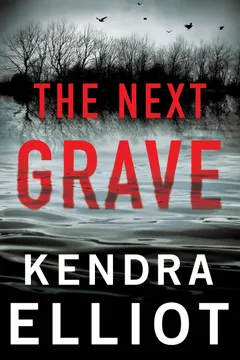
Other books by Kendra Elliot

Download PDF
Download EPUB
.epub digital book format is ideal for reading ebooks on phones, tablets, and e-readers.








