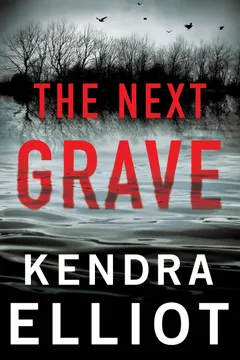


Plot Summary
The Badge in the Trunk
Detective Evan Bolton follows junkyard owner Silas Moon to a battered Camry and finds a bound, decomposing man in its trunk. A bullet hole marks the forehead; a sheriff's badge beneath the body identifies the victim as Rod McLeod, Evan's retired mentor and closest friend. Evan is shaken by the discovery and by the voicemail he has not returned from Rod's daughter, Sophia.
He calls her, but gets no answer. When Detective Noelle Marshall reaches Sophia's home, she finds broken glass, blood across the bathroom, and signs of a violent struggle. Sophia and her twelve-year-old son, Zack, are gone. The separate crime scenes suddenly look connected, and Evan takes charge of the search while fearing he has already failed Rod's family.
The crime scene makes private grief part of the investigative machinery: Evan cannot identify Rod without also confronting his own missed call to Sophia. His guilt is specific and immediate, not a generalized burden, and it threatens to blur the distinction between what he owes his friend and what the evidence can establish. The body in a junkyard trunk also gives the case a deliberate public ugliness. Rod's badge turns a familiar symbol of authority into evidence of vulnerability, while Sophia's emptied home expands the murder into a family crisis that Evan cannot solve by mourning alone.
Thor Follows the Gully
Rowan Wolff, a search-and-rescue handler, cuts short a training weekend after Evan tells her Rod has been killed and Sophia is missing. At Sophia's house, Rowan gives Thor a piece of Sophia's clothing and follows him through the backyard and down a gully to a new construction site.
There Thor loses the trail, suggesting the abductors transferred Sophia to a vehicle. Zack then arrives home from two nights at a friend's, alive and unaware of the deaths.
Rowan tells him his grandfather is gone; he recognizes that Rod was probably murdered and worries the same person has his mother. With social services unable to offer a suitable home, Rowan persuades Noelle to place Zack with Evan's sister, Bridget, where he can stay among familiar children and animals.
Rowan's work depends on reading a dog's body rather than forcing a preferred answer from it. Thor's trail ends at the construction site, and that failure is useful: it narrows the abductors' route without pretending to locate Sophia. Rowan then shifts from search specialist to emotional caretaker, telling Zack the truth about Rod because Noelle cannot yet manage the conversation. Her practical insistence that he stay with people and animals he knows counters the impersonal logic of emergency placement. In this section, care is not an alternative to investigation. It is one of the conditions that lets a frightened child remain safe enough to help.
Rod's Missing Files
Evan enters Rod's tidy townhouse and finds no sign of a struggle, but the home office has been disturbed. Rod's computer tower is missing, a key has been left in a filing cabinet, and several files are gone. The remaining folders contain photocopies of solved cases, including investigations Rod had not personally handled. Their selection makes no obvious sense.
Evan and Noelle begin checking Rod's work and acquaintances while Evan learns that Sophia's ex, Charlie Graham, has left prison early. At the office, detectives discover that the archived cases do not share a clear suspect or date pattern. Rod seems to have been pursuing something outside his official caseload, but the missing files conceal the most important part of his search.
Rod's office turns his familiar neatness into a crime-scene clue. The key left in the cabinet matters because it violates a routine Evan knows intimately, and the missing files matter because the surviving records are too orderly to be random clutter. Yet the files resist the simple explanation that Rod was revisiting his own cases. This uncertainty invites a psychological reading of his retirement: he has not stopped working, but he has moved his work beyond ordinary supervision. Evan must treat loyalty carefully. His knowledge of Rod's habits is an investigative advantage, but it can also encourage him to read every irregularity as meaningful before he knows what it means.
Gunfire at the Body Shop
Evan and Noelle find Charlie Graham working at an auto body shop and ask where he was around the time of Rod's death and Sophia's disappearance. Graham reacts angrily when Evan mentions Sophia, but his employer and halfway-house records later support his account that he was at work and then at home.
Before the detectives can make sense of his response, a concealed shooter fires from a nearby line of trees. Graham is hit in the arm; a second bullet passes close to Evan's head. No one sees the gunman, and the shots leave the detectives unsure whether Graham or Evan was the intended target. The attack raises the stakes and suggests that someone is willing to kill while the investigation is active.
The shooting disrupts the familiar interview-room division between questioner and suspect. Evan's deliberate provocation of Graham does not produce useful truth; instead, it places the detectives in open ground when an unseen shooter acts. Graham's criminal history makes him an easy focus for suspicion, but his strong alibi and his own wound complicate that shortcut. The sequence also introduces a central vulnerability in Evan's professional identity: he is trained to assess danger, yet the threat comes from outside the frame of his investigation. The missing shooter becomes more than a clue. It is an early demonstration that the investigators may be observed and outmaneuvered.
Cash and a Bullet
Bank footage shows Sophia withdrawing ten thousand dollars from Blossom Bounty's business account on Friday. Her tense movements and forced smile suggest she was under pressure, though the detectives cannot tell whether she acted freely.
They learn she had a boyfriend, Ian Martin, whom she introduced to Rod at dinner, but Ian says their relationship ended before he flew to Boston. At Rod's autopsy, medical examiner Natasha Lockhart finds extensive bruising, cuts, rope marks, and cigarette burns like the scars Charlie once inflicted on Sophia.
Rod had been tortured, his tongue removed, and shot twice at close range. One bullet remains beneath his scalp, giving the investigation a chance to identify the weapon. Evan leaves the examination shaken but returns to witness the findings.
The section replaces the investigators' initial assumptions with evidence that resists clean interpretation. Sophia's cash withdrawal could indicate coercion, but the footage cannot reveal who controlled the situation. Ian's absence and Charlie's history each offer plausible narratives, neither yet supported enough to settle the case. Natasha's autopsy makes the cost of uncertainty physical: Rod's body records both deliberate torture and a close-range execution. Evan's decision to return after becoming ill shows how professional duty can demand exposure to grief rather than emotional invulnerability. The recovered bullet offers a technical path forward, but it cannot answer the deeper question of what Rod was forced to know.
Fire at Rowan's House
While Rowan is away, someone breaks windows at her home and throws burning devices inside. She returns to find smoke filling the house and rushes to save Thor, who is trapped in the basement. Rowan breaks a small laundry-room window, crawls through glass, moves a heavy dryer beneath it, and helps firefighters pull the dog outside. Cuts and embedded glass send her to the emergency room.
Evan reviews their security footage and sees a passenger in a dark truck throw the devices, carefully keeping his face and the license plate out of view. The truck's appearance resembles Rod's missing Ford. Rowan and Evan lose their home and belongings, and Evan begins to suspect that the arson is tied to the attacks on the investigation.
Rowan's rescue of Thor is a concrete expression of the same trained persistence she brings to searches, but here the skill is driven by attachment rather than procedure. She risks injury because the dog is not an abstract responsibility; he is family. The fire also forces the couple out of the space that had become their shared home, turning a private refuge into evidence of a wider threat. The camera footage offers partial knowledge: it confirms planning while withholding identity. The possible match to Rod's truck links the personal attack to the investigation, but leaves open whether Evan is being targeted for his casework or for something he has not yet discovered.
Tara in the Trees
Police find Sophia's Subaru at the Todd Lake trailhead and bring Thor in to search, but he finds no trail leading away from the car. Two hikers then report a dead woman farther along the path. The victim is Tara Tilson, Sophia's business partner, whom Evan had spoken with the day before. Tara's body bears a forehead wound like Rod's, linking the murders more directly.
Soon afterward, divers recover Rod's Ford from a lake outside Bend. Its license plates are gone, but the vehicle identification number confirms it is his. The truck's custom wheels also match the vehicle in Rowan's fire footage. Investigators now have a stronger connection among Rod's murder, Tara's death, and the attack on Evan and Rowan, but Sophia remains missing.
The discovery of Tara changes the emotional meaning of the earlier phone call. She was not merely a business contact who withheld information; she is now a victim whose silence may have been shaped by fear or loyalty. The matching forehead wounds and the recovered truck offer a visible pattern, but the pattern does not yet explain who is responsible or why. Thor's failure to find a trail is equally important. Search work can produce an absence that rules out a route, even if it cannot retrieve the missing person. The investigators gain physical links while losing the comfort of imagining that the threat is confined to Rod's murder.
The Golden Goose Visit
A phone-location search reveals that Rod visited Deer Ridge prison shortly before his death. Evan and Noelle interview Damian Collinson, a convicted jewelry-store robber whose case file was among Rod's unexplained copies.
Collinson recalls Rod asking him to reconstruct the Golden Goose robbery in unusual detail, especially moments when Collinson left camera view. Rod also asked whether he knew Charlie Graham. The visit yields no clear motive, but it confirms that Rod was personally probing one of the old cases.
Evan still cannot identify what the archived files have in common, and no suspect emerges from the prison conversation. The questions deepen rather than close the mystery: Rod had discovered something, and he was gathering information in secret.
The prison visit is a negative result with structural value. Collinson does not reveal a hidden partner or a secret crime; instead, his account proves that Rod's inquiry was active and unusually focused. The detective's method suggests he was testing an existing theory rather than casually reminiscing. That distinction changes how Evan reads the copied files: they may be a map of a current investigation, not a collection of retirement souvenirs. The scene also complicates the moral categories attached to crime. Collinson is candid about his guilt, while Rod's private methods remain opaque. The story asks the reader to distinguish between certainty about a past offense and uncertainty about the institutions that recorded it.
Evidence Turns on Evan
Forensics reports Evan's fingerprints on objects in Rod's office and on the broken glass and bathroom counter at Sophia's home, places he says he never touched. Investigators also connect his name to an online listing for Rod's missing computer tower. Lieutenant Louis Ogden suspends Evan and takes his badge, weapon, and work phone.
Evan tells Noelle he believes someone inside law enforcement is framing him. Before he can explain the situation to Rowan, he disappears. A masked assailant strikes him outside Rowan's parents' home and carries him away. Evan wakes chained in an isolated shed, where his captor, Dale Forbes, blames him for an old case that ruined Dale's life.
The frame-up attacks Evan at the point where his selfhood and occupation overlap. Losing his badge is not simply a practical obstacle; it is an institutional judgment that he may have betrayed the work he understands as moral duty. The planted evidence is designed to make his truthful account sound self-serving, while the Craigslist listing supplies an apparently ordinary corroboration. His suspicion of an insider is rational but costly, because it isolates him before he can fully share it. Dale's grievance then reveals how the same institutions can be experienced differently: Evan sees an investigation, while Dale sees a permanent verdict imposed by police, courts, employment, and public opinion.
Zack Vanishes Too
While Evan is captive, Zack disappears from Bridget's ranch. Rowan brings Thor to search the area, and the dog tracks Zack more than a mile into the woods before the scent ends at a service road. Fresh footprints show Zack walked beside someone larger. The FBI joins the search, but Rowan cannot reach Evan, and Noelle reveals that his department suspended him.
Days later, hikers find Sophia alive in the woods, badly injured and dehydrated. At the hospital, Sophia explains that Rod had warned her about a dangerous investigation and told her to leave him behind if their home was attacked. She fled, but the captors later seized her and used a false ransom demand to lure her into their hands.
The disappearance of Zack makes the threat generational: the boy is no longer protected by distance from the adult investigation. Rowan's tracking identifies a likely vehicle transfer, yet the trail's end leaves her with knowledge but no rescue. Sophia's recovery brings relief without resolution, because she is physically safe while her son remains missing. Her account clarifies Rod's precautions and recasts his secrecy as an attempt to protect his family, not simple distrust. It also exposes the cost of protection: Sophia followed his instructions without understanding the whole plan, and the resulting isolation made her vulnerable. Rowan's fear for Evan continues alongside the search for Zack, with no confirmation that either man is alive.
JB Names the Grudge
At the hospital, Sophia tells detectives that her masked captors demanded evidence Rod supposedly hid. Investigators arrest Jeremiah Bradley Fry, known as JB, a relative of the woman who owned the property where Sophia was held. JB admits that a man called Sid involved him in Rod's capture and murder, then used him to abduct Zack.
Before JB can provide Sid's last name, a sniper shoots him through the head outside his apartment. Noelle and Rowan then visit JB's sister, Cynthia, an evidence technician. Cynthia identifies Sid as Dale Forbes and admits she planted a gun in Dale's old manslaughter case after he blackmailed her. Rod and Evan had investigated that case, and Rod had recently begun asking questions about it.
JB's unreliable memory makes his testimony both frustrating and consequential: he circles back, forgets questions, and still reveals the chain connecting Rod, Sophia, and Zack. His murder demonstrates that the captor can reach beyond the holding site and silence a witness with precision. Cynthia's confession widens the scandal from one vengeful man to a compromised evidentiary process. Her fear for her daughter explains her choices without absolving them; the planted gun helped a guilty story look legally complete. The sequence's moral pressure comes from that distinction. Coercion can narrow a person's sense of options, but professional authority also creates obligations to refuse, report, and preserve evidence.
The Abandoned Powerhouse
Police raid the property where Sophia escaped, but Sid has already moved his captives. Searchers find torture tools and a grave, not Evan or Zack. At the sheriff's office, Rowan's brother Malcolm recalls an abandoned hydroelectric plant near one of Sid's former work areas. Rowan and Malcolm drive there and find Sid's truck wedged among the trees.
They hear Zack screaming inside the building. Malcolm rushes down the slope before police arrive; Sid shoots him in the leg and takes Rowan captive when she follows. Inside, Rowan finds Evan and Zack bound and battered. Sid has planned to use them against each other, while Rowan's sudden arrival gives him a new target and leaves the captives waiting for rescue.
The failed raid turns procedural competence into a race against an adversary who can relocate faster than the investigation can respond. Malcolm's knowledge of the landscape supplies the lead, but his trauma makes him act before backup arrives. Rowan's decision to follow him is likewise emotionally legible and strategically dangerous: she cannot leave her brother alone, yet entering the site gives Sid another hostage. The abandoned powerhouse concentrates the book's recurring contrast between visible evidence and hidden harm. Outside, the truck marks the location; inside, the bindings and injuries reveal what the official search has not yet reached. The section ends with knowledge finally converging on the captives, but at the cost of putting Rowan in immediate danger.
Noelle's Shot Through the Grate
Sid threatens to kill Zack and Rowan while forcing Evan to watch. Evan tries to redirect Sid's attention toward himself, but Sid prepares to shoot Rowan. Outside the powerhouse, Noelle has arrived with the responding team and spots the threat through a grated window. She fires through it, killing Sid before he can pull the trigger.
Officers cut the captives free and reach Malcolm, whose severe leg wound has been controlled with Rowan's belt as a tourniquet. Evan learns that Sophia survived and that Zack can see his mother again. Rowan, Evan, Zack, and Malcolm are all alive, though injured and shaken. Noelle saves the hostages, but the shooting leaves her carrying the emotional cost of killing a man at close range.
The climax resolves through coordinated attention rather than a solitary act of heroism. Evan's attempt to draw Sid's focus protects the others only temporarily; Noelle's position outside the building makes the decisive intervention possible. Rowan's tourniquet, Malcolm's discovery of the site, and the officers' response are all necessary parts of survival. The rescue does not erase the violence that preceded it. Evan and Zack have endured captivity, Rowan has witnessed her brother bleeding, and Noelle has had to kill Sid. The ending therefore grants physical survival without pretending that trauma ends at the moment restraints come off. Relief arrives as a fragile beginning, not a return to the lives they had before.
Epilogue
A week later, Evan and Rowan are staying with her parents while recovering. Rod's memorial has brought his friends and colleagues together, but the question of what he was hiding remains. In mail from Rod's home, Evan finds an envelope postmarked three days before the murder.
Inside are photographs of JB posing with the engraved gun Cynthia planted in Dale's case, plus a memory card containing the originals. Rod had mailed the proof to Evan because he trusted him to understand it. Evan and Rowan decide to rebuild Rowan's burned home as a place belonging to both of them. With Thor close by, they begin to imagine a future that includes grief but is not governed by it.
The final evidence arrives through an intimate act of trust rather than a dramatic confession. Rod's photographs connect JB to the planted gun and explain why Dale feared that his old case could be reopened. Mailing them to Evan made the evidence harder to seize and made Evan the person who could interpret it, though that confidence also left him exposed. The letter's personal affection complicates the investigative revelation: Rod trusted Evan as a detective and loved him as family, but still chose secrecy over collaboration. Rowan and Evan's decision to rebuild gives the ending a material form. Their home will not restore what the fire destroyed; it will be made deliberately, together, after they have learned how easily safety can be taken.
Analysis
The novel builds its mystery around the difference between evidence and trust. Rod's files, Evan's fingerprints, the recovered bullet, and Thor's scent trails each provide concrete information, yet none is self-interpreting. The detectives must decide what a clue means while resisting the pull of friendship, professional reputation, and fear. That tension becomes especially sharp when planted prints turn institutional procedure against Evan: evidence can be manipulated precisely because people depend on it.
The book also examines protection as a morally complicated practice. Rod withholds his suspicions from Sophia and Evan because he believes secrecy will shield them. Evan follows that example by carrying distress alone, while Rowan's family responds to danger through shared labor and direct care. Both strategies have costs. Secrecy leaves people unable to act with full knowledge; dependence on others exposes them to risk, but creates the relationships that make survival possible.
The captives' ordeal gives the investigation a bodily measure. Rod's torture, Sophia's injuries, and Evan and Zack's confinement are not abstract stakes; they change what the survivors can trust, remember, and bear. The rescue restores their physical freedom but does not undo those experiences. The final letter therefore offers more than a clue. It gives Evan evidence of Rod's affection and confidence, while also forcing him to confront the mentor's choice to keep danger private. Rebuilding the burned home becomes the novel's answer to that inheritance: safety is not a permanent condition, but a shared project that can be chosen again.
Review Summary
The Next Grave receives an overall rating of 4.45/5, with most readers praising its gripping plot, compelling characters, and satisfying twists. Fans of the Columbia River series love following Detective Evan Bolton, Rowan Wolff, and her dog Thor through this personal and intense investigation. Many highlight the clever mystery structure, emotional stakes, and seamless series connections. Critical reviews cite underdeveloped characters, pacing issues, and an underwhelming resolution. The audiobook receives mixed feedback regarding narration style. Most agree it works well as a standalone entry.
Characters
Evan Bolton
A detective under pressureEvan is a Deschutes County detective shaped by a strong sense of duty and a painful history: his younger sister disappeared when he was in college, leaving him familiar with the long uncertainty endured by families of the missing. He is thoughtful about evidence, willing to delegate, and deeply loyal to the people who have taught him. His closeness to retired detective Rod McLeod gives him both professional insight and emotional vulnerability. Evan's relationship with Rowan offers a life beyond work, though his instinct to carry responsibility alone can keep him from sharing fear until it has grown difficult to contain.
Rowan Wolff
A search-and-rescue handlerRowan works with her search-and-rescue dog, Thor, locating missing people across difficult terrain. A previous leg injury limits her speed but has not diminished her confidence or skill. She reads Thor closely, respects his instincts, and understands that a failed trail can still provide useful information. Rowan is devoted to her family and to Evan, though she has learned from a short, failed marriage to guard her independence. Her practical courage appears most clearly when another person or animal is in danger. She does not need to be the official investigator to recognize when a vulnerable person needs protection.
Thor
Rowan's tracking partnerThor is Rowan's black search-and-rescue dog, trained to locate missing people and signal his handler when he finds them. He is energetic, easily bored, and attentive to Rowan's mobility, often checking that she can keep up without losing focus on his task. His sensitivity to scent and body language makes him an essential working partner, but his connection to Rowan is just as important. Thor's calm presence comforts children and adults in distress. He dislikes smoke and fire, a vulnerability Rowan understands from earlier training and one that makes his safety especially important to her.
Rod McLeod
Evan's retired mentorRod is a longtime Deschutes County detective whose mentorship helped shape Evan's methods and confidence. Organized to the point of ritual, he labels his household files and keeps his work arranged in exact patterns. He is protective of his daughter, Sophia, and grandson, Zack, and remains connected to former colleagues after retirement. Rod's loyalty can become stubborn, especially when he believes a person he loves is at risk. His history with Evan is affectionate but demanding: he expects the younger detective to think carefully, accept help, and keep doing the work well.
Sophia McLeod
A mother caught in dangerSophia is Rod's daughter and Zack's mother, an independent woman who runs a florist shop with her business partner, Tara Tilson. She is protective of Zack and wary of the instability created by his father, Charlie Graham. Sophia values her father's advice but also wants a home and life of her own, not one permanently organized around danger. Her close friendship with Tara gives her a trusted source of practical support. She is not simply a relative waiting to be rescued; she is observant, resourceful, and capable of making difficult decisions under pressure.
Noelle Marshall
Evan's investigative partnerNoelle is a Deschutes County detective who shares investigative responsibility with Evan and brings sharp judgment, persistence, and a controlled command of interviews. Her polished manner can make her seem unflappable, but the case exposes how personally she feels the losses around her. Noelle knows when to challenge Evan's assumptions and when to cover for his blind spots. She is also protective of her team, though the pressure of a case involving a fellow officer can test her confidence. Her determination comes from a practical belief that procedure matters because real people depend on it.
Zack McLeod
Sophia's perceptive sonZack is twelve, Rod's grandson, and the person Sophia most wants to protect. He loves bikes, video games, and the family gatherings he remembers with Evan and Rod. Zack notices adult tensions even when no one explains them, and his grandfather's warnings have taught him to take apparent coincidences seriously. He is grieving and frightened, but his curiosity and attachments remain intact. The animals and children at Bridget's ranch give him a measure of ordinary companionship while his family is in danger.
Natasha Lockhart
The medical examinerDr. Natasha Lockhart is the medical examiner responsible for examining Rod and translating bodily evidence into facts the investigators can use. She is precise and professional, though the case reveals her personal connection to Rod and his late wife, Ellen. Years earlier, Rod and Ellen helped Natasha care for her grandmother after Natasha's mother's death. That history gives her reason to grieve, but she remains committed to a thorough examination. Her work illustrates the quiet intimacy of a small professional community, where a victim may also have been a friend.
Tara Tilson
Sophia's business partnerTara runs Blossom Bounty with Sophia and shares a close, trusting partnership with her. She handles much of the shop's business administration, including the accounts placed in her name, and knows Sophia's history with Charlie Graham. Tara is practical and loyal, someone Sophia can turn to when frightened. Her bond with Sophia is close enough to carry emotional weight beyond the workplace, though she may not know every detail of Sophia's private life.
Charlie Graham
Sophia's volatile exCharlie is Zack's father and Sophia's abusive former partner, recently released from prison. He has a history of theft and violence, and his past treatment of Sophia left lasting scars. At the auto body shop, he is trying to maintain a job and comply with parole, while his resentment and temper remain visible. Evan's history with Charlie makes him a natural suspect in the investigation, but the detectives must separate his genuine past crimes from evidence about the present danger.
Malcolm Wolff
Rowan's returned brotherMalcolm is Rowan's older brother, kidnapped as a child and held for twenty-five years before escaping and returning to his family. He is rebuilding a life that captivity denied him, learning ordinary skills and forming close bonds with his siblings and his dog, Zeke. Malcolm's recovery is gradual and supported by routines, family patience, and the freedom to explore. His past gives him a particular sensitivity to the fear and helplessness of children in danger, though those same memories can make urgent situations difficult for him to approach calmly.
Bridget Kerr
Evan's protective sisterBridget is Evan's sister and the mother of Charlotte, Theodore, and Molly. She and her husband, Victor, operate a private, rural ranch that has grown into an animal rescue. Bridget offers Zack a safe, familiar place to stay and works hard to make him feel included without pretending his mother's disappearance is unimportant. Her instinct is to care through practical action, though she is candid about the limits of what she can control.
Cynthia Parnell
An evidence technicianCynthia is a Deschutes County evidence technician and the older sister of Jeremiah Bradley Fry. She is a single mother who values her work and is deeply protective of her daughter. Cynthia's fear of losing her job and family security shapes how she responds to pressure, sometimes leading her to prioritize immediate protection over professional judgment. Her role in the department gives her access to sensitive evidence, while her personal vulnerabilities make her susceptible to people who understand how to exploit that access.
Dale Forbes
A former manslaughter defendantDale Forbes is a man whose past intersects with a manslaughter investigation handled by Evan and Rod. Though he avoided a conviction, the case affected his work and reputation, and he came to see the investigators as responsible for the losses that followed. Dale's grievance is rooted in the gap between legal outcome and personal consequence: being cleared in court did not restore his former life. He is a reminder that perceived injustice can harden into an identity, especially when resentment replaces self-examination.
Jeremiah Bradley Fry
A forgetful local relativeJeremiah, usually called JB, is related to Catherine Woods, the former owner of the isolated property connected to the case. A head injury has left him with memory problems that interfere with his work and daily life. JB is easily distracted, sometimes repeats questions, and depends on other people to make sense of complicated situations. He wants to be useful and accepted, which can make him vulnerable to someone offering money or direction. His imperfect recollections nevertheless carry details the investigators need.
Louis Ogden
Evan's lieutenantLouis Ogden supervises the detectives and is skilled at organizing people and resources. Evan considers him a dependable, if unremarkable, manager who generally supports reasonable requests. When evidence implicates Evan, Louis must act on what the department has in front of it, even as the apparent facts clash with his long experience of Evan's character. His role exposes the strain between personal trust and institutional procedure.
Plot Devices
Rod's case archive
A trail through old casesRod keeps photocopies of solved investigations in carefully arranged files, including cases other detectives handled. Their presence points Evan toward a secret inquiry, while missing folders and a missing computer tower suggest someone is trying to erase or control what Rod found. The archive initially appears to be an eccentric retirement habit. Later, its connection to a disputed manslaughter case explains why Rod was reviewing evidence and why Dale feared exposure.
Thor's scent tracking
A trail with an endpointRowan gives Thor clothing belonging to a missing person, then reads his search pattern to understand where the person traveled. His scent work takes him from Sophia's home through a gully to a construction site, where the trail ends at a likely vehicle transfer. Later, his searches help investigators assess the trail around Sophia's car and the ranch where Zack disappears. Thor's indications are evidence, not magic: he can identify a route or a break in the scent, but cannot always reveal who took the person or where they went.
The planted evidence
A case turned inside outFingerprints appear at scenes Evan says he never touched, and an online listing ties his name to Rod's missing computer. These details make the department treat Evan as a suspect and remove him from the investigation. Later, Cynthia's access to evidence explains how the false trail could be created. The frame-up exploits the very tools meant to establish reliability: prints, property records, and internal trust. It also shows how a technically plausible record can become persuasive even when it contradicts a person's known conduct.
Rod's memory card
Proof mailed beyond reachRod mails Evan an envelope containing a small memory card and printed photographs of JB posing with an engraved gun. The images connect the weapon to the evidence planted in Dale's old case and clarify why Rod had been investigating it. By sending the material to Evan, Rod preserves proof outside his home and places it with the detective he trusts to interpret it. The device resolves the missing evidence question after the rescue while revealing that Rod anticipated danger without explaining his suspicions to the people closest to him.
Columbia River Series
About the Author
Other books by Kendra Elliot


Download PDF
Download EPUB
.epub digital book format is ideal for reading ebooks on phones, tablets, and e-readers.








