

Key Takeaways
Use your Enneagram type as a mirror, not a complete identity.
A useful beginning. The authors begin with a practical question: after discovering a type, what changes? Their answer is that naming a pattern helps reveal how a person reacts, defends, and affects relationships, but insight alone does not undo those habits. In their own family and ministry lives, Adele initially dismissed feedback about interrupting, while Doug denied that his restrained anger was anger. Clare saw her drive but missed its cost; Scott’s wish for peace could become avoidance. Recognizing a type made these patterns easier to discuss, not automatically easier to change.
Practice makes insight usable. The book treats personality as a starting point for noticing and choosing, not a box that explains everything. Its Christian aim is to become more capable of loving God, oneself, and other people through deliberate reflection and spiritual practice.
The book’s strongest opening move is to separate self-knowledge from self-transformation. A label can make a pattern discussable, which is valuable, but it can also become a polished excuse: that is simply how this type behaves. The authors’ candid examples keep the label accountable to its effects on other people. A useful test for any personality framework is whether it increases curiosity and responsibility, rather than certainty about oneself. Here, the type is most helpful when it exposes a behavior that a trusted person has already been trying to name.
Bring head, heart, and gut into the same decision.
Three ways of knowing. The authors group Enneagram types by their preferred center: gut or body for Eights, Nines, and Ones; heart for Twos, Threes, and Fours; and head for Fives, Sixes, and Sevens. They call these GQ, EQ, and IQ. Their Harmony Enneagram links each type with two others so a familiar strength can be balanced by less-used perspectives: Eight with Two and Five, Nine with Three and Six, and One with Four and Seven.
Try a three-part check. Before an important response, ask what the mind thinks, what the heart feels, and what the body instinctively registers. An Eight may retain a clear sense of injustice while adding compassion and reflection. A Three may pursue results while considering loyalty, people, and rest. The goal is a fuller response, not abandoning the type’s strengths.
This model offers a practical antidote to single-channel decision-making. Analysis can miss relational costs, strong feelings can outrun evidence, and instinct can mistake urgency for accuracy. Asking all three questions creates a modest pause in which a person can compare perspectives instead of letting the loudest one win. The model is best understood as a reflective prompt, not a map of three scientifically equivalent brains. Its usefulness lies in widening attention, especially when a familiar strength has begun to dominate the situation.
Interrupt the reflex before it chooses your next move.
A pause with steps. STOP is the book’s short practice for noticing a trigger and recovering choice. It guides a person to look beyond the first interpretation, identify what just activated them, consult head, heart, and gut, and return attention to God and the present situation. The authors stress that a difficult conversation need not be solved in that instant. Even noticing the reaction creates an opportunity to revisit it later with more clarity.
Make it concrete. An Eight who feels challenged can ask how much force the moment really needs. A Nine who wants to withdraw can identify the task or conversation being avoided. A One can notice the bodily tension beneath criticism. The sequence is not a demand to suppress anger or anxiety. It is a way to avoid treating the first impulse as the only available response.
STOP is memorable because it moves from awareness to a choice, rather than requiring a person to feel calm before acting wisely. That matters: a pause can make room for a response even when strong emotion remains. The book also recognizes that reflection may happen after the encounter, which avoids turning mindfulness into another performance standard. Its spiritual language will fit some readers better than others, but the underlying sequence is broadly legible: notice, name, widen perspective, and choose what deserves attention.
Treat childhood defenses as adaptations you can update, not defects.
Old protection, present cost. The book invites readers to look for childhood messages that still shape adult reactions. A child who learned that vulnerability was unsafe may become an Eight who controls or a Five who withdraws. A child whose needs went unnoticed may become a Two who over-gives, a Nine who disappears, or a Three who performs for approval. These are presented as protective adaptations, not proof that a person is fundamentally broken.
Recover what was set aside. The authors call the disowned needs and capacities of childhood the dismissed childlike self. Their exercises ask readers to notice what they learned to hide, what situations still trigger that response, and what support might help. They describe prayer and reflection, while also naming spiritual friendship, coaching, and counseling as possible companions in healing.
This framing replaces moral condemnation with a more useful question: what did this response once help the person survive, and what does it cost now? That shift can create compassion without excusing present harm. The book’s personal histories make the idea vivid, especially when competence or calm was rewarded while emotion, play, or assertiveness was discouraged. A necessary caution is that personality descriptions cannot establish what happened in someone’s childhood. The proposed history should be explored as a possibility, not imposed as an explanation.
Pair each type's gift with its neglected counterweight.
Strength needs balance. The Harmony Triads suggest that growth often comes by developing capacities associated with two other types. The combinations offer a compact guide:
1. Eights add care and reflection; Nines add effective action and commitment; Ones add emotional nuance and play.
2. Twos add boundaries and thoughtfulness; Threes add honesty, loyalty, and rest; Fours add perspective, steadiness, and joy.
3. Fives add warmth and action; Sixes add calm and effective initiative; Sevens add emotional depth and perseverance.
Keep the gift. The point is not to become a different type. The Eight’s courage, the Nine’s peacemaking, or the Seven’s optimism can remain valuable, while a missing perspective helps that gift serve others more wisely. For instance, a Four’s sensitivity can create connection when grounded in steadiness rather than driven by fear of being ordinary.
The counterweight idea is more generous than the usual self-improvement demand to eliminate a weakness. It asks a person to keep what works and add what the habitual style leaves out. In practice, that means an assertive leader need not become passive to listen, and an imaginative person need not stop dreaming to finish a commitment. The pairing is a heuristic, not a prescription that every member of a type has the same blind spot. Individual experience should determine which capacity is actually underused.
Read inner comfort and distress as clues, then test them.
Notice the movement. Drawing on Ignatius of Loyola, the authors use consolations and desolations to describe inner experiences that may help discern direction. Consolation can accompany movement toward love, connection, and freedom. Desolation can reveal fear, resentment, avoidance, or other patterns that narrow a person’s choices. Neither category simply means pleasant equals good or painful equals wrong. Distress may expose a harmful reflex, but it may also show where support or change is needed.
Review the day. The Examen is a reflective prayer that looks back on experience in God’s presence. Readers identify moments that felt life-giving and moments that felt constricted, notice bodily and emotional signals, and consider what those reactions reveal about their motives. The authors encourage tracking recurring patterns over time. A single feeling is evidence to investigate, not an unquestionable instruction.
This approach is valuable because it treats emotional life as information rather than noise or command. A sense of ease may reflect genuine alignment, but it may also come from avoiding a hard conversation. Anxiety may signal danger, or simply the discomfort of trying something unfamiliar. The book’s insistence on testing inner movements is therefore essential. Its religious interpretation will not be shared by every reader, yet the practice of reviewing choices, feelings, and consequences can still support careful self-understanding.
Choose spiritual practices that meet your actual reflex.
A practice, not a checklist. The book offers silence, solitude, breath prayer, body awareness, journaling, gratitude, imaginative prayer, and other disciplines. Each is meant to create space for attention and a different response to an entrenched habit. An Eight might practice slowing down; a Three might practice anonymity and truthful rest; a Seven might fast from a favored distraction; a Two might pause before agreeing to help.
Fit the person and moment. The authors do not present these exercises as quick cures or a universal program. They recommend choosing what fits a person’s circumstances and season. One shared starting point is intentional breathing, which can help someone notice bodily tension and settle attention. The book also cautions that body-focused reflection may be difficult for people with trauma, who may prefer to begin with another center or move at their own pace.
The practical value comes from matching the exercise to the pattern. A discipline that asks someone to do more may reinforce a Three’s overwork, while unstructured quiet may intensify a different reader’s distress. The authors’ invitation to choose carefully is more psychologically realistic than treating spiritual practice as a standardized dose. Their account sometimes speaks confidently about new neural pathways, but the practices do not need an inflated neuroscience claim to be worthwhile. Regular attention, reflection, and supportive relationships are meaningful aims in their own right.
Build empathy by asking what a difficult behavior once protected.
Look beneath the irritation. Each type chapter ends by asking readers to consider how another style may have developed and what it contributes. An Eight’s intensity may make others feel overrun, yet it can also defend people with less power. A Nine’s quiet may seem agreeable, while hiding anger or an unspoken preference. A One’s criticism can sting, while coming from a genuine wish to improve a flawed situation.
Understand without excusing. The book’s stories connect habits to experiences such as being punished for expressing emotion, receiving attention only for achievement, or learning that one’s needs did not matter. Readers are encouraged to notice their own thoughts, feelings, and instincts when hearing these accounts. That reflection can make conflict less personal and help someone respond directly, for example by naming hurt, asking what is wanted, or setting a boundary.
Empathy here is not sentimental approval. It involves holding two truths at once: a behavior may be understandable in light of a person’s history, and it may still cause real harm. That distinction makes empathy useful in relationships because it supports both compassion and clear limits. The book’s stories can widen perspective, but type-based explanations should not replace asking the person what they meant or needed. Curiosity works best when it opens a conversation instead of diagnosing someone from a distance.
Make teams stronger by sharing power among different work styles.
Difference can improve the work. The book applies its framework to organizations, where conflict often grows from clashing expectations, unclear roles, or different ideas about what matters. Gut-centered colleagues may push for action, heart-centered colleagues may protect relationships, and head-centered colleagues may question risks and plans. Each contribution can help, and each can become costly when it controls the whole process.
Design for more than one voice. The authors recommend building teams with varied styles, discussing how people react under stress, and inviting groups to imagine how another center would approach a decision. Their example exercise asks people from each center to describe how the others might respond, then compare those assumptions with the other groups’ actual views. The purpose is not to sort workers into fixed roles, but to make disagreement informative and collaboration more deliberate.
This organizational use turns personality language away from individual labeling and toward coordination. A team that welcomes questions, relational concerns, and decisive action is less likely to mistake one leader’s preference for the only rational way to work. The exercise also makes assumptions visible before they harden into judgments. Still, teams should use type categories lightly: actual expertise, authority, incentives, and workload matter as much as personality. Diversity of perspective helps only when people have enough trust and influence to speak.
Analysis
This book is best read as a Christian practice manual built around the Enneagram, not as a scientific account of personality. Its distinctive contribution is the Harmony Triads model: each type is asked to draw on two other styles, so growth means adding perspective rather than merely correcting a flaw. The book then translates that model into an applied sequence: recognize automatic defenses, connect them to possible formative experiences, practice discernment, and bring greater empathy into relationships and teams. The most compelling principle is that a strength can become a defense when it is used alone. Force can protect the vulnerable or dominate a room. Peace can mediate conflict or conceal resentment. Care can be generous or transactional. Achievement can mobilize a group or turn a person into a performance. This makes the book more relational than many personality guides: behavior is evaluated not only by intention, but by what it does to connection and shared work.
There are limits to the framework. The Enneagram is not a clinical diagnosis, and the book’s type descriptions and childhood narratives should not be treated as validated causal explanations. People may recognize themselves in several descriptions, and labels can create confirmation bias: once a type is assigned, ordinary behavior may be reinterpreted to fit it. The authors themselves advise readers to explore types slowly and not rely solely on an online test. That caution deserves emphasis.
The book also uses neuroscience language to support body awareness and spiritual practice. Brain plasticity and the role of breathing in bodily regulation are legitimate subjects of research, but those findings do not establish that the nine Enneagram types correspond to distinct neural systems or validate the Harmony map. The soundest reading separates useful practices from stronger claims made around them. Slow breathing, reflective review, and attention to bodily cues can help people pause and observe; their meaning still requires interpretation, context, and sometimes professional support.
The framework is most responsible when used as a temporary lens: a way to ask better questions, not a final verdict about oneself or another person.
Review Summary
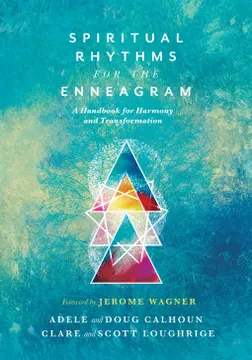
Spiritual Rhythms for the Enneagram is widely praised as a rich, practical resource that goes beyond typical Enneagram introductions. Reviewers consistently highlight its unique "Harmony Triads" framework, which integrates head, heart, and gut intelligences for spiritual transformation. The book's spiritual practices, prayers, and empathy sections receive particular acclaim. Most reviewers recommend prior Enneagram knowledge, noting it is not for beginners. A few found it repetitive or overly complex. Overall, it is regarded as an essential, deeply Christian resource for serious students seeking growth and self-understanding.
Glossary
Harmony Triads
Three-type integration mapA framework that links each Enneagram type to two types associated with the other centers of intelligence. The proposed groups are Eight, Two, and Five; Nine, Three, and Six; and One, Four, and Seven. The purpose is to help a person supplement their preferred way of responding with less-used perspectives.
Harmony Enneagram
Integrated Enneagram mapThe authors’ reorganization of Enneagram connections into three balanced groups that include head, heart, and gut styles. It is intended to show how each type can draw on two additional styles, rather than rely only on its default way of understanding and responding.
IQ, EQ, and GQ
Head, heart, gut knowingThe book’s shorthand for three preferred modes of awareness: IQ refers to thought and analysis, EQ to emotional and relational awareness, and GQ to bodily instinct and agency. The authors use the terms as a practical reflection tool for considering different kinds of information, not simply as conventional test scores.
FLOW
Open, loving presenceAn acronym for a state of freedom from automatic defensive reactions, loving engagement, openness to head, heart, and gut awareness, and presence with God and reality. In the book, FLOW describes a person responding with greater integration rather than tightening around habitual fears, compulsions, or self-protective roles.
STOP
Trigger interruption practiceA brief practice for interrupting automatic reactions. The steps direct a person to widen their view, notice what triggered them without condemnation, consult head, heart, and gut perspectives, and return attention to God and the present situation. It is intended to create room for a chosen response, including after an encounter has ended.
Motions of the soul
Inner movements for discernmentA phrase associated with Ignatian spirituality that the authors use for movements noticed through thought, emotion, and bodily instinct. Attending to these experiences can help a person examine motives and choices in relation to love, connection, and spiritual direction.
Consolations
Movements toward loveIn the book’s Ignatian vocabulary, consolations are inner movements that may accompany greater love, connection, peace, or freedom. They are not defined simply as pleasant feelings. Readers are encouraged to examine whether an apparent consolation leads toward care and spiritual openness or merely satisfies a defensive impulse.
Desolations
Signals of distress or constrictionInner movements associated with fear, shame, anger, disconnection, or other forms of distress. The authors treat them as potentially informative rather than as experiences to hide. Desolation may reveal a defensive pattern or point toward a need for support, reflection, and renewed connection with God.
Examen
Reflective daily reviewA prayerful review of a day or period of time, associated with Ignatius of Loyola. A person recalls moments of life-giving connection and moments of distress, notices emotional and bodily signals, and considers what those experiences reveal about motives, habits, and possible direction.
Welcoming prayer
Prayerful release of controlA portable prayer practice for meeting an experience as it is, rather than immediately trying to control or replace it. The person notices bodily, emotional, or mental reactions, acknowledges the needs beneath them, and makes room for God within the moment. The practice is intended to loosen automatic defensive responses.
True self
Beloved, open identityThe authors’ Christian term for a person’s identity grounded in union with God rather than achievements, social roles, or defensive habits. The true self is described as able to receive and give love, remain present, and act with greater freedom and virtue. It is not an image a person earns or constructs.
False self
Defensive ego identityThe authors’ term for a habitual, self-protective identity organized around roles, approval, control, achievement, or other measures of worth. Under stress, it may appear through denial, withdrawal, overwork, people-pleasing, or criticism. The book treats these patterns as changeable responses, not a person’s deepest identity.
About the Author
Other books by Adele Ahlberg Calhoun

Download PDF
Download EPUB
.epub digital book format is ideal for reading ebooks on phones, tablets, and e-readers.








