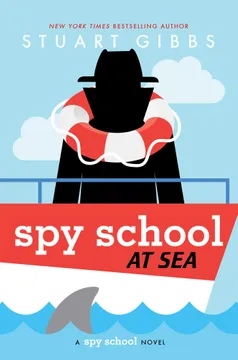


Plot Summary
Prologue
A classified CIA memo sets Operation Deadly Manatee in motion: Benjamin Ripley has found evidence that Murray Hill, a slippery former student turned double agent, is in Nicaragua. The Agency orders Ben, his friend Mike Brezinski, and spy prodigy Erica Hale to track him aboard the Emperor of the Seas, a giant cruise ship bound through Central America.
The memo also hints at the Agency’s habit of sending young trainees into danger, while its cheerful praise of their school conceals a less flattering motive: the mission might improve the principal’s standing with his superiors.
The memo frames espionage as an institution as much as an adventure. Its bureaucratic language turns children into deployable assets, and its praise of the Academy is plainly transactional. The comic fuss over the operation’s name and office refreshments makes the machinery of intelligence look both powerful and absurd. That contrast prepares the reader for a story in which genuine danger repeatedly emerges from systems that pretend to be orderly, professional, and under control.
The Rotko Family Assignment
At the Academy of Espionage, CIA deputy director Indira Kapoor tells Ben, Mike, and Erica that Murray may board the Emperor of the Seas in Nicaragua. The teenagers are chosen because they know his habits and can enter the ship’s youth spaces without raising suspicion.
MI6 agents Catherine and Alexander Hale will pose as their parents, while Ben and Mike become adopted sons in the invented Rotko family. Ben has another reason to dread the trip: he and Mike recently let Erica’s younger sister, Trixie, discover that her family are spies, and Mike has begun secretly messaging her.
Erica has been avoiding Ben, whose crush on her has grown into a friendship she does not know how to trust. The mission promises forced proximity, danger, and a secret Ben cannot keep forever.
The assignment binds professional and private secrecy together before the ship even appears. Ben is not simply concealing a CIA mission; he is avoiding accountability for exposing Trixie to a dangerous family truth. Erica’s discomfort with attachment and Ben’s habit of postponing difficult honesty create parallel vulnerabilities. Their cover as a family makes the mission’s central irony concrete: these agents must perform intimacy while struggling to speak honestly within their real relationships. Ben’s reluctance therefore has emotional as well as tactical stakes.
The Suite That Wasn't Murray's
The Rotkos board through the crowded passenger terminal, while wealthy guests receive private shuttles and a separate deck. On the crossing, Erica steals a hospitality worker’s tablet and checks the ship manifest. It places the supposed guests Harry and Ophelia Butz in the vast Emperor Suite, a name Ben recognizes as Murray’s kind of joke.
Their first break-in instead reveals Jessica Shang, daughter of the imprisoned criminal Leo Shang, and her mother Shayla, who now controls much of his legitimate business, including the cruise line.
Shayla’s security chief, Bjorn Turok, resembles Dane Brammage, a violent enemy Ben believes dead. The family lets the agents search the ship discreetly, but bars them from the bridge and nuclear engine room. A ballroom booking for the International Tulip Growers Association gives the team its next lead.
The ship’s architecture turns wealth into access: elite passengers move through private terminals and guarded decks, while ordinary guests wait in hot queues. That class division gives the spies both a practical obstacle and a map of who can move unseen. Erica’s tablet theft demonstrates competence, but the manifest’s false lead also reminds the team that information is only as reliable as the person who planted it. The Shangs complicate the mission further: their hospitality earns trust even as their control over the ship’s restricted spaces creates suspicion.
The Pirate Party Trap
During the ship’s pirate-themed party, the team uses the crowd and matching costumes to slip toward the ballroom booked under the tulip growers’ name. Erica and Catherine work on its locked entrance while Ben keeps watch, then steps outside to inspect its dark windows. Murray appears beside Dane Brammage, who is very much alive.
Murray admits the banquet booking is fabricated and that he arranged it to lure the agents away from the others. Dane clamps a hand around Ben’s throat, while Murray takes Ben’s radio and threatens him for information. Ben’s attempt to trick the pair with guesses about their scheme fails. Murray decides the ship offers a convenient place to dispose of a body, and Dane throws Ben overboard from the stern.
Murray’s trap exploits the team’s confidence in its own investigative logic. The false banquet is not merely a clue that proves wrong; it is a device that makes Ben’s reasonable suspicion predictable to his enemy. His isolation turns a team operation into a test of personal survival. Murray’s old habit of treating Ben as a rival worth talking to has hardened into a willingness to have him killed, making their history feel newly consequential. The disguise that helps the agents blend into the party cannot protect Ben once he is separated from them.
A Light Over Open Water
Ben hits the Pacific near the ship’s propellers and is spun through the water before resurfacing behind the receding vessel. Cold waves and darkness leave him too exhausted to swim toward shore, and he briefly considers giving up.
Remembering how Erica would keep fighting, he uses the stars to find east and begins swimming. Mike, who noticed Ben’s radio go dead, launches a life raft and searches the sea alone. Ben raises the flashlight he had mistakenly grabbed instead of his mace, giving Mike a beacon to follow.
When a wave pulls Ben under, Mike leaves the raft’s safety line around himself, dives in, and hauls his friend back. They reach the Costa Rican coast at dawn, where a beach crowded with nesting sea turtles leads them to an isolated house.
Ben’s survival depends on a small practical mistake becoming useful: the flashlight he grabbed in place of a weapon becomes the signal that keeps Mike searching. The scene recasts espionage competence as improvisation rather than mastery. Ben’s thought of Erica helps him resist despair, while Mike’s decision to enter the water makes friendship an action with physical cost. The sea turtles offer a striking counterpoint to the boys’ frantic struggle: both are vulnerable in an unfamiliar environment, but only the humans understand how close they came to disappearing.
The Bait Becomes a Choice
The house belongs to a Costa Rican drug trafficker known as El Diablo, but he mistakes Ben and Mike’s pirate clothes and CIA badges for a confused emergency rather than an attack. He feeds them, lends them clothes, and flies them to Manuel Antonio, where the Hales have gone ashore.
Catherine and Erica embrace the boys with unmistakable relief; Erica holds Ben longer than her undercover role requires. Back aboard the ship, the team reports that the ballroom was empty and that no one has found Murray.
Ben realizes the Agency had expected Murray to target him and used him as bait without telling him. Catherine admits the deception and apologizes for the danger it caused. Although she offers to keep Ben hidden, he chooses to stay and help search for Murray.
The reunion exposes two different forms of care. El Diablo’s practical kindness keeps the boys alive, while Catherine’s embrace reveals how closely duty and affection have become entangled. Ben’s anger is justified by the Agency’s concealment, but Catherine’s apology shifts the conflict from betrayal toward repair. His decision to remain is not proof that the deception was acceptable; it is a reclaiming of agency after others made him a tool. The mission becomes something Ben chooses, rather than something done to him.
The Theater's Hidden Hatch
Mike studies the ship’s layout and reasons that the theater, built over the stern, may conceal a route into the engine room. Using crew passes arranged by Shayla, the team enters through cramped staff corridors and slips beneath the stage during a storm-delayed musical rehearsal.
Ben finds an emergency hatch opening onto the engine room. There they see the nuclear reactor and twelve wrapped terra-cotta warriors stolen from China. Catherine cuts the wrapping to identify the artifacts, despite Erica’s warning that the search is drifting from its purpose.
Engineers spot them and fire as the group retreats through the hatch into the theater. A fight erupts among actors dressed as sea creatures; Ben is briefly lifted onto the stage, then security chief Bjorn knocks him unconscious.
The backstage route makes the ship’s glamour depend on hidden labor. Guests see a musical and a nuclear-powered marvel; the crew live in cramped quarters, and stolen objects lie beneath the performance. Catherine’s response to the warriors reflects a moral impulse that exceeds mission efficiency, while Erica’s objection reveals how strongly she equates focus with control. Their disagreement is not simply right versus wrong: Catherine sees a crime that deserves attention, and Erica sees the danger of abandoning the threat they came to stop. The stage turns their escape into a public spectacle they cannot direct.
Murray's Officer Quarters
Ben wakes in Jessica’s suite with a frozen steak on his bruised head. Jessica says her mother did not know about the stolen statues and explains that officers’ rooms sit behind the bridge, outside the passenger map.
Ben suspects Murray may be hiding there, protected by the ship’s restricted access. He calls Mike, learns the others are tailing Dane, and goes with Jessica and Bjorn, who uses his resemblance to Dane to pass the coded door. The officers’ rooms are orderly except for one filthy cabin shared by Dane and an absent roommate.
Stained keys and discarded food identify it as Murray’s. As Ben and Jessica search the mess, Murray enters, mistakes Bjorn for Dane, and reveals that his work is complete and he has only hours to escape. Then he runs.
Ben’s deduction grows out of attention to character rather than a secret technical skill: he knows Murray’s slovenliness well enough to read it as evidence. This is the kind of expertise the Agency claimed to value when it assigned him, though his earlier misjudgment about the luxury suite made others doubt him. Jessica’s information helps turn a passenger map’s omissions into a clue. At the same time, her defense of her mother remains only her account, preserving uncertainty. Ben’s success is real, but it arrives just as Murray regains the initiative.
Guacamole Across the Ship
Ben and Jessica chase Murray through a roller rink made treacherous by the storm, then down stair rails and into the crowded fiesta. Murray crashes into the buffet, leaving a green trail that leads Ben into the giant kitchen.
Dane arrives and nearly strangles Ben, but Erica and Catherine strike him with cookware until he falls. Murray escapes through a cargo area. Following the trail, the team finds migrants hidden in a shipping container; Catherine learns they were deceived by smugglers promising passage to America.
The fugitives have seen Murray head toward an exit. By the time the agents reach the elite boarding lounge, his speedboat is already fleeing into the storm. Ben retrieves the damaged blueprint Murray dropped, while Dane remains behind for questioning.
The farce of a guacamole-smeared pursuit sits beside the grim discovery of people treated as cargo. The ship’s comic excess does not soften its moral failures; rather, the same machinery that serves endless buffets and elite leisure conceals trafficking and stolen art. Ben’s pursuit nearly costs him his life again, but the others’ rescue prevents his role as bait from becoming his only function. Murray escapes physically, yet his trail reveals a wider criminal system that implicates more than one villain.
The Canal Becomes the Target
Bound in industrial plastic wrap, Dane finally admits Murray has set a timer on the ship’s reactor system. The Emperor itself is meant to explode as it passes through the Panama Canal, where the blast could destroy a vital trade route.
Dane says Murray is heading for Nueva Gorgona and claims only Murray can disable the device. Catherine recognizes that moving the ship away from land would still leave passengers and rescuers in danger. The team commandeers the remaining luxury speedboat, with Alexander suddenly competent while leading a mutiny against its guards.
They race through the storm toward Panama, while Dane stays behind and Murray’s head start grows. A deadline now governs every decision: the team must catch Murray before the ship reaches the canal.
The bomb transforms the mission from pursuit into triage. A threat to the canal is both spectacular and systemic: Murray intends to turn the passengers into instruments of economic disruption. Dane’s testimony is useful despite his self-interest, showing that compromised sources can still reveal truth when their incentives shift. Catherine’s refusal to treat evacuation as a complete solution widens the moral frame beyond the team’s survival. The approaching deadline also tests Alexander, whose competence appears when his daughter and the passengers need it.
A Pier Full of Accusations
At Nueva Gorgona, the team finds Murray arriving with Shayla and Jessica Shang. Shayla and Murray each accuse the other of plotting the ship’s destruction, revealing a dispute over insurance and a terrorist scheme, while Jessica insists she learned of her mother’s involvement only during the escape.
Erica and Catherine move closer to seize Murray, but he exposes Mike’s secret relationship with Trixie, Erica’s younger sister. The revelation makes the Hales turn toward Mike, giving Murray the opening he needs.
He knocks Alexander into the water, takes the team’s speedboat, and escapes. Ben grabs a rental WaveRunner and pursues him; Erica catches a tow from Murray’s boat and joins Ben, even as their argument over Trixie and Ben’s earlier mistakes follows them onto the water.
Murray’s most effective weapon is not the spear gun but his knowledge of what the team has kept hidden from one another. He understands that a private fact can fracture attention faster than a physical attack. The pier scene reveals the cost of Ben and Mike’s careless secrecy, but it also shows how the Hales’ family protectiveness can be manipulated. Erica and Ben carry their conflict into the chase because neither has yet learned to separate accountability from accusation. Their partnership remains essential, but it is no longer emotionally effortless.
The WaveRunner Capture
Murray careens through crowded water, wrecking boats as Ben follows on the rental WaveRunner. Erica water-skis behind the fleeing speedboat, then leaps onto Ben’s craft, but slips while trying to board Murray’s boat and falls into the bay. Ben keeps chasing.
He loops the loose mooring line around the speedboat’s propeller and rudder, disabling its engine and steering; the boat then plows across a resort beach and crashes into a swimming pool. Ben corners Murray with a spear gun.
Murray claims he cannot disarm the bomb, but the group forces him to return with them. On the drive to the airport, Alexander crashes their van after missing a turn, breaking Catherine’s leg. With minutes dwindling, Catherine sends Erica, Ben, Mike, and Murray toward the ship.
Ben wins through observation and improvisation, not by matching Murray’s speed or Erica’s athleticism. The mooring line converts the antagonist’s reckless driving into his restraint, while the crash that follows makes the victory costly and chaotic. Catherine’s injury removes the most experienced adult from the final operation, forcing the young agents to accept responsibility without pretending they are invulnerable. Her decision to send them is not a vote of confidence in danger for its own sake; it is a choice made because no safer capable team remains.
Thirteen Seconds Remaining
Murray insists he cannot cancel the bomb, but admits he might know how it works. Zoe sends Ben schematics of the reactor while the team flies toward the canal. At the locks, DEA agents mistake them for drug smugglers because they arrived on El Diablo’s jet.
Erica distracts the agents, then uses explosives to blast a hole in the ship’s side. The team races through the casino and theater into the engine room. Ben recognizes which radiation monitor is actually the detonator.
Murray has forgotten the password, but Ben tells him that Zoe likes him, and Murray immediately recalls the code. With thirteen seconds left, Ben enters it and cancels the detonation. Ship security arrives and detains the team, while Erica points out the stolen artifacts and trafficking operation concealed aboard.
The climax gathers the book’s recurring forms of intelligence: Zoe’s research, Ben’s memory, Erica’s precision, and Murray’s self-absorption. No single agent can solve the crisis alone. Ben’s lie about Zoe is ethically dubious, but it exploits Murray’s vanity and desire for approval to prevent mass death. The countdown’s last seconds make competence look less like cool certainty than a sequence of informed risks. The ship’s security guards initially treat the rescuers as criminals, underscoring how difficult truth can be to recognize inside a compromised institution.
A Kiss Above Lake Gatun
With the explosion stopped, the authorities begin sorting out the crimes aboard the Emperor: stolen terra-cotta warriors, human trafficking, casino fraud, and the conspiracy involving Murray and Shayla. The damaged ship is moved into Lake Gatun and kept afloat while officials arrange repairs and help passengers and crew.
Ben returns to the Rotkos’ cramped cabin to find his belongings moved into the Shangs’ spacious suite, a favor Erica arranged through Bjorn. On the balcony, Erica acknowledges that she was wrong to treat relationships as liabilities and apologizes for letting Ben face danger without the truth.
She also admits that he and she work well together. As fireworks begin over the lake, Erica kisses Ben. Their partnership has shifted from a guarded crush and wary friendship into something they are both willing to consider.
The resolution does not make the institutions around the children suddenly trustworthy: the ship remains damaged, its leaders face prosecution, and the passengers still need practical help. What changes is the intimate scale. Erica’s apology matters because she has built her identity around not making mistakes; admitting one requires more than affection, it requires revising her standard of control. Ben’s place beside her is not earned by becoming the strongest agent, but by contributing judgment and accepting reciprocal dependence. The kiss completes an emotional movement toward trust, not a promise that danger or uncertainty has ended.
Epilogue
After the mission, Murray’s scheduled email reaches a network of criminal contacts. It blames Ben for the repeated collapse of their schemes and announces the activation of Project X, a coordinated effort against him.
Even from custody, Murray tries to convert personal humiliation into a larger alliance, framing Ben as a common enemy to people who have never met him. The cruise ship’s immediate crisis is over, but the final message leaves the story’s victory exposed to a new threat.
The email undercuts the emotional closure without undoing it. Ben and Erica have moved toward trust, and the team has saved thousands of people, yet success has made Ben more visible to the enemies he has repeatedly frustrated. Murray’s message turns his private resentment into collective recruitment, revealing how grievance can become an organizing tool. The ending therefore resists the fantasy that a solved case restores safety. The immediate danger is contained; the consequences of Ben’s growing reputation are not.
Analysis
Spy School at Sea turns a cruise ship into a map of unequal access. Wealthy guests board privately and occupy guarded decks; ordinary tourists wait in lines; crew members sleep in cramped quarters; officers live behind another restricted door. The ship’s vertical layers make class visible as architecture, while the hidden crimes show that security systems can protect privilege as readily as they prevent danger. Ben’s investigation repeatedly depends on reading these spaces: a false guest name, an absent room on the passenger map, a food-stained keypad, and a concealed hatch each tell him something about who belongs where.
The novel also treats secrecy as a social behavior, not just a spy technique. Ben and Mike conceal Trixie’s involvement from Erica, Jessica listens in, and Murray turns their private information into a weapon. These errors are not interchangeable. Ben’s avoidance grows from fear of Erica’s anger; Mike’s disclosures come from romantic attachment; Jessica’s curiosity is intensified by boredom and isolation. Their motives are recognizably human, but in this world, ordinary intimacy can create operational consequences. Erica’s arc challenges the belief that emotional distance is automatically professional. Her eventual admission of error does not make her less capable; it makes her more accountable to the people she relies on.
Ben’s strongest skill is not flawless prediction. He is wrong about Murray’s first hiding place, gets trapped, and survives partly through help from Mike and later Erica. His growth lies in using observation without mistaking confidence for certainty, and in insisting that he deserves the truth about risks he is asked to take. The climax makes this collective: Zoe supplies research, Mike contributes planning and courage, Erica creates openings, Murray provides knowledge, and Ben connects the clues under pressure. The comic action never erases the stakes. A cruise buffet, an absurd musical, and a crowded water-sports bay become the terrain of trafficking, stolen heritage, and a threat to international trade. The book’s final achievement is therefore double: it stops a catastrophe while allowing its young agents to revise what loyalty and trust require.
Review Summary
Spy School at Sea receives high praise from readers, with an average rating of 4.54/5. Fans appreciate the engaging plot, character development, and humor. Many highlight the book's broad appeal across age groups. Reviewers enjoy the cruise ship setting, action sequences, and plot twists. Some note the series' darker tone as it progresses. The book's ending generates excitement for the next installment. Readers consistently commend Stuart Gibbs' writing style and ability to maintain the series' quality through multiple books.
Characters
Benjamin Ripley
The observant traineeBen is a young CIA trainee whose mathematical mind helps him notice patterns, estimate time, and connect behavior to motive. He is brave without being naturally fearless, and his narration often admits when he is frightened or uncertain. His friendship with Mike gives him a trusted ally, while his feelings for Erica make him sensitive to her distance and approval. Ben’s instinct is to think his way through danger, but he can also make impulsive mistakes, especially when he is avoiding an uncomfortable truth. He wants to be useful rather than treated as bait, and he is learning that competence includes owning errors, asking for help, and making choices even when others have underestimated him.
Erica Hale
The brilliant legacy spyErica has trained for espionage since childhood and is more capable than most adults around her. She reads people with startling precision, moves decisively under pressure, and often treats emotional restraint as a form of safety. Her family’s history has taught her that attachment can complicate the work, so she is cautious with Ben even as she grows to respect him. Erica’s sharpness is not mere coldness: it reflects a demanding belief that mistakes can endanger people. Her challenge is to recognize that control has limits and that trust can improve, rather than weaken, a team. She is also fiercely protective of her younger sister, Trixie.
Mike Brezinski
Ben's loyal best friendMike is Ben’s oldest friend and an enthusiastic trainee whose appetite for adventure can outrun his caution. He is sociable, quick to encourage others, and often notices practical possibilities that more hardened agents overlook. His interest in theater and his close study of the ship’s layout become useful expressions of a mind that is more observant than his joking manner suggests. Mike’s affection for Trixie makes him more secretive and distracted, exposing the tension between ordinary teenage romance and intelligence work. Even when he is scared, he acts for his friends, and his loyalty is concrete: he risks himself rather than leaving Ben alone.
Murray Hill
The slippery double agentMurray is a former spy-school student who treats loyalties as temporary arrangements and plans as opportunities to enrich himself. He enjoys explaining his schemes and believes his intelligence makes him indispensable, but his vanity, poor coordination, and appetite for comfort repeatedly undermine his self-image. Ben knows Murray well enough to anticipate some of his habits, though Murray has often stayed ahead by using deception and surprise. Their relationship carries the uneasy familiarity of former classmates turned adversaries. Murray is dangerous not because he is physically imposing, but because he can invent elaborate plans and exploit the secrets other people keep.
Catherine Hale
The principled MI6 agentCatherine is Erica’s mother, an accomplished MI6 agent who balances operational discipline with warmth and attentive care. She is guided by a strong ethical code, whether she is resisting gifts, protecting civilians, or insisting that cultural artifacts matter beyond their market value. Her judgment is not infallible, and she can place mission needs above a young agent’s right to understand the risks. Unlike Erica, Catherine is openly affectionate, though she is still capable of difficult decisions when danger leaves no clean option. Her presence gives the team adult expertise, but her relationship with Erica also shows how professional duty can strain family trust.
Alexander Hale
The charmingly flawed agentAlexander is Erica’s father and Catherine’s estranged husband, a handsome man whose confidence has often exceeded his espionage skill. His past as a convincing impostor has left him with a reputation for incompetence, though he can be brave, affectionate, and unexpectedly effective when the situation demands it. Alexander’s severe seasickness makes him a recurring liability aboard the ship, while his devotion to Erica gives his mistakes emotional weight. He wants to be respected by his family and peers, but he is at his best when he stops performing competence and accepts help. His marriage to Catherine remains complicated, yet the two still cooperate as parents and agents.
Jessica Shang
The restless ship heiressJessica is the daughter of the imprisoned businessman Leo Shang and a young woman accustomed to wealth, private tutors, and an unusually mobile home aboard a cruise ship. She is talkative, curious, and bored by the carefully managed life her family provides. Her history with Ben and the other trainees makes her more comfortable around spies than most civilians, but she still wants a friendship that is not merely useful to their work. Jessica is protective of her mother and sensitive to the shame of having criminal parents. Her warmth and impulsiveness make her an ally, though her habit of listening in can also spread information farther than she intends.
Shayla Shang
The polished cruise ownerShayla is Jessica’s mother and a wealthy businesswoman whose taste for conspicuous luxury is matched by a strong concern for her family’s future. She has inherited control of major assets built by her husband, Leo, and presents herself as a capable host who knows how to manage powerful people. Her manners can make her seem generous and reassuring, while her influence over the ship’s operation gives her a more consequential presence than a typical passenger. Shayla is a parent first in Jessica’s eyes, which makes questions about family loyalty and responsibility especially charged.
Dane Brammage
The nearly indestructible thugDane is a hulking enforcer who has worked for several criminal groups and has repeatedly crossed paths with Ben. His size and resilience make him frightening in a direct confrontation, while his tendency to follow another person’s orders reveals a less independent nature. Dane wants the security and recognition that come from belonging to a powerful partner, even when that partner treats him poorly. His family has hoped for a different life for him, but he has chosen violence over the profession they imagined. He is dangerous, yet not beyond ordinary needs for loyalty and respect.
Bjorn Turok
The formidable security chiefBjorn is the Emperor’s head of security and Dane’s cousin. He is a physically imposing man whose work requires vigilance, restraint, and loyalty to the people under his protection. His resemblance to Dane creates immediate alarm for Ben, but Bjorn has a distinct sense of responsibility and is not simply a reflection of his relative. He is cautious about risking his position, yet willing to listen when credible evidence demands action. Bjorn’s presence gives the cruise ship a human face for its security system, one more complicated than the uniform and access codes suggest.
Zoe Zibbell
The sharp-eyed traineeZoe was Ben’s first friend at the Academy and is a perceptive trainee who enjoys piecing together evidence. She has a proud, competitive streak and resents being assigned routine work while her friends receive dangerous missions. Her interest in catching double agents puts her in a different corner of the spy world, though she remains eager to help Ben when she can. Zoe’s intelligence is social as well as analytical: she notices clues others miss and reads changes in people’s voices and behavior. She wants her skill to matter, not merely to be acknowledged.
Trixie Hale
Erica's curious younger sisterTrixie is Erica’s younger sister, a fan of spy stories who has long imagined herself suited to espionage. She is bright, curious, and more perceptive than her family’s protective secrecy allows them to assume. Her growing connection with Mike gives her a personal link to Ben’s closest friendship. Trixie wants to be trusted and included, but the secrets surrounding her family make that desire risky. She is not an agent, yet her curiosity and access to sensitive information place her close to the boundary between ordinary life and the spy world.
El Diablo
The unlikely turtle guardianEl Diablo is a wealthy Costa Rican landowner known locally for protecting nesting sea turtles and supporting community projects. He combines a fierce interest in conservation with a relaxed, almost grandfatherly manner, and he is more comfortable discussing energy systems and wildlife than operating his phone. Ben and Mike meet him while exhausted and stranded, so his hospitality becomes a vivid contrast to the danger they have just escaped. His public generosity complicates easy assumptions about how good and bad people behave.
Kit Karoo
The relentlessly cheerful hostKit is an Australian hospitality worker aboard the Emperor of the Seas, assigned to entertain younger passengers. Her bright persona makes her a memorable guide to the ship’s attractions, though behind it she is tired of long shifts and demanding guests. She helps the undercover team blend in without realizing the full nature of their mission.
Indira Kapoor
The mission's CIA sponsorKapoor is the CIA deputy director of operations who briefs the young agents and authorizes their deployment. She values their record of ingenuity but represents the Agency’s institutional willingness to put trainees into danger. Her brisk manner and occasional embarrassment over small mistakes give the briefing a bureaucratic edge.
The Principal
The embattled school chiefThe Academy’s principal is irritable, status-conscious, and eager to receive credit for his students’ achievements. His office is still damaged from an earlier mishap involving Ben, and the physical ruin reflects the school’s constant collision with its own bureaucracy. He wants recognition, but has little influence over the mission itself.
Captain Dean Steinberg
The ship's decorated captainCaptain Steinberg is the public face of the Emperor of the Seas, presented to passengers as a decorated and capable leader. He oversees a ship so large that its operations depend on layers of officers, access controls, and crew systems. His role embodies the authority and confidence the cruise company wants its guests to trust.
Plot Devices
The Rotko family cover
Makes the agents look ordinaryCatherine and Alexander pose as parents, Erica as their daughter, and Ben and Mike as adopted sons. The alias gives the young agents plausible access to family and teen areas on the cruise ship, where adults might attract attention. It also forces Ben and Erica into repeated contact while their real friendship remains strained. The cover works best when the team behaves naturally, so private disagreements and careless disclosures can threaten the mission as much as a compromised password.
The false ballroom booking
Lures the team into dangerMurray invents an International Tulip Growers Association gathering aboard the ship after earlier claiming that the organization conceals a criminal consortium. The booking gives the agents a plausible place to investigate, but its apparent confirmation comes from a manifest the team has reason to trust. By sending them to the ballroom during the pirate party, Murray separates Ben from the others and makes their investigation predictable. The decoy demonstrates how an enemy can use a previous conversation as bait.
The cruise ship itself
Turns leisure into a mazeThe Emperor’s decks divide passengers by wealth and age, while crew passages, officer quarters, cargo holds, theaters, and machinery form a second ship hidden inside the first. That structure creates the mission’s obstacles and opportunities: restricted areas conceal evidence, public parties mask movement, and the theater’s backstage spaces provide access to the engine room. The setting also places thousands of people within reach of Murray’s plan. Its polished attractions and compromised operations make the ship both a playground and a crime scene.
The reactor detonator
Sets a deadly deadlineMurray alters a radiation monitor on the nuclear reactor housing so that it functions as the control point for a timed detonation. A damaged blueprint offers incomplete clues, while the real schematics later help Ben identify the false monitor. The device turns the cruise ship into a bomb intended to explode in the Panama Canal, putting passengers and global shipping at risk. Its password protection makes Murray’s memory essential, even though his panic and vanity make him a poor person to depend on.
The hidden messages
Make secrets dangerousBen and Mike’s private communications with Trixie, Jessica’s eavesdropping, and Murray’s knowledge of what has been said create a chain of unplanned disclosures. No single message causes the entire crisis, but each enlarges the circle of people who know sensitive information. Murray eventually uses the secret about Mike and Trixie to distract Erica and Catherine at the pier, giving him time to escape. The device connects teenage intimacy to espionage’s central problem: information can protect people, but it can also become leverage.
Spy School Series

About the Author
Other books by Stuart Gibbs


Download PDF
Download EPUB
.epub digital book format is ideal for reading ebooks on phones, tablets, and e-readers.








