

Plot Summary
Prologue
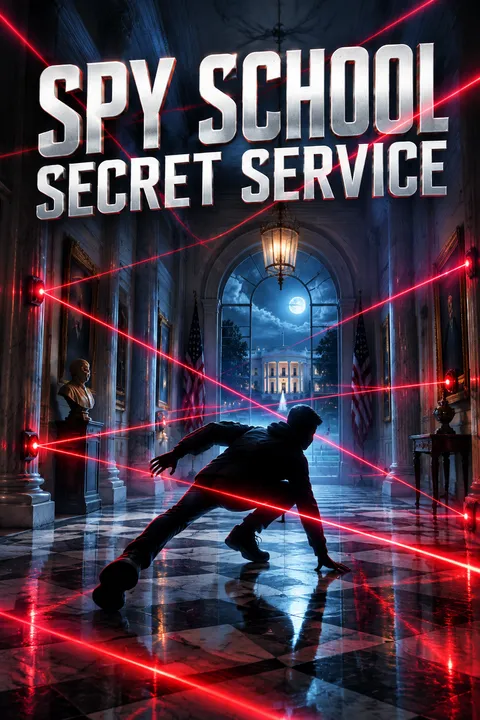
A sealed dispatch dated February 9 reports a sudden surge in SPYDER communications and warns that a high-level target faces imminent danger. Its unidentified author urges the president6 to activate Operation Pungent Muskrat and recommends thirteen-year-old Benjamin Ripley,1 whose record shows talent despite his inexperience and emotional distractions.
The mission will also require the president’s son,7 though the dispatch conceals both their identities and the precise threat. The message frames Ben’s1 next assignment as a race against a danger already in motion.
The dispatch makes secrecy feel less like protection than a condition of action: names and details are hidden even from the reader, but the urgency is plain. Its recommendation of Ben also establishes the story’s central tension. He is valued for ingenuity and moral judgment, yet the people assigning him the mission already know he is vulnerable. The classified memo’s cool language cannot fully contain that risk. Before Ben enters the White House, the document has made his selection feel both flattering and ominous.
SPYDER Returns to School
Zoe Zibbell3 tells Ben Ripley1 that she and Warren Reeves,9 her camouflage-loving classmate, have bugged the principal’s17 office and recorded a call confirming SPYDER’s return. The principal17 approves Ben’s1 activation, though none of them knows what the mission entails.
Mike Brezinski,4 Ben’s1 newly recruited friend, has just used an improvised bomb explosion to escape his homework, displaying the rule-breaking instincts that impress the academy’s top student, Erica Hale.2 Erica2 arrives to collect Ben1 and reveals that she is only delivering the message, not joining him.
In a black SUV, Ben1 meets CIA veteran Cyrus Hale5 and President David Stern.6 They explain that SPYDER may have infiltrated the government and is plotting the president’s6 assassination. Ben1 must enter the White House as a friend of the president’s son.7
The school scene gives the mission two competing models of competence. Warren values concealment and formal technique, while Mike reaches the objective by questioning the assignment itself. Ben’s own strength lies between them: he notices patterns, but still needs the institution to tell him where to look. Cyrus’s choice to send him alone converts that uncertainty into policy. The president’s presence makes the threat intimate, yet the warning about a compromised government means ordinary authority cannot be trusted to secure the mission.
A White House Playdate
The Secret Service delays Ben1 outside the Eisenhower Executive Office Building, then draws weapons when its bomb-sniffing dogs bark at his jacket. The agents find no explosives, and aide Kimmy Dimsdale15 explains that Ben1 may simply carry the smell of meat from his father’s grocery business.
Inside, Kimmy15 leads him through the crowded West Wing to Jason Stern’s7 room. Jason7 resents the assignment, rejects Ben’s1 attempt to cooperate, and later denies knowing him after Ben1 accidentally walks in on Jason’s sister,7 Jemma, in the bathroom.
The Secret Service holds Ben1 for two hours before Kimmy15 confirms his identity. On the drive back, Cyrus5 criticizes Ben’s1 failure and asks whether Jason7 might be involved. Ben1 instead points to suspicious visitors, including a businessman he photographed,14 and Cyrus5 orders him to return the next day.
The first visit makes the White House’s security problem visible through a small failure of social knowledge. Ben’s cover depends on Jason behaving like a host, but Jason’s resentment makes the cover brittle, and a bathroom accident turns that brittleness into detention. The dogs’ unexplained reaction is more consequential: a correct warning is dismissed because the agents cannot interpret it. Ben leaves without a suspect, but his photographs and his observation that nervousness is not proof establish a better investigative principle than Cyrus’s demand for a short list.
The Jacket Starts Ticking
On the obstacle course the next morning, Erica2 tells Ben1 that the suspicious visitor was Vladimir Gorsky,14 a powerful Russian arms dealer possibly connected to SPYDER. She warns that repeated visits can make security procedures feel routine, allowing an attacker to exploit lowered vigilance.
Ben1 returns to the White House with Jason,7 whose forced friendliness does little to ease the mission. When Gorsky14 sees Ben1 in the West Wing, he reacts with alarm. Ben1 connects that reaction to the dogs’ earlier interest in his jacket and feels a small mechanism click inside it.
He tears the jacket off, rushes into the Oval Office, throws it away from the president,6 and takes cover. The bomb detonates there, injuring no one seriously but wrecking the office. The Secret Service arrests Ben,1 believing he brought the bomb in to kill the president.6
Ben’s deduction arrives at the exact moment when proof is least useful: he recognizes the danger, acts correctly, and still looks like its source. That reversal exposes how security systems depend not only on detection but on interpretation. The earlier dog alert should have mattered, yet repetition made it easier to dismiss. Gorsky’s alarm is another signal without context. By saving lives through a reckless-looking act, Ben becomes trapped in a public story that makes his actual intention almost impossible to establish.
A Fugitive Under Washington
The Secret Service escorts Ben1 toward Virginia, but gunmen attack the convoy on Arlington Memorial Bridge. A crane hook tears the roof from Ben’s1 locked car, forcing him to leap into the Potomac as the vehicle explodes. He reaches a hidden tunnel beneath the National Mall, warms himself, and waits until night to move.
At a hotel pay phone, he calls Zoe,3 who believes he was framed but warns that Cyrus5 is leading the search for him. Erica2 takes the phone and accuses Ben1 of betraying her, then vows to hunt him down.
Her words sound like a final rejection, especially because she compares him to a former student who defected to SPYDER. Ben1 realizes she may be speaking under surveillance and searches for meaning in her warning. Her reference to finding hope gives him a destination: the Hope Diamond at the Natural History Museum.
The bridge attack strips Ben of the usual protections of identity: he is publicly named as a criminal, hunted by federal agents, and separated from his allies. His survival depends on remembered routes and lessons, not institutional help. Erica’s call sharpens the emotional danger because the person he trusts most seems to confirm his worst fear. Ben’s decision to interpret her words rather than accept their surface meaning is a practical act of trust. The Hope Diamond turns that trust into a navigable clue.
Hope in the Gem Vault
At the Natural History Museum, Ben1 finds Erica2 in the Hope Diamond gallery, disguised as an ordinary student. She admits that she caused the bridge attack, using the crane to free him before federal agents could take him to the Pentagon.
Government agents and SPYDER operatives converge on them, so Erica2 leads Ben1 through the exhibits, using the displays and a stolen spider to delay their pursuers. Erica’s mother,8 Catherine Hale,8 defeats the last SPYDER agents with a dinosaur bone and hides the fugitives in a compartment in her minivan.
Catherine8 reveals that she works for British intelligence and helps Erica2 explain how SPYDER may have planted the bomb and manipulated security. Ben1 needs evidence to clear his name. Erica2 proposes questioning Ashley Sparks,10 a captured SPYDER student, and Catherine8 drives them toward the academy.
The museum rescue reverses the meaning of Erica’s earlier threat: she sounded hostile because she needed to protect the operation, and Ben’s trust lets him reach her. The setting turns knowledge into both hazard and tool. Specimens and displays attract pursuers, but Erica uses the museum’s unusual contents to escape them. Catherine’s arrival widens the story beyond the CIA, while her concealed profession echoes the family’s larger difficulty with trust. Her practical care for Ben makes the fugitive’s crisis briefly feel survivable.
The Cellblock's False Friend
Ben,1 Erica,2 Catherine’s8 support, and Ben’s friends4 infiltrate the academy’s underground detention center to question Ashley Sparks.10 Mike4 and Zoe3 have already reached the cells, while Nefarious Jones16 insists he has no new information. Ashley10 refuses to help unless the group frees her and promises her a new life abroad.
Erica2 accepts the bargain, but Warren9 appears with campus guards and declares them under arrest. Ashley’s10 reaction gives Ben1 the clue that she and Warren9 are connected. Erica2 releases a smoke pellet, and she and Ashley10 fight their way through the guards while Zoe3 proves she can defend herself too.
The group escapes into the obstacle course, where Ben1 explains that Warren9 planted the bomb and had been working with Ashley.10 Ashley10 then shoves Erica2 from a swinging-log beam and disappears into the dark. The others are captured.
Warren’s betrayal works because he has been easy to underestimate, both socially and as a spy. His jealousy gives SPYDER a personal opening, while his camouflage makes that opening hard for friends to see. Ashley’s bargain shows how little moral conversion is involved: she wants escape, not remorse. The failed rescue leaves Ben with a painful mixture of insight and guilt. He correctly identifies the conspiracy, but his allies pay for the truth before anyone in authority is willing to believe it.
The Tribunal Misreads the Blast
At a late-night tribunal, Cyrus5 accuses Ben1 and his friends of collaborating with SPYDER. Erica2 is still groggy from a sedative dart, and the panel treats the group’s testimony as self-serving because Warren9 has supplied a contrary account.
Ben1 insists that he was framed, but the evidence against him appears stronger than his explanation. He notices that the blast also harmed the chairman of the Joint Chiefs of Staff, who has since resigned, and realizes the president6 may have been a distraction from a deeper military target.
The panel dismisses his theory as unsupported and votes to transfer the prisoners to a military interrogation facility. The decision seems to seal their fate. Yet Cyrus’s5 haste and his concern about compromised agencies leave Erica2 room to suspect that he may be using the transfer for another purpose.
The tribunal stages institutional certainty as a kind of group blindness. Cyrus’s evidence is circumstantial, but the panel treats the familiar story of a compromised child as more plausible than a hidden conspiracy inside government. Ben’s theory is strategically strong and evidentially weak, a distinction the hearing refuses to hold open. Mike’s earlier challenges have made the panel consider its own vulnerability, but not enough to reverse its judgment. The transfer becomes the consequence of a system choosing a defensible narrative over an unsettling possibility.
The Pentagon's Hidden Passage
Inside the prisoner van, Erica2 wakes and recognizes that Cyrus5 may be delivering them to the Pentagon so they can reach the military’s secure nuclear-control systems. Ben1 reasons that SPYDER may have targeted the chairman to install its own operative, the vice chairman, as his successor.
At the Pentagon, Cyrus5 and Erica2 pretend to remain hostile while secretly arranging to free the group. Erica2 reveals that Cyrus5 slipped her a handcuff key during their staged confrontation. Once the soldiers are distracted, the prisoners and Hales5 overpower their guards, cuff Felicia DuVray, and race through the basement.
Their target is a secure room where the new chairman, Elmore Finch,13 could activate the portable launch system. At its entrance they find Finch13 with armed soldiers and his aide, Murray Hill,11 a former enemy of Ben’s,1 carrying the metal briefcase.
The transfer transforms the tribunal’s apparent defeat into a risky route past Pentagon security. Erica reads Cyrus’s actions as a coded plan, but the plan works only because Ben has identified why the chairman’s resignation matters. Their deception is not merely cleverness; it is a response to institutions too compromised to trust openly. Erica’s admission that Cyrus gave her the key restores a family bond without erasing his earlier harshness. The nuclear briefcase makes the danger concrete: a chain of political succession can become a weapon.
The Pentagon Swordfight
Finch13 orders his soldiers to fire, and Murray11 bolts with the launch briefcase. Cyrus5 and Erica2 lead their group through the Pentagon, commandeer electric carts, and chase the two men through the crowded corridors. The carts crash into a Revolutionary War display, scattering its weapons and cutting off the hallway with a live power line.
Ben1 confronts Murray11 with a bayonet, then fights him using a sword from the display. Their struggle sends the briefcase toward the sparking wire, but Finch13 blocks it before it can be destroyed. Soldiers surround Ben.1
Instead of resisting, he claims Finch13 recruited him to kill the chairman, giving Cyrus5 a chance to support the accusation with his own account. The crowd begins to doubt Finch.13 A general orders Finch,13 Murray,11 and the others taken into custody, securing the briefcase and stopping SPYDER’s nuclear threat.
The climax joins Ben’s two defining abilities: he calculates danger in motion, then changes tactics when force cannot work. The sword fight is not a triumph of superior skill; it is a desperate contest that leaves the briefcase within reach of catastrophe. Ben’s most important move comes afterward, when he accepts arrest and turns the authorities’ suspicion into leverage against Finch. Mike’s earlier willingness to rethink an assignment has become a model for Ben. He wins by redirecting the system’s assumptions rather than overpowering its soldiers.
A Medal and a Warning
After Murray11 confesses to SPYDER’s operation, the government clears Ben1 and his friends. It hides the conspiracy from the public, blaming the failed presidential attack on Finch’s13 supposed breakdown and presenting Ben1 as the young visitor who saved the president.6
At a White House ceremony, Ben1 receives a medal while his parents watch proudly. Jason7 still insults him, but Erica2 secretly humiliates Jason7 during the event, and his fall into the celebration cake gives Ben1 and his friends a rare moment of laughter.
Ben1 then remembers that Gorsky14 looked frightened when he saw him before the Oval Office blast. He suspects SPYDER may have wanted to eliminate the arms dealer14 as well as the chairman. Erica2 takes the new lead to Cyrus,5 leaving the victory real but incomplete.
The resolution restores Ben’s public identity without restoring public knowledge. The official story protects national security, but it also hides how close SPYDER came to controlling the military. Ben’s medal repairs the visible harm of accusation, while his parents’ presence answers the private cost of being unable to contact them. The ceremony’s comic humiliation of Jason offers emotional release without pretending that the friendships are uncomplicated. Gorsky’s unexplained fear prevents celebration from becoming certainty: Ben has earned recognition, but his attention remains fixed on what the official account leaves out.
Epilogue
A final dispatch dated February 17 recaps Operation Pungent Muskrat for a CIA director whose name is concealed. Its author accepts responsibility for the mission’s failures, including Ben’s1 use as an unwitting carrier and the destruction of the Oval Office, while crediting the team with uncovering and stopping SPYDER’s plot.
The report warns that corruption remains embedded in government and recommends another operation, even arguing that the agency should reuse a more memorable mission name. The memo closes on a forward-looking note: the immediate danger has passed, but the larger contest has not.
The closing memo restores the bureaucratic frame from the opening, but its confidence is weaker now. The author can report a successful operation, yet cannot claim that the agencies are clean or that SPYDER has been eliminated. Ben’s survival and public medal are only part of the outcome; the intelligence system still depends on unauthorized choices and concealed knowledge. The joking dispute over mission names gives the report a human edge, but its central message is serious: institutional victory is provisional when the institution itself may be infiltrated.
Analysis
The novel makes espionage a problem of interpretation as much as concealment. Ben1 sees warning signs, including the dogs’ reaction, Gorsky’s14 alarm, and the chairman’s resignation, but each observation can be dismissed when it does not fit the official story. SPYDER exploits that gap between evidence and accepted meaning. It does not simply hide a bomb; it teaches security personnel to distrust the very signals that might reveal one, then frames the person who responds correctly.
Ben’s1 growth is therefore not a transformation into a flawless operative. He remains poor at fighting and uncertain about whether his friends trust him. His advantage is the capacity to revise a theory when the facts shift. Mike4 models the value of questioning procedure, Zoe3 supplies loyalty when proof is scarce, and Erica2 shows that trust can require deliberate misdirection. Their different strengths create a working team, even when institutional authorities mistake cooperation for conspiracy.
The book also examines how public narratives can become instruments of control. Ben’s1 arrest and the media’s portrayal of him make the false account more powerful than the truth, while the government later invents a cleaner public version to conceal how close SPYDER came to the nuclear command system. His medal repairs his reputation without exposing the compromised structures that produced the crisis. The ending is thus both comic and unsettled: Jason’s7 public humiliation offers a satisfying personal counterweight, but Gorsky’s14 unexplained fear leaves a trail beyond the ceremony.
Family relationships mirror the intelligence world’s central dilemma. Cyrus5 protects national security by using Ben1 as bait; Erica’s parents8 have built lives around secrets; Ben1 longs to be trusted by people who cannot safely tell him everything. The story does not present secrecy as inherently evil, but it shows how secrecy corrodes judgment when institutions stop questioning their own authority. Ben’s1 real achievement is not merely stopping Finch.13 He keeps asking what the apparent crisis is designed to hide.
Review Summary
Spy School Secret Service is highly praised by readers for its exciting plot, humor, and well-developed characters. Many consider it one of the best in the series, with unexpected twists and turns. Reviewers appreciate the book's fast pace, realistic White House setting, and complex conspiracy storyline. While some find the premise of a 12-year-old spy unrealistic, most readers suspend disbelief and enjoy the adventure. The book is recommended for ages 9-14 and is noted for its clean content and educational value about government institutions.
Characters
Benjamin Ripley
The reluctant pattern-finderBen is a thirteen-year-old spy-in-training whose strongest tools are mathematical reasoning, memory, and a habit of questioning what other people take for granted. He is not the academy’s best fighter, and his uncertainty often grows sharper when he compares himself with more confident classmates. Still, he keeps looking for the hidden connection between events, even when the people in charge dismiss his conclusions. His need to be trusted is complicated by his secretive profession: he wants ordinary friendships and family closeness while being required to conceal where he goes and why. Ben’s humor helps him endure embarrassment, but his persistence is what makes him useful.
Erica Hale
The unreadable elite spyErica is the academy’s most gifted student, trained from childhood by a family with a long intelligence legacy. She moves quietly, fights with exceptional skill, and treats preparation as a form of self-protection. Her reserve is not simple coldness: she has learned that attachment can expose both a person and a mission to danger. Ben’s1 persistence reaches her in ways she finds difficult to admit, while her complicated family history reinforces her belief that trust is costly. Erica values competence, but her loyalty sometimes requires her to act outside the rules she normally follows. She is most revealing when her control slips and concern becomes visible.
Zoe Zibbell
The observant loyal friendZoe is a quick-thinking student whose curiosity leads her to plant listening devices in the principal’s17 office. She has a talent for covert observation and a strong instinct for standing by people she cares about, even when doing so puts her at odds with authority. Her humor and energy can make her seem less serious than she is; in practice, she notices emotional details and acts decisively under pressure. Zoe’s closeness to Ben1 carries feelings she has trouble expressing directly, and that unspoken tension affects how she reads the attention others give him. She is a friend who offers faith before she has proof.
Mike Brezinski
The rule-bending recruitMike is Ben’s1 old friend from outside spy school, newly recruited after proving his potential during a dangerous encounter. He improvises rather than follows procedure, often finding a safer or more surprising way to reach the objective. That habit irritates students who believe rules create reliability, but Mike’s unconventional reasoning can expose flaws in the assignment itself. He is sociable and confident, qualities that help him connect with people quickly, though his self-assurance sometimes masks how little he understands the spy world. His loyalty to Ben1 is active rather than sentimental: he joins the risks, challenges the adults’ assumptions, and keeps morale from collapsing.
Cyrus Hale
The severe veteran handlerCyrus is Erica’s grandfather2 and an accomplished, unofficially active CIA veteran. He thinks in terms of threat, access, and acceptable risk, and his blunt manner leaves little room for reassurance. His distrust of compromised institutions is grounded in experience, but it can make him treat people as pieces in a plan before explaining the danger to them. He respects intelligence even when he dislikes the person displaying it. His relationship with Erica2 mixes genuine affection with the demands of a family that has made espionage its inheritance. Cyrus’s judgments are shaped by a lifetime in which hesitation can cost lives.
David Stern
The exposed presidentDavid Stern is the president of the United States and Jason7 and Jemma’s father7. In private, he is genial and curious about ordinary life, but he understands that his position makes even an unremarkable outing a security risk. He trusts Cyrus’s5 assessment enough to involve Ben1, while trying to balance his children’s needs with the demands of public office. His warmth makes Ben1 feel less intimidated, though the president’s authority cannot prevent the danger around his family.
Jason Stern
The resentful first sonJason is the president’s6 thirteen-year-old son, accustomed to having his movements and friendships shaped by security concerns. He resents being told whom to spend time with and takes that frustration out on Ben1, whom he treats as an unwanted assignment. His private hostility contrasts with the polished image expected of a presidential child. Jason’s irritation is not a hidden spy skill or a sign of unusual insight; it is the behavior of a boy who feels controlled and responds by trying to control someone else.
Catherine Hale
Erica's gracious motherCatherine is Erica’s mother2, a warm and composed woman whose gentleness does not make her helpless. She offers food, shelter, and practical advice at moments when Ben1 and Erica2 are exhausted and exposed. Her ease with people contrasts with Erica’s2 guarded style, and her humor gives their strained family exchanges a softer edge. Catherine understands that secrecy can corrode a household, yet she has spent years making difficult choices around it. She is caring without being naïve, and she expects courage to include attention to consequences.
Warren Reeves
The overlooked camouflage expertWarren is a student known for camouflage, stealth, and a tendency to struggle with other parts of spy training. He is sensitive to criticism, especially from Zoe3, whose opinion matters to him more than he admits. His rivalry with Ben1 is sharpened by the way Ben1 receives field assignments and recognition that Warren believes he could earn himself. Warren wants to be taken seriously, but his insecurity makes him vulnerable to measuring his worth through comparison. His awkwardness can conceal real skill, so classmates who dismiss him may miss what he is capable of.
Ashley Sparks
The gymnast with sharp edgesAshley is a gifted former gymnast and a dangerous student from an opposing spy program. She combines remarkable athleticism with a theatrical, taunting manner and a private vocabulary of blended words. She is competitive, resourceful, and intensely focused on the future she believes she was denied. Ashley can be charming when it serves her, but she has little patience for people she regards as obstacles. Her skill makes her formidable in a fight, while her grievances give her a strong sense that she has been wronged by the world around her.
Murray Hill
The anxious former adversaryMurray is a teenage former opponent of Ben’s1, remembered for his slovenly appearance, elaborate schemes, and repeated failures to stay ahead of Ben1. He is ambitious enough to pursue dangerous work but often lets his appetites and fears interfere with his plans. Murray wants recognition and financial reward, and he can rationalize choices that place other people at risk. His comically specific anxieties complicate the menace he tries to project. To Ben1, Murray represents a familiar threat: someone whose plans are serious even when his execution is absurd.
Alexander Hale
The charming weak linkAlexander is Erica’s father2 and Cyrus’s son5, a CIA agent whose charm is more reliable than his field competence. He makes a strong first impression and can win people over socially, but he is careless and often struggles with the practical demands of espionage. His strained relationship with Cyrus5 leaves him sensitive to his father’s judgments, while his affection for Erica2 makes him protective even when he cannot control her choices. Alexander is well-meaning, but his good intentions do not always translate into good execution.
Elmore Finch
The decorated military leaderElmore Finch is a senior military officer whose position gives him authority over consequential decisions. He presents the discipline and experience expected of a high-ranking leader, and those qualities make him difficult to question without strong evidence. In a world where access and credibility matter as much as force, Finch’s institutional standing is itself a powerful asset. His presence connects the White House crisis to the military’s chain of command.
Vladimir Gorsky
The powerful arms dealerGorsky is a Russian arms dealer whose business reaches across conflicts and political alliances. He is wealthy, influential, and accustomed to moving through rooms occupied by senior officials. His presence at the White House draws Ben’s1 attention because it brings together international weapons dealing and American security. Gorsky’s polished public position makes him difficult to classify: his reputation is troubling, but suspicion is not the same as proof.
Kimmy Dimsdale
The cheerful White House aideKimmy is a White House aide who guides Ben1 through the complex and crowded presidential residence. She is enthusiastic about its history and eager to make visitors feel welcome. Her warmth contrasts with the suspicion of the security staff, though she is also careful to manage the awkward consequences of Jason’s7 behavior.
Nefarious Jones
The gaming-cell recluseNefarious is a former student from an opposing spy program, now held in the academy’s secure detention unit. He prefers video games to conversation and is content with a routine others would find bleak. His quiet pragmatism makes him a contrast to Ashley’s10 restless ambition.
The principal
The distracted school administratorThe principal manages the Academy of Espionage’s administration, though he is easily distracted and widely regarded as incompetent. His office becomes a target for Zoe3 and Warren’s9 surveillance, and his decisions affect how quickly the school responds to a crisis.
Plot Devices
Operation Pungent Muskrat
Ben's covert assignmentThe operation is the secret mission Cyrus Hale5 arranges after receiving apparent intelligence that SPYDER plans to assassinate President David Stern6. Ben1 is sent into the White House under the ordinary cover of friendship with Jason7, because a teenager can move through the household without attracting the same attention as a professional agent. The cover gives Ben1 access but also leaves him dependent on Jason’s7 cooperation and exposed to a large, crowded security system. The name appears in the opening dispatch and returns in the closing report, framing the mission from urgent authorization through official recap.
The Bombay Boomerang
Routine becomes a weaponErica2 explains this espionage tactic before the attack: repeated visits can make security staff less wary of a visitor, allowing a later attempt to exploit familiarity. In the story, the dogs’ first alarm at Ben’s1 jacket is treated as a false positive because they find no explosives. When the jacket triggers a second time, the agents are less prepared to treat it as a real warning. The idea also gives Ben1 a way to understand that SPYDER has manipulated the security routine, not merely slipped a bomb past it. The device turns ordinary repetition into part of the plot.
The Hope Diamond
A coded meeting placeAfter Erica2 appears to disown Ben1 over a monitored telephone call, her reference to finding hope gives him a clue he can act on. Ben1 connects it to the Hope Diamond in the Natural History Museum and goes there to meet her. The gallery’s crowds and quiet displays provide cover, while the diamond gives the rendezvous a memorable landmark. This device makes Ben’s1 trust active: he must decide whether Erica’s2 apparent anger is sincere or a signal meant for him. It also moves the fugitive plot from isolation into renewed partnership.
The Nuclear Briefcase
Military power made portableThe portable launch system is kept in a secure briefcase and can be activated only after several identity checks in a protected Pentagon room. Its existence gives SPYDER a larger objective than a single assassination: control of the system could place catastrophic force in the hands of a compromised military leader. Ben1 and Erica2 connect the chairman’s resignation to the vice chairman’s possible succession, then race to stop the activation. During the final chase, the briefcase is nearly destroyed by a live power line, but Finch13 blocks it. Ben’s1 accusation helps keep the case and its contents in custody.
Spy School Series


About the Author
Other books by Stuart Gibbs


Download PDF
Download EPUB
.epub digital book format is ideal for reading ebooks on phones, tablets, and e-readers.








