

Key Takeaways
Retrace a national divide before deciding its people are strangers
The route is the argument. Tony Horwitz follows Frederick Law Olmsted’s 1853-54 journey from the Ohio Valley through the South and Texas, beginning with his own arrival in Grafton, West Virginia. Olmsted, a restless Connecticut farmer and aspiring writer, reported for the New-York Daily Times under the name Yeoman. He wanted direct observation of a region Northern readers often encountered through polemics. Horwitz’s route brings him into contact with miners, barge crews, shopkeepers, churchgoers, historians, and families along the Mexican border.
A journey is not a survey. One reporter’s encounters cannot represent entire regions, and Horwitz shows how his own assumptions sometimes color what he sees. The more durable claim is that national divisions become understandable through particular places, histories, livelihoods, and conversations, not through stereotypes alone.
What’s striking is that the reporting method becomes part of the subject. A traveler does not simply collect facts; appearance, accent, timing, and purpose shape what strangers choose to reveal. That is a useful lesson for journalism and social research alike: access is produced through relationships, not just obtained through persistence. Yet intimate encounters can create a false sense of representativeness. The strongest reading treats each person as a revealing case, not a stand-in for a region. Horwitz’s self-implication helps keep that distinction visible.
Listen across difference, but do not confuse access with agreement
Conversation changed Olmsted. He began his Southern reporting as a moderate opponent of slavery, hoping firsthand information might encourage mutual understanding. In Nashville, he met Samuel Perkins Allison, a cultivated lawyer who defended slavery’s expansion and believed society should be divided between a ruling class and workers beneath it. Olmsted argued for Northern democracy, but also recognized the North’s own failures to respect laborers and Black citizens. His encounter did not erase the moral conflict. It sharpened his judgment about the region’s leadership and pushed him toward a more forceful opposition to slavery.
Listening is not surrender. Olmsted’s exchange with Allison complicated his view of his own society without making the two positions morally equivalent. The trip revealed that some people were open to debate, while others treated hierarchy as a principle worth defending.
This is a useful correction to the idea that civility alone can resolve political conflict. Conversation can expose hidden assumptions and improve a listener’s self-understanding, even when persuasion fails. But open-mindedness should not become a demand to treat every position as equally defensible. In moral and political disputes, the relevant question is not only whether both sides feel heard, but who is being denied freedom or standing. Listening is valuable partly because it helps identify that asymmetry more clearly.
Make slavery concrete before reducing it to an economic argument
Violence was part of management. On the Red River, Olmsted visited the plantations of Meredith Calhoun, a major slaveholder with nearly a thousand enslaved people. He witnessed an overseer brutally whip a teenage girl named Sall for missing work. The overseer treated the beating as routine discipline, a warning meant to control an entire workforce. Olmsted also saw sick and injured people forced back into the fields.
Efficiency did not mean progress. Louisiana sugar plantations used advanced machinery, specialized labor, and tightly managed schedules. Their organization resembled industrial production, but it rested on coerced labor, family separation, and frequent injury. This evidence complicates the claim that slavery was simply an economically backward system. Its injustice does not depend on proving it was unproductive.
The plantation evidence challenges a tempting but fragile argument: that slavery was wrong because it was inefficient. If a system can generate wealth while inflicting profound harm, economic performance cannot serve as its moral test. That distinction matters beyond this history. Institutions often present extraction as efficiency while excluding the costs borne by those with the least power. A full accounting must ask both what a system produces and whose bodies, choices, and relationships pay for it.
Read coal-country anger through lost work, not slogans alone
A symbol outlasted its jobs. In West Virginia, Horwitz found communities shaped by the collapse of coal, rail, and manufacturing work. Cumberland had lost half its population, and a former textile plant had been replaced by a prison. In Wheeling, an old foundry survived with sixty-four workers, about a quarter of its earlier workforce. A local Democratic leader noted that coal had fallen to roughly 3 percent of state employment and revenue, yet politicians still invoked it as a symbol of regional pride and security.
Decline was not abstract. Workers described uncertain jobs, lost wages, dangerous conditions, and fear that their towns were being left behind. Some dismissed environmental concerns; one towboat worker worried about pollution near his children’s home. Economic loss helps explain political resentment, though it does not excuse racism or settle every political question.
The account avoids two easy explanations: that voters are simply duped by slogans, or that economic hardship explains every belief. Place-based identity often binds work to dignity, family history, and a sense of being useful. When an industry contracts, the loss is cultural as well as financial. Still, nostalgia can obscure who profited from resource extraction and who was left with its costs. Taking economic grievance seriously means examining both the vanished livelihood and the power structures that shaped it.
Ask who benefits when a community’s past is edited
Public memory has authors. In Colfax, Louisiana, a disputed political struggle after the Civil War ended in the massacre of at least seventy Black men. Yet a local monument honored three white men who died fighting for white supremacy, while an official marker described the event as a riot that ended Reconstruction misrule. Efforts to recognize the Black dead met resistance from people who feared reopening old conflicts.
Tourism can soften history. At some Natchez-area plantation homes, guides discussed enslaved people as servants or passed quickly over their living conditions. Other sites, including Frogmore and Whitney Plantation, made the labor and violence central. The contrast shows that historical interpretation is not neutral: what a tour names, omits, or calls a tragedy shapes what visitors understand.
Memory studies offers a useful lens here: monuments do not merely preserve the past, they assign significance and legitimacy. A marker that calls a massacre a riot gives later generations a ready-made political interpretation. Tourism adds another pressure, since attractive stories can be easier to sell than painful ones. Revising public memory is not the same as using history for present-day scorekeeping. It is a way to make the record more complete, especially where earlier accounts served the powerful.
Look for dissent inside the places outsiders label monolithic
Texas had its own anti-slavery dissidents. In Sisterdale, German immigrants known as Forty-Eighters included political exiles who had taken part in Europe’s failed revolutions of 1848. Some formed the Freie Verein, a political society that opposed slavery and promoted democratic reforms. Olmsted admired their schools, farming, music, and intellectual life, and helped support a newspaper facing financial pressure and threats.
Resistance carried a cost. During the Civil War, German Unionists in the Hill Country refused Confederate allegiance. Edward Degener’s sons joined a group fleeing toward Mexico and were killed at the Nueces River. Their story, and the larger community of dissidents, became far less visible than the state’s familiar Confederate narratives. Their presence complicates any account of Texas as politically uniform.
The forgotten dissenters matter because regional identity is often narrated as consensus after the fact. Small communities can preserve alternatives that dominant institutions later suppress or overlook. Their example also warns against romanticizing dissent: political courage does not guarantee success, and a coalition can be vulnerable to both repression and internal disagreement. Historical pluralism is not a claim that everyone opposed injustice. It is a reminder to look for the people whose opposition complicates the cleanest version of the story.
Treat parks as civic infrastructure, then audit who can use them
A park can shape social behavior. Olmsted believed public landscapes could bring people of different incomes and backgrounds into shared space. Central Park’s winding paths, wooded areas, and open meadows offered a change from the city’s straight streets and hurried routines. Horwitz finds visitors talking, playing, resting, and watching one another, with the park receiving about fifty million visits a year.
Access is never automatic. Louisville once separated Black visitors into designated parks, and Audubon Park in New Orleans restricted how Black people could use its facilities. Today, park quality and safety still vary with neighborhood wealth. Olmsted’s democratic ambition helps explain why parks matter, while their uneven histories show that shared space requires fair access, investment, and upkeep.
Urban design can make certain encounters more likely by creating places where people have time, safety, and a reason to linger. That is a real civic contribution, but proximity by itself does not guarantee trust or equality. The history of segregated parks makes the point sharply: a public landscape can reproduce the exclusions of the surrounding city. The practical test is therefore twofold: does a space invite shared use, and do all residents have a genuine ability to reach and enjoy it?
Facts need trust before they can puncture a conspiracy
A correction can fail in plain sight. In Crockett, Texas, local residents told Horwitz that a nearby property was a Muslim compound with armed guards and a terrorist training camp. The county sheriff said it was a doctor’s private home, but several people at the Moosehead Café dismissed his account as part of the cover-up. One claimed to possess aerial photographs but would not show them.
The sample has limits. Horwitz acknowledges that a small group in one café cannot represent all Texans. Still, the encounter showed how rumors can harden into a shared explanation that rejects contrary evidence. His original hope that calm reporting could bridge political divisions collided with a community that did not trust the institutions or messengers offering correction.
The scene illustrates why fact-checking is necessary but rarely sufficient. People evaluate claims through social relationships and existing suspicions, so a correction from an untrusted source may sound like further proof of concealment. That does not make truth relative, or misinformation harmless. It suggests that credible reporting needs both verifiable evidence and durable relationships with the people being addressed. The scale of Horwitz’s sample remains small, which is why the episode works best as a vivid warning, not a national diagnosis.
Treat Texas as a borderland, not a political monolith
The state is a meeting place. Olmsted encountered German settlements, Mexican communities, Native peoples, and Anglo migrants across Texas. In San Antonio, these groups shaped the city’s languages, homes, food, and public life. Near Eagle Pass, the Rio Grande was not simply a line between countries. Enslaved people crossed it seeking freedom in Mexico, while families today moved across the bridge for school, work, shopping, and visits.
Borders change meaning. The phrase “Gone to Texas” first described people fleeing debt or the law, then accompanied mass migration into the state, including the forced movement of enslaved people. In Eagle Pass, 95 percent of residents spoke Spanish. The route reveals a state formed through overlapping migrations and conflicts, not one timeless regional character.
Borderlands make national categories look less natural than they appear on a map. Language, family, labor, and commerce cross boundaries even as laws determine who may move safely and on what terms. That fluidity should not be mistaken for a world without borders or unequal power. The Rio Grande could offer escape to one person and surveillance to another. The useful shift is to see identity as historically made while still asking who controls its legal and material consequences.
Design for distant effects, then ask whose freedom expands
Travel became a design education. On the Guadalupe River, Olmsted and his brother chose campsites for water, shelter, shade, and a pleasing view. He later described this practical comfort as a key to landscape beauty and used it to guide his park designs. Central Park’s curving paths invite visitors to wander rather than march through a grid. At the book’s close, two Harlem boys explore its wooded paths and enjoy getting lost.
Long effects need scrutiny. Olmsted’s park ideal was democratic, but suburbs influenced by his designs often excluded people of color, and his late career included work for an exceptionally wealthy estate. His planning could open public access while his own politics remained paternalistic. A design’s intention matters, but so do the institutions and exclusions that shape its use.
The closing image links landscape to freedom in a precise, physical way: room to roam, pause, and choose a path. That is more than scenery, because environments organize attention and access. Yet design intentions cannot control every outcome. Suburban segregation and exclusive private commissions complicate the legacy of a planner who wanted public uplift. The most useful standard is not whether a designer held admirable ideals, but whether the places created distribute freedom in practice.
Analysis
Horwitz’s central achievement is to make a historical journey do two jobs at once. It recovers Frederick Law Olmsted’s reporting on slavery and the antebellum South, while testing whether travel and conversation can help a modern writer understand political division. The route gives that question texture: a ruined coal town, a barge crew, plantation museums, a Texas café, a contested massacre site, and a border community each expose different forces hidden by national labels.
The book’s strongest historical correction is that the South was neither a single culture nor a simple economic opposite to the North. Enslaved labor powered sophisticated plantation production; German Texas contained anti-slavery organizers; Mexican towns offered refuge to fugitives; and white Southerners could share everyday warmth with Black neighbors while sustaining brutal racial hierarchies. Such contradictions are not incidental color. They show how social intimacy can coexist with structural domination, and how a society’s public memory can preserve one while disguising the other.
The contemporary comparison is most persuasive when it stays grounded in material places. Lost industrial work, resource extraction, uneven development, and local pride help explain political identity without reducing voters to either victims or villains. The comparison becomes less secure when isolated conversations seem to stand for larger populations. Horwitz recognizes this limitation, but the reader should keep it in view: a memorable encounter is evidence of possibility, not a representative survey.
Olmsted’s career supplies the book’s final tension. He imagined parks as democratic spaces that could restore people and bring them together, yet his beliefs were paternalistic, his work sometimes served great wealth, and public landscapes were segregated or unequally maintained. The book does not resolve that contradiction. It leaves a sharper question: can institutions be judged by their founding ideals, or only by who can actually benefit from them? Its answer is implicit in the journey. History becomes useful when it reveals both the promise of a design and the power that limits it.
Review Summary
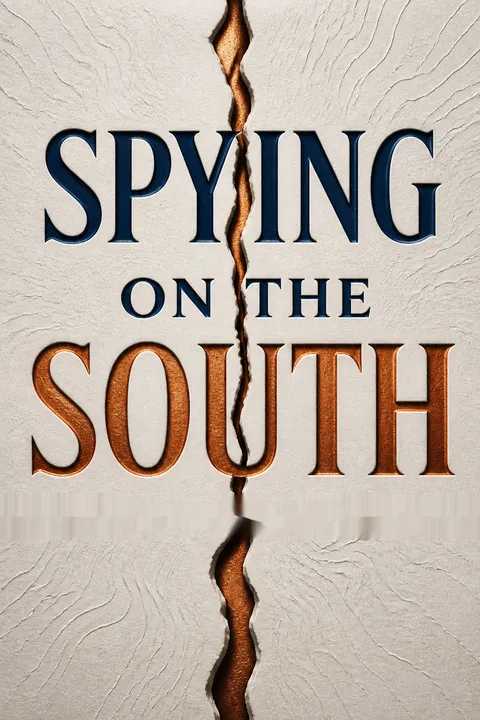
Spying on the South receives strong praise from reviewers, averaging 4 out of 5 stars. Readers admire Horwitz's ability to connect with diverse people across the American South while retracing Frederick Law Olmsted's 1850s journey. Many highlight the book's humorous anecdotes, historical insights, and thoughtful parallels between antebellum America and modern political divisions. The reviews carry a bittersweet tone, as Horwitz died unexpectedly just two weeks after publication. Most consider it a worthy, if not his finest, final work from a beloved writer.
People Also Read







Glossary
Yeoman
Olmsted’s reporting aliasThe pseudonym Frederick Law Olmsted used while reporting on the South for the New-York Daily Times. The name suggested an independent farmer, fitting the persona of a Connecticut agriculturalist traveling through slaveholding states. It also helped protect his identity, since Northern visitors could be suspected of abolitionist activity.
Gone to Texas (G.T.T.)
A sign of flightA nineteenth-century expression for leaving home, often to escape debt, legal trouble, or personal disgrace by starting over in Texas. People sometimes marked abandoned homes with the initials G.T.T. The phrase later took on a broader association with westward migration, including the movement of enslavers and enslaved people into Texas.
mudsill theory
Hierarchy as social foundationA pro-slavery argument that society requires a permanent laboring class at its base, like the mudsill supporting a building, so that a privileged class can lead and advance civilization. In Olmsted’s account, Samuel Perkins Allison defended a society divided into sharply unequal ranks and contrasted it with the North’s more democratic ideals.
Forty-Eighters
German revolution-era exilesGerman-speaking people who left Europe after the failed revolutions of 1848. Some settled in Texas, including the Hill Country, and carried political commitments to republican government, secular thought, and social reform. A number opposed slavery and Confederate secession, although German Texans did not all share the same politics.
Freie Verein
Sisterdale political societyGerman for “Free Society,” the Freie Verein was formed in Sisterdale, Texas, by German political exiles and allies. It organized debate and reform activity, including opposition to slavery. Its members’ political work faced hostility, financial pressure, and, during the Civil War, violent repression of Unionist resistance.
quality of ease
Comfort shaped by landscapeOlmsted’s idea that landscape beauty is connected to the ease of satisfying basic human needs. A good setting offers shelter, shade, water, a pleasing view, and a place to rest without demanding severe effort. His experience selecting campsites in Texas helped inform this principle of park design.
Greensward
Central Park design planThe winning 1858 proposal by Frederick Law Olmsted and Calvert Vaux for Central Park in New York. Its design emphasized open meadows, pastoral scenery, winding paths, and bridges and underpasses that separated different kinds of traffic. The plan treated the park as a public landscape rather than a collection of monuments.
Juan Crow
Anti-Hispanic segregation practicesA term used in the book for laws and customs that discriminated against people of Mexican descent in Texas. Like Jim Crow practices targeting African Americans, Juan Crow restricted access and opportunity through segregation and social exclusion. The account describes these practices in places such as the Cotton Patch dance hall.
Second Middle Passage
Forced migration within AmericaThe forced movement of enslaved people from the Upper South to the expanding plantation regions of the Deep South. People were transported by land and river, separated from families, and sold into new forms of bondage. The book notes that this internal migration involved roughly a million enslaved people.
landscape architecture
Planning land for human useA profession and practice associated in the book with Olmsted and Vaux, combining landscape design with the planning of roads, parks, and other public or residential spaces. Olmsted viewed it as more than gardening or building design: it shaped how people moved through places and experienced their surroundings.
About the Author

Download PDF
Download EPUB
.epub digital book format is ideal for reading ebooks on phones, tablets, and e-readers.








