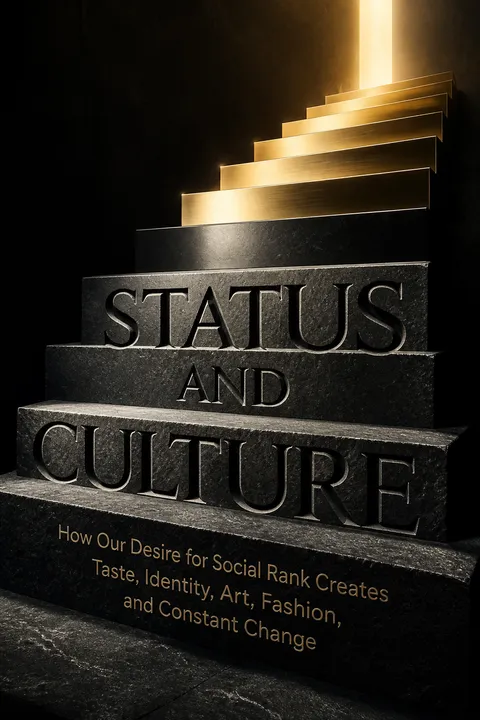


Key Takeaways
Read cultural change as status competition, not a mysterious contagious fad
A haircut becomes history. Before the Beatles adopted their famous moplike cut, Stu Sutcliffe wore it and endured his friends’ jokes. The band eventually followed, partly because the style set them apart from other groups. The hairstyle had no special practical advantage. Its value came from the social distinction it offered, then from the approval it gathered as the Beatles’ fame grew. The book uses this story to pose a larger question: why do whole populations embrace arbitrary styles, then abandon them?
Status supplies the pattern. Marx argues that people’s efforts to gain esteem and favorable treatment create shared behaviors. Those behaviors become culture. This does not mean people only care about rank, or that cultural choices are meaningless. It means status helps explain why particular choices become collective trends while equally useful alternatives are ignored.
The moptop is a compact example of how a local choice can acquire public meaning: imitation turns a haircut into a group marker, while celebrity gives it wider authority. This is a useful corrective to explanations that treat trends as infections spreading without decision-makers. The lens is strongest for patterns across groups, not for explaining every person’s private attraction to a style. A trend can carry pleasure, memory, or practical value alongside rank.
Judge status by how people are treated, not by an invisible social score
Rank has consequences. In a Lassie television episode, a farm dog is mistaken for a famous show champion. The mistake brings her owner VIP passes and a luxury hotel suite. The dog’s abilities have not changed; the organizers’ treatment has. Status is a person’s comparative position in a social hierarchy, made visible through respect, access, attention, and other benefits. It depends on the group and setting, rather than existing as a universal score.
Starting lines differ. Some status is achieved through work, talent, wealth, education, or connections. Other status is ascribed through characteristics such as race, gender, or family background. These forms can overlap: an accomplished person can still face discrimination. High status brings real advantages, while low status can mean exclusion and worse treatment. The hierarchy is therefore more than a contest of vanity.
This definition connects status to observable treatment, making a slippery concept easier to examine: who gets listened to, helped, admitted, or excused? It also prevents the analysis from reducing inequality to taste alone. Yet ranking is not always a fair measure of contribution. Ascribed advantages can be mistaken for merit, and worthy work can go unrecognized. The distinction between achieved and inherited standing helps expose that confusion.
Notice when an arbitrary custom becomes a test of belonging
Customs coordinate us. A convention is a familiar, expected behavior that a group could replace with another workable choice. Black tie is expected at a formal ball, though a tuxedo is no more useful there than another outfit. The specific choice is arbitrary; agreement makes it socially important. Bavarians may feel more part of Oktoberfest in traditional dress because dressing alike makes membership tangible.
Expectations enforce themselves. Conventions begin as ways to coordinate, then gain emotional force. People reward others for meeting expectations and may react angrily when they are broken. Repetition turns conventions into habits, making them feel natural rather than chosen. The author calls these internalized social patterns habitus. They can even shape perception: languages divide colors differently, and musical traditions influence which sounds feel cheerful or sad.
Conventions act like social infrastructure: shared expectations make coordination easier, but also determine who appears out of place. This helps explain why harmless deviations can provoke outsized reactions. The same mechanism can preserve useful practices and unfair ones, including standards shaped by gender or class. Asking who benefits from a norm, and who must pay for violating it, turns an apparently neutral custom into something open to scrutiny.
Use signals with credible reasons, not obvious pleas for admiration
Status needs translation. Strangers cannot see someone’s whole life, so people communicate rank through clothes, possessions, behavior, and knowledge. The book calls these clues signals. A cue is harder-to-control evidence of background, such as an accent or manner; even what someone does not wear can count as a signal. Beck’s obscure musical references helped present him as more than a novelty singer, while a luxurious grain silo let farmers display prosperity.
Credibility matters. A good status symbol has an ordinary purpose as well as social meaning. A handbag carries belongings; a silo stores grain. Cost, time, exclusive access, specialized knowledge, and willingness to break norms can all make a signal harder to copy. But signals can be misread or faked. Anna Sorokin passed herself off as an heiress by displaying the expected trappings of wealth. Appraisers therefore judge the whole pattern, not one conspicuous object.
This account resembles signaling theory: a message becomes persuasive when copying it is costly or when other evidence supports it. It also explains why conspicuous boasting can backfire. The important caveat is that costly signals do not prove virtue or skill; they may only prove access to money, time, or opportunity. Reading signals as evidence rather than truth makes social judgment more careful, especially when a single luxury item invites a confident but shallow conclusion.
Treat taste as learned social judgment, not a universal detector of beauty
Preferences classify people. John Waters became an acclaimed filmmaker while celebrating aesthetics many viewers considered disgusting. His career shows that taste is not a single, timeless standard. It is a learned preference for certain styles, objects, and experiences, shaped by a person’s social group and its conventions. Shared tastes can create belonging; divergent ones can mark someone as an outsider.
Mastery takes practice. The book describes sophisticated taste through three qualities: knowledge of a field, coherence among choices, and originality that stays within a recognizable sensibility. A striking object can look misplaced if it clashes with everything around it. Authenticity matters too: Vanilla Ice lost public credibility when his invented tough-guy backstory conflicted with his actual background. Taste is both a personal repertoire and a public claim, assessed by other people.
The social account of taste makes aesthetic judgment less mysterious and more accountable. It can reveal how standards that seem natural often reflect access to education, time, and particular communities. At the same time, calling taste socially learned does not make every judgment equally informed or every artwork equally powerful. The useful distinction is between the origin of a preference and the quality of the experience it produces.
Read class aesthetics as strategies for turning different assets into prestige
Money speaks in styles. Marx contrasts groups by the resources they use to claim standing. New Money often turns wealth into visible luxury. Old Money can signal inherited security through restraint, worn-in possessions, and knowledge of subtle codes. Professionals use education and cultural knowledge to choose products they can explain as thoughtful or high quality. People with fewer resources may favor kitsch or flashy goods because they offer accessible pleasure and visible distinction.
Taste follows position. These are not fixed personalities or universal rules. They are recurring strategies shaped by unequal assets. A newcomer may spend heavily to demonstrate success, while a hereditary elite can reject the same display and still be recognized by peers. The quiet old watch and the jewel-covered car can both communicate status, but to different audiences and through different conventions.
The comparison is especially useful because it resists treating minimalism as inherently superior to extravagance. Understatement can signal privilege just as loudly as a logo, provided the audience knows how to read it. Still, class styles are broad patterns, not reliable portraits of individuals. The framework is best used to ask what a taste requires and whom it impresses, rather than to sort every person into a tidy category.
Build outsider styles from existing pieces, knowing success may invite imitation
Alternatives create belonging. Working-class teenagers who became Britain’s teddy boys adapted expensive Edwardian clothing into a more dramatic look. Their style set them apart from mainstream respectability and gave members new sources of local esteem. Such groups form when people who feel undervalued create their own standards. Their conventions can be demanding too: members may need to learn the right clothes, slang, music, and behavior to count as insiders.
Rebellion gets repackaged. Many subcultural styles combine existing objects in new ways, a practice called bricolage. Rastafarian styles, including dreadlocks, moved from a marginalized community into wider popular culture through Bob Marley’s music. As outsiders’ ideas gain recognition, businesses often simplify and sell them. The original group may lose some control, while its once-shocking style becomes ordinary fashion.
Subcultures show that people can find recognition by changing the rules of a local group, even when the larger hierarchy remains stacked against them. Their creativity is often less about inventing materials from nothing than about giving familiar objects new meanings. Commercial adoption can spread those meanings, but it can also strip away history and politics. Wider popularity is therefore not the same as equal credit or benefit.
Value artists for changing their field’s questions, not only pleasing its audience
Recognition is part of art. Henri Rousseau was mocked for paintings that looked childlike, then championed by Picasso and other artists who saw them as a challenge to accepted painting. Edna Hibel, despite technical skill and public honors, is much less present in art history. The contrast illustrates the book’s distinction between aesthetic value, the experience a work offers, and artistic value, its contribution to the problems artists and critics consider important.
Innovation has a context. John Cage’s unconventional music initially angered audiences and musicians, yet later influenced other artists and entered cultural institutions. Radical work can be difficult because it asks audiences to revise their expectations. That difficulty alone does not make something important. The work must connect to an active artistic conversation, and recognition by critics, fellow artists, and institutions helps determine whether it receives the status of art.
The distinction between audience pleasure and historical influence clarifies why popularity and artistic importance do not always coincide. It also reveals that judgments of art depend on institutions with power to preserve and interpret work. That is an argument for taking expertise seriously, not treating gatekeepers as infallible. Institutions can recognize innovation, but they can also overlook creators whose work or background falls outside their own conventions.
Track trends through elite distinction, imitation, simplification, and eventual overexposure
Fashion has a social sequence. William Finnegan loved his long surfboards, but after expert surfers demonstrated what shorter boards could do, the longboard lost status among peers. Practical advantages helped, yet social judgment made the switch feel urgent. The book describes a recurring cycle: influential people adopt something distinctive, early followers imitate them, media spreads the idea, businesses make accessible versions, and broad adoption drains its exclusivity.
Cupcakes show the cycle. Magnolia Bakery’s cupcakes became fashionable after appearing in Sex and the City, then spread through news coverage and copycat shops. Their popularity grew, but overexposure helped turn them into a target of backlash. The process is not simple contagion: adopters change a trend’s meaning as they take it up. Practical improvements can matter, but status often explains the speed and reach of cultural change.
This cycle links individual choices to market behavior: audiences imitate, media legitimizes, and firms lower the cost of participation. It explains why commercial success can undermine the very distinction that made a product desirable. The sequence is a model, not a clock. Some trends arise outside elite circles, and useful innovations can spread for practical reasons. Status is an important driver, not a substitute for every other cause.
Ask who gets to preserve the past before calling a style timeless
Survival acquires prestige. A button-down shirt moved in and out of fashion before becoming a staple of American style. Its long circulation helped make it seem classic rather than merely old. Historical value comes from positive associations with the past, but history itself is selective: institutions, critics, historians, and other influential groups decide which works and customs remain visible.
The forgotten can return. Retro revives once-discarded styles, often as playful or ironic novelties. In the late 1960s, George Leonard and his group Sha Na Na revived 1950s vocal pop, helping make the decade’s style newly appealing. The revival did not simply restore the original; it reshaped how people remembered it. Both canons and retro expand the past available to the present, though the canon tends to favor works endorsed by high-status institutions.
Historical prestige can create a valuable anchor in a culture full of short-lived novelty, but endurance is not neutral evidence of quality. Access to preservation, education, and institutional attention influences what survives. Retro offers a partial correction by returning overlooked material to circulation, though revival can distort origins. The practical question is not whether the past deserves reverence, but whose past is being remembered and for what purpose.
Online abundance makes exclusivity harder, pushing status toward money and scale
Visibility changes the game. Social media turns status claims into a constant public performance, measured through followers, likes, and shares. At the same time, the internet makes information and once-rare products easier to find. Obscure knowledge and access therefore provide weaker barriers to imitation. A viral post may attract millions of views yet bring its creator little lasting recognition or benefit.
More choice does not guarantee more influence. The long tail of niche content expanded what people could find, but niche taste is a weak status signal when almost anything is searchable. Fast circulation also gives elites less time to make a style exclusive. The author argues that these changes weaken the status value that once helped new ideas travel from small groups into mass culture. They may encourage safer, familiar choices, even as more creators and voices become visible.
The argument distinguishes access from attention: a vast catalogue can widen participation while making shared reference points harder to sustain. Digital platforms also give creators new routes to audiences, so weaker traditional gatekeeping is not simply cultural loss. The key tension is between diversity of supply and collective recognition. A niche can flourish without becoming a common language, while a viral metric may measure exposure rather than durable esteem.
Redistribute respect while rewarding the difficult work of cultural invention
Equality needs more than access. Status hierarchies influence everyday courtesies, opportunities, and whose preferences seem legitimate. The conclusion argues for challenging conventions that make inherited advantages appear natural, expanding material opportunities, and treating people lower in the hierarchy with greater respect. Institutions can also reduce extreme gaps between ordinary benefits and elite privileges, rather than pretending status will disappear.
Creativity needs recognition. The book warns that flattening every distinction can weaken incentives for difficult, original work. It proposes rewarding cultural competence and inventive contributions without making wealth the sole measure of worth. That means supporting creators whose work expands what audiences can perceive, while widening who gets recognized as capable of doing so. The goal is not hierarchy for its own sake, but a fairer system of esteem that encourages cultural variety.
This closing proposal refuses an easy choice between equality and excellence. Respect can be distributed more broadly without claiming every contribution has identical effects, while institutions can reward invention without turning inherited privilege into proof of merit. The challenge is governance: deciding what counts as contribution can reproduce the same exclusions the reform aims to undo. Transparent standards and broader participation in cultural institutions are essential to making the balance credible.
Analysis
The book’s central achievement is to connect small, visible decisions to large cultural patterns without treating people as passive victims of fashion. A haircut, a watch, or a musical preference becomes socially consequential because others interpret it, reward it, and copy it. Status is therefore both an incentive and a system of communication. This model integrates familiar topics such as class, identity, art, media, and consumer behavior into a single account of why arbitrary choices can feel necessary.
Its strongest analytical distinction is between the value an object provides directly and the value it acquires through social position. That distinction explains why a less practical luxury can outperform a more useful substitute, or why an artwork rejected by its first audience can later become canonical. The account also resists a simple top-down story: outsiders and subcultures innovate, but elite recognition and commercial distribution often determine which innovations travel.
The main risk is explanatory overreach. If every preference is treated as status seeking, the theory can become difficult to disprove and can understate pleasure, habit, practical constraints, affection, and sincere political commitment. The more defensible claim is not that status explains every motive, but that it helps explain patterned adoption across groups, especially when alternatives are functionally similar. Status should be treated as a powerful mechanism within cultural change, not its sole cause.
The internet discussion is especially useful when read as a claim about recognition rather than artistic capacity. Digital tools increase the number of creators and available works, while making durable shared attention harder to secure. That may weaken older pathways to prestige without eliminating new forms of influence. The book’s final question is consequently institutional: how can societies distribute respect more fairly while still giving meaningful recognition to creative risk? That question turns cultural analysis into a practical debate about who gets heard, remembered, and rewarded.
Review Summary
Status and Culture receives mixed reviews, with praise for its insightful analysis of status-seeking behavior and cultural trends. Readers appreciate Marx's exploration of how status drives cultural change and his examination of internet-age dynamics. Some find the book repetitive or overly academic, while others value its thought-provoking ideas. Critics argue that the theory is sometimes unfalsifiable or circular. The final chapter on contemporary culture garners particular interest, though opinions on its effectiveness vary. Overall, the book is seen as a useful framework for understanding cultural phenomena.
People Also Read






Glossary
Status value
Prestige attached to behaviorThe social advantage or disadvantage attached to a convention because of its association with particular groups or positions. Following a high-status convention may help someone gain approval from an influential group; adopting a convention associated with a lower-status group may reduce that approval. Status value is relative and can change as a behavior spreads or its associations shift.
Convention
Shared expected behaviorA regular, widely understood behavior that members of a group expect one another to follow, even though another choice could often serve the same purpose. Conventions help people coordinate and recognize group membership. Through repetition and social approval, they can become habits and feel natural rather than arbitrary.
Status group
Community with shared status rulesA group whose members share beliefs about which qualities, possessions, or behaviors deserve esteem. These beliefs create internal rankings and distinguish members from outsiders. A person can belong to several status groups at once, such as a family, workplace, or subculture, and each may reward different qualities.
Habitus
Internalized social patternsA person’s learned, often unconscious dispositions for acting, perceiving, and judging, shaped by the conventions of the communities in which they live. Habitus influences ordinary choices, from manners and clothing to what seems beautiful or appropriate. Because it operates below conscious attention, socially learned preferences can feel innate.
Cultural capital
Knowledge of high-status conventionsKnowledge, preferences, behaviors, and credentials that signal familiarity with prestigious social groups and can help someone gain acceptance within them. Cultural capital may include knowing how to behave in a setting or how to discuss art and food. It is often easier for people raised around high-status conventions to acquire and display naturally.
Cachet
Prestige through associationThe prestige an object, activity, or style gains through its association with admired or high-status people and groups. The object need not be objectively superior to alternatives. Its reputation depends on who uses it, who recognizes the association, and whether the convention remains distinct enough to carry status.
Signaling costs
Barriers to copying a signalThe resources or risks that make a status signal difficult for others to imitate. Costs can include money, time, exclusive access, specialized knowledge, or social disapproval for breaking a norm. High costs can make a signal seem more credible, though they do not prove that the person displaying it has merit.
Countersignaling
Rejecting obvious status displaysA strategy in which people with secure status avoid the conspicuous displays commonly used to claim it. Understatement can itself signal established wealth or belonging when peers recognize subtle cues. The same modest appearance may not communicate status to outsiders, who may interpret it as genuine lack of resources.
Subcultural capital
Standing within an alternative groupKnowledge and practices that earn esteem inside a subculture, such as its clothing codes, music, slang, or shared history. A person may possess substantial subcultural capital among peers while receiving little recognition in wider society. These codes create belonging, but they can also enforce conformity within the group.
Artistic value
Contribution to art’s problemsThe significance a work gains by offering an original response to questions that matter within its artistic field. This differs from aesthetic value, which concerns the experience or pleasure a work provides. Artistic value depends on historical context and on recognition by artists, critics, institutions, and later interpreters.
Critical mass
Self-sustaining adoption thresholdThe point at which enough people have adopted an innovation that further adoption becomes self-sustaining. A convention gains momentum because its growing visibility makes participation seem normal, useful, or socially safe. At this stage, imitation and social proof may matter more than the distinction that attracted early adopters.
Omnivore taste
Broad, mixed cultural preferencesA taste ideal in which cultural competence is shown by appreciating a wide range of forms, from elite art to popular entertainment and niche styles. The ideal can challenge narrow hierarchies and broaden cultural curiosity. It can also weaken taste’s ability to distinguish groups, and may make it harder to criticize popular work without appearing elitist.
FAQ
1. What is Status and Culture by W. David Marx about?
- Core exploration: The book investigates how the universal human desire for social rank shapes taste, identity, art, fashion, and cultural change.
- Status as a cultural engine: Marx argues that status hierarchies and competition are the primary forces behind why certain cultural practices emerge, spread, and eventually change.
- Interdisciplinary synthesis: Drawing from sociology, economics, anthropology, and cultural theory, the book provides a comprehensive framework for understanding the mechanisms of cultural evolution.
- Focus on signaling and conventions: It highlights how individuals use status symbols, conventions, and behaviors to communicate and maintain social distinctions.
2. Why should I read Status and Culture by W. David Marx?
- Decoding cultural phenomena: The book offers practical tools to understand trends, identity politics, and the mechanisms behind cultural creativity, especially in the internet age.
- Unique perspective: It fills a gap by linking status-seeking to cultural change, providing insights not found in other works on culture or sociology.
- Relevance to modern life: Marx addresses how digital media and social networks have transformed status signaling and cultural dynamics, making the book highly relevant today.
- Breaking taboos: The book openly discusses the often-ignored but powerful role of status in shaping human behavior and social organization.
3. What are the key takeaways from Status and Culture by W. David Marx?
- Status drives culture: Status competition is the underlying force behind the creation, adoption, and abandonment of cultural conventions, tastes, and trends.
- Conventions and signaling: Social conventions and status symbols are used to signal group membership and social rank, influencing everything from fashion to art.
- Cultural change is cyclical: Fashion cycles, art movements, and subcultures all follow patterns of elite distinction, mass emulation, and eventual mainstream adoption.
- Internet’s impact: The digital age accelerates trend cycles, dilutes exclusivity, and changes how status is signaled and perceived.
4. How does Status and Culture by W. David Marx define status and its role in society?
- Status as social rank: Status is an individual’s position within a social hierarchy, determined by respect, perceived importance, and group appraisals.
- Contextual and dynamic: Status is always relative, socially bestowed, and can change depending on context and time.
- Benefits and consequences: High status brings esteem, access, and influence, while low status can lead to exclusion and negative emotions.
- Invisible but powerful: Status is often unspoken but governs much of human behavior, shaping social organization and cultural practices.
5. What are conventions and how do they relate to status in Status and Culture?
- Conventions as cultural units: Conventions are arbitrary but widely accepted social behaviors that coordinate group actions and signal belonging.
- Status value of conventions: Some conventions are associated with higher-status groups, making them more desirable and influential.
- Imitation and distinction: Individuals imitate group norms to gain status, but also seek distinction to stand out, balancing conformity and uniqueness.
- Cultural molecules: Conventions form the building blocks of culture, constantly evolving through status-driven adoption and abandonment.
6. How does Status and Culture by W. David Marx explain signaling and status symbols?
- Status signaling: Individuals communicate their social rank through observable behaviors, possessions, and knowledge—collectively known as status signals.
- Status symbols: Objects or behaviors with high status value serve as status symbols, requiring cachet (elite association) and signaling costs (money, time, exclusivity).
- Cheating and enforcement: Groups enforce status integrity by punishing those who fake status symbols, ensuring authenticity through redundancy and congruence.
- Role of media and marketing: Media and marketing amplify status signals, influencing the diffusion and desirability of status symbols.
7. What is the relationship between taste, authenticity, and identity in Status and Culture by W. David Marx?
- Taste as social mechanism: Taste reflects group membership and personal identity, shaped by status, conventions, and internalized dispositions (habitus).
- Authenticity’s paradox: Authenticity is judged by others and requires congruence between tastes and one’s origin story or immutable characteristics.
- Persona and identity: Individuals craft personas—public packages of signals and tastes—to claim status, while identity is shaped by others’ appraisals.
- Taste and status: Taste is less about innate aesthetic judgment and more about signaling social rank and belonging.
8. What are the four main status strategies described in Status and Culture by W. David Marx?
- Perform better: Excel according to status criteria (wealth, talent, education) and visibly signal achievements to gain higher status.
- Pretend to be high status: Emulate high-status symbols and behaviors to temporarily fool appraisers, sometimes leading to real status.
- Change status criteria: Advocate for new criteria (e.g., creativity, originality) that favor one’s own strengths or assets.
- Form new status groups: Create alternative communities with distinct status beliefs, gaining local status even if global status is sacrificed.
9. How does Status and Culture by W. David Marx explain the emergence and evolution of fashion cycles and cultural change?
- Elite distinction: Fashion cycles begin with elites adopting exclusive goods or practices to distinguish themselves.
- Mass emulation: Early adopters and the broader public imitate elite trends, prompting elites to abandon them for new distinctions.
- Media and commercialization: Media and manufacturers broadcast and simplify trends, accelerating their spread and normalization.
- Perpetual motion: This chase-and-flight dynamic creates continuous cultural change, with status competition at its core.
10. What role do subcultures and countercultures play in cultural creativity according to Status and Culture by W. David Marx?
- Alternative status groups: Subcultures and countercultures form around distinct conventions, providing local status to marginalized or rebellious individuals.
- Innovation through negation: These groups create radical styles by negating or exaggerating mainstream norms, often escalating to maintain distinctiveness.
- Diffusion to mainstream: Subcultural innovations are often adopted, sanitized, and commercialized by the mainstream, influencing broader culture.
- Replication of status logic: Even rebellious groups develop their own hierarchies and status conventions, mirroring mainstream status dynamics.
11. How does Status and Culture by W. David Marx address the impact of the internet and social media on status and culture?
- Acceleration of trends: The internet speeds up the diffusion of trends and lowers signaling costs, making status symbols more accessible and ephemeral.
- Depletion of exclusivity: Online platforms make it easier to fake status signals, reducing their effectiveness and exclusivity.
- New status dynamics: Social media influencers and viral content create novel forms of status competition and identity formation.
- Cultural stasis and retromania: The rapid cycle of adoption and abandonment can lead to creative stagnation and a focus on nostalgic or recycled content.
12. What are the best quotes from Status and Culture by W. David Marx and what do they mean?
- “Status enactment is always a sign”: All social behaviors related to status serve as communicative signals, emphasizing the symbolic nature of status.
- “There is no innocent eye”: Perception is always influenced by cultural context and prior knowledge, shaping taste and status judgments.
- “Fashion is made to be unfashionable”: Fashion’s purpose is to differentiate and signal status by being novel and exclusive, driving constant change.
- “We will never actually eliminate status”: Status hierarchies are a persistent social reality, continually shaping culture and behavior.
Download PDF
Download EPUB
.epub digital book format is ideal for reading ebooks on phones, tablets, and e-readers.








