

Key Takeaways
Luxury lost its luster when the logo outgrew the craft
The old promise. Luxury once meant more than an expensive object. It joined fine materials and skilled making with rarity, personal service, and a relationship to the maker’s history. A customer might be measured and fitted, advised by a saleswoman who knew her, and receive a garment built to be worn for years. The object signaled status, but its quality and the experience of acquiring it mattered too.
The new contradiction. In 2004, the author found convincing designer goods offered cheaply by vendors in a Xi’an hotel, then watched the sellers vanish. The encounter captures the book’s central question: if a logo can be copied, and the genuine article is increasingly mass-produced, what is the customer actually buying? Thomas traces how corporate growth made luxury more visible and accessible while weakening the craft and service that once justified its claim to distinction.
The opening puzzle is powerful because it separates the visible sign of luxury from the things that once supported it. In economic terms, a logo is a signal: it helps strangers infer status or taste quickly. Craftsmanship and attentive service are harder to copy, but they are also less immediately legible. This creates an incentive to invest in the symbol rather than the substance. The critique should not romanticize the old order, which depended on extreme exclusivity and social hierarchy. Still, the distinction is useful: a high price and a famous name do not, by themselves, demonstrate exceptional making.
When luxury goes public, quarterly growth competes with craft
Expansion through control. In 1977, Louis Vuitton had two stores and modest sales. Henry Racamier took over, brought stores under company control, and expanded production and international reach. This strategy, called vertical integration, means a company controls more of the steps from making a product to selling it. Vuitton’s profit margin rose to about 40 percent, compared with competitors’ 15 to 25 percent, helping establish a powerful model for the industry.
The new pressure. Public listing supplied capital for expansion, but also made companies answer to shareholders seeking regular profit growth. Thomas argues that this changed the priority from making the finest product to increasing profitability. Arnault’s LVMH built a portfolio of brands, streamlined operations, and invested heavily in marketing. The same scale that enabled global growth also rewarded standardization, volume, and decisions that could improve near-term results.
This is a classic tension between operational efficiency and the preservation of tacit skill. A larger company can invest in factories, distribution, and quality systems that a family workshop could never afford. Yet quarterly reporting can make slow, uncertain investments in expertise look unattractive beside more immediate sales gains. The important distinction is not simply private ownership versus public ownership. It is whether the organization’s measures of success include the durability, repairability, and human knowledge embedded in the product, rather than treating those qualities as costs to be minimized.
Handbags became luxury’s profit engine because they sell status without sizing
An easy purchase. A handbag needs no fitting room, works across seasons, and displays a brand in public. These features made it an ideal entry product for customers who could not afford couture or a full wardrobe. The business was unusually profitable: the book reports typical handbag markups of ten to twelve times production cost, and as much as thirteen times at Louis Vuitton.
A manufactured must-have. By the 1990s and 2000s, luxury houses used advertising, celebrity visibility, and seasonal designs to create “It bags,” the highly promoted bags treated as essential for that moment. In 2004, luxury brands sold $11.7 billion in handbags and leather accessories, a segment growing faster than the broader luxury market. The product’s convenience and visibility turned it into both a sales engine and a portable advertisement.
The handbag’s success shows how product design and marketing can reinforce one another. A visible, easily recognized item offers a customer a compact way to communicate affiliation, while the lack of sizing makes it simpler to manufacture and sell at scale. That helps explain why the bag can eclipse clothing in a fashion house’s business. But ease of purchase is not evidence of lasting value. When the seasonal cycle makes a bag feel obsolete quickly, the customer may be paying a premium for a temporary social signal rather than for durability or design that endures.
Use perfume as an entry point, but ask what mass production preserves
A small piece of the dream. Perfume has long let customers buy into a fashion house at a lower price than clothing or jewelry. Chanel No. 5 illustrates the older ideal: its formula drew on many ingredients, including jasmine and roses grown for Chanel by the Mul family in Grasse. The company’s support helped keep a rare flower farm operating, connecting the finished scent to a specific place and supply chain.
More launches, lower costs. The book describes roughly 200 new perfumes entering the market each year, double the number from a decade earlier. Fragrance companies increasingly relied on large laboratories and marketing briefs, while some brands sought cheaper ingredients and packaging. Synthetic materials can be valuable creative tools, but they are not automatically equivalent to every natural ingredient. The tension is between perfume as skilled composition and perfume as a high-volume brand extension.
Perfume makes the economics of aspiration unusually clear: an accessible product can carry a house’s identity far beyond its couture clientele. It also shows why “natural” and “synthetic” are not simple synonyms for good and bad. The book’s perfumers describe synthetics as materials with their own expressive uses, while also warning that a cheaper substitute can change a composition. The more useful question is not whether a scent is wholly natural, but whether the creative choices are deliberate, and whether cost cutting is being disguised as continuity.
Global storefronts can turn one market’s preferences into everyone’s template
Japan changed the map. In the 1970s, Japanese demand for Western luxury goods was so strong that unofficial resellers bought stock in Europe and sold it at steep prices in Japan. Louis Vuitton’s Kyojiro Hata responded by building an official distribution system, managing the brand’s presentation locally, and narrowing the price gap between Paris and Japan. The first six Japanese stores sold $5.8 million in Vuitton products in their opening year.
Local expectations travel. Japanese customers were known for demanding close attention to detail and rejecting flaws that other customers might ignore. Their spending and shopping abroad also influenced where brands opened stores, what they stocked, and how they served customers. As luxury companies expanded globally, consistent branding helped them scale. But global consistency could make different cities and brands feel alike, replacing local character with a single polished retail language.
The Japanese story complicates the idea that globalization is simply a corporation exporting taste to passive consumers. Customers can shape the producer: their expectations influence quality checks, pricing, staffing, and expansion plans. Once a company turns those lessons into a standardized system, however, adaptation can become another form of uniformity. The distinction matters beyond fashion. Organizations learn from local users, but they can also flatten local differences when they convert a successful response into a global template.
A luxury label can say Europe while its supply chain spans continents
The label hides the route. Thomas reports that luxury handbags may combine hardware, zippers, lining, leather, embroidery, and assembly from several countries. Some brands shifted production to China while maintaining European associations through design claims or final assembly. In one factory she visited, a bag that cost about $120 to produce was selling for $1,200 in a Hong Kong department store. The price reflected far more than labor or materials: it also sold the brand’s promise.
Cost reaches workers. Production in China could cost 30 to 40 percent less than in Italy, creating strong incentives to move work. The book describes workers in one factory earning about $120 a month and doing repetitive assembly-line tasks. Such production does not automatically mean poor quality, but hidden sourcing can make consumers believe that a product’s origin and making are different from reality.
A product’s country-of-origin label is a poor map of its entire production history. The deeper issue is information asymmetry: brands know more than buyers about where components come from, how much work is done at each site, and how labor is treated. At the same time, relocating production does not prove that an item is inferior, and European origin does not guarantee ethical work. The consumer-facing claim should therefore be assessed against transparent evidence, not against a romantic story about national craftsmanship.
Counterfeits expose the gap between buying a product and buying its symbol
Demand follows the logo. Luxury companies made logos central to advertising and product design, encouraging customers to treat the mark itself as a sign of success. Counterfeiters met demand from people who wanted the signal but could not, or would not, pay the authentic price. Some copies were crude; others were close enough to confuse buyers. Thomas describes a counterfeit workshop in Guangzhou where children were making cheap branded bags, an example of the human costs concealed behind a seemingly harmless bargain.
A wider criminal network. The book connects large-scale counterfeiting to organized crime and reports that illicit production can involve trafficking and forced labor. Brands responded with investigators, lawsuits, and raids, yet fakes returned when enforcement eased. This makes counterfeiting more than lost sales: it reveals how a market built on recognizable symbols can generate demand for unauthorized versions of those symbols.
The counterfeit market functions as an uncomfortable audit of what customers value. If visual recognition matters more than construction, a good copy can deliver much of the social payoff at a fraction of the price. That does not make authentic and counterfeit goods equivalent: unauthorized production can involve deception, unsafe work, and criminal networks. Nor does every person buying a fake know who made it. The useful question is how much of a brand’s premium rests on verifiable quality, and how much rests on recognition alone.
Mass access brings sales, but also churn, theft, and fragile demand
More doors, more leftovers. Global stores, outlets, and duty-free retail made designer goods easier to encounter. They also created large stocks of seasonal merchandise. Outlet centers offered past-season goods at steep reductions, while some brands began making products specifically for outlet sales. Fast-fashion retailers added another challenge, releasing new styles quickly and collaborating with famous designers at accessible prices.
A broader market swings harder. Traditional luxury depended on a narrow clientele with the means to keep buying through downturns. By courting middle-market customers and travelers, brands became more exposed to economic shocks. After the 2001 attacks stopped travel, LVMH’s reported net income fell from €722 million in 2000 to €10 million in 2001. Wider reach can produce faster growth, but it also links sales to consumers whose spending is more vulnerable to changing circumstances.
Distribution is not neutral. A flagship can cultivate exclusivity, while an outlet can clear inventory, attract new buyers, and train customers to wait for a discount. Those channels may serve different purposes, but together they can weaken the idea that every item is scarce and enduring. The book’s financial examples also show that selling to more people does not necessarily stabilize a business. Scale can diversify a customer base, yet dependence on travel, fashion cycles, and discretionary spending can amplify shocks.
Protect luxury with skill, service, and limits, not theatrical store design
Craft takes time. At Hermès, new leather artisans spent two years learning the house’s methods, and a Birkin or Kelly bag took about fifteen to sixteen hours to make. The company produced 130,000 handbags in 2005, maintaining waiting lists rather than rapidly expanding supply. Chanel likewise supported specialist workshops and suppliers, including the embroidery house Lesage and the Mul family’s flower farm for perfume.
The experience matters. Hermès offered made-to-order bags and saddles, with customers choosing materials, colors, and hardware. The result was not merely a costly object but a product shaped around individual needs and made through accumulated skill. This model differs from the mass-market logic of identical stock and immediate availability. Its defining feature is not a lavish interior, but the labor and attention built into the object and its sale.
Scarcity has two very different sources: a deliberate marketing tactic, or a real limit imposed by time, skill, and materials. The first can manufacture urgency; the second can preserve expertise and meaningful variation. Hermès illustrates how a company can grow while constraining production, though that approach also keeps products beyond most budgets. Craft preservation is valuable, but it should not be confused with broad social benefit. The strongest case for it is cultural and practical: skills disappear when there is no viable work to sustain them.
Buy for making, fit, and service rather than borrowed status
Choose what earns its place. Thomas’s examples of alternatives include vintage couture, custom lingerie from Parisian maker Cadolle, bespoke work at Christian Louboutin, and Hermès special orders. These purchases offer personal fit, unusual materials, or direct attention from a skilled maker. They stand apart from buying the season’s logo-heavy item simply because advertising says it is indispensable.
A different kind of luxury. In São Paulo, the Daslu retailer built its business around personal relationships: sales staff knew customers, selected products for them, and treated the store as a place to spend time as well as shop. A customer there described luxury as knowing how to choose well, not merely buying more. The book’s final challenge is for shoppers to distinguish a genuinely special product or experience from a familiar brand name wrapped around mass-produced goods.
This closing principle shifts the buyer’s attention from status to use: Does the object fit, last, delight, or connect its owner to a maker’s skill? That is a more demanding standard than brand recognition, because it requires looking beyond the logo and asking what the price purchases. It also avoids treating all mass production as worthless. A widely available item can be well designed and useful. The distinction is whether its value is experienced in the product itself or borrowed almost entirely from the name attached to it.
Analysis
Deluxe is both an industrial history and a critique of how markets manufacture desire. Its narrative follows luxury from workshops serving courts and wealthy patrons to public companies with global stores, advertising budgets, and products aimed at aspirational consumers. The contrast is not simply handmade good, machine-made bad. The deeper change is that the source of value shifts: from skill, service, and durable use toward recognition, distribution, and the promise of belonging.
The book’s strongest insight is that accessibility and exclusivity are not opposites that can be reconciled by marketing language alone. A luxury company can sell perfume or small accessories widely while preserving rare work at the top of its range. But when every product, store, and advertisement performs the same status message, the distinction between an invitation into a tradition and a mass-produced signal becomes harder to defend. The handbag is the clearest example because it is both practical merchandise and a public sign, allowing the company to monetize aspiration at exceptional margins.
Thomas also makes supply chains visible. A label can imply a European tradition while production depends on international components, subcontracting, and low-paid labor. That exposure usefully challenges the assumption that a high price guarantees either exceptional workmanship or ethical production. Yet the book’s criticism can lean toward nostalgia: older luxury was built on class exclusion, and artisanal production is not automatically fair or sustainable. Scale can fund jobs, preserve a brand, and bring good design to customers who were previously shut out.
The lasting test is therefore not whether a company grows, but what it chooses to protect as it grows. Does expansion support skilled workers, honest sourcing, repair, and attentive service, or does it make the logo carry more weight than the object? That question applies to consumers as well as executives. A buyer cannot restore an industry’s craft alone, but can refuse to treat price, prestige, and quality as interchangeable. Because the book was published in 2007, its market forecasts and examples should be read as a portrait of that moment, while its questions about scale and symbolic value remain useful.
Review Summary
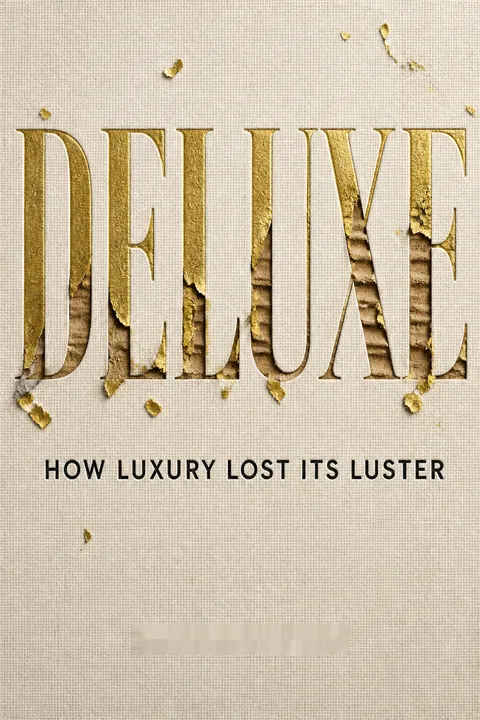
Deluxe: How Luxury Lost Its Luster explores the transformation of the luxury fashion industry from exclusive craftsmanship to mass-market consumerism. Thomas criticizes how conglomerates have prioritized profits over quality, diluting the essence of luxury. The book offers detailed histories of fashion houses and insights into manufacturing, counterfeiting, and global markets. While some readers found it informative and well-researched, others criticized its length and occasional lack of focus. Overall, it provides a comprehensive look at the changing landscape of luxury goods and their cultural impact.
People Also Read




Glossary
democratic luxury
Luxury sold across income levelsA business approach that makes luxury brands available to a much broader public through lower-priced accessories, perfume, global stores, outlets, and travel retail. The term presents wider access as a social good, but Thomas argues that it also served a commercial goal: increasing sales by turning elite brands into mass-market names.
vertical integration
Control across production and salesA business strategy in which a company takes control of multiple stages of its operation, such as production, distribution, and retail, rather than relying on outside manufacturers, wholesalers, or franchisees. Henry Racamier used the approach at Louis Vuitton, increasing the company’s control over its stores and helping establish a model adopted by other luxury groups.
It bag
Seasonal must-have handbagA handbag promoted as the essential accessory of a particular fashion moment. Luxury companies, designers, advertising, and fashion media helped create demand for these bags, which were visible status symbols and profitable products that did not require sizing. The book contrasts their rapid seasonal appeal with classic bags valued for longevity.
Parasite Singles
Unmarried adults living with parentsA term used in Japan for unmarried, university-educated women, often ages twenty-five to thirty-four, who worked and continued living with their parents. With fewer household expenses, many had substantial discretionary income. The book describes their spending on luxury goods and shopping trips as an important force in the expansion of luxury retail.
luxury refugees
Creators leaving corporate luxuryThomas’s term for designers, perfumers, and executives who became disillusioned with the compromises of large luxury companies and left to build smaller, independent businesses. Their stated aim was to preserve creative control, personal service, and high standards of making, rather than pursue expansion at any cost.
massclusivity
Mass reach with limited availabilityA retail idea used by H&M to describe a designer collaboration sold widely through a mass-market chain but available only as a limited collection. Customers could buy designer-associated fashion at much lower prices, yet had to arrive while the special release was in stock. The concept combines broad distribution with temporary scarcity.
nouveau chic
Newly affluent, brand-aware consumersA label used in the book for young Chinese consumers who had grown up amid greater economic opportunity and access to global information. They spent on themselves, sought fashionable luxury goods, and often treated famous brands as signs of modern status. The term describes a developing consumer group, not a single uniform taste.
FAQ
What is Deluxe: How Luxury Lost Its Luster by Dana Thomas about?
- Transformation of luxury industry: The book traces the evolution of the luxury goods industry from exclusive, artisanal workshops to mass-produced, global corporations.
- Behind-the-scenes revelations: Dana Thomas exposes how luxury brands have shifted focus from craftsmanship and exclusivity to profit and mass appeal.
- Key themes and scope: It covers globalization, marketing, counterfeiting, and the sociocultural impact of luxury consumption, offering a critical look at the industry’s changes.
- Personal and investigative approach: Thomas combines historical analysis, interviews, and firsthand experiences to provide a comprehensive narrative.
Why should I read Deluxe: How Luxury Lost Its Luster by Dana Thomas?
- Insider’s perspective: The book offers a rare, critical look at the luxury industry’s inner workings, revealing realities behind the glamorous façade.
- Understanding consumer culture: Readers gain insight into how luxury brands manipulate desire, status, and identity through marketing and branding.
- Critical analysis: Thomas challenges common perceptions, exposing issues like loss of craftsmanship, exploitation, and the dark side of democratized luxury.
- Broader relevance: Essential for those interested in fashion, business, culture, or the ethics of global consumerism.
What are the key takeaways from Deluxe: How Luxury Lost Its Luster by Dana Thomas?
- Craft to corporation: Luxury shifted from handcrafted, exclusive goods to mass-produced, profit-driven products through corporate consolidation and globalization.
- Handbags as profit engines: Iconic handbags became central to brand identity and financial success, often overshadowing clothing and other products.
- Globalized production: Manufacturing moved to low-cost countries, raising concerns about quality, authenticity, and labor ethics.
- Counterfeiting and brand dilution: The rise of fakes and mass-market strategies threaten the exclusivity and value of luxury brands.
How does Dana Thomas in Deluxe explain the historical origins and evolution of the luxury goods industry?
- European aristocratic roots: Luxury began in royal courts, with artisans crafting exclusive goods for monarchs and nobility, establishing brands like Louis Vuitton and Hermès.
- Industrial Revolution expansion: The rise of the bourgeoisie broadened luxury’s clientele, making conspicuous consumption a social marker.
- Postwar and social change: After WWII, designers like Dior revived luxury, but the 1960s-70s saw democratization through licensing and ready-to-wear lines.
- Modern transformation: The industry shifted from tradition and exclusivity to mass production and global marketing.
How did luxury brands become global corporations, according to Deluxe: How Luxury Lost Its Luster?
- Corporate takeovers: Family-owned houses were acquired by business moguls like Bernard Arnault, forming conglomerates such as LVMH.
- Vertical integration: Brands began controlling production, distribution, and retail, maximizing profits and standardizing quality.
- Global retail expansion: Flagship stores and standardized marketing created a cohesive global image, with luxury brands entering new markets worldwide.
- Profit over heritage: The focus shifted from artisanal values to financial growth and market dominance.
What role do marketing, celebrity culture, and advertising play in luxury’s success, as described in Deluxe by Dana Thomas?
- Advertising revolution: Luxury brands invested billions in provocative campaigns, using supermodels and celebrities to build global recognition.
- Celebrity endorsements: Hollywood stars and stylists became key to promoting brands, providing free publicity and influencing trends.
- Event sponsorships: Brands sponsor high-profile events to associate with glamour and exclusivity, reinforcing the luxury fantasy.
- Manipulating desire: Marketing strategies create aspiration and status, driving consumer demand for luxury goods.
How has globalization affected luxury markets, especially in Asia, according to Deluxe: How Luxury Lost Its Luster?
- Japanese market dominance: Japan became a major luxury consumer, influencing product design and retail strategies.
- China’s explosive growth: Brands rapidly expanded into China and other emerging markets, adapting to local tastes and shopping habits.
- Homogenized global retail: Luxury stores worldwide adopted similar opulent designs, creating a consistent brand image.
- New consumer demographics: The rise of middle-class and young consumers in Asia reshaped global luxury demand.
What does Dana Thomas reveal about the globalization of luxury goods production in Deluxe?
- Shift to low-cost countries: Manufacturing moved from Europe to China, Mauritius, and Vietnam to cut labor costs.
- Complex supply chains: Luxury products now combine materials and components from multiple countries, complicating provenance and quality control.
- Labor and ethical concerns: Factories often employ young workers in challenging conditions, raising questions about labor standards and human rights.
- Technological innovations: Brands use advanced tools to increase productivity, sometimes at the expense of artisanal quality.
How did luxury handbags become central to the industry, according to Deluxe: How Luxury Lost Its Luster?
- Handbags as brand entry point: Designers like Tom Ford made handbags the primary product introducing customers to luxury brands.
- The “It” bag phenomenon: Iconic designs like Fendi’s Baguette drove sales, brand prestige, and sparked industry-wide trends.
- Production scale-up: Brands adopted assembly-line methods and globalized manufacturing to meet booming demand.
- Profit and status: Handbags became the most visible and profitable luxury item, symbolizing status and aspiration.
What insights does Deluxe: How Luxury Lost Its Luster provide about the perfume industry within luxury?
- Perfume as accessible luxury: Fragrances allow consumers to buy into luxury brands at a lower price point, supporting broader brand marketing.
- Craftsmanship and sourcing: The book details the artistry of master perfumers and the sourcing of rare ingredients from places like Grasse, France.
- Industry challenges: Market saturation, celebrity perfumes, and cost-cutting have diluted quality and reduced sales.
- Balancing art and profit: Brands struggle to maintain artistry while maximizing profitability, often outsourcing production and altering formulas.
What does Dana Thomas reveal about counterfeiting in the luxury industry in Deluxe: How Luxury Lost Its Luster?
- Scale and impact: Counterfeiting is a massive global problem, costing brands billions and fueling organized crime.
- Consumer demand for logos: The desire for status symbols drives demand for both real and fake luxury goods, blurring social distinctions.
- Production and distribution: Counterfeits are made in clandestine workshops, often with poor labor conditions, and distributed through global networks.
- Legal challenges: Brands invest heavily in legal action, but enforcement is difficult and penalties are often light.
What are the best quotes from Deluxe: How Luxury Lost Its Luster by Dana Thomas and what do they mean?
- “Luxury is a necessity that begins where necessity ends.” — Coco Chanel: Highlights luxury as an indulgence beyond basic needs, rooted in desire and status.
- “Luxury has lost its luster.” — Dana Thomas: Sums up the book’s thesis that corporatization and democratization have eroded luxury’s original values.
- “The way I define luxury isn’t by fabric or fiber or the amount of gold bits hanging from it. That’s an old definition. For me, luxury is about pleasing yourself, not dressing for other people.” — Marc Jacobs: Challenges traditional notions of luxury, emphasizing personal satisfaction over conspicuous consumption.
- Quotes as thematic anchors: These statements encapsulate the book’s critical perspective on the changing meaning of luxury.
About the Author
Other books by Dana Thomas
Download PDF
Download EPUB
.epub digital book format is ideal for reading ebooks on phones, tablets, and e-readers.








