

Key Takeaways
One impulsive post cost Lyons millions, and nearly cost his marriage.
A costly habit. Dan Lyons built a career on being outspoken, until a Facebook post criticizing a startup’s CEO got him fired after twenty months. His stock options required four years at the company. Years later, he calculated that staying long enough to vest could have left him with shares worth about $8 million. His talkativeness also helped drive a separation from his wife. The problem was not simply saying too much. It was speaking impulsively even when he knew the words could hurt him.
A revealing score. Lyons rated 50, the highest possible result, on the Talkaholic Scale, a questionnaire designed to identify compulsive overtalking. His wife gave him the same score. The number made a private source of friction difficult to dismiss as just a lively personality.
The opening story gives restraint a tangible cost: speech can spend money, trust, and opportunity in seconds, while the benefits of silence often arrive quietly. That framing is useful because overtalking is easy to excuse as charm or candor until consequences accumulate. Still, one disastrous post cannot establish that silence would have solved every problem in Lyons’s life. The more general lesson is narrower and stronger: a known impulse deserves practical safeguards, especially when the stakes are high.
Practice restraint in short, deliberate reps instead of demanding instant silence.
A daily workout. Lyons treats speaking with intention as a practice, not a personality transplant. He recommends trying one exercise in a bounded situation, such as a half-hour call or a family meal, rather than attempting to stay quiet all day.
The Five Ways to STFU can be expressed as five small choices:
1. Leave a gap unfilled when nothing useful needs saying.
2. Pause before answering, especially when emotion rises.
3. Reduce posting and commenting online.
4. Make room for stretches without incoming media.
5. Give another person your full attention.
Lyons used reminders above his computer, slowed his speech, and wrote down what a meeting needed to accomplish before joining. These supports made restraint less dependent on willpower and easier to repeat.
The workout metaphor turns a vague virtue into a behavior that can be practiced and reviewed. Small trials also lower the risk of confusing quietness with withdrawal: a person can test one pause without becoming an entirely different conversational partner. The framework is most useful when treated flexibly. A long silence is not automatically thoughtful, and speaking up can be essential when someone needs protection, clarity, or recognition. The aim is choice, not muteness.
Social platforms turn your need for connection into a machine for compulsive speech.
Participation is the product. Lyons argues that social apps profit when people keep returning, posting, and reacting. Notifications and unpredictable bursts of attention encourage repeated checking, while emotionally charged posts can attract more engagement. A Yale study cited in the book tracked 1.2 million tweets and found that users’ posts grew more frequent and more outraged over time. The design rewards a style of communication that can spill into offline life.
Add friction. Lyons removed Facebook and Instagram from his phone, used Twitter in read-only mode, and found the services less compelling when he stopped performing for an audience. Other options include turning off notifications, keeping the phone in another room, or checking apps only at a chosen time. Social media can also offer support and connection, so the point is deliberate use, not a universal ban.
This account shifts the problem from individual weakness to an interaction between human motives and engineered incentives. A person may open an app for belonging, then be nudged toward performance and conflict because those actions hold attention. That distinction helps replace shame with strategy: changing access can be more reliable than repeatedly resisting a cue. At the same time, a platform is not experienced identically by every user. Its value depends on what someone does there, what it displaces, and how it affects their mood.
Schedule quiet before your attention and stress are spent for you.
Noise has a bodily cost. The book links constant digital input and environmental noise with distraction, agitation, and stress. Lyons describes the Anxiety Wheel: anxiety prompts a person to reach for a phone or talk compulsively, but the extra stimulation can intensify the anxiety that prompted the behavior. Silence and time outdoors offer a way to interrupt that loop.
Lyons tries forest bathing, a slow, attentive visit to a wooded place, and returns feeling calmer and less drawn to his phone. He also describes meditation and workplace breaks without screens. Some supporting claims need care: research on silence and new brain cells discussed in the book was conducted in mice, not people. The practical case for quiet does not depend on overstating that evidence.
Quiet functions here not as a luxury but as a boundary around attention. A pause from incoming signals can make it easier to notice one’s own thoughts instead of reacting to the newest prompt. This also connects the personal and the environmental: people cannot fully manage attention while every room, device, and workplace demands it. Claims about silence as direct medical treatment remain less settled than the everyday value of relief from interruption. That distinction preserves the useful advice without turning calm into a cure-all.
Use questions to turn routine talk into conversations that matter.
Depth beats volume. Psychologist Matthias Mehl studied everyday speech using an Electronically Activated Recorder, a device that captures brief samples of conversation. In one study, people who spent more time in substantive conversations and less time in small talk reported greater life satisfaction. The happiest participant spent about 10 percent of speaking time on small talk; the least happy spent nearly 30 percent. The results show an association, not proof that changing conversation alone causes happiness.
A meaningful exchange does not require grand topics. Mehl describes asking a neighbor who had undergone cancer surgery how he was really doing, then listening to the answer. Lyons recommends asking open questions and resisting the urge to fix the other person’s problem. Ordinary talk can become more honest when someone feels there is room to answer fully.
The value of this finding lies less in condemning small talk than in showing that conversation has different depths. Brief exchanges help people coordinate and establish ease; deeper ones can reveal concerns, hopes, and a sense of being understood. Questions create an invitation, but the invitation works only when the listener can tolerate an answer that is complicated or slow. The reported relationship between substantive talk and wellbeing should not be treated as a guaranteed formula. It does, however, make a strong case for making room for occasional conversations with real stakes.
Let pauses protect your leverage when pressure tempts you to overexplain.
Silence changes the negotiation. Lyons describes salary adviser Katie Donovan receiving an offer, declining to answer immediately, and letting the recruiter sit with the pause. After she repeated that she would consider the offer and respond later, the recruiter returned with an amount 20 percent above the original. Her example illustrates a common trap: people often fill an awkward silence by listing reasons to accept a deal they dislike.
A pause can also improve a presentation or a difficult reply by giving the other person time to absorb what was said. But silence is not a magic bargaining trick. It works best when the speaker knows what they want, can tolerate uncertainty, and avoids using quiet to threaten or humiliate.
A pause can interrupt the reflex to soothe another person’s discomfort at one’s own expense. In negotiation, that pause preserves options: the person who fills every gap may disclose their limits before the other side has made its case. Yet the same tactic can become coercive when status is unequal or the other party cannot safely disagree. Its ethical use depends on whether silence creates room for consideration or is deployed to make someone feel powerless.
Stop interrupting women, even when the room treats it as normal.
Floor time reflects status. In an experiment described by Lyons, an executive tracked interruptions across fifteen hours of meetings and recorded 314. Men made about two-thirds of them, and most of those interruptions were directed at women. Other research in the book finds that men speak more in some classrooms and academic discussions, while women are often perceived as overly talkative even when they speak less.
The advice is not to make women responsible for repairing the imbalance. Men can wait until a colleague finishes, notice who has been interrupted, and credit the person whose idea is repeated. When leading a meeting, they can invite contributions from people who have not yet had space to speak. A person who is interrupted can also use a calm, direct request to finish a point.
The section makes a crucial point about communication: the same amount of speech can be interpreted differently depending on who speaks and who is expected to yield. Counting interruptions can expose a pattern that participants may otherwise experience as isolated incidents. But speaking-time statistics are not a complete account of power; authority, expertise, topic, and organizational culture also shape whose words carry weight. The practical response is not simply to tell women to become more forceful. It is to change the room’s habits and distribute attention more fairly.
Parent by leaving enough space for children to solve, fail, and grow.
Help without taking over. When Lyons’s teenage daughter panicked about an English assignment, he resisted his usual impulse to supply answers. He listened until the immediate worry gave way to a deeper fear about adulthood. In another conversation, his son talked through a difficult paper aloud, and questions helped him organize his own argument. In both cases, the parent’s restraint gave the child room to think.
Lyons contrasts this approach with intensive parenting that manages every lesson, schedule, and setback. A gardener, in psychologist Alison Gopnik’s metaphor, creates conditions for growth rather than shaping a child into a predetermined design. This does not mean abandoning children. It means allowing manageable failures, boredom, and independent decisions while remaining a reliable source of support.
The parenting insight rests on a distinction between support and control. Solving a child’s problem can bring immediate relief to both parent and child, yet repeated rescue may leave the child with less practice making decisions. The opposite extreme, withholding help when a child genuinely needs it, is not independence; it is neglect. The useful middle ground is responsive restraint: listen first, ask what kind of help is wanted, and let children carry the parts of a challenge they can manage.
In love, quiet attention can cool conflict, but silence must not become punishment.
Less argument, more attention. During a separation from his wife, Lyons began practicing quieter interactions: taking walks together, listening over dinner, and resisting the urge to reopen old disputes. After months of these encounters, they reconciled. The experience leads him to suggest that some couples need less immediate rebuttal and more time to settle before responding.
This is different from stonewalling, one of the harmful interaction patterns identified by psychologist John Gottman, alongside criticism, contempt, and defensiveness. Lyons describes using STOP: pause, breathe, notice what is happening internally, then decide whether to speak and how. A cooling-off period can help a person return calmer. It should not be used to deny a partner communication, avoid necessary decisions, or make the other person anxious.
The account is persuasive because it treats silence as an active choice to avoid escalation, not as a way to win an argument. Still, reconciliation after a quieter period does not demonstrate that silence can repair every relationship, and the book’s experience should not substitute for professional help where it is needed. The key distinction is between a pause that supports regulation and a withdrawal that controls or abandons the other person. Healthy quiet remains connected to care, clarity, and a willingness to return to the issue.
Train listening like a skill, not a trait you either possess or lack.
Attention takes effort. Lyons describes listening as difficult partly because thought moves faster than ordinary speech, leaving space for distraction and rehearsing a reply. In one interview, he discovered from the transcript that he had done most of the talking despite intending to listen. Recording and reviewing a conversation made the imbalance visible.
Practice can be simple: put away the phone, prepare to hear someone before speaking, ask open questions, and summarize what was said before adding advice. The book also applies this to work. Sales-call analysis cited by Lyons found that stronger performers spent more time listening and asked a moderate number of questions, while weaker performers dominated the call. In product development, listening to customers helps teams revise what they build rather than defend an untested idea.
Treating listening as trainable corrects the comforting assumption that good intentions are enough. Transcripts and recordings provide feedback that memory alone often cannot, while repeated practice can turn attention into a more dependable habit. Listening also has institutional value: teams learn more when people can report problems without being cut off or punished. Still, listening is not the same as agreement, and some situations require a timely challenge. The skill is to understand first, then respond with relevant speech rather than reflexive speech.
Analysis
STFU is a memoir-led argument for treating speech as a behavior that can be managed, not an identity that must be indulged. Lyons begins with an unusually concrete confession: his compulsive talking damaged work and family life. That personal cost gives the book its narrative engine, while interviews, studies, and practical exercises widen the subject from one man’s impulse control to a culture organized around constant expression.
The book’s most valuable distinction is between silence as avoidance and silence as attention. Its examples range from pausing in a salary negotiation to listening while a teenager works through fear. The same outward behavior can serve very different purposes. Silence may protect thought, make space for another person, or prevent a regrettable response. It may also conceal power, suppress disagreement, or withhold connection. The ethical question is not simply whether someone speaks, but who gets room to speak, who benefits from the quiet, and whether the conversation can safely resume.
The digital critique extends that question to design. Platforms reward frequent participation, so individual restraint must compete with products built to prompt checking and reaction. Lyons’s practical advice is strongest where it changes the conditions of behavior, such as removing apps, turning off alerts, and scheduling quiet. His claims about health and neuroscience are more uneven. Some studies suggest promising links among conversation, stress, and wellbeing, but association is not proof of treatment, and some biological claims discussed are preliminary or based on animal research.
The result is not a rule that less speech is always better. It is a case for proportion: fewer reflexive words, more deliberate questions, and better attention to context. The book is most convincing when restraint returns agency to the speaker while increasing agency for others. Its lasting challenge is to make room for purposeful speech without mistaking constant visibility for connection.
Review Summary
STFU receives mixed reviews, with ratings ranging from 1 to 5 stars. Some readers find it insightful and practical, praising its research and humor. They appreciate the advice on talking less and listening more. Others criticize it for being too long, repetitive, and politically biased. Many note the irony of a book about shutting up being wordy. Some reviewers find value in the sections on social media and workplace communication, while others feel the author's personal anecdotes and opinions detract from the overall message.
People Also Read







Glossary
Talkaholic Scale
compulsive talking questionnaireA sixteen-item self-rating questionnaire developed by communication researchers Virginia Richmond and James McCroskey to identify compulsive overtalking. Its scored items produce a result from 10 to 50. In the book, a score above 40 indicates talkaholism, while scores from 30 to 39 suggest borderline difficulty controlling speech. It is a screening tool, not a clinical diagnosis.
Anxiety Wheel
anxiety reinforcing speech and scrollingLyons’s name for a self-reinforcing loop in which anxiety prompts someone to talk compulsively or check social media for relief, but the added stimulation increases anxiety instead. The cycle can also run in reverse: tolerating quiet or resisting the urge to check may allow the initial discomfort to subside.
Five Ways to STFU
five restraint practicesLyons’s informal set of exercises for communicating with greater intention: speak only when useful, pause before responding, reduce social-media participation, seek periods without noise or screens, and listen actively. They are meant to be practiced selectively in bounded situations, rather than applied as a demand for constant silence.
SITFO
turn off digital inputsAn acronym for Shut It the Fuck Off. Lyons uses it to describe deliberately switching off devices, apps, and streams of media to reduce information overload. The practice can mean taking a break from screens or removing particular sources of distraction, rather than abandoning the internet altogether.
Active silence
attentive silence that invites thoughtA way of being quiet while remaining engaged with another person. Rather than ignoring or withdrawing, the listener gives focused attention, allows pauses, and resists the impulse to solve or redirect the other person’s problem. The book uses this idea especially in conversations with children and close relationships.
STOP
pause and assess before respondingA mindfulness technique attributed in the book to Jon Kabat-Zinn. It stands for Stop, Take a breath, Observe what is happening internally, and Proceed with intention. In conversation, it creates a brief interval between an emotional trigger and a response, making it easier to choose whether and how to speak.
Traffic Light Rule
check attention during long remarksA conversational guideline associated with psychologist Marty Nemko. It treats the first thirty seconds of a comment as a green light, the next stretch as a caution period, and about one minute as a point to stop or check the listener’s interest. The intent is to notice attention and break long explanations into shorter exchanges.
60-40 Rule
balance speaking and listeningCommunication professor Michael Beatty’s guideline for dating conversations: neither person should dominate the exchange, and each should speak roughly 40 to 60 percent of the time. The range is a rule of thumb, not a precise measurement. It is meant to avoid both overwhelming a partner and leaving them to carry the entire conversation.
Four Horsemen
four damaging conflict patternsPsychologist John Gottman’s labels for four destructive ways couples may interact: criticism, contempt, defensiveness, and stonewalling. The book presents them as warning signs in relationship communication. When a person feels overwhelmed during conflict, a pause to calm down can help, provided it is not used to avoid the issue or punish a partner.
FAQ
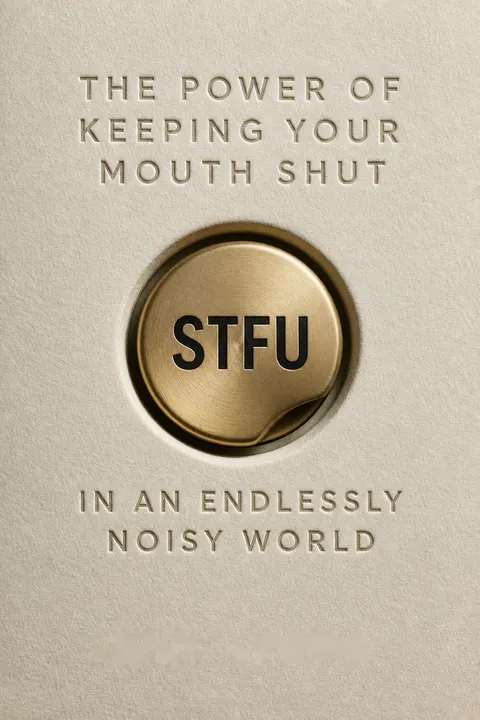
What's "STFU: The Power of Keeping Your Mouth Shut in an Endlessly Noisy World" about?
- Theme of Silence: The book explores the benefits of speaking less and listening more in a world overwhelmed by noise and constant communication.
- Personal Journey: Author Dan Lyons shares his personal experiences with overtalking and the negative impacts it had on his life, including professional setbacks and personal relationships.
- Practical Advice: It offers practical strategies for reducing unnecessary speech, improving listening skills, and enhancing personal and professional relationships.
- Cultural Critique: The book critiques modern society's obsession with constant communication and the pressure to express opinions on every topic.
Why should I read "STFU: The Power of Keeping Your Mouth Shut in an Endlessly Noisy World"?
- Improve Communication: The book provides insights into how speaking less can lead to more effective communication and stronger relationships.
- Personal Growth: It offers a pathway to personal growth by encouraging self-reflection and mindfulness in communication.
- Professional Benefits: Readers can learn how to use silence as a tool for negotiation and leadership, potentially leading to career advancement.
- Mental Health: The book discusses how reducing verbal clutter can lead to reduced anxiety and improved mental well-being.
What are the key takeaways of "STFU: The Power of Keeping Your Mouth Shut in an Endlessly Noisy World"?
- Silence is Powerful: Speaking less can make you appear more intelligent and in control, enhancing your influence in both personal and professional settings.
- Listening is Crucial: Active listening is a skill that can improve relationships and lead to better understanding and empathy.
- Cultural Shift Needed: Society needs to shift from valuing constant noise and communication to appreciating the power of silence and thoughtful speech.
- Practical Techniques: The book provides specific methods, such as the "Five Ways to STFU," to help readers implement these changes in their lives.
What are the "Five Ways to STFU" mentioned in the book?
- Say Nothing: When possible, choose silence over speaking to conserve your words for when they truly matter.
- Master the Pause: Use pauses in conversation to think before speaking and to give others space to contribute.
- Quit Social Media: Reduce or eliminate social media use to decrease unnecessary noise and improve mental clarity.
- Seek Silence: Spend time in silence to recharge and improve creativity and productivity.
- Learn to Listen: Develop active listening skills to enhance understanding and connection with others.
How does Dan Lyons suggest using silence as a tool for negotiation?
- Power of the Pause: Silence can create discomfort in negotiations, prompting the other party to fill the void, often to your advantage.
- Avoid Overexplaining: By speaking less, you avoid giving away too much information or undermining your position.
- Control the Conversation: Silence can help you maintain control of the conversation, allowing you to steer it in your favor.
- Encourage Offers: By not immediately responding, you may encourage the other party to improve their offer or terms.
What personal experiences does Dan Lyons share in the book?
- Career Setbacks: Lyons discusses how his tendency to overtalk cost him a lucrative job opportunity and millions in potential earnings.
- Marriage Challenges: He shares how overtalking contributed to a separation from his wife and how learning to listen helped repair their relationship.
- Social Interactions: Lyons recounts various social situations where his overtalking led to awkwardness and strained relationships.
- Self-Reflection: The book details his journey of self-discovery and the realization of the benefits of speaking less.
What are some of the best quotes from "STFU: The Power of Keeping Your Mouth Shut in an Endlessly Noisy World" and what do they mean?
- "Talk less, get more." This quote encapsulates the book's central theme that speaking less can lead to greater influence and success.
- "Silence is power, and power is silence." It highlights the idea that those who speak less often hold more power and control in conversations.
- "The less you say, the more mysterious you become." This suggests that mystery can enhance one's presence and authority.
- "You can always say nothing." A reminder that silence is always an option and can often be the best response.
How does Dan Lyons address the issue of social media in the book?
- Critique of Social Media: Lyons criticizes social media for contributing to noise and distraction, making it harder to focus and communicate effectively.
- Encouragement to Quit: He suggests quitting or significantly reducing social media use to improve mental health and communication skills.
- Impact on Relationships: The book discusses how social media can harm real-life relationships by encouraging superficial interactions.
- Dopamine and Addiction: Lyons explains how social media exploits dopamine responses, leading to addictive behaviors and increased anxiety.
What is the "Talkaholic Scale" and how is it used in the book?
- Self-Assessment Tool: The Talkaholic Scale is a questionnaire designed to help individuals assess their level of compulsive talking.
- Identifying Overtalkers: It helps readers identify if they have a tendency to overtalk and how it might be affecting their lives.
- Encourages Reflection: By scoring themselves, readers are encouraged to reflect on their communication habits and consider changes.
- Basis for Improvement: The scale serves as a starting point for those looking to reduce overtalking and improve their communication skills.
How does "STFU: The Power of Keeping Your Mouth Shut in an Endlessly Noisy World" address workplace communication?
- Meetings and Efficiency: The book suggests keeping meetings short and focused, with an emphasis on listening rather than speaking.
- Leadership and Listening: It highlights the importance of listening as a key leadership skill that can lead to better decision-making and team dynamics.
- Negotiation Tactics: Silence is presented as a powerful tool in negotiations, helping to maintain control and gain advantages.
- Reducing Workplace Noise: Lyons advocates for reducing unnecessary communication to improve productivity and workplace harmony.
What role does listening play in "STFU: The Power of Keeping Your Mouth Shut in an Endlessly Noisy World"?
- Active Listening: The book emphasizes the importance of active listening as a way to improve relationships and understanding.
- Listening as a Skill: Listening is presented as a skill that can be developed and refined through practice and mindfulness.
- Impact on Relationships: Good listening can lead to deeper connections and more meaningful conversations with others.
- Listening in Leadership: Effective leaders are often those who listen more than they speak, using the information gathered to make informed decisions.
How does Dan Lyons propose using silence to improve personal relationships?
- Active Silence: Lyons suggests using silence to create space for others to express themselves, leading to better understanding and empathy.
- Reducing Conflict: By speaking less, individuals can avoid unnecessary arguments and focus on resolving issues constructively.
- Building Connection: Silence can be a powerful tool for building deeper connections, as it encourages listening and reflection.
- Encouraging Self-Sufficiency: In parenting, silence can help children develop problem-solving skills and independence by allowing them to work through challenges on their own.
About the Author
Other books by Dan Lyons
Download PDF
Download EPUB
.epub digital book format is ideal for reading ebooks on phones, tablets, and e-readers.








