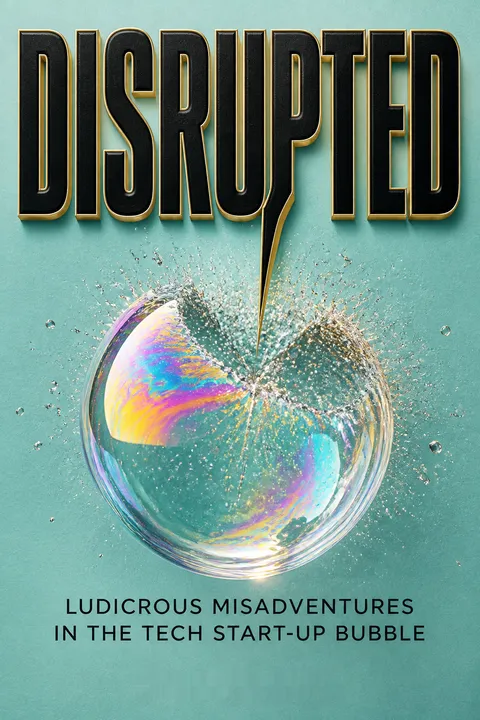


Key Takeaways
Treat reinvention as a family decision, not a personal adventure
A career can vanish overnight. At fifty-one, Lyons was technology editor at Newsweek, a job he loved. Then the magazine eliminated his position with two weeks' notice and no severance. His wife had recently left teaching because of chronic migraines, and their six-year-old twins depended on the family's income and health insurance. The shock was practical as well as personal: Could they still afford their planned trip? What would happen when insurance ended? His first response was to imagine a grand escape to the mountains, but his wife brought him back to the household realities.
The leap carried real risk. Lyons eventually chose HubSpot, a nearby start-up, over other offers partly because it promised a chance at a lucrative IPO. He had no marketing experience, but hoped to learn quickly. His story makes career change less like a motivational poster and more like a decision made under pressure, with dependents and bills in the frame.
What's valuable here is the refusal to treat professional identity as a private possession. A layoff changes the family's risk profile, not only the worker's self-image. Research on job loss often distinguishes financial strain from the loss of status and routine; Lyons's account shows how both arrive together, affecting his marriage and his children's sense of security. His wife's insistence on discussing present facts is a useful counterweight to panic-driven optimism. Still, taking a risky job is not automatically courageous or foolish. The better question is whether the upside, support system, and downside protection fit the household's actual capacity.
In a bubble, a compelling growth story can outrank a profitable product
The pitch came first. HubSpot sold a vision called inbound marketing: attract potential customers with online material instead of relying only on advertising and cold calls. But the company initially hired sales and marketing leaders before settling on a product. Former employees told Lyons that early software was unreliable, and that HubSpot's own marketers sometimes relied on competitors' tools. In 2011, after acquiring a company with stronger engineers, HubSpot began rebuilding its software.
Growth became the proof. By the time Lyons joined in 2013, the product had improved, but the company still depended heavily on sales calls, marketing campaigns, and publicity. Its founders presented a clean origin story about transforming marketing. The business, as Lyons found it, was messier: a sales engine seeking fast growth, with product quality and profitability still unresolved. The narrative helped attract customers, employees, and investors, even while the economics remained uncertain.
The account usefully separates a company's story from its operating reality. In finance, a valuation reflects expectations about future cash flows, so a young company can rationally spend ahead of revenue if customer retention and margins later improve. That possibility is not the same as proof that the story will come true. The relevant questions are whether customers keep paying, whether acquisition costs fall, and whether product value grows beyond the sales effort required to explain it. Lyons is strongest when he shows the gap between promise and practice. His skepticism is less conclusive when it treats hype itself as evidence that a business must fail.
Read workplace perks as part of the labor model, not proof of care
Fun was a business asset. HubSpot's offices had orange branding, games, free snacks and beer, a hammock room, parties, and team activities. The company described this atmosphere as evidence of a distinctive culture. New hires heard that they were joining a movement, not merely selling software. A shared vocabulary, praise rituals, and the HEART values of humble, effective, adaptable, remarkable, and transparent helped make that identity visible and repeatable.
The other workplace was louder. Lyons was moved into a telemarketing room where young representatives made calls under constant quotas. One representative estimated that about one call in eighty secured a product demonstration. Workers were paid modestly, monitored closely, and could be dismissed for missing monthly targets. The contrast does not prove that every perk was cynical, but it shows that a cheerful office and a punishing labor system can coexist. A company's stated values reveal only part of how work feels and who benefits.
Organizational culture can create genuine belonging and still serve economic purposes. Rituals, symbols, and shared language help coordinate people, especially in a fast-growing company where formal procedures lag behind. The concern arises when belonging becomes a substitute for bargaining power, fair pay, or predictable treatment. A useful test is whether employees can criticize the culture without risking their standing, and whether the company offers material support alongside emotional enthusiasm. Lyons's satirical framing sometimes makes ordinary workplace fun look inherently manipulative. The sharper insight is that perks should be judged alongside workload, compensation, and the consequences of saying no.
When the metric is leads, quality becomes expendable
The blog served a funnel. HubSpot measured the company blog by how many readers became sales leads, meaning people who provided contact information. Its imagined target customer, 'Mary the Marketer,' represented a busy small-business marketer seeking basic practical advice. The blog team faced a target of 14,000 leads a month, which Lyons says required roughly one million visitors. That pressure rewarded searchable how-to articles and downloadable guides, not necessarily ambitious reporting.
The assignment changed beneath him. Lyons believed he had been hired to raise the quality of HubSpot's content. Instead, he was asked to write for the lead-generation system and found that his more sophisticated articles attracted readers who rarely filled out forms. His proposal for a separate, higher-end publication was rejected by managers, despite initial support from the founders. In this setting, content was not primarily journalism or education. It was a measured step in the sales process.
This is a vivid case of Goodhart's law: when a measure becomes a target, people adapt their behavior to improve the number, sometimes at the expense of the thing the number was meant to represent. Lead volume may be useful for a sales team, but it cannot by itself tell whether readers trust the company or customers benefit from its software. The key is to pair activity measures with outcomes such as customer retention, satisfaction, and the quality of leads. Lyons also learns that good work is context-dependent. His reporting skills did not automatically transfer to conversion copy, and the mismatch was organizational as much as personal.
Treat culture fit as a test for belonging, not sameness
The office had a narrow image. Lyons describes a workforce dominated by young, white, mostly suburban employees, with few older workers and very limited racial diversity. One former colleague reportedly estimated that, out of 700 employees, only 75 were over thirty-five. The company promoted culture fit as a hiring priority, while its own HR department told Lyons it had no diversity statistics. He also heard casual remarks about his age and was encouraged to turn being the old employee into a comic feature.
Age became visible at work. CEO Brian Halligan told the New York Times that gray hair and experience were overrated in technology. Lyons, then in his fifties, felt the remark confirmed a broader pattern he had already encountered. The book also describes lawsuits alleging age or gender discrimination at other technology firms, while noting that those companies denied the allegations. The larger point is not that every young workplace discriminates, but that a narrow idea of fit can quietly reproduce itself.
Culture fit can be a practical question about whether people can collaborate around shared expectations. It becomes dangerous when similarity is mistaken for competence, or when a familiar background is treated as evidence of potential. In hiring, vague fit judgments are especially hard to audit because they sound reasonable while hiding inconsistent standards. Lyons's experience gives the pattern a human face, but one memoir cannot establish the prevalence or motive behind every employment decision. His strongest evidence is cumulative: workforce composition, comments, hiring preferences, and the absence of basic diversity data. Organizations can reduce ambiguity by defining job-related criteria and tracking who advances.
A job can demand loyalty while offering no reciprocal security
Employees were replaceable by design. HubSpot used 'graduation' as a warm-sounding label for departures, including firings. Lyons describes workers being dismissed with little warning, sometimes without severance, while colleagues received upbeat messages about their next adventure. The company's culture code emphasized the team over the individual, but employees could be treated as short-term contributors rather than long-term members. This reflects the wider 'tour of duty' model Lyons discusses, in which a job is framed as a temporary exchange of work for pay and experience.
Equity did not erase the risk. Start-up employees often accept lower salaries in exchange for stock options, which may become valuable if the company grows. But options can be worth little if the eventual share price falls below the employee's exercise price, or if the worker leaves before vesting. Lyons notes that founders and investors sometimes sell shares before an IPO, while employees remain exposed to the outcome. The promise of a windfall is not the same as a dependable compensation plan.
The distinction between a team and a family can be healthy when it prevents false promises of permanent employment. The imbalance appears when companies ask workers for emotional allegiance while treating security as entirely the worker's problem. Stock options can align incentives, but their value is difficult for employees to assess, especially when private valuations and vesting rules are complex. Clear pay, transparent equity terms, and honest communication about layoffs are more substantive than slogans about loyalty. Lyons's criticism is persuasive on the asymmetry of risk, though not every short-term job is exploitative. Temporary work can suit people when its terms are explicit and the compensation matches the uncertainty.
If nobody owns a decision, nobody can be held to it
Approval did not guarantee action. Lyons pitched a separate online magazine to HubSpot's founders, who appeared to support it. His managers then delayed the project, and it was ultimately replaced by a smaller blog assignment. Nobody could clearly explain who had reversed the decision or why. The episode taught him that a founder's enthusiasm was not the same as a funded plan, a named owner, or authority to execute.
Ambiguity enabled pressure. After Lyons criticized a company leader's age-related comments online, his manager described the post as a serious offense and said the company could fire him without needing a reason. Later, that manager repeatedly challenged his loyalty and performance, while tying his continued employment to the success of a podcast. Lyons interpreted the treatment as an effort to make him quit. His account shows how unclear authority can leave workers struggling to distinguish ordinary feedback from an informal campaign to push them out.
A decision needs more than senior approval: it needs an accountable owner, resources, a timeline, and a record of what changed. Without those elements, employees can be held responsible for outcomes they were never empowered to control. This is a basic problem of organizational design, not merely bad manners. The interpersonal account is harder to verify from one side, and Lyons's interpretation of motives should be treated as his interpretation. Even so, the described process is instructive. When a manager's expectations shift, written priorities and explicit escalation paths protect both the employee and the organization from retrospective blame.
Inspect the cash burn, not just the startup's IPO story
Revenue growth hid heavy losses. HubSpot reported $77.6 million in revenue and a $34.2 million loss in 2013. From 2009 through mid-2014, it generated $231 million in revenue but lost $118 million. In 2013, sales and marketing consumed about 68 percent of revenue, more than three times the company's research and development spending. The prospectus warned that the company might never become profitable. Nevertheless, its shares began trading in October 2014 above the initial offering price.
The outcome was uneven. Lyons received roughly $60,000 from his options, a meaningful sum but far from the imagined fortune. A later share sale raised more money for insiders than for the company itself. The figures do not prove that HubSpot could never become profitable, but they show why a rising stock price is not a substitute for understanding losses, cash needs, and who is selling. Investors buying the story were speculating on future performance, not buying an established stream of profits.
A loss-making company is not automatically a bad investment. Subscription software can require substantial upfront spending to acquire customers, and those investments may pay off if customers stay and service costs decline. The prospectus figures make the necessary test concrete: do recurring revenues eventually support the cost of selling, servicing, and improving the product? Investors should also distinguish company fundraising from insiders' sales, since those transactions serve different interests. Lyons is right to foreground cash burn and ownership. A more complete evaluation would also examine retention, margins, and customer acquisition trends, rather than treating losses as a verdict by themselves.
Trust a platform only as much as its oversight deserves
The book ended in uncertainty. After Lyons left, HubSpot announced that its board had fired its longtime marketing chief over attempts to obtain a manuscript involving the company. Another executive resigned before the company could determine whether to fire him for similar conduct. The company said it had notified legal authorities. A US attorney later told Lyons's lawyer that prosecutors would bring no charges, but the investigation's findings were not publicly explained to him. The book therefore presents serious concerns, not a complete account of what happened.
Oversight matters beyond the workplace. HubSpot stored customer information, including contact lists and business data. Lyons argues that people who entrust information to online services depend on employees, leaders, and boards to control access responsibly. A company's public values cannot substitute for clear rules, independent review, and consequences when those rules are breached. The unanswered questions about the manuscript and the board's limited disclosure left customers and investors with little basis for judging the company's safeguards.
Digital trust is an institutional property, not a personality trait. Users cannot inspect every employee's access or every internal investigation, so they depend on governance: access controls, audit logs, independent oversight, and credible disclosure after incidents. The account is necessarily incomplete because the investigation was not made public, and the absence of criminal charges does not establish either innocence or guilt. That uncertainty is precisely why process matters. A company asking users to entrust it with sensitive information should be judged not only by its product, but by whether its controls and accountability mechanisms are strong enough to withstand pressure from its own executives.
Analysis
Disrupted works because it is simultaneously a career memoir, a workplace ethnography, and an argument about start-up economics. Its narrative begins with a recognizable private crisis: an experienced journalist loses a valued job, fears becoming unemployable, and accepts a position that promises reinvention and possible financial upside. The comic tour of orange offices and earnest rituals then shifts into a study of what those rituals obscure: sales quotas, lead targets, unstable authority, and a workforce organized around rapid growth. The sequence lets readers experience the seduction before the critique arrives.
The book's central contribution is not simply that HubSpot had an eccentric culture or that start-ups can be chaotic. It shows how an attractive public identity can coexist with harsh internal incentives, and how the same company can sincerely offer employees community while treating labor as replaceable. The most durable analytical lens is to compare stated values with decision rights, measures of success, and the distribution of risk. Who can change a decision? What behavior earns praise or punishment? Who benefits if the company succeeds, and who absorbs the loss if it does not?
The memoir also has limits worth keeping in view. Lyons is a participant with a clear comic voice, strong grievances, and incomplete access to internal financial and legal deliberations. His encounters reveal how one employee experienced the firm, not a representative survey of every employee or customer. Some allegations about executives and other companies remain allegations, and the book itself acknowledges that the investigation into the manuscript was not fully disclosed. Those limits do not erase the value of the testimony; they clarify what kind of evidence it is. The strongest reading treats the book as a vivid case study of incentives, workplace power, and trust, while distinguishing documented figures from the narrator's interpretations. Its closing lesson is especially timely: a company's claims to be innovative or humane matter less than the safeguards that govern its actual power.
Review Summary
Disrupted receives mixed reviews, with some praising its humor and insights into startup culture, while others criticize the author's negative tone and perceived entitlement. Many readers find the book's critique of ageism, diversity issues, and questionable business practices in tech startups valuable. Some appreciate Lyons' candid portrayal of his experiences, while others see him as whiny and out of touch. The book sparks discussions about workplace culture, the tech industry bubble, and generational differences in professional settings.
People Also Read







Glossary
inbound marketing
Attracting customers through contentA marketing approach that draws potential customers toward a business through online material, such as blog posts, websites, and videos, rather than relying chiefly on outbound methods such as advertising and cold calls. In the book, HubSpot presents inbound marketing as a more effective and less expensive alternative, and sells software intended to support it.
HubSpeak
HubSpot's internal jargonLyons's label for the specialized vocabulary and acronyms used inside HubSpot. Terms such as DRI, KPI, TOFU, and MOFU gave employees a shared shorthand for roles, targets, and stages of the sales funnel. The vocabulary could help coordinate work, but Lyons also saw it as a marker of an insular culture that made ordinary discussions needlessly opaque.
HEART
Five desired employee traitsA HubSpot culture-code acronym for humble, effective, adaptable, remarkable, and transparent. Co-founder Dharmesh Shah presented these qualities as characteristics of an ideal HubSpot employee. The book describes HEART as both an aspirational statement of company values and part of a culture that assessed employees through a formal performance category bearing the same name.
VORP
Value over a replacement workerShort for value over replacement player, a metric adapted from baseball and used at HubSpot to evaluate how much value an employee provides compared with a cheaper replacement. Lyons portrays it as a way to pressure labor costs downward. Its placement beside HEART in employee evaluations captured the tension between the company's language of care and its emphasis on economic efficiency.
lead nurturing
Following up with potential customersA sales and marketing process that continues contacting people who have shown interest in a product, often through a sequence of automated emails and sales calls. HubSpot used the phrase for efforts to move a prospect toward a purchase. Lyons questions the positive framing when repeated messages are unwanted, showing how company vocabulary can recast persistent selling as customer care.
buyer persona
A model target customerA fictional profile used to represent a company's intended customer and guide its marketing. HubSpot's central example was Mary the Marketer, described as a busy marketing professional seeking practical advice. Writers used this profile to choose subjects and formats, especially blog content intended to attract small-business leads.
culture fit
Perceived match with workplace normsA hiring and management judgment about whether a person's behavior, values, or style appears compatible with an organization's existing culture. In Lyons's account, HubSpot treated cultural compatibility as important, but the workforce's relative uniformity raised the concern that fit could favor familiar backgrounds and ages rather than job-relevant ability.
graduation
A euphemism for leaving HubSpotHubSpot's upbeat term for an employee's departure, including cases in which a worker had been fired. Managers announced that someone had graduated and was moving toward a new adventure, while the person often disappeared from the workplace with little discussion. Lyons argues that this language softened the appearance of abrupt and sometimes painful dismissals.
FAQ
What's Disrupted: Ludicrous Misadventures in the Tech Start-up Bubble about?
- Author's Experience: The book chronicles Dan Lyons' transition from journalism to working at HubSpot, a tech start-up, highlighting the stark contrast between media portrayals and the actual tech work environment.
- Silicon Valley Culture: Lyons delves into the culture of Silicon Valley, describing it as a "bubble" characterized by self-confidence and a disconnect from reality, critiquing ageism and employee treatment.
- Personal Journey: It also narrates Lyons' personal journey of reinventing himself at fifty-two, emphasizing the challenges older workers face in a youth-centric industry.
Why should I read Disrupted by Dan Lyons?
- Insightful Perspective: The book offers a unique insider's view of the tech start-up world, revealing its absurdities and challenges, and demystifying the glamorized tech culture.
- Humor and Satire: Lyons uses humor and satire to critique the tech industry, making the book both entertaining and thought-provoking, with witty observations that simplify complex topics.
- Cautionary Tale: It serves as a warning for those considering a tech career, especially older workers, by highlighting the pitfalls and harsh realities of start-up culture.
What are the key takeaways of Disrupted?
- Reality vs. Myth: Lyons emphasizes the gap between the myth of the heroic entrepreneur and the chaotic reality of start-up life, challenging popular tech company myths.
- Ageism in Tech: The book discusses prevalent age discrimination in the tech industry, illustrating how older workers are undervalued and often pushed out.
- Corporate Culture: Lyons critiques the superficial aspects of tech corporate culture, such as the focus on fun and perks over meaningful work, which often mask deeper organizational issues.
What are the best quotes from Disrupted and what do they mean?
- "HubSpot’s leaders were not heroes...": This quote challenges the notion of heroism in entrepreneurship, suggesting that tech leaders are often celebrated without merit.
- "I am a Beached White Male.": Reflects Lyons' feelings of being out of place in a young tech environment, highlighting older workers' struggles in adapting to youth-centric cultures.
- "We’re a team, not a family.": Illustrates the transactional nature of tech employment today, signifying a shift from traditional corporate loyalty to a more disposable workforce.
How does Disrupted address the issue of work-life balance?
- Unlimited Vacation Policy: Lyons critiques HubSpot's unlimited vacation policy, which can be a way to avoid paying out vacation time, reflecting a trend of offering benefits that sound good but may not be beneficial.
- Pressure to Perform: The book shows how performance pressure undermines work-life balance, as employees feel compelled to work harder to meet unrealistic expectations.
- Cultural Expectations: Highlights the expectation for constant availability and engagement, leading to burnout and making true work-life balance difficult to achieve.
What is the "content factory" in Disrupted?
- Blog Team's Workspace: The "content factory" refers to where HubSpot's blog team operates, characterized by a high volume of young employees producing content for lead generation.
- Production Line Mentality: Lyons critiques the factory-like atmosphere, where content is churned out rapidly, often prioritizing quantity over quality.
- Lead Generation Focus: The content is primarily focused on generating leads rather than meaningful journalism, highlighting the commercialization of content in tech.
How does Dan Lyons describe the culture at HubSpot?
- Cult-like Environment: Lyons describes HubSpot's culture as cult-like, with a strong emphasis on positivity and team spirit, often to an extreme degree.
- Jargon and Buzzwords: The use of specific jargon, like "HubSpeak," prioritizes its own language over clear communication, creating barriers for newcomers.
- Superficial Perks: The culture is marked by superficial perks, such as free food and fun events, which can distract from deeper organizational issues.
What challenges does Dan Lyons face as an older worker in a tech start-up?
- Age Discrimination: Lyons experiences age discrimination, feeling out of place among younger colleagues, highlighting the undervaluation of older workers in tech.
- Cultural Disconnect: He struggles to adapt to HubSpot's culture, which prioritizes youth over experience, making it difficult for him to find his place.
- Job Security Concerns: As an older worker, Lyons faces heightened job security concerns, adding to his anxiety and feelings of inadequacy.
How does Disrupted critique the concept of "inbound marketing"?
- Marketing Buzzword: Lyons critiques "inbound marketing" as a buzzword lacking substance, arguing it can lead to spamming potential customers.
- Lead Generation Focus: The focus on generating leads can overshadow content quality, diluting marketing efforts' integrity.
- Superficial Engagement: Highlights how inbound marketing can create a facade of engagement without fostering genuine customer connections.
What is the significance of the term "bubble" in Disrupted?
- Economic Bubble: "Bubble" describes inflated valuations of tech start-ups lacking sustainable business models, reflecting broader economic overvaluation.
- Mindset Bubble: Refers to the insular mindset of tech workers, often disconnected from outside realities, fostering self-regard and poor decision-making.
- Cultural Critique: Critiques Silicon Valley culture, suggesting it fosters unrealistic expectations and a lack of accountability among leaders.
What role do venture capitalists play in Disrupted?
- Investment Dynamics: Venture capitalists drive startup culture, often prioritizing rapid growth and high valuations over sustainable practices.
- Pressure on Startups: VCs pressure startups to make risky decisions, sacrificing long-term stability for short-term gains.
- Ethical Concerns: Raises questions about venture capital ethics, particularly in influencing company culture and employee treatment.
How does Lyons' experience at HubSpot compare to his previous career in journalism?
- Cultural Differences: Lyons contrasts journalism's collaborative, creative environment with tech startups' competitive, cutthroat atmosphere.
- Personal Fulfillment: Reflects on the personal fulfillment found in journalism, often lacking in his role at HubSpot.
- Career Transition: Chronicles his struggle to adapt to a new career path, highlighting the challenges of reinventing oneself in a different industry.
About the Author
Other books by Dan Lyons

Download PDF
Download EPUB
.epub digital book format is ideal for reading ebooks on phones, tablets, and e-readers.








