

Key Takeaways
Build resilience through virtue and connection, not invulnerability
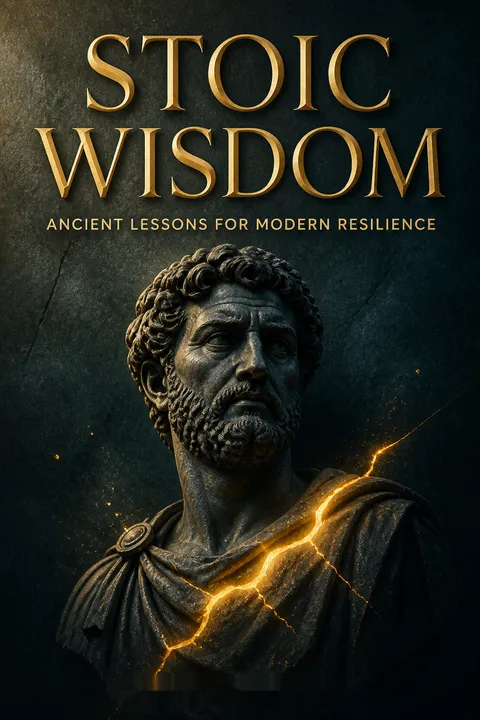
A practical philosophy. Stoicism is more than a trick for staying calm: it joins self-command to virtue, or the effort to act wisely and well. Its roots run from Socrates, who examined how people should live, through the countercultural Cynic Diogenes to Zeno, founder of the Stoic school. Roman writers such as Seneca, Epictetus, and Marcus Aurelius turned those ideas into counsel for daily life. Today the philosophy attracts entrepreneurs, soldiers, and self-help readers seeking steadiness under pressure.
Strength has limits. Sherman argues that resilience means adapting to adversity, not becoming invulnerable. Epictetus’s emphasis on inner freedom can inspire endurance, but taken alone it risks making structural hardship sound like an individual failure. Stoicism is healthier when personal discipline is paired with social support and the work of improving unjust conditions.
The book’s central correction is valuable because resilience is often marketed as a private superpower. A more realistic model includes both personal capacities and the conditions that let people use them, such as trusted relationships and meaningful choices. That distinction also guards against blaming people for suffering they cannot control. At the same time, an ideal of virtue can become another impossible standard if every setback is treated as a test of character. The strongest reading makes discipline a resource for responding to hardship, not a demand to deny it.
Measure success by skilled effort, not outcomes beyond your control
Separate aim from result. Stoic ethics distinguishes virtue from external outcomes. Health, friendship, and security matter and are usually worth pursuing, but they cannot guarantee a good life because chance can take them away. The Stoics call such things preferred indifferents: worthwhile choices, but not the measure of a person’s moral worth.
The archer’s lesson. An archer aims to hit a target, yet can control only the quality of the shot, not every condition affecting its flight. Fire chief Aart van Oosten faced a similar limit when he judged that a rescue attempt in a burning building would kill both trapped children and firefighters. A later report found the children had died before firefighters arrived. The Stoic lesson is to judge professional action by informed, careful effort, while still acknowledging tragic results.
This distinction resembles the difference between process goals and outcome goals in performance psychology. It protects sound judgment from being judged solely by luck, a crucial safeguard for clinicians, first responders, and anyone working under uncertainty. But it should not become a way to avoid reviewing decisions or repairing preventable harm. The useful sequence is to assess what was knowable, evaluate the quality of the action, and learn from the result. Calm is not a substitute for accountability; it can make accountability more bearable.
Rehearse likely losses, then plan prevention and recovery
Prepare before the shock. Stoic pre-rehearsal means vividly imagining a possible loss or setback in advance, then thinking through how to respond. It is not a spell against grief. It is a way to reduce the shock of treating ordinary human vulnerability as unimaginable. Tim Ferriss adapted the method into a worksheet: name the feared event, list ways to prevent it, and identify how to repair damage if it happens.
Make it humane. Sherman describes gently joking with her elderly mother about whether they had bought an imaginary immortality plan. The shared joke made an avoided subject more approachable as death neared. The method can also begin with smaller frustrations, building readiness gradually. Exposure-based therapies similarly use repeated, supported encounters with reminders of fear, though treatment for trauma requires appropriate clinical care.
Anticipation is useful when it produces preparation rather than endless threat-scanning. The difference is practical: a rehearsal ends with an action, a support plan, or a clearer acceptance of what cannot be controlled. Without that boundary, repeatedly imagining worst cases can become rumination and intensify anxiety. The family story also shows why emotional preparation need not be grim or formulaic. Humor, shared attention, and a person’s own preferred way of approaching difficult subjects can make reflection more tolerable.
Pause before endorsing the impression that turns feeling into action
Notice the judgment. Stoics distinguish an impression, or how something initially appears, from assent, the mind’s acceptance of that appearance as true or important. For example, an insult may seem to prove that one has been wronged and must retaliate. The Stoics argue that this evaluative judgment helps shape the emotion and the action that follows.
Not every reaction is chosen. The book describes three layers: involuntary bodily responses such as a startle or blush; ordinary emotions shaped by judgments; and cultivated emotions directed toward virtue. Even a composed person may tremble before danger. Sherman’s account therefore preserves a distinction between an automatic response and what someone does with it. The practical exercise is to notice the first reaction, then check whether its interpretation fits the facts before acting.
This account has a useful point of contact with cognitive therapies, which help people identify how interpretations influence emotional responses. It also fits a broader picture of decision-making in which fast reactions can be useful, but sometimes need deliberate review. The caution is that not all emotions are fully voluntary, and people’s interpretations are shaped by trauma, illness, and social power. A pause can create room for choice, but it should not be used to assign blame to people for reactions they did not freely select.
Turn anger toward repair, not retaliatory status-restoration
Distinguish protest from revenge. Seneca warns that anger can gather momentum and become payback, especially when a person feels insulted or lowered in status. Retaliation may injure another person without improving the original wrong. Yet anger can also alert people to serious injustice and help spur action. Sherman uses Hugh Thompson, a helicopter pilot who intervened to stop the My Lai massacre, as a difficult example: outrage moved him to protect civilians, but his action was restrained rather than vengeful.
Choose the response. The book suggests that a morally useful response aims to prevent harm or restore dignity, not simply make an offender suffer. Early bodily signs of anger can be a cue to pause and assess what the situation demands. The challenge is not to become indifferent to injustice, but to avoid letting retribution dictate the remedy.
This distinction helps explain why calls to suppress anger can protect the comfortable more than the wronged. Anger may register that a boundary or basic dignity has been violated, while retaliation often shifts attention toward personal standing. The harder question is how to preserve anger’s information and energy without making it the sole guide to action. Deliberate goals, such as protecting people or changing a harmful practice, offer one check. So does listening to those most affected before deciding what repair requires.
Treat moral distress as a prompt for repair, not self-condemnation
Moral injury is not just fear. It is deep distress arising when someone believes they committed, witnessed, or suffered a serious moral wrong. A military aviator, Layne McDowell, remained haunted by an accidental bombing in Kosovo and imagined the child who might have been killed. Even if war rules or bad luck explain an event, guilt can persist because the person cares about the lives at stake.
Keep the moral signal. Sherman argues that distress about wrongdoing can reveal an aspiration to become better. But self-blame can grow harsher than the facts warrant. Seneca’s play about Hercules offers a model of help: after Hercules unknowingly kills his family, his father and friend offer compassion and urge him not to punish himself without limit. Other people can help someone separate responsibility from misfortune and find a path toward repair.
The distinction between moral pain and self-punishment matters in trauma care. If guilt is dismissed as irrational, a person can feel that the moral meaning of an event has been erased. If every painful feeling is treated as proof of culpability, recovery can be blocked by an impossible demand for control. A compassionate review can hold both truths: an action may have caused real harm, and the actor may have faced severe constraints. Accountability and self-forgiveness need not cancel each other.
Build resilience through belonging, not solitary toughness
A social capacity. Stoic resilience depends on more than inner grit. Sherman points to Tara Westover’s memoir, in which dance offered a girl raised in an abusive, isolated household a felt sense of belonging. The experience mattered alongside the protection of her mother and grandmother. Marcus Aurelius likewise describes people as interdependent parts of a larger whole, not self-sufficient units.
Widen the circle. The Stoic idea of oikeiōsis describes developing a sense of belonging, first to oneself and close relations, then outward toward wider humanity. The second-century Stoic Hierocles pictured this as drawing concentric circles of concern closer together. That requires imagination and effort, not merely calling strangers family. Friendships, mentors, and communities help people withstand adversity and make care for distant others more concrete.
The argument aligns with social models of resilience, which treat relationships and community as resources rather than optional comforts. The dance example makes an abstract claim visible: coordinated movement can give a person an immediate experience of connection. Yet belonging is not automatically safe or fair. Families and communities can also exclude, control, or harm. The task is therefore not simply to expand attachment, but to build relationships marked by trust, respect, and reciprocal support.
Use Stoic self-mastery to challenge injustice, not accommodate it
A useful shortcut, not an escape. Modern Stoic lifehacks offer practical ways to handle fear and frustration. Ferriss’s fear-setting exercise, for instance, asks a person to spell out a feared outcome, consider prevention, and plan repairs. But private coping cannot replace action against harmful conditions. Sherman applies this point to racial bias: automatic perceptions of threat can be examined before they become discriminatory decisions or uses of force.
Make the practice collective. Social media helped circulate images and accounts that pushed racial injustice into public view. The same platforms can spread misinformation and hostility. Stoic self-command is most useful here when it helps people question their assumptions and act responsibly, not when it teaches those harmed by injustice to tolerate it. The book’s standard is a wider one: personal calm should support social repair, not serve as its substitute.
This section draws an important boundary around self-help: an intervention can improve individual coping while leaving the source of distress intact. That is a familiar problem in organizational life, where resilience training may ask employees to adapt to damaging conditions instead of changing them. The book’s application to bias usefully directs attention to the moment between perception and action. Still, individual reflection cannot by itself correct institutional incentives or unequal power. Personal practice and structural reform address different parts of the same problem.
Practice reflection without mistaking rumination for calm
Review the day honestly. Seneca describes an evening practice of examining his conduct: where he spoke too sharply, resented a slight, or cared too much about status. The Stoic term prosokhē refers to sustained attention to one’s thoughts and actions. Its purpose is to improve judgment, not to prove personal failure. Remembering good examples, such as a mentor’s patience or generosity, can also guide future behavior.
There is more than one kind of meditation. Stoic reflection is verbal and evaluative, while the Vedic practice Sherman describes uses a repeated sound to quiet mental chatter. The practices have different aims and need not compete. A deliberate review may help someone learn from a difficult interaction; a quieter practice may offer rest. If self-examination becomes repetitive self-attack, its method has stopped serving its purpose.
A useful test for reflective practice is whether it leads to clearer action, greater perspective, or a genuine pause. If it produces only another round of accusation, it is no longer careful examination. The contrast with mantra-based meditation clarifies that the word meditation covers distinct practices, not one universal technique. Matching a practice to a person’s needs is more sensible than treating a tradition as a cure-all. Severe or persistent distress may also call for professional care.
Keep ancient Stoic wisdom, but reject its historical evasions
Read the past in context. Stoic claims about shared reason and humanity can challenge narrow tribal loyalties. But ancient Stoics did not abolish enslavement. Epictetus, himself an enslaved person before becoming free, emphasized inward freedom; Seneca urged humane treatment while living in wealth supported by enslaved labor. Their moral ideals therefore coexist with serious failures to confront the institutions around them.
Separate insight from authority. The tradition also contains arguments for women’s education and equal capacity for virtue, especially in Musonius Rufus, though Sherman notes that this early feminism remains incomplete. Modern readers can draw on Stoic practices without treating every ancient judgment as wise. The final standard is whether self-discipline serves shared dignity and social repair, rather than disguising injustice as fate.
The book’s historical reckoning resists two easy options: discarding a whole tradition or celebrating its most appealing maxims without scrutiny. Intellectual inheritance is more useful when its contradictions remain visible, because those contradictions reveal what a principle did and did not change in practice. The distinction between universal moral language and unequal social reality is especially important in any tradition claiming to speak for everyone. A living philosophy must be judged not only by its ideals, but also by the institutions and people its practices leave untouched.
Analysis
Sherman’s book is best understood as a critical field guide, not a conversion manual. Its organizing question is whether Stoicism can offer calm without demanding emotional numbness, resilience without pretending that people are invulnerable, and inward discipline without turning away from collective injustice. The answer is qualified: Stoic tools are useful when they train attention, judgment, and adaptability, but the familiar image of the self-sufficient sage is too thin to explain how people actually survive trauma or change public conditions.
The book’s most consequential move is to relocate resilience from heroic endurance to supported adaptation. Its cases of a traumatized aviator, a firefighter facing an impossible rescue, and a child finding belonging through dance show that judgment and effort matter, but so do luck, social bonds, institutional decisions, and help from others. This makes the philosophy more psychologically credible, while also resisting a common misuse of self-help: turning structural hardship into a personal test of attitude.
Its treatment of emotion is similarly productive. The Stoic idea that judgments shape emotions encourages a pause between initial reaction and action. Sherman complicates that claim by recognizing bodily reactions, grief, moral distress, and anger that can carry information about injustice. This is a stronger account than a simple command to stay calm, though it leaves a practical question: how can people distinguish a constructive emotional signal from an impulse that distorts judgment? The book’s answer is not a universal formula, but attention, reflection, and dialogue with others.
The final historical critique gives the book its ethical boundary. Stoic cosmopolitanism and shared humanity are powerful ideals, but ancient writers did not consistently challenge enslavement or social hierarchy. A modern Stoicism must therefore treat its inheritance as material for judgment, not as authority beyond judgment. Its value lies in practices that deepen responsibility to others, rather than merely making hardship easier to endure.
Review Summary
Reviews of Stoic Wisdom are mixed. Some praise its accessible approach to ancient philosophy and modern applications, particularly for veterans. Others criticize its political commentary and perceived attacks on contemporary Stoic practitioners. Positive reviews highlight Sherman's nuanced take on Stoicism, emphasizing community and emotional balance. Negative reviews argue the book strays from its purported focus on resilience and Stoic wisdom. Several reviewers recommend reading original Stoic texts instead. Overall, the book's reception varies widely, with some finding it insightful and others disappointed by its content and approach.
People Also Read








Glossary
assent to impressions
accepting an initial judgmentIn Stoic psychology, an impression is how something appears to the mind. Assent is the mind’s acceptance of that appearance as true or important. For Sherman, noticing assent can create a moment to examine an interpretation before it becomes a settled judgment, emotion, or action.
preferred indifferents
worthwhile external conditionsPreferred indifferents are external things, such as health, friendship, or adequate resources, that people generally have reason to seek. Stoics do not regard them as the foundation of happiness, which depends on virtue, but they are not meaningless. Wisdom involves choosing them appropriately without treating them as guarantees of well-being.
pre-rehearsal
imagining and preparing for adversityA Stoic exercise in which a person vividly considers possible future losses or difficulties before they occur. The point is not to eliminate distress or assume the worst, but to reduce the shock of the unexpected, identify preventive steps, and consider how to respond if prevention fails.
oikeiōsis
developing a sense of belongingA Stoic concept describing how beings become attuned to what is their own and fitting. In human development, it connects self-preservation and reason with growing concern for other people. Sherman emphasizes its social reach: a sense of belonging can expand from oneself and close relations toward humanity more broadly.
pre-emotions
involuntary early emotional reactionsPre-emotions are bodily or mental reactions that arise before a person gives full assent to an evaluative judgment. Examples include trembling, blushing, or startling. Stoic writers distinguish them from developed emotions because they may occur involuntarily, even in a wise person, and can provide rapid signals about a situation.
moral injury
distress after moral transgressionMoral injury is profound distress linked to committing, witnessing, or suffering a perceived moral wrong. It can involve guilt, shame, anger, betrayal, or a sense of a damaged moral self. Unlike trauma centered primarily on threat to life or bodily safety, its central wound concerns moral beliefs and conduct.
prosokhē
sustained attention to conductA Stoic practice of vigilant attention to one’s thoughts, judgments, and behavior. In Sherman’s account, it supports regular self-examination and can help a person notice habits that undermine good conduct. Its purpose is moral improvement, not relentless self-criticism or a claim that anyone can become faultless.
Download PDF
Download EPUB
.epub digital book format is ideal for reading ebooks on phones, tablets, and e-readers.








