Key Takeaways
1. Philosophy: A Practical Guide to Living Well
Philosophy is no trick to catch the public — it’s not devised for show. It’s a matter not of words but of facts.
Beyond academia. Stoicism, at its core, reclaims philosophy as a practical art of living, not merely an academic pursuit of abstract theories. Ancient Stoics like Seneca, Epictetus, and Marcus Aurelius saw philosophy as a "therapy for the emotions" and a guide to navigating life's challenges. It was about shaping the soul, ordering one's life, and providing courage and peace of mind amidst uncertainty.
Wisdom's essence. Wisdom, for the Stoics, isn't just clever sayings but a deep, embodied discernment for living well. It offers both guidance, illuminating the path to a good life, and guardrails, protecting us from falling into destructive patterns. This practical wisdom helps us understand what to embrace and what to release, transforming our inner and outer lives.
Transformative purpose. The ultimate aim of Stoic philosophy is personal transformation, leading to tranquility, fearlessness, and freedom. It's not about accumulating knowledge for its own sake, but about digesting insights and turning them into muscle, flesh, and bone—into character. As Epictetus noted, the goal is to return home tolerant, helpful, imperturbable, and serene, equipped for life's journey.
2. Master the Dichotomy of Control
Some things are within our power, while others are not.
Inner vs. outer. This foundational Stoic principle, often called the "Stoic fork," distinguishes between what we can fully control (our judgments, choices, desires, aversions) and what we cannot (our body, property, reputation, external events). The former are "free, unhindered, and unimpeded," while the latter are vulnerable to external forces.
Source of distress. All worry, stress, and anxiety, according to Epictetus, stem from desiring or fearing things outside our complete control. By focusing our concern solely on our internal mental states—our reactions and choices—we liberate ourselves from the turmoil caused by external circumstances. This doesn't mean ignoring externals, but rather managing our emotional attachment to them.
A spectrum of influence. While classical Stoics emphasized a strict dichotomy, modern interpretations often acknowledge a spectrum of control, from total control to partial influence to no control. The wisdom lies in discerning where our efforts are best placed, focusing on what we can genuinely affect, and cultivating a resilient mindset towards everything else. This approach helps us avoid needless frustration and preserve our inner peace.
3. Virtue: The Only True Good and Path to Happiness
Only virtue has intrinsic value.
Excellence of being. Virtue (arete in Greek, virtus in Latin) signifies peak human excellence, strength, and moral goodness. For Stoics, it's the ultimate goal of life, the sole intrinsic good, and the only reliable path to true happiness (eudaimonia). Conversely, vice is the only true evil.
Happiness redefined. Unlike popular notions that equate happiness with pleasure or satisfied desires, Stoicism asserts that virtue alone is both necessary and sufficient for eudaimonia. A virtuous person is inherently flourishing, regardless of external circumstances like wealth, health, or fame, which are merely "indifferents."
The unity of virtues. Stoics believed in the "unity of the virtues," meaning one cannot possess a single virtue (like courage) without possessing them all (wisdom, justice, self-control). This implies that true virtue is an all-or-nothing state, though progress towards virtue is possible. This rigorous standard underscores the profound internal transformation required for Stoic happiness.
4. Cultivate Apatheia: Freedom from Destructive Passions
Freedom is not acquired by the satisfaction of craving, but by its suppression.
Beyond indifference. Stoic "apathy" (apatheia) is often misunderstood as a lack of feeling or indifference. In its original Greek, it means "without passion." Passions, for Stoics, are irrational, agitating impulses of the soul (like excessive anger, fear, lust, or grief) that stem from false judgments and disrupt reason. Apatheia is liberation from these destructive forces.
Discipline of mind. Achieving apatheia involves rigorous self-discipline across three areas:
- Thought: Carefully judging impressions, assenting only to truth.
- Desire: Directing desires only towards what is truly good (virtue) and within our control.
- Action: Acting virtuously, guided by reason, not impulsive passions.
This discipline prevents unhealthy emotions from taking root and ensures rational conduct.
Path to tranquility. The ultimate aim of apatheia is ataraxia, or inner peace and tranquility. This isn't an absence of all emotion, but a state where natural, appropriate feelings can arise without disturbing the soul's equilibrium. By mastering our judgments and desires, we become less vulnerable to external upsets and maintain a stable, serene inner life.
5. Embrace Fate (Amor Fati) and Impermanence
Instead of wishing that things would happen as you’d like, wish that they would happen as they do, and then you’ll be content.
Cosmic optimism. Ancient Stoics believed in a benevolent, all-wise divine reason (the Logos) that governs the universe, ensuring everything happens for the best. This led to the doctrine of "amor fati" or "love of fate"—a cheerful, grateful acceptance of all events, even perceived misfortunes, as part of a perfect cosmic plan.
The flux of reality. Marcus Aurelius frequently meditated on the impermanence of all things, echoing Heraclitus's idea that "everything is always changing." Recognizing that existence flows like a river, with nothing stable, helps reduce attachment to fleeting pleasures and distress over temporary difficulties. This perspective fosters gratitude for the present moment.
Liberation through acceptance. By aligning our will with the cosmic will, we free ourselves from the frustration of unmet desires and the impiety of complaining against divine order. This radical acceptance, though challenging, is seen as a path to profound inner peace and resilience, allowing us to find strength and opportunity even in adversity.
6. The Four Cardinal Virtues: Pillars of Character
Justice is the most glorious and splendid of all the virtues.
Foundational excellences. Following Plato, Stoics identified four cardinal virtues as the bedrock of moral character:
- Wisdom (Prudence): Knowledge of what is truly good, bad, and indifferent, guiding right action.
- Justice: Giving each person their due, treating others fairly and with dignity.
- Courage (Fortitude): Knowledge of what is fearful and not fearful, enabling endurance and right action in the face of danger.
- Self-Control (Temperance): Mastery over desires and emotions, ensuring moderation and rational conduct.
Interconnectedness. These virtues are deeply interconnected; possessing one implies possessing them all, as they all stem from a perfected rationality. They are not merely individual traits but a unified disposition for living an excellent life.
Beyond personal gain. While courage and self-control manage our inner world, justice governs our interactions with others, emphasizing our social nature and duties. Practical wisdom underpins all, providing the discernment needed to apply these virtues effectively in every situation, ensuring our actions contribute to the common good.
7. Build Resilience Through Daily Practices
The blow of an evil foreseen comes softly.
Mental martial arts. Stoicism offers a "toolkit" of psychological practices to build resilience and inner peace, akin to mental training. These aren't just intellectual concepts but habits of mind cultivated through consistent effort.
Key practices include:
- Living in the present moment: Releasing past regrets and future anxieties to find calm in the now.
- The view from above: Gaining perspective by imagining oneself observing events from a cosmic distance, diminishing trivial concerns.
- Objective representation: Describing events neutrally, stripping away subjective, often negative, value judgments.
- Praemeditatio malorum (Premeditation of evils): Anticipating potential hardships to prepare emotionally and reduce their impact when they occur.
- Voluntary discomfort: Deliberately practicing self-deprivation (e.g., cold showers, simple meals) to toughen the will and reduce fear of hardship.
- Morning and evening meditations: Reflecting on the day ahead and reviewing the day past for moral improvement.
- Journaling: Clarifying thoughts, tracking progress, and processing emotions.
- Acting with a reserve clause: Adding "if fate permits" to desires and plans to prevent disappointment.
Habitual strength. These practices, when deeply absorbed and habitually applied, transform our character, making us less vulnerable to emotional turmoil and more capable of responding rationally and virtuously to life's inevitable challenges. They are the means by which Stoic philosophy becomes a lived reality.
8. Community and Cosmopolitanism: Our Social Duty
All rational creatures, by nature’s deep design and purpose, are made for one another.
Reason and relationality. Stoics believed that humans are fundamentally rational and social animals. Our capacity for reason enables complex community building, and our innate relationality means we flourish best in connection with others. These two attributes are intertwined, with reason guiding our social interactions towards harmony.
Circles of concern. The concept of "oikeiosis" (appropriation) describes our natural expansion of self-concern to include others. Hierocles' concentric circles illustrate this: starting with the self, expanding to family, friends, neighbors, city, nation, and ultimately, all humanity. The ethical task is to draw these outer circles inward, extending care and affection to all.
Cosmic citizenship. This expanded sense of belonging culminates in cosmopolitanism—the idea that we are "citizens of the world," united by a shared spark of divine reason. This universal kinship implies duties to all humans, transcending local allegiances. It calls for cooperation, justice, and a commitment to the common good, rejecting divisive tribalism that fragments humanity.
9. Redefine Desire for True Contentment
It’s the possibility of having a dream come true that makes life interesting.
Desire's double edge. While desires can motivate and enrich life, Stoics recognized they are also a primary source of dissatisfaction and unhappiness if misdirected or excessively clung to. The common "desire satisfaction view of happiness" (happiness = satisfied desires) is flawed because it ignores the nature of desires and the value of the "gap" between wanting and having.
Desire only what is. For ultimate serenity, Epictetus urged desiring only what actually is, was, or will be, aligning our will with the Logos. This radical acceptance eliminates the "satisfaction gap" and protects against disappointment. However, this extreme view can seem to stifle hope and proactive efforts to improve the world.
A balanced approach. A more nuanced Stoic perspective suggests that while we should curb excessive or inappropriate desires, and hold external goals lightly, proper desires are essential for growth and purpose. The "gap" between desire and satisfaction can be a healthy space for hope, aspiration, and action. The key is to manage our emotional attachment to outcomes, embracing the process while releasing rigid expectations.
10. Conquer the Fear of Death
That day you fear as the end of all things is the birthday of your eternity.
Natural and inevitable. Stoics viewed death as a natural, necessary, and unavoidable part of life's cycle, akin to growth or aging. Fearing it is irrational, as it's either a transition to another state (where the benevolent Logos still governs) or a return to nothingness (where no harm can be experienced).
Arguments against fear:
- Judgment Argument: It's not death itself that frightens, but our judgment that it's dreadful.
- Avoidance Argument: Death is unavoidable; it's irrational to fear what cannot be avoided.
- Ignorance Argument: We don't know enough about death to rationally fear it as harmful.
- Acceptance Argument: Since death is God's will, it should be accepted with equanimity.
- Sameness Argument: The length of life is irrelevant; the present moment is all that's truly lived or lost.
- Normal Change Argument: Death is just another transformation in a universe of constant flux.
- Quantity or Quality Argument: Focus on living well (virtuously) rather than living long.
Liberation and perspective. Contemplating mortality, for Stoics, isn't morbid but liberating. It fosters gratitude for the present, encourages living fully and virtuously, and helps us detach from trivial concerns. By accepting death as a natural process, we can live without anxiety and make a "becoming exit" when the time comes.
11. Modern Stoicism: Ancient Wisdom for Today's World
Modern Stoicism is a contemporary popular movement and family of philosophical views aimed at reviving Stoicism as a practical philosophy of life and adapting it to modern values and perspectives.
A surprising revival. After centuries of dormancy, Stoicism has experienced a massive resurgence, driven by a cultural hunger for meaning, resilience, and inner calm in a turbulent world. This revival is fueled by bestselling authors, podcasts, and online communities, making ancient wisdom accessible to millions.
Key adaptations. Modern Stoicism often differs from its ancient counterpart by:
- Secularizing: Downplaying or rejecting the pantheistic Logos, fate, and afterlife.
- Streamlining: Omitting complex physics, logic, and some extreme ethical paradoxes.
- Focusing on practicality: Emphasizing psychological techniques for emotional regulation, stress reduction, and personal growth.
- Broadening values: Acknowledging externals like health and relationships as valuable, though still subordinate to virtue.
Pros and cons. While critics argue that modern Stoicism is a "stripped-down" version, lacking the rigor and comprehensive worldview of its ancestor, its accessibility and practical focus have had a broad positive impact. It has helped countless individuals improve their lives, sparked renewed scholarly interest, and brought philosophy back into mainstream conversation, proving its enduring relevance.
Last updated:
Review Summary
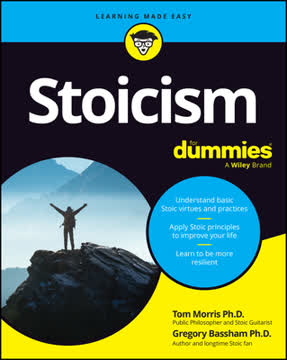
Stoicism For Dummies receives mixed reviews averaging 4.03/5 stars. Positive reviews praise it as the most thorough overview of Stoicism available, combining rigorous academic scholarship with practical applications and humor. Readers appreciate its extensive references, modern interpretations including CBT applications, and critical discussion of commercialization. However, critics argue it focuses too much on history and theory rather than practical techniques, contains excessive gatekeeping about "true" Stoicism, and rambles without answering key questions. Some suggest reading primary sources like Marcus Aurelius's Meditations instead, while others value it as an excellent introduction.
Similar Books