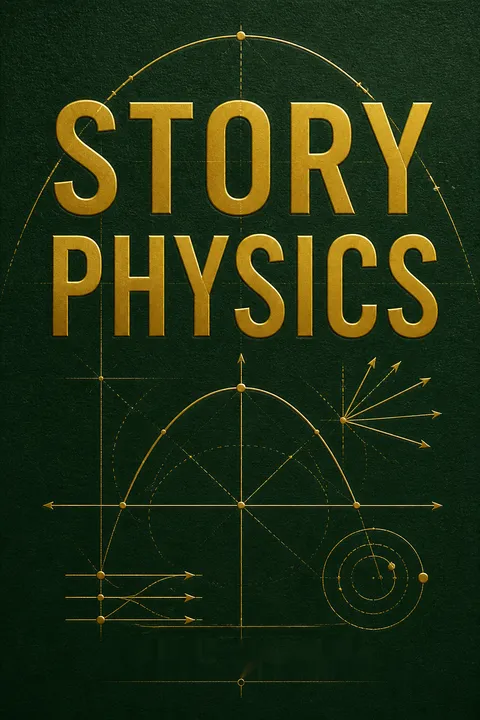


Key Takeaways
Treat story craft as forces to steer, not rules to obey
The forces behind response. Brooks calls the recurring elements that shape a reader’s experience story physics. They include the strength of the story’s promise, its conflict and pace, the reader’s concern for the hero, the feeling of inhabiting the story world, and the author’s way of telling it. These forces affect whether a story feels compelling, regardless of whether the writer consciously plans them.
Process is flexible. A writer can outline, draft by instinct, or combine the two. None of those choices removes the need to make effective story decisions. Brooks argues that craft is not a cage of arbitrary rules, but a way to recognize consequences and choose deliberately instead of accepting the first idea that appears.
The useful shift is from asking whether a writer has obeyed a rule to asking what a choice makes the reader feel, expect, or understand. That turns craft into a set of observable effects rather than a list of taboos. The model is most persuasive when treated as a diagnostic lens, not a guarantee of success. A story can satisfy many craft expectations and still leave readers cold; strong technique creates opportunity, not certainty.
Turn an intriguing seed into a premise with conflict and a human stake
A spark is not a story. An idea is a starting point; a concept adds a dramatic situation with potential conflict; a premise connects that situation to a character whose actions can carry the story. The distinction matters because a striking setting or topic may inspire a writer without giving a reader a reason to keep turning pages.
Test the idea before committing. Brooks describes a novel that began as a baseball comeback story. After reconsidering the material with his editor, he transformed it into a story about a woman and a software fraud. The new direction grew from the initial seed but offered a different source of dramatic possibility. Ask what a character wants, what opposes that desire, and what makes the outcome matter.
This is a strong form of creative due diligence. It protects writers from confusing personal fascination with a narrative that can sustain a reader’s attention. The editor’s role in the baseball-story example is especially valuable: testing an idea need not mean abandoning it, but can reveal a more fertile version. Still, a premise need not be spectacular or easy to pitch. Quiet material can work when character, voice, and execution provide enough force.
Give the hero a consequential problem, not merely an important theme
Meaning needs movement. Brooks distinguishes a story’s subject from its plot. A novel about injustice, grief, or finding oneself names a concern, but it does not yet give a protagonist anything concrete to pursue. Dramatic tension arises when a character has a goal or problem, faces opposition, and risks something through action. The reader’s central question becomes what the character will do and what the choice will cost.
Let action reveal the theme. In The Help, the racial injustice of 1962 Jackson, Mississippi, is not carried by explanation alone. Skeeter’s effort to write a book with the maids creates a goal, dangers, and opposition. Their decisions make the larger issue visible through consequences. Internal struggle can provide conflict, too, but Brooks argues that it needs a dramatic situation to give it shape.
The distinction is useful because it turns an abstract intention into something a writer can stage and revise. A character’s choices make values legible: readers encounter the theme through pressures, loyalties, and costs rather than receiving it as a lecture. The caution is that action need not mean spectacle. A restrained domestic story can have powerful conflict when its choices carry real consequences. The key is not noise, but meaningful resistance.
Make readers feel for the hero, then place them inside the ordeal
Concern and immersion differ. Brooks separates hero empathy, the reader’s emotional investment in a character’s plight, from vicarious experience, the sense of sharing the character’s situation. A hero need not be likable, but readers need a reason to care what happens. Clear stakes help: the audience must understand what success or failure means to the person at the center.
Katniss makes both forces visible. In The Hunger Games, Katniss volunteers to take her sister’s place in a lethal competition. That act gives readers an immediate reason to root for her. The first-person narration then keeps the reader close to her calculations, fear, and uncertain reading of Peeta’s motives. The extraordinary danger becomes not just something observed, but an experience followed from inside her limited knowledge.
The distinction helps writers diagnose two different gaps. A reader may understand a character’s emotions yet remain detached from the world, or may enjoy an exciting setting without caring who survives it. Pairing emotional investment with sensory and situational access can make each stronger. The limit is that close identification is not every reader’s goal. Distance, ambiguity, or an unsympathetic viewpoint can be deliberate choices, provided the story offers another compelling reason to engage.
Use structure to control when pressure changes, not to dictate content
A story changes gears. Brooks presents a four-part architecture: establish the situation, show the hero responding to a newly defined challenge, shift toward a more active effort, and bring the conflict to resolution. Major turns divide these movements. In his model, the First Plot Point arrives around the first fifth of the story, a central shift comes near the midpoint, and another major turn appears in the final quarter.
Turns earn their timing. The First Plot Point is not simply the first exciting event. It is the moment the central journey becomes clear in relation to stakes and opposition. Brooks points to Skeeter’s commitment to write the book in The Help as such a shift. These proportions are presented as useful targets for commercial storytelling, not instructions about what scenes must contain.
The architecture gives writers a practical way to ask whether a story is moving through meaningful changes or merely accumulating episodes. Its best use is as a map for reader expectation: each section should alter what the protagonist understands or attempts. The exact percentages deserve more flexibility than the book sometimes allows. Some genres, forms, and deliberately slow narratives create momentum by different means, so the model is strongest as a pressure test rather than a universal law.
Choose a narrative strategy that makes this story more intimate or revealing
How is not the same as when. Structure concerns the order and function of major story movements. Narrative strategy concerns how the story reaches the reader, including point of view, framing, and time sequence. These choices are part of the story’s design because they control what readers know, when they know it, and whose experience shapes their interpretation.
Let the form serve the material. The Help uses three first-person narrators, giving different characters access to the racial and social pressures around Skeeter’s book. The Hunger Games stays close to Katniss’s first-person perspective, preserving uncertainty about events beyond her awareness. A non-linear sequence can also reveal information strategically. None of these approaches replaces underlying structure; each changes the reader’s route through it.
Narrative strategy is more than stylistic decoration. It distributes knowledge, and knowledge is one of a story’s main instruments of suspense and sympathy. Choosing a restricted point of view can intensify uncertainty, while multiple narrators can expose competing realities. The tradeoff is equally important: a viewpoint that withholds too much may frustrate, while one that explains everything can drain tension. The right choice depends on the particular emotional and informational experience the story needs.
Give every scene one clear job in the larger story
A scene needs a mission. Brooks uses story beat for a moment that advances or alters the narrative, such as a reveal, a decision, or a change in a relationship. Each scene should have one primary contribution to the exposition, while also developing character. A scene that only repeats background or pauses for explanation risks slowing the story without adding enough value.
Build toward the change. In The Hunger Games, Katniss uses a wasp nest to disrupt the stronger competitors below her and acquire a weapon. The sequence does more than provide danger: it changes her from someone chiefly evading threats into someone able to act against them. Brooks also recommends entering scenes close to their essential moment and cutting setup that readers can infer.
The scene-mission test makes revision concrete. Instead of asking whether a passage sounds good, the writer can ask what changes because it exists and whether that change belongs here. This resembles editing in other forms: attention is limited, so every unit should justify its place. Yet a scene can carry several layers beneath one primary purpose. Treating the mission as a compass, rather than a rigid one-function limit, preserves subtlety and texture.
Make setting and subtext pressure the characters, not decorate the page
The world should act. Brooks uses subtext for the unspoken social, historical, physical, and relational forces that shape what characters believe they can do. Setting becomes dramatically useful when it affects choices and consequences, rather than serving only as atmosphere or a catalogue of interesting details.
The Help makes context consequential. Its 1962 Jackson setting is not interchangeable with a neutral backdrop. Racial norms govern employment, safety, and social standing, so the characters’ choices about Skeeter’s book carry specific risks. The story explores its theme through these pressures and through what the characters do. Brooks warns against letting a writer’s fascination with an issue or place displace the conflict that gives the story forward motion.
This view treats setting as a system of permissions and penalties. A place feels vivid not only because of what it looks like, but because it changes who can speak, what can be attempted, and what resistance costs. That approach can deepen theme without explanatory speeches. It also asks for care: contextual detail should not flatten a real community into a convenient backdrop. The setting’s complexity should shape characters, not merely decorate the author’s argument.
Keep searching until the story's strongest version replaces the first draft's guess
Every process includes discovery. Brooks argues that outlining and drafting are different routes toward the same task: finding, testing, and improving the story. Drafting organically can work, but new discoveries may require rebuilding earlier scenes so they fit the story’s eventual direction. The important question is not which process is purest, but whether the result has been tested against the needs of the whole.
Make the story easier to inspect. A beat sheet records story moments as short notes that can be rearranged before they become full scenes. Another exercise reduces the whole narrative to nine lines: an opening hook, setup, major turns, the movements between them, and a resolution. If those lines are hard to write, the difficulty can reveal missing causality or unclear stakes before a full manuscript makes revision costly.
The practical insight is to separate discovering a story from polishing its sentences. Short outlines and beat sheets make structural changes inexpensive, while a draft lets a writer discover material that planning did not uncover. The two methods can therefore complement each other. The risk is mistaking a clean outline for a living story: a plan cannot predict every useful surprise, and the prose itself may reveal character or meaning that a schematic cannot.
Make craft elements reinforce one another, as The Help and The Hunger Games do
A story is an integrated design. Brooks groups craft into six areas: concept, character, theme, structure, scene construction, and writing voice. He distinguishes these tools from the story physics they help create, such as tension, reader investment, pace, and immersion. A compelling concept alone cannot compensate for weak scenes, just as polished prose cannot supply a missing dramatic journey.
The examples show combination. In The Help, Skeeter’s book project joins character ambition to social conflict and thematic stakes, while three narrators shape the reader’s access. In The Hunger Games, the death match supplies danger, but Katniss’s survival and uncertain relationship with Peeta give that danger emotional complexity. The examples illustrate how story elements can strengthen one another rather than operate as separate ingredients.
The integrative model is the book’s clearest defense against formula. A writer can keep the same broad architecture while changing the characters, world, voice, and moral problem almost without limit. What matters is how those choices interact. The case studies make that interaction visible, though successful examples cannot establish that every effective story uses the same design. Their value is diagnostic: they show how to examine a story’s working parts and identify what gives them force.
Analysis
Story Physics is a craft book that converts a vague question, why does this story work, into a set of design questions about promise, conflict, pace, reader investment, immersion, and narrative form. Its central contribution is not the claim that stories have predictable components; that idea is familiar across dramatic theory. Its sharper move is to connect those components to revision decisions. A writer can ask whether a scene changes the situation, whether the protagonist has meaningful stakes, and whether the chosen point of view intensifies the intended experience.
The book’s structure is itself pedagogical. It moves from the search for an idea, through design and scene execution, then tests its claims against The Help and The Hunger Games. Those readings demonstrate how a thematic concern can be embodied in a plot, and how a high-concept predicament can gain emotional depth through relationships and limited perspective. The cases are useful because they make abstract terms visible in actual story choices.
The main limitation is the book’s confidence that its preferred structural proportions describe nearly all successful commercial stories. Bestseller examples establish that the model can explain those stories, but they do not prove that the model is necessary for every successful work. This is a problem of survivorship and selection: familiar hits are examined, while less conventional successes receive less attention. The distinctions between principle and rule help, but the argument occasionally turns a productive heuristic into a near-universal law.
The most durable reading is therefore neither obedience nor dismissal. Treat the architecture as a diagnostic map for commercial narrative, especially when a manuscript feels inert or episodic. Then test whether the map clarifies the work rather than forcing it into a preset shape. The book is most valuable when it teaches writers to make creative choices consciously, and least convincing when it implies that one audience’s appetite for momentum and identification defines storytelling as a whole.
Review Summary
Story Physics receives mixed reviews. While some praise its insights on story structure and complementary nature to Brooks' previous book, many criticize its repetitiveness, vague explanations, and excessive self-promotion. Positive reviewers find it helpful for understanding story elements and optimizing writing, while detractors argue it lacks concrete advice and is poorly organized. The book's analysis of popular novels like The Hunger Games is seen as a strength by some. Overall, readers seem divided on its value, with experienced writers finding it more useful than beginners.
People Also Read



Glossary
Story physics
Forces shaping reader responseBrooks’s term for the underlying qualities that influence how a story affects readers. These include the strength of its dramatic promise, conflict, pace, emotional connection to the protagonist, immersive experience, and way of telling. Writers can use these qualities to evaluate ideas and scenes, regardless of whether they plan in advance or discover the story through drafting.
Concept
A conflict-bearing story situationA developed story idea that implies dramatic tension and raises a question a reader may want answered. In Brooks’s distinctions, an idea is only a starting point. A concept supplies a situation with conflict potential, while a premise connects that situation to a character and the course of a story.
Premise
Character joined to dramatic conflictA concise statement of a story’s character-centered dramatic situation. Brooks distinguishes premise from concept by emphasizing the protagonist: the premise indicates who faces the central situation and what kind of journey or problem follows. It gives the writer a clearer basis for developing plot, stakes, and the reader’s expectations.
First Plot Point
Launch of the central journeyA major turn near the end of the opening portion of a story that makes the protagonist’s central journey clear in relation to opposition and stakes. Earlier incidents may be exciting or important, but Brooks reserves this term for the moment when the story’s defining challenge is meaningfully underway.
Narrative strategy
How the story reaches readersThe author’s choices about how information and experience are presented. It can involve point of view, framing devices, chronology, and other methods of narration. Brooks distinguishes narrative strategy from structure: strategy shapes the reader’s route through the story, while structure concerns the sequence and function of its major movements.
Story beat
A moment advancing the narrativeA significant moment or scene that moves the story forward by changing information, relationships, stakes, or action. Beats can be major turns, such as a revelation, or smaller steps that connect larger events. In planning, writers often record beats briefly before expanding them into paragraphs and scenes.
Mission-driven storytelling
Writing toward a defined purposeA way of developing stories in which each large section and each scene has a clear narrative purpose. A scene should make a primary contribution to the exposition while also revealing character. The method helps writers connect individual moments to the larger arc and identify passages that slow the story without advancing it.
Six Core Competencies
Six areas of storytelling craftBrooks’s framework for organizing the principal areas a fiction writer must develop: concept, character, theme, structure, scene construction, and writing voice. These are the components and skills used to build and deliver a story. He distinguishes them from story physics, the reader-facing effects those craft choices are meant to produce.
Vicarious reading experience
Feeling inside the story situationThe reader’s sense of experiencing a character’s situation from within, rather than merely observing it. A story can create this through a compelling setting, dangerous or unusual circumstances, social dynamics, and a point of view that makes events immediate. Brooks treats it as distinct from empathy, though the two can reinforce each other.
FAQ
What's Story Physics about?
- Understanding Storytelling Forces: Story Physics by Larry Brooks explores the fundamental forces that drive effective storytelling, emphasizing the importance of recognizing and harnessing these forces.
- Universal Principles: The book argues that while every writer has a unique style, certain universal principles, referred to as "story physics," are essential for crafting successful stories.
- Practical Guidance: Brooks provides practical advice on optimizing story elements like character, plot, and theme to enhance the overall impact of a narrative.
Why should I read Story Physics?
- Enhance Writing Skills: Designed for writers at all levels, the book offers insights into the mechanics of storytelling that can elevate your writing.
- Learn from Examples: Brooks uses well-known novels and films to illustrate his points, making the concepts relatable and easier to understand.
- Shift in Mindset: Encourages a shift from a "no rules" mentality to recognizing the importance of structure and principles in storytelling.
What are the key takeaways of Story Physics?
- Story Forces: Identifies six key forces of storytelling: compelling premise, dramatic tension, pacing, hero empathy, vicarious experience, and narrative strategy.
- Search for Story: Emphasizes the importance of developing ideas into compelling concepts, which is essential for creating narratives that resonate with readers.
- Structure and Strategy: Highlights the relationship between structure and narrative strategy as a critical aspect of storytelling.
What are the six key forces of storytelling in Story Physics?
- Compelling Premise: A foundational idea that poses a dramatic question to engage readers.
- Dramatic Tension: The conflict that propels the narrative forward, creating urgency and stakes.
- Pacing: Ensures the story unfolds in a way that keeps the audience invested and eager to turn the pages.
- Hero Empathy: Relates to the reader's ability to connect with and root for the protagonist.
- Vicarious Experience: Allows readers to experience the story alongside the characters, enhancing the narrative's impact.
- Narrative Strategy: Involves choices regarding how the story is told, including point of view and structure.
How does Story Physics define dramatic tension?
- Core Element: Described as the conflict arising when a hero faces obstacles in pursuit of a goal, essential for keeping readers engaged.
- Creating Stakes: Establishing clear stakes is vital for effective dramatic tension, helping readers understand what is at risk.
- Examples Provided: Brooks uses examples from popular literature and film to illustrate how dramatic tension is built and maintained.
How does Story Physics suggest optimizing story elements?
- Understanding Story Physics: Encourages writers to recognize and apply the six forces of storytelling as benchmarks for creative choices.
- Search for Story: Emphasizes developing ideas into compelling narratives, actively seeking the best possible story elements.
- Iterative Process: Advocates for revising and refining drafts based on story physics principles to elevate the work's effectiveness.
What is the difference between an idea and a concept in Story Physics?
- Basic Definitions: An idea is a simple notion, while a concept is a more developed version that includes conflict and dramatic potential.
- Importance of Development: Many writers fail to evolve their ideas into compelling concepts, leading to weak narratives.
- Example of Evolution: Brooks shows how a basic idea can transform into a rich concept that drives the narrative forward.
How does Story Physics address the relationship between structure and story physics?
- Structure as Framework: Defined as the framework supporting the narrative, guiding the placement of key story elements.
- Interdependence of Elements: Structure and story physics are interdependent, with each influencing the other.
- Creative Choices: Encourages making creative choices within the structure framework, using story physics to optimize narratives.
What role does pacing play in storytelling according to Story Physics?
- Maintaining Engagement: Pacing is crucial for keeping readers interested and invested in the story.
- Contextual Flow: Pacing should align with the story's structural context, with different parts requiring different strategies.
- Building Tension: Pacing is tied to dramatic tension, used to heighten or alleviate tension strategically.
How does Brooks define the Six Core Competencies in Story Physics?
- Concept: The foundational idea driving the story, often expressed as a "what if?" question.
- Character: The protagonist's journey and development, crucial for reader empathy and engagement.
- Theme: The underlying message or meaning, adding depth and resonance to the narrative.
- Structure: Organizes the story into a coherent framework, optimizing pacing and tension.
- Scene Execution: Writing scenes that effectively convey the story's mission, contributing to the overall narrative.
- Writing Voice: The unique style and tone of the author, enhancing the reader's experience.
What are some best quotes from Story Physics and what do they mean?
- "The goal is goosebumps.": Emphasizes evoking strong emotional reactions in readers, leaving a lasting impression.
- "Write your story however you need to write it, process-wise.": Encourages finding a personal creative process while adhering to storytelling principles.
- "The highest goal of any writing process is to find and execute the best possible story.": Underscores striving for excellence in storytelling to captivate and engage readers.
How can I apply the principles from Story Physics to my writing?
- Understand Your Structure: Familiarize yourself with the four-part storytelling structure: setup, response, attack, and resolution.
- Define Your Characters: Develop well-rounded characters with clear motivations and arcs to enhance reader empathy.
- Focus on Scene Missions: Ensure each scene has a clear mission contributing to the overall narrative.
- Embrace Vicarious Experience: Create scenarios that allow readers to connect emotionally with your characters.
Download PDF
Download EPUB
.epub digital book format is ideal for reading ebooks on phones, tablets, and e-readers.








