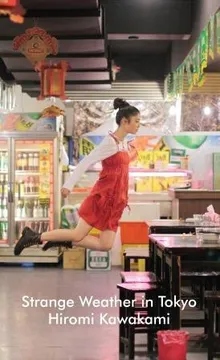


Plot Summary
A Teacher at the Counter
Tsukiko Omachi, a solitary office worker in her late thirties, recognizes her former high-school Japanese teacher at a neighborhood bar. She cannot remember his name, so she calls him Sensei, and their matching appetites turn an accidental meeting into long, easy evenings together. Sometimes they end the night at his cluttered home, where he shows her ceramic teapots saved from railway meals and dead batteries he cannot bear to discard.
He tests each battery, delighted when its needle still stirs. Tsukiko begins to see that his collections are less about objects than the small lives and journeys they preserve. Yet their closeness remains casual, built on chance meetings, separate bills, and the comfort of not having to explain themselves.
The relationship begins not with attraction declared but with a shared appetite and a method of being together that protects both people from demand. Separate checks and chance encounters preserve independence even as familiarity grows. Sensei’s old batteries and travel teapots offer a quiet model of attachment: something can be spent, finished, or forgotten by others and still retain meaning. Tsukiko’s attention to these objects marks her first movement toward Sensei, though she has not yet named that movement as desire.
Two Chicks in a Hat
Sensei arranges a daytime outing to a crowded market, where he and Tsukiko share lunch and drift past groceries, household goods, and a stall selling animals. A child persuades his mother to buy a kitten, but Sensei pauses at the chicks and chooses two, asking Tsukiko to help carry them.
He explains that a lone chick would be lonely, though he doubts he is suited to caring for pets and would rather not become attached to something cute. He protects the boxes inside his Panama hat on the bus ride home. The purchase exposes a softness he tries to manage with rules: Sensei wants company for the chicks, but fears what affection might ask of him.
The chicks translate emotional need into a practical problem Sensei can solve. He can admit that a creature should not be left alone more easily than he can acknowledge his own loneliness. His careful handling of the boxes also contrasts with his claim that pets are not his strength. Tsukiko watches the contradiction without pressing it, an early sign of how their intimacy works: she notices what Sensei cannot comfortably say, while he lets her remain near without naming the relationship.
The Giants Divide Them
A baseball broadcast turns their familiar bar routine sour when Sensei celebrates a Giants victory and pours saké into Tsukiko’s cup despite their usual boundaries. She hates the team, spills the drink, and refuses to speak to him for weeks, even when they sit near each other.
Missing him more than she admits, she buys a small kitchen grater and gives it to him after they finally move back beside each other at the counter. Sensei accepts the gift, then proposes making grated-yam soup together. Walking home, he recalls a haiku, while Tsukiko counts stars behind him until she reaches twenty-two. Their reconciliation is modest, but the gift lets her approach without asking him to explain himself.
The quarrel matters because it exposes how much their unspoken arrangements have come to matter. Sensei’s celebratory pour breaks a boundary that had seemed trivial until Tsukiko feels its loss. Her silence protects her pride, while the inexpensive grater gives her a way back that does not require a confession. The stars supply a private measure of attention: Tsukiko follows Sensei while keeping count, close enough to accompany him yet still at a distance. Their affection develops through gestures that preserve deniability.
Mushrooms in the Forest
The bar owner, Satoru, invites Sensei and Tsukiko to forage in Tochigi with his cousin Toru, who looks almost exactly like him. Sensei arrives in a tweed suit with his briefcase, and the four climb into the woods, where Tsukiko tires while Sensei moves easily among the trees. Over mushroom soup, Sensei reveals that his wife did not die, as Tsukiko had assumed.
She left him about fifteen years earlier, after a life of stubborn enthusiasms that included eating a poisonous mushroom on a family hike. Their young son watched in terror as she laughed uncontrollably for hours. Sensei remembers his own anger at her recklessness, then admits that their marriage was not a good fit. His memories complicate the tidy story Tsukiko had invented.
The forest unsettles Tsukiko’s city-bound sense of solitude, but the deeper disruption is the correction of her story about Sensei. She had turned his wife into a dead absence; the truth is more difficult, involving choice, conflict, and a marriage neither spouse could fully inhabit. Sensei’s recollection reveals that he can be judgmental and wounded, not merely a composed teacher. The mushroom’s involuntary laughter also makes private pain public, an image that anticipates how emotion will repeatedly escape the careful forms Tsukiko and Sensei build around it.
Lost on New Year’s Night
After a stiff New Year visit with her mother and brother’s family, Tsukiko spends days sleeping and neglecting herself. The family meal of her favorite tofu cannot bridge the silence between mother and daughter.
Alone later, she cuts her foot while changing a kitchen light, grows dizzy, and remembers an old boyfriend she loved but failed to call because she feared rejection. The memory breaks through her habitual composure. She leaves home crying, misses the last bus, and wanders familiar streets that suddenly feel strange.
Calling for Sensei in her thoughts, she finds him walking nearby. He supplies the missing words to a winter song, and they go for their first drink of the year. His presence steadies her without requiring her to explain the tears.
Tsukiko’s loneliness is not simple isolation. She is surrounded by family, yet closeness makes speech feel more dangerous, while a past romance shows how fear can turn silence into permanent separation. The accidental wound gives that inward distress a physical trigger. Sensei’s arrival does not solve her family history or undo the lost relationship; instead, his calm companionship lets her return to the present. The scene clarifies why their bond matters to her: he is someone she can find without first finding the right words.
The Earring in His Palm
On a winter evening, Tsukiko unexpectedly meets Sensei, who has hurt his backside in a fall. They choose an oden shop rather than their usual bar, where a drunk customer mocks their age difference and makes crude insinuations about them. Sensei stays composed while the man eventually passes out. Then, without warning, Sensei steals the dangling earring from the sleeper’s ear.
He explains that a story by a writer he admires inspired him, though he insists the theft was simply something he wanted to do. Tsukiko is startled, then amused by the incongruity of his quiet mischief. As they walk beneath the moon, his account of physical helplessness opens a rare exchange about loneliness and the strange ties that bring people together.
The drunk customer tries to define Tsukiko and Sensei from the outside, reducing their companionship to a sexual joke. Sensei’s refusal to defend himself denies the stranger the authority to set the terms of their relationship. His theft is not a noble lesson but an impulsive private act, which makes his usually orderly character briefly unreadable. Tsukiko’s anger on his behalf reveals a protectiveness she has not previously voiced. Their conversation then shifts from public judgment to bodily vulnerability, letting closeness appear in the ordinary fact of walking together.
Kojima Returns at Blossoming Time
Sensei brings Tsukiko to the high-school teachers’ annual cherry-blossom party, where she reconnects with Takashi Kojima, a former classmate she once went to the movies with. Kojima tells her that he married their classmate Ayuko after university, but their marriage ended when Ayuko fell for her boss.
As Sensei talks animatedly with art teacher Ms. Ishino, Tsukiko stays with Kojima and leaves the party with him. At his familiar bar, she enjoys wine and food in a mood detached from ordinary time. Later, Kojima kisses her in the empty schoolyard and admits he has liked her for years. Tsukiko stops him from going further. They hold hands and walk the embankment before she takes a taxi home alone.
Kojima gives Tsukiko a glimpse of an age-peer relationship shaped by shared memories and ordinary romantic scripts. His history with Ayuko also shows how a life can acquire whole chapters outside the view of old classmates. Tsukiko enjoys the evening, but her refusal is not simply a rejection of Kojima; it registers the distance between affection she can imagine and the attachment already occupying her attention. Sensei’s conversation with Ms. Ishino sharpens that awareness without resolving it. Tsukiko leaves with the possibility of another life still open, but not chosen.
Chocolate from Pachinko
After the party, Tsukiko and Sensei meet only briefly, and she hears he has visited Satoru’s bar with Ms. Ishino. When Sensei finds her in the rain, Tsukiko mentions that she has a date with Kojima the next day. Instead of pursuing the subject, Sensei takes her to a pachinko parlor. He wins a large run of balls, trades them for a small vacuum cleaner and chocolate, then shares the sweets with her.
Their quiet walk beneath one umbrella restores their old rhythm. Earlier, Kojima had asked Tsukiko to see a movie, and she agreed, but this unexpected afternoon with Sensei leaves her attention elsewhere. His detour into gambling becomes a way to reclaim their companionship without asking her to cancel anything.
Sensei responds to the news of Tsukiko’s date not with a declaration or demand, but with an activity that redirects them into familiar company. The pachinko win gives the encounter a comic, contingent quality: luck briefly produces more than either person needs, so Sensei turns excess into a shared treat. Yet Tsukiko’s rival attachment is now visible, and Sensei cannot remain entirely outside it. Their umbrella walk is both a return to ease and a delay of the question neither is prepared to answer.
Thunder After the Confession
Kojima invites Tsukiko on a trip to an inn known for seasonal ayu and local vegetables. Unsure she wants to go, she drinks too quickly at Satoru’s when Sensei orders the same fish. Sensei takes her home after she falls asleep on his tatami. There, she admits she does not want the trip with Kojima and asks Sensei to travel with her instead.
When he resists, she tells him she loves him. A sudden thunderstorm fills the house, and Tsukiko, frightened by thunder, curls against him. Sensei holds and rubs her back, but the storm drowns out her repeated declaration and he does not answer it. Some time later, he invites her to spend a weekend with him on an island he knows.
Tsukiko’s confession is both a genuine declaration and an attempt to force an answer from a man who has made restraint his governing habit. Sensei’s silence cannot be read as simple indifference: he comforts her physically while leaving the emotional question unresolved. The storm externalizes the disproportion between what she has said and what either can manage in the moment. Her childhood fear makes dependence visible, but it also risks allowing Sensei to treat her as a child rather than a partner. The island invitation becomes his delayed response, though not yet a clear one.
The Grave on the Island
Sensei and Tsukiko travel by train and ferry to an island he has visited before. On their first walk, he leads her over a hill and through a hamlet to a neglected cemetery. There he prays at the grave of Sumiyo, his wife, and explains that she left him, lived with several men, and eventually died after being struck by a car on the island.
Sensei admits that he still thinks about her. Tsukiko feels blindsided: she has come hoping for closeness, but he has brought her into the presence of a love and grief that predate her. She walks back to the guesthouse alone, angry and determined to enjoy the trip without him. As darkness settles, that resolve gives way to wanting him to return.
The grave makes Sensei’s past material and unavoidable. Until now, Sumiyo has been a story assembled from fragments; on the island, Tsukiko stands beside the evidence of a life that cannot be displaced by her own feelings. Sensei’s invitation may be trust, but it also asks Tsukiko to witness his attachment without promising that he can offer something comparable. Her anger is a defense against the humiliation of discovering how little she knows. Her longing when he is absent shows that the defense cannot erase her need for him.
A Poem Instead of a Promise
Sensei returns to the guesthouse, and he and Tsukiko share an elaborate seafood dinner before retiring to separate rooms. After bathing, she joins him for beer, but their talk dwindles into long silences. Back in her room, she cannot sleep and hears activity in his; when she goes to investigate, she finds him writing a haiku about octopus.
She helps him finish it, and the two spend the rest of the night composing poems. Tsukiko eventually falls asleep on his futon. In the morning, she returns to him, and he kisses her hair and touches her tenderly. She falls asleep again in his arms. Their closeness deepens, but they do not turn the night into the sexual relationship she has hoped for.
The island offers proximity but not the decisive transformation Tsukiko wants. Sensei can invite her into his room and share a private creative ritual, yet when desire surfaces he redirects the encounter into gentleness and sleep. The poems provide a language they can make together, while also allowing Sensei to avoid saying what their intimacy means. Tsukiko’s willingness to return in the morning shows that she accepts tenderness even when it does not settle her uncertainty. The episode deepens attachment and intensifies its asymmetry at once.
The Tidal Flat Between Worlds
Some time after the island trip, Tsukiko and Sensei meet again at Satoru’s bar, drink heavily, and find themselves in a tidal flat that feels like a borderland between waking and elsewhere. In this uncertain place, Sensei recalls Sumiyo’s skill at magic and describes the family’s Shiba Inu dying when their son was young.
Sumiyo insisted the dog had been reborn inside her, then barked like it at dinner, widening the distance between herself and their son. Sensei recalls that their son eventually left and rarely visited. Tsukiko has never met Sumiyo, yet the dream lets her experience the marriage through Sensei’s memories. When she asks where they are, he cannot give her a solid answer.
The tidal flat turns memory into a shared but unstable landscape. Tsukiko can enter Sensei’s past only through his narration, and the dream makes clear that intimacy does not grant her complete knowledge of him. Sumiyo’s claim about the dog’s rebirth may be comic, unsettling, or an attempt to manage grief; the text refuses to settle on a single diagnosis. What matters is its consequence: the son withdraws, and Sensei is left with a family history he cannot repair. The dream’s ambiguity mirrors the limits of what Tsukiko can know or control.
The Cricket Calls Her Back
After the tidal-flat encounter, Tsukiko avoids Sensei, Satoru’s bar, and the familiar streets where they might meet. She tries solo hot-spring trips and shopping, but the outings feel empty rather than freeing. During a rare visit to the bar, she hears that Sensei has been coughing and has not appeared for a week.
A cricket chirps near the drain as her worry rises. Tsukiko goes to Sensei’s house and finds him recovering from a cold. His familiar teasing and the sight of him at home loosen the fear she had been calling independence. She stays only for tea, then leaves, resolved to stop expecting romance and chiefly relieved that he is alive and well.
Tsukiko’s attempt to let her feelings wither becomes an experiment in avoidance, but it reveals how much of her ordinary world has formed around Sensei. Travel and errands do not restore the solitude she once considered sufficient; they make its limits more visible. The cricket acts as an unplanned alarm, interrupting her self-protective story before she can fully believe it. Her visit does not produce a romantic breakthrough. Instead, the practical fear of losing Sensei strips away the bargaining over what their relationship should become.
A Date in the Park
Sensei calls Tsukiko and invites her on a date to an exhibition of old calligraphy. At the museum, she enjoys his judgments about the handwriting even though she cannot read it. In the park afterward, he holds her hand and admits that he has hesitated for a long time. He asks whether she would accept a relationship grounded in love, then wonders how she would feel if he did not have many years left.
Tsukiko tells him she loves him and can accept that uncertainty. She agrees to his proposal, and they sit together in the dark. Their relationship changes not because age or mortality disappears, but because Sensei finally names a future they can choose together, however limited it may be.
The museum date brings Sensei’s hesitation into the open without disguising it as a joke or a lesson. His question about lifespan tests whether Tsukiko wants an idealized future or the actual relationship available with an older man. Her answer does not erase fear; it makes love a present-tense choice rather than a guarantee against loss. The calligraphy exhibition is fittingly unreadable to Tsukiko, yet shared attention lets her participate. Their bond becomes explicit through mutual consent, while its vulnerability remains built into the terms.
The Briefcase Left Behind
During their relationship, Sensei and Tsukiko go to aquariums and Disneyland, share meals, and tell each other they love one another. Sensei worries that age has left him unable to be physically intimate; Tsukiko reassures him without making sex a test of their bond. Later, after he calls from a greengrocer simply to tell her she is lovely, he asks her to come over.
They finally spend the night together. Their relationship lasts only a few years before Sensei dies. His son gives Tsukiko the familiar briefcase, and hearing Sensei’s full name makes her grief suddenly tangible. She keeps going to Satoru’s bar, makes Sensei’s version of tofu stew, and reads the poems he taught her. The briefcase remains empty, holding what cannot be returned.
The ending measures love not by duration or conventional milestones but by the practices that remain after a person is gone. Sensei’s anxiety about sex reveals how aging can make the body feel like a verdict; Tsukiko’s patience allows intimacy to arrive without turning it into proof of worth. His death converts the briefcase, once a familiar accessory, into an object of absence. Food, poetry, and the bar keep the relationship active in memory, but they do not restore Sensei. Tsukiko’s grief is therefore both ordinary and specific: a life is gone, and its small habits survive.
Analysis
The novel builds its romance out of repeated ordinary arrangements: two seats at a counter, separate bills, familiar food, and walks that happen without being planned. Those arrangements matter because both characters are cautious in different ways. Tsukiko treats emotional dependence as a risk she can avoid by not asking; Sensei’s formality and age give him reasons to hesitate before offering a future. Their intimacy develops through gestures that can be mistaken for habit, which makes each change in routine carry unusual force.
The book also resists turning age difference into either a scandal or a guarantee of wisdom. Sensei can be tender, evasive, vain about his knowledge, and unexpectedly mischievous. Tsukiko can be perceptive about others while remaining confused about her own desires. Their differences are not resolved by discovering a perfect shared language. Instead, they learn to inhabit pauses, meals, and imperfect attempts at communication, while eventually speaking plainly enough to choose a relationship.
Memory is never complete. Sensei’s stories about Sumiyo arrive in fragments, and the tidal-flat episode makes their limits explicit. Tsukiko can listen and imagine, but she cannot replace the people who shaped his past or fully know what he felt. This matters because the romance does not erase earlier attachments. Love is presented as an addition to a life already marked by marriage, family estrangement, failed relationships, and aging.
The ending makes time the story’s hardest fact. Intimacy arrives, but it does not protect the couple from loss. What remains is not an abstract lesson but a collection of habits: tofu prepared in Sensei’s way, poems spoken alone, a familiar bar, and the briefcase he carried everywhere. The novel suggests that a relationship is not made unreal by its brevity. Its reality lives in the attention people gave each other, and in the changed life that attention leaves behind.
Review Summary
Strange Weather in Tokyo receives generally positive reviews, averaging 3.66/5. Readers praise its quiet, sparse prose and its tender portrayal of loneliness and unconventional romance between Tsukiko, a solitary woman in her late thirties, and her former teacher, "Sensei," thirty years her senior. Many appreciate the vivid descriptions of Japanese food and nature, and the novel's dreamlike, episodic structure. Common criticisms include the slow plot, the problematic age-gap dynamic, and occasional misogynistic undertones. The book resonates most with readers who value atmosphere and character over conventional narrative.
People Also Read







Characters
Tsukiko Omachi
The guarded regularTsukiko is a woman nearing forty who lives alone, works in an office, and often spends her evenings eating and drinking by herself. Her dry humor and apparent self-sufficiency conceal difficulty initiating emotional conversations. She can identify what is unfair or illogical more readily than she can act on her own longing, and fear of rejection has shaped earlier relationships. Food, streets, weather, and small domestic details anchor her attention when feelings become hard to name. Sensei’s company gives her a form of closeness that does not initially demand explanation, but it also exposes how much she has relied on solitude as protection. Her development centers on learning to acknowledge desire without pretending that love can guarantee safety.
Sensei, Harutsuna Matsumoto
The composed teacherSensei is Tsukiko’s former Japanese teacher, more than thirty years older than she is. He is formal, impeccably upright, and devoted to small rituals, from pouring saké to carrying his old briefcase. His teaching habits surface in everyday life, especially through poetry, literary anecdotes, and his instinct to correct Tsukiko. Beneath that authority is a man who keeps old objects, remembers a complicated marriage, and sometimes acts with surprising playfulness. He values fairness and listens carefully, though he often hesitates when emotional decisions require him to speak plainly. His age and past shape the limits he sees in a possible relationship, while his affection emerges through steady attention, shared meals, and understated acts of care.
Takashi Kojima
The familiar alternativeKojima is Tsukiko’s former high-school classmate, a warm, socially capable man who remembers their youthful date more clearly than she does. He has experienced marriage and divorce, and he approaches Tsukiko with a mixture of earnestness and practiced adult manners. He enjoys good food, knows a polished bar, and tries to make romantic overtures without hiding his interest. His ease contrasts with Sensei’s reserve, giving Tsukiko a glimpse of a more conventional peer relationship. Kojima is not merely a rival: his presence helps Tsukiko recognize which forms of intimacy feel natural to her and which do not.
Satoru
The steady bar ownerSatoru owns the neighborhood bar where Tsukiko and Sensei repeatedly meet. He is a practical cook and an observant host, though he rarely intrudes directly into their private affairs. His invitation to go mushroom hunting opens a new setting for the pair, and his occasional questions reveal that he notices their attachment more clearly than they do. Satoru’s bar functions as a social home without requiring anyone to explain why they have come. His ordinary routines, radio, food, and customers provide the grounded background against which Tsukiko’s private emotional life unfolds.
Sumiyo
Sensei’s elusive wifeSumiyo is Sensei’s wife, known to Tsukiko only through his recollections. She is independent, stubborn, and drawn to enthusiasms that other people may find impractical or bewildering. Her love of hiking, unusual interests, and willingness to follow her own impulses shaped the household she shared with Sensei and their son. Because the reader encounters her through memories rather than direct scenes, she remains partly unknowable, neither reduced to Sensei’s grievances nor made into a simple ideal. Her choices continue to influence how Sensei understands attachment, family, and the past.
Toru
Satoru’s mountain guideToru is Satoru’s cousin and mushroom-hunting companion. He looks remarkably like Satoru, adding a comic note of uncertainty to the trip, and helps prepare food in the forest. His relaxed confidence contrasts with Tsukiko’s discomfort outdoors and Sensei’s formal clothing. Toru’s easy presence helps create the informal setting in which Sensei begins to speak about his family.
Takashi Kojima’s former wife
The absent classmateAyuko was Tsukiko’s energetic high-school classmate and Kojima’s first wife. She admired their art teacher and later built a life beyond the old school circle. Her history reaches Tsukiko through Kojima’s account, reminding her that former classmates carry private histories she never knew.
Ms. Ishino
The admired art teacherMs. Ishino taught art at Tsukiko’s high school and remains part of its annual cherry-blossom gathering. Students admired her energy, artistic independence, and distinctive presence. She is connected to both Ayuko’s youthful admiration and Sensei’s old professional world, making her a quiet reminder of the past that Tsukiko and Sensei share.
Sensei’s son
The distant family witnessSensei’s son appears mainly through his father’s memories. As a child, he shared family hikes and experienced the confusion caused by his mother’s unpredictable behavior. His later distance from his parents forms part of the family history Sensei struggles to understand.
Tsukiko’s mother
The close, quiet parentTsukiko’s mother lives nearby with Tsukiko’s brother and his family. She expresses care through familiar food, especially her carefully prepared tofu, but mother and daughter struggle to find conversation. Their silence reflects intimacy that has become difficult rather than absent.
Satoru’s cousin’s twinlike double
The forest doubleAlthough Toru is Satoru’s cousin, the two men look and move so alike that Tsukiko struggles to tell which one is speaking. Their resemblance gives the mushroom trip a light touch of disorientation and emphasizes how little Tsukiko knows about the world beyond her usual routine.
The great-aunt
The gardener of loveTsukiko’s lively great-aunt believed affection required active care, much like tending a plant. She kept romantic company and used wordplay to make her advice memorable. Her ideas give Tsukiko a framework for thinking about whether distance can make unwanted feelings fade.
Plot Devices
Sensei’s briefcase
A portable private archiveThe black briefcase is one of Sensei’s most consistent features. He carries it to bars, markets, and excursions, sometimes keeping practical necessities inside and sometimes holding items that connect him to his habits and past. Its familiarity helps Tsukiko recognize him across changing settings. By the end, the briefcase takes on a different weight: it remains after Sensei is gone, and its empty interior makes absence concrete. The object links the novel’s small everyday observations to its final reckoning with memory.
Food and drink
Intimacy without declarationsMeals and drinks give Tsukiko and Sensei a reliable way to spend time together before either can speak openly about affection. Tofu, saké, beer, mushrooms, seafood, and shared restaurant outings mark shifts in the relationship through choices, pace, and company. Their habits also reveal differences: Sensei’s precise rituals sit beside Tsukiko’s appetite and impulsiveness. Food is not simply atmosphere. It supplies occasions for invitations, reconciliations, awkward silences, and acts of care.
Poetry and teaching
A safer language for feelingSensei often recalls poems or teaches Tsukiko about literature, and their shared attempts at haiku become a way to remain together when direct emotional speech is difficult. His teacherly manner can be affectionate, irritating, or evasive. Poetry lets the characters attend to images, sound, and form while leaving personal meanings partly unstated. Tsukiko’s growing engagement with poems also becomes a way of keeping Sensei’s influence present in her own life.
Weather and the tidal flat
Outer forms of inner uncertaintyRain, moonlight, thunder, birds, and seasonal change continually accompany shifts in Tsukiko’s emotional state. The island’s cemetery makes Sensei’s past physically present, while the later tidal-flat episode blurs dream and waking memory. These settings do not explain the characters’ feelings for them. Instead, they make uncertainty tangible: a storm interrupts a confession, darkness complicates departures, and the tidal flat permits memories that resist ordinary sequence.
Collected keepsakes
Objects hold traces of livesSensei’s old railway teapots and spent batteries establish his reluctance to discard objects once they have served him. The stolen earring, Tsukiko’s grater, and other ordinary possessions likewise gather meaning through the circumstances in which they change hands. Their value is personal rather than monetary: an object can remember a journey, mark a reconciliation, or preserve a moment that its owners cannot easily describe. This pattern prepares the novel to treat material things as imperfect containers for memory.
Download PDF
Download EPUB
.epub digital book format is ideal for reading ebooks on phones, tablets, and e-readers.








