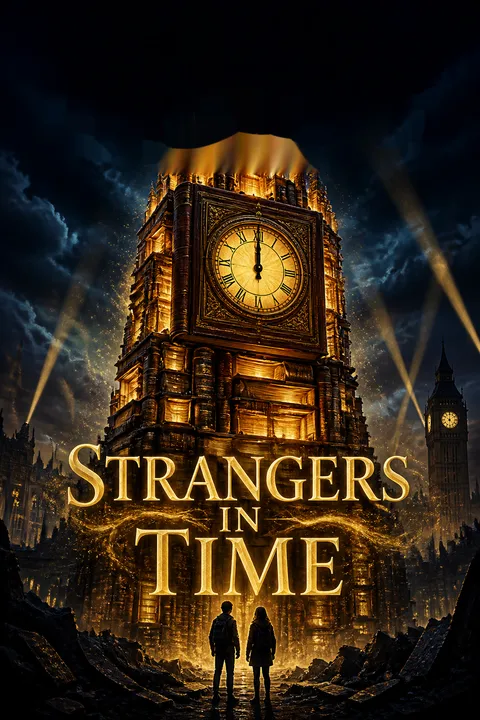


Plot Summary
The Bookshop Burglary
Fourteen-year-old Charlie Matters,1 orphaned and living with his grandmother7 in bombed-out Bethnal Green, first tries to steal shoes from St. Saviour’s School. A double lock defeats him, so he heads home through the rain and slips into a bookshop, where he takes biscuits, cash, and a blank journal.
Its owner, Ignatius Oliver,3 later finds Charlie’s1 clothing tag and returns it to his flat, revealing that the shopkeeper3 knows where he lives. Charlie1 goes back to investigate and sees Oliver’s3 worn clothes and the funeral photograph of his wife,6 Imogen.6
Recognizing that Oliver3 is poor too, Charlie1 returns the money and journal. Oliver3 lets him keep the journal, turning a failed theft into Charlie’s1 first unexpected invitation to record his own life.
Charlie’s theft begins as practical arithmetic: shoes, food, and a little security matter more than rules to a boy who has been denied ordinary ways to earn them. Returning the money complicates the easy division between criminal and respectable, because Charlie judges Oliver not by status but by need. The blank journal then offers a different kind of resource. It cannot feed him, yet it grants him a place to put experiences that otherwise remain trapped in memory. Oliver’s generosity is not a rescue from poverty; it is an act of recognition that lets Charlie imagine his thoughts might deserve keeping.
The School That Buried Jane
The rubble of Charlie’s1 childhood reaches back to the Blitz, when a bomb struck the school he had just begun attending. His mother, Jane, ran toward the building after the late warning siren, hoping to bring him home, and was killed before she reached him.
Charlie1 survived beneath the collapsed classroom, then learned in hospital that she would not return. His father had already died at Dunkirk, and his grandfather was later crushed in a crowd at Bethnal Green Underground station.
Charlie’s grandmother7 became his last family, but he never recovered enough to stay in school: the basement classroom and gas masks revived the terror of the bombing. He forged a letter claiming they had moved to the country, then began surviving by his own rules.
Charlie’s self-sufficiency is not simple precocity. It is a defense built from repeated losses that arrived before he could understand or influence them. His mother’s death carries a particularly painful contradiction: she died trying to reach him, while he survived without her. Leaving school is therefore less an act of indifference than an attempt to escape a place that has fused learning with catastrophe. His mantra about being a man gives him a usable identity, but it also pressures him to hide fear and grief. The boy’s sharpness keeps him alive; the cost is that he often treats needing help as a danger in itself.
Molly Returns to London
Nearly sixteen, Molly Wakefield2 returns after five years of evacuation in Suffolk, where a vicar’s family and their nurse relative have educated her and trained her to assist at a hospital.
London’s ruins unsettle her, but the greater shock waits at her Chelsea home: her mother5 is said to be convalescing in Cornwall, her father4 is absent, and the household offers evasions instead of answers. On a night walk, Molly2 meets Charlie,1 who knows the streets but pretends his parents are alive.
She hires him to guide her to the Ministry of Food, following the address on her father’s4 note. The office is empty, and the last bus has gone. Charlie1 gets her home on a borrowed bicycle, refuses his half-crown payment, and leaves Molly2 curious about the boy1 who helped without taking his due.
Molly and Charlie enter the story carrying opposite forms of privilege and deprivation, but each has mistaken appearance for security. Molly has a large house, fine clothes, and an education, yet she cannot locate either parent or understand why her home feels staged. Charlie has little material comfort but knows how to navigate danger and scarcity. Their meeting allows each to encounter a life outside the assumptions they have inherited. Molly’s first lie about Charlie being her brother is small but revealing: she is beginning to act beyond the rules of her sheltered upbringing, while Charlie’s refusal of payment hints that his moral code is more complicated than his criminal reputation.
The Lorry in the Dark
When Charlie1 learns his grandmother’s7 bakery wages have been cut, he searches for money before they lose their flat. Lonzo Rossi8 and Eddie Gray,9 two orphaned boys who survive in a bombed building, confront him; Lonzo8 has seen Charlie1 return Oliver’s3 stolen cash and demands they take it back together.
He threatens Charlie’s grandmother7 with his knife, forcing Charlie1 to agree. Eddie9 picks the bookshop lock, but the door is latched inside, so Lonzo8 breaks it down. A constable rushes toward them, and the boys flee.
A delivery lorry strikes the constable and runs over Eddie’s9 head. Charlie1 stops in horror, but Lonzo8 threatens him and his grandmother7 until Charlie1 runs. The newspaper later identifies the dead constable, while Charlie1 carries the guilt and the fear that the police will hang him.
This catastrophe grows from scarcity rather than from a single villainous choice. Charlie’s effort to protect Oliver’s money becomes, under Lonzo’s coercion, the reason he is present at the break-in; the police pursuit and lorry turn a desperate scheme into irreversible loss. Charlie is neither innocent of the burglary nor responsible for the deaths in the way his terror insists. That distinction matters psychologically: guilt expands to fill the space where a child has no power to undo events. Lonzo’s knife makes survival a moral trap, since Charlie must flee Eddie to protect himself and his grandmother, then lives as if flight itself were a murder.
Two Children at the Grave
Charlie’s grandmother7 dies suddenly on the bathroom floor, leaving him homeless and unsure how to arrange her burial. He runs through the rain to Molly’s2 house carrying her burial clothes and his few possessions.
Molly2 feeds him, helps him recover the journal Lonzo8 has stolen from his old flat, and arranges the funeral at the church where Charlie’s1 mother and grandfather are buried. At the graveside, Charlie1 admits he has lost his parents and fears leaving his mother alone.
Molly2 tells him that love can remain with him wherever he goes, then confesses that her father4 has disappeared and her mother5 is in a sanatorium. Their shared losses turn an awkward acquaintance into a bond. Charlie1 has no home to return to, so Molly2 brings him into the Wakefield2 household while they face the next problem together.
The funeral gives Charlie a task when grief has temporarily made feeling impossible. He gathers his grandmother’s clothes and the money he has earned because practical care is the only language of mourning he knows. Molly’s help does not erase his poverty, but it prevents grief from being compounded by the logistics of homelessness and burial. Their confession at the graveside is reciprocal rather than therapeutic: each risks telling the truth because the other has already shown up. Molly’s reassurance about carrying the dead within oneself directly answers Charlie’s fear of abandonment, while also preparing her to face her own family’s uncertain fate.
A Cipher Behind the Covers
Oliver’s3 visits from a short, guarded man called Cedric12 make Charlie1 uneasy. He sees Cedric12 deliver papers to Oliver3 and later spots Oliver3 slipping an envelope through the door of Cedric’s12 lodging. Molly2 hopes the meetings are innocent, but Charlie1 returns alone, picks the lodging’s lock, and searches the room.
In a locked cabinet he finds a machine unlike an ordinary typewriter, a sheet of German writing, and a copy of George Sand’s Consuelo with its pages cut away to conceal something inside.
The book bears the mark of Oliver’s3 shop. Charlie1 tells Molly2 what he has found, but they have no proof that Oliver3 is doing anything wrong, and reporting the discovery could expose Charlie’s1 own break-in. The secret deepens just as their trust in Oliver3 is beginning to grow.
The mystery grows from objects that have ordinary uses and sinister possibilities: a book, a locked room, a machine, and a message Charlie cannot read. His suspicion is grounded in lived experience of deception, but his loyalty to Oliver keeps him from treating suspicion as certainty. Molly’s response is shaped by her education and her need to believe that dependable adults still exist. Their different instincts make them better investigators, yet their vulnerability limits what they can safely do. The hollowed book also gives the story’s central metaphor a practical edge: literature can shelter secrets, while the act of cutting into a book damages the very thing it is meant to preserve.
Chelsea Falls Again
A fresh air raid catches Molly,2 Charlie,1 and Oliver3 on the way to shelter. After the bombing, Molly2 ignores Oliver’s3 order to fetch help and uses her hospital training to slow a badly wounded man’s bleeding, then directs the medics who take him away.
When they return to Chelsea, the Wakefield2 house has been destroyed and Mrs. Pride10 has been killed inside. With her parents absent and her home gone, Molly2 accepts Oliver’s3 offer to stay above The Book Keep with Charlie.1
She begins searching for paid work and secures a nursing auxiliary post at a Covent Garden clinic by demonstrating her knowledge of infection, blood loss, and emergency care. Charlie,1 still avoiding Inspector Willoughby,14 finds work as a telegram messenger under the name Ignatius Oliver3 and hides wherever he can.
Molly’s competence becomes visible through action rather than status. She has been treated as too young to work, yet the bombing gives her a chance to use skills acquired while caring for wounded soldiers. Saving the injured man cannot restore her house or Mrs. Pride, but it gives her agency at the exact moment her private world is destroyed. Oliver’s offer of shelter turns the bookshop into a provisional family home, though each child worries that authorities may separate them. Charlie’s false work name is both a practical shield and a sign of attachment to Oliver: even while fleeing the law, he borrows the identity of the man who has treated him as worthy.
Telegram Boy Found
Charlie1 delivers telegrams across London, including a death notice that leaves a young widow collapsing in her doorway. He recognizes that the message’s official wording cannot lessen its harm, but continues the work because families need to know.
Meanwhile, Oliver3 asks postal offices about a boy1 using an alias and recognizes Charlie’s1 borrowed name on a messenger roster. He arranges for Charlie’s1 final delivery to bring him to the clinic, where Molly2 works. There they find Lonzo,8 whom Inspector Willoughby14 arrested while he tried to enlist.
Willoughby14 and a constable beat Lonzo8 and leave him badly injured; Charlie1 persuades him to identify the officers and clarify the failed burglary. Major Bryant13 arranges action against the abusive police. Lonzo8 dies soon after, with Charlie1 beside him, but his account clears the way to protect Charlie1 from the worst charges.
The telegram route gives Charlie a job that turns his street knowledge into legitimate skill, but it also forces him to carry strangers’ bereavement from door to door. His response to the widow is a small act of care, an alternative to the helpless flight that has haunted him since Eddie died. The reunion with Lonzo offers a different kind of reckoning. Charlie does not demand that his former friend earn forgiveness before receiving it; he stays beside him and listens. Lonzo’s testimony cannot restore Eddie or himself, but it breaks Willoughby’s power to define the boys as monsters. The scene shifts responsibility back toward institutions that have used violence while claiming to uphold order.
Oliver’s Dying Disguise
Desdemona Macklin,11 the suspicious tea-shop owner across the alley, is found stabbed in her basement during another raid. Days later, Cedric12 visits Oliver3 at midnight, and Charlie1 and Molly2 overhear enough to learn that Macklin11 may have been killed because she noticed secret activity.
Cedric12 catches them listening and forces them into a car with Oliver3 and an armed accomplice. At a riverside clearing, police arrive and a staged shootout makes Oliver3 appear to die, allowing Cedric12 to escape believing the children and Oliver3 are eliminated.
Major Bryant13 then explains that Oliver3 and Imogen6 had been part of Britain’s Double-Cross scheme, feeding Germany carefully falsified intelligence. Imogen6 had first spied for Germany, then turned against it; Oliver3 continued the deception after her death. The children’s discoveries had brought them dangerously close to the operation.
The staged death reverses the story’s moral appearances: Oliver seems to betray the children, then appears to die, before the performance is exposed as protective deception. The reversal is earned because the children have already encountered the machine, German documents, and hollowed books. Their observations are not magical intuition; they are accumulated evidence, interpreted under pressure. Imogen’s compromised patriotism complicates the easy language of loyalty. She tried to end the bombing by aiding Germany, then recognized the human cost and redirected her abilities toward resistance. The plot’s intelligence game mirrors the novel’s domestic secrets: concealment may defend people, but it also deprives loved ones of the truth they need to understand their lives.
The Road to Cornwall
Dr. Stephens15 calls from the Beneficial Institute after Molly’s2 mother, Eloise,5 asks to see her. Train service is unavailable, so Oliver3 uses Major Bryant’s13 travel papers and the family drives west in the Wakefield Singer, which Charlie1 had found intact after the Chelsea bombing.
At the Institute, Molly2 finds Eloise5 gravely ill, swollen and weakened, but briefly able to recognize her. Doctors explain that a lobotomy has left her calmer at times, while incurable kidney disease is now threatening her life.
Molly2 also learns that Oliver’s3 wife, Imogen,6 once sought help at the same Institute and jumped from a nearby cliff. Dr. Foyle16 had tried to stop her and heard her leave a final message for Oliver.3 The revelations connect the families’ private suffering, though neither woman’s illness can be undone.
The journey is both practical rescue and emotional passage. Molly has spent the story trying to uncover what happened to her mother, only to discover that knowledge cannot reverse either the institutional treatment or the illness. Eloise’s brief recognition offers connection without promising recovery. The account of the lobotomy makes the medical world itself morally uncertain: treatment has muted visible distress, but at substantial cost to the person being treated. For Oliver, the Institute turns Imogen’s death from a fact into a place and a final act of communication. The two young people and the widower arrive seeking answers; what they receive instead is a clearer view of the limits of rescue.
The Father Returns
Molly’s2 effort to bring Eloise5 back to London triggers a violent outburst, reminding her that her mother5 cannot safely travel. Two nights later she finds Eloise5 missing from her locked room and discovers her with Herbert Wakefield4 beside a waiting car.
Herbert4 reveals that three British soldiers assaulted Eloise5 in an Underground shelter and that police officials dismissed her account to protect men needed for the war. After years of searching, he tracked the soldiers down and killed them himself, then disappeared to avoid trial.
He intends to take Eloise5 somewhere safe. Molly2 begs him not to leave her, but he refuses; as police arrive, Eloise5 falls from the car and Herbert4 drives off. The police pursue him, and the car crashes and explodes. Eloise5 dies three nights later, with Molly2 holding her hand.
Herbert’s return replaces the mystery of his absence with a devastating moral explanation. He did not abandon his family because he stopped loving them; he left after state institutions failed Eloise and after revenge became the only justice he believed remained. That history makes his actions comprehensible without making them harmless. Molly must hold both judgments at once, which is a harder maturity than simple forgiveness or condemnation. Eloise’s fall from the car brings her back within her daughter’s reach, but only for a few final days. The scene exposes how public neglect can produce private violence, while refusing to pretend that vengeance can repair the original injury.
The Last Shelter
After the deaths of both Wakefields,4 the Tinsdale relatives arrange the return of their bodies to London and offer Molly2 support for university. She chooses to remain with Charlie1 and Oliver3 for now, while Charlie1 keeps working as a telegram messenger.
Oliver3 tells the children that the three of them have become a family, and puts the bookshop into their future by arranging a will that gives them equal shares. In late January 1945, a V-2 rocket strikes London without the warning of an approaching aircraft.
Molly2 and Charlie1 shelter in a basement as Oliver,3 on air-warden duty, races to bring residents to safety. He is only a short distance from them when the rocket hits. The children survive, but lose the man who had given them a home3 and kept choosing life beside them.
The V-2 attack turns the book’s recurring shelter scenes into a final test of attachment. Oliver’s work as an air warden is not abstract heroism: he repeatedly leaves safety to find people who may not even heed his warnings. His death follows from that ethic, not from a desire for martyrdom. The will gives the children material protection, but it cannot cushion the immediate loss. His decision to make them heirs also answers their deepest fear of being temporary guests in other people’s lives. They have been claimed as family before the war takes him, and that claim persists after he is gone.
The Bookshop Outlives War
After Oliver’s3 death, his solicitor confirms that he left The Book Keep and his insurance money equally to Molly2 and Charlie.1 His brother offers help, and the Tinsdales welcome Molly2 and Charlie1 into their Yorkshire home.
Molly2 later attends university, becomes a psychiatrist, and returns to London to run the thriving bookshop. Charlie1 travels the world by ship, train, and plane, eventually settling in Australia with a family of his own. In her fifties, Molly2 finishes Imogen’s6 unfinished novel and prepares it for publication under both women’s names.
She still visits the graves of the people she lost and remembers Oliver3 at the place where he died. The bookshop, with its untidy shelves and open invitation to discover, becomes a living inheritance rather than a monument to grief.
The ending does not claim that time heals loss by itself. Molly and Charlie build lives because particular people gave them shelter, trust, and practical help when official systems could not. Their later achievements differ, but both grow from the skills they developed under pressure: Molly’s care for patients and Charlie’s attention to the world around him. Finishing Imogen’s novel joins memory to authorship without pretending Molly can speak exactly as the dead woman would have. The bookshop’s continued disorder preserves Oliver and Imogen’s belief in discovery, while its success shows that care can outlast its caregivers. The novel’s final inheritance is therefore relational as well as material.
Analysis
The novel places its characters inside a war that injures not only bodies and buildings but also the ordinary systems people rely on for protection. Charlie’s1 theft, Molly’s2 return to an empty home, and Herbert’s4 pursuit of justice all begin where institutions fail to meet human need. Yet the story does not equate desperation with innocence. Charlie’s1 choices have consequences, Herbert’s4 revenge remains morally fraught, and Imogen’s6 attempt to stop the war by serving Germany causes harm before she changes course. The characters must live with the distance between understanding why someone acted and endorsing what they did.
The central relationships offer a counterweight to that failure. Oliver3 gives Charlie1 a journal rather than a lecture, Molly2 uses her training to help strangers, and the three gradually make a family through repeated acts of practical care. Their bond does not erase the losses they carry. It gives grief witnesses and gives each person a reason to imagine a future. The novel’s attention to food, shoes, rent, medicine, and shelter keeps that care concrete: kindness is not merely a feeling but the provision of something another person needs.
Books and messages carry the same tension. A journal can preserve a private truth, a novel can make another life imaginable, and a telegram can deliver news no recipient wants. At the same time, books are hollowed to hide intelligence, letters are withheld, and official accounts distort what has happened. Communication is both a means of connection and a tool of concealment.
The final legacy is not triumph over war so much as the continuation of human work after loss. Molly’s2 medical career and Charlie’s1 travels grow from abilities first used to survive. Completing Imogen’s6 novel allows the living to inherit her unfinished labor without pretending to replace her. The bookshop endures as a place of discovery, suggesting that remembrance becomes most sustaining when it helps people make something new.
Review Summary
Strangers in Time by David Baldacci receives overwhelmingly positive reviews (4.15/5). Set in 1944 London during the Blitz, the novel follows three unlikely companions: Charlie, a poor East End teenager; Molly, a wealthy fifteen-year-old; and Ignatius Oliver, a grieving bookshop owner. Reviewers praise Baldacci's departure from thrillers into historical fiction, highlighting the emotional depth, well-developed characters, and vivid depictions of wartime London. The audiobook's full-cast narration receives exceptional acclaim. While most appreciate the found-family narrative and themes of resilience and survival, some critics found it slow-paced, overly long, or depressing.
People Also Read








Characters
Charlie Matters
The East End survivorA quick-witted boy growing up amid the ruins of Bethnal Green, Charlie steals because hunger and poverty leave him few honest chances to provide for himself and his grandmother7. He is observant about people and streets, adept at locks, and suspicious of authority, but he follows a private code about whom he will take from and when he must return what is not his. His losses make him determined to appear older and tougher than he feels. Beneath that defense, he is curious, tender toward the vulnerable, and capable of loyalty even when loyalty costs him. His developing friendship with Molly2 and Oliver3 gives him room to imagine a future beyond survival.
Molly Wakefield
The returning medical prodigyMolly returns to London after years in the country with an excellent education, medical experience, and a deep expectation that her family will welcome her home. She is disciplined and intellectually ambitious, but not immune to the habits of privilege that have kept her sheltered from the city’s harshest realities. Work among wounded soldiers has already taught her to act decisively when someone is in danger. As she befriends Charlie1, she learns to question explanations, recognize the difference between rules and justice, and speak up for a future of her own. Her compassion is practical: she feeds, treats, investigates, and keeps showing up.
Ignatius Oliver
The grieving bookshop keeperOliver is a reserved bookseller and air warden whose wife’s6 death has left him struggling to imagine a life beyond memory. He is thin, modest, and more comfortable with mathematics and codes than with the unfinished novel occupying his thoughts. His work during raids shows a quiet courage expressed through concrete duties: guiding people to shelter, helping the injured, and returning to those still missing. He recognizes decency in Charlie1 before Charlie1 can recognize it in himself, and he treats Molly2 as a capable person rather than a child to be managed. His kindness is not effortless; it grows from grief, guilt, and a wish to be useful.
Herbert Wakefield
A father under strainMolly’s2 father is a serious, patriotic man whose work has long involved travel and sensitive responsibilities. Before the war, he encouraged Molly’s2 education while also imagining a more conventional future for her. His devotion to his wife5 and daughter2 is real, though his instinct to protect them by withholding information leaves Molly2 confused and excluded. The violence of wartime tests his faith in the institutions he once served. He is intelligent, resourceful, and accustomed to acting alone, qualities that can become liabilities when grief and anger narrow his sense of what justice requires.
Eloise Wakefield
A mother living with traumaEloise is Molly’s2 affectionate, devoted mother, remembered from childhood as someone happiest in her daughter’s2 company. Before the war, she was sensitive and prone to anxiety, but her family’s love and familiar routines gave her a sense of safety. Wartime separation and violence place pressure on that fragile security. Her story is seen largely through the people who love her, especially Molly2, who must learn that affection cannot by itself cure illness. Eloise’s presence connects the novel’s domestic plot to the limits of medical knowledge and to the lasting consequences of trauma.
Imogen Oliver
The absent novelistImogen was Oliver’s3 wife, a bookseller, and an intellectually formidable woman who began writing a novel about wartime London. She loved books not simply as possessions but as openings into other lives, and her restless intelligence shaped the shop’s disorderly charm. Her father’s public life and her own social confidence gave her access to influential circles, while her convictions could carry her beyond the safe limits others accepted. In Oliver’s3 memories she remains vivid, brilliant, and difficult to reduce to a single trait. Her unfinished manuscript and her influence on Oliver3 continue to shape the people who knew her.
Charlie’s grandmother
Charlie’s last familyCharlie’s1 grandmother works at a bakery and stretches rationed food, scarce wages, and worn possessions to keep her grandson1 safe. She believes education can widen his future, even when he believes immediate work matters more. Her care is expressed through packed meals, repaired clothing, stories about life before the war, and a daily kiss before work. Poverty has made her practical, not unfeeling, and she knows that Charlie1 hides more than he admits.
Lonzo Rossi
A hard-pressed street boyLonzo is an older East End orphan who survives by his nerve, quick talk, and willingness to intimidate others. He is usually the loudest person in a room, but his bravado covers grief and a history of unstable homes. His closest attachment is to Eddie9, whose quietness contrasts with Lonzo’s impulsiveness. Charlie1 sees both the danger Lonzo poses and the damaged boy beneath it, a tension that shapes their uneasy friendship.
Eddie Gray
The quiet makerEddie is Lonzo’s8 closest friend and a resourceful boy who can make tools and work a lock. He speaks little, but his attentive silences suggest that he has learned to watch before trusting. Life in temporary homes and institutions has made him wary, while his practical skills give him a role in the boys’ fragile partnership. Charlie1 senses that Eddie carries experiences he rarely shares.
Mrs. Pride
Molly’s steadfast nannyMrs. Pride has cared for Molly2 since childhood and serves as the keeper of household routines and family history. She is affectionate, anxious, and fiercely loyal to the Wakefields2, but her loyalty can become silence when she believes an adult’s wishes must be obeyed. She tries to protect Molly2 from painful truths even as the girl grows old enough to demand them.
Desdemona Macklin
The watchful tea-shop ownerMacklin runs the tea shop opposite The Book Keep and notices who visits, when they come, and what they carry. Her curiosity can be intrusive, and her opinions about politics, books, and wartime conduct are pronounced. She is a shrewd observer of her neighborhood, though suspicion often outruns sympathy. Her presence makes the alley feel watched even when the shop appears quiet.
Cedric Axmann
The guarded visitorCedric is a compact, carefully dressed man who meets Oliver3 in private and carries papers he does not want others to see. He is controlled and alert, measuring people before he trusts them. His visits unsettle the ordinary rhythm of the bookshop and give Charlie1 reason to investigate. Cedric’s composed manner makes him difficult to read.
Major Scott Bryant
Oliver’s government contactBryant is a military intelligence officer who knows Oliver3 from earlier work and moves easily between personal loyalty and official secrecy. He is blunt, disciplined, and conscious that the information he handles can endanger people if it spreads. His friendship gives Oliver3 access to government support, though Bryant must weigh that loyalty against the demands of his position.
Inspector Willoughby
A brutal investigatorWilloughby is a hard, cynical police inspector pursuing the boys connected to a fatal accident. He treats fear as evidence and uses his authority to force confessions rather than establish trust. His approach reflects a wartime police culture strained by shortages and loss, but his own cruelty goes beyond professional rigor. To Charlie1, he embodies the danger of being judged by people who have already decided what kind of boy he is.
Dr. Thaddeus Stephens
The Institute physicianStephens works at the Beneficial Institute, where he cares for patients with serious mental and physical illnesses. He is courteous and concerned, but operates within the limited treatments and resources of his time. His letters give Molly2 fragments of her mother’s5 condition, while his own knowledge of Imogen’s6 final visit helps Oliver3 confront a loss he has kept at a distance.
Dr. Everett Foyle
The searching surgeonFoyle is a surgeon interested in new procedures for severe mental illness, partly because his own father was a patient. He is intelligent and sincere, but his confidence in experimental treatment exists alongside the painful limits of what medicine can do. His encounters with Molly2 show both his curiosity about her experience and his willingness to acknowledge uncertainty.
Matron Tweedy
The demanding clinic matronTweedy is a senior nurse who evaluates Molly’s2 claimed experience before allowing her to help at the clinic. She is stern, efficient, and responsible for care in a setting short of staff and supplies. Her standards are high, but she changes her judgment when Molly2 demonstrates genuine skill.
Arthur Benedict
The telegram office managerBenedict manages the telegram messengers and gives Charlie1 a chance to work under an assumed name. He values punctuality, presentation, and accurate accounts, yet understands that young workers need encouragement as well as rules. His approval helps Charlie1 discover that his knowledge of London can become a legitimate skill.
Plot Devices
The blank journal
A place for testimonyOliver3 gives Charlie1 a blank journal after Charlie1 returns stolen money. At first Charlie1 sees only wasted paper, but he later begins writing down deaths, deliveries, memories, and the thoughts he cannot share easily. Lonzo’s8 brief apology to Eddie9 remains on the journal’s flyleaf, tying the object to the boys’ guilt as well as Charlie’s1 growth. It becomes a private record of experience that official reports and family stories cannot contain. The journal’s value changes from possible cash to a means of witnessing, helping Charlie1 imagine that his words might matter even when no one else reads them.
The cipher and hollow books
Secrets hidden in plain sightOliver’s3 replica of Alberti’s Disk demonstrates how rotating alphabets can conceal messages. Later, Charlie1 finds German writing and a coded machine in Cedric’s12 lodging, while books from The Book Keep have their pages cut away to hide documents. These clues make ordinary literary objects part of a covert intelligence network and give the children a trail to follow. The device also links Oliver’s3 mathematical mind to Imogen’s6 world of books. The hollow volumes are not merely clues: they show the physical cost of secrecy, as books are damaged to protect information and the people handling it.
The telegram route
Messages carried by childrenCharlie’s1 bicycle messenger job turns his street knowledge into paid work, but the telegrams expose him to the emotional aftermath of war. He delivers ordinary greetings as well as official notices of death, waiting for recipients to read each message. A widow’s collapse makes the human consequence immediate: the messenger cannot change the news, but he can stay and offer support. The route also becomes the means by which Oliver3 finds Charlie1, because Charlie1 works under a borrowed name that links him to the bookshop. Communication in the novel is never neutral; a letter, a telegram, or a withheld message can alter a family’s choices.
Air raids and V-2 rockets
War’s random pressureBlackouts, shelters, sirens, and unexploded bombs govern daily life in London, forcing characters to make choices under the constant threat of sudden death. The raids destroy homes and kill people without regard to class, while the V-2 rockets intensify the danger because they arrive without the warning of aircraft. Bombing repeatedly changes the practical conditions of the plot: Molly2 loses her home, Oliver3 works as an air warden, and the children seek shelter together. The attacks also shape the novel’s emotional rhythm, interrupting moments of safety and making ordinary acts of care feel urgent.
The Double-Cross operation
Misdirection turned against GermanyBritain’s counter-espionage scheme turns captured German agents into channels for false intelligence. Imogen6 first passes information to Germany, then works with Oliver3 and Major Bryant13 to deceive the enemy; Oliver3 continues the work after her death. Cedric12 receives messages designed to make him believe his network is useful, while the staged shooting at the river preserves the operation by making Oliver3 appear dead. The scheme explains the coded papers and secret meetings the children have observed. It is also morally complicated: success depends on deception, while the people living inside the deception risk losing trust and safety.
About the Author
Other books by David Baldacci


Download PDF
Download EPUB
.epub digital book format is ideal for reading ebooks on phones, tablets, and e-readers.








