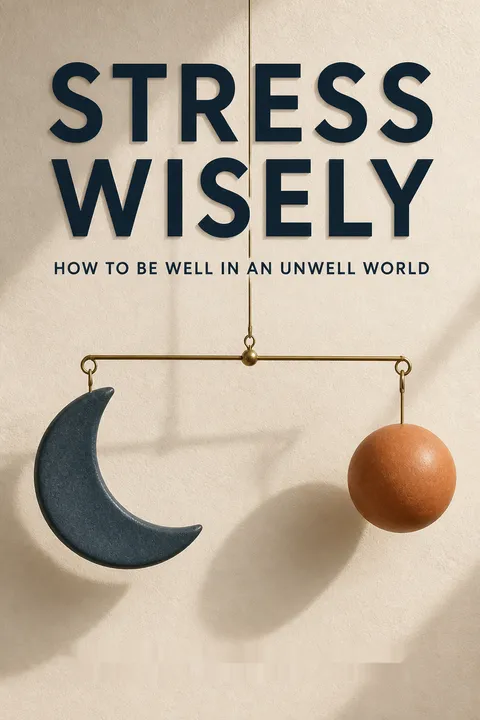


Key Takeaways
Stop performing 'fine'; hiding distress does not make it manageable.
The cost of silence. Hanley-Dafoe recalls being a teenager in serious distress who tried to tell a teacher she was not coping. The teacher dismissed her as dramatic. That encounter helped teach her to conceal pain, a habit that can make suffering harder to recognize and support. Later, outward success did not automatically heal the distress underneath it.
Name the real conditions. The book argues that modern strain is not simply a personal failure of organization or self-care. People face clashing demands, social comparison, economic pressure, injustice, and crises that individual coping skills cannot erase. Wellness practices can help, but communities, employers, and governments also have responsibilities for the conditions producing stress.
The opening move is important because it separates distress from personal inadequacy. That distinction makes room for both self-understanding and practical help: someone who can name what is happening is more likely to seek support than someone busy defending the appearance of competence. The book also resists a familiar trap in wellness writing, which is to make systemic problems sound like private attitude problems. Individual practices matter, but they cannot compensate indefinitely for unsafe or unfair conditions.
Treat stress as unavoidable energy, then choose how to work with it.
Change the story. Stress is the body's response to perceived demands and threat, not a moral category of good or bad. The same stress chemistry can accompany a new opportunity or a frightening event. The book draws on a study of more than 29,000 people: those who said stress affected their health “a lot” had a 43 percent higher prevalence of death over the study period. This is an association, not proof that beliefs alone determine health. Still, the finding supports examining the story a person tells about stress.
Notice the reaction. Fight, flight, freeze, and fawn are automatic threat responses. Fawning means appeasing or accommodating a threat to seek safety. A person may not control the first reaction, but can learn to understand it and decide what support or next step is needed.
This reframing avoids the false promise that a well-lived life is stress-free. It also offers a useful distinction between bodily alarm and deliberate response: the first can be automatic, while the second may become more flexible with awareness and support. The study is most useful as an invitation to question catastrophic assumptions, not as a guarantee that a positive mindset protects health. Trauma, chronic illness, and ongoing danger cannot be talked away.
Track your stress load before the bucket spills into burnout.
Capacity is unequal. In the stress bucket model, a person's bucket represents the stress they carry and the capacity they have to absorb more. Biology, temperament, trauma, privilege, and life experience shape its size and starting level. Everyday pressures add water; coping strategies release some. Helpful releases create room, while avoidant habits may briefly soothe without reducing the underlying load.
Protect the buffer. The space between current stress and overflow is the buffer zone. Hanley-Dafoe pairs this image with the Yerkes-Dodson curve: some arousal can support performance, but excessive or prolonged demands undermine it. Burnout is more than a demanding day. It can involve emotional exhaustion, cynicism, and a sense of ineffectiveness. When demands persistently exceed resources, rest alone may not be enough; the demands or supports must change.
The bucket metaphor is memorable because it makes cumulative strain visible. It also corrects a common misunderstanding: a person can be overwhelmed by several ordinary demands even when no single one seems dramatic. Its strongest implication is social as well as personal. People do not begin with equal capacity, and advice to “cope better” can conceal unequal loads. The metaphor is not a diagnostic tool, however. It helps people notice patterns, but serious or persistent distress may require professional assessment and structural change.
Build wellness across eight realms, not just through physical health.
A whole-life map. The Eight Realms of Wellness framework treats well-being as a direction of growth rather than a finish line. Its realms are the body, heart, mind, community, environment, roles, resources, and soul. They cover physical needs; emotions; learning and thought; relationships; surroundings and systems; work and caregiving; finances; and purpose, values, and meaning.
Look for connections. A demanding job can drain time for relationships, money pressure can affect sleep, and a disordered home can make concentration harder. Hanley-Dafoe argues that the realms overlap, so a single wellness tactic rarely fixes everything. She also draws on Halbert Dunn's broader conception of wellness, in which a person's potential develops within the environment they actually inhabit. Responsibility is shared between the individual and the surrounding systems.
The framework's value is diagnostic rather than prescriptive. Instead of asking, “What is wrong with me?” a reader can ask which areas are under strain and how they influence one another. That shift can prevent overinvesting in the most socially visible domain, such as fitness or career achievement. The breadth is also a limitation: eight domains can feel like eight more things to manage. The framework works best as a map for choosing one relevant next step, not as a demand to optimize every corner of life.
Respect your body as an ally, not a project to punish.
Care beyond appearance. Hanley-Dafoe describes a long struggle with disordered eating and the surprising praise she received when she became dangerously thin. She uses that experience to question a culture that confuses appearance with health. The chapter traces the history of dieting, calorie counting, and the body mass index, arguing that these tools can encourage shame and do not capture every person's health or body composition. It reports that the diet industry is worth $71 billion and that 95 percent of diets fail, claims the book uses to challenge faith in restrictive programs.
Return to basics. Body appreciation means respecting what the body does, rather than requiring positive feelings about every feature. The book recommends nourishment, regular movement that is not punishment, and realistic sleep routines. It notes that sleep loss can impair mood, memory, health, and emotional control.
The chapter's most durable shift is from appearance as a verdict to the body as a lived relationship. That makes room for care without demanding that people love every aspect of their bodies. The critique of diet culture is especially relevant where health advice becomes moral judgment. At the same time, broad claims about diet failure and health metrics should not replace individualized medical care. Body respect includes access to accurate diagnosis and treatment, not simply a new vocabulary for self-acceptance.
Name feelings precisely, then respond to what they are asking for.
Feelings carry information. The book distinguishes emotions, the body's underlying reactions, from feelings, the conscious experiences given to those reactions. A person may experience several at once, in different intensities. Hanley-Dafoe calls a familiar, learned emotional state an emotional home. Someone may repeatedly return to worry, anger, or people-pleasing because it feels familiar, even when it causes harm.
Use a small sequence. Adapted from social-emotional learning, the author's practice is to notice a feeling, name it specifically, consider where it comes from, and choose an action. “Depleted,” for example, may point toward a need for rest or connection more clearly than “tired.” Difficult emotions are not evidence of failure. But trauma is not always resolved through reflection alone; the author stresses that trained therapeutic support may be needed.
This method turns emotional awareness into a decision aid rather than a demand to feel better immediately. Naming can create enough distance to distinguish a signal from an instruction: anger may indicate a boundary problem, but it does not require an impulsive confrontation. The idea of an emotional home adds a useful question about what feels familiar, not merely what feels pleasant. Still, self-observation has limits. A person in danger or experiencing severe symptoms may need safety and professional care before introspective exercises.
Choose reciprocal belonging over exhausting efforts to fit in.
Connection is a need. Hanley-Dafoe tells of a young man she met while interning at Kingston Penitentiary. As a child without a stable family, he joined a gang because it offered protection, relationships, and a place to belong. The story does not excuse the harm he caused; it shows what can happen when essential needs go unmet. Belonging can protect people, while the desperate search for it can also make dangerous groups appealing.
Count the relationship tax. The author uses this term for the effort and emotional cost demanded by roles and relationships. Some communities offer mutual support; others require a person to hide important parts of themselves. A small circle of trustworthy people may be more sustaining than a large network built around performance. The book encourages readers to notice which relationships make them feel seen, heard, and respected.
The prison story makes belonging concrete: connection is not a decorative extra but can shape consequential choices. It also discourages simplistic judgments about individual behavior by asking what unmet needs a group is fulfilling. For everyday relationships, the relationship-tax idea can clarify why a role feels draining even when it looks desirable from the outside. Reciprocity does not mean every exchange is equal at every moment. Caring relationships include uneven seasons, but they should not require one person to disappear.
Shape work around values, and treat burnout as a demand problem.
Meaning is not a job title. Hanley-Dafoe separates purpose, the reason for an action, from meaning, what a person makes of it. A job need not be a passion if it supports something deeply valued. But the work can still become corrosive when its demands conflict with those values. One parent realized this after arriving late to a son's basketball game despite believing that work was ultimately for the family.
Inspect the conditions. The book's work assessment asks about workload, control, reward, community, fairness, and values. These six areas can reveal why a role is unsustainable. It recommends protected focus time, breaks, clear priorities, advance planning, and boundaries. Yet when a workplace is persistently unsafe or unreasonable, personal productivity techniques cannot solve the underlying problem.
This account improves on the slogan to “find your passion” by separating meaningful effort from constant enthusiasm. It also makes room for paid work, caregiving, and domestic labor, which are often treated as if only salaried employment counts. The six-part assessment is useful because burnout is rarely explained by workload alone. Its systems emphasis matters: individual boundaries can help, but the organization must also examine fairness, staffing, control, and recognition rather than praising employees for enduring preventable strain.
Rewrite your money story without pretending poverty is a mindset.
Inherited beliefs matter. The author traces her family's migration from Scotland to Canada with very little money and describes how family memories shaped her own beliefs about scarcity and responsibility. A money story is the collection of lessons, silences, and experiences that influence how someone thinks and acts around finances. Naming that story can reveal old assumptions that no longer match present circumstances.
Distinguish belief from resources. A scarcity mindset assumes there will not be enough and encourages fear-driven holding or chasing. A sufficiency mindset means recognizing what is available and trusting one's ability to address needs. This is not a claim that money is imaginary or that gratitude pays rent. Financial wellness includes meeting obligations and feeling able to make choices. The book urges honest conversations, financial learning, and plans suited to a person's actual resources.
The distinction between financial literacy and financial wellness is useful: knowing terms does not automatically create habits or security. The family stories also show why money conversations carry emotion, identity, and inherited expectations. The account of sufficiency needs careful boundaries, however. It can reduce needless comparison, but it must not reframe material deprivation as a failure to appreciate what one has. The book's strongest version holds both truths: perspective affects behavior, and economic conditions impose real limits.
Make purpose and spiritual practice part of ordinary days, not future rewards.
Meaning belongs in daily life. The book treats spirituality broadly, as a sense of connection, values, purpose, and something beyond the isolated self. It may be religious, rooted in nature or art, or take another personal form. Hanley-Dafoe recounts struggling to believe she deserved to survive a near-fatal accident. A priest helped her loosen the idea that suffering and rescue can be neatly assigned according to who deserves them.
Give values a place. Spiritual wellness is not an achievement to complete. The author suggests setting boundaries, protecting the beginning and end of the day, scheduling reflection, using breath or movement, and spending time in nature. These practices make room for what matters now, rather than postponing life until a future milestone arrives.
This approach makes spirituality accessible without reducing it to a single doctrine or requiring a dramatic conversion. It connects meaning with the ordinary choices that express a person's values, which is more actionable than treating purpose as a hidden answer waiting to be found. The account of the accident also challenges just-world thinking, the belief that good people reliably receive good outcomes. Spiritual meaning can comfort, but it should not be used to explain away injustice or imply that suffering was deserved.
Keep five recovery levers close: solitude, connection, nature, music, expression, and gratitude.
Small resets count. The Five Forces of Recovery emerged from the author's research during the COVID-19 pandemic, when people described what helped them feel better in the moment. Solitude and connection form one continuum: some people need a few minutes alone, while others need to feel understood by someone else. The other forces are nature, music, acts of expression, and gratitude. Together, these offer practical ways to interrupt a rising stress response.
Make a personal plan. A person might step outside, listen to a song that brings comfort, write or speak about a feeling, or notice something genuinely appreciated. The author recommends planning ahead for emotional states, including identifying actions that help and habits that tend to worsen the moment. These are life jackets, not solutions to every stressor. Persistent overwhelm may also require rest, help, or changes to the conditions causing it.
The framework is memorable because it gathers accessible actions rather than demanding a complicated wellness routine. Its flexibility matters: solitude may restore one person and deepen another person's isolation, so the useful choice depends on context. Gratitude can widen attention, but it should not silence grief or anger. The strongest reading treats each force as an option for regulation, not a universal prescription. Recovery is a practice of finding a fitting action, while remaining honest about problems that need more than a momentary reset.
Analysis
Stress Wisely is part memoir, part practical guide, and part argument about where responsibility for well-being belongs. Its core claim is not that stress can be mastered or eliminated, but that people can develop a more skillful relationship with it through awareness, recovery, and a broader view of wellness. The book's arc moves from the damage of appearing “fine,” through the biology and accumulation of stress, toward a map of eight connected life domains and a set of immediate recovery practices.
The personal stories do important work. The author's adolescent distress, work-driven striving, trauma, family life, and encounters with people whose choices were shaped by unmet needs make abstract ideas legible. They also challenge the tidy division between successful and struggling: outward achievement can coexist with serious internal distress. The most useful conceptual pair is the stress bucket and the Eight Realms. One helps readers think about accumulated load and limited capacity; the other expands the search for causes beyond the body or the workplace.
The book is at its strongest when it refuses to turn structural problems into personal homework. It explicitly argues that employers, communities, and governments share responsibility, and that a person cannot self-care their way out of chronic overload. That position prevents the frameworks from becoming another performance checklist. Its chief tension is breadth: eight realms, five recovery forces, multiple reflective exercises, and many research claims can themselves feel like more demands. The practical answer is to use the frameworks selectively, as tools for noticing and choosing, not as standards to satisfy.
Some evidence is presented in simplified form, and individual studies cannot establish universal rules. The book's own caveats about trauma and personal variation are therefore important. The deepest takeaway is less a scientific formula than a humane discipline: tell the truth about the load, understand the conditions around it, and choose the next response that supports a life worth inhabiting now.
Review Summary
The reviews for Stress Wisely are mixed, with ratings ranging from 2 to 5 stars. Some readers found the book helpful, praising its actionable ideas and the author's genuine approach. Others criticized it for being too autobiographical, lacking relevance, and jumping between topics. Positive reviews highlighted the book's thought-provoking nature and easy-to-read format. Negative reviews mentioned the author's personal stories as distracting and the content as common knowledge. Several readers struggled to engage with the book, while others found it insightful and worth revisiting.
People Also Read







Glossary
Stressing wisely
Working with stressThe practice of accepting that stress is part of life and responding to it in ways that support wellness. It combines awareness of personal stress reactions with habits and supports that help a person cope, recover, and make choices across different areas of life. It does not mean eliminating stress or relying on self-care to fix systemic problems.
Eight Realms of Wellness
A whole-life wellness mapHanley-Dafoe's framework for viewing wellness across eight interconnected areas: the body, heart, mind, community, environment, roles, resources, and soul. The realms cover physical health, emotions, learning and thought, relationships, surroundings, work and caregiving, finances, and meaning. The framework is intended to help identify where stress is arising and how one domain may affect another.
Five Forces of Recovery
Five ways to resetA set of recovery practices drawn from the author's research on how people felt better during the COVID-19 pandemic. The five forces are solitude and connection, treated as opposite ends of one continuum, plus nature, music, acts of expression, and gratitude. They are intended as accessible ways to support well-being in difficult moments, not as substitutes for professional help or changes to harmful conditions.
Stress bucket model
A picture of stress capacityA model that represents accumulated stress as water in a bucket. A person's starting load and capacity are shaped by biology, temperament, life experience, and available resources. Daily demands add to the bucket, while coping strategies can release pressure. The buffer zone between current load and overflow represents the room available to handle further demands.
Yerkes-Dodson Human Performance and Stress Curve
Stress and performance curveA model describing how performance can rise as physiological or mental arousal increases, up to an optimal point, and then decline when arousal becomes excessive. Hanley-Dafoe uses it to explain why some stress can support action, while too many demands or prolonged strain can impair performance and contribute to overwhelm.
Emotional home
A familiar emotional stateThe learned emotional state a person tends to return to because it feels familiar, even when it is not helpful. Examples in the book include worry, anger, fear, and a sense of obligation. The idea encourages people to notice recurring emotional patterns without treating those patterns as fixed identities.
Fawning response
Appeasing a perceived threatAn automatic stress response in which a person tries to gain safety by accommodating or appeasing someone perceived as threatening. It can involve pushing aside one's own needs and focusing on the other person's wishes. The book presents fawning as a survival response, not a deliberate moral failing, and recommends approaching it without shame.
When-then
Postponing well-being until laterA pattern of believing that well-being can begin only after a future condition is met, such as finishing a degree, changing one's body, or reaching a certain level of success. Hanley-Dafoe argues that this cycle keeps satisfaction out of reach because each milestone can create another condition to fulfill.
Relationship tax
The cost of a relationship roleThe emotional effort and labour demanded by a role, relationship, or community. Taking stock of this cost can reveal whether a connection supports belonging and authenticity or requires excessive self-suppression. The concept is not a demand for perfectly equal exchanges; it is a prompt to notice patterns of depletion and reciprocity.
Signature strengths
Energizing personal qualitiesA values-based approach to identifying character strengths that feel essential to a person's identity, relatively natural to use, and energizing when expressed. Examples in the book include curiosity, bravery, kindness, integrity, perspective, and playfulness. The author recommends using these strengths to find meaningful ways to contribute and connect with others.
Sufficiency mindset
Trusting what is enoughA way of relating to money and resources that recognizes what is available and supports meeting needs without constant comparison or acquisition. In the book, sufficiency contrasts with scarcity thinking, which is organized around fear that there will not be enough. It does not deny poverty or guarantee financial security; it describes a perspective and set of behaviors within real circumstances.
FAQ
What's Stress Wisely about?
- Focus on Wellness: Stress Wisely by Robyne Hanley-Dafoe explores how to manage stress in a challenging world, emphasizing the importance of wellness.
- Eight Realms of Wellness: The book introduces a framework that includes physical, emotional, intellectual, social, environmental, occupational, financial, and spiritual aspects.
- Personal and Professional Insights: Dr. Hanley-Dafoe shares her personal experiences with stress, making the book relatable and impactful.
Why should I read Stress Wisely?
- Practical Strategies: The book offers actionable tools and insights that can be easily integrated into daily life to combat stress.
- Holistic Approach: It encourages readers to consider all aspects of their lives, not just physical health, for sustainable well-being.
- Empowerment: The book aims to empower readers to take control of their stress and wellness, emphasizing personal capacity to thrive.
What are the key takeaways of Stress Wisely?
- Stress is Inevitable: Understanding stress as a natural part of life helps individuals approach it with a balanced mindset.
- Choose Wellness: Making conscious choices that prioritize wellness can lead to significant improvements in health and happiness.
- Community Matters: Building supportive relationships enhances resilience and provides a buffer against stress.
What are the Eight Realms of Wellness in Stress Wisely?
- Physical Realm: Focuses on nutrition, sleep, and exercise as foundational for overall wellness.
- Emotional Realm: Addresses feelings and emotional connections, crucial for mental health.
- Intellectual Realm: Encompasses learning and creativity, contributing to personal growth and satisfaction.
How does Dr. Hanley-Dafoe define stress in Stress Wisely?
- Biological Reaction: Stress is a normal biological reaction involving hormones like adrenaline and cortisol.
- Complex Experience: It can be cognitive, emotional, physical, or behavioral, requiring a multifaceted management approach.
- Wicked Problem: Stress is described as complex with no simple solutions, encouraging deeper exploration of management strategies.
What is the significance of mindfulness in Stress Wisely?
- Mindfulness as a Superpower: It is highlighted as a powerful tool for self-regulation and stress management.
- Awareness of Stress: Mindfulness helps individuals become more aware of their stress responses and triggers.
- Practical Application: The book provides mindfulness exercises to enhance overall well-being and resilience.
What are some practical strategies for managing stress mentioned in Stress Wisely?
- Daily Check-Ins: Regular self-check-ins foster self-awareness and help identify stressors early.
- Building a Support Network: Emphasizes the importance of community and relationships in managing stress.
- Adaptive Coping Strategies: Encourages engaging in hobbies, spending time in nature, and practicing gratitude.
What are the best quotes from Stress Wisely and what do they mean?
- “You do not have to make your life look easy.”: Emphasizes authenticity in expressing struggles.
- “People can do hard things. People can do great things. When we believe.”: Highlights the power of belief in oneself.
- “Your body is the most significant organism on the planet. And it is all yours.”: Underscores the importance of body appreciation and self-care.
How does Stress Wisely address the concept of burnout?
- Burnout Defined: Described as the accumulation of stressors leading to emotional exhaustion and ineffectiveness.
- Signs of Burnout: Includes symptoms like cynicism and emotional fatigue, with early recognition being crucial.
- Recovery Strategies: Emphasizes the need for deep rest and self-care, acknowledging the need for help and support.
What role does community play in Stress Wisely?
- Importance of Belonging: Community and connection are vital for emotional and physical well-being.
- Empathic Attunement: Involves connecting authentically with others, fostering understanding and support.
- Building Supportive Relationships: Encourages cultivating relationships that provide emotional support.
What are the Five Forces of Recovery mentioned in Stress Wisely?
- Solitude and Connection: Balances time alone for reflection with seeking connection for support.
- Nature: Engaging with nature improves mood and reduces stress.
- Music: Used for emotional expression and regulation, enhancing mood and fostering connection.
How can I apply the concepts from Stress Wisely to my daily life?
- Self-Assessment: Assess your current state in each of the Eight Realms of Wellness and create a plan to address them.
- Incorporate the Five Forces: Integrate solitude, nature, music, expression, and gratitude into your routine.
- Mindset Shift: Adopt a sufficiency mindset by focusing on what you have, leading to greater contentment and resilience.
About the Author
Other books by Robyne Hanley-Dafoe

Download PDF
Download EPUB
.epub digital book format is ideal for reading ebooks on phones, tablets, and e-readers.








