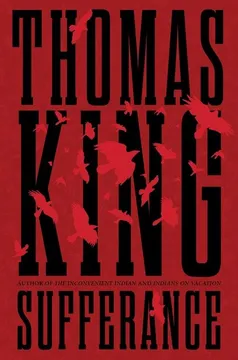


Plot Summary
The Schoolhouse Refuge
Jeremiah Camp has retreated to the abandoned Cradle River residential school, where he replaces the wooden crosses over dead children with named stones. He was born on the reserve, but spent most of his life away and now keeps the town at arm’s length. Mayor Bob Loomis wants the reserve cleared for a development, while preservationist Maribelle Wegman disputes Camp’s removal of the crosses.
At the Piggy café, Florence Holder reports on the reserve’s failing trailers and the families sleeping in the plaza. Camp’s quiet routine breaks when Oliver Flood, emissary of the powerful Locken Group, finds him and announces that Thomas Locken has died. The company wants Camp’s forecasting ability again, though he left that work years ago.
Camp’s refuge is already entangled with the history he hopes to avoid. The school is both his shelter and a place built to erase Indigenous children, while the graveyard gives him a task that is private yet ethically charged. His refusal to engage with the town is not neutral: Loomis’s development plans advance whether Camp participates or not. The novel’s opening therefore makes withdrawal a fragile strategy. Flood’s arrival exposes the same pattern on a larger scale: powerful institutions treat land, people, and even Camp’s talents as resources they can reclaim.
Twelve Names Return
At the Plaza Hotel, Ash Locken, Thomas’s daughter and heir, explains that her father kept a separate file containing twelve names, including his own. Five of the people on the list have recently died, as has Thomas, and Ash wants Camp to explain the pattern. The page also carries a handwritten warning about existing only through the tolerance of others.
Camp recognizes the list because he made it during his nearly thirty years working for Thomas, when he studied information for patterns that might predict what came next. He refuses to help at first, but Ash’s question follows him back to the school. He begins connecting the names to reports Florence has collected, even as the reserve’s own conflict with town officials keeps escalating.
The list turns Camp’s old profession into a moral problem. He once treated prediction as a technical skill, a way to identify patterns without assuming responsibility for what powerful clients did with them. Now his own work may have helped assemble the people whose deaths he is being asked to explain. Ash’s request is also a question about inheritance: she has gained her father’s authority but not his certainty. Camp’s silence protects him from being recruited, yet it also leaves the consequences of his knowledge in other hands.
Foam and Broken Promises
Cradle River’s trailers, installed by Indian Affairs after older homes were bulldozed, leak, slump, and grow mould; promised upgrades never arrived. At a government meeting, Roman Moosonee challenges officials who offer a can of foam instead of reliable water, electricity, or compensation.
He sprays the product onto a government vehicle, and Mayor Bob responds by cutting the reserve’s utilities. Roman then disables services to councillors who backed the mayor, bringing police attention and jail time.
Meanwhile, the mayor presses to move the reserve and place the plaza’s homeless families in empty trailers. Camp learns that the old school’s graves hold children who died during the 1944 blizzard, while the priest in charge spent school funds on religious relics instead of food and medical care.
The government’s foam can compresses a long history of abandonment into a visible, almost absurd gesture. It is presented as help while leaving the conditions that produced the mould untouched. Roman answers this evasion with retaliation, but the uneven consequences expose who has the power to define an act as criminal. Camp’s work in the graveyard belongs to the same history: he names children whose deaths were once explained away as fate. The present-day reserve and the buried students are not separate injustices. Both are shaped by institutions that promise care while withholding its material necessities.
The Lighthouse Lab
After Ash insists on a meeting, Flood takes Camp by helicopter to the Locken Group’s Toronto tower. Camp refuses to speak his name to a security scanner, forcing the company to let him in without its usual ritual of control.
Researchers review the deaths and find only one recurring business connection: Ankh Technologies, a company that appears to exist mainly on paper. Ash then shows Camp the ruins of a remote weather station leased by Ankh, where German industrialist Gunther Vogel and his son were reportedly present when it exploded.
Vogel studied long-lived sea organisms. Ash believes her father paid for Camp’s school property in exchange for an earlier forecast and now offers him payment to solve the deaths. Camp returns to Gleaming with the question unresolved.
The tower’s security system makes a small but revealing test: Camp will not lend his voice to the machinery that claims the right to identify and admit him. His refusal does not defeat the corporation, but it establishes that its rules are negotiable when someone declines to perform them. The Ankh clue shifts the mystery from individual accidents toward a coordinated enterprise, while the destroyed station makes scientific ambition physically legible as rubble. Ash is asking for more than an explanation of deaths. She wants Camp to enter again a system whose power he once helped organize.
A Child at the Table
Back in Gleaming, Camp finds that Emma Stillday and her young daughter, Lala, need a place to stay because mouldy trailers are no home for a child. Florence and the reserve community have arranged for them to use the school. Lala quickly befriends Camp’s stray cat, repairs her air mattress with his help, and draws in the classrooms.
She calls him Pop-Up and treats his silence as no barrier to companionship. Camp also burns the town’s notices and the remaining crosses he has pulled from the cemetery, while an apparition of a child watches and then disappears. The fire does not erase the school’s history, but Lala’s arrival gives the old building new inhabitants and begins to pull Camp into everyday family life.
Lala’s presence changes Camp’s isolation through ordinary demands rather than a grand revelation. She needs food, a repaired bed, company, and someone to walk her to school; answering those needs gives Camp a role that cannot be reduced to prediction. The child he sees in the cemetery and the living child at his table make the school’s past and present occupy the same space. His bonfire is an act of protest, not a cure for historical harm. Lala’s drawings and questions offer a different kind of repair: they make the building useful to people again.
The Refuge Overflows
Camp settles into a routine with Lala while Emma returns to Gleaming, works in the Piggy, and tries to rebuild her legal career. Her former partner, Roman, wants a relationship with their daughter but keeps placing music and work ahead of the time Emma asks him to share. Mayor Bob introduces an anti-loitering bylaw, and police arrest Wes Stanford, his pregnant wife Autumn, and other plaza families.
Emma takes their case and asks Camp to let the school serve as their address, giving them a basis to seek assistance. The old building fills with adults, children, and eventually dogs. Camp tries to keep his room private, but the crowded house exposes how thoroughly his chosen solitude depends on other people staying outside.
The school’s changing use makes privacy a material privilege rather than a purely personal preference. Camp can shut a door, but the families outside it have no secure address and face punishment for being visible in public. Emma meets that pressure with legal work, converting the school from a retreat into infrastructure. Roman’s uncertain efforts with Emma and Lala echo Camp’s own difficulty sustaining relationships: both men care, yet habitually withdraw when care asks for time and exposure. Community arrives as noise and inconvenience, but also as a practical answer to needs that individual self-sufficiency cannot meet.
The Gardeners’ List
As more people crowd into the school, Camp studies the files Ash gave him and sends her a forecast. He concludes that the twelve names belong to an exclusive group pursuing immortality through Ankh Technologies, and that the deaths are not a random series of accidents.
At the Plaza, Ash explains that her father assembled the group and sought eternal life, while Camp’s list identified those able to fund the project. She believes their concentrated wealth and power made them a danger, and has used the list to target them.
Flood confirms the deaths were arranged and describes the public cover story: a terrorist organization called the Gardeners will claim responsibility. All twelve listed people are dead. Camp understands that his pattern-reading helped make the killings possible.
The revelation turns forecasting into participation. Camp did not order the killings, but the list he built made a private project and its participants visible to Ash. The novel resists an easy distinction between insight and innocence: knowledge can be used to expose power, yet the act of making people legible can also enable violence. Ash’s garden metaphor recasts murder as pruning, a language of care that conceals who gets to decide which lives are expendable. Camp recognizes the danger of the billionaires’ project without being able to treat their deaths as a clean solution.
The Office Burns
A fire destroys the reserve’s band office, where the files and computers were kept. Roman suspects political sabotage, and Mayor Bob uses the damage to renew his claims that the reserve is unsafe.
The later explanation is less sinister and no less tragic: Wapi tried to refuel a generator while it was still hot, spilling gasoline and accidentally starting the blaze. His hands are burned, and the mayor considers charging him. During the upheaval, Nutty’s worsening respiratory illness sends her back to hospital, so Flood equips Camp’s school with beds and other necessities for her and the others.
Ash’s Ankh Foundation proposes a replacement office, modular homes, a well, solar power, and a new septic system. The band council sends the generous offer back for further consideration rather than accepting it outright.
The fire concentrates several vulnerabilities in one event: the band’s dependence on generators, its lack of water, and its reliance on a single office to hold vital records. Wapi’s accident shows how quickly a child can be made to carry blame for conditions adults and governments have failed to address. Bob’s response turns a practical crisis into an argument for further control. Ash’s offer might relieve genuine hardship, but it arrives from the same powerful network that has just been exposed as willing to reshape lives without consent. The council’s hesitation is therefore neither ingratitude nor simple mistrust. It is an assertion of decision-making power.
The Choice to Stay
Flood tells Camp that Ash plans another round of selective killings and asks him to help decide which wealthy people should be targeted. Camp does not agree. The band council questions the Foundation’s proposal and considers building for itself, while Emma takes on the Neighbours’ legal fight and begins establishing her practice.
Mayor Bob faces investigation over the contracts for his development project, and the old crosses are finally burned during the spring festival as the community gathers around the drum.
Camp spends time away from the school, even sleeping in Nutty’s failing trailer, but Lala and the others keep drawing him back. He finishes carving his aunt Mary Camp’s name into a river stone. When Flood’s new request remains unanswered, Camp stays with the work and the people around him.
The ending does not resolve Camp’s ethical dilemma by giving him a clean new purpose. He has seen what his skill enabled, and Ash’s next request would make him an active participant in a continuing program of violence. Yet he also cannot return to the untouched solitude with which he began: Lala, Emma, the reserve, and the graves have altered what home means. His final action is modest and exacting, putting a name on a stone rather than deciding which strangers deserve to die. The open ending leaves forecasting unresolved while making presence, care, and accountability the choices he can enact now.
Analysis
Sufferance sets two scales of dispossession beside each other. In Gleaming, the reserve faces a mayor who calls removal development, a government that substitutes mould foam for safe housing, and laws that make poverty itself punishable. In the Locken world, inherited wealth seeks to defeat mortality and treats the rest of humanity as background to a private experiment. These are not identical forms of power, but both rely on the assumption that those with resources may decide what happens to everyone else.
Camp’s profession makes that assumption personal. He learned to turn scattered facts into patterns for people who could act on them. His forecast is neither neutral nor fully controlling: it can expose a project, but it can also help make violence more efficient. Ash’s gardening language offers a seductive moral shortcut, converting human beings into branches that can be removed for the health of a whole. The novel makes Camp confront the danger in that logic without pretending the billionaires’ conduct is harmless.
The residential school cemetery supplies the story’s clearest counterpractice. Camp names individual children rather than treating their deaths as a regrettable statistic. That work does not undo the past, but it refuses the institution’s power to decide what is remembered. Lala extends the same principle into the living world. She gives Camp’s cat a name, draws in the school, and asks him to take part in ordinary care. Emma turns the building into shelter and a legal address; the reserve community weighs outside help against self-determination.
The ending offers no clean escape from compromised choices. The band council does not automatically accept a lavish proposal, and Camp does not promise Ash another forecast. His movement is smaller but consequential: he continues the work of naming the dead and stays within reach of the living. The novel suggests that responsibility begins not with mastering the future, but with recognizing whose lives a decision will alter and refusing to mistake power for permission.
Review Summary
Sufferance is praised for its blend of humor, social commentary, and unique narrative style. Readers appreciate King's ability to tackle serious issues with wit and insight. The silent protagonist and quirky characters are highlighted as strengths. Some find the plot disjointed or slow-paced, but many enjoy the book's thought-provoking nature. Themes of Indigenous struggles, wealth inequality, and community are noted. While opinions vary, most reviewers find the novel engaging and recommend it, particularly for fans of King's work.
Characters
Jeremiah Camp
Withdrawn pattern readerCamp is a Cradle River man who spent years analyzing patterns for the Locken Group before retreating to the abandoned residential school. He avoids speech, news, and most company, relying on fixed meals and routines to keep the world manageable. His graveyard work, replacing crosses with named stones, gives his solitude a form of responsibility. He is perceptive without being certain that insight gives him authority to act. That tension defines his relationships: he is wary of dependence, yet repeatedly responds to concrete needs around him. Lala’s trust and the reserve’s history challenge his belief that staying apart is the same as doing no harm.
Ash Locken
Heiress seeking answersAsh inherits the Locken Group and its private network of influence from her father, Thomas. She is controlled, observant, and accustomed to translating personal conviction into institutional action. Her interest in Camp comes from his unusual ability to see patterns, but she also wants to understand the motives behind her father’s secret projects. Ash speaks fluently in the language of cultivation and improvement, revealing both her strategic intelligence and her confidence that complex social problems can be managed from above. Her relationship with Camp is shaped by unequal power, mutual recognition, and a shared awareness that prediction can change the future it claims merely to describe.
Oliver Flood
Locken’s patient enforcerFlood is the Locken Group’s director of difficult negotiations and Camp’s persistent escort back into corporate life. Polished, dryly observant, and comfortable with intimidation, he treats coercion as a practical tool rather than a personal failing. His apparent courtesy never quite removes the threat beneath it. Flood also enjoys history, food, and the theatre of his own explanations, which makes him more complicated than a silent bodyguard. He understands the costs of power without believing that understanding will make people abandon it.
Emma Stillday
Lawyer rebuilding her lifeEmma is Ada Stillday’s daughter, Lala’s mother, and Roman’s former partner. Trained as a lawyer, she has been working in food service while trying to restore her professional standing. She is practical, direct, and attentive to what people need before she spends time on declarations of principle. Her return to Gleaming puts her between family history and a future she is trying to build for Lala. Emma’s legal training makes her a valuable advocate for Cradle River and the displaced families, but she also has to negotiate the emotional work of co-parenting with Roman and accepting help from others.
Lala Stillday
Curious young connectorLala is Emma and Roman’s lively young daughter and Ada’s granddaughter. She approaches Camp without fear, gives his cat a name, asks constant questions, and treats his old school as a place to explore rather than a monument to avoid. She wants to be brave, liked, and included, even when other children make her feel different. Her closeness with Camp develops through ordinary shared tasks: walking to school, drawing, eating, and caring for animals. Lala’s confidence can be impulsive, but she is also quick to notice sadness in others and imagine ways to ease it.
Roman Moosonee
Restless cornet playerRoman is Camp’s cousin, an accomplished cornet player, and Lala’s father. His career has taken him around the world, but he has returned to the reserve with financial and personal disappointments. He is outspoken against political hypocrisy and willing to risk punishment to challenge it. In private, he struggles to show up consistently for Emma and Lala, often letting gigs and rehearsals claim the time they need. His music is both a genuine vocation and a refuge from difficult relationships.
Ada Stillday
Protective family anchorAda is Emma’s mother and Lala’s grandmother, a forceful presence in reserve politics and family life. She speaks bluntly about the poor trailers, the mayor’s plans, and the ways government promises have failed. Her anger comes from long experience, but she also shows loyalty through practical care, especially for Nutty and the younger generation. Ada can resist change when she fears it will weaken the community, yet she is not indifferent to help. Her central concern is that the family and the reserve should not be made dependent on outsiders’ goodwill.
Nutty Moosonee
Elderly keeper of memoryNutty is an elder of Cradle River and Roman’s grandmother. She lives in a deteriorating trailer but continues to welcome people, share food, and remember how the reserve has changed. Her stories connect the damaged present to the residential school and its children, while her care for Camp treats him as kin even when others question his belonging. Nutty’s gentleness does not make her passive; she argues for generosity where Ada sees danger. Her warmth is expressed through food, teasing, and the insistence that community is something people choose to practise.
Florence Holder
Café’s communal centerFlorence runs the Piggy, a café she once shared with her late partner, Reggie Clarke. She keeps the place alive through coffee, food, news, and the daily company of friends, despite insisting that she never wanted the restaurant to become a full-time burden. She is sharp-tongued, generous, and quick to see when Camp is using routine to avoid a difficult choice. Florence’s grief for Reggie remains part of her life, but she has rebuilt a social world around the café rather than retreating from it.
Louis Bear
Measured community chiefLouis is chief of Cradle River and Enola’s father. He handles community affairs with a practical, measured temperament, balancing public negotiations with the daily needs of the reserve. He cares for his nephew Wapi and tries to give the younger generation opportunities beyond the reserve, including travel and cultural work. Louis is politically alert without mistaking discussion for change. His steady presence gives Ada and Roman room to be more openly combative.
Enola Bear
Clever civic challengerEnola works in the band office and is Louis’s daughter. Quick-witted and politically engaged, she punctures official language with jokes and keeps close watch on how decisions affect Cradle River. Her teasing of her father is affectionate, but she is no mere comic relief; she is alert to the structures behind local disputes. Enola is also protective of Wapi and helps make the reserve’s cultural life visible through its drum and beadwork traditions.
Wapi Bear
Quiet, observant nephewWapi is Louis’s nephew, raised by Louis and Enola after his parents died in a car accident. He communicates through short repeated words, gestures, and close attention to his tablet and surroundings. The adults protect him, but also encourage his participation in family and community life. His curiosity makes him a bridge between children and adults, while his dependence on others reveals how easily a person can be underestimated when they communicate differently.
Bob Loomis
Mayor selling a futureLoomis is Gleaming’s mayor and a real-estate owner who wants to move the reserve and build a development on its land. He packages dispossession as civic improvement, promoting models, brochures, and public-safety claims. His manner is genial when he wants agreement and self-righteous when challenged. The town’s financial ambitions and his political ambitions are difficult to separate, making him a local expression of the corporate power Camp once served.
Maribelle Wegman
Preservationist with influenceWegman is a member of Gleaming’s preservation committee and an advocate for protecting the school graveyard. She sees the crosses as heritage objects, while Camp sees them as symbols of the institution that harmed the children buried there. She also supports moving the reserve, which complicates her claim to be acting on behalf of history. Her polished authority lets her frame political interests as preservation, even when the people most connected to the site disagree.
Wes Stanford
Homeless father organizingWes is a former factory worker, Autumn’s partner, and father to their children. After his plant closes, he and other families take shelter in the plaza and then the old box factory. He is wary of the town’s plan to house them in mould-damaged trailers and understands that poverty has made his family vulnerable to decisions made elsewhere. Wes is protective without pretending that his family’s circumstances are easy, and he is willing to work with Emma when she offers a legal route forward.
Iku Takahashi
Neighbor and birdwatcherTakahashi is a Gleaming resident who walks her dog, Koala, and carries binoculars that belonged to her late husband, Keizo. She is friendly and persistent, repeatedly inviting Camp to look more closely at the world around him. Her birdwatching offers a quiet counterpoint to his habit of turning away from what he sees.
Plot Devices
The twelve-name list
A map of hidden ambitionThomas Locken’s private list names twelve extremely wealthy people, including himself. Camp originally assembled it for Locken as a pattern-finding exercise, and later deaths force Ash to ask what the names share. The list leads Camp toward Ankh Technologies and its immortality project, while also giving Ash a way to identify her targets. It links Camp’s former work to the consequences he now hopes to avoid.
The graveyard stones
Names restored to the deadCamp replaces the school cemetery’s anonymous wooden crosses with stones bearing the children’s names. The work is a personal act of respect and a refusal to leave the school’s victims as a vague historical statistic. It also brings Camp into conflict with Wegman, who regards the crosses as heritage, and gives Lala a concrete way to join him. The stones make the community’s buried past visible within its present struggle over land.
The crows
Witnesses to human choicesCrows recur around the school, the graveyard, and the reserve. Camp watches them for patterns and remembers stories of their capacity to learn and retaliate. Their presence links the natural world to the novel’s concern with observation: crows watch before acting, while people often ignore evidence that disrupts what they want to believe. They are not a magical explanation for events, but a recurring measure of attention, memory, and consequence.
Florence’s tarot deck
Chance beside daily newsFlorence keeps the tarot deck that belonged to Reggie and invites Camp to draw a card during their café routine. She does not treat the cards as reliable prophecy, but their interpretations give the characters a playful language for naming fear, change, and hope. The deck contrasts with Camp’s evidence-based forecasting: one offers symbolic possibility, while the other claims to identify patterns with practical consequences. Its readings often reflect what the characters already sense but have not said plainly.
The Gardeners
Violence disguised as pruningThe Gardeners are the name used to claim responsibility for the deaths of the twelve billionaires. The gardening metaphor presents targeted killing as selective removal of harmful growth, making violence sound like maintenance. Ash’s use of the metaphor reflects her belief that concentrated wealth can be cut back for the wider world’s benefit, while the novel questions who gets to decide which people are disposable. The group also provides a public cover story that conceals the private motives behind the deaths.
About the Author
Other books by Thomas King

Download PDF
Download EPUB
.epub digital book format is ideal for reading ebooks on phones, tablets, and e-readers.








