

Plot Summary
Prologue
At dawn, Gabriel climbs the tidal rocks called the Apostles, intending not to return. When fog hides the sunrise and his drum fails, he hears a child in the surf and pulls her onto the basalt. More people follow: a dozen strangers, cold and drowning.
Gabriel sings as the tide rises, and they answer him before slipping back into the water. He reaches shore alive, uncertain whether he rescued shipwrecked people or summoned figures from an older story. On the beach, only a dog waits for him.
The opening makes survival arrive before explanation. Gabriel sets out to control the terms of his death, but the sea interrupts his private ceremony with other lives that require his hands and voice. The strangers can be read as real people or as figures from Indigenous creation stories, and the book preserves that uncertainty rather than settling it. The dog’s presence then carries the mystery into ordinary life. Gabriel’s first movement away from isolation is not a decision to recover. It is an act of rescue that makes retreat harder.
The Missing Biologist
At Domidion, CEO Dorian Asher learns that Gabriel Quinn, the corporation’s brilliant head of Biological Oversight, has vanished. Security photographs show Quinn’s rented house covered with place names associated with nuclear and industrial disasters, ending with a final warning on the front door.
Dorian orders his assistant, Winter Lee, to find Quinn quietly, then discovers that the scientist spent his vacation in restricted archives studying a modified bacterium. Quinn’s colleague Warren Thicke knows little, except that Quinn had been asking about a cancelled project.
Dorian treats the disappearance as a business problem, even as his own nausea, tremors, and lapses in concentration worsen. The empty aquarium where Quinn once watched a turtle becomes another unexplained absence.
Dorian’s first instinct is to convert uncertainty into a manageable investigation. The glass offices, surveillance, and security protocols promise visibility, yet they cannot explain a missing employee or a vanished turtle. That gap unsettles him because his authority depends on the belief that systems can account for everything. Quinn’s disaster list is not merely eccentric writing: it is a record of consequences that corporate files tend to divide into separate, containable incidents. Dorian can recognize the pattern only gradually, because recognizing it would also implicate the institution that gives him power.
A Refuge Beside the Bay
After the rescue on the rocks, Gabriel lies naked on Samaritan Bay’s beach, waiting for death and trying to dismiss what happened in the water. Mara Reid returns his clothes and discovers that he has been making repeated attempts to drown himself. He gives her little explanation, but her refusal to treat him as either a spectacle or a mystery unsettles his practiced detachment.
Nicholas Crisp, an eccentric local who rents Gabriel a weathered trailer, offers him a chair, food, and a place to stay at a fugitive’s rate. An old dog follows Gabriel from the beach to the trailer. Mara names him Soldier, and the three form an awkward orbit around a man who has not yet decided to live.
Gabriel arrives with the conviction that solitude is a fact rather than a condition he can alter. Mara disrupts that conviction by responding to his suicidal behavior without either romanticizing it or letting him disappear into it. Crisp’s hospitality is similarly practical: a trailer, a chair, and an invitation are modest forms of care, not cures. Soldier’s attachment gives Gabriel companionship without demanding an explanation. The town’s damaged, half-empty landscape mirrors Gabriel’s inner state, but its residents keep offering concrete ties that make his intended exit less private than he wants.
A Drum in the Fog
Sonny, the lonely caretaker of the Ocean Star Motel, finds a damp hand drum near the trail to the hot springs. His father’s rules have taught him to distrust questions, but the drum stirs a hope that the Indigenous families driven from Smoke River might return. Sonny leaves the instrument where Mara can find it, then sees a black-haired girl wearing Gabriel’s distinctive jacket and takes her for proof that the return has begun.
Meanwhile, Mara remembers her mother and grandmother and begins painting portraits of the people she has lost. The first work gives her a task she can approach one brushstroke at a time, while Sonny’s drum and Mara’s canvases turn private grief toward the possibility of other people.
Sonny and Mara answer absence in opposite but related ways. Sonny’s rigid rules protect him from uncertainty, yet the drum makes him imagine a future beyond the motel’s empty vending machines. Mara’s painting does not restore her family, but it lets memory become work rather than a sealed room. Both characters use objects to make loss tangible: Sonny handles the drum, Mara studies faces on canvas. The book treats these acts not as sentimental substitutes for the missing, but as first attempts to create a relationship with what remains.
The GreenSweep File
Dorian traces Quinn’s archive searches to GreenSweep, a proposed defoliant made from a modified plant bacterium. Independent scientists had found that an earlier version could kill plant life, and Quinn had apparently worried about its environmental reach. Dorian orders Quinn’s house sealed and questions Thicke, who admits that the two scientists had discussed the cancelled project.
At the same time, Domidion faces dead fish near its Alberta tar-sands holdings and a missing waste barge, the Anguis, last reported lost in a storm. Dorian’s symptoms continue, but he tries to manage them with medication and work. For now he treats each warning as a separate risk, while Quinn’s files suggest that the risks may belong to one history.
This section links the novel’s two scales of harm: the intimate problem of a missing scientist and the enormous consequences of industrial research. Dorian’s compartmentalization is more than a corporate tactic. It is also a psychological defense against the possibility that his work has produced an outcome no one can control. Quinn’s archive trail makes that defense unstable, while the missing barge and the Alberta fish kill foreshadow that disposal and damage do not stay neatly within corporate boundaries. Dorian responds by gathering information, but gathering is not yet the same as accepting responsibility.
A Birthday in the Springs
At Crisp’s birthday gathering in Beatrice Hot Springs, Mara and Gabriel join the host in retelling the story of Sky Woman, the animals who help her, and the twins whose rival creations make the world imperfect but livable. Crisp draws Gabriel into the telling, and Gabriel leads a song, using the water as a makeshift drum.
Unseen guests eat from the feast, deepening the sense that the living are not alone in the gathering. Crisp also reveals that Sonny is his nephew, tying the guarded motel boy to the older man’s estranged family. Later, Mara asks Gabriel to share her bed without sex; he stays awake beside her and discovers the comfort of holding someone without needing to turn closeness into possession.
The creation story offers an alternative to the fantasy of a flawless world. Its balance depends on differences, limits, and the labor of many beings, which sharply contrasts with Gabriel’s scientific attraction to control. His song brings him into a communal practice he once held at a distance. Mara’s request for simple physical closeness similarly tests whether intimacy can exist without performance or certainty. Crisp’s disclosure about Sonny places family history inside the wider circle of the gathering: estrangement is real, but kinship has not stopped exerting pressure.
Lilly's Face Returns
While moving her belongings back to Smoke River, Mara finds a photograph on Gabriel’s refrigerator and recognizes her best friend Lilly with her baby, Riel. Gabriel explains that Lilly is his younger sister, then learns that she named her son after the childhood name she used for him. He had not known the child existed.
The discovery leaves him unable to stay at the table, while Mara begins to understand how much family history he has missed. She settles into her grandmother’s stripped house, and Crisp later brings back furniture and appliances he had kept in storage. At the reserve, Gabriel and Mara also find signs that someone has been living among the abandoned homes, though the occupants flee before they can be questioned.
The photograph turns Gabriel’s abstract estrangement into a specific loss: a sister built a life, had a child, and remembered him, while he remained absent. His shock is sharpened by the fact that Riel’s name preserves an attachment he did not know he still possessed. Mara’s return to her grandmother’s house is not a simple homecoming either. The stolen furnishings and hidden residents show how grief, displacement, and survival have altered ownership of the place. In both cases, home is not recovered by feeling alone. It must be approached through evidence, labor, and other people.
Two Dams Break
Two holding ponds at Domidion’s tar-sands facility breach, sending a vast volume of toxic waste into the Athabasca River. Dorian learns that the ponds were designed for evaporation, but production kept them full by continually pumping in more effluent.
Rather than accept the company’s responsibility, he prepares a media strategy that emphasizes energy needs and the cleanup crews. On television, Manisha Khan presses him about the earlier Kali Creek disaster and GreenSweep, connecting Domidion’s current emergency to its past.
Dorian tries to redirect the interview, but the story exposes the company’s history and Quinn’s disappearance to a national audience. The spill threatens communities and waterways downstream, while Dorian’s public confidence masks worsening illness and private disarray.
The two breached dams make the cost of Dorian’s preferred compartmentalization physically visible. Waste that was supposed to evaporate has been kept in circulation for the sake of production, just as the company has kept its account of past failures safely partitioned. Khan’s questions undo those divisions by placing Kali Creek beside the Athabasca. Dorian’s performance reveals how corporate speech can acknowledge danger while refusing moral implication. The ecological crisis is not an interruption of business as usual; it is what business as usual has accumulated.
The Scientist's Confession
Crisp drives Gabriel to the canyon where GreenSweep was released and shows him the dead landscape below. Gabriel descends alone, finding bones along the creek and seeing the consequences he had kept at a scientific distance. He had helped develop the bacterium, though the field crew used it at the wrong concentration and a storm carried it into the watershed.
When he finally tells Mara, he does not ask her to absolve him. She confirms that the disaster killed her mother and grandmother, along with Lilly, Riel, and much of the community. Mara gives him back his father’s drum and jacket, then tells him the low tide will come before dawn. Gabriel reads the return as permission to finish what he began on the rocks.
Gabriel’s guilt is morally serious, but his wish to die risks turning accountability into another form of self-absorption. The canyon corrects the abstraction of his laboratory work with animal bones and a living creek altered by his decisions. His confession gives Mara the truth, yet it does not make the losses hers to forgive. Her refusal to comfort him immediately prevents remorse from becoming a shortcut around consequence. By directing him toward the low tide rather than offering absolution, she leaves open a harder question: what can a responsible person do after repair is impossible?
Sonny Builds a Beacon
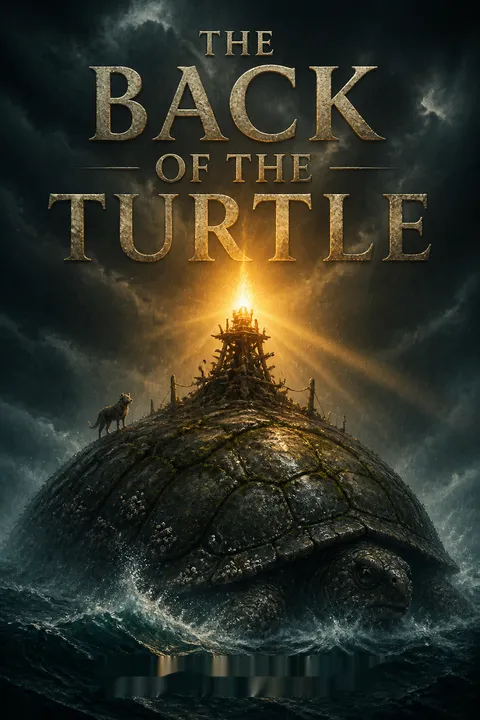
Sonny gathers shells, bones, rebar, and copper wire to build a tower on the beach, believing its light can bring turtles and people back. Soldier leads him to the motel room Sonny has imagined his father occupying. When the dog forces the door open, Sonny finds only dust and cobwebs; the father he has trusted as an authority has been absent for a long time.
Crisp offers food and company instead of demanding an explanation. Sonny returns to his tower, lights its beacon, and helps a battered sea turtle reach the water. At the hot springs, Crisp later shows Sonny the turtle laying eggs. For the first time, Sonny can share his hope with people who are present, rather than waiting for his father to validate it.
Sonny’s tower begins as an attempt to restore the world through obedience to an imagined father, but its construction requires his own judgment, ingenuity, and persistence. The opened motel room makes that dependence impossible to sustain. Soldier and Crisp do not replace Sonny’s father; they offer forms of care grounded in the present. The turtle’s return gives his labor a purpose that is real without being guaranteed. Sonny cannot command the eggs to hatch, but he can tend the beach and welcome what comes.
The Tide Turns the Ship
At the spring low tide, Gabriel reaches the Apostles with his drum, intending to die as the water returns. Mara climbs after him and refuses to leave, telling him that if he will not save himself, he must help save her. They struggle through the rising surf together and reach the beach, where Sonny’s beacon and a gathering crowd mark a way back.
Then the Anguis, the missing waste barge carrying Domidion’s toxic cargo, crashes out of the fog. Its Taiwanese crew recognize it as their ship. Crisp leads the townspeople in pushing against the hull as Gabriel, Mara, Sonny, and the families sing; Sonny’s hammer joins the rhythm. The incoming waves lift the barge and carry it back out to sea, turning individual survival into collective action.
The tide gathers the novel’s central conflicts into one physical test. Gabriel cannot control the sea, undo GreenSweep, or make guilt disappear; he can only accept Mara’s hand and move with her toward shore. The stranded Anguis then makes shared responsibility visible: the town’s response matters even when no one can guarantee the outcome. Song and hammer do not magically replace labor. They coordinate it. The barge’s departure is not a cleanup or a pardon, but a moment when people who were previously isolated act together against a danger none could manage alone.
The Bay Learns to Return
After the Athabasca disaster and his failed television defense, Dorian spends a sleepless night walking through Toronto. A fortune teller offers him a chance to ask the question that matters most, but he refuses.
He learns that Olivia wants a divorce and eventually buys a residence at the Hermes, choosing a fresh start while his medical tests remain inconclusive. Months later at Samaritan Bay, Sonny watches the turtle eggs hatch and runs between the nest and surf, drumming the babies toward the water.
Fish, birds, and other signs of life have begun returning, and the town’s survivors are making room for one another. Mara and Gabriel remain connected, though his responsibility cannot be erased. The ending offers renewal as work, not as a clean restoration of what was lost.
The closing movement refuses a single scale of redemption. Dorian can purchase a new residence and reorganize his life, but money does not settle his health or repair the damage his company has caused. Sonny’s work is smaller and more immediate: he encourages vulnerable hatchlings across a beach, without pretending he can guarantee their safety. The returning animals signal ecological possibility, not a reversal of history. Likewise, Mara and Gabriel’s continued connection does not cancel grief or culpability. The book locates hope in repeated acts of care undertaken without certainty.
Analysis
The novel places ecological disaster beside forms of damage that are easier to overlook: family estrangement, grief, cultural displacement, corporate self-deception, and the loneliness of people left behind. Its characters repeatedly confuse control with safety. Gabriel believes that scientific understanding can stand apart from consequences; Dorian believes that public relations and market logic can contain them; Sonny believes obedience will secure a father’s care. Each belief falters when the world refuses to remain inside the boundaries assigned to it.
Against those strategies, the book sets practices of relation. Mara paints the dead and returns their faces to the houses they inhabited. Crisp cooks for whoever arrives, including strangers who have taken what they needed to survive. Gabriel’s songs make him part of a group before he can explain himself. Sonny builds with discarded materials, then learns that care means accompanying the turtle rather than carrying it. These acts do not undo loss or replace accountability with kindness. Their value lies in restoring obligations between people, animals, and places.
The recurring Sky Woman story resists the fantasy of a perfect beginning. The world is made through cooperation, but it remains uneven, vulnerable, and dependent on continued care. The novel’s hope is therefore ecological and social rather than triumphant. Fish, birds, and turtles begin to return, yet the book does not promise that nature will restore every human loss or that the past can be cleaned away. Its sharper claim is that responsibility begins when people stop treating damage as someone else’s problem. Survival becomes meaningful not because guilt disappears, but because the living choose what to do together after it.
Review Summary
The Back of the Turtle is a compelling novel that addresses environmental disasters, corporate greed, and Indigenous experiences. Many readers praise King's masterful storytelling, wit, and ability to blend humor with serious themes. The book explores guilt, redemption, and hope through diverse characters affected by an ecological catastrophe. While some found the pacing slow or characters underdeveloped, most appreciated the novel's powerful messages about environmental responsibility and human resilience. The book's mix of realism and magical elements resonated with many readers.
People Also Read

Characters
Gabriel Quinn
The haunted biologistGabriel is an exceptionally gifted biologist who has learned to trust systems, evidence, and controlled experiments more readily than emotional bonds. His reserve makes him seem self-contained, but his family history reveals how much distance can be mistaken for independence. He is drawn to questions about how living systems work, and he carries a capacity for music and storytelling that he has kept at the edge of his life. His arrival in Samaritan Bay places his scientific certainty beside a damaged landscape and a community that cannot be reduced to data. Gabriel’s struggle concerns whether knowledge can become responsibility, and whether closeness can be accepted without first being earned through perfection.
Mara Reid
The painter who came homeMara is an Indigenous artist whose bond with Smoke River is shaped by family, memory, and a strong sense of place. She has spent years building a life away from home, yet the deaths of her mother, grandmother, and closest friend leave her unable to treat the reserve as merely a past she has outgrown. Painting becomes a practical way to approach grief: she recreates people and homes from memory, then carries the portraits back to the land where they belonged. Mara is direct, funny, and alert to the difference between remorse and accountability. Her care for Gabriel does not require her to deny anger or surrender her own judgment.
Dorian Asher
The polished corporate chiefDorian is the CEO of Domidion, a wealthy executive accustomed to converting uncertainty into a manageable choice. He takes comfort in luxury, corporate protocols, and the belief that problems can be contained by competent people. His intelligence is real, but it often serves rationalization: he can see the costs of industrial decisions while arguing that the enterprise must continue. Physical symptoms and personal strain begin to unsettle the composed identity he has built. Dorian’s story asks what happens when the habits that have secured his power no longer protect him from illness, public scrutiny, or the consequences of decisions made under his authority.
Sonny
The motel's lonely keeperSonny lives at the Ocean Star Motel, maintaining its machines and searching the shore for salvage. His thoughts follow private rules and borrowed sayings, giving his world a childlike logic that can be both comic and painful. He longs for approval from a father whose expectations shape his understanding of right and wrong. Beneath the rituals and hammering is a sharp capacity for invention, loyalty, and kindness. Sonny notices what others overlook, including the small objects left behind by visitors and the needs of people who have nowhere to go. His emotional life centers on belonging and the difficult work of discovering whom he can trust.
Nicholas Crisp
The exuberant hostNicholas Crisp is a red-bearded, theatrical local who lives beside the hot springs and treats hospitality as a daily responsibility. He speaks through stories, literary references, jokes, and maritime metaphors, but beneath the performance is a careful observer of grief and kinship. Crisp offers Gabriel shelter, gathers people around food, and keeps the creation story alive through repeated telling. He is not a simple sage: his own family history includes estrangement and regret, and his optimism can coexist with sorrow. Crisp’s instinct is to create occasions where people can meet without being forced into immediate agreement or explanation.
Soldier
The watchful straySoldier is an elderly, limping dog who attaches himself to Gabriel and moves freely between the beach, motel, and reserve. He is quiet rather than obedient, often humming, growling, or simply waiting beside the person who needs company. Soldier’s attention repeatedly directs the humans toward events they might otherwise miss. He provides Sonny with companionship without asking him to follow a rule, and he stays close to Gabriel without demanding confession. The dog functions as a guide through both physical space and emotional avoidance.
Winter Lee
Dorian's exacting assistantWinter is Dorian’s precise and composed executive assistant. She gathers information, manages corporate communication, and reports difficult facts without ornament. Her stillness contrasts with Dorian’s increasingly erratic moods, making her a stabilizing presence inside Domidion’s glass offices. Winter understands the company’s procedures but does not always share Dorian’s assumptions about what those procedures can accomplish. Her role shows how competence can serve both the maintenance of corporate power and the exposure of problems that power would prefer to contain.
Mei-ling
The stranded crew's voiceMei-ling is a Taiwanese crew member who speaks enough English to help her family explain their ordeal to the people of Samaritan Bay. She translates for her father and cousins, describing the breakdown of their ship and their attempts to reach land. Her practical clarity allows the town to understand that the newcomers are frightened and hungry, not simply trespassers. Mei-ling carries responsibility for making her family understood while preserving their dignity in an unfamiliar community.
Lilly
Gabriel's absent sisterLilly is Gabriel’s younger sister and Mara’s closest friend from childhood. Curious, affectionate, and more comfortable with relationships than her brother, she shares Mara’s early dreams while remaining tied to family obligations. Her memories connect the two central characters long before they understand their relationship. Lilly’s choices and remembered presence shape Gabriel’s sense of what he missed, while Mara’s portraits preserve the texture of a friendship that helped define her youth.
Rose Sampson
The family storytellerRose is Lilly and Gabriel’s mother, a Smoke River woman who carries complicated feelings about the reserve and the family’s departures. She tells the Sky Woman story to her children, passing on a way of understanding creation that differs from Gabriel’s scientific education. Her relationship with her son is marked by separation and unspoken hurt, while her closeness to Lilly and Mara anchors the younger women’s memories of home. Rose’s presence survives through stories, photographs, and the places she inhabited.
June Reid
Mara's remembered motherJune is Mara’s mother, a practical woman who shares daily customs and a lively family life with her daughter and mother. She helps teach Mara to approach the river with respect and supports her through the tensions of adolescence, even when their views of the future differ. Her teasing humor and frank advice remain part of Mara’s inner life after she is gone. June represents care expressed through ordinary routines as much as through explicit guidance.
Muriel Reid
Mara's sharp-witted grandmotherMuriel is Mara’s grandmother, a woman of strong opinions, humor, and close involvement in family life. She shares the morning river custom and helps shape Mara’s understanding of home, relationships, and the practical demands of adulthood. Muriel can be affectionate and meddlesome in the same breath, often using jokes to puncture solemnity. Her memories and habits help Mara retain a living connection to Smoke River rather than treating it as a landscape emptied of meaning.
Joe Quinn
Gabriel's lawman fatherJoe is Gabriel and Lilly’s father, an RCMP officer whose understanding of the world is shaped by rules, danger, and responsibility. He shares music and powwow experiences with Gabriel, offering his son a route into family and community life that the boy is not always ready to accept. Joe’s decisions create lasting consequences for the family, and his relationship with Gabriel is loving but imperfect. He is remembered through fragments of travel, songs, and the ordinary moments that Gabriel later wishes he had valued.
Sonny's father
The unseen authoritySonny’s father is a powerful presence in the boy’s thoughts, supplying rules, sayings, and expectations that organize Sonny’s daily life. Sonny looks to him for approval and understands many ordinary choices as tests of obedience. The father’s absence from the town’s active community leaves Sonny with a narrow source of guidance, even as Sonny develops instincts and ideas of his own. His influence makes Sonny’s longing for companionship especially poignant.
Olivia Asher
Dorian's restless wifeOlivia is Dorian’s wife, accustomed to a life of comfort but less persuaded than he is that acquiring more property will create happiness. She travels, pursues her own interests, and challenges Dorian’s assumptions about money and status. Their relationship has become distant beneath its polished routines. Olivia’s choices force Dorian to confront a private life that cannot be managed like an executive portfolio.
Manisha Khan
The probing broadcasterManisha Khan is a television journalist who questions Domidion’s representatives about genetically modified products and environmental damage. She is composed on camera and alert to evasions, following a line of inquiry beyond the prepared corporate talking points. Her reporting connects separate incidents that Dorian would prefer to keep distinct. Khan’s role is not to resolve the disasters, but to make their history publicly harder to ignore.
Warren Thicke
The compliant scientistWarren Thicke is Quinn’s colleague in Biological Oversight. He values his position and the division’s work, but his public explanations reveal a tendency to overstate safeguards and underestimate how much the audience knows. His professional dependence on Domidion limits his usefulness as a guide to Quinn’s motives.
Benjamin Toshi
Dorian's concerned physicianDr. Toshi is Dorian’s physician, attentive to symptoms that Dorian tries to minimize. He orders further tests and urges him to enter the hospital, while Dorian resists the loss of control that medical uncertainty demands. Toshi’s careful approach contrasts with his patient’s desire for immediate, uncomplicated answers.
Plot Devices
The Sky Woman story
A living creation mapThe story of Sky Woman falling into a water-filled world, helped by animals and carried on a turtle’s back, recurs as a framework for understanding creation and community. Crisp’s telling brings Mara and Gabriel into a shared act of narration, while its twins make imperfection part of the world’s design rather than an accidental flaw. The story also helps Sonny imagine return and renewal. Its purpose is not to provide a literal explanation for every uncanny event, but to offer a way of thinking in which animals, people, and land are interdependent.
The drum and songs
Sound that gathers peopleThe hand drum carries family memory and gives Sonny an object to interpret as a sign of Indigenous return. Gabriel’s singing first accompanies his attempt to die, then helps the rescued crew join him, and later becomes part of communal action. Sonny uses drumming to accompany his work and encourage turtle hatchlings. The drum never functions simply as a magical tool. It marks the transition from private feeling to shared rhythm, making separate people capable of acting together.
The Apostles and the tide
A threshold between choicesThe Apostles are reached only at low tide and cut off again as the sea returns. Gabriel treats their narrow summit as a place where he can control the terms of his death, while the rising water repeatedly challenges that illusion. The same tidal cycle governs the community’s rescue of Gabriel and its response to the Anguis. The rocks make the novel’s questions physical: retreat is possible only for a time, and survival depends on recognizing when others are sharing the danger.
GreenSweep
Science made consequenceGreenSweep is a bacterium developed as a defoliant whose danger was not adequately contained. Its use at Kali Creek, at the wrong concentration, and the storm that carried it into the watershed lead to the devastation called the Ruin. The project links Gabriel’s scientific career to the deaths and ecological destruction in Mara’s home. The novel uses this history to examine how technical knowledge can be treated as separate from moral responsibility, even when the consequences spread far beyond the laboratory.
The Anguis
The danger that comes homeThe Anguis is a waste barge that Domidion loses after hazardous cargo cannot be unloaded. Its disappearance allows the corporation to treat a catastrophe as distant, but the ship eventually reaches Samaritan Bay, where its Taiwanese crew have already been rescued. The barge’s arrival gathers corporate negligence, displacement, and community response into one event. The people of the Bay cannot erase what it carries, but they can face it together. The ship makes visible the way discarded dangers return to the places and people least equipped to bear them.
FAQ
Synopsis & Basic Details
What is The Back of the Turtle about?
- Atonement for ecological disaster: The novel follows Gabriel Quinn, a brilliant Indigenous biochemist haunted by his role in creating GreenSweep, a defoliant that caused an environmental catastrophe, "The Ruin," devastating the Smoke River reserve and its people. He returns to the Pacific coast community of Samaritan Bay, initially seeking to end his life, but instead finds himself drawn into the lives of the few remaining inhabitants and a mysterious group of shipwreck survivors.
- Corporate denial and consequence: Parallel to Gabriel's journey, the narrative tracks Dorian Asher, the CEO of Domidion, the corporation behind GreenSweep. Dorian navigates a world of corporate spin and personal unraveling as his company faces mounting environmental and public relations crises, highlighting the moral decay and ultimate emptiness of unchecked corporate power.
- Community's struggle and rebirth: The story explores the resilience of the devastated community, particularly through Mara Reid, an artist and nurse who returns to her ancestral home, and Sonny, a simple, hopeful motel caretaker. Their individual struggles with grief and memory intertwine with the arrival of the "sea people" (Mei-ling and the Sea People) and the looming threat of the toxic barge, Anguis, culminating in a collective act of defiance and a tentative new beginning.
Why should I read The Back of the Turtle?
- Rich thematic depth: Readers seeking a profound exploration of environmental responsibility, corporate ethics, Indigenous resilience, and the power of storytelling will find the novel deeply rewarding. It challenges conventional notions of guilt and redemption, offering a nuanced perspective on human complicity in ecological destruction.
- Unique narrative blend: Thomas King masterfully weaves together elements of Magical Realism and Blurred Boundaries, dark humor, and a Dual Narrative Structure, creating a compelling and often surprising reading experience. The interplay between Gabriel's personal quest and Dorian's corporate machinations provides a sharp, insightful critique of modern society.
- Memorable, complex characters: From the guilt-ridden Gabriel and the fiercely resilient Mara to the enigmatic Nicholas Crisp and the innocent Sonny, the characters are richly drawn and emotionally resonant. Their individual journeys of loss, survival, and tentative hope offer a powerful testament to the human spirit's capacity for adaptation and renewal.
What is the background of The Back of the Turtle?
- Environmental and Indigenous context: The novel is deeply rooted in contemporary environmental concerns, particularly the impact of industrial pollution and genetically modified organisms, drawing parallels to real-world disasters like the Athabasca oil sands spills and the Fukushima nuclear meltdown. It also explores the historical and ongoing displacement and cultural erasure faced by Indigenous communities in Canada, reflecting Thomas King's consistent engagement with these themes.
- Mythological and literary allusions: King integrates the Indigenous Creation Story of "The Woman Who Fell from the Sky" as a central motif, providing a mythic framework for understanding destruction and rebirth. The narrative also subtly references Western literary and historical figures, from Oppenheimer's "Now I am become Death" to Blake's "Jerusalem," enriching its commentary on human ambition and its consequences.
- Geographical and cultural specificity: The setting of Samaritan Bay, a fictional Pacific coast community, grounds the universal themes in a distinctly Canadian landscape, complete with references to specific Canadian cities (Toronto, Lethbridge, Calgary) and cultural touchstones (RCMP, Co-op markets). This specificity adds a layer of authenticity to the novel's exploration of place, memory, and belonging.
What are the most memorable quotes in The Back of the Turtle?
- "Now I am become Death, the destroyer of worlds." (Gabriel, Chapter 9): This quote, a direct allusion to J. Robert Oppenheimer's reflection on the atomic bomb, encapsulates Gabriel's profound guilt and self-perception as the architect of the environmental disaster. It highlights the theme of scientific hubris and the devastating power unleashed by human ingenuity, a central element in Gabriel Quinn's motivations and his journey towards atonement.
- "If you repeat a lie often enough, it becomes the truth." (Winter, Chapter 54): Attributed to Joseph Goebbels, this chilling statement from Winter Lee, Dorian's assistant, reveals the cynical core of Domidion's public relations strategy. It underscores the novel's critique of corporate spin and the manipulation of public perception, a key aspect of the themes in The Back of the Turtle regarding truth and denial.
- "It's not about moving. It's about community." (Mara, Chapter 95): Spoken by Mara as the community collectively pushes the Anguis back into the sea, this line distills the novel's ultimate message of collective action and resilience. It emphasizes that true strength lies not in individual power or material gain, but in shared purpose and the bonds forged through common struggle, a powerful insight into the novel's themes of community and survival.
What writing style, narrative choices, and literary techniques does Thomas King use?
- Trickster narrative voice: Thomas King employs a distinctive narrative voice, often characterized by dry wit, ironic commentary, and a conversational tone that directly engages the reader. This "trickster" sensibility, often associated with Indigenous storytelling traditions, allows him to subvert expectations, inject humor into grim situations, and offer subtle critiques of power structures, enhancing the overall analysis of the story.
- Interweaving of myth and reality: The novel seamlessly blends realistic contemporary events with elements of Magical Realism and Blurred Boundaries, most notably through the recurring Indigenous Creation Story and the ambiguous nature of characters like the "sea people" and Soldier the dog. This technique blurs the lines between the literal and the symbolic, inviting deeper interpretation of themes such as cultural memory, spiritual connection to the land, and the cyclical nature of destruction and renewal.
- Symbolism and recurring motifs: King utilizes a rich tapestry of symbolism and recurring motifs to deepen meaning. The Symbolism of the Turtle and the Tower, the drum, the jacket, the hot springs, and the various names (Anguis, GreenSweep, Kali Creek) all carry layered significance, often evolving in meaning throughout the narrative. This careful crafting of symbols encourages readers to look beyond the surface plot and engage with the novel's profound commentary on environmentalism, identity, and the human condition.
Hidden Details & Subtle Connections
What are some minor details that add significant meaning?
- Dorian's mattress and health: The recurring detail of Dorian's expensive, off-gassing mattress (Chapter 5) and his subsequent health issues (ringing ears, nausea, sweating, Chapter 14, 29, 33, 61, 65) subtly links his personal decay to the toxic products and practices of his corporation, Domidion. It foreshadows his physical and moral collapse, suggesting that even the powerful cannot escape the consequences of environmental harm.
- Sonny's "Heriquin" and new words: Sonny's innocent attempt to coin new words like "Heriquin" (Chapter 16) for a female mannequin, and his later realization of "two new words discovered by Sonny," highlights his unique, uncorrupted perception of the world. This contrasts sharply with the corporate jargon and manipulative language used by Dorian and Domidion, emphasizing Sonny's purity and his role as a hopeful, creative force in a damaged world.
- Crisp's "Jabberwoks" and "Snakes and Ladders": Nicholas Crisp's whimsical but pointed descriptions of Domidion as "Jabberwoks" (Chapter 9) and life as a "game of Snakes and Ladders" (Chapter 35) infuse the narrative with a playful yet profound critique. These seemingly throwaway lines underscore the arbitrary and often destructive nature of corporate power, while also suggesting that life, despite its challenges, remains a game with unpredictable turns, reflecting Crisp's trickster wisdom.
What are some subtle foreshadowing and callbacks?
- The disappearing turtle in Domidion's lobby: The initial mention of the turtle in Domidion's lobby aquarium (Chapter 2) that "vanished" and was never found, subtly foreshadows Gabriel Quinn's own disappearance and his eventual connection to the natural world. It also hints at the novel's central symbolism of the turtle as a creature of endurance and escape, linking the corporate world's inability to contain nature to the broader themes in The Back of the Turtle.
- Mara's "Blind Bat" and "flying" games: Mara's childhood games of "Blind Bat" and leaping into the wind (Chapter 52) subtly foreshadow her later role in guiding Gabriel through the literal and metaphorical fog of the reserve and her own journey of finding her way home amidst loss. These games symbolize the need for intuition, trust, and a leap of faith in navigating uncertainty, connecting to Mara's resilience and her ability to adapt.
- Crisp's "Is not my word like fire?": Crisp's dramatic recitation of this biblical quote (Chapter 85) as Sonny lights the beacon on the tower, subtly foreshadows the powerful, almost magical effect of collective song and action in the novel's climax. It suggests that words and stories, when imbued with conviction and shared purpose, can indeed ignite change and bring about new realities, reinforcing the themes in The Back of the Turtle about the power of narrative.
What are some unexpected character connections?
- Crisp and Sonny's familial bond: The revelation that Nicholas Crisp is Sonny's uncle (Chapter 41) and that they are "twins" (Crisp and Sonny's father) adds a profound layer to their relationship, explaining Crisp's protective nature and Sonny's deep-seated need for approval from his absent father figure. This connection highlights the enduring ties of family and the ways in which community members step in to fill voids left by tragedy, deepening the character motivations for both.
- Gabriel's family and the reserve: The gradual unveiling of Gabriel's Indigenous heritage and his mother Rose's connection to the Smoke River Reserve (Chapter 55, 63, 67) is a crucial, unexpected link. It reveals that Gabriel's role in the Ruin is not just professional but deeply personal, making his guilt and quest for atonement even more poignant. This connection transforms his journey from a general search for redemption to a specific reckoning with his own family's history and the land they belong to, enriching the analysis of Gabriel Quinn's character.
- The Anguis crew as the "sea people": The mysterious "sea people" Gabriel rescues are later revealed to be the Taiwanese crew of the Anguis (Chapter 79), the toxic barge. This unexpected connection transforms them from mythical figures into literal refugees, victims of Domidion's negligence. It broadens the novel's scope to include global environmental justice and the plight of displaced peoples, blurring the lines between the supernatural and the real, and adding a powerful layer to the themes in The Back of the Turtle about interconnectedness.
Who are the most significant supporting characters?
- Winter Lee: The Corporate Mirror: Beyond her role as Dorian's efficient assistant, Winter serves as a chilling reflection of corporate detachment and the logical extreme of prioritizing efficiency over humanity. Her almost robotic precision and lack of emotional response (Chapter 2, 18, 50, 54) highlight the dehumanizing aspects of Domidion's culture, making her a subtle but powerful commentary on the moral landscape Dorian inhabits. Her occasional, almost imperceptible smiles (Chapter 50, 96) are unsettling precisely because they are so rare.
- Kip: The Philosophical Chauffeur: Dorian's limo driver, Kip (Chapter 29,
About the Author
Other books by Thomas King
Download PDF
Download EPUB
.epub digital book format is ideal for reading ebooks on phones, tablets, and e-readers.








