

Key Takeaways
Change the interpretation, and the same event can produce a different feeling
Interpretation sits between event and emotion. The book’s ABC model of emotions describes an activating event (A), a belief or thought about it (B), and the emotional consequence (C). A car that will not start might prompt thoughts of being helpless and late, or thoughts about calmly arranging help. The event is the same, but the emotional response changes with its meaning. Automatic thoughts are the quick, often unnoticed words, images, or impressions that supply that meaning.
Watch for a feedback loop. Fear can produce bodily sensations, which prompt a new alarming thought, which intensifies the fear. A Thought Journal helps interrupt this cycle by recording the situation, the thought, and the distress level from 0 to 100 soon after an upsetting moment.
The model’s strength is practical: it identifies a point where a person can intervene without first solving the entire past. It also resembles appraisal models in psychology, which examine how a person evaluates an event rather than treating emotion as a direct readout of the event itself. The model should not be mistaken for a claim that thoughts explain every feeling. Pain, illness, social conditions, and bodily states can affect mood directly. CBT’s useful claim is narrower: when interpretation is amplifying distress, examining it can create options.
Catch a thinking shortcut before it turns one fact into your whole reality
Name the shortcut, not yourself. The authors call recurring distortions limited thinking patterns. They include filtering, where one negative detail eclipses the rest; polarized thinking, which allows only extremes; and overgeneralization, which turns one setback into a permanent rule. Mind reading assumes what others think, while catastrophizing predicts disaster. Magnifying inflates a problem, personalization makes events about oneself, and shoulds impose rigid rules on self or others.
Build a more balanced account. A draftsman received praise for his work and a request to finish the next assignment faster, but fixated on the criticism and concluded his employer thought he was lazy. The practice is to identify the pattern, write a more accurate alternative, and consider what action follows. Quantifying, checking assumptions, and looking for exceptions can replace all-or-nothing conclusions with workable judgments.
Naming a distortion can create psychological distance: instead of accepting a thought as reality, a person can recognize a familiar mental move. This is close to metacognitive approaches, which focus on how thoughts are handled, not merely on their content. The categories are best used as prompts, not verdicts. A negative interpretation may be accurate, and an appeal to balance should not erase discrimination, danger, or legitimate disappointment. The useful question is whether the conclusion fits the available evidence, not whether it sounds positive.
Put your most painful thought on trial with evidence from both sides
Separate facts from conclusions. A hot thought is a thought that triggers strong emotion. The Thought and Evidence Journal asks the reader to select one, list observable evidence for it, search for evidence against it, write a balanced alternative, and rate mood again. The point is not to force optimism, but to include information that distress may have pushed out of view.
Len’s sales record tells the story. A sales representative called himself a failure after a weak month and lost deals. His evidence against that sweeping judgment included finishing fourth among nine representatives for the year, having several strong months, and maintaining trusted customer relationships. His depression rating fell from 85 to 30 after he formed a more balanced view. He also made a plan to reconnect with customers rather than focus only on contract totals.
This exercise turns vague reassurance into an evidence audit. Its insistence on observable facts is valuable because feelings of certainty can masquerade as proof, especially during low mood. It also resembles scientific reasoning: a claim becomes more credible when it survives attempts to disconfirm it. Yet the method is not a courtroom where every fear must be defeated. Len’s reduced income remained a real concern. Balanced thinking is strongest when it clarifies what is true and directs attention toward useful action, rather than merely lowering distress.
Settle the body's alarm before asking the mind to think clearly
Practice relaxation as a skill. The relaxation response is a state in which measures such as breathing rate, heart rate, and muscle tension decrease. Abdominal breathing aims to slow shallow, rapid breathing; the authors note that three or four deep breaths can help some people feel calmer. Progressive muscle relaxation, or PMR, involves tensing and then releasing muscle groups throughout the body. The book recommends practicing the full sequence regularly, for about 20 to 30 minutes.
Make the skill portable. After learning PMR, a person can scan for tension and release it without first tensing every muscle. Cue-controlled relaxation pairs slow breathing with a brief mental cue, so the cue becomes associated with letting go. Visualization adds a personally calming scene, imagined through details such as sound, texture, and temperature. These techniques can be practiced separately or combined.
Relaxation gives CBT a bodily entry point. Slow breathing and muscle release can reduce arousal, making it easier to distinguish a physical alarm from evidence of imminent danger. Repeated practice also builds a skill that is more accessible under stress than an elaborate argument with oneself. The claim that deep relaxation and anxiety are physiological opposites is useful as a practical contrast, but should not be read as a guarantee that relaxation eliminates fear. Some people find breath focus uncomfortable; adapting the exercise or choosing another technique is sensible.
Give worry a scheduled appointment instead of letting it occupy the day
Assess both likelihood and impact. Worry control combines physical calming with risk assessment: estimate how likely the feared event is, then ask whether its consequences would truly be as catastrophic as imagined. The reader also lists alternative outcomes and possible ways to cope. This separates the chance of a problem from the ability to handle it.
Contain worry through exposure. Worry exposure means setting aside a daily period for focused attention to worries rather than repeatedly wrestling with them all day. The book suggests starting with a less distressing worry, imagining its worst outcome vividly for 25 minutes, then imagining alternatives for five minutes and rating anxiety again. Rachel practiced with the fear of forgetting her sister’s birthday; her anxiety rating for the imagined scene fell from 90 to 30. She worked through a hierarchy of worries over several weeks.
Scheduled exposure changes the relationship to worry: the person approaches a feared image deliberately instead of using distraction or reassurance to escape it. Exposure-based therapies commonly rely on repeated contact with feared material, though contemporary accounts emphasize learning new information, not simply waiting for anxiety to vanish. The book’s ratings can make progress visible, but a single score is not a full measure of recovery. A useful outcome is also whether worry consumes less time and interferes less with ordinary decisions.
Test the rituals that promise safety but keep your worry alive
Treat checking as a testable prediction. Worry behavior prevention targets actions or avoidances intended to prevent feared events, such as repeatedly checking a report, calling a loved one for reassurance, or avoiding reminders of death. These behaviors can briefly ease anxiety while preventing a person from learning whether the feared outcome would occur without them.
Run a small experiment. First record the behavior and predict what will happen if it is reduced. Then stop or replace the easiest behavior, track anxiety, and compare the prediction with the actual result. Carly feared that a party would run out of food unless she prepared too much. She calculated a reasonable amount and did not add extra portions. The party succeeded, and her anxiety fell from 100 before it to 25 afterward. More difficult behaviors can be reduced step by step.
The experiment is powerful because it tests both the feared consequence and the assumed necessity of the ritual. This resembles behavioral learning: when a person discovers that an expected disaster does not follow from dropping a safety behavior, the behavior can lose some of its authority. The distinction between ritual and prudent preparation matters. Sensible safety checks should remain in place; the target is repetitive behavior that is excessive, costly, and disconnected from a realistic level of risk.
Schedule pleasure and mastery before motivation returns
Measure what the week contains. Activity scheduling is a method for addressing depression by deliberately adding pleasurable activities and activities that create a sense of mastery, meaning accomplishment or effective self-care. The reader records activities by the hour for a week and rates pleasure and mastery from 1 to 10. This makes visible how depression may have crowded out enjoyable experiences or left days filled with neither nourishment nor achievement.
Plan first, then compare. The book recommends choosing several pleasure activities and several mastery activities for the coming week, while adding no more than one extra mastery task per day. Larger tasks can be divided into steps of 15 minutes or less. Before each activity, predict its likely pleasure or mastery rating; afterward, record the actual rating. Depressed people may underestimate how worthwhile an activity will feel, so the comparison offers concrete feedback rather than requiring faith in motivation.
Activity scheduling reverses the common assumption that action must wait for mood. In behavioral activation, planned engagement can restore contact with reward, social connection, and a sense of competence, even when enthusiasm is initially absent. The book’s separate pleasure and mastery ratings are especially useful because a task can feel satisfying without being fun, and recreation can matter even when it produces no accomplishment. The schedule should remain humane: illness, caregiving, poverty, or unsafe conditions can limit choice, and lack of activity is not a moral failure.
Schedule CBT practice instead of waiting for insight or motivation
Change depends on repetition. The authors stress that understanding a technique is different from practicing it. They recommend putting exercises into a calendar, choosing a limited trial period, and adjusting instructions to personal needs. Some methods are repetitive, but repeated use helps make skills easier to access when distress returns. Continuing practice after improvement may also reduce the chance of slipping back into familiar patterns.
Use self-help within its limits. A person can revisit the relevant exercise when an old problem reappears, but this book is not enough for every situation. The introduction specifically urges readers with serious thoughts of suicide to seek professional help promptly. CBT tools can support care, but they do not replace assessment or treatment when symptoms are severe, persistent, or dangerous.
The book’s practical emphasis reflects a broader distinction between knowing a principle and acquiring a skill. A calendar, a written rating, or a completed exposure session creates observable evidence of practice, which is more reliable than waiting to feel ready. The invitation to adapt exercises also guards against rigid self-help. Still, self-monitoring can feel burdensome or intensify distress for some readers. A clinician can help tailor the approach, address barriers, and determine whether another form of support is needed.
Analysis
Super Simple CBT is a skills-based introduction to cognitive behavioral therapy, organized as a progression from noticing thoughts to changing the body and behavior. Its six central tools are automatic-thought monitoring, identifying limited thinking, evidence testing, relaxation, worry control, and activity scheduling. The sequence matters: a reader first learns to observe a distressing reaction, then gains ways to question or interrupt it, and finally practices responses that change daily life.
The book’s most compelling premise is not that distress is imaginary or that every feeling can be argued away. It is that interpretation, bodily arousal, and behavior can reinforce one another. A threatening interpretation can intensify physical alarm; that alarm can seem to confirm the interpretation; avoidance can prevent corrective experience. The tools target different points in this loop. Journals clarify thought patterns, relaxation addresses arousal, exposure tests predictions, and scheduling counters withdrawal.
The approach is persuasive because it translates broad ideas into measurable exercises. Ratings, written evidence, planned sessions, and before-and-after comparisons make change easier to notice. These tools also reveal a limitation: numerical ratings can suggest precision without capturing the full complexity of mood, context, or recovery. The numbers are useful prompts, not objective diagnoses.
The book’s accessible, self-guided format is an advantage for readers seeking a clear starting point, but simplicity has boundaries. Emotions can arise from trauma, illness, material hardship, or unsafe circumstances, not only from distorted interpretations. A balanced thought should not excuse harmful conditions, and a relaxation exercise cannot resolve every external problem. The text appropriately distinguishes self-help from professional care in cases of serious suicidal thinking. Overall, its durable lesson is methodological: notice the pattern, test what it predicts, try a different response, and observe what actually happens. That is more grounded than demanding instant positivity, and more actionable than waiting for insight alone.
Review Summary
Super Simple CBT receives mostly positive reviews, with an average rating of 3.64/5. Readers appreciate its concise, practical approach to cognitive behavioral therapy techniques. Many find it helpful as an introduction to CBT, praising its accessibility and straightforward explanations. The book's focus on quick, implementable skills is highlighted as a strength. Some reviewers note that while the techniques are simple, consistent practice is required for effectiveness. A few critics feel the book oversimplifies CBT or doesn't offer enough new information for those already familiar with the subject.
People Also Read






Glossary
ABC model of emotions
Event, thought, feelingA way to map an emotional response into three parts: an activating event, the belief or interpretation about that event, and the emotional consequence. The model helps show that different interpretations of the same situation can produce different feelings, and that a reaction may become a loop when one feeling prompts further alarming thoughts.
Automatic thoughts
Fast, habitual interpretationsBrief thoughts, images, sensations, or impressions that arise without deliberate effort and assign meaning to events. They often feel true because they appear spontaneously and may be difficult to notice. In the book, identifying automatic thoughts that precede persistent distress is the first step toward examining and changing them.
Limited thinking patterns
Recurring thought distortionsEight recurring ways of narrowing or distorting interpretation: filtering, polarized thinking, overgeneralization, mind reading, catastrophizing, magnifying, personalization, and shoulds. The patterns can overlap. Naming them helps a person question a conclusion, consider missing evidence, and develop a more balanced response rather than treating a habitual interpretation as settled fact.
Hot thoughts
Thoughts that trigger emotionThoughts that contribute strongly to a painful emotional reaction, either because they occur frequently or because they have intense impact. The book recommends selecting a hot thought from a thought record, examining evidence for and against it, and forming a balanced alternative that acknowledges the real facts without accepting an exaggerated conclusion.
Thought Journal
Record of distressing thoughtsA notebook or worksheet used to record painful feelings, the situations around them, the automatic thoughts that preceded them, and a distress rating from 0 to 100. Entries made soon after an upsetting event can help reveal repeated themes and the interpretations that sustain emotional distress.
Thought and Evidence Journal
Evidence review for hot thoughtsA worksheet or journal process for examining one emotionally powerful thought. The user records objective evidence supporting it, searches for evidence against it, writes a balanced alternative, and rates mood again. It can also preserve alternative thoughts and identify practical actions related to the situation.
Relaxation response
Reduced bodily arousalA calmer physiological state associated with lower heart and breathing rates, reduced blood pressure and muscle tension, and other changes opposite to many bodily features of anxiety. The book presents breathing, muscle relaxation, and visualization as ways to practice this response.
Progressive muscle relaxation
Tense, then release musclesA relaxation technique in which muscle groups are deliberately tensed and then released in sequence. The contrast helps a person recognize and let go of stored tension. The book also describes shortened versions and body scans that can be used for quicker relaxation after the full method has been learned.
Cue-controlled relaxation
Breathing paired with a cueA method that pairs slow abdominal breathing with a brief verbal cue, such as silently associating an exhale with relaxing. Repeated practice builds an association between the cue and releasing tension, allowing the skill to be used more quickly and in a wider range of settings.
Worry exposure
Scheduled practice facing worriesA structured method of setting aside time to imagine feared outcomes rather than repeatedly avoiding or interrupting worry. The person works through a hierarchy, beginning with less distressing worries, vividly imagines a feared scenario, and then considers alternative outcomes. The book presents repeated practice as a way to reduce the distress and disruption associated with worry.
Worry behavior prevention
Reducing worry-driven ritualsA process for changing checking, avoidance, or other actions used to prevent feared events. The person records a behavior, predicts what will happen if it is reduced, tests the prediction by stopping or replacing it, and compares expected with actual outcomes. More difficult behaviors can be approached gradually.
Activity scheduling
Planned pleasure and accomplishmentA method for addressing depression by tracking daily activities and deliberately scheduling both pleasurable experiences and tasks that provide a sense of mastery or accomplishment. The person rates predicted and actual pleasure or mastery, making it possible to notice progress and identify activities that support reengagement with daily life.
FAQ
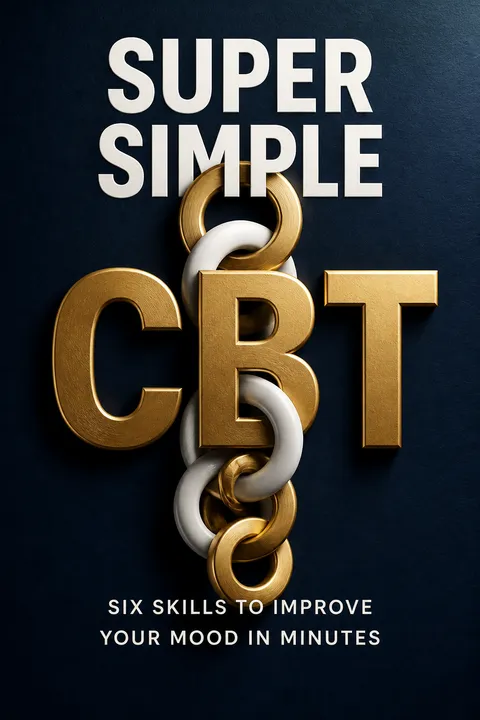
1. What is "Super Simple CBT: Six Skills to Improve Your Mood in Minutes" by Matthew McKay about?
- Concise CBT Guide: The book is a practical, easy-to-read introduction to cognitive behavioral therapy (CBT), focusing on six core skills to improve mood and manage emotional distress.
- Target Audience: It’s designed for people struggling with anxiety, depression, and related psychological issues, as well as those new to CBT or seeking a straightforward approach.
- Action-Oriented: The book emphasizes actionable exercises, worksheets, and real-life examples to help readers apply CBT techniques immediately.
- Self-Help Focus: It empowers readers to change their emotional responses by identifying and altering unhelpful thought patterns.
2. Why should I read "Super Simple CBT" by Matthew McKay?
- Accessible and Practical: The book distills complex CBT concepts into simple, actionable steps, making it ideal for beginners or those overwhelmed by more detailed workbooks.
- Immediate Relief: Techniques are designed to provide quick mood improvements, often within minutes, making it useful for those seeking fast, tangible results.
- Evidence-Based Methods: The strategies are grounded in decades of CBT research and clinical practice, ensuring their effectiveness.
- Broad Applicability: The skills taught can help with a range of issues, including anxiety, depression, anger, perfectionism, low self-esteem, shame, guilt, and procrastination.
3. What are the key takeaways from "Super Simple CBT" by Matthew McKay?
- Thoughts Cause Feelings: Most emotions are triggered by our thoughts, not just past experiences or unconscious memories.
- Change Thoughts, Change Feelings: By identifying and altering negative or distorted thoughts, you can change your emotional responses.
- Six Core Skills: The book teaches six essential CBT skills: recognizing automatic thoughts, identifying limited thinking, challenging hot thoughts, practicing relaxation, controlling worry, and getting mobilized.
- Practical Tools: Using thought journals, evidence gathering, relaxation exercises, and activity scheduling can significantly reduce emotional suffering.
4. What are the six core CBT skills taught in "Super Simple CBT" by Matthew McKay?
- Automatic Thoughts: Learning to recognize and record the spontaneous thoughts that trigger emotional distress.
- Limited Thinking: Identifying and challenging eight common patterns of distorted thinking, such as filtering, overgeneralization, and catastrophizing.
- Hot Thoughts: Gathering evidence for and against emotionally charged thoughts to develop more balanced perspectives.
- Relaxation: Practicing techniques like abdominal breathing, progressive muscle relaxation, and visualization to reduce physical and mental tension.
- Worry Control: Using risk assessment, worry exposure, and behavior prevention to manage chronic worry and anxiety.
- Getting Mobilized: Scheduling pleasurable and mastery activities to counteract depression and increase motivation.
5. How does "Super Simple CBT" by Matthew McKay explain the relationship between thoughts and feelings?
- ABC Model: The book uses the ABC model—Activating event, Belief (thought), Consequence (feeling)—to illustrate how thoughts directly influence emotions.
- Examples Provided: It gives relatable scenarios showing how different interpretations of the same event can lead to different emotional outcomes.
- Feedback Loops: It explains how negative thoughts and feelings can create self-perpetuating cycles, intensifying emotional distress.
- Empowerment: By understanding this relationship, readers are encouraged to take control of their feelings by changing their thought patterns.
6. What are "automatic thoughts" according to "Super Simple CBT" by Matthew McKay, and how can I identify them?
- Definition: Automatic thoughts are spontaneous, often unnoticed thoughts that arise in response to triggers and shape our emotional reactions.
- Characteristics: They are typically brief, believed without question, seem spontaneous, often involve "shoulds," and tend to be negative or catastrophic.
- Identification Methods: The book suggests reconstructing problem situations in your mind, stretching out shorthand thoughts, and keeping a Thought Journal to record them.
- Counting Technique: If thoughts are too fast to catch, simply counting each negative thought can help increase awareness and control.
7. What are the eight patterns of limited thinking described in "Super Simple CBT" by Matthew McKay, and how can I counter them?
- Eight Patterns: Filtering, polarized (black-and-white) thinking, overgeneralization, mind reading, catastrophizing, magnifying/minimizing, personalization, and shoulds.
- Recognition: Each pattern is explained with examples and cue words to help readers spot them in their own thinking.
- Balanced Alternatives: The book provides specific strategies for each pattern, such as shifting focus, quantifying instead of generalizing, and questioning absolute statements.
- Action Plans: Readers are encouraged to rewrite automatic thoughts in a more balanced way and develop action steps based on these new perspectives.
8. What is a "hot thought" in "Super Simple CBT" by Matthew McKay, and how do I challenge it?
- Definition: A hot thought is a particularly strong, emotionally charged thought that triggers significant distress.
- Evidence Gathering: The book teaches a step-by-step process to list evidence for and against the hot thought, using a Thought and Evidence Journal.
- Balanced Thinking: Synthesizing both sides helps create a more realistic, less distressing perspective.
- Practice and Action: Readers are encouraged to practice new balanced thoughts, record them for future reference, and develop action plans to address the underlying issues.
9. What relaxation techniques does "Super Simple CBT" by Matthew McKay recommend, and how do they help?
- Abdominal Breathing: Deep, slow breathing to counteract shallow, stress-induced breathing and quickly induce relaxation.
- Progressive Muscle Relaxation (PMR): Systematically tensing and relaxing muscle groups to release stored tension and reduce anxiety.
- Cue-Controlled Relaxation: Pairing a verbal cue with relaxation to trigger calmness on demand.
- Visualization: Creating vivid mental images of peaceful scenes to promote a sense of safety and relaxation, which is physiologically incompatible with anxiety.
10. How does "Super Simple CBT" by Matthew McKay help with worry and anxiety control?
- Daily Relaxation: Regular practice of relaxation techniques to break the cycle of chronic worry and physical tension.
- Risk Assessment: Learning to realistically estimate the probability and consequences of feared events, countering overestimation and catastrophizing.
- Worry Exposure: Scheduling dedicated worry sessions to confront fears directly, reducing their emotional impact over time.
- Worry Behavior Prevention: Identifying and stopping unhelpful behaviors (like excessive checking or avoidance) that perpetuate worry.
11. What is "activity scheduling" in "Super Simple CBT" by Matthew McKay, and how does it help with depression?
- Purpose: Activity scheduling is used to combat the immobilization and lack of pleasure common in depression by intentionally planning enjoyable and mastery-based activities.
- Tracking and Rating: Readers record their daily activities, rating each for pleasure and mastery to identify imbalances and opportunities for improvement.
- Adding New Activities: The book guides readers to schedule new pleasurable and mastery activities, even if motivation is low, to gradually increase engagement and mood.
- Comparing Predictions: By comparing predicted and actual enjoyment or accomplishment, readers can see how depression distorts expectations and build confidence in positive change.
12. What are the best quotes from "Super Simple CBT" by Matthew McKay, and what do they mean?
- "Thoughts cause feelings." This foundational CBT insight emphasizes that our emotional experiences are shaped by our interpretations, not just by events themselves.
- "You can change your feelings by changing your thoughts." The book’s core message: by identifying and altering negative thought patterns, you can directly influence your mood and well-being.
- "What has been learned can be unlearned and changed." This quote offers hope, reminding readers that even deeply ingrained negative thinking habits are reversible with practice.
- "You can change the structure of your life by altering the structure of your mind." It encapsulates the transformative power of CBT, suggesting that internal change leads to external improvements in life satisfaction.
About the Author
Other books by Matthew McKay



Download PDF
Download EPUB
.epub digital book format is ideal for reading ebooks on phones, tablets, and e-readers.








