

Key Takeaways
Turn hardship into stories that teach courage without hiding the cost
Stories carry experience. The memoir begins with McRaven as a child, listening to his father and fellow fighter pilots swap accounts of war, friendship, and near escapes. Their stories made hardship vivid, but humor and affection kept them from becoming mere accounts of pain. As an adult, McRaven treats storytelling as one way a generation passes on its values and gives difficult memories a shape that others can carry.
Memory is part of the account. McRaven acknowledges that time may have blurred details and that some dialogue is reconstructed. His stories are explicitly his recollections, not a comprehensive history of every event or person involved.
What's striking is that storytelling here functions as a social practice, not just entertainment. A group retells dangerous experiences until they become shared knowledge about courage, loyalty, and what deserves a laugh. Narrative psychology similarly emphasizes that people organize experience into stories, though the form can simplify events as well as preserve them. The memoir's humor gives pain a place without granting it the whole stage. That distinction matters: turning hardship into a story can help people live with it, but a polished story should not be mistaken for the entire truth.
A timely vote of confidence can redirect more than one life
One call mattered. In high school, McRaven was chasing a mile record but losing confidence. Before his last chance, former football coach Jerry Turnbow called to encourage him, despite having left the school years earlier. McRaven ran 4:31.40, beating the existing record of 4:32.70. The achievement helped persuade him that he could take on the demands of becoming a Navy SEAL.
The effect spread outward. McRaven sees Turnbow's small gesture as part of a chain: a student gains confidence, enters a demanding career, and later leads people whose lives touch many others. The point is not that one pep talk guarantees success, but that a modest act can arrive at a consequential moment.
The episode illustrates how encouragement can change a person's estimate of what is possible. In education and coaching, confidence is not a substitute for preparation, but it can influence whether someone persists long enough to use their ability. Turnbow's call mattered because McRaven had already trained and had another race ahead; the coach did not create the work, he helped McRaven trust it. The broader ripple effect is compelling, though counterfactual chains are impossible to prove. The story is strongest as a reminder to offer timely support, not as evidence that every success depends on a single mentor.
Break overwhelming tests into the next task your team can finish
Make the ordeal smaller. Basic Underwater Demolition/SEAL training, or BUD/S, is the Navy's demanding selection and training course for future SEALs. Its notorious Hell Week keeps trainees cold, wet, exhausted, and under pressure for six days with virtually no sleep. McRaven's class began with 155 trainees; 55 remained by the time Hell Week began, and 33 eventually graduated.
Focus on the next evolution. The class leader urged trainees to handle each discrete training event instead of imagining the entire week ahead. Classmates linked arms in the water and sang together in the mud, helping one another hold on. The strategy did not make the conditions easy. It made the next step visible enough to attempt.
This is a practical use of cognitive chunking: a task that overwhelms attention becomes more manageable when divided into near-term actions. The group adds another resource, social regulation. A teammate's presence can steady effort when exhaustion narrows judgment. Still, this lesson has limits. Extreme endurance training is designed around a defined test, with instructors responsible for safety; ordinary workplaces can misuse the same language to excuse chronic overload. Breaking a challenge into steps helps people act, but it does not make every challenge wise or humane.
Build trust by sharing risk, admitting mistakes, and protecting people
Leadership is tested in the surf. During a training exercise at Morro Bay, McRaven saw a Navy boat crew prepare to take a rigid-hull inflatable boat through dangerous waves. He asked whether the crew believed it could manage the crossing, then chose to ride along. The boat capsized, trapping him underwater before he escaped and was rescued by SEALs in a small boat.
The aftermath mattered. Five men were hospitalized, and the expensive craft was a total loss. McRaven reassured the boat's young officer that everyone was alive and that the incident could be handled. He also acknowledged that the decision to attempt the crossing had been unwise. The episode links trust not to infallibility, but to responsibility after a bad call.
A leader who shares danger can signal that the team is not being asked to bear risks the commander avoids. Yet presence alone is not sound leadership: joining a hazardous activity can validate a poor decision or increase the number of people exposed. The more durable lesson is the response after failure. Acknowledging error without humiliating the officer makes it easier to examine what happened. That resembles psychological safety, the condition in which people can report mistakes and learn from them. Trust grows when candor and accountability coexist, not when the commander simply declares the team resilient.
Give second chances with standards, not sentimentality
Accountability can leave room for change. As commanding officer of a SEAL team, McRaven found Lieutenant Jeremy Carter guilty after a DUI and an attempt to evade police. He believed the conduct demanded consequences, but his command master chief pointed out that the punishment could end Carter's career. McRaven reconsidered. Years later, Carter was promoted, served in Iraq and Afghanistan, and earned a Bronze Star for valor after saving fellow SEALs.
McRaven knew the other side. In 1983, he had been relieved of a command and considered leaving the Navy. Senior officers gave him another opportunity, and his wife encouraged him not to quit. Those experiences shaped his judgment: a serious mistake deserves a response, but it need not define the rest of a person's life.
The story makes a useful distinction between consequences and permanent exclusion. Organizations need standards, especially where misconduct can endanger others, but discipline that removes every path back can waste talent and discourage honesty. Carter's later service does not erase the DUI; it shows that one failure did not predict his whole career. Fair second chances depend on consistent procedures, evidence of change, and attention to harm. Without those conditions, mercy can look like favoritism. With them, it can become a way to preserve both institutional integrity and human potential.
Change course when risk outruns the mission's value
Fatigue changes the calculation. In 1981, McRaven helped run a hostage-rescue training exercise in the Philippines. After the exercise, he was scheduled to accompany a Marine colonel on a demanding low-level flight. Seeing how exhausted the colonel was, McRaven suggested they skip that portion. The colonel eventually agreed and returned to base by another route.
The plane never returned. The MC-130 carrying the other participants crashed into the sea about half an hour later. Twenty-three of the 24 people aboard died. The story cannot establish what would have happened if McRaven and the colonel had boarded, nor does the book claim that their decision caused the crash. It does show why leaders must weigh fatigue and risk, even when a plan is already underway.
This episode resists the comforting idea that good decisions always produce good outcomes, or that survival proves a decision was correct. Decision science calls attention to hindsight bias: once an outcome is known, earlier choices can appear more obviously right or wrong than they were at the time. McRaven had a reason to reconsider the flight, but the crash cannot validate his judgment by itself. The more responsible lesson is procedural: reassess conditions as they change, and distinguish what was knowable beforehand from what became clear afterward. In high-risk work, humility is part of competence.
Create a brief advantage through concealment, rehearsal, and decisive action
A small force needs an edge. McRaven's concept of relative superiority describes how a smaller special operations force can gain a temporary advantage over a stronger defender. His model emphasizes keeping the plan manageable, concealing it, rehearsing it, and acting with surprise and speed. The advantage is temporary, so the force must use it before the enemy can respond.
Planning does not remove uncertainty. For the 2011 raid on Osama bin Laden's Abbottabad compound, McRaven compared options, brought in a small planning team, and rehearsed the operation. The plan included contingencies, including a refueling point. One Black Hawk lost lift and crashed inside the compound, but the assault continued and the team extracted. Rehearsal and backup plans did not prevent the failure; they helped the force respond.
The model is a way to think about timing and asymmetry: a smaller team cannot stay exposed and expect to overpower a larger system indefinitely. Its value is practical, particularly when preparation can turn complex work into practiced action. The raid also shows why simplicity should not be confused with certainty. The helicopter crash was a significant breakdown, and success depended on trained people adapting under pressure. Such a model fits tightly bounded operations better than political or social problems, where surprise and speed may cause new costs rather than resolve the underlying conflict.
Use patience to create the opening a hostage rescue needs
A lifeboat left little room. In 2009, Somali pirates held Captain Richard Phillips in a small lifeboat after seizing the Maersk Alabama. McRaven coordinated naval forces, SEALs, and intelligence support while the pirates remained near the Somali coast. A direct assault could have endangered Phillips, so the team used conversations, food, water, and pressure to keep the pirates engaged and look for an opening.
The opening was brief. The pirate leader, Abduwali Muse, came aboard a U.S. ship to talk, while the other captors stayed in the lifeboat. Eventually, three SEAL snipers had a simultaneous clear shot through the boat's small windows. They killed the remaining pirates, and Phillips survived. The rescue depended on restraint, preparation, and a decision made by the operators closest to the scene.
Patience in this case is active: the naval force shapes the situation, gathers information, and waits for a safer opportunity instead of treating immediate force as the only sign of resolve. The story also shows the value of delegation. A commander can establish limits and resources, but the people with the clearest view must act when seconds matter. This is not a universal template for hostage crises. Negotiation, force, and delay carry different risks in each case, and the safety of the hostage must remain the central measure rather than the drama of the rescue.
Pursue justice without pretending the cost makes every war worthwhile
Rescue did not mean rescue all. Martin and Gracia Burnham had been held for months by Abu Sayyaf in the Philippines. U.S. officials eventually helped the Philippine government with training, intelligence, and other support. When Philippine forces attacked the hostage-takers, Gracia survived, but Martin was killed. McRaven had pushed for action and later struggled with the outcome.
Tactical success cannot settle policy. Years later, after Saddam Hussein's capture, interrogators found no evidence of the weapons of mass destruction they had hoped to locate. McRaven records both the satisfaction of removing a brutal ruler and the deaths, losses, and instability that followed the Iraq war. He offers hope, not a confident proof that the war's costs were justified.
The memoir is most credible when it separates what a mission achieved from what a war accomplished. A hostage rescue can be operationally brave and still end in a death; removing a dictator can be a tactical success without resolving the political consequences. Ethical analysis requires both levels, and it should include civilians and local partners, not only the people in the command chain. The book cannot provide a full accounting of these wars, but its uncertainty is valuable. Honoring service does not require declaring every policy wise or every sacrifice worth its price.
Let wounded people define their future, then build the support around it
The injured were more than their injuries. McRaven recalls a young infantryman in a hospital who, despite devastating blast wounds, insisted he would return to the infantry. He also describes SEAL Mike Day, who survived a firefight after being hit repeatedly and later worked to help veterans with post-traumatic stress and brain injuries. Both stories show people setting their own terms for what a life after injury can mean.
Support makes agency possible. Brendan Marrocco lost all four limbs in Iraq and asked to meet his returning unit. He later received a bilateral arm transplant. McRaven's retirement speech gathers these encounters into a practical ethic: help people, work hard, and keep going. The stories honor determination, while also pointing to the hospitals, rehabilitation teams, and comrades that make recovery less solitary.
These accounts shift attention from injury as a final identity to the person's own plans and priorities. That is powerful, but stories of exceptional grit can unintentionally imply that every wounded person should return to the same role or meet the same standard. Disability scholarship distinguishes personal agency from the social conditions that enable participation: accessible environments, medical care, and inclusion matter as much as resolve. The memoir offers a respectful starting point by listening to what the injured men say they want. Their choices deserve support, not conversion into a test of toughness for everyone else.
Analysis
Sea Stories is a memoir arranged less like a leadership manual than a series of remembered tests: a boy absorbs stories from fighter pilots, a young man learns persistence in training, and a senior commander faces decisions in which lives and political consequences are inseparable. Its connective tissue is not a single doctrine. It is dependence on other people, expressed through coaches, teammates, spouses, commanders, and the injured service members McRaven visits. The narrative's form supports that theme: each episode becomes a story carried forward, often with humor, but also with explicit grief.
The book is especially useful as a casebook in judgment under pressure. Its best lessons are not that courage guarantees success, but that preparation, trust, humility, and reassessment matter when plans meet reality. The discussion of relative superiority offers a clear operational model, while the failed RHIB crossing and the Stray 59 crash expose the limits of control. The hostage rescues show the importance of patience and delegated action. These examples make leadership concrete without pretending every decision can be made safely.
The memoir also requires a careful reading of its vantage point. McRaven writes as a senior American commander and openly frames events through his own recollection, including reconstructed dialogue. His accounts illuminate the inner logic of command, but cannot stand in for a complete history of the wars, or for the perspectives of every civilian, ally, and opponent affected. The book's most valuable moral tension appears when operational achievements sit beside strategic uncertainty, as in Iraq, or personal tragedy, as in the Burnham rescue. Its closing faith in service and resilience is sincere, but its stronger contribution is the less tidy record underneath: people act with limited knowledge, depend on one another, and must live with outcomes they cannot fully explain.
Review Summary
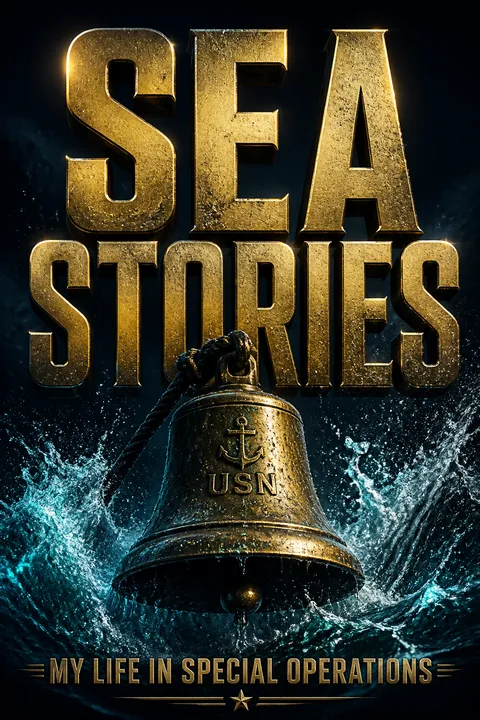
Sea Stories: My Life in Special Operations is highly praised for its compelling storytelling, inspirational messages, and behind-the-scenes look at major military operations. Readers appreciate McRaven's humility, humor, and leadership insights. The book covers his childhood, SEAL training, and high-profile missions like the Bin Laden raid. While some find certain parts overly patriotic or lacking depth, most consider it an engaging and inspiring read that offers valuable life lessons and a fascinating glimpse into special operations.
People Also Read


Glossary
Sea Stories
Stories shared after serviceMcRaven uses the term for tales told by sailors returning from long voyages, typically among friends and with good intentions. In the memoir, the form extends beyond literal sea voyages: people recount danger, loss, mischief, and service in ways that preserve shared experience and pass lessons between generations.
BUD/S
Navy SEAL selection and trainingBasic Underwater Demolition/SEAL training is the Navy course that prepares and selects candidates for the SEAL Teams. McRaven describes its three phases as physical conditioning, diving, and land warfare. Candidates who graduate still complete further advanced training before receiving the SEAL Trident.
Hell Week
Six-day BUD/S endurance testHell Week is a punishing stretch within the first phase of BUD/S, described by McRaven as six days of near-constant physical and mental pressure with little or no sleep. Trainees face cold water, fatigue, harassment, and demanding team events. Many quit, but passing Hell Week does not guarantee completion of the rest of BUD/S.
relative superiority
Temporary advantage over defendersMcRaven's model for how a small special operations force can gain a short-lived advantage against a stronger defender. The force relies on preparation, concealment, rehearsal, surprise, and rapid action to reduce the time it is vulnerable and to act before the defender can effectively respond. It is an operational model, not a guarantee of success.
R2P2
Rapid reaction planning processThe Rapid Reaction Planning Process is the Navy and Marine Corps staff method McRaven describes for developing plans during a crisis. Staff identify the mission and required tasks, compare several courses of action, assess their risks, and brief senior leaders with a recommendation. In the Amuriyah tanker crisis, senior commanders bypassed the full process in favor of an experienced officer's faster plan.
About the Author



Download PDF
Download EPUB
.epub digital book format is ideal for reading ebooks on phones, tablets, and e-readers.








