

Key Takeaways
Treat curiosity as evidence, not a demand for instant purpose
Purpose emerged through practice. Before Schmidt’s, Jaime moved through human-resources jobs, graduate study, a divorce, and creative detours including sewing and interior design. The attempts that failed clarified what did not hold her attention. While pregnant and unhappy at work in Portland, she joined a do-it-yourself shampoo class. Making natural personal-care products absorbed her: she kept testing formulas after work and noticed that natural deodorants on the market failed her. Curiosity gave her a concrete problem to solve.
Follow the energy. The lesson is not that every hobby deserves a company. The signal was sustained interest through tedious work, paired with a need other people shared. For anyone still searching, experimentation produces better evidence than abstract rumination: notice what repeatedly draws attention, then test whether it solves a real problem.
What's striking is how the story replaces the myth of a predetermined calling with a process of accumulating evidence. Jaime did not discover a lifelong identity in childhood; she learned by noticing which work could hold her attention after a full day on the job. That resembles exploratory learning: small trials reveal preferences that introspection alone often cannot. Still, enthusiasm is only one signal. A pursuit can be absorbing without being commercially viable, and a market can exist without making the work personally sustainable. Curiosity is a strong starting instrument, not a complete business plan.
Test one product variable at a time before calling it finished
Excellence took experiments. Jaime wanted a natural deodorant that felt smooth, smelled appealing, stayed stable, and controlled odor. Early coconut-oil and baking-soda batches were grainy, inconsistent, and not fully effective. She tried different plant butters, powders, and mixing temperatures, sometimes preparing five batches in one evening while changing only one ingredient ratio. After cooling, she labeled and compared them, then tested promising versions over several days. The finished formula combined baking soda and cornstarch with shea butter, cocoa butter, and vitamin E.
Set a standard, then learn. She kept refining the product, but did not wait for a theoretical perfection that could never be tested. She sold only after she trusted its quality, then used real customer experience to improve it. Her method turns craft into disciplined development: isolate variables, record results, and decide what good enough means before endless tinkering takes over.
This is a maker’s version of controlled experimentation. Changing one factor at a time makes cause and effect easier to interpret, while repeated use tests whether a promising sample survives ordinary conditions. The deeper point is that quality can be both personal and observable: Jaime’s standards shaped the formula, but other people’s experience determined whether it worked beyond her own bathroom. The limitation is that small informal tests cannot establish safety or consistency at commercial scale. The book’s strongest implication is not to replace formal testing, but to make careful iteration the foundation that formal testing can build on.
Let repeated customer feedback reveal the problem worth solving
Customers supplied early research. At Portland markets, buyers did more than purchase deodorant. They returned with reports that it worked, asked about ingredients, and flagged problems. When several customers questioned whether the cornstarch was genetically modified, Jaime researched an alternative and shifted toward arrowroot. When a customer reported a rash, she explored the likely sensitivity to baking soda or fragrance and introduced a fragrance-free option. Repeated complaints about getting product under fingernails pointed toward a different applicator, while steady requests for a stick format signaled a larger product opportunity.
Look for patterns, not applause. One comment may be unusual; a recurring request can expose a barrier shared by many buyers. Jaime tracked suggestions, weighed the effort and cost, and did not promise to implement every idea. The feedback mattered because it improved the product and showed whom the business could serve.
Customer feedback becomes most useful when it is treated as a pattern to investigate rather than a command to obey. The examples here connect qualitative listening to product decisions: a rash points toward a formulation question, while repeated requests for a different applicator reveal friction in daily use. This is richer than counting sales alone because it captures why people adopt, reject, or recommend a product. But vocal customers are not always representative of the whole market. Recurring feedback should generate a hypothesis, then be checked against broader sales, testing, and customer evidence.
Concentrate your brand where customers already feel an unmistakable difference
Focus made the business legible. Jaime began with deodorant, lotion, shampoo bars, sunscreen, and other personal-care products. Yet customers most often praised the deodorant, and she became known locally for it. She eventually stopped making the rest and built Schmidt’s around the item with the clearest demand and strongest differentiation. A new identity, brighter packaging, and glass jars helped the deodorant stand out beyond farmers markets. The business reached $132,000 in sales in 2013, then expanded quickly through retail and online channels.
Narrowing can create room. The decision was not a belief that a business should never expand. It was a way to make one offer distinctive enough to earn attention before taking on more. A strong niche helps customers understand what a brand does unusually well, and gives retailers a reason to consider it among many similar products.
The move from a broad craft table to a single hero product illustrates the strategic value of clarity. A focused offer can concentrate limited time, cash, and marketing into one recognizable reason to choose the brand. It also makes word of mouth easier: customers can explain the product’s difference without reciting a catalogue. Focus is not automatically correct, however. A bestseller can reflect temporary novelty, and concentration increases exposure if demand changes. The useful principle is to focus where evidence and distinctiveness overlap, while keeping enough awareness of risk to avoid mistaking a successful first product for a permanent boundary.
Take stretch opportunities, but calculate their cost before saying yes
Opportunity demanded a leap. A Portland spa asked Jaime to create a custom massage lotion, even though the formula, texture, and volume would differ from her existing products. She accepted, spent more than a month experimenting, and won the spa as a steady customer. The work brought income, credibility, and new product experience. But she did not know whether the arrangement was profitable, and later wished she had charged for development time and asked the spa to share more of the risk.
Yes needs a budget. Other leaps paid off: a retailer in the Netherlands ordered 500 jars, far more than Jaime usually made in a month. She worked through production and shipping to fulfill it. Her willingness to act opened doors, but she also emphasizes tracking labor, materials, shipping, and cash before committing. Boldness is useful when paired with a clear limit on what the business can afford to lose.
The spa episode makes the hidden price of an opportunity visible: product development consumes time and money even when no invoice is issued. A large customer can confer credibility, but prestige does not pay suppliers or guarantee a profitable relationship. The Netherlands order shows the complementary truth: an unexpectedly large opportunity can justify stretching when the business can fulfill it and payment terms are favorable. These stories make a stronger rule than simply embracing risk. Before agreeing, distinguish learning value from financial return, define the maximum exposure, and ask which party bears the cost if the experiment fails.
Make retailers see how your product grows their business
Sell the retailer’s outcome. Early on, Jaime pitched stores by explaining the deodorant’s ingredients and customer enthusiasm. She learned that buyers also needed to know how the product would help their business. A product that merely replaced another brand might not increase store sales. Schmidt’s made a stronger case by attracting new customers, appealing to shoppers willing to pay more, and bringing its online audience into stores. The company built line sheets, professional photos, barcodes, and retailer-specific pitches as it moved from consignment to wholesale.
Retail has its own rules. Larger stores may require opening orders at no charge, known as free fill, or expect promotions and precise delivery standards. Whole Foods initially took 420 units without paying for them, but Schmidt’s later became its top-selling deodorant. The opportunity was substantial, yet the terms needed to be understood as part of the cost of entering the channel.
This lesson shifts the founder’s perspective from product pride to partner incentives. Retail buyers are not simply judging whether an item is good; they are allocating scarce shelf space and seeking sales, new shoppers, and reliable supply. Making that business case is a form of translation, not self-erasure: the product’s qualities matter when connected to the retailer’s goals. The free-fill example also cautions against treating distribution as proof of success. A prominent shelf placement can drain cash or disappoint if sell-through is weak. The founder must make the retailer’s case while still protecting the company’s economics.
Build production and cash systems before publicity outruns capacity
Attention can become an operations crisis. After a Fox News segment aired, thousands of orders arrived while Portland was covered in snow. The team lacked efficient order processing, the larger mixing equipment was not ready, and a worker accidentally combined the wrong scents during an all-nighter. The surge exposed the cost of treating demand as the only measure of growth. The company added batch order software, more staff, and better equipment, then moved production out of Jaime’s home.
Growth requires infrastructure. By 2016, Schmidt’s had 20 employees, sales of $6.9 million, and production capacity that eventually grew nearly tenfold with manufacturing consultants. Those gains required warehouse planning, inventory controls, hiring, bookkeeping, and working capital. Revenue did not guarantee cash on hand: one tax bill reached about $300,000 while money was tied up in operations. A fast-growing brand needs systems to protect quality and liquidity, not just more orders.
The television rush is a vivid example of demand as a stress test. Marketing can create a sudden gap between what customers expect and what a young operation can deliver, and that gap damages trust if fulfillment, quality control, and communication lag. The less glamorous systems are therefore part of the customer experience. Growth also has a financial paradox: higher sales can increase the money needed for inventory, payroll, and taxes before cash returns. The account is especially useful because it refuses to equate expansion with effortless prosperity. Still, rapid scaling carries real risk, and the story’s successful outcome should not make every growth expense seem prudent.
Guard your values and distinctiveness without living in competitors’ shadow
Protect what makes the brand yours. Copycat deodorants unsettled Jaime, but constant monitoring distracted her from improving Schmidt’s. She chose to protect specific assets, such as names and design, and to keep formulas and supplier relationships private where appropriate. She also learned that customer testimonials and claims about product performance could carry legal risk unless substantiated, so marketing needed evidence and care.
Values shape business choices. Schmidt’s pursued vegan and cruelty-free certifications and withdrew from a retailer whose owners’ public views conflicted with the company’s values. Jaime declined expansion into China because required animal testing would violate those commitments. Competitors can imitate a visible product, but a business can keep its own direction by investing in its customer relationships, product, and principles rather than reacting to every rival.
This section distinguishes two forms of protection. Intellectual property and carefully controlled information defend assets that can be copied; values guide choices that cannot be reduced to a legal filing. The combination gives a brand both a boundary and a reason to exist. The account also shows that authenticity has operational consequences: refusing a market may cost revenue, while unsubstantiated claims can invite legal trouble. There is a useful balance here. Treating every competitor as a threat encourages defensive imitation, but treating all copying as harmless can leave genuine infringement unaddressed. Focused protection preserves attention for the work that competitors cannot simply reproduce.
Change the format when it helps more customers keep the promise
Adapt the route, not the standard. Customers repeatedly asked for a stick deodorant, although Jaime’s original formula was designed for a jar. She spent years developing a version with smooth application and reliable performance while avoiding ingredients she did not want in the product. When the stick launched, it outsold the jar eight to one, but Schmidt’s kept both formats for customers who preferred the glass container. A magnesium-based sensitive-skin version addressed another group who struggled with the original formula.
Expand from a proven center. Later, customer interest guided development of soap and toothpaste, while research and product testing helped the company decide what belonged under the Schmidt’s name. The principle was not to chase every trend or request. It was to change format or extend the line when the new offer served existing customers and fit the brand’s standards.
The stick is a case of adaptation that preserves the central promise while removing a practical obstacle. This is a useful distinction for any product: loyalty to a founding design can become loyalty to the founder’s preferences rather than to the customer’s need. Keeping jars alongside sticks also avoids a false choice between innovation and continuity. Product expansion, however, can dilute attention and multiply manufacturing complexity. Customer demand is necessary evidence, not sufficient evidence; fit, production capability, safety, and economics still determine whether an extension strengthens the brand.
Sell or step back when another structure can extend the mission
An exit can be a deliberate choice. By 2017, Schmidt’s had 150 employees, was on pace for nearly $23 million in revenue, and faced rising needs for capital, executive talent, and operational support. Jaime and Chris considered a sale not because the business had failed, but because its growth had become difficult to carry alone. Unilever offered distribution and expertise, and the founders negotiated a role for Jaime as brand spokesperson rather than daily operator. The acquisition closed for a nine-figure sum.
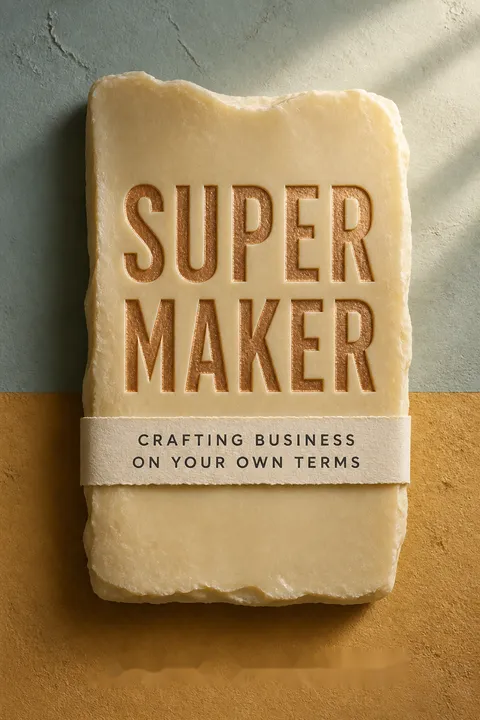
The work continued in a new form. Jaime remained involved with Schmidt’s while helping develop Color, an investment fund supporting underrepresented founders, and Supermaker, a media platform elevating entrepreneurs often overlooked by traditional outlets. Her next chapter extended the original interest in making and entrepreneurship, but with a different tool: investing in and amplifying other founders.
The ending broadens success beyond ownership. A founder can preserve influence through a negotiated role, transfer operational responsibility, and redirect experience and resources toward other people’s businesses. That is a more complicated model of legacy than either holding on forever or selling out. It also asks a hard question: whose interests are protected in a transition? Jaime’s attention to company values, employees, and her own family made fit as important as price. A sale is not automatically liberation or betrayal. It is a governance decision, and its quality depends on the terms, the successor, and the founder’s own priorities.
Analysis
Supermaker is part memoir, part operating manual. Its organizing logic is a sequence of changing problems: finding work that feels alive, proving a product, locating an underserved customer, winning retail, building capacity, and deciding when ownership itself becomes a burden. The deodorant story supplies continuity across those shifts. A kitchen formula becomes a national brand not through one breakthrough, but through repeated translation: Jaime translates customer irritation into formulation, product difference into packaging, and product performance into a retailer’s sales case.
The book’s strongest contribution is its account of entrepreneurial learning as cumulative and social. The early markets are not merely sales venues. They are laboratories, reputation engines, and places where suppliers, buyers, and peers become part of the company’s infrastructure. The later operating lessons follow naturally: a founder’s intuition can open doors, but bookkeeping, production controls, legal review, and working capital keep those doors from becoming liabilities. This makes the narrative unusually useful to makers whose work crosses craft and commerce.
The story also needs to be read as a case, not a universal recipe. Schmidt’s benefited from a supportive partner, family help, savings, a lively local maker ecosystem, a product with repeat-purchase potential, and favorable media attention. Those conditions do not negate Jaime’s work; they clarify why persistence alone cannot reproduce her outcome. The book sometimes presents a successful founder’s instincts as broadly portable, even though another company might need slower validation, more formal planning, or a different financing path.
Its deeper argument is about authorship. Jaime repeatedly changes the means while protecting the purpose: she narrows the product line, adds a stick, accepts professional manufacturing, and ultimately sells the company. That flexibility is not indecision. It is a way of distinguishing the mission from the founder’s preferred methods. The final shift toward investing in and publicizing underrepresented founders extends that distinction beyond one brand. The story suggests that entrepreneurial impact can survive a change in product, role, or ownership, provided the founder remains deliberate about what is being carried forward.
Review Summary
Supermaker receives mostly positive reviews, with readers praising its inspirational and informative content for entrepreneurs. Many appreciate Jaime Schmidt's candid storytelling and practical business advice. The book resonates particularly well with small business owners and those in the consumer packaged goods industry. Some readers found the later chapters less relatable as they focus on large-scale growth and acquisition. Overall, reviewers value the mix of personal narrative and actionable tips, though a few criticize the book's length and self-congratulatory tone.
People Also Read










Glossary
Supermaker
Creative business builderSchmidt’s term for a maker-entrepreneur who turns creative work into a business while defining success on personal terms. The idea joins hands-on product creation with commercial learning, growth, and community contribution. It does not require every maker to build a large company; the scale and purpose of the work can differ from founder to founder.
COGS (cost of goods sold)
Direct product costsThe costs directly involved in producing a unit of a product, such as ingredients and direct labor. COGS is compared with sales revenue to calculate gross profit. Schmidt’s uses the concept to help founders judge whether retail and wholesale prices cover the cost of making the product, before accounting for broader expenses such as administration, rent, and marketing.
Unique value proposition
Distinct customer benefitA concise explanation of what makes a product meaningfully different and valuable to its intended customer. In Schmidt’s case, the challenge was to explain not merely that the products were local and natural, but why the deodorant deserved attention in a crowded category. A strong proposition must make the difference clear to both customers and potential retail partners.
Free fill
Unpaid opening inventoryAn initial shipment of product supplied to a retailer at no charge, often so the retailer can test a new item in stores. Schmidt’s encountered this requirement when entering Whole Foods. Free fill can buy access to a major sales channel, but the brand must account for the product cost and cash impact before accepting the arrangement.
Trade-up
Higher-priced customer purchaseA retail strategy in which a customer buys a more expensive product than the alternative they would otherwise choose. Schmidt’s used this idea in buyer pitches, arguing that its deodorant could attract shoppers willing to pay more. The retailer’s interest was not simply that one brand might replace another, but that the category could gain value.
Broker
Outsourced retail salespersonA sales representative or firm that works on a brand’s behalf to establish relationships with retailers and secure product placement, usually for a commission. Schmidt’s hired brokers with industry connections and regional expertise. They helped the founder reach more buyers while freeing her to focus on product development, production, and other business needs.
Distributor
Retail supply intermediaryA business that buys or handles products and makes them available to retailers, simplifying purchasing and logistics for stores. Some retailers prefer to work with distributors rather than individual brands. For Schmidt’s, entering distribution improved access to larger accounts, but required attention to distributor fees, shipping specifications, inventory, and reduced margins.
CPA (cost per acquisition)
Cost to gain a customerThe amount a business spends to acquire one customer through marketing or advertising. Schmidt’s used CPA alongside order value and product and shipping costs to judge whether an ad could be profitable. A business may accept a higher acquisition cost if customers make repeat purchases, but it must understand its margins and cash flow.
LTV (lifetime value)
Customer spending over timeThe expected value of the purchases a customer makes over the duration of their relationship with a business. Schmidt’s considered repeat deodorant purchases when assessing advertising, free samples, and customer service. LTV can justify spending more to attract or retain a customer, but estimates depend on actual repeat behavior rather than optimistic assumptions.
MAP (Minimum Advertised Price)
Minimum public selling priceA policy setting the lowest price at which authorized sellers may advertise a brand’s products. Schmidt’s used a MAP policy to address third-party sellers who undercut its prices on Amazon. A policy can support consistent presentation and pricing, but sellers may still violate it, requiring monitoring and enforcement.
Contract manufacturer
External product producerA third-party company hired to manufacture a brand’s product, often when demand exceeds the brand’s own production capacity. Schmidt’s used one to produce large orders while retaining some production in Portland. Before partnering, a brand needs to assess quality controls, capacity, minimum orders, confidentiality, supply arrangements, and shipping costs.
Download PDF
Download EPUB
.epub digital book format is ideal for reading ebooks on phones, tablets, and e-readers.








