


Key Takeaways
Treat sudden energy loss as a clue, not a verdict
Notice the change. Erikson opens with his early years in a Swedish bank, where dull work, an industry crisis, distressed clients, poor leadership, and difficult colleagues piled up. No single cause explains his exhaustion. The book uses “energy vampire” as a metaphor for people, situations, or habits that sap confidence, motivation, or emotional capacity. A sudden drop after a conversation can be useful evidence, but it does not prove the other person intended harm.
Look for a pattern. Track what happened, what you felt, and what tends to trigger that reaction. The same person may energize one colleague and drain another. Self-knowledge helps distinguish a mismatch in styles from persistent harmful behavior, and helps reveal when the draining pattern belongs to one’s own habits.
The opening story works because it resists a single-villain explanation: workplace design, economic pressure, emotional labor, and colleague behavior compound. That resembles a systems view of stress, where strain often comes from interacting demands rather than one isolated source. The vampire metaphor makes an invisible cost memorable, but it can also turn a feeling into a label. Treating depletion as a signal to investigate, rather than proof of another person’s character, preserves both compassion and accuracy.
Agree on the result before a perfectionist commandeers the method
Separate ends from means. The perfectionist in Erikson’s portrait is diligent and dependable, yet can spend more effort policing procedure than completing the task. Daniel, a fictional case study, times his morning routine precisely and turns a workplace plan into a prolonged inspection of every sentence. His standards may prevent errors, but they also make colleagues hesitant and slow the work.
Set the contract. Agree in advance on the outcome, deadline, and acceptable quality. Leave room for the capable person doing the work to choose the method. Erikson also recommends written agreements, specific feedback, and recognition for what went well. This works because perfectionists value rules and commitments. The point is not to dismiss care or detail, but to stop an exacting process from swallowing the purpose.
This distinction maps neatly onto management by objectives: specify what success means, then grant appropriate discretion over how to reach it. Autonomy can improve ownership, while clear standards protect quality. The balance depends on the stakes. In safety-critical work, process controls may be essential; in routine work, micromanagement can add friction without reducing meaningful risk. The useful question is not whether detail matters, but whether this detail protects the outcome or merely reassures the person demanding it.
Enjoy the drama without becoming its unpaid supporting cast
Charm is not delivery. Erikson describes dramatic people as attention-seeking, energetic, and often entertaining, but also impulsive and poor at follow-through. His former boss Ronnie could sell ambitious projects with theatrical confidence, then leave the team without a plan or concrete instructions. Employees who asked for specifics risked being called negative, while the initial enthusiasm made the leadership look effective.
Ask for the next step. Avoid arguing about the person’s personality. Translate big promises into owners, actions, dates, and resources, then record the agreement. The book suggests adapting communication to the person’s appetite for recognition, but praise should not replace accountability. A warm interaction can preserve cooperation; documented commitments reveal whether the excitement has substance.
Organizations often reward visible confidence because it is easy to notice in interviews and meetings, while execution is slower to assess. That creates a predictable gap between charisma and competence. The practical response is not to punish expressiveness, which can be a real asset, but to build routines that test plans against reality. A specific owner and deadline are fairer than a vague judgment that someone is all talk. The caveat is that some apparent disorganization reflects missing authority or resources, not personality.
With bullies, protect your safety before trying to win
Fear changes the room. Kenny, a manager in Erikson’s account, berated employees in meetings but stayed charming around the owners. He kept his position partly because he produced results and decision-makers did not see how he treated colleagues. The book argues that fear-driven workplaces undermine trust and encourage people to protect themselves instead of cooperating.
Choose the objective. Pause before responding, ask for time, and decide what outcome matters: safety, accurate records, ethical conduct, or a route out. Keep clear documentation when possible, and do not falsify information or accept illegal or unethical orders. Erikson’s strongest advice is to leave when the situation is dangerous or persistently damaging. Confrontation is not always courage; under a power imbalance, it can increase the risk.
The account highlights a familiar governance failure: leaders may mistake results delivered by a bully for evidence of healthy leadership. Independent reporting channels and careful records matter because the person causing harm may control the story. Still, advice must account for retaliation, financial dependence, and immediate safety. A direct challenge can work in some settings and backfire in others. The useful principle is to assess power and risk before choosing a tactic, and to seek appropriate organizational or professional support rather than handling serious abuse alone.
Replace vague agreements with observable actions and firm deadlines
Resistance can hide in silence. Erikson describes passive-aggressive behavior as indirect opposition: a person appears to agree, then delays, forgets, or does the task so poorly that others stop asking. In one coaching example, a worker’s repeated failure to complete assignments shifted work onto colleagues. In relationships, sulking or silence can leave a partner guessing instead of addressing the disagreement.
Make completion visible. Define exactly what done means, who owns each step, and when it is due. Follow up on behavior rather than debating someone’s mood or motives. Praise completed work, but do not quietly take over every unfinished task. Erikson also recommends inviting the person to express grievances indirectly if direct discussion feels difficult. These tactics can clarify expectations, though they cannot guarantee cooperation.
Clear requests reduce the room for misunderstandings, and visible checkpoints make shared work more manageable. But interpreting delay as deliberate resistance too quickly risks confusing avoidance with overload, unclear authority, disability, or a genuine skills gap. A fair process asks what is blocking the work before assigning intent, then adjusts support or consequences based on evidence. The goal is accountability without mind-reading. If a repeated pattern continues after expectations and barriers are addressed, boundaries become more important than endless negotiation.
Offer martyrs empathy, but leave ownership of their lives with them
Compassion can become a trap. Erikson’s story of Jessica and her mother Vera shows how repeated appeals to hardship drew Jessica into providing money, housing, and emotional support. Vera’s distress may have felt genuine, but the pattern left Jessica depleted and burdened with responsibility for problems she could not solve. The author calls this victimhood, a persistent belief that misfortune is caused by forces beyond one’s control.
Help without taking over. Listen, acknowledge the feeling, and ask what the person wants to change. Encourage them to name and choose their own next step rather than supplying every answer or rescuing them repeatedly. Set limits on how long a conversation can remain focused on complaints without solutions. The book also advises stepping back when support becomes harmful. Hardship deserves care, but care does not require surrendering one’s own life.
The distinction between validating pain and endorsing helplessness is valuable. Supportive questions can preserve a person’s agency better than unsolicited rescue, while boundaries protect the helper from burnout. Yet a recurring complaint is not proof of self-imposed victimhood. Depression, illness, poverty, discrimination, and coercive circumstances can restrict real choices. The most humane approach combines respect for agency with curiosity about barriers. A boundary can limit a conversation without dismissing the underlying hardship or declaring the person responsible for everything that happened.
Judge narcissistic patterns by repeated behavior, then protect your exit
Watch actions, not glamour. Erikson portrays narcissistic people as entitled to admiration and willing to use others for status, favors, or attention. Their confidence can be compelling at first. The test is the recurring pattern: Do promises match actions? Are favors mutual over time? Can they accept ordinary limits without retaliation? The author recommends keeping notes when reality is repeatedly disputed and paying attention to how the person treats those with less power.
Set a threshold. Mild self-importance is not the same as a clinical disorder. But when exploitation, deception, or abuse becomes persistent, the book advises leaving rather than hoping to reform the person. In an unsafe relationship, seek trusted support and professional help. The purpose of noticing patterns is not to diagnose someone from a checklist, but to decide what contact is safe and sustainable.
Tracking repeated behavior can counter the confusion created when charm and mistreatment alternate. It shifts judgment from dramatic impressions to observable evidence, a useful practice in any relationship. At the same time, narcissistic traits exist on a spectrum, and a popular checklist cannot establish a clinical diagnosis. The practical decision does not depend on a label: persistent coercion or exploitation is enough reason to set limits. Where there is danger, safety planning and outside support are more useful than trying to win an argument about someone’s personality.
Set boundaries with everyday drains instead of diagnosing every annoyance
Not every drain is sinister. Erikson includes the whiner, who habitually finds fault; the walking disaster, who overcommits and can be exploited; and the know-it-all, who gives unsolicited advice. These patterns differ. A complainer may need a boundary or a practical question, such as whether they want help changing the situation. A generous but overextended friend may need practice saying no. An unwanted adviser can be thanked and ignored, or asked why the advice is necessary.
Match the response to the behavior. Describe what is happening and what needs to change, rather than applying a grand label. Erikson’s own closing reminder is that people can drain themselves through habits, poor planning, or misplaced attention. This keeps the metaphor useful: it points toward a response, not a permanent verdict on someone’s character.
This smaller taxonomy is most useful when treated as a menu of behaviors, not a set of identities. A person who complains during a temporary crisis may need support, while a chronic pattern may call for limits. Likewise, generosity can be admirable and still unsustainable. The distinction is whether the behavior is repeated, harmful, and responsive to conversation. Specific boundaries are often less inflammatory than character judgments, and they leave room for change without requiring the listener to absorb unlimited frustration.
Turn ambitious goals into routines your present self will actually follow
Make the future appealing and actionable. The book contrasts conventional SMART goals with Brendon Burchard’s DUMB approach, which emphasizes an inspiring aspiration, a positive reason to pursue it, a workable method, and actions within one’s control. Erikson argues that a goal should create energy, not merely satisfy a checklist. A dream without a method, however, remains a wish.
Design for the moment of choice. A habit can be understood as a trigger, a repeated action, and its reward. Procrastination, or akrasia, is acting against one’s better judgment; the present self tends to prefer an immediate pleasure over a distant benefit. Pair a task with a near-term reward, break it into small intervals, or arrange a commitment with another person. These methods make starting easier than waiting for motivation.
This account joins goal design with behavioral economics: long-term intentions compete against immediate incentives. That helps explain why a sincere plan can collapse at the point of action. Smaller steps and immediate rewards lower the psychological distance to beginning. The caution is that not every delay reflects weak discipline; exhaustion, unclear priorities, or an impossible workload may be the real obstacle. A goal system should help someone act on valued aims, not convert every hour into a productivity test.
Stop donating attention to low-value tasks, feeds, and noise
Choose the right work. Erikson asks readers to distinguish activities that move a goal forward from time sinks, including tasks done well that should not have been done at all. The relevant choice depends on both the goal and the deadline. He also warns that constant news and social media can consume attention, worsen comparison, and displace direct contact. His suggested experiments include limiting notifications, keeping devices away during meals or at bedtime, and taking a temporary break from news.
Check the purpose. Before opening an app or accepting a task, ask whether it serves a real need now. The book does not argue that every feed or leisure activity is harmful; it urges readers to notice how use affects mood, focus, sleep, and relationships. Time saved is useful only if it is spent on something that matters to the reader.
Attention is a limited resource, and digital products compete for it through rapid feedback and interruption. Environmental changes, such as muting alerts, can be more reliable than repeatedly resisting them. The book’s personal news detox is best understood as an experiment rather than universal advice: staying informed can matter, and avoiding distressing information is not always the same as solving its source. The broader lesson is to choose exposure deliberately and protect periods of focused work and face-to-face connection.
Use DISC as a rough map, then examine your own effect
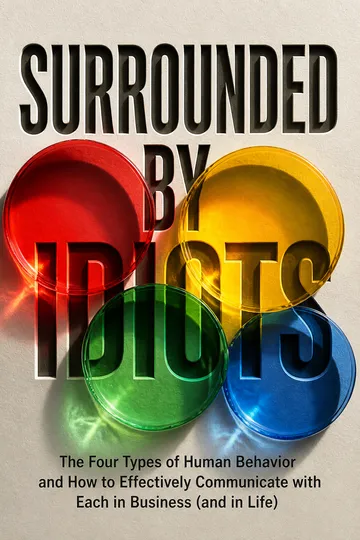
Adapt without stereotyping. Erikson uses DISC colors as shorthand for behavioral preferences across two dimensions: extroversion versus introversion, and task versus relationship focus. Red tends toward action and tasks, Yellow toward social energy, Green toward steadiness and relationships, and Blue toward detail and accuracy. People commonly combine tendencies, and the model describes behavior rather than a whole personality. Its practical use is to anticipate friction, such as a fast-moving Red clashing with a cautious Green.
Include yourself in the diagnosis. Erikson cites Tasha Eurich’s finding that 95 percent of people rated their self-awareness above average, while only about 10 to 15 percent were judged accurate by people who knew them. He recommends asking others for feedback and noticing one’s own impact. His final exercise is to list energy drains alongside the people who provide support, then make time to appreciate the latter.
A compact vocabulary for different work styles can help people adapt their pace, detail, and communication without treating disagreement as malice. Its value is pragmatic, not diagnostic. Color labels can also encourage confirmation bias: once someone is called a Blue, every request for evidence may be read as rigidity. The model works best as a provisional question, such as what kind of information or pace helps this person contribute? Self-awareness adds reciprocity by asking not only who drains energy, but when one’s own behavior does the same.
Analysis
The book’s most durable idea is not that some people are vampires, but that energy loss can be observed, traced, and answered with a proportionate action. Its opening bank story makes this concrete: tedious work, a financial crisis, distressed clients, weak leadership, and difficult colleagues compound rather than compete as explanations. The metaphor gives readers a memorable name for depletion, while the advice repeatedly turns attention toward patterns, communication, boundaries, and the reader’s own habits.
Its practical strength is behavioral specificity. Instead of merely urging patience, it proposes written outcomes for the perfectionist, concrete commitments for the dramatic manager, and safety-conscious distance from a bully. It also extends the inquiry inward, connecting energy to procrastination, attention, social media, news, and time spent on irrelevant tasks. This makes the book more than a catalogue of difficult personalities.
The principal weakness is the temptation to convert informal types into fixed explanations. The DISC colors can be a useful conversational shorthand, but they do not capture a person’s full character or establish why someone acts as they do. Similarly, checklists for narcissism or passive aggression should not be treated as clinical assessments. A missed deadline may reflect avoidance, but it may also reflect workload, unclear instructions, illness, or inadequate authority. The book’s strongest advice therefore survives its taxonomy: describe recurring actions, test interpretations against evidence, and choose boundaries suited to the actual risk.
The most balanced reading holds two truths together. People differ in the ways they gain and lose energy, so adapting communication can prevent needless conflict. Yet not every problem is a personality mismatch, and not every distressed person can simply choose a new attitude. Organizational incentives, unequal power, health, and material constraints shape behavior. Self-awareness is most useful when it increases both agency and curiosity, rather than becoming a license to classify others. The closing gratitude exercise completes that view: attention should not be reserved for the people who create friction, but deliberately directed toward relationships that make life more sustainable.
Review Summary
Surrounded by Energy Vampires receives mixed reviews, with ratings ranging from 1 to 5 stars. Readers appreciate Erikson's insights on identifying and dealing with energy-draining individuals, finding the book informative and practical. Some praise its humor and relatability, while others criticize its negativity and lack of scientific backing. The color-coding system for personalities is a recurring theme, with some finding it helpful and others confused. Critics argue the book can be judgmental and oversimplifying, while supporters value its self-reflection tools and communication strategies.
People Also Read

Glossary
Energy vampire
A source of depletionErikson’s metaphor for a person, situation, or habit that drains confidence, motivation, attention, or emotional energy. The term is not a clinical diagnosis and does not necessarily imply that someone intends harm. Different people can experience the same interaction differently, so the metaphor is best used to identify patterns and consider a response.
DISC theory
A behavioral-style mapA framework that organizes behavior along two dimensions: task versus relationship orientation, and extroversion versus introversion. Erikson recasts the resulting styles as Red, Yellow, Green, and Blue. Red emphasizes action and tasks, Yellow social energy, Green stability and relationships, and Blue accuracy and detail. The model is a shorthand for behavior, not a complete personality assessment.
DUMB goals
Inspiring, actionable goalsA goal-setting approach presented as an alternative to relying only on measurable, tightly specified targets. It stresses choosing an energizing aspiration, connecting it to a positive reason, using a workable method, and focusing on actions a person can control. The book uses the approach to pair ambitious visions with practical routines.
SMART goals
Structured goal criteriaA widely used goal-setting framework attributed in the book to George T. Doran. It calls for goals to be specific, measurable, attainable, relevant, and time-bound. Erikson considers it useful for clarity, but argues that a neatly structured target may not provide enough emotional appeal to sustain motivation.
Time inconsistency
Present rewards outweigh future onesA tendency to value immediate rewards more strongly than future benefits. The book uses the concept to explain why someone can sincerely plan to study, exercise, or save money, then choose an easier pleasure when the moment arrives. Procrastination often reflects this conflict between a future-oriented intention and present-focused action.
Temptation bundling
Pair effort with enjoymentA technique associated with behavioral economist Katherine Milkman. It links an activity with long-term benefits to something immediately enjoyable, so the appealing activity helps make the effort more attractive. The book gives examples such as saving a favorite podcast for exercise or combining a preferred show with a household chore.
Akrasia
Acting against better judgmentA term from ancient philosophy used in the book for choosing an action that conflicts with what one believes one should do. Erikson connects it to procrastination: a person may know that a task matters, yet delay it for something easier or more immediately rewarding, despite expecting negative consequences.
FAQ
What's Surrounded by Energy Vampires about?
- Focus on Energy Drainers: The book delves into the concept of "energy vampires," individuals who sap your energy, joy, and motivation. It categorizes them into types like perfectionists, drama queens, bullies, and narcissists.
- Personal Experiences: Author Thomas Erikson shares anecdotes from his life, illustrating how these energy vampires impacted his work and relationships, making the content relatable.
- Strategies for Management: Erikson offers practical advice on identifying and dealing with energy vampires, empowering readers to reclaim their energy and well-being.
Why should I read Surrounded by Energy Vampires?
- Understanding Human Behavior: The book provides insights into behaviors that drain energy, helping you understand relationship dynamics, especially in overwhelming social or work environments.
- Practical Solutions: Erikson offers actionable strategies to manage interactions with energy vampires, aiding personal development and mental health improvement.
- Engaging Storytelling: The author's humorous and relatable writing style makes complex psychological concepts accessible, encouraging reflection on personal experiences with energy drainers.
What are the key takeaways of Surrounded by Energy Vampires?
- Identify Energy Vampires: Recognizing different types of energy vampires is crucial for managing your energy levels. Each type has distinct behaviors that can be identified in daily interactions.
- Self-Awareness is Key: Understanding your personality traits and how they interact with energy vampires helps navigate challenging relationships, emphasizing the importance of self-awareness.
- Practical Strategies: Erikson suggests methods like setting boundaries, using humor, and focusing on positive reinforcement to empower readers in controlling their interactions.
What are the best quotes from Surrounded by Energy Vampires and what do they mean?
- "An energy vampire is an uninvited mental squatter.": This highlights energy vampires as intruders in your mental space, emphasizing the need to recognize and address their presence.
- "Self-awareness may well be the key here.": It underscores the importance of understanding your reactions and personality traits to avoid negative impacts from others.
- "You can’t solve a problem you don’t know you have.": This stresses the necessity of recognizing energy vampires in your life to effectively deal with them.
How can I spot an energy vampire according to Surrounded by Energy Vampires?
- Behavioral Patterns: Look for individuals who consistently drain your enthusiasm and motivation through negativity or criticism, in both work and personal settings.
- Emotional Impact: Notice if you feel exhausted or demotivated after interacting with someone, as this may indicate they are an energy vampire.
- Types of Energy Vampires: Familiarize yourself with types like perfectionists, drama queens, and bullies, each with specific traits to help identify them.
What is the DISC theory mentioned in Surrounded by Energy Vampires?
- Understanding Personalities: The DISC theory categorizes people into four types: Red (dominant), Yellow (influential), Green (steady), and Blue (conscientious), aiding in understanding behaviors.
- Energy Dynamics: Each personality type interacts differently with energy vampires, influencing responses to various situations, like Reds confronting directly and Greens avoiding conflict.
- Self-Reflection Tool: The DISC theory helps assess personal traits and how they might be affected by energy vampires, leading to better energy management.
What strategies does Surrounded by Energy Vampires suggest for dealing with energy vampires?
- Set Boundaries: Establish clear boundaries to protect your emotional space, which may involve limiting interactions or being assertive about your needs.
- Use Humor: Employ humor to diffuse tense situations, lightening the mood and reducing emotional weight in interactions.
- Focus on Positive Reinforcement: Encourage positive behavior by acknowledging and rewarding it, shifting the relationship dynamic towards constructive interaction.
How does Surrounded by Energy Vampires define a perfectionist as an energy vampire?
- Obsessive Attention to Detail: Perfectionists demand perfection, leading to frustration for those around them by adhering rigidly to rules and standards.
- Control Issues: They struggle with improvisation and can become controlling, stifling creativity and collaboration in group settings.
- Emotional Detachment: Perfectionists may suppress emotions, making connection difficult and leading to misunderstandings and resentment.
What is the impact of drama queens as energy vampires according to Surrounded by Energy Vampires?
- Attention-Seeking Behavior: Drama queens create crises to maintain attention, leading to chaos in personal and professional environments.
- Emotional Drain: They require constant validation, leaving others feeling depleted and frustrated after interactions.
- Superficial Relationships: Their focus on drama prevents deeper connections, resulting in shallow interactions that fail to satisfy emotional needs.
How can I protect myself from energy vampires as suggested in Surrounded by Energy Vampires?
- Increase Self-Awareness: Understanding your triggers and responses to energy vampires helps navigate interactions more effectively.
- Limit Exposure: Reduce time spent with known energy vampires to preserve energy and mental well-being.
- Practice Assertiveness: Be clear and assertive about your boundaries and needs, effectively deterring energy vampires from draining your resources.
What are the consequences of interacting with energy vampires as described in Surrounded by Energy Vampires?
- Emotional Exhaustion: Prolonged interactions can lead to fatigue, frustration, and depression, impacting work and relationships.
- Decreased Productivity: Energy vampires hinder focus and productivity, as their negativity overshadows motivation, leading to performance decline.
- Strained Relationships: Constant exposure creates tension and conflict, resulting in misunderstandings and potential breakdowns in connections.
How can I apply the concepts from Surrounded by Energy Vampires in my daily life?
- Identify Your Energy Vampires: Reflect on interactions to identify individuals who drain your energy and their impact on your mood and motivation.
- Practice Self-Care: Prioritize activities that recharge you, like exercise, hobbies, or spending time with supportive friends.
- Communicate Effectively: Use DISC model insights to adapt communication styles, improving interactions and reducing conflicts with energy vampires.
About the Author
Other books by Thomas Erikson





Download PDF
Download EPUB
.epub digital book format is ideal for reading ebooks on phones, tablets, and e-readers.








