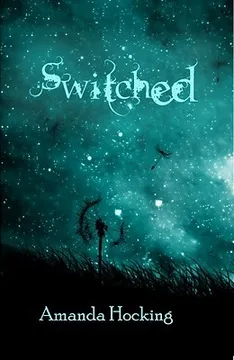


Plot Summary
Prologue
At Wendy Everly’s sixth birthday party, her mother, Kim, struck her in front of the guests, then chased her through the kitchen with a cake knife. Kim believed Wendy had replaced the son she was supposed to have, and Matt, Wendy’s older brother, tackled their mother before she could do worse than cut Wendy’s stomach.
The wound healed into a long scar; the reason for the attack remained buried beneath years of family silence. Wendy remembers no tenderness from Kim, only the conviction that she was unwanted and somehow responsible for the fracture in her family.
The childhood attack gives Wendy’s later alienation a concrete origin, but it also makes her an unreliable judge of her own worth. She inherits Kim’s accusation as a private explanation for every conflict, even though she was a child and Matt intervened to save her. The scar is both evidence and unanswered question: it proves what happened without explaining why. The family’s silence protects Wendy from repeated trauma, yet it leaves her to invent a cause, often turning blame inward. This history makes the promise of another family emotionally potent, while also making Wendy wary of anyone who claims to know what she is.
An Unwanted New Start
At seventeen, Wendy has already been expelled from multiple schools for fighting, and her aunt Maggie and older brother Matt have moved again to give her another chance. Wendy meets Patrick, an easygoing classmate who tries to draw her into ordinary school life, while Finn Holmes, a striking newcomer, watches her with unnerving attention.
Wendy dismisses Finn as a creep and resists the idea that she needs friends, but her home life shows how much Matt and Maggie have sacrificed to keep her safe. Matt has postponed his own plans to care for her; Maggie still hopes they can make a lasting home. Wendy promises to try harder, though she has no idea why this new town feels different, or why Finn seems unable to look away.
Wendy’s defiance is not simple adolescent rebellion. It is a practiced way of controlling encounters before anyone can reject or manage her. Matt and Maggie offer care without demanding that she become easy to love, but Wendy interprets their vigilance as evidence that she is a burden. Finn’s silent scrutiny unsettles her because it reverses her usual position: she cannot decide what he wants or make him look away. The new school therefore begins as a small social experiment. Wendy agrees to try, not because she trusts the future, but because she cannot bear to disappoint Matt.
Fists Before Friendship
Patrick persuades Wendy to share lunch with Finn, and their awkward conversation reveals that both newcomers dislike the cafeteria food and know little about each other. When Tegan Lively insults Wendy outside the restroom, Wendy punches her and grabs her hair, ready to keep fighting. Finn seizes Wendy’s wrist and pulls her into an empty art room before a teacher can catch her.
He rebukes her for answering every insult with violence, then admits her safety and continued place at school matter to him. Patrick covers for her, and Tegan leaves with a bloody lip but does not report Wendy. The next day, Finn and Wendy exchange a tentative greeting. Patrick then invites Wendy to the semi-formal, and Finn says he may attend.
The fight makes Wendy’s anger both effective and costly. She can overpower Tegan in the moment, but she risks losing the new chance Matt and Maggie have worked to secure. Finn’s intervention is the first evidence that his attention carries responsibility, though Wendy cannot tell whether it reflects concern or some private agenda. Patrick’s role is different: he makes room for people without treating their awkwardness as a problem to solve. Together, the boys expose Wendy’s conflicted need for connection. She wants to be protected from consequences, yet resents anyone who acts as if she needs protection at all.
One Dance, Two Revelations
At the semi-formal, Wendy waits anxiously for Finn, then feels briefly transported when he arrives and asks her to dance. The tenderness curdles when he insults her dancing and suggests she wanted his attention more than he wanted hers. Wendy flees, and Finn apologizes, but his concern turns urgent when Patrick changes his mind after Wendy silently focuses on getting him to take her home.
Finn identifies the influence as persuasion, a form of mind control Wendy has used without understanding it. Later, he climbs to her bedroom window to explain that she is a changeling, a child exchanged at birth. Wendy rejects his claim as delusion, yet spends the night unable to dismiss it.
The dance joins romantic awakening to a sudden loss of certainty. Wendy experiences closeness with Finn as proof of personal desire, then discovers that his conduct may have been shaped by a role she does not understand. Her own persuasion creates a parallel unease: she can get what she wants by affecting another person’s choice, but has mistaken that power for ordinary charm. The revelation does not immediately free her from doubt. Instead, it destabilizes the boundaries she uses to define herself, including the belief that her history is fully human and that her influence over others is harmless.
Proof in the Baby Book
After Finn leaves her room, Wendy searches family photographs and her baby book. She sees how unlike the blond, blue-eyed Everlys she looks, and learns that the family once expected a boy and that Matt chose her name. The evidence deepens her fear that Finn may be right. Wanting confirmation, Wendy deliberately uses persuasion on Matt, making him drive her to the psychiatric hospital where Kim lives.
The choice frightens her because Matt strongly opposes the visit, yet she needs to hear the truth from the woman who tried to kill her. For the first time, Wendy recognizes that her ability can override someone she loves. By the time they reach the hospital, curiosity has become a test of identity and of her own moral limits.
The baby book turns family memory into evidence, but the evidence is emotionally double-edged. It suggests Wendy does not belong by blood, while also revealing that Matt actively claimed her by naming her. Her decision to persuade him is a point of ethical consequence: she seeks the truth by violating the very bond that makes the truth painful. Wendy’s power is not framed as an uncomplicated gift. It magnifies the question of consent inside her most intimate relationship, forcing her to consider whether the people who care for her are choosing freely or simply responding to her will.
A Mother Confirms the Swap
Kim recognizes Wendy as the changeling who took the place of her son, Michael, and insists that Wendy killed him, though she offers no evidence. Her accusation reopens the birthday attack and leaves Wendy wondering whether she has harmed everyone who loves her.
Matt brings her home and tells her plainly that she is not evil, pointing to her improving grades and new friendships as signs she is growing. Wendy cannot accept that comfort; she fears her presence has consumed Matt’s life.
That night, she sneaks to Finn’s apartment and asks whether Trylle are monsters. Finn reassures her, then explains that her birth family is in Förening, Minnesota. Wendy chooses to leave with him, seeking answers and believing Matt will be better off without her.
Kim supplies confirmation without offering understanding. Her insistence that Wendy is a monster repeats the wound of the prologue, but the accusation now has a supernatural explanation attached to it, making it harder for Wendy to reject. Matt counters with lived evidence: her recent effort, her capacity for friendship, and his enduring love. Wendy still leaves, not because she has stopped trusting Matt, but because she believes love makes her dangerous to him. Her choice reveals how trauma can turn care into debt. She seeks a new origin partly to discover who she is, and partly to remove herself from the people she fears she has harmed.
Förening’s Golden Cage
Finn brings Wendy to Förening, a secluded Trylle community built among the Mississippi bluffs, where Queen Elora receives her with formality rather than warmth. Elora explains that Trylle exchange their babies with human families so the children can grow up with education and wealth, then return as adults.
She says Wendy is a princess and the heir to her throne, but also expects her to bring her human family’s money into the community. Wendy is appalled that Elora knew changelings could be rejected or harmed, yet left her with Kim anyway. Rhys, a friendly human ward of the household, offers a gentler welcome. Feeling trapped by the palace and its transactional view of family, Wendy steals his motorcycle and rides back to Matt and Maggie.
Förening fulfills Wendy’s wish for an explanation while refusing her wish for uncomplicated belonging. The community’s beautiful estate rests on a system that treats childhood as an investment: safety and education are exchanged for future wealth and allegiance. Elora presents this arrangement as tradition and duty, but Wendy measures it against the specific danger she survived. Rhys’s casual warmth makes the contrast sharper. Wendy’s first escape is not a rejection of her origins; it is a protest against being assigned a life before anyone asks what she wants. The motorcycle becomes her first attempt to choose a direction for herself.
Home Is Not Her Origin
Matt and Maggie welcome Wendy home in relief, and she apologizes for disappearing, though she hides the Trylle explanation behind a story about going away with Finn. Finn soon visits and urges her to return to Förening.
Wendy refuses, choosing the family who raised her over a crown and a birth mother she barely knows. When Matt finds Finn in her room and threatens him, Wendy uses persuasion again to make Matt leave, then orders Finn to go.
She has barely settled back into school when, before dawn, a barefoot girl and a tall man intercept her outside her house. They identify themselves as trackers and try to seize her. Wendy fights back, but the man slaps her down, making clear that her ordinary home cannot shield her from the world Finn described.
Wendy’s return home briefly restores the safety she knows, but it cannot undo the consequences of her new identity. Her lie protects Matt and Maggie from a truth they are not prepared to hear, while her second use of persuasion makes her refusal to harm them increasingly complicated. Finn’s pursuit also sharpens the distinction between choice and duty: he asks her to return, but his presence carries the threat of a world that has already claimed her. The strangers’ attack turns that abstract danger physical. Wendy can reject Förening, but she cannot make the Vittra forget she exists.
Vittra at Dawn
Finn arrives as the trackers, Jen and Kyra, try to carry Wendy away. He drives them off, identifies them as Vittra, and tells Wendy that they will keep coming for her because she is the Trylle princess. With her safety now beyond Matt’s reach, Wendy agrees to leave. She borrows Finn’s phone to call Matt, telling him she is safe but cannot return; the conversation devastates them both.
Back in Förening, Elora explains that the Vittra are a rival, dwindling tribe seeking to capture Wendy because her inherited abilities could strengthen them. Wendy learns her powers may grow beyond persuasion, but she is still reluctant to accept the crown. For now, the danger leaves her no safe alternative to staying under Elora’s protection.
The attack changes Wendy’s decision from a question of identity into a question of immediate survival. Finn’s rescue proves he is not merely delivering her to a new life; he is willing to fight for her, though Wendy still cannot separate personal feeling from professional duty. The call to Matt is the emotional price of protection. She chooses distance to keep him safe, but cannot make that choice feel less like abandonment. Elora’s explanation gives the Vittra a political motive and makes Wendy’s potential power a public resource. Even before she accepts the role, other people have begun fighting over what her existence means.
Lessons in a Palace
Back at Elora’s house, Wendy meets Rhiannon, Garrett, Willa, and the withdrawn Tove Kroner, whose telekinesis marks him as unusually powerful. Rhys makes the palace feel less cold, but Finn later explains that Rhys is the human child exchanged for Wendy, the son Kim named Michael.
Wendy grieves the life he lost and tells him about Matt and Maggie, while Finn warns that human wards are not supposed to learn their birth families. As Wendy prepares for her public debut, she sees how sharply Förening ranks royalty, aristocrats, trackers, and humans.
A dinner with the Kroners exposes the political stakes: Tove is a possible successor, and Wendy is expected to prove she can inherit authority. She remains more interested in treating people kindly than in appearing powerful.
The revelation about Rhys turns Wendy’s origin story into a human cost rather than a private mystery. She has not simply been displaced from one family; another child was displaced in her place, and both grew up under the consequences of Elora’s decision. Wendy’s empathy for Rhys complicates the Trylle system because she recognizes the supposedly lesser human ward as a person with a history and claims of his own. Tove’s power and political position show that Wendy’s title is not secure by itself. Her challenge is to learn the rules without adopting the hierarchy’s indifference toward those beneath it.
Her Name, Her Choice
While preparing Wendy for her debutante ball, Elora demands that she abandon the name Matt gave her and choose a royal one. Wendy refuses, and Finn supports her right to keep it. Elora treats his intervention as evidence that he has become too attached to Wendy, then dismisses him from her service.
She explains that a princess involved with a tracker could lose her title, while Finn’s resignation is meant to protect Wendy’s future. Wendy confronts him as he packs, insisting she would rather leave the crown than lose him. Finn denies wanting her, but his kiss betrays the lie. He still leaves, believing his presence could destroy the future she has not yet chosen. Wendy is left heartbroken on the eve of her public presentation.
The dispute over Wendy’s name is a struggle over who gets to author her identity. Elora sees a royal name as a necessary sign of continuity; Wendy sees Matt’s choice as the one piece of her past she can carry without shame. Finn’s defense makes personal loyalty visible inside a system built to subordinate it to rank and bloodline. His departure is both protection and an act of control: he decides that Wendy’s future matters more than her present wishes. The kiss confirms his feelings but offers no easy rescue. Desire gives Wendy proof of connection while leaving her alone with the political cost.
Glass Falls at the Ball
Wendy attends her coming-out ball in a silver gown, meeting hundreds of guests while trying to endure the scrutiny and unwanted attention. Tove quietly helps her escape an older Chancellor who corners her on the dance floor. Before the christening ceremony can begin, Vittra crash through the ballroom skylights.
Rhys tries to defend Wendy and is knocked unconscious; Tove uses telekinesis against the attackers, while Elora and Willa fight elsewhere in the chaos. Finn returns and gets Wendy out, but Jen corners them on the balcony. Wendy stabs Jen with broken glass to stop him from killing Finn. As Jen hangs Finn over the edge, Finn drags them both toward the drop; Tove catches Finn with his power, and the surviving Vittra retreat.
The ball makes Wendy’s ceremonial emergence collide with the violence that her title attracts. She is presented as an object of political attention before the Vittra turn that attention into a physical hunt. Her earlier helplessness is not erased, but on the balcony she acts decisively, using the broken setting to protect Finn. The rescue depends on several people: Rhys intervenes despite his lack of status, Tove’s unusual power prevents Finn’s fall, and Finn returns despite having been ordered away. The scene tests whether the community’s ranks can produce solidarity when its rituals fail. Wendy’s survival is collective, not a proof that she is already a competent ruler.
Leaving the Crown Behind
After the attack, Aurora heals Wendy and Finn, and Wendy embraces Rhys despite the social distance between them. Finn spends the night beside her, but Elora has already arranged to send him away again, fearing his devotion will endanger Wendy and his life. Wendy is left with defense meetings, lessons, and a court that still treats her as a future ruler rather than a frightened young woman.
Rhys admits he is unhappy in the household, and Wendy recognizes that Matt and Maggie could offer him a family as well as a home. She persuades him to leave with her, then the two slip away on his motorcycle. Wendy hopes to return to the people who chose to raise her, while privately wondering whether Finn will track her down.
The ending refuses the neat resolution of a princess accepting her inheritance. Wendy’s brief intimacy with Finn cannot overcome the institution that separates them, and Elora’s decision makes protection feel indistinguishable from confinement. Rhys gives Wendy a companion who understands displacement from the other side of the exchange. Their escape is impulsive, but it is also ethically pointed: Wendy chooses the family built through care over the lineage built through transaction, and wants Rhys to have that choice too. Her private hope that Finn will follow keeps the ending emotionally unresolved. She is moving toward home, but not away from longing.
Analysis
Switched makes belonging a question of care, inheritance, and consent. Wendy begins with a childhood story that tells her she is unwanted, and she has learned to treat anger as proof that no one can control her. The discovery that she was exchanged at birth seems to explain her difference, but the Trylle community offers belonging on transactional terms: her childhood was arranged for her, her wealth is expected to support the community, and her future is already attached to a crown.
The novel’s sharpest ethical complication is persuasion. Wendy’s ability gives her agency while threatening the agency of people she loves. When she compels Matt to take her to Kim, she obtains the truth through an act that violates Matt’s wishes. The power therefore makes a supernatural version of the story’s ordinary family problem: care can become control when one person decides they know what another needs. Wendy’s emerging judgment depends on learning that a desired outcome does not automatically justify the method.
The contrast between Matt and Elora clarifies the book’s competing models of family. Matt’s love is expressed through years of sacrifice, patience, and protection, while Elora’s care is inseparable from succession and the survival of Trylle society. Neither relationship is uncomplicated. Matt’s protectiveness can limit Wendy; Elora’s political duty can make her seem incapable of affection. Wendy’s resistance is not simply a refusal to grow up or accept responsibility. She is trying to build an idea of responsibility that includes the people beneath her, especially Rhys, whose childhood demonstrates the cost of the changeling system.
The ending leaves Wendy between worlds rather than resolving her identity into a title. Her decision to flee with Rhys rejects the assumption that birth determines where someone belongs, while her hope that Finn will follow preserves the emotional pull of the life she is leaving. The novel’s central tension remains open: Wendy may inherit power, but she will have to decide whether to reproduce the hierarchy that formed her or reshape it around chosen loyalty.
Review Summary
Switched receives mixed reviews, averaging 3.87/5. Fans praise its originality, fast pacing, and creative troll mythology, with many enjoying the romantic tension between Wendy and Finn. Critics frequently cite underdeveloped characters, insta-love, weak plot progression, and an overly passive protagonist as major flaws. Many reviewers draw comparisons to Twilight-era paranormal YA tropes, noting clichés like the "chosen one" narrative and a brooding love interest. Despite its shortcomings, several readers found it entertaining enough to continue the series.
People Also Read




Characters
Wendy Everly
The reluctant heirWendy is sharp, impulsive, and fiercely resistant to being managed. Years of school expulsions and her mother’s childhood attack have taught her to use anger as both shield and weapon. She dislikes being touched, struggles to accept help, and assumes that the people who care for her are paying too high a price. Yet her loyalty is strong: she protects those she considers vulnerable, even when doing so costs her safety or status. Her emerging ability to influence others unsettles her because it threatens the freedom she values. Wendy’s central struggle is not simply discovering where she comes from, but deciding whether inherited power can be used without reproducing the cruelty and hierarchy that shaped her.
Finn Holmes
The controlled protectorFinn is observant, disciplined, and difficult to read. He approaches Wendy with professional focus, but his restraint is strained by a growing personal attachment. He believes preparation and duty can protect people from dangers they do not yet understand, which makes him both reliable and controlling. Finn is especially practiced at concealing emotion, a habit reinforced by a life spent earning trust and moving between communities. His composure can seem cold, but it is also a defense against choices that might compromise his responsibilities. Wendy’s bluntness unsettles his careful boundaries, forcing him to confront the difference between serving someone and deciding what is best for them.
Matt Everly
The steadfast brotherMatt is Wendy’s older brother and the steady center of the family that raised her. Reserved and responsible, he has repeatedly put his own education and ambitions aside to protect her through moves and school crises. His protectiveness comes from love, but also from the childhood violence he witnessed and the fear that he might fail her again. Matt rarely expresses his grief openly; instead, he tries to solve problems before Wendy has to face them. His relationship with her is built on long familiarity, patience, and a willingness to stay even when she pushes him away. He represents a form of family grounded in daily care rather than status or inheritance.
Elora
The formidable queenElora is a powerful, elegant ruler who treats order as a responsibility that outweighs personal comfort. She is politically alert and accustomed to having her decisions obeyed, but her command of a community leaves little room for warmth or mutuality. Elora evaluates relationships through duty, succession, and the survival of Trylle influence. Her emotional reserve makes it difficult to distinguish private affection from strategic calculation, especially for those who need reassurance from her. She values discipline and expects others to understand the demands of her position without being told. Her conflict with Wendy arises in part because Wendy insists that authority should answer to individual wishes, not simply tradition.
Rhys
The warm-hearted wardRhys is a lively, attractive young man raised in Elora’s household. His teasing humor and easy companionship soften the formality of the palace, and he is quick to notice when Wendy feels isolated. Beneath his confidence sits an awareness that he does not occupy the same place as the Trylle around him. He wants room to choose his own life, rather than remain grateful for privileges that come with limits. His friendship with Wendy grows from their shared discomfort with the roles others assign them, though he expresses vulnerability more openly than she does.
Maggie
The patient guardianMaggie is Wendy’s aunt and legal guardian, a former child psychologist who has devoted herself to raising Wendy and Matt. Affectionate and hopeful, she believes a stable home and persistent love can help Wendy build a life beyond her childhood trauma. She often tries to soften conflict between Matt and Wendy, while her willingness to maintain family ties can put her at odds with Matt’s stricter boundaries. Maggie’s care is practical as well as emotional: she feeds Wendy, moves for her, and keeps making room for another fresh start.
Kim
The wounded motherKim is the woman who raised Wendy and whose mental illness and grief have shaped Wendy’s earliest memories. She is elegant, proud, and emotionally guarded, but her conviction about the child she lost has hardened into accusation. Kim’s pain is real, yet she directs it toward a child who could not understand or answer it. Her relationship with Wendy is defined by rejection and unresolved history rather than maternal comfort. She remains a painful source of information because Wendy wants an explanation from the person least able to offer one without causing further harm.
Patrick
The generous classmatePatrick is a tall, awkward, good-natured classmate who befriends Wendy without demanding that she become more conventional. He tries to include Finn as well, believing kindness can interrupt loneliness. His optimism sometimes leads him to misread tensions, but he is not careless with Wendy’s feelings and tries to support her when conflict erupts. Patrick gives Wendy an early experience of friendship that is ordinary and unforced, a contrast to the intense attention she receives from Finn.
Willa
The candid debutanteWilla is a privileged young woman with a sharp tongue, a polished sense of style, and the ability to influence the wind. She can be impatient and cutting, especially toward people she considers socially awkward, but she is also capable of practical generosity. When Wendy must prepare for a public debut, Willa steps in with energy and skill, helping her navigate an unfamiliar world. Her confidence conceals a measure of insecurity about her own limited abilities and prospects.
Tove Kroner
The powerful outsiderTove is a reserved young aristocrat whose telekinetic power is unusually strong. He appears aloof and often avoids the social roles his family expects him to perform, including a political position he has no interest in. Tove notices what others miss and can be unexpectedly considerate when someone is overwhelmed. His discomfort with ceremony and authority makes him a useful mirror for Wendy, though he has more command of the abilities that the court prizes.
Rhiannon
The nervous neighborRhiannon is Willa’s human neighbor, friendly but easily embarrassed by Rhys’s teasing. She tries to make a good impression on Wendy and is quick to apologize when she fears she has been rude. Her presence helps Wendy see that social rank does not determine warmth or decency, even in a household that categorizes people by status.
Aurora Kroner
The aristocratic healerAurora is Tove’s mother, a polished aristocrat whose ability to heal makes her valuable during crises. She moves comfortably through political conversation and understands the competitive pressures surrounding succession. Her manner can seem cool, but her concern for Tove is unmistakable. Aurora represents both the authority of the established families and the practical care that Wendy hopes to find in her new world.
Garrett Strom
The easygoing aristocratGarrett is Willa’s father and an old friend of Elora’s. Relaxed and warm where the other adults often seem guarded, he tries to put Wendy at ease during formal gatherings. His affection for Willa is evident, and he can make room for humor even when the room is governed by political tension.
Tegan Lively
The schoolyard antagonistTegan is a popular student who needles Wendy with public insults. Her mockery gives Wendy a quick target for anger and helps expose how little restraint Wendy has developed. Tegan’s social confidence contrasts with Wendy’s outsider status.
Jen
The relentless pursuerJen is a Vittra tracker who pursues Wendy with force and treats capture as a professional objective. His physical aggression makes the political threat to Wendy immediate and personal.
Kyra
The Vittra accompliceKyra accompanies Jen in the effort to seize Wendy. She is calculating and persistent, using persuasion and pressure before violence becomes necessary.
Mr. Meade
The exasperated teacherMr. Meade teaches Wendy’s history class and repeatedly confronts her for sleeping through lessons. His classroom discipline adds another small pressure to Wendy’s unstable school life.
Ms. Page
The concerned counselorMs. Page is Wendy’s school counselor, who tries to redirect her toward graduation and a more workable future. She recognizes Wendy’s intelligence but cannot make Wendy invest in plans she does not yet believe belong to her.
Plot Devices
The changeling exchange
A borrowed childhoodTrylle families secretly exchange newborns with human families. The children receive the advantages of human education and wealth, then return to the Trylle community when they are older. The practice finances the secluded society and shapes its hierarchy, while leaving both exchanged children and their host families with complicated losses. For Wendy, the exchange explains her difference and connects her to a royal lineage, but it also means that her upbringing was designed without her consent. Rhys’s presence reveals the other side of the arrangement: a human child also grows up away from the family that gave birth to him.
Persuasion
Influence without consentPersuasion is a Trylle ability that lets a person make another person act by concentrating on what they want. Wendy has used it instinctively before she understands what it is, including on Patrick, Maggie, and Matt. The ability advances the plot by turning private wishes into immediate action, but it also creates a moral problem: the person being persuaded may not be choosing freely. Wendy’s discomfort grows as she realizes that love and obedience can look alike from the outside. The power is tied to her potential political authority, making self-control and consent central questions in her development.
Tracker instincts
A human compassTrackers use an instinctive sense of the people they are following, heightened by an object such as a lock of hair from the person’s infancy. Finn can locate Wendy and detect when she is distressed, though he cannot read her thoughts. This ability explains his persistent watchfulness and allows him to find her when she is in danger. It also complicates intimacy: Wendy is never entirely sure whether his attention comes from affection or from the job. The tracking instinct helps protect her, but it makes privacy and personal choice harder to separate from professional duty.
Royal succession
Bloodline becomes leverageTrylle society is organized by inherited status, with royal families claiming the strongest abilities and the right to rule. Wendy’s position as Elora’s heir makes her valuable to both the Trylle and their rivals, while the Kroners stand near the succession if her claim fails. Rules about relationships and bloodlines further restrict who may hold the crown. The succession structure gives Wendy political stakes before she has learned the customs or decided whether she wants power. It also exposes a conflict between inherited authority and her instinct to judge people by how they treat one another.
The Vittra pursuit
A rival claim to WendyThe Vittra are a rival tribe whose numbers and abilities are waning. Their trackers try to capture Wendy because her potential powers and royal position could shift the balance between the communities. Their attacks transform Wendy’s identity crisis into an immediate physical threat, forcing her to choose shelter in Förening even when she distrusts its ruler. The pursuit also tests whether the Trylle court can defend the heir it expects to command. By attacking during Wendy’s public debut, the Vittra expose how ceremony and political display cannot protect her from the conflict beneath them.


Download PDF
Download EPUB
.epub digital book format is ideal for reading ebooks on phones, tablets, and e-readers.








