

Key Takeaways
Train for the job you must do, not an abstract idea of fitness
Fitness depends on the task. A strong road runner may struggle under a heavy pack on steep ground, just as a fighter may lack the endurance for a long run. Green Protocol targets combat arms work: moving over distance with equipment, then doing demanding tasks on tired legs. The same logic applies to tactical law enforcement, rescue, and other jobs with comparable demands.
Reach the problem, then solve it. The book describes British SAS selection as a month of increasingly demanding rucking, followed by events including a 24-kilometer mountain route and a 40-mile march with a 55-pound pack. The challenge is not one heroic effort, but repeated work under accumulated fatigue. Training should reflect the role, not merely produce impressive gym numbers.
The central distinction resembles the principle of task specificity in motor learning: capacity transfers best when practice resembles the demands of performance. That makes the book's definition of fitness unusually concrete. It also cautions against treating a single test, such as a road-running time, as a complete measure of readiness. The limitation is that operational roles vary widely. A shared label like combat fitness can conceal different balances of load carriage, speed, strength, and technical skill, so the job description must guide the plan.
Build a broad base before asking your body to peak
Earn the hard phase. Short, intense programs can sharpen someone who already has years of relevant preparation. They are a poor substitute for that preparation. A candidate without a running, rucking, and strength base may be overwhelmed by abrupt two-a-days, rapid mileage increases, or high-repetition workouts. The book argues that foundation building can take many months, and suggests that 6 to 12 months of basic work may be a more honest starting point than a promise of elite readiness in a few weeks.
Measure readiness before advancing. Capacity begins with strength work and easy running, and uses a six-mile run in 60 minutes as a basic benchmark. The point is not to worship that number, but to establish enough aerobic preparation to tolerate the more specific work that follows.
This is a useful antidote to compressed transformation promises. In adaptation, the body responds not only to the challenge but to its recent training history, which helps explain why the same workload can be productive for one person and excessive for another. Benchmarks make progress more observable than vague confidence. Still, a fixed benchmark cannot capture every athlete's injury history, terrain, or occupational needs. It works best as a decision aid, not as a universal certificate of readiness.
Run consistently to improve rucking, instead of solving everything with more rucks
Rucking has a cost. Carrying a load is essential practice, but repeated long rucks can create substantial physical stress without proportionate gains. The book recommends roughly one to three rucks per week, adjusted to the objective and training phase. It also cites analysis from the Naval Special Warfare community that identified running performance as a strong predictor of ruck-march performance. Running develops the ability to move one's body for long periods, while strength becomes more important as loads grow, especially above roughly 50 to 70 pounds.
Use the right combination. The suggested recipe is regular running, purposeful strength training, and enough rucking to learn the specific skill and prepare for the required load. Ruck benchmarks vary by role, terrain, load, and pace, so more is not automatically better.
The argument treats training as a problem of useful adaptation per unit of recovery cost. That is a powerful way to choose between similar-looking workouts: the most specific exercise is not necessarily the most efficient one to repeat. Running can build a broader endurance base, while loaded marching supplies the missing task practice. The balance is context-sensitive, however. A role with unusually heavy loads or steep terrain may require more direct exposure than a general plan suggests, introduced gradually rather than assumed away.
Let easy endurance build the engine that repeated hard efforts depend on
Easy means genuinely easy. Low Intensity Steady State running, shortened to LSS, is relaxed aerobic work meant to support endurance and allow a high weekly training volume. The book suggests a conversational pace, roughly a 4 or 5 out of 10 in perceived effort. During the early Capacity phase, flat ground helps trainees learn that pace. Later, easy runs can move to trails, where gentle hills add terrain practice; steep climbs can be hiked rather than forced at a hard effort.
Keep the other gears. LSS is one part of the system, not the whole plan. Tempo runs, intervals, hill sessions, and long runs address different demands. A stronger aerobic base also helps the body recover between harder efforts, so easy mileage supports more than slow running.
The value of easy work is partly psychological: it teaches restraint in a culture that often confuses exhaustion with effectiveness. It also makes volume easier to sustain, which matters in endurance preparation. The talk test is a practical self-regulation tool when heart-rate readings are noisy or conditions change. Yet effort zones are not perfectly interchangeable across people, heat, altitude, or fatigue. The book's flexibility to use perceived effort, rather than treating a monitor as an unquestionable authority, is therefore important.
Lift to become durable, not to win a strength contest
Strength supports the whole task. The book treats maximal strength as a foundation for carrying loads, protecting the body, and improving other abilities such as muscular endurance. Strength-endurance, or SE, means applying force repeatedly over time, as in sustained push-ups, pull-ups, or loaded work. The suggested order is to build muscle and strength before emphasizing repeated-effort work, rather than relying on high-repetition training alone.
Change the dose as endurance rises. A minimal two-day Fighter template can preserve and build strength alongside heavy conditioning. In the author's ultra-running account, a training partner used frequent, high-volume lifting, missed runs through fatigue and minor injuries, and failed to finish the event. That is an anecdote, not proof that lifting caused the result, but it illustrates the cost of giving every quality equal priority.
This is a strong example of programming by opportunity cost. Every hard session consumes time and recovery that could have supported another adaptation. The book's answer is not to abandon strength, but to adjust its volume and intensity when endurance takes priority. That approach aligns with concurrent training, where strength and endurance can coexist but may compete when both are pushed hard at once. Individual responses differ, so performance trends, soreness, and missed sessions offer better guidance than rigid loyalty to a favorite lifting plan.
Practice on hills and trails because flat-road fitness can mislead
Terrain changes the effort. Off-road routes, elevation, mud, and steep descents place different demands on the body than a flat road. The book recommends gradually incorporating rolling trails into easy and long runs, hiking climbs that push effort too high, and practicing descents rather than discovering their cost during a selection event. Hill sessions build climbing ability and muscular endurance; downhill exposure helps prepare the legs for repeated impact from changing angles.
Build endurance without making every outing a test. Back-to-back long runs, two long efforts on consecutive days, can develop tolerance for accumulated fatigue, but the book says to use them sparingly. Its author describes turning a tired 25-kilometer trail outing into a manageable session by walking, jogging slowly, and taking a brief rest. The full outing still provided endurance practice without requiring every kilometer to be run.
This focus on terrain makes training more ecologically valid: the conditions of practice resemble the conditions in which ability must be used. It also recognizes that endurance is not simply a distance on a watch. Pacing, footing, climbing, and recovery while moving all shape performance. The playful approach can make volume more sustainable, but it should not become an excuse to ignore progression or pain. Freedom within a session works best when the larger training plan still provides direction.
Move from general capacity to specific load-bearing performance in stages
Foundation has three steps. Green Protocol's Foundation phase moves from general fitness toward combat-specific performance. Capacity builds strength and basic aerobic fitness, with a six-mile run in 60 minutes as its benchmark. Velocity emphasizes running, hills, speed, and long distances, aiming for a 20-mile off-road run in eight hours or less. Outcome shifts toward rucking, work capacity, and muscular endurance, with a 20-mile ruck carrying 50 pounds as its main benchmark. These targets can be shortened or changed to fit the actual role.
Then change gears. Continuation is the long-term phase, designed to make fitness sustainable alongside work and life. Its templates range from simple lifting and running to concurrent training across several domains. The system is modular: experienced trainees can start partway through or skip components when their preparation already meets the need.
The sequence is valuable because it distinguishes general preparation from task-specific preparation, two aims that are often blurred together. The benchmarks make that transition legible, while the option to modify them acknowledges real differences between jobs. The structure should not be mistaken for a scientifically exact staircase with identical steps for everyone. Training history, available time, and occupational exposure all affect the starting point. The book's strongest principle is the progression from broad capability to relevant specificity, not mandatory adherence to every template.
Raise training stress gradually, then schedule recovery before breakdown
Progression needs room to work. Green Protocol increases running distances, loads, or repetitions in manageable steps and includes regular deload weeks, when training volume or intensity drops substantially. The book warns that a trainee can feel energetic during a deload while still needing recovery, so a light week is not the moment to chase personal records. If a session is missed, the general advice is to move on rather than cram it into an already crowded schedule.
Consistency beats heroic bursts. Two-a-day training appears in the demanding peaking phase, but is not treated as a default lifestyle. The author favors one quality session a day for most people and advises starting conservatively, especially when existing unit training or physical work already adds stress. The book also recommends consulting a physician before beginning these demanding programs.
The emphasis on planned recovery recognizes that adaptation depends on both stress and the opportunity to respond to it. It also resists a common planning error: treating every missed workout as debt that must be repaid. That can turn a flexible plan into a brittle one. Recovery is individual, though, and scheduled deloads cannot automatically resolve pain or injury. The book appropriately distinguishes preventive recovery from treating an injury, but high-demand training still calls for professional assessment when symptoms arise.
Prepare to exceed minimums while tired, rushed, and tested in sequence
A rested test is a narrow test. Selection and fitness assessments may combine events with little recovery, unfamiliar timing, poor sleep, nerves, and strict form standards. The book warns that someone who can complete five pull-ups when fresh may not manage one after a hard run. It advises training beyond the stated minimums and practicing events consecutively and in different orders. One illustrative target is turning minimums of 40 push-ups, five pull-ups, and an 11-minute 1.5-mile run into roughly 60, 10, and 9:30.
Prepare for long efforts sensibly. For sessions lasting more than one to two hours, the book suggests testing carbohydrate and electrolyte intake during training, with a rough guide of 50 to 60 grams of carbohydrate and about 500 milligrams of sodium per hour. Individual needs differ, and the book cautions against becoming dependent on special products unavailable during a course.
This is a form of stress inoculation: practice makes a demanding situation less novel, though it cannot reproduce every psychological or environmental pressure. Sequential testing also reveals interactions between abilities that isolated scores hide. The targets are useful examples, not universal standards, and nutrition strategies should be tested rather than copied mechanically. A sound plan distinguishes controlled practice from reckless deprivation. The book makes that distinction by encouraging fueling rehearsal while warning readers not to imitate dangerous food or water restrictions on their own.
Make your long-term plan modular, and add only what your life lacks
Choose a sustainable baseline. Continuation offers several ways to keep training relevant: Hybrid alternates emphasis between strength and running; concurrent templates maintain several combat-fitness qualities each week; block training switches focus when equipment or schedules change. Baseline/Detour means keeping a reliable core plan for most of the year, then temporarily changing direction for a specific event or weakness.
Count work already being done. The Mike India approach, also called the Missing Ingredient approach, means adding only the training absent from someone's job, unit sessions, sports, or other activities. A soldier whose unit already supplies running and calisthenics may need structured strength work, not another full conditioning program. If deployment removes gym access, the plan can shift toward bodyweight strength-endurance and running, then return to heavier lifting when equipment is available.
This is a systems view of training: the relevant question is not simply what a program contains, but what the person's entire week already demands. That helps avoid redundant work and makes adherence more realistic. The baseline-and-detour model also resembles adaptive planning in uncertain environments, where a stable default coexists with short-term responses to new demands. Its risk is underestimating hidden workload or overestimating recovery. A simple activity log can make the missing-ingredient decision more evidence-based.
Analysis
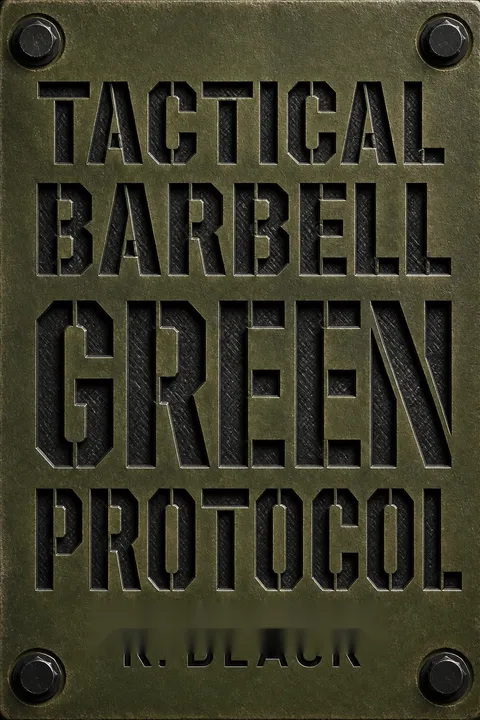
Green Protocol is both a training philosophy and a menu of practical programs. Its main argument is that demanding operational fitness cannot be built by chasing a short selection-prep plan in isolation. A trainee first develops general strength and endurance, then converts that capacity into terrain, load carriage, repeated effort, and event readiness. Once the concentrated build is over, a flexible continuation plan preserves progress without pretending that training is the person's only responsibility.
The book's most useful distinction is between being fit in general and being conditioned for a particular job. That distinction explains its bias toward running, moderate strength work, rucking, hills, and work capacity rather than fashionable workouts chosen for how punishing they feel. Its program architecture also makes the central idea actionable: benchmarks establish waypoints, training blocks adjust emphasis, and modular options accommodate different starting points and occupational demands.
The approach is strongest when read as a set of principles rather than a universal prescription. Its benchmark distances and loads suit the intended population, but not every tactical role, athlete, or injury history. The author recognizes this by allowing substitutions, abbreviations, and lower targets, although that flexibility asks the reader to make sound judgments about readiness. The same caution applies to the anecdotal examples: they illustrate plausible training problems, but do not establish general causal rules.
A broader lesson is that specificity does not mean doing only the event itself. Running may support rucking, strength may support repeated effort, and easy mileage may make harder sessions recoverable. The challenge is managing those interactions without letting one domain crowd out the rest. Green Protocol succeeds as a map for that tradeoff: build capacity, practice the demands that matter, recover deliberately, and keep the long-term plan adaptable.
Review Summary
Tactical Barbell receives overwhelming praise with a 4.65/5 rating from 220 reviews. Readers appreciate the book's research-backed approach to combat fitness, covering running, rucking, and strength training through various protocols and templates. Many reviewers highlight its value for military personnel, law enforcement, and endurance athletes, though some note it's best read after books 1 and 2 in the series. Users praise its clear, concise presentation without gimmicks, calling it ideal for busy individuals seeking functional fitness programming that works long-term.
People Also Read










Glossary
Green Protocol
Combat-focused hybrid trainingA strength and conditioning system designed for combat arms athletes and other roles requiring substantial endurance, strength, and work under load. It combines running, rucking, strength work, and conditioning, with training phases that build general ability, develop operational specificity, and support longer-term training.
Combat fitness
Fitness applied to the roleThe ability to perform the physical demands of a combat-related job, rather than simply score well in a general fitness domain. In the book, that may mean moving over difficult terrain with equipment, then completing demanding tasks while fatigued. The precise mix depends on the role.
Capacity
Strength and aerobic foundationThe first Foundation template in Green Protocol. It combines structured strength training with easy steady-state running to develop general strength and aerobic fitness before more specialized work. Its main benchmark is a six-mile run completed in 60 minutes or less, though the template can be adjusted.
Velocity
Running-focused development phaseThe Foundation template that builds running endurance, speed, and ability on uneven terrain. It combines easy runs, speed sessions, hills, long runs, and strength training, with strength work reduced as running volume rises. Its primary benchmark is a 20-mile off-road run in eight hours or less.
Outcome
Rucking and work-capacity phaseThe Foundation template that converts existing strength and endurance into loaded movement, muscular endurance, and work capacity. It progressively increases ruck distance and load, and its peaking portion includes more demanding sessions and a taper. Its main benchmark is a 20-mile ruck with 50 pounds.
Continuation
Sustainable long-term trainingThe flexible phase intended to follow concentrated Foundation training or support trainees who already have a suitable base. It offers different templates for balancing strength, endurance, rucking, and other demands while making room for work, family, and operational responsibilities. It is designed for continued progress, not merely maintenance.
Low Intensity Steady State Run
Easy aerobic runningA relaxed, sustained run intended to develop aerobic fitness and support higher overall training volume. The book recommends a conversational effort, generally around 4 to 5 on a 10-point perceived-effort scale. Depending on the phase, it may be performed on flat ground or trails with gentle elevation.
Strength-Endurance Training
Repeated force over timeTraining for the ability to apply muscular force repeatedly rather than produce maximal force once. The book uses exercises such as push-ups, pull-ups, and squats in planned sets or circuits, often with abbreviated rests. It can be adapted to specific tests, occupational tasks, or available equipment.
Work Capacity
Ability to handle combined workThe ability to perform multiple physical demands together and to tolerate substantial training or operational workload. Examples include combining running, strength, and muscular endurance in one task, or sustaining activity across repeated sessions or days. The book uses the term broadly in the context of combat fitness.
Peggy's Hills
Hill-based endurance circuitA continuous conditioning session combining repeated uphill and downhill movement with a small number of strength-endurance exercises performed at the top of a hill. It is done at a sustainable pace, not as repeated hill sprints, and can be modified with a light weight vest or alternate exercises.
Baseline/Detour
Default plan plus focused changesA long-term planning strategy for using a sustainable Continuation template as the regular training baseline, then temporarily changing the plan for a particular goal or weakness. After the event or focused training block, the trainee returns to the baseline rather than continually replacing the overall plan.
Mike India
Add only missing trainingThe book's shorthand for the Missing Ingredient approach. A trainee first considers the exercise already supplied by work, unit training, sport, and daily life, then adds only the important qualities not adequately covered. The method aims to reduce redundant workload and make training more sustainable.
Download PDF
Download EPUB
.epub digital book format is ideal for reading ebooks on phones, tablets, and e-readers.








