

Key Takeaways
Treat self-sabotage as behavior to guide, not proof that you are bad.
A useful separation. Susan Anderson calls the impulsive, self-defeating part of the personality the Outer Child. In her model, the Inner Child carries feelings and needs, the Outer Child acts on them, and the Adult Self guides behavior and cares for both. For example, feeling anxious about a date is not the same as sending a string of angry messages when the person is late. The anxiety deserves attention; the messages are behavior that can be changed.
Accountability without shame. The model does not excuse harmful actions. It shifts attention from condemning the whole self to noticing the behavior, its trigger, and the unmet need it may be trying to handle. Anderson presents the Outer Child as a psychological tool, not a medical diagnosis.
What's useful here is the distinction between an emotion and the action taken under its influence. It resembles a core skill in cognitive behavioral therapy: notice a thought or feeling, then create room to choose a response. That separation can reduce shame without diluting responsibility. The metaphor also has limits. Treating an impulse as a separate inner character may help some people observe it, while others may find it too theatrical or use it to disown their choices. Its value rests on whether it increases awareness and accountability, not on whether the psyche literally contains three children and an adult.
Separate what you feel from what you do before trying to change.
Hear the feeling first. Anderson argues that emotional insight alone may not change an established behavior. Her dialogue exercises give distinct voices to the Inner Child, Outer Child, and Adult Self. The Adult asks what the Inner Child feels, listens without ridicule, and then decides how to respond. If a colleague dismisses an idea, for instance, the underlying hurt can be acknowledged without letting an angry outburst make the next decision.
Keep the boundary clear. Anderson adapts a parenting principle for self-talk: validate feelings, but do not treat them as permission for damaging behavior. A person can be angry and still choose not to lash out. This approach also aims to protect the emotional self from self-blame, while leaving the Adult Self responsible for the actions that follow.
The distinction is especially relevant to emotion regulation, where suppressing a feeling and acting it out are not the only options. Naming an emotion can make it easier to consider a response that fits the situation. The framework adds an accessible inner dialogue to that process, which may be more memorable than abstract advice. Still, some feelings do signal that a situation is unsafe or persistently harmful. Listening inward should not become a reason to tolerate mistreatment or to assume every conflict is an internal problem.
Pair a vivid future picture with one small action you complete today.
Make the future concrete. Anderson's program combines written dialogue, guided visualization, and action steps. In Back to the Future, a person imagines having reached a goal, then works backward to identify obstacles and actions that could have led there. Her Dream House visualization gives that future a detailed setting. These exercises are meant to move attention from the problem alone toward a possible direction, not to guarantee an outcome.
Turn intention into behavior. The next step is a small, feasible action, sometimes only a few minutes long, chosen with the goal in mind and completed promptly. Someone hoping to change careers might first gather information about training or contact a resource. Anderson recommends regular practice over months, rather than expecting one insight or visualization to erase a long-standing pattern.
The sequence links mental rehearsal to actual behavior, a combination found in many approaches to goal pursuit. A future image can help clarify what matters, while a small action supplies feedback from the real world. That feedback matters because imagined success can otherwise become another form of avoidance. Anderson's method is strongest when visualization leads to a specific, observable step. Its neuroscience explanations are more ambitious than the practical advice requires, and readers should not mistake an exercise in imagination for evidence that a desired future is assured.
Answer old abandonment fears with care you can reliably provide yourself.
Notice self-abandonment. Anderson uses this term for neglecting or attacking one's own needs, often through self-blame, avoidance, or surrendering responsibility for emotional care. She distinguishes adult feelings of abandonment from the literal dependence of a child, while recognizing that adult losses can revive powerful fears. A breakup, job loss, or exclusion can stir old insecurity even when the person cannot recall a clear childhood event.
Practice being dependable. One exercise asks the reader to imagine adopting a frightened, abandoned child and then to treat that child as the Inner Child. The point is not to recover a particular memory. It is to respond to present feelings with care, and to keep promises to oneself through realistic actions. Anderson argues that this can build a more reliable relationship with oneself instead of placing every need in someone else's hands.
The adoption image turns self-compassion into a relationship with responsibilities: notice distress, offer reassurance, and follow through. That is a persuasive way to make an abstract idea concrete. It also aligns with attachment-informed approaches that emphasize dependable care and emotional safety. A useful qualification is that people can experience real abandonment and betrayal as adults, not merely echoes of childhood. Self-care can support recovery, but it does not erase another person's responsibility or replace appropriate support from trusted people and professionals.
In love, test whether pursuit is mistaken for passion.
Watch what creates the spark. Anderson uses the term abandoholism for a pattern of seeking emotionally unavailable partners and confusing the strain of pursuit with romantic chemistry. In her account, uncertainty can intensify longing, while a willing partner may feel less exciting. Brad, a married client, had lost passion for his available wife and became preoccupied with a colleague who was not fully available. He saw that pursuing the colleague threatened the marriage he wanted to preserve.
Do not diagnose every attraction. The practical question is whether insecurity and intermittent attention are driving the bond more than mutual care. Anderson encourages readers to consider availability, trust, and their own repeated choices, rather than treating intensity as proof of compatibility. This is a prompt for reflection, not a rule that every difficult relationship is addictive or that a person should stay in an unhappy one.
The distinction between attraction and anxiety can be clarifying. Attachment research and relationship practice both recognize that uncertainty may intensify preoccupation, though that does not establish a simple chemical explanation for love. The book's account of neurochemicals makes a vivid case, but it risks reducing complex relationships to a biochemical trap. Compatibility, desire, values, and context matter too. The most helpful test is behavioral: does the connection support reciprocity and respect, or does it repeatedly organize life around winning reassurance?
Listen closely to cravings, then meet the need beneath them.
Study the urge without disguise. Radical Listening is Anderson's exercise for recording food cravings, the explanations used to justify eating, and the reality of what follows. A person might notice that eating continues past fullness because the taste, texture, or soothing effect is compelling. Naming the urge honestly can reveal what food is doing emotionally, such as offering comfort or distraction, without assuming that every appetite has the same cause.
Look beyond willpower. Anderson describes how restrictive dieting can make food more salient for some people and notes that biology, medication, and other factors can affect weight. Her approach pairs honest observation with dialogue about deeper needs and small, deliberate actions. The goal is not to shame appetite, but to understand its role and find other ways to care for the need it may be serving.
This exercise resembles mindful self-monitoring: carefully observing a cue and response can reveal patterns that vague resolutions conceal. It also makes room for the possibility that eating serves more than hunger. The important safeguard is to avoid turning observation into surveillance or moral judgment. Weight and eating are shaped by medical, psychological, social, and environmental factors, and persistent distress around food may require qualified care. Listening is useful when it increases understanding, not when it becomes another instrument of self-criticism.
Shrink procrastination into a promise small enough to keep today.
See the avoidance loop. Anderson compares procrastination to a game of peekaboo: a task feels less real when ignored, but it has not actually disappeared. Delay can offer brief relief while allowing costs and anxiety to grow. In one example, Joyce, an attorney, was postponing calls to clients. She began by promising herself one call, then completed more once she had started.
Make follow-through manageable. The dialogue exercises ask what the delay feels like from the inside, while action steps lower the barrier to beginning. A first step might be opening the paperwork, gathering a needed number, or making one call, rather than demanding a complete life overhaul. Small actions are not a cure for every cause of procrastination, but they can interrupt avoidance and provide evidence that a task can be approached.
The strength of this advice is its attention to the transition between intention and action. A task made smaller can reduce the emotional cost of starting, while completion builds practical momentum. That is a useful complement to insight, especially when rumination has become a substitute for doing. Yet chronic procrastination can also reflect depression, ADHD, fear, or overwhelming conditions. If tiny steps repeatedly fail, the right conclusion may not be that the person lacks discipline; it may be that the barrier needs a different kind of support.
Give financial fear a lever through one concrete next step.
Bring money into view. Anderson describes Outer Child patterns such as impulse buying, avoiding career moves, and postponing financial tasks. Credit can make spending feel less immediate than handing over cash, encouraging a person to focus on the purchase while the obligation stays abstract. The book also links fear to both overspending and under-earning: someone may buy for short-term comfort or avoid asking for work that could improve their finances.
Choose an action, not a fantasy. The program asks readers to name a financial goal, notice the behaviors blocking it, and take a manageable step. That could mean reviewing a bill, seeking qualified financial guidance, or learning about a debt-support group. Anderson uses the metaphor of a lever: a small act can restore a sense of agency even before the larger problem is solved.
The lever metaphor usefully separates agency from total control. A person may not be able to change interest rates, income instability, or the terms of a debt, but can sometimes take a concrete step that improves information or access to help. The book's emphasis on impulsivity is relevant, though financial hardship cannot be reduced to individual habits. Wages, housing costs, health, and access to credit shape outcomes. A sound application pairs self-observation with practical advice and recognition of structural constraints.
Treat persistent depression with support, structure, and professional care.
Do not rely on insight alone. Anderson describes depression as potentially involving loss, stress, physical processes, and reduced functioning. Her exercises are intended to complement, not replace, psychotherapy, medication, support groups, or other qualified care. She recommends making a future image, writing dialogues, and taking small actions that bring movement and structure into the day. Examples include walking, contacting someone, or completing one manageable task.
Start where you are. A person who feels depleted may need help getting started, and an action can be modest without being meaningless. The book suggests regular practice rather than expecting a sudden breakthrough. Persistent or severe depression deserves assessment by a qualified professional, especially when daily functioning or safety is affected. The framework can offer a way to notice self-defeating habits, but it is not a treatment plan or a substitute for clinical judgment.
The emphasis on action alongside reflection has a close cousin in behavioral activation, a therapeutic approach that helps people reconnect with meaningful activities despite low mood. The book's insistence on professional care is essential because depression is not simply a bad habit or a failure of self-love. Its brain-based explanations sometimes imply more certainty than the text can establish, and visualization should not be presented as a stand-alone remedy. The humane takeaway is more modest: support, structure, and achievable action can sit alongside appropriate treatment.
Analysis
The book's central contribution is practical rather than diagnostic. It offers a memorable way to separate vulnerable feelings from the defensive or impulsive behavior that may follow them. That distinction lets a reader approach a recurring pattern with both compassion and responsibility: the feeling is not condemned, and the behavior is not excused. The three-part model gives this process characters, dialogue, and a sequence of exercises, making an internal conflict easier to observe and discuss.
Its strongest method is the movement from awareness to practice. Readers identify a pattern, listen for the need or fear beneath it, imagine a more desirable future, and take a small action in the present. This structure is useful across topics as different as procrastination, eating, debt, and relationship anxiety because it treats self-sabotage as a learned response that can be examined rather than a fixed identity. The emphasis on repeated, manageable actions is more persuasive than any promise of instant transformation.
The framework is best treated as a metaphor, not as a clinically established map of separate brain modules. The book draws heavily on neuroscience to explain behavior, memory, attachment, and motivation, but its descriptions sometimes simplify complex processes or present hypotheses with considerable confidence. The usefulness of a dialogue exercise does not depend on every neural explanation being correct. Likewise, intense attraction cannot be reduced to fear chemistry, and financial or mental-health problems cannot always be solved through individual effort.
A careful reader can keep the model's strengths while setting sensible boundaries. Use it to notice triggers, name feelings, and choose a more deliberate response. Do not use it to invalidate real harm, avoid professional care, or blame oneself for conditions beyond personal control. Its most durable idea is that insight becomes meaningful when it changes how a person behaves toward their own needs in everyday life.
Review Summary
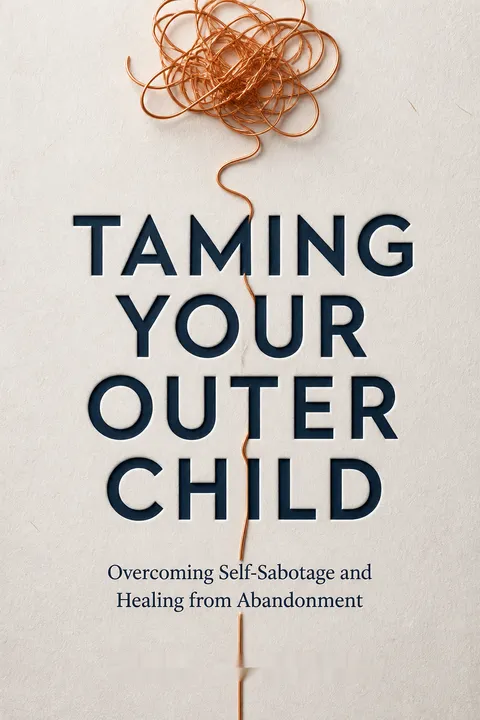
Taming Your Outer Child receives mostly positive reviews, with readers praising its practical approach to addressing self-sabotaging behaviors. Many find the concept of the "outer child" helpful in understanding and managing their actions. The book's exercises and dialogues are often described as transformative, though some readers find them awkward initially. Critics note repetition and occasional fat-shaming language. Overall, reviewers appreciate the book's insights into abandonment issues and self-improvement, with many reporting significant personal growth after applying its techniques.
People Also Read









Glossary
Outer Child
Self-defeating behavioral partAnderson's term for the part of the personality that acts out feelings and needs in impulsive, defensive, or self-defeating ways. It may appear through habits such as procrastination, overspending, overeating, or relationship games. The term is a psychological metaphor in the book, not a formal psychiatric diagnosis, and is intended to help readers observe behavior without blaming their emotional needs.
Inner Child
Core feelings and needsIn Anderson's framework, the Inner Child represents emotional experience and basic needs, not behavior. It may feel frightened, lonely, hopeful, angry, or in need of comfort and connection. The model asks the Adult Self to listen to these feelings directly, rather than confusing them with the impulsive actions associated with the Outer Child.
Adult Self
Guiding, caring selfThe Adult Self is the executive role in Anderson's three-part model. It is responsible for caring for the Inner Child, guiding the Outer Child's behavior, and pursuing considered goals. The book treats it as a capacity that can grow through practice, especially through dialogue, visualization, and follow-through on realistic actions.
Separation therapy
Dialogue among inner partsAnderson uses separation therapy for exercises that distinguish feelings, behavior, and adult guidance by giving them separate voices. Written exchanges between the Adult Self and Inner Child, or the Adult Self and Outer Child, are meant to make internal conflicts easier to recognize and address. The technique adapts earlier self-dialogue practices rather than requiring readers to recover specific childhood memories.
Back to the Future
Imagine success, plan backwardA visualization exercise in which a person imagines a future point where a goal has been achieved, identifies the obstacles overcome, and works backward to picture the actions that led there. Anderson presents it as a way to give intention a clearer direction and rehearse possible behavior. It is a planning exercise, not a prediction that the imagined outcome will occur.
Turn Around
Outer listens to InnerA dialogue exercise in which the Outer Child is imagined turning to face the Inner Child instead of guarding or acting out its feelings. The Adult Self mediates, reassures the Inner Child, and directs the Outer Child toward constructive behavior. The image is intended to separate emotional needs from automatic defenses and give the person a pause for reflection.
Radical Listening
Record urges without judgmentAnderson's journaling practice for examining cravings and compulsive patterns in detail. In the food application, the writer records the sensory appeal of eating, the justifications for continuing, and the consequences, while avoiding shame or denial. The aim is to see the pattern clearly enough to distinguish an urge from the deeper need it may be serving.
Abandoholism
Pursuit of unavailable partnersAnderson's term for repeatedly seeking emotionally unavailable partners and becoming attached to the uncertainty and pursuit. In this pattern, the challenge of winning someone's interest may be mistaken for passion, while an available partner can feel less exciting. The concept invites readers to examine repeated relationship choices; it is not a clinical diagnosis or proof that strong attraction is unhealthy.
Dream House
Future-self visualizationA guided visualization in which a person imagines an ideal home and its surroundings as a symbolic representation of emotional needs, goals, and possibilities. The reader revisits the image as a mental reminder of a desired direction. Anderson presents the exercise as a way to focus attention and support action, not as a promise that the imagined home or circumstances will become real.
About the Author

Download PDF
Download EPUB
.epub digital book format is ideal for reading ebooks on phones, tablets, and e-readers.








