

Key Takeaways
A powerful talk is a teachable act of giving, not a performance of confidence.
Speaking is learnable. Anderson argues that effective public speaking is not an inborn gift or a single formula. It is a set of skills that can be practiced, and the speaker’s job is to share something useful in an authentic way. Fear can help: the stakes may push a speaker to prepare rather than bluff. Anderson recalls a shy twelve-year-old, Richard Turere, who built flashing lights from salvaged parts to protect his family’s cattle from lions. With help shaping the story and rehearsing, Turere gave a compelling talk despite his nerves and halting English.
Ideas move people. After a failed SpaceX launch, Elon Musk spoke to employees and helped shift their attention from despair to what the team had achieved and what came next. A talk can change a room, but its force comes from substance and sincerity, not theatrical polish.
What's striking is the shift from public speaking as self-display to public speaking as a service. That resembles good teaching: the measure is not how impressive the instructor appears, but what learners can understand and use afterward. The emphasis on practice also makes stage fright less mysterious. Anxiety is not proof of incapacity; it is often a response to social evaluation. Still, authenticity alone cannot guarantee a useful talk. A sincere speaker may be unclear or mistaken, so preparation must sharpen both the message and its evidence.
Build one useful idea in listeners, not a résumé of everything you know.
Define the gift. An idea, in Anderson’s broad sense, is something that changes how listeners see the world. It might be a scientific insight, a practical method, or a lesson drawn from experience. The test is not whether the speaker has a grand invention, but whether the audience can leave with a clearer understanding or a new question. Researcher Sophie Scott made laughter newly interesting by explaining it as a social behavior that can turn tension into shared pleasure. The talk offered both enjoyment and a lasting lens for interpreting ordinary moments.
Start with substance. Anderson’s own appeal to preserve TED succeeded because it presented the conference as a place where disciplines could learn from one another, not merely as an event attached to its founder. If the speaker has not yet found a worthwhile idea, research and reflection may uncover one. Sometimes the right first step is asking trusted people what they find distinctive in the speaker’s work or experience.
This standard usefully separates a talk’s value from the speaker’s résumé. It also echoes the distinction between information and insight: a list of facts may be accurate, but an organizing interpretation makes them memorable and usable. The audience’s prior knowledge matters, too. A familiar message can still be valuable when a fresh example makes it newly legible. Yet a compelling idea is not automatically a true one. Speakers should treat elegance as a reason to investigate a claim, not as evidence that the claim is sound.
Choose a single throughline, then cut anything that cannot strengthen it.
Give the talk a route. A throughline is the central idea that connects the parts of a talk and carries listeners toward its conclusion. Anderson recommends expressing it in roughly fifteen words. A topic is not enough: a talk about a new water technology might focus on engineering, a water shortage, or an unexpected design insight. Each choice creates a different journey.
Depth beats coverage. Trying to squeeze every project or fact into a short slot usually leaves each point underexplained. The audience needs to know why a point matters and see examples that make it concrete. Anderson illustrates the tradeoff by replacing a short résumé of his life with one revealing scene from his student years. The scene conveyed more about his character because it developed one idea in depth. For difficult issues, curiosity about a possible solution can invite attention more effectively than a list of reasons to feel guilty.
The throughline is a practical answer to a cognitive problem: listeners cannot hold every detail at once, especially when those details arrive only once and in sequence. A clear structure lets them predict how each new point relates to the last. The recommendation to cut is therefore more than an aesthetic preference; it protects comprehension. The limitation is that simplification can hide genuine complexity. A strong throughline should clarify what the evidence supports without implying that a multifaceted problem has only one cause or solution.
Earn attention through human trust before asking audiences to change their minds.
Make contact first. Listeners assess the person delivering the words, not just the words themselves. Anderson recommends natural eye contact, warmth, and a conversational presence. Vulnerability can help when it is truthful and relevant. Neurosurgeon Sherwin Nuland explained his expertise on electroshock therapy, then disclosed that the treatment had helped him survive severe depression. The personal revelation changed the meaning of his subject and gave his audience a reason to trust his perspective.
Give before asking. Humor, self-deprecation, and stories can soften distance, but forced intimacy and self-promotion often backfire. Anderson contrasts a speaker who used a talk to promote consulting services with human-rights lawyer Bryan Stevenson, who offered stories and analysis without turning his talk into a fundraising appeal. Attendees contributed more than the amount his organization needed. For audiences divided by politics or identity, beginning from shared concerns may keep people listening longer than language that triggers group loyalties.
Trust is not decorative; it affects whether people consider unfamiliar information at all. In that sense, a speaker’s openness can function like a signal of accountability: the person is willing to be seen, not only to persuade. But emotional connection is ethically double-edged. The same techniques can create understanding or bypass scrutiny. Vulnerability should therefore support the idea, not substitute for evidence, and audiences should remain free to question a speaker they like.
Shape personal stories around a lesson others can carry beyond your life.
Build a narrative arc. A story becomes easier to follow when a recognizable character wants something, meets an obstacle, faces rising tension, and reaches a resolution. The speaker should include enough detail to let listeners imagine events, but remove details that do not help them understand the point. Anderson’s example of Eleanor Longden shows how a personal account can do more than hold attention: her experience of hearing voices and receiving a psychiatric diagnosis becomes a way to examine mental illness and recovery.
Make the story generous. A life story is not automatically a useful talk. It needs an insight that matters beyond the speaker’s own achievements. A parable can do this through an invented or simplified situation that makes a larger system easier to see. Lawrence Lessig’s fictional place where only people named Lester vote illustrates how political funding can distort representation. Such analogies invite audiences to connect the story with a real issue, but they must fit closely enough not to mislead.
Narrative is a powerful teaching format because it gives abstract claims a sequence, stakes, and human consequences. It can also help audiences imagine perspectives outside their own experience. The strongest stories do not merely provoke emotion; they make a claim available for examination. That distinction matters because vividness can create a sense of truth even when a story is atypical. A speaker should make clear what the story illustrates, and what it cannot establish on its own.
Teach complex ideas in steps, using familiar images before specialist language.
Start from what listeners know. Explanation is the process of adding to or reorganizing someone’s mental model. Dan Gilbert’s talk on how people misjudge future happiness introduces one concept at a time: the brain’s ability to simulate experiences, the tendency to exaggerate their effects, and the mind’s capacity to adapt. Familiar comparisons, such as imagining a flavor before tasting it, help listeners grasp the new ideas before they encounter the technical terms.
Check every step. The curse of knowledge is the difficulty experts have remembering what it feels like not to know their subject. A speaker may understand each sentence while listeners lose track of how the sentences connect. Anderson recommends testing drafts with people unfamiliar with the topic, explaining jargon, and using transitions to signal contrast, cause, or example. In Bonnie Bassler’s account of bacteria coordinating behavior through chemical signals, clear context and concrete examples make complicated research accessible without stripping away its significance.
The method resembles scaffolding in education: learners attach unfamiliar ideas to concepts they already understand, then use the new structure to interpret more difficult material. Metaphors are especially efficient because they offer a provisional model before a full technical account is possible. Their efficiency creates a risk, however. An analogy can illuminate one feature while distorting another. Effective explanation uses metaphors as entrances, then supplies evidence and boundaries so listeners do not mistake the comparison for the phenomenon itself.
Make the old explanation feel incomplete, then support a better one with reasons.
Prepare the mind to revise. Persuasion asks listeners to reconsider what they already believe. Steven Pinker’s talk on historical violence begins by recalling how brutal earlier societies could be and how news emphasizes dramatic incidents. That context makes his population-adjusted evidence for declining rates of violence easier to take seriously. A vivid example or story can prime curiosity, but it is not proof by itself.
Let the argument earn assent. A reasoned case proceeds in small steps, with each conclusion supported by premises listeners can examine. A detective-style structure can help: pose a mystery, test possible explanations, and show why some fail. Dan Pallotta used linked if-then claims to argue that rules against risk and ambitious pay can constrain nonprofit organizations. Humor, images, and third-party evidence can make reasoning more engaging, but attacking opponents personally can replace argument with tribal defense.
The section’s strongest insight is that persuasion has both an emotional entry point and an evidentiary core. People rarely approach a talk as neutral calculators; an intuitive example can create enough interest to consider evidence. But this sequence also calls for care. Priming may make a conclusion feel plausible before it has been demonstrated. Speakers should distinguish the story that motivates a question from the data that answer it, and should acknowledge uncertainty where the evidence leaves room for competing interpretations.
Use visuals to reveal what words cannot, not to decorate every sentence.
Show the hard-to-describe. Images, demonstrations, and data displays can make a discovery visible in a way spoken description cannot. A demonstration of a water-filtering bottle, for example, can turn an explanation into observable evidence. Yet slides are not mandatory: they can distract from a personal story or create unnecessary cognitive load. When they are useful, each should carry one central point, and the spoken explanation should add meaning rather than repeat text on the screen.
Let wonder serve an idea. A sequence of images can guide an audience through a body of work, while a vision of the future can help people imagine what a discovery makes possible. Anderson calls an image-led sequence a wonder walk. It needs a linking idea, not just a parade of projects. A compelling future vision also connects technology to human values, so that novelty feels relevant rather than merely impressive or unsettling.
Visuals can distribute cognitive work across words and images, letting a speaker show spatial patterns or processes that would take many sentences to describe. That is a genuine explanatory advantage, not merely decoration. The audience still has limited attention, though. Complex graphics, technical language, and rapid delivery can compete for the same mental resources. A useful design question is not whether a slide looks polished, but whether it makes one relationship easier to perceive than speech alone could.
Rehearse until the structure feels effortless, whether scripted or improvised.
Practice for fluency. Some speakers script and memorize; others prepare an outline and speak in the moment. Neither approach is universally best. A script can make tight timing and complex explanations more reliable, but partial memorization can sound stiff or leave a speaker searching for the next line. Unscripted delivery can feel alive, but without preparation it can become rambling. Repeated run-throughs help both approaches find a clear sequence, natural phrasing, and a workable pace.
Prepare the whole situation. Practice with the actual visuals, notes, and timing, then get feedback from people outside the speaker’s field. Build in time for pauses and audience response. Anderson suggests preparing to finish within about ninety percent of the allotted slot. A speaker can also manage nerves through breathing, movement, hydration, and a backup plan. The opening should quickly earn attention, and the ending should leave one clear final impression rather than trailing into apologies or extra acknowledgments.
Rehearsal is best understood as reducing avoidable demands on working memory. When the sequence is familiar, a speaker can attend to listeners, timing, and meaning instead of inventing every transition under pressure. That does not require a polished, unchanging performance. It creates room to respond naturally because the structure is secure. The useful distinction is between rehearsed and mechanical: repetition can make delivery more human, but only if practice includes attention to tone, audience contact, and the idea itself.
Put your voice online: one clear talk can travel far beyond the room.
The audience can multiply. Anderson describes how TED began putting talks online in 2006. The first six videos drew far more attention than expected, and TED expanded its free archive. By late 2015, TED Talks were being viewed about 1.2 billion times per year. The larger point is that online video allows a speaker’s work to reach people who could never attend the original event, while helping viewers learn from teachers beyond their local institutions.
Learning becomes shared. Online audiences also let creators watch, adapt, and improve one another’s work. Anderson calls this crowd-accelerated innovation: visible examples and broad participation can speed improvement in a skill. He sees presentation literacy, the ability to share ideas effectively, as increasingly useful in a world where specialized information is widely available. That future depends not only on more speakers, but on more people willing to listen, evaluate claims, and contribute what their experience can teach.
Digital distribution changes the scale of speaking, but it also changes the incentives. A talk can reach people across borders and give skilled teachers unusual reach; the same platform can reward polish, novelty, or emotional spectacle over accuracy. View counts measure attention, not learning or truth. The deeper opportunity lies in treating public communication as a shared knowledge practice: ideas circulate, receive scrutiny, and improve. That requires accessible presentation skills alongside habits of verification and genuine openness to correction.
Analysis
Anderson’s guide is built around a productive tension: a talk should be carefully engineered, yet it must feel like a real human being speaking to other people. Its practical advice resolves the tension by separating preparation from performance. Structure, examples, visuals, timing, and rehearsal are planned in advance; warmth, attention, and responsiveness are expressed in the room. This is more than stagecraft. It is a theory of how knowledge moves between people: the speaker begins with the audience’s existing mental models, earns enough trust to invite attention, then builds or revises understanding in manageable steps.
The book’s most durable contribution is its insistence that presentation is not a coat of polish applied after the idea is finished. Choosing a throughline forces the speaker to decide what the idea actually is. Rehearsal exposes gaps in reasoning. Testing with nonexperts reveals hidden assumptions. Visual design clarifies which relationships matter. In that sense, presentation can improve thinking itself, much as explaining an argument to a skeptical listener can reveal its weaknesses.
The examples also show the limits of general rules. TED audiences are unusually attentive, speakers receive substantial editorial support, and many examples involve accomplished people with compelling material. The guidance transfers well, but the conditions do not always. A workplace presentation may involve less trust, more competing interests, or constraints on what can be shown. Authenticity and storytelling cannot dissolve those power differences.
The book’s optimism about global connectivity deserves similar qualification. Online video lowers barriers to access and allows ideas to travel, but reach is not the same as public benefit. Emotional fluency can serve truth, error, or manipulation. The strongest version of presentation literacy therefore joins eloquence to intellectual accountability: clear claims, visible evidence, fair treatment of disagreement, and willingness to revise. A talk can synchronize attention, but audiences still need the freedom and tools to judge what they hear.
Review Summary
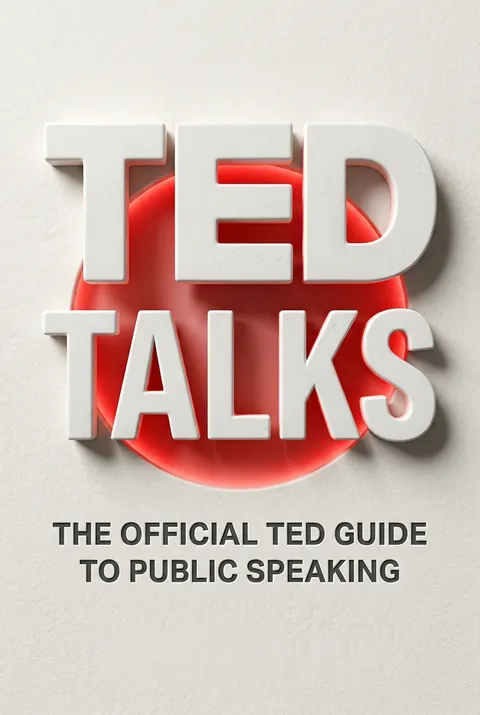
TED Talks: The Official TED Guide to Public Speaking offers valuable insights on delivering impactful presentations. Readers appreciate the practical advice, examples from successful TED talks, and emphasis on substance over style. Many found it useful for improving public speaking skills, though some felt it was too TED-specific. The book encourages speakers to focus on sharing meaningful ideas and connecting with audiences. While some reviewers found parts repetitive or obvious, overall it was praised for its comprehensive approach to crafting compelling presentations.
People Also Read









Glossary
presentation literacy
Skill in sharing ideasThe ability to develop and communicate an idea effectively to an audience. Anderson treats it as a learnable modern form of rhetoric, involving more than confident delivery: speakers must shape a useful message, make it understandable, connect with listeners, and choose a fitting way to present it. The term applies to public speaking across education, work, and civic life.
throughline
The talk’s connecting ideaThe central idea that links a talk’s stories, explanations, evidence, and examples into one coherent journey. A throughline is more specific than a topic or a goal such as inspiring an audience. It helps the speaker decide what belongs, what should be cut, and how each section contributes to the takeaway listeners should remember.
curse of knowledge
Forgetting what novices do not knowThe difficulty experts face in imagining the perspective of someone unfamiliar with their subject. Because a concept feels obvious once learned, speakers may skip essential context, use unexplained jargon, or fail to show how one point connects to the next. Testing explanations with people outside the field can reveal gaps that are invisible to the expert.
intuition pump
A device that primes plausibilityA metaphor, story, or other vivid framing that makes a conclusion easier to consider by activating familiar intuitions. It is not a proof. In a persuasive talk, an intuition pump can help listeners see why a claim might matter or feel plausible, preparing them to examine the argument that follows.
Uncanny Valley
Awkward half-memorized deliveryAnderson’s analogy for a stage in memorizing a talk when some passages are polished from memory but the speaker has not yet mastered the whole presentation. The result can sound robotic in memorized sections and hesitant in others. Further practice may make recall effortless, while stopping at this stage risks an unnatural performance.
wonder walk
A guided sequence of discoveriesAn image-led talk that takes an audience through a series of artworks, observations, or discoveries. Each item offers a moment of interest, while a linking idea gives the sequence coherence and momentum. The format can entertain and inform, but a collection of unrelated examples may feel like a portfolio tour rather than a meaningful talk.
crowd-accelerated innovation
Improvement through visible participationAnderson’s term for a process in which many people can see strong examples of a skill, learn from one another, and contribute their own variations. Online video can make talent visible across distance and provide incentives to practice and improve. The idea applies to performance skills as well as public speaking, though visibility alone does not ensure quality.
full spectrum
A talk using more than wordsAnderson’s label for presentations that combine speech with other forms, such as dance, live demonstrations, props, music, audience participation, or remote presenters. These formats can create vivid experiences that ordinary slides cannot. They require careful execution: added elements should clarify or deepen the idea rather than distract from it or make the talk feel gimmicky.
FAQ
What's TED Talks: The Official TED Guide to Public Speaking about?
- Focus on Public Speaking: The book provides insights into the art of public speaking, emphasizing effective communication of ideas to an audience.
- Tools for Speakers: It offers a variety of tools and techniques, including connection, narration, explanation, persuasion, and revelation, to enhance presentations.
- Personal Stories and Examples: Chris Anderson shares anecdotes and examples from TED speakers to illustrate key points and demonstrate the impact of effective public speaking.
Why should I read TED Talks: The Official TED Guide to Public Speaking?
- Enhance Communication Skills: The book can help improve your public speaking skills, making you a more effective communicator in personal and professional settings.
- Learn from Experts: It compiles wisdom from successful TED speakers, providing proven strategies and insights for your own talks.
- Inspire and Motivate: The book encourages readers to share their ideas and stories, embracing public speaking as a powerful tool for change.
What are the key takeaways of TED Talks: The Official TED Guide to Public Speaking?
- Presentation Literacy: Emphasizes the importance of effectively communicating ideas in various contexts.
- Authenticity Matters: Stresses that impactful talks come from speakers who are authentic and passionate.
- No One-Size-Fits-All: Encourages speakers to find their unique voice and style, rather than following a single formula.
What is the "throughline" concept in TED Talks: The Official TED Guide to Public Speaking?
- Central Theme: The "throughline" is the central theme or idea that ties together all elements of a talk, ensuring coherence and focus.
- Engagement: A strong throughline helps engage the audience by providing a clear narrative to follow.
- Crafting Your Message: Anderson advises encapsulating the throughline in a concise statement to guide the structure and content of the talk.
How can I connect with my audience according to TED Talks: The Official TED Guide to Public Speaking?
- Make Eye Contact: Establishing eye contact creates a personal connection and builds trust with the audience.
- Show Vulnerability: Sharing personal stories or admitting nervousness can humanize the speaker and foster empathy.
- Use Humor: Incorporating humor can break the ice and make the audience more comfortable, enhancing receptiveness.
What are some common traps to avoid in public speaking as mentioned in TED Talks: The Official TED Guide to Public Speaking?
- The Sales Pitch: Avoid turning your talk into a sales pitch; focus on providing value to the audience.
- The Ramble: Stay focused and avoid meandering; ensure your talk has a clear structure and purpose.
- The Org Bore: Don’t bore the audience with organizational details; focus on ideas and insights that matter to them.
What is the importance of storytelling in TED Talks: The Official TED Guide to Public Speaking?
- Engagement and Empathy: Stories captivate audiences and allow them to empathize with the speaker's experiences.
- Structure and Flow: A well-told story provides a natural structure for a talk, guiding the audience through the narrative.
- Memorable Impact: Stories often leave a lasting impression, making it easier for the audience to remember key points.
How does TED Talks: The Official TED Guide to Public Speaking define "presentation literacy"?
- Core Skill: Presentation literacy is the ability to speak effectively and engage an audience, a skill that should be taught in schools.
- Historical Context: Anderson connects it to the ancient art of rhetoric, emphasizing its importance in human communication.
- Modern Relevance: In today's digital age, mastering presentation literacy is crucial for sharing ideas and influencing others globally.
What is the Uncanny Valley concept in TED Talks: The Official TED Guide to Public Speaking?
- Memorization Challenges: Refers to the awkward phase when speakers know their talk well enough to recite it but lack naturalness.
- Importance of Authenticity: Highlights the need to move beyond rote memorization to deliver talks with passion and connection.
- Navigating the Valley: Advises practicing until delivery feels natural, focusing on meaning rather than just recalling words.
How does TED Talks: The Official TED Guide to Public Speaking suggest handling nerves before speaking?
- Use Fear as Motivation: Channel nervous energy into preparation to boost confidence and improve performance.
- Breathing Techniques: Deep breathing exercises calm nerves and reduce adrenaline, helping speakers feel centered.
- Focus on the Message: Shifting attention to the importance of the message can alleviate anxiety and enhance connection.
What are the different delivery methods discussed in TED Talks: The Official TED Guide to Public Speaking?
- Scripted Talks: Ensures clarity and precision but warns against sounding robotic if not delivered authentically.
- Unscripted Talks: Can create a more engaging experience but requires thorough preparation to avoid rambling.
- Hybrid Approaches: Combines elements of both styles, allowing flexibility while maintaining structure.
What role do visuals play in a TED Talk according to TED Talks: The Official TED Guide to Public Speaking?
- Enhancing Understanding: Visuals clarify complex ideas, making them more accessible and memorable.
- Avoiding Text Overload: Advises against cluttered slides, advocating for impactful images that complement the message.
- Visual Storytelling: Encourages using visuals as part of a narrative, creating a more engaging experience.
Hùng Biện Kiểu TED Series Series
About the Author
Other books by Chris J. Anderson

Download PDF
Download EPUB
.epub digital book format is ideal for reading ebooks on phones, tablets, and e-readers.








