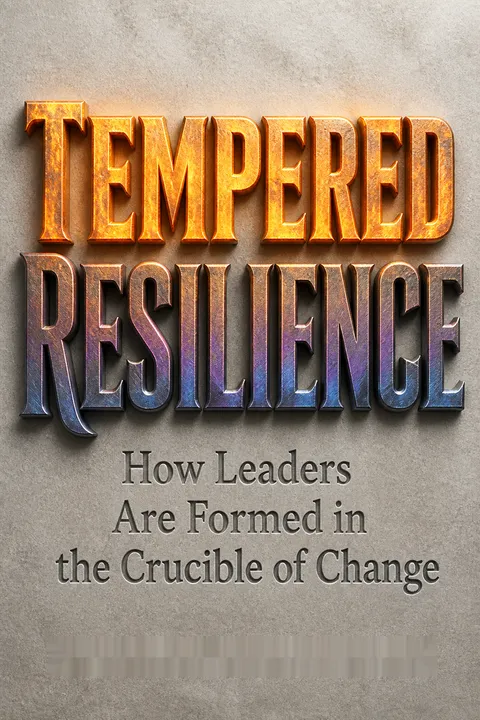


Key Takeaways
Treat resistance as evidence of loss, not proof your plan is wrong.
Change threatens what people value. An adaptive challenge cannot be solved with existing expertise alone. It requires people to learn, change habits, and accept losses, so resistance is a predictable response, not automatic evidence that the proposal is mistaken. In Exodus, the Israelites saw the Red Sea part, yet six weeks later fear made them long for Egypt again.
Expect sabotage in the system. A church member named Jay had helped build the buildings a pastor wanted to replace. Though he voted for the project, he later worked against its fundraising because the presentation had dismissed his contribution. His actions were harmful, but they grew from injury and anxiety, not cartoon villainy. The leader's task is to persist without treating every opponent as an enemy.
What's useful here is the shift from asking whether people are for or against change to asking what they fear losing. That question can reveal practical concerns, identity threats, or accumulated distrust that a polished plan will not resolve. It also guards against a common mistake: labeling all dissent sabotage. Resistance may identify a genuine flaw or a group excluded from the decision. The leader needs curiosity as well as stamina, especially when the people bearing the costs have less power than the people proposing change.
Aim change at a real human need, not your institution's survival.
Start outside the organization. In a meeting with Silicon Valley advisers, Bolsinger presented a seminary initiative as a good strategy for the school. They pointed out that he had not explained how it would help ministry leaders or address a real problem. Their critique exposed a familiar institutional trap: preserving the organization can quietly replace serving the people it exists to serve.
Keep mission larger than the institution. A church may need new attendance, money, or programs, but those are means, not the ultimate purpose. The question is what the institution is being preserved to do for its neighbors. The book's Christian frame locates that purpose in loving God and serving others. A credible change effort connects internal adaptation to needs beyond the walls.
This principle gives strategy an ethical test: who benefits if the change works? Institutional survival is not inherently selfish; stable organizations can serve people well. But survival becomes a circular goal when leaders cannot name whom the organization serves or what need it meets. The external focus also helps distinguish genuine adaptation from fashionable innovation. A new program or technology matters only if it improves the organization's response to a real need, not merely its appearance of relevance.
Ground your identity beyond the approval of the people you lead.
Resistance tests identity. Bolsinger distinguishes failure of nerve, when a leader gives in to group anxiety and retreats to the status quo, from failure of heart, when discouragement hardens into cynicism and emotional abandonment. Both can arise when a leader's worth depends on approval or success. Self-differentiation means remaining fully oneself while staying connected to others, including when they disagree.
Separate calling from results. In the book's Christian account, the leader is loved by God before accomplishing anything. That conviction does not remove responsibility or grief when an initiative fails. It gives the leader a steadier basis from which to face either outcome. Bolsinger recalls losing a consequential church vote and finding comfort in the knowledge that his family and friends remained his, regardless of the result.
The distinction between staying connected and surrendering one's judgment is central to leadership under pressure. It resembles emotional differentiation in family systems: a person can remain in relationship without absorbing every surrounding reaction. The spiritual grounding described here is specific to Christian faith, but the practical question travels more widely: what remains of a leader's identity when authority, praise, or a successful outcome disappears? A caveat matters: conviction must not become immunity from feedback. Stable identity should make accountability easier, not unnecessary.
Learn leadership in the live context where change is resisted.
Practice outlasts the classroom. Leadership is not limited to a job title. Anyone taking responsibility for change that requires other people, or themselves, to change is leading. The book cites a 2014 McKinsey analysis that criticized leadership programs for separating reflection from real work and neglecting context. A concept that sounds clear in a classroom can evaporate amid anxious colleagues, competing demands, and limited resources.
Treat the work as formation. The pastor who led a church building project learned from a donor's opposition that his presentation had insulted someone whose history he had failed to understand. The experience forced him to listen better and communicate more carefully. Leadership challenges can form judgment, but difficulty alone does not guarantee growth. The leader must examine what happened and learn from it.
This is a strong argument for workplace learning, where new skills meet the actual social pressures that determine whether they are used. Reflection turns experience into learning, while practice tests whether the lesson survives reality. The process also suggests that leadership development cannot be reduced to promotion or credentials. Yet exposure to hard situations is not automatically educational. Without coaching, feedback, and time to think, a leader may simply repeat familiar reactions with greater confidence.
Admit what you do not know before confidence outruns competence.
Reflection makes leaders teachable. In an adaptive crisis, the urge to act quickly can be a way to perform certainty rather than understand the problem. Bolsinger argues that a leader may need to pause and admit that no ready-made answer is available. Vulnerability here is not a dramatic confession to everyone. It begins with honest self-examination, often shared first with trusted people.
Review experience deliberately. The prayer of examen, a Jesuit practice of reflecting on the day, asks a person to notice emotionally significant moments and consider whether they drew the person toward or away from faith, hope, and love. Bolsinger adapted this into weekly family dinners where everyone shared a high and a low point. Repeated reflection helped the family speak honestly and notice what was shaping them.
The value of saying that an answer is unknown is not humility for its own sake. It keeps a group from mistaking a leader's composure for actual diagnosis. Reflection can also reveal the emotional motives hidden inside apparently rational decisions, such as the desire to avoid embarrassment or regain control. Still, vulnerability needs boundaries. A leader who discloses indiscriminately may burden colleagues or expose themselves to unfair treatment. The useful question is not simply whether to be open, but where openness can support learning and shared responsibility.
Build a three-stage support system, not a lone-hero routine.
Leaders need different kinds of support. Research discussed in the book distinguishes front-stage relationships with colleagues doing the work, backstage relationships with mentors or coaches who help improve it, and offstage relationships with people who value the leader beyond performance. Allies help carry an initiative, mentors help interpret it, and confidants offer a place to recover a sense of worth beyond the job.
Hardship needs company. Kevass Harding became pastor of a declining church in a changing neighborhood. Within six months, nearly all the members had left, and racism and broken promises nearly drove him from ministry. He credits his wife's support with helping him continue. The lesson is not that one spouse must carry a leader, but that resilience is built through dependable relationships, not isolated willpower.
The three settings correct the myth that a capable leader should be self-sufficient. Each relationship serves a different function, and expecting one colleague or partner to provide all three can strain the bond. The framework also distinguishes support from agreement: allies may help advance the work, while confidants can care about the leader without taking the organization's side. For leaders with less institutional power, however, support networks may be harder to access. Organizations should make mentoring and confidential support practical, not merely praise them in principle.
Train resilience through humility, empathy, diagnosis, and honest grief.
Build capacities through practice. Bolsinger describes four kinds of repeated activity: learning from mistakes to deepen humility, listening to understand people's hopes and fears, observing a situation before rushing to solve it, and lamenting losses honestly instead of hiding them behind forced optimism. These are not simply ideas to admire. They are behaviors to rehearse until they shape how a leader responds under pressure.
Use concrete disciplines. A leader might seek a coach, ask more questions than they answer, step back to examine group patterns, or pray with words that name suffering and ask for help. In the book, a fly-fishing guide's precise corrections initially left Bolsinger discouraged, but practicing those lessons the next day improved his skill. Useful practice can feel awkward because it exposes what still needs work.
The practices span several modes of attention: inward, interpersonal, systemic, and spiritual. Together, they offer a corrective to leadership cultures that reward speed and confident speech above careful perception. Lament is especially important because naming pain can prevent optimism from becoming denial. These practices should not be mistaken for a universal cure. Reflection without action becomes rumination, listening without boundaries becomes paralysis, and lament without support can deepen despair. Their value lies in a cycle that connects honest perception to responsible action.
Keep change moving by regulating reactivity and revising the route.
Make room for shared thinking. At a clergy gathering, Bolsinger's presentation about historical explorers triggered objections from African American pastors who felt the story minimized racial harm. Rather than shut down the protest or defend himself reflexively, he worked to manage his own reactions and keep the group in conversation. This is difficult work: anger, fear, and defensiveness can make a room less able to think together.
Preserve purpose, adjust the path. When Ford faced severe losses, CEO Alan Mulally rallied employees around a renewed version of the company's founding purpose, summarized as One Ford. A compelling frame can reconnect change to an organization's identity. Reorientation then means testing the next step, learning from results, and adjusting strategy without abandoning the mission. Leaders also need relationships with colleagues and superiors, not only followers.
This approach combines emotional regulation with strategic flexibility. The leader does not have to choose between holding a direction and changing tactics; those are different levels of commitment. Reframing can help people see change as continuity with a valued identity, but it can also become a rhetorical trick if leaders ignore whose history the organization celebrates and whose it excludes. The clergy gathering shows why listening to challenge is part of diagnosis. A renewed story is credible only when it makes room for inconvenient truths.
Schedule recovery as part of leadership, not as its reward.
Stress needs recovery. In blacksmithing, repeated heat and hammering can strengthen steel, but excessive stress leaves it brittle. Tempering includes cooling and reheating so the tool becomes both tough and flexible. The book connects this rhythm to athletic training: coach Bill Bowerman taught runners to alternate hard and easy days rather than push at maximum effort constantly.
Practice not leading. For Bolsinger, rest includes Sabbath worship, meals with family, time outdoors, and retreats. He describes arriving in Idaho in his efficient, hurried Airport Tod mode, then gradually relaxing into a slower pace. The point is not to earn rest by finishing every task. Ceasing from work reminds the leader that identity and value do not depend on constant usefulness.
Recovery is not a luxury appended to serious work; it changes the capacity with which work is done. The analogy to training makes the case tangible, and Sabbath adds a challenge to productivity as the chief measure of worth. Rest also needs to be designed around actual conditions. A day off does little if the workload remains structurally impossible or if leaders are punished for disconnecting. Individual rituals matter, but organizations must also make recovery compatible with responsibility.
Measure success by people changed, not one initiative saved.
The institution is not the whole mission. The book reports that many organizational change efforts fail, and argues that an unsuccessful initiative does not automatically mean the leader lacked resilience. Adaptive change requires the people who must change to take responsibility for that work. A leader cannot permanently solve the challenge on their behalf.
Know when the season ends. If people refuse to own the necessary learning and change, a leader may need to leave that effort and serve the mission elsewhere. This is not the same as retreating at the first sign of resistance. It is recognizing that persistence cannot substitute for collective participation. The deeper measure is whether people grow in their ability to learn, face loss, and act with hope beyond one organization or one leader's tenure.
This closing standard resists both heroic overidentification and easy resignation. It relocates success from a leader's control of outcomes to the community's growing capacity to respond. That is a more humane measure, though it is also harder to assess than a completed project or financial target. There is a useful tension between perseverance and exit: leaders need evidence that people are not taking up the work, rather than interpreting every painful disagreement as refusal. Mission remains durable precisely because no single organization owns it.
Analysis
The book's central achievement is to connect three scales that leadership advice often separates: the inner life of the leader, the relational system around that leader, and the organization's capacity to adapt. The blacksmith metaphor makes this integration memorable. Heat and hammering represent the demands of change, the anvil represents relationships that can hold vulnerability, and tempering represents recovery that prevents strength from becoming brittleness. The metaphor is more than decoration because it explains why hardship alone does not produce resilience. Formation requires interpretation, support, practice, and rest. The account also improves on a simplistic celebration of grit. Tenacity matters, but so do identity beyond performance, empathy for those experiencing loss, and the ability to revise tactics. The stories of King, Moses, Harding, and the pastor's conflict with Jay show that resistance can be emotionally costly and morally complex. They make clear that a leader's steadiness is not merely a private virtue. It affects whether a group can stay present to difficult questions without collapsing into appeasement or contempt.
The framework nevertheless requires careful application. Groups may resist because a proposed change is poorly designed, because leaders have ignored people with less power, or because the stated mission does not match institutional behavior. Calling resistance sabotage too quickly can protect leaders from accountability. The book's own account of racial conflict illustrates why observation and listening must precede confident interpretation.
Its Christian account grounds identity and purpose in God's love and mission. Readers outside that tradition can still use the practices, but should recognize that the theological premise is not interchangeable with generic purpose language. Finally, resilience should not become a demand that individuals endure structurally unreasonable work. The book's emphasis on rest, relationships, and the option to leave a change effort helps counter that danger. Its most useful claim is not that leaders must withstand everything, but that they can become more discerning, connected, and adaptable while serving a purpose larger than their own success.
Review Summary
Tempered Resilience receives mostly positive reviews, with readers praising its insights on leadership during change. Many find the blacksmithing metaphor effective in illustrating resilience development. Reviewers appreciate Bolsinger's vulnerability, practical advice, and integration of Christian faith with leadership principles. Some readers note similarities to his previous work, while others consider it essential for pastors and leaders facing challenges. A few criticize the repetitive use of quotes and religious examples, but overall, the book is regarded as timely and valuable for those in leadership positions.
People Also Read










Glossary
Tempered resilience
Flexible strength under pressureA leader's developed capacity to remain committed to a well-discerned mission while adapting to resistance and changed circumstances. The metaphor comes from steel that is made strong without becoming brittle. In the book, this capacity grows through leadership experience, self-reflection, supportive relationships, deliberate practices, and recurring periods of rest.
Adaptive challenge
A problem requiring learningA challenge that cannot be solved by applying existing expertise or a known technical fix. It requires individuals or groups to learn, change behavior, and decide what to preserve or relinquish as circumstances shift. Because the work involves loss and adaptation, people may resist even when the need for change is clear.
Failure of nerve
Retreat into the status quoA leader's loss of courage under pressure from group anxiety. Rather than continue necessary change, the leader accommodates resistance and returns to familiar arrangements, often to preserve approval or calm the group. In the book's biblical metaphor, it resembles turning back toward Egypt rather than continuing through uncertainty.
Failure of heart
Discouraged emotional abandonmentA leader's response to prolonged resistance in which discouragement hardens into cynicism, anger, or emotional disconnection. The leader may psychologically abandon the people and mission, even while remaining in the role. It contrasts with failure of nerve, which gives in to the group's anxiety rather than withdrawing from it.
Self-differentiation
Staying distinct while connectedThe ability to remain clear about one's convictions and goals while staying in relationship with people who disagree. A self-differentiated leader can manage personal reactivity, tolerate displeasing others, and avoid either merging with group anxiety or cutting off from the group. The concept draws on family systems thinking.
Prayer of examen
Reflective review of experienceA Jesuit prayer practice in which a person recalls the day's significant experiences, especially moments that stirred strong feelings, and reflects on whether they fostered or diminished faith, hope, love, and connection. Bolsinger presents it as a disciplined way to notice patterns, practice gratitude, and become more attentive to one's inner life.
Front stage, backstage, and offstage
Three settings for supportA model of the relational settings leaders need. The front stage is where colleagues and allies share the work. The backstage is where mentors, coaches, or supervisors help leaders reflect and improve. The offstage is where friends, family, or confidants relate to the person beyond the demands of leadership performance.
Rule of life
A structure for chosen practicesA set of intentional rhythms, relationships, and practices that supports a person's chosen way of living and serving. In Christian traditions, it is not a list of requirements for earning grace, but a structure that helps people respond to grace consistently. Bolsinger applies the idea to practices that develop resilience for leading change.
FAQ
What's Tempered Resilience about?
- Leadership Formation: Tempered Resilience by Tod Bolsinger focuses on how leaders are shaped through the challenges of change, emphasizing resilience in the face of adversity.
- Blacksmithing Metaphor: The book uses blacksmithing as a metaphor to illustrate how leaders are forged through experiences requiring self-reflection, relational security, and adaptability.
- Crucible of Change: Bolsinger argues that true leadership emerges from navigating crises, which transform leaders into resilient figures capable of guiding others.
Why should I read Tempered Resilience?
- Practical Insights: The book offers practical insights for leaders in various contexts, including churches, nonprofits, and businesses, making it relevant for a wide audience.
- Developing Resilience: It provides a framework for understanding and developing resilience, crucial for effective leadership in today’s rapidly changing environments.
- Real-Life Examples: Bolsinger shares real-life stories and examples, including those of historical figures like Martin Luther King Jr. and Moses, to illustrate resilient leadership principles.
What are the key takeaways of Tempered Resilience?
- Leadership is Formative: Leaders are formed through the act of leading, facing challenges, and learning from them, essential for developing resilience.
- Self-Reflection Importance: Vulnerable self-reflection is critical for leaders to understand their strengths and weaknesses, allowing them to adapt and grow.
- Relational Security Matters: Strong relationships provide the support leaders need during challenging times, emphasizing the cultivation of a network of allies and confidants.
What is the blacksmithing metaphor in Tempered Resilience?
- Forging Leaders: The metaphor illustrates how leaders are shaped through experiences involving heating (self-reflection), holding (relational security), and hammering (stress and challenges).
- Temperament of Steel: Just as steel is tempered to become strong and flexible, leaders must undergo a similar process to withstand leadership pressures.
- Craftsmanship of Leadership: Leadership is a craft requiring ongoing practice, reflection, and the willingness to be shaped by experiences.
How does Tempered Resilience address the concept of adaptive leadership?
- Adaptive Challenges: The book distinguishes between technical problems and adaptive challenges that require new learning and change.
- Learning from Experience: Adaptive leadership involves learning from experiences and changing strategies based on what is learned.
- Resilience in Adaptation: Resilience is key to adaptive leadership, enabling leaders to persist through challenges and maintain focus on their mission.
What does resilience mean in the context of Tempered Resilience?
- Capacity to Adapt: Resilience is the ability to maintain core values and purpose in the face of challenges, involving flexibility and adaptability.
- Not Just Toughness: Resilience is about learning and growing from experiences, including failures and setbacks, essential for effective leadership.
- Formed Through Experience: Resilience is developed through leadership experiences, where leaders face resistance and learn to navigate it effectively.
What are the failures of nerve and heart mentioned in Tempered Resilience?
- Failure of Nerve: This refers to a leader's inability to stand firm in the face of resistance, often leading to a retreat to the status quo.
- Failure of Heart: This describes a leader's emotional withdrawal or cynicism when discouraged, resulting in a disconnect from their mission.
- Consequences of Both Failures: Both failures can undermine a leader's effectiveness and the organization's ability to adapt and thrive.
What practices can help develop resilience according to Tempered Resilience?
- Self-Reflection: Engaging in regular self-reflection helps leaders understand their motivations, strengths, and weaknesses.
- Building Relationships: Cultivating strong, supportive relationships provides the emotional security leaders need during challenging times.
- Embracing Vulnerability: Leaders should embrace vulnerability as a strength, allowing for deeper connections and fostering a culture of trust.
What is the concept of a "Rule of Life" in Tempered Resilience?
- Framework for Spiritual Practices: A "Rule of Life" is a framework that helps leaders establish intentional spiritual practices and commitments.
- Adaptation to Context: Different communities may have different rules based on their specific missions and contexts, allowing for tailored practices.
- Support for Resilience: The Rule of Life supports leaders in developing resilience by providing a consistent structure for spiritual growth.
How does Tempered Resilience address the challenges of leading change?
- Understanding Resistance: The book delves into the nature of resistance that leaders face when implementing change, often stemming from fear and anxiety.
- Emotional Intelligence: Bolsinger highlights the importance of emotional intelligence, suggesting that understanding emotions is crucial for effective change management.
- Practical Strategies: The book provides strategies for leaders to manage reactivity and engage with their teams during times of change.
How can leaders manage their reactivity during times of change according to Tempered Resilience?
- Self-Awareness: Bolsinger stresses the importance of self-awareness in managing reactivity, recognizing emotional triggers and responses.
- Creating a Safe Environment: Leaders should create a safe environment for open dialogue and feedback, mitigating defensiveness.
- Focus on the Collective Mission: Leaders are encouraged to keep the focus on the collective mission rather than personal grievances.
What are the best quotes from Tempered Resilience and what do they mean?
- “The question I find myself asking is not, ‘Can I learn the skills I need to lead change?’ but rather ‘Can I survive it?’”: This quote emphasizes the emotional toll of leadership during change, highlighting the need for resilience.
- “To lead, especially in the face of resistance, requires that we develop resilience.”: This highlights the central theme that resilience is essential for effective leadership in challenging environments.
- “Leadership is disappointing your own people at a rate they can absorb.”: This reflects the reality that leaders must make tough decisions that may not please everyone, but must maintain trust and support.
About the Author

Download PDF
Download EPUB
.epub digital book format is ideal for reading ebooks on phones, tablets, and e-readers.








