

Plot Summary
The Assassin Names Himself
A lanky stranger reaches the Confessors’ Palace without raising an alarm, then tells Kahlan Amnell, Mother Confessor and Richard Rahl’s betrothed, that he has come to kill them. His apparent helplessness is a disguise: he commands magic and speaks with Emperor Jagang’s certainty. Kahlan had hoped to question him before using her power, while Cara, Richard’s Mord-Sith guard, wanted to kill him immediately.
When Marlin attacks Cara with magic, she takes control of his gift and subdues him. Her victory does not settle Kahlan’s unease. Marlin was ordered to announce himself, an absurd tactic for an assassin, and his arrival feels less like the attack itself than the opening move in a larger plan.
The scene places restraint and readiness in direct conflict. Kahlan’s caution protects the possibility of learning more, while Cara’s instinct treats hesitation as a threat to Richard’s life. Marlin’s apparent weakness makes both women misread him, but the real danger is not simply his magic: it is the intelligence behind his actions. The episode also establishes the Mord-Sith’s unusual power. Cara can turn an enemy’s magic against him only after he attacks her with it, so her apparent dominance depends on provoking precisely the danger she fears.
Nadine Claims Richard
In Petitioners’ Hall, Kahlan notices Nadine Brighton, a young woman from Westland whose long hair suggests high rank. Nadine has come looking for Richard Cypher, the name he used before learning he was Darken Rahl’s son. She believes they are destined to marry, a claim passed to her by the witch woman Shota.
When Richard arrives in his new war wizard’s clothes, Nadine treats him as the woods guide she remembers and assumes he will return home with her. Richard rejects the engagement and names Kahlan as the woman he loves. Nadine’s humiliation is plain, but Kahlan learns that Shota sent her here, so dismissing her could mean overlooking a danger aimed at Richard.
Nadine’s arrival makes Richard’s former life physically present at the moment he is trying to inhabit a new one. She remembers him through ordinary village customs, while the palace sees a ruler and war wizard. Kahlan’s response is complicated by empathy: she understands the pain of searching for a lost beloved, even as Nadine’s claim threatens her own future. The scene also shifts suspicion away from the apparent rival. Nadine may be confused and self-interested, but Shota’s involvement makes her journey part of a larger design.
Jagang Wears Marlin
Kahlan questions Marlin in the palace pit, where Cara’s control over his magic is supposed to keep him helpless. Instead, Marlin wakes with Jagang speaking through his body. The emperor reveals that he has been listening to Kahlan and Cara, learning what Richard can and cannot do, and that Sister Amelia has returned with something stolen from elsewhere.
He describes a bound-fork prophecy that will destroy Richard whichever choice he makes. When Kahlan tries to seize Marlin, Jagang attacks Cara, then escapes through the guards, leaving dead and wounded soldiers behind. Kahlan kills Marlin at the drainage tunnels, but Jagang’s mind escapes with him. The prophecy has been invoked, and the threat is no longer hypothetical.
The pit turns observation into vulnerability: while Kahlan believes she is questioning a prisoner, Jagang is gathering intelligence through him. His escape also exposes the limits of Cara’s control and Kahlan’s authority. They can defeat the host without defeating the invader. The bound-fork prophecy is psychologically effective because it converts every attempt at agency into a possible confirmation of doom. Jagang does not need to explain how the trap works; he needs only to make Richard’s future choices feel contaminated in advance.
A Healer Named Drefan
Marlin’s attack leaves Cara convulsing in the pit, unable to move or speak. Nadine tries to help with herbs, but a D’Haran healer, Drefan Rahl, identifies a dangerous disturbance in Cara’s bodily energies and begins restoring them through precise pressure and other trained techniques. Cara recovers and recognizes Drefan as Richard’s half brother, another son of Darken Rahl.
Drefan explains that his mother left him among healers to protect him from his father’s contempt for children without the gift. Richard, who lost his family to betrayal and violence, welcomes him as a brother. Drefan’s skill earns the trust of Kahlan and the palace, though his arrival alongside the other strange visitors leaves Richard wary.
Drefan offers Richard a possible repair to the damage left by Darken Rahl: a brother who serves life rather than conquest. His healing is not presented as effortless magic but as disciplined attention to a body in crisis. That distinction matters to Richard, who is trying to understand whether power can be used without turning people into instruments. Kahlan’s unease keeps the welcome from becoming uncritical. The family resemblance promises connection, but the timing and Drefan’s opaque confidence leave a question attached to that promise.
The Plague Finds Children
Richard and Kahlan discover that children who played Ja’La in front of them are dying from a plague that leaves victims feverish, swollen, or blackened at the extremities. Yonick leads them to his brother Kip, who dies as Richard comforts him. The boy briefly speaks after death, warning that the winds are hunting Richard.
The group then finds more Ja’La players sick, including a child marked with tokens that Drefan says foretell death. Witnesses recall a man and a brown-haired woman showing the children a black box filled with patterned white sand and colored light. Richard recognizes the description as dangerous magic. Jagang’s visit to the game, once an unsettling detail, now looks like the beginning of a deliberate attack.
The plague becomes personal through the children, not through a count of casualties. Richard has no cure to offer Kip, and his promise of recovery cannot outlast the boy’s body. The moment exposes the gap between authority and efficacy: being Lord Rahl does not give him power over every form of suffering. The black box also transforms an innocent game into a site of contamination. Jagang’s objection to inclusive play gives the outbreak a political meaning: the children are targets because Richard made the game open to all.
Aydindril Draws Its Ring
As the plague spreads, Richard and Kahlan divide the army into smaller units, send them to positions around Aydindril, and restrict travel so infected people cannot carry the sickness farther. Richard insists on warning the population rather than hiding the danger, even though he has no cure.
Kahlan manages surrender talks with the visiting lands: Togressa, Pendisan Reach, and Grennidon join D’Hara, while Jara asks for more time. Mardovia rejects both sides and trusts its supposedly impregnable city of Renwold. Kahlan warns its ambassador that neutrality will not protect his people from the Imperial Order, but he leaves unconvinced. The decision leaves Renwold exposed and gives the war a human cost beyond Aydindril.
The political negotiations mirror the plague response: both demand that leaders act before certainty is available. Richard’s insistence on truth costs him the comfort of reassuring his people, while Kahlan uses authority to build a coalition quickly. Mardovia’s refusal is not mere arrogance; its leaders trust a history of surviving smaller threats. Their error is one of scale. The scene shows how local memory can become a dangerous guide when the enemy has changed, and how neutrality is not a shield when both sides define the conflict as existential.
Shota Names Their Future
Worried that Shota’s warning about the winds and her prayer for Richard signal more than matchmaking, Kahlan secretly reaches Agaden Reach through the sliph. She arrives prepared to defend herself, but Shota denies trying to harm her and explains that her visions feel like memories of future events.
Shota believes Richard will marry Nadine and Kahlan will marry another man, though she cannot see who the other husband is. She also fears the child Richard and Kahlan might have together.
Kahlan challenges Shota’s certainty, then leaves shaken by the possibility that the prophecy, the plague, and their marriages are connected. She returns by the sliph with no simple answer, only a warning that another message from the winds will decide their path.
Kahlan’s visit begins as an act of anger and becomes a test of whether she can separate messenger from cause. Shota’s account does not make her trustworthy, but it complicates the easy role Kahlan had assigned her as a jealous antagonist. The future is presented as something perceived rather than authored, leaving Kahlan caught between skepticism and dread. Her secret journey also shows how love can produce both courage and concealment: she goes to protect Richard, while hiding the danger from him in the name of protecting him.
The Red Moon's Pursuers
Far from Aydindril, First Wizard Zedd and former Prelate Annalina track the prophet Nathan, whom Ann had kept confined for centuries. Their trail leads to a decoy at an inn, where Sister Roslyn attacks after Zedd’s magical trap ignites and kills her along with bystanders. Nathan escapes, leaving a message that confirms Jagang has invoked a bound-fork prophecy against Richard and directs Zedd and Ann to the Jocopo Treasure.
At the same time, Prelate Verna hears that the three red moons have ended and chooses to rescue her imprisoned friends Janet and Amelia. Warren, newly awakened to prophecy and suffering dangerous headaches, insists that he must go with her. Their separate searches converge on the same stolen magic.
This strand broadens the crisis without making prophecy a reliable map. Nathan knows enough to warn his allies, but not enough to give them a complete solution; Zedd and Ann must act on partial information. The false trail also exacts a cost from people who are not central to the struggle, demonstrating how magical countermeasures can harm bystanders. Verna’s decision is driven by loyalty, while Warren’s is constrained by prophecy and illness. Their partnership reflects the book’s recurring problem: duty can demand action before anyone understands its full consequences.
Renwold's Last Scribe
In Renwold, the Imperial Order breaches the city’s celebrated defenses and slaughters residents, enslaving survivors. Clarissa, an unmarried scribe, is marked with a silver ring and ordered to guide soldiers to the abbey’s books. Nathan Rahl, a prophet traveling under a false identity, has her lead them there, then saves her by making the soldiers believe he is an influential agent of Jagang.
He offers Clarissa a choice between submission and helping him prevent further deaths. She chooses to leave with him. Nathan hides them in plain sight, dresses her as a favored companion, and treats her with a respect she has rarely received. Their bond grows as he prepares her to help recover a dangerous book from Jagang’s collection.
Clarissa’s change begins not with a revelation of hidden power but with a choice made under terror. Nathan cannot save Renwold, and he does not pretend he can; instead, he asks her to risk herself to prevent future losses. The gold-ring disguise later gives her a visible status she never possessed, but his respect matters more than the costume. Their relationship challenges the assumption that protection must be paternalistic: Nathan gives Clarissa information and agency, while she earns a role in his plans through courage and attention.
The Winds' First Warning
After the dying boy’s warning, Kahlan uses the sliph to reach Shota, then continues to the Mud People, whose ancestor spirits have summoned her through a bone knife. The spirit of Chandalen’s grandfather reveals that the Temple of the Winds exists partly in the world of life and partly in the world of the dead.
It was entrusted with powerful magic, and Jagang’s theft has released a plague that is already spreading beyond Aydindril. The spirit shows Kahlan a vision of cities and villages filled with corpses, then tells her the winds will provide a way into the temple. Kahlan accepts that the price may be severe. She returns carrying a warning that the plague cannot be contained by walls or armies.
The spirit’s vision changes the scale of the story from a local epidemic to a world-threatening catastrophe. It also confirms that the Temple is not simply a lost building but a structure straddling two worlds, which explains why ordinary maps and searches fail. Kahlan’s promise to follow the path, despite not knowing its price, is an act of responsibility rather than confidence. The scene reframes her from a leader who can command people to one who must submit to information she cannot control.
A Trial Buried in Stone
Richard and Berdine search the Wizard’s Keep for records of the Temple of the Winds. Their work leads Richard into the First Wizard’s sealed enclave, where he finds the long-hidden trial record in High D’Haran. It explains that a team of nearly one hundred wizards sent the Temple away after objecting to the use of magic to transform people into weapons.
The authorities executed the team, and the prosecutor Lothain entered the Temple to reverse their work, only worsening the damage. The book also records how the first Confessor, Magda Searus, was created to force Lothain to confess. Richard learns that the crisis began in a history of competing claims over who may wield magic and what can be sacrificed for victory.
The archive turns the immediate conflict into an inheritance of institutional wrongdoing. The Temple’s removal was not a clean act of preservation: the wizards who opposed weaponizing people were executed, while the authority that created the Confessors used coercion to expose the truth. Richard’s discovery complicates any simple division between responsible and corrupt magic. His own power comes with a history of choices made by people who believed their emergency justified extraordinary harm.
The Dead Multiply
The plague overwhelms Aydindril despite the army’s precautions. Richard visits families in the poor quarters, watches children die, and orders dead-carts as the numbers climb into the hundreds. Raina, one of his Mord-Sith protectors, weakens and dies while feeding seeds to Reggie, a chipmunk with a damaged tail. Her last request brings Richard back to the small kindnesses he tried to restore in the Mord-Sith.
Meanwhile, prostitutes are murdered and a crossbow assassin targets Nadine. Richard catches Tristan Bashkar attempting to kill Kahlan with a decoy bed, then sends Tristan’s head to Jara after he confesses he hoped to protect his people by killing her. The true killer remains close to the palace, hidden behind a healer’s reputation.
The epidemic and the murder plot produce different kinds of helplessness. Richard can command armies and detect an arrow, but he cannot save Raina or the children from the plague. The chipmunk scene makes her death intimate, not merely tactical: her gentleness has become possible because Richard gave the Mord-Sith room to live beyond their training. Tristan’s confession exposes fear as a rationale for atrocity, while the unidentified killer’s continued presence warns that public emergencies can conceal private violence.
The Wind Demands Two Weddings
The Andolian Legate Rishi arrives carrying the final message from the winds. To enter the Temple, Richard must marry Nadine, and Kahlan must marry Drefan; the unions must be genuine, faithful, and freely accepted. The instruction makes Shota’s vision concrete and turns the prophecy into an immediate choice.
Richard and Kahlan agree because the plague is killing thousands and no other route has appeared. They ride to Mount Kymermosst, where the ruins stand at the edge of the vanished mountain. Before the ceremony, each speaks privately with the beloved they are about to lose. Richard and Kahlan then wed the partners named by the winds, exchanging vows while keeping their true love fixed on one another.
The message converts prophecy from an abstract threat into a moral demand. Richard and Kahlan are not asked merely to endure heartbreak; they must decide whether their private bond can be sacrificed for people who will never know what it cost. The requirement of free consent makes the choice ethically unstable, since refusal means allowing mass death. Their agreement is therefore neither uncomplicated obedience nor romantic surrender. It is a decision under coercive conditions, made because they cannot accept the alternative.
The Temple Takes Its Price
Once the marriages are consummated, the Temple of the Winds appears during a storm over the cliff. Richard enters it alone, carrying the knowledge he needs to interrupt the stolen magic. The winds require him to give up what he learns before he can return, and Darken Rahl’s spirit adds a harsher price: Richard must carry the plague’s magic in himself.
The ordeal leaves him sick and near death, but the plague’s source is contained. Kahlan remains behind, believing she has lost Richard for good. When he returns, the wound between them is still raw: he believes she betrayed him, while she believes she has destroyed his trust. The cure has been won, but its emotional cost has not yet been faced.
The Temple makes knowledge costly rather than liberating by default. Richard can gain the understanding needed to stop the plague only by surrendering it, leaving him unable to return as the fully empowered wizard he briefly became. Darken Rahl’s demand turns sacrifice into a personal ordeal, while the storm’s appearance joins cosmic scale to bodily danger. The result is deliberately incomplete: saving the world does not automatically repair the intimate damage between Richard and Kahlan.
The Brother Behind the Knife
With Richard absent, Drefan claims the authority of Lord Rahl and presses Kahlan to accept him as a husband in every sense. The healer who tended the sick is revealed as the killer who mutilated women, including prostitutes he had supposedly come to help. He captures Cara and torments her with rats, exploiting the terror left by her Mord-Sith training.
Kahlan returns from the Old World with the black book Clarissa retrieved from Jagang’s stronghold, but Drefan takes it and threatens her. Richard arrives weakened by the plague, yet kills Drefan before he can murder Kahlan. He then turns to the stolen book, the remaining obstacle between the world and the epidemic.
Drefan’s double identity exposes the danger of judging people by a socially useful role. His work as a healer is real, but it does not cancel the violence he commits in private. His claim to rule also exploits the D’Harans’ need for a Lord Rahl when Richard is gone. Cara’s torture recalls the system that shaped her, while Kahlan’s refusal to submit shows that losing her Confessor power has not erased her agency. Richard’s return is physically diminished but morally decisive.
The Book's Destruction
Kahlan and Richard use the instructions recovered from the Temple and the book Clarissa carried back. Richard supplies the white sorcerer’s sand; Kahlan adds a grain of black sand and speaks the three chimes Nathan taught her. The opposing sands cancel the book’s magic, and the plague’s power collapses.
Richard, who had absorbed the danger to return, begins to recover after Kahlan heals him, while the death toll stops rising. The solution depends on knowledge passed through many hands: Nathan, Clarissa, the ancestor spirit, and the sliph all contribute pieces. It also takes Richard’s trust in Kahlan for the final act to succeed, after his first reaction to her apparent betrayal nearly left them divided.
The book’s destruction is a rare instance in which a weapon is defeated by precise knowledge rather than force. The white and black sands are not interchangeable symbols: their interaction cancels a specific magical mechanism. The solution also makes the story’s network visible. No single character possesses the whole answer; survival depends on information crossing cultures, generations, and loyalties. Richard’s physical recovery and emotional reconciliation are linked, but not identical. The spell can be ended in an instant; trust must be chosen again.
The Wedding They Choose
After the crisis, Richard and Kahlan travel back to the Mud People and take the vows they had postponed. Zedd, Ann, Cara, Berdine, and the village elders witness their marriage, while the community celebrates with food, music, and dancing. Shota also appears, congratulates them, and gives Kahlan a charm meant to prevent a child, warning that she will act if they ignore her concern.
Kahlan accepts the gift without surrendering her judgment, and she and Richard choose to cherish their marriage before returning to the dangers still ahead. Their wedding fulfills the opening hope of their union, but it does not erase the cost of the prophecies or the threat posed by Jagang.
The ending restores the couple’s chosen bond without pretending that choice can dissolve every danger. Their marriage is public, communal, and grounded in the people they have protected, rather than imposed by political spectacle. Shota’s warning keeps the future unsettled, but the charm becomes an object they can negotiate rather than a verdict they must obey. Richard and Kahlan return to love after betrayal and fear, not because they have escaped consequence, but because they decide that consequence will not dictate the whole meaning of their lives.
Analysis
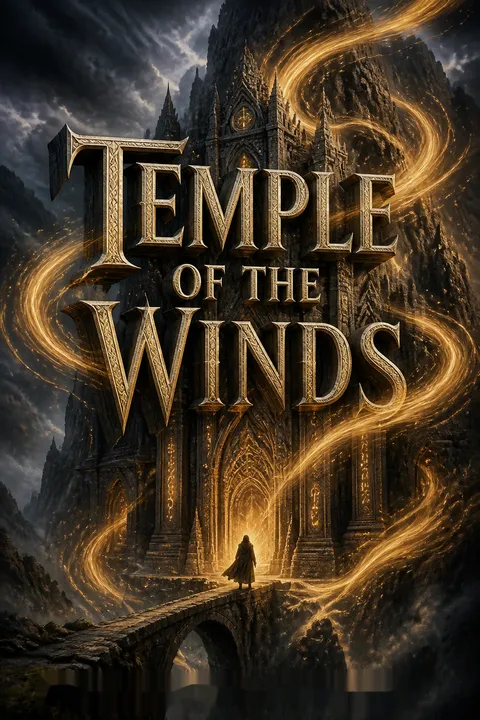
Temple of the Winds makes private love and public duty collide in unusually literal terms. Richard and Kahlan are asked to exchange the future they have chosen for a chance to stop a plague killing children and families. Their consent is real, but constrained by the scale of the threatened loss, so the story refuses to make sacrifice feel clean. The marriages become a test of whether love means possession or whether it can survive a period in which the beloved is unavailable.
The novel also treats knowledge as an ethical burden. Jagang uses prophecy and magic while claiming to oppose magic; the ancient wizards suppress dangerous power by executing those who challenged their methods; Confessor and Mord-Sith traditions preserve order through violations of individual will. Richard’s search for the Temple therefore uncovers not a simple cure but a chain of choices made by people convinced that their emergency justified control.
The plague exposes the limits of authority. Richard can command an army, but cannot cure a child by willing it. Drefan and Nadine can comfort the sick, yet cannot promise survival. The leaders’ most consequential work often consists of telling the truth, organizing help, and accepting the limits of their knowledge. Against this, the ending gives real force to small acts of trust: Kahlan risks everything to retrieve the book, Richard returns to seek forgiveness, and the couple chooses marriage after prophecy has tried to define their future for them. Their union is not an escape from duty. It is a life they reclaim within it.
Review Summary
Temple of the Winds receives mixed reviews, with some praising its engaging plot and character development, while others criticize its excessive violence, sexual content, and repetitive storylines. Many readers find the relationship between Richard and Kahlan frustrating, and some feel the writing quality has declined from earlier books. The novel's darker themes and controversial scenes polarize readers. Despite criticisms, fans of the series appreciate the expanding world-building and magical elements, though some struggle with the book's pacing and character decisions.
People Also Read
Characters
Richard Rahl
The burdened war wizardRichard is the Master of D’Hara, the Seeker of Truth, and a rare war wizard with both sides of magic. Raised as a woods guide, he distrusts power used for its own sake and measures leadership by whether it protects ordinary people. His love for Kahlan gives him a private life he never expected to have, while his new command forces him to weigh that happiness against the lives of thousands. He is decisive in danger but not invulnerable to exhaustion, grief, or jealousy. Richard’s central struggle is to use immense power without becoming the kind of ruler who treats people as tools.
Kahlan Amnell
The last Mother ConfessorKahlan is the Mother Confessor, a political leader whose touch can overwhelm another person’s will. She is disciplined, perceptive, and accustomed to placing duty before private desire, yet her love for Richard has given her a life beyond the role she inherited. Her compassion does not make her hesitant when people are in danger; she can act decisively and accept painful consequences. Kahlan’s greatest vulnerability is not weakness but responsibility: she repeatedly risks herself to shield Richard and the people who depend on him. Her judgment is strongest when she can hold fear, tenderness, and political necessity in view at once.
Cara
Richard’s red-leather guardianCara is a Mord-Sith, trained from childhood to protect a Lord Rahl through violence and fear. Her red leather and Agiel mark a life built around pain, but Richard’s freedom and trust have begun to make room for humor, choice, and attachment. She is fiercely protective of Richard and Kahlan, sometimes to the point of disregarding their orders. Beneath her cool discipline is a survivor who understands how easily hesitation can become fatal. Cara’s loyalty is not simple obedience: she must learn how to protect the people she loves without repeating the cruelty that shaped her.
Nadine Brighton
The healer from HartlandNadine grew up in Hartland, where she learned herbs from her father and knew Richard before he became Lord Rahl. She wants to be useful, to be valued, and to build a life in which her healing matters. Her feelings for Richard are genuine, but her understanding of love has been shaped by insecurity and a mistaken belief that desire can be secured through strategy. Shota’s intervention brings Nadine into a world she barely understands. She is not simply a rival to Kahlan: her practical knowledge and instinct to help make her valuable during the plague, even as her hopes complicate the relationships around her.
Drefan Rahl
The healer brotherDrefan is Richard’s half brother and the High Priest of the Raug’Moss, a community of healers. He is disciplined, knowledgeable, and accustomed to carrying responsibility for people whose suffering he cannot always relieve. His childhood was shaped by fear of Darken Rahl, and he was raised far from the court that might have killed him. Drefan’s calm confidence contrasts with Richard’s more openly compassionate manner. He believes that healing requires clear limits and difficult decisions, and he approaches the world through systems of bodily balance, duty, and service.
Zeddicus Zu’l Zorander
Richard’s wizard grandfatherZedd is the First Wizard and Richard’s grandfather, though for much of Richard’s life he was simply his eccentric, beloved mentor. His immense experience does not make him infallible; he can be impulsive, suspicious, and exasperating, especially when prophecy or danger is involved. His humor masks a deep sense of responsibility for the people he has taught and protected. Zedd represents a living bridge between the old magical order and Richard’s uncertain future. He is willing to act under imperfect conditions, but his confidence often brings him into trouble before his wisdom can rescue him.
Annalina Aldurren
The former PrelateAnnalina, usually called Ann, is an ancient sorceress and former Prelate of the Sisters of the Light. She understands the danger of prophecy and the cost of allowing gifted people to act without guidance. Her long history with Nathan leaves her torn between affection and fear of what he may do when free. Ann is practical, authoritative, and willing to make severe choices when she believes lives are at stake. Her relationship with Zedd shifts from coercive alliance toward genuine cooperation, revealing that even an experienced leader can need help relinquishing control.
Verna
The reluctant PrelateVerna is a Sister of the Light who becomes Prelate while Ann is away. She combines institutional discipline with personal loyalty, especially toward her longtime friends Janet and Amelia. When Warren’s new prophetic gift threatens his life, Verna must balance her mission with her love for him. She is not fearless, but she can act while afraid and revise her plans when new information arrives. Her decisions show the strain placed on a leader who must protect individuals without losing sight of a larger war.
Warren
The novice prophetWarren is a young wizard whose gift for prophecy has only recently emerged. Unlike a conventional scholar, he experiences visions whose meaning can be dangerous even to him. The gift brings severe headaches because he has not learned to control it, making his love for Verna inseparable from fear for his survival. Warren is thoughtful and gentle, but prophecy can leave him frightened and physically helpless. His emerging abilities offer vital information while also demonstrating that knowledge without training can become a threat.
Nathan Rahl
The escaped prophetNathan is an ancient prophet and a Rahl, long confined at the Palace of the Prophets. His confidence, wit, and theatrical manners conceal a mind shaped by centuries of isolation and prophecy. He can be generous and tender, especially toward Clarissa, yet he is also capable of dazzling risk and manipulation. Nathan thinks in long spans of time and often treats ordinary expectations as obstacles to be redirected. His freedom gives him the chance to act on a warning, but his methods leave others uncertain whether they are being protected, recruited, or maneuvered.
Clarissa
The scribe who chooses actionClarissa is a literate woman from Renwold who has survived by accepting a narrow place in a society that undervalues her. The invasion strips away the fragile security she had built, while Nathan offers her a chance to help prevent further suffering. She is frightened, observant, and capable of courage once she has a purpose she believes in. Her growing confidence does not come from becoming someone else, but from recognizing that her reading, judgment, and choices have real value. Clarissa’s tenderness toward Nathan coexists with her commitment to the dangerous work he asks of her.
Emperor Jagang
The dream-walking emperorJagang rules the Imperial Order and can enter the minds of others through his gift as a dream walker. He pursues a world without magic while using magical means to defeat his enemies, a contradiction he treats as temporary necessity. Jagang is patient, strategic, and willing to spend other people’s lives without hesitation. He understands that fear and ideology can be as useful as armies. His antagonism toward Richard is personal, but his larger goal is political domination, making him dangerous even when he is not physically present.
Shota
The witch woman of Agaden ReachShota is a powerful witch woman whose visions let her perceive possible future events as vividly as memories. She is proud, guarded, and accustomed to being blamed for messages others would rather not hear. Her relationship with Richard and Kahlan is marked by suspicion, but not reducible to malice: she believes that knowledge of danger can be a form of care. Shota resists being judged by ordinary standards while still expecting others to weigh her words carefully. Her insight can guide the protagonists, but it cannot provide certainty or relieve them of choice.
Berdine
The Mord-Sith scholarBerdine is a Mord-Sith whose devotion to Richard is matched by unusual scholarly ability. She helps him work through the ancient High D’Haran texts that contain clues about the Temple of the Winds. Her dry humor and closeness to Raina reveal a private tenderness that the Mord-Sith training tried to suppress. Berdine respects strength but is not impressed by authority alone. She is often the person who converts a vague lead into usable knowledge, while remaining a fierce guard when danger becomes immediate.
Raina
The playful Mord-SithRaina is one of Richard’s Mord-Sith protectors, bonded to him by loyalty and gratitude for the freedom he has given her. Her teasing manner and affection for Berdine show how she tries to reclaim ordinary human pleasures after a childhood of brutality. She treats protection as an active duty, not a ceremonial position, and is willing to defy instructions when she thinks Richard is at risk. Raina’s attachment to small, gentle experiences gives her a life beyond the violence she was trained to perform.
Chandalen
The Mud People protectorChandalen is a skilled hunter and protector of the Mud People, trained to defend his community without abandoning its traditions. He begins wary of Richard and Kahlan, but comes to recognize their loyalty through action. His knowledge of the grasslands, local dangers, and ancestral customs makes him an essential guide. Chandalen is direct, proud, and deeply bound to his people. His respect is earned rather than given automatically, and once earned, it carries the weight of a warrior’s trust.
Legate Rishi
The Andolian messengerLegate Rishi leads the Andolians, a magical people whose curiosity about objects and messages often sets them apart from human customs. He arrives in Aydindril bearing a message that changes Richard and Kahlan’s choices. His ceremonial authority is real, but his people’s peculiar customs can make his behavior difficult to interpret. Rishi is not a conventional diplomat; he serves as a link between the protagonists and the forces surrounding the Temple of the Winds.
Sister Amelia
The Order’s captured sorceressAmelia is a Sister of the Light who becomes entangled in Jagang’s service and his plans involving stolen magic. Her history with Verna and Janet makes her more than an enemy operative: she belongs to a circle of women whose old friendships persist beneath political and spiritual divisions. Amelia is capable, secretive, and vulnerable to the coercive power Jagang holds over gifted people. Her choices matter because they connect the temple’s ancient protections to the present plague.
Tristan Bashkar
The wavering Jarian envoyTristan is a royal envoy from Jara, trained in negotiation, warfare, and the careful use of charm. He is ambitious and politically alert, but his confidence can shade into entitlement. The red moon complicates his instructions to surrender, giving him grounds to delay while he weighs the safety of his people. Kahlan knows his history with the old Midlands council and watches him carefully. He represents the fragile balance between personal judgment and the demands of a nation at war.
Denna
Richard’s former captorDenna was a Mord-Sith who captured and tortured Richard, yet their history becomes more complicated through forgiveness and later connection. She embodies the difference between a person and the role imposed upon her: she was shaped by an institution that trained women to inflict pain, but she also possessed capacities for love and sacrifice. Denna’s presence in Richard’s life is tied to memory, guilt, and the possibility that understanding an enemy’s humanity can alter what follows. She remains a difficult figure, not a simple symbol of either cruelty or redemption.
Plot Devices
The Sword of Truth
The Seeker’s moral weaponRichard’s sword is both a practical weapon and a magical instrument that responds to the wielder’s convictions. Its power can make him dangerously certain, so judgment matters as much as strength. The blade represents Richard’s office as Seeker, but it does not solve problems beyond its reach: it cannot simply cut a plague or substitute for the knowledge he lacks. Other people also recognize its authority, which makes it a political symbol as well as a weapon. In this story, its absence during the Temple journey forces Richard to rely on understanding, responsibility, and the limits of force.
The Temple of the Winds
A sealed storehouse of magicThe Temple exists partly in the world of life and partly in the world of the dead. Ancient wizards sent it away to keep dangerous magic from being misused, but they left a difficult route back in case the need became great enough. Jagang’s agents violate its protections and take a magical book that starts the plague. The Temple then sends warnings through the red moon, the dying, and people able to perceive its messages. Reaching it requires more than finding its physical location: its protections impose a price on those seeking entry and on the knowledge they carry away.
The Bound-Fork Prophecy
A trap disguised as choiceJagang invokes a prophecy that appears to offer Richard two alternatives, both fatal. Its language predicts a firestorm, a remedy sought through the winds, and betrayal by the woman in white. The prophecy drives Richard and Kahlan to scrutinize every choice and makes their love feel like a possible weapon against one another. Shota and the ancestral spirit confirm that the warning is connected to real events, but they also show that the wording alone cannot explain the path. The prophecy operates as pressure, not a complete map; the characters must act without knowing its full terms.
The Sliph
A living road between worldsThe sliph is a magical being capable of carrying travelers over immense distances. To travel, a person must breathe her in and later breathe her out, an experience that combines transport with a surrender of ordinary bodily certainty. The sliph was created from a woman and bound to serve as a passage, though she retains a distinct personality and insists on protecting the privacy of those she carries. Richard and Kahlan use her to reach remote places quickly, while Jagang’s agents also exploit her routes. Her existence makes the ancient war’s technology tangible and creates both escape and security risks.
Confessor and Mord-Sith Power
Control, pain, and protectionA Confessor’s touch overwhelms the will of the person she touches, while the Mord-Sith’s Agiel inflicts pain and can seize an attacker’s magic if that person uses magic against her. Both powers were developed within systems meant to protect political order, yet both can violate the people they affect. Kahlan and Cara carry these abilities differently: Kahlan uses hers reluctantly to protect others, while Cara’s training taught her to treat pain as discipline and defense. The story repeatedly asks whether a power’s purpose can excuse the harm it causes, especially when its wielder is under pressure to save lives.
FAQ
Synopsis & Basic Details
What is Temple of the Winds about?
- Plague Threatens the World: Emperor Jagang, a powerful dream walker, unleashes a magical plague across the New World, causing widespread death and suffering, particularly among children.
- Quest for Ancient Magic: To stop the plague, Richard Rahl, the Seeker of Truth and a war wizard, must find the legendary Temple of the Winds, a repository of dangerous magic hidden in the underworld for three thousand years.
- Sacrifice and Prophecy: Richard and Kahlan Amnell, the Mother Confessor, face devastating personal sacrifices dictated by prophecy and the Temple itself, testing their love and challenging their understanding of duty and fate.
Why should I read Temple of the Winds?
- Deepens Core Relationships: The novel intensely explores the bond between Richard and Kahlan, pushing their love and commitment to the absolute breaking point through external threats and impossible choices.
- Expands World Lore: It introduces significant elements of the world's history, including the ancient war, the creation of the Temple of the Winds, the nature of prophecy, and the origins of magic and magical beings like the sliph and Confessors.
- Explores Complex Moral Dilemmas: The story forces characters to confront agonizing decisions between personal happiness and the greater good, duty and desire, and the nature of forgiveness and betrayal, offering profound thematic depth.
What is the background of Temple of the Winds?
- Post-Darken Rahl Conflict: The story follows the defeat of Darken Rahl and Richard's reluctant assumption of leadership over D'Hara and the newly united Midlands, setting the stage for the larger conflict with the Imperial Order from the Old World.
- Ancient War Echoes: It delves into the history of the Great War three thousand years prior, revealing how powerful wizards created magical weapons and entities, and ultimately sealed away dangerous magic in the Temple of the Winds to prevent its misuse.
- Imperial Order Threat: The primary external conflict is the looming invasion by Emperor Jagang's Imperial Order, which seeks to conquer the New World and eradicate magic, using dream walking and captured magic users as tools of war.
What are the most memorable quotes in Temple of the Winds?
- "Confessors don't have love, Kahlan. They have duty.": This stark statement, echoed by Kahlan's mother's spirit, encapsulates the central conflict between Kahlan's personal desires and her inherent nature and responsibilities as a Confessor, a theme that drives much of her internal struggle.
- "On the red moon will come the firestorm... Lightning will find him on that path, for the one in white, his true beloved, will betray him in her blood.": This chilling prophecy, inscribed by Jagang, foreshadows the devastating events to come, directly linking the plague ('firestorm') to Richard's fate and a perceived betrayal by Kahlan, creating immense narrative tension.
- "I am the weapon.": Richard's declaration to Drefan, made when facing him without the Sword of Truth, signifies his understanding that his true power lies not in the tool he wields, but in his own will, conviction, and inherent nature as the Seeker and a war wizard.
What writing style, narrative choices, and literary techniques does Terry Goodkind use?
- Third-Person Limited Perspective: The narrative primarily follows Richard and Kahlan, often shifting between their viewpoints, allowing readers access to their internal thoughts, fears, and motivations, intensifying the emotional impact of their struggles.
- Detailed Exposition and Philosophical Exploration: Goodkind employs extensive dialogue and internal monologue to explore the philosophical underpinnings of his world, discussing concepts like duty, freedom, morality, and the nature of good and evil, often through character debates and reflections.
- Building Suspense through Mystery and Foreshadowing: The author uses cryptic prophecies, enigmatic characters (Shota, the sliph, Drefan, the Andolians), and unfolding mysteries (the plague's origin, the Temple's nature) to build suspense, often dropping subtle clues and foreshadowing future events that gain significance later in the narrative.
Hidden Details & Subtle Connections
What are some minor details that add significant meaning?
- Cara's Fear of Rats: Cara's seemingly throwaway comment about fearing rats (Chapter 3) is a subtle callback to her horrific Mord-Sith training, where she was confined with rats, revealing a deep, hidden trauma beneath her tough exterior and foreshadowing the specific torture Drefan later inflicts upon her.
- Nadine's "Accidental" Actions: Nadine's repeated insistence that her actions (like letting Richard catch her with Michael, or her journey to Aydindril) were accidental or simply following instructions (Chapter 7) subtly hints at external manipulation, later confirmed to be Shota's influence, and underscores Nadine's lack of true agency in the larger plot.
- The Temple Team's Symbols: The symbols Richard finds on his war wizard outfit and later recognizes on the Temple of the Winds entrance (Chapter 46) are not just decorative; they represent specific concepts of war wizardry like 'cut' and 'all-inclusive vision,' subtly revealing the nature of his inherent power and the ancient knowledge he is destined to reclaim.
What are some subtle foreshadowing and callbacks?
- Shota's "Spirits Have Mercy": Shota's whispered prayer, "May the spirits have mercy on his soul" (Chapter 7), initially seems like a general concern for Richard, but later, after the plague's devastation is revealed and the prophecy is understood, it becomes a chilling foreshadowing of the immense sacrifice Richard will be forced to make, hinting at the involvement of both good and evil spirits.
- Richard's Healing Touch: Richard's ability to heal Cara and Kahlan after Drefan's attacks (Chapter 67), despite having lost his knowledge of the winds, is a callback to his inherent healing ability, a lesser-known aspect of his gift hinted at earlier (Chapter 50), subtly suggesting that not all knowledge of his power was taken, or that his love provides a different kind of power.
- The Nangtong's Magic Nullification: Zedd's explanation of the Nangtong's ability to nullify other magic (Chapter 45) foreshadows the nature of the Temple of the Winds' magic, which also operates on principles of balance and counteraction, subtly preparing the reader for the idea that magic can be countered or suppressed by other forms of magic or inherent abilities.
What are some unexpected character connections?
- Richard and Drefan's Shared Trauma: Beyond being half-brothers, Richard and Drefan share the trauma of being Darken Rahl's unwanted, ungifted offspring (from Darken Rahl's perspective). Drefan's story of his mother's fate and his own fear (Chapter 17) mirrors Richard's discovery of his true parentage and the dangers he faced, creating an unexpected point of empathy between them before Drefan's true nature is revealed.
- Kahlan and Cara's "Sisterhood": The development of a bond between Kahlan and Cara, culminating in their calling each other "sister of the Agiel" (Chapter 2), is unexpected given their initial adversarial dynamic and Cara's past as a torturer. This connection, forged through shared loyalty to Richard and mutual understanding of sacrifice, highlights the theme of finding humanity and connection in unexpected places.
- The Sliph's Human Past: The revelation that the sliph was once a human woman, a "whore" who was transformed by wizards to prevent her from revealing their secrets (Chapter 52), is a shocking and unexpected connection between a magical entity and human tragedy, adding a layer of pathos to the sliph's character and highlighting the dark side of ancient magic.
Who are the most significant supporting characters?
- Cara: As Richard's fiercely loyal Mord-Sith bodyguard, Cara provides not only physical protection but also emotional depth through her backstory and developing bond with Kahlan. Her unique perspective on duty, pain, and loyalty offers crucial insights into the D'Haran culture and the impact of Richard's leadership.
- Drefan Rahl: Richard's newly discovered half-brother, Drefan, initially appears as a benevolent healer, offering hope against the plague. His complex past and eventual reveal as a manipulative, psychopathic killer driven by a twisted sense of entitlement make him a pivotal antagonist and a dark reflection of Richard's own potential Rahl nature.
- Nadine Brighton: A woman from Richard's past, Nadine is initially presented as a romantic rival manipulated by Shota. Her presence forces Kahlan to confront her insecurities, and Nadine's later role as a healer during the plague and her tragic fate underscore the widespread impact of the magical conflict on ordinary lives.
- Shota: The enigmatic witch woman, Shota, acts as a complex force whose motivations are often unclear. Her prophecies and interventions, though seemingly disruptive, are revealed to be attempts to guide events based on her foresight, making her a crucial source of information and a catalyst for key plot developments.
Psychological, Emotional, & Relational Analysis
What are some unspoken motivations of the characters?
- Richard's Need for Family: Beyond his duty as Lord Rahl, Richard's eagerness to embrace Drefan as a brother (Chapter 17) stems from his deep-seated longing for family connection, having lost his adoptive father, mother, and half-brother Michael. This unspoken need makes him vulnerable to Drefan's deception.
- Kahlan's Desire for "Normalcy": Despite her power and position, Kahlan's longing for a simple life with Richard, symbolized by her dream of their wedding and domestic intimacy (Chapter 6), is a powerful unspoken motivation. This desire makes the sacrifices demanded by prophecy and duty all the more agonizing.
- Cara's Quest for Redemption: Cara's unwavering loyalty and seemingly reckless bravery are subtly motivated by a deep need to atone for her past as a Mord-Sith and the horrors she inflicted (Chapter 8). Serving Richard, who freed her, is her path to finding worth and meaning beyond her brutal training.
What psychological complexities do the characters exhibit?
- Richard's Burden of Leadership and Power: Richard grapples with the immense psychological weight of his responsibilities as Lord Rahl and war wizard, often feeling overwhelmed and inadequate (Chapter 33). His struggle to reconcile his past as a simple woods guide with his current role, and his fear of his own power, reveal deep internal conflict.
- Kahlan's Internal Conflict of Duty vs. Desire: Kahlan's primary psychological complexity lies in the constant battle between her duty as Mother Confessor and her personal desires, particularly her love for Richard. Her training instilled a rigid sense of self-denial, making her struggle to embrace happiness and love a central aspect of her character arc.
- Drefan's Psychopathy and Twisted Morality: Drefan exhibits clear signs of psychopathy, including a lack of empathy, manipulative behavior, and a disturbing enjoyment of inflicting pain (Chapter 66). His twisted justification of his actions as "justice" or "mercy" reveals a profoundly disturbed psychological state, rooted in his traumatic past and resentment.
What are the major emotional turning points?
- Richard's Rage at the Plague's Victims: Witnessing the suffering and death of innocent children from the plague (Chapter 29) is a major emotional turning point for Richard, fueling his determination to stop it at any cost and driving his later actions, including his willingness to make the ultimate sacrifice.
- Kahlan's Acceptance of Shota's Prophecy: Kahlan's conversation with Shota (Chapter 41), where she is forced to confront the witch woman's vision of her and Richard marrying others, is a devastating emotional turning point. Accepting this perceived fate, despite her love for Richard, marks a moment of profound sacrifice and resignation.
- Richard and Kahlan's Final Embrace Before Sacrifice: The moment Richard and Kahlan agree to the Temple's wedding requirements and share a final embrace (Chapter 55) is an emotionally charged turning point, signifying their acceptance of a fate that will tear them apart but potentially save countless lives, highlighting the depth of their love and commitment to duty.
How do relationship dynamics evolve?
- Richard and Kahlan's Love Tested: Their relationship evolves from a passionate, hopeful bond towards a tragic, sacrificial one. External forces and prophecies constantly challenge their ability to be together, forcing them to prioritize duty and the greater good over their personal happiness, ultimately leading to a heartbreaking separation.
- Kahlan and Cara's Growing Trust: The dynamic between Kahlan and Cara transforms from cautious alliance to genuine friendship and mutual respect. Cara's backstory and vulnerability soften her image, while Kahlan's compassion and trust earn Cara's fierce loyalty, culminating in Cara's pivotal act of defiance to bring Kahlan and Richard together one last time.
- Richard and Drefan's Brotherly Facade: The relationship between Richard and Drefan is initially presented as a hopeful new family connection for Richard. However, it quickly devolves into suspicion and ultimately deadly conflict as Drefan's true, psychopathic nature is revealed, shattering Richard's hope for a brotherly bond.
Symbolism & Imagery
What are some recurring objects/items?
- The Agiel: The Agiel, the Mord-Sith's weapon and symbol of their identity, recurs throughout the story. It symbolizes pain, control, and the brutal past of the Mord-Sith, but also becomes a symbol of loyalty and protection under Richard. Kahlan wearing Denna's Agiel signifies her connection to Richard's past suffering and her role as a protector.
- The Black Book: The black book stolen from the Temple of the Winds symbolizes dangerous, uncontrolled magic and the devastating consequences of its misuse. Its dark, light-absorbing cover reflects its sinister nature, and its destruction is key to ending the plague.
- The Amulet: Richard's amulet from the First Wizard's enclave, with its ruby and symbols, symbolizes his identity as a war wizard and the ancient knowledge and power he inherits. It represents the "primary edict" of a war wizard – "cut" – highlighting the lethal aspect of his destiny.
What is the symbolism of the red moon?
- Warning of Violation: The red moon is explicitly stated to be a warning from the Temple of the Winds (Chapter 31). It symbolizes a breach, a violation of the ancient magic contained within the Temple, signaling that something dangerous has been released into the world.
- Ignition of Prophecy: The red moon is the trigger for the bound fork prophecy Jagang invokes (Chapter 31). It symbolizes the activation of a predetermined, inescapable fate, marking the beginning of the events that will lead to immense suffering and sacrifice.
- Omen of Cataclysm: The unnatural color of the moon serves as a powerful omen of impending disaster and widespread death (Chapter 19). It symbolizes the disruption of the natural order and the arrival of a devastating force, the plague, that threatens to consume the world.
What is the symbolism of the plague's tokens?
- Mark of Inevitable Death: The tokens, dark spots appearing on the skin, particularly the legs, symbolize a specific, irreversible form of the plague that is always fatal (Chapter 30). Their appearance signifies that death is certain and imminent, regardless of the victim's apparent health.
- Sign of the Worst Outbreaks: The presence of tokens is linked to the most widespread and deadly historical plagues (Chapter 30). They symbolize the most virulent form of the disease, indicating a catastrophic level of infection and mortality.
- Visible Touch of the Keeper: Some people believe the tokens are a visible sign of the Keeper of the Underworld's fatal touch (Chapter 30). This symbolizes the plague as a supernatural judgment or curse, beyond the realm of natural illness and conventional healing.
What is the symbolism of the Temple of the Winds itself?
- Repository of Dangerous Magic: The Temple symbolizes ancient, powerful magic that was deemed too dangerous for the world of life and was thus sealed away. It represents the potential for both immense power and catastrophic destruction inherent in magic.
- Bridge Between Worlds: The Temple exists simultaneously in the world of life and the world of the dead (Chapter 43). It symbolizes a connection between these realms, a pathway that can be traversed under specific, often difficult, conditions, highlighting the interconnectedness of existence.
- Sentient Entity: The Temple is portrayed as having a form of perception or will, capable of sending messages and setting requirements (Chapter 43). It symbolizes magic not merely as a force to be wielded, but as an entity with its own nature and responses, adding a layer of mystery and respect to its power.
Interpretation & Debate
Which parts of the story remain ambiguous or open-ended?
- The Full Nature of the Temple's Sentience: While the Temple sends messages and sets requirements, the extent of its consciousness or will remains ambiguous. It's unclear if it acts with intent or is simply following predetermined magical protocols set by its creators, leaving its true nature open to interpretation.
- The Exact Mechanism of the Plague's Spread: Despite Drefan's theories and the link to the magical book, the precise way the plague spreads remains somewhat mysterious. The varying accounts and unpredictable nature of who gets sick and who doesn't leave room for debate on whether it's purely a magical effect, a natural disease amplified by magic, or something else entirely.
- The Ultimate Fate of Nathan Rahl: Nathan's departure after signaling General Reibisch and his final words ("If Richard lives...") leave his future uncertain. His claim to be the new Lord Rahl and his complex motivations remain open-ended, suggesting his story and potential future interactions are far from over.
What are some debatable, controversial scenes or moments in Temple of the Winds?
- Cara's Torture of Marlin: Cara's brutal torture of Marlin (Chapter 2), including breaking his ribs and using the Agiel, is highly controversial. While justified by her duty and Marlin's threat, the graphic depiction and Cara's seemingly detached enjoyment raise questions about the morality of torture, even against an enemy, and the lasting impact of her Mord-Sith training.
- The Wedding Requirements and Consummation: The spirits' demand for Richard and Kahlan to marry others and consummate those marriages (Chapter 55-58) is arguably the most controversial plot point. The forced intimacy, particularly Kahlan's experience with Drefan, is deeply disturbing and raises debates about consent, sacrifice, and whether the "greater good" can justify such personal violation.
- Richard's Execution of Tristan Bashkar: Richard's decision to execute Tristan for intent rather than deed (Chapter 51), and his use of Tristan's head as a message, is debatable. While Tristan was a threat and potentially involved in the murders, executing him without a Confessor's confirmation of his guilt in the murders challenges Richard's role as the Seeker of Truth and his commitment to justice.
Temple of the Winds Ending Explained: How It Ends & What It Means
- Sacrifice and Separation: The Temple of the Winds ending explained reveals that Richard and Kahlan agree to the Temple's requirements: Richard marries Nadine, and Kahlan marries Drefan. This sacrifice is the price of entry into the Temple of the Winds to stop the plague. However, Cara, defying orders, switches the partners, leading to Kahlan consummating her marriage with Richard, and Nadine with Drefan.
- Plague Halted, But at a Cost: Richard enters the Temple of the Winds, gains knowledge of his power, and stops the plague by absor
Sword of Truth Series
About the Author
Other books by Terry Goodkind
Download PDF
Download EPUB
.epub digital book format is ideal for reading ebooks on phones, tablets, and e-readers.








