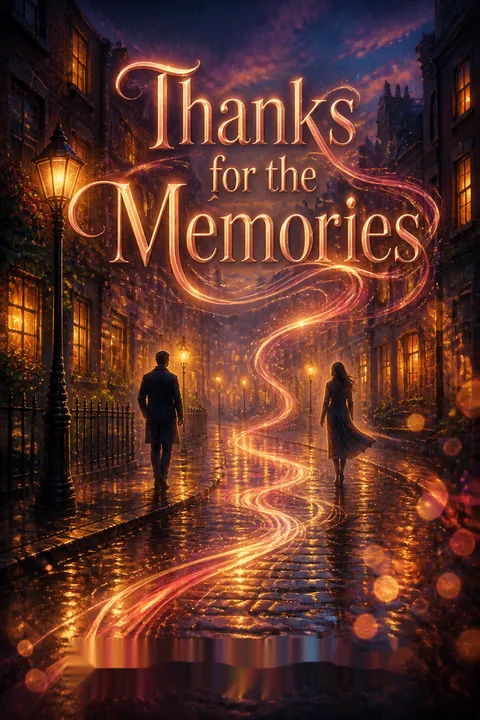


Plot Summary
Prologue
Joyce Conway lies at the foot of the stairs after hurrying to answer the telephone. Blood pools around her, and she fears the baby she has waited years to have is already gone. Her father, Henry, reaches her and calls for help, gripping her hand until she chooses to keep living.
The opening fixes the story on a terrible hinge: Joyce survives, but the life she expected does not. A month earlier, an American art lecturer named Justin Hitchcock had donated blood in Dublin, an act whose consequences neither of them could imagine.
The prologue turns survival into an active, painful choice rather than a simple medical outcome. Joyce's attention narrows to her unborn child, while Henry's hand pulls her back toward the living through their bond as father and daughter. The telephone gives ordinary haste a devastating consequence, but the narration does not treat the accident as moral punishment. Instead, the scene establishes the book's central tension between what can be explained and what must be endured. Joyce's body is saved before she can understand what has been lost, leaving the later story to ask what kind of life can grow in that gap.
Justin Gives a Pint
At Trinity College, American art lecturer Justin Hitchcock arrives late to a blood-donation talk, spills his coffee, and tries to escape the clinic Sarah Fields is organizing. His daughter Bea later reminds him that he has crossed an ocean to stay near her after his divorce, but still resists giving anything without recognition.
Sarah's warmth and the prospect of a date finally get him onto the donation bed. He watches his blood fill the collection bag, proud of the deed and already imagining how its unknown recipient might repay him. The joke hides a genuine shift: Justin has offered something bodily and precious, though he still thinks of generosity as a transaction whose other party ought to be grateful.
Justin's donation begins in vanity, not selflessness, which makes the gesture psychologically useful rather than morally neat. He wants a witness and imagined repayment because anonymous care threatens his habitual need to be admired. Yet the physical act exceeds his motive: once the blood leaves him, it enters a system of care he cannot control. The novel plants this contradiction early. Justin's later longing to know the recipient grows from an attempt to reclaim authorship over a gift that has already become part of someone else's life.
A Hospital's Unbidden Lessons
In hospital, Joyce learns that her unborn baby has died and that a transfusion has restored the blood she lost. Henry stays beside her, making halting attempts to comfort her while she imagines the child she had planned to name Sean or Grace. Then ordinary objects provoke knowledge she cannot explain.
She identifies the hospital chapel's rococo decoration and its architect, and recognizes the history of a cactus her friends Kate and Frankie bring as a gift. The cactus also opens a vivid image of a blond girl knocking one from a windowsill with a ball. Joyce is grieving and alarmed at once: familiar facts seem to arrive with someone else's memories attached, while her friends wonder whether shock has unsettled her mind.
Joyce's first strange knowledge appears beside the most intimate absence in her life. The architectural facts are precise, almost impersonal, while the cactus memory carries a child's domestic warmth; together they make the new experience harder to dismiss as random confusion. Her grief also changes how she receives care. Flowers would have asked her to perform conventional delicacy, but the prickly plant gives her something to study and name. The scene links knowledge to attachment: Joyce does not merely acquire facts, she encounters fragments that feel lived, and their emotional force unsettles her confidence in her own boundaries.
The Salon's Strange Recognition
Leaving hospital, Joyce dreads returning to the house where she fell and to the nursery prepared for the baby. At a salon she impulsively cuts her hair short, while a handsome American beside her jokes about the cactus she is carrying. They exchange glances and feel an inexplicable familiarity, then leave in separate taxis.
At home, a neighbor's rug covering the bloodstained carpet makes Joyce realize how much Henry has tried to protect her. The telephone message she finally plays is only a video-store reminder about an overdue Christmas film. She throws the disc across the room, breaks the glass on family photographs, and climbs into the nursery to hold a toy rabbit and mourn the future that will not arrive.
The salon offers Joyce a meeting before either character has the language to understand it. Her drastic haircut is not a makeover so much as an attempt to mark a boundary between the pregnant self and the bereaved self, even though memories remain rooted beneath the change. At home, Henry's well-meant rug conceals evidence without erasing it; the trivial rental call exposes how little significance the accident itself can offer as an explanation. Joyce's anger breaks objects because the losses have no adequate target. The nursery then turns private grief into physical space, forcing her to touch what she had prepared.
A Marriage Finally Ends
At dinner, Joyce tells Conor that their ten-year marriage has been empty for years and that she will not use another decade of trying for a baby to avoid facing it. Conor accepts the separation, and Joyce moves into Henry's modest home with her cactus and suitcases.
The return exposes how little she knows about the routines that have held her father together since her mother's death. She notices that he hides cigarettes in an empty cereal box and has put her mother's photograph away to conceal his smoking.
Joyce threatens to call his doctor, then accidentally reaches Bea in London instead of the number she intended. Bea mentions an upcoming ballet performance and an American father flying in from Dublin, giving Joyce a startling reason to travel.
Joyce's decision to leave Conor is not presented as a triumph over marriage so much as an end to emotional postponement. Their hoped-for child had become a distraction from a bond neither could restore by effort alone. Moving into Henry's house reverses their familiar roles: Joyce is vulnerable, yet she becomes the one policing his health and uncovering his concealed grief. The accidental call offers a bridge out of isolation, but it is also an expression of her new willingness to follow an improbable lead. Her life begins to move again before she can explain why.
London, With Henry
Joyce's dreams now contain a blond girl at different ages, a red-haired woman, sprinklers, and places she has never visited. Her friends hear about sudden knowledge of art, architecture, food, and languages, while Joyce struggles to lift Kate's baby Sam without panic.
Bea's voice and blond hair match the dream girl, so Joyce persuades Henry to take his first flight to London with her. The airport tests his fear of unfamiliar systems: he brings cigarettes, a lighter, clippers, and a banana through security, then jokes his way through questioning.
Once airborne, he settles beside a photograph of his dead wife. In London he insists on visiting an Antiques Roadshow valuation, and Joyce improvises by presenting a wastebasket they have no right to claim.
The trip gives Joyce a practical form for an otherwise unmanageable suspicion. Rather than submit immediately to other people's doubts, she follows a specific connection, Bea's voice, and asks Henry to accompany her. His first flight places his familiar humor against genuine vulnerability; the photograph of his wife becomes a portable home. The stolen wastebasket episode reverses the expected roles again, with Joyce improvising while Henry pursues his television hero. Their comic adventure does not cancel bereavement. It allows them to act together in the present, creating a shared memory while Joyce searches the past for an explanation.
The Girl in Swan Lake
At the Royal Opera House, Joyce spots Justin in a box with his red-haired former wife, Jennifer, and recognizes Bea among the dancers. She watches with the pride of someone who remembers Bea as a little girl, though Bea has never met her.
Justin also sees Joyce across the theater, but family friction prevents him from reaching her before she leaves. In the bar, Joyce finally meets Bea, who describes her father donating blood in Dublin and his fanciful wish for a grateful recipient to bring muffins, arrange errands, and provide opera seats.
Bea's childhood locket confirms the park memories Joyce has been seeing. The connection now seems concrete, but the pair still depart without meeting, each missing the person they have been trying to find.
The ballet makes memory visible without making it publicly legible. Joyce sees Bea as both the child she remembers and the young dancer she has become; Justin watches the same performance through a father's ordinary pride. Their shared focus on Bea creates an emotional overlap before they know its cause. Bea's account transforms Joyce's private suspicion into a plausible chain of events, but not proof of a transfusion. The missed meeting sustains uncertainty at the exact moment recognition seems possible. The book treats coincidence not as an answer but as a pressure that makes both characters choose what they are willing to believe.
Thanks Without a Name
Back in Ireland, Joyce and her friends research reports of people acquiring donor traits, though no explanation is certain. Joyce decides to answer Justin's boastful wish with practical gratitude: a muffin basket, dry cleaning, a newspaper, coffee, and a chauffeured car. Justin receives the gifts but cannot identify their sender, and his search makes him confront how badly he has treated Sarah, the doctor he used as company and then neglected.
His brother Al, meanwhile, fears dying at the age their father did. Joyce overhears Justin reveal the family secret he has never told Al: their father died by suicide, not a heart attack. She leaves her contact details in Justin's trash, but he discards the clue while pursuing the mystery recipient.
The favors begin as playful fulfillment of Justin's own selfish fantasy, then acquire a more serious purpose: Joyce wants to thank him without demanding immediate belief or intimacy. Anonymity protects her from exposure but also repeats Justin's original problem, a gift whose giver cannot be acknowledged. In parallel, Al's fear shows how family stories shape the body before anyone verifies them. Justin's silence about his father's death has protected Al from pain while burdening Justin with the sole custody of truth. Joyce's accidental presence makes that secret part of her own knowledge, complicating the idea that borrowed memories are harmless.
The Gallery's Near Miss
Justin returns to Dublin for a National Gallery lecture and scans the audience for the person sending his gifts. Joyce waits outside with Kate's baby Sam, then takes him into Merrion Square while Kate attends the talk.
There, Joyce finally lifts Sam from his stroller and admits to herself that she has avoided him because his presence sharpens the pain of losing her own child. She holds him, explains her grief in her own mind, and lets him point out a bird before setting him down again.
Meanwhile Justin visits Sarah's clinic, apologizes, then secretly enters her office searching for donor records. Sarah catches him and tells him he has never stayed long enough to learn about her life or her daughter. His search yields no answer, only evidence of his own self-absorption.
Joyce's encounter with Sam is a small but decisive act of re-entry into ordinary care. She does not mistake holding him for replacing her baby; she acknowledges the difference and accepts the pain that comes with contact. Justin's parallel movement is less mature. He apologizes to Sarah, then invades her professional space to satisfy his fixation, repeating the pattern of treating another person as a route to his own answers. The scene juxtaposes two forms of attention: Joyce learns to stay present with a child, while Justin is forced to see the human cost of his curiosity.
A Date, Two Destinations
Joyce returns to work and puts the house on the market, though showing it to a pregnant couple makes the nursery and the stained hall carpet difficult to face. She eventually sells to other buyers. In a department store, she and Justin finally meet properly, with Kate and Frankie introducing them.
Justin accepts a dinner invitation, while Joyce suspects he is still searching for the anonymous recipient. He has also arranged front-row opera tickets for that person, and Joyce chooses the opera over dinner, hoping he will find her there.
Justin, persuaded to choose Joyce instead, waits alone at the restaurant. At home, Henry collapses after becoming confused about his medication and is taken to hospital. Joyce misses Justin's calls and rushes to her father, leaving both intended meetings unresolved.
The crossed appointments convert uncertainty into an ethical choice. Justin chooses a real woman in front of him over an imagined benefactor, while Joyce chooses the theater because she wants their meeting to be grounded in the truth of the donation. Neither decision is foolish, but both are shaped by incomplete information. The house sale adds another form of release: Joyce can preserve memories without preserving the building that contains them. Henry's sudden illness then reorders every priority. His vulnerability makes the romance secondary and reveals that Joyce's most urgent attachment is still the father who kept her alive.
The Secret in the Bin
After the missed evening, Justin learns from Bea that the Irish woman in a group photograph from the ballet was the person who spoke to her about his donation. He realizes Joyce is both the recipient and the woman whose presence has unsettled him since the salon.
He races home and searches the trash for the contact details she left there. On the telephone, Joyce explains that she believes his transfused blood brought his memories, knowledge, and tastes into her life.
Justin doubts her account until she describes his father's suicide and the child Justin watching from the stairs. The truth strikes his most guarded wound. Instead of accepting her, he tells her to stay away, leaving Joyce alone with the knowledge that she has reached him and driven him off.
The revelation binds the novel's supernatural premise to a memory Justin has treated as unspeakable. Joyce's account is persuasive precisely because it crosses from public biography into private trauma, but that accuracy feels less like comfort than an invasion to Justin. His rejection is therefore not simple disbelief. It is a defense against the collapse of boundaries between his past and another person's mind. Joyce, in turn, has mistaken access for permission: she knows something true, but truth alone does not establish trust. The painful separation forces the story to distinguish intimacy from possession.
Henry's Empty Bed
One month later, Joyce is trying to build a life beyond her marriage, searching for a smaller apartment and returning to work. She and Henry walk through Dublin together, but he resists each possible home because he fears losing their closeness.
During Joyce's night out, Henry becomes dizzy while handling his medication and goes to hospital, where doctors discover diabetes rather than the heart attack he feared. Joyce returns to a dark house, finds his pills scattered, and believes he is gone until neighbor Fran tells her where he is.
At his bedside, Henry reassures her and asks about her evening. Joyce admits Justin never arrived; Henry comforts her, unaware that the missed meeting is part of a larger misunderstanding neither has yet repaired.
Henry's hospitalization brings the story back to the opening's fear of sudden absence, but this time Joyce can reach him in time. His illness is serious enough to expose his age and dependence, yet treatable enough to make care possible. Joyce's panic reveals the depth of their bond: she has lost a child and left a husband, but the prospect of losing her father still feels like the end of every shelter. Her willingness to seek a home of her own is not a rejection of Henry. It is a first attempt to imagine separation without abandonment.
The Desire Line Home
Justin's memory of Joyce's account, and the ballet photograph that confirms her identity, eventually outweigh his fear of what he cannot explain. With help from Kate and Frankie, he learns details of Joyce's life and returns to Henry's house carrying flowers and an apology.
He can now answer some of her private knowledge with facts learned from her friends, turning their connection into a mutual exchange rather than a one-way trespass. Joyce accepts him and agrees to accompany him to Sarah's clinic so he can apologize properly.
Henry watches from behind the curtain as Joyce crosses the worn track she made through his garden as a child. She leaves not as a fleeing wife or grieving patient, but as someone choosing her own path beside another person.
The ending does not settle the scientific question of whether blood can carry memory. It settles the relational question of what the characters do with uncertainty. Justin returns only after recognizing that his refusal wounded Joyce, and his apology is paired with restitution to Sarah rather than treated as a private romantic gesture. Joyce accepts closeness without surrendering her agency. Henry's garden path gives that agency a visible shape: she has always moved by desire rather than prescribed route, but now the path leads outward instead of back into retreat. The romance becomes credible because each person chooses it after injury.
Analysis
The novel builds its romance out of a medical fact that is both ordinary and radically intimate: donated blood is anonymous, traceable in records, and divided into components, yet it may carry more than physiology. The story declines to settle that possibility scientifically. Instead, it asks what happens when an experience feels true before it can be verified. Joyce's new knowledge offers comfort and danger in equal measure. It lets her encounter Justin's past, but it also crosses a boundary he has not consented to cross. His refusal is therefore not merely skepticism; it is a struggle to retain ownership of a trauma he has never disclosed.
Grief works through the body and through domestic objects. The stained carpet, nursery, short haircut, and cactus make loss tactile, while Henry's hidden cigarettes and absent photograph show that mourning can become a household routine. Joyce's departure from Conor is not caused by the miscarriage, though the loss removes the future they had used to postpone their marital truth. Her recovery is measured less by forgetting than by renewed capacity: she can hold Sam, sell the house, and remain connected to her dead child without making grief her only identity.
Henry's comic habits are not decorative relief. His slow pace, garden, and persistent stories offer a countermodel to the rush that governs Joyce's accident and Justin's frantic search. He teaches, imperfectly, that attention is a form of care. The final garden path joins that lesson to choice: healing is not a return to the old route, but movement along a path made through repeated acts of desire. The book's romantic resolution works because it requires accountability as well as attraction. Justin must apologize to Joyce and Sarah; Joyce must permit closeness without treating uncanny knowledge as entitlement. The mystery remains open, but the human obligations do not.
Review Summary
Thanks for the Memories receives mixed reviews, with readers praising its humor, emotional depth, and unique premise involving memories transferred through a blood transfusion. Many enjoy the father-daughter relationship and find the story entertaining, albeit unrealistic. Some criticize the slow pacing and predictable plot. Readers appreciate Ahern's writing style and character development, particularly Joyce's father. While some find it a delightful romantic comedy, others struggle with its implausibility and feel the ending is rushed or unsatisfying.
People Also Read
Characters
Joyce Conway
The grieving seekerJoyce is a Dublin property agent whose carefully ordinary life has been organized around marriage, work, and a long-awaited pregnancy. Observant but not naturally adventurous, she initially prefers familiar routines and keeps difficult feelings contained, often making herself agreeable for other people. The loss of her baby exposes how much she has been postponing a decision about her marriage and her own desires. Her bond with her father is affectionate, exasperating, and shaped by shared humor. Joyce's central psychological struggle is learning that grief need not dictate retreat: she can remember what she lost, remain tender toward others, and still choose a future that belongs to her.
Justin Hitchcock
The self-doubting lecturerJustin is an American art historian and guest lecturer, intellectually fluent but often socially clumsy. Divorced and living between work and family obligations, he uses humor, expertise, and self-promotion to cover loneliness and uncertainty. His relationship with his daughter Bea matters deeply to him, though protectiveness can turn into interference. He is drawn to art because it rewards sustained attention, yet he often fails to offer that same attention to living people. His story tests whether he can move from wanting credit for generosity to practicing it without applause, and whether he can accept emotional truths that do not arrive with a rational explanation.
Henry Conway
The steadfast fatherHenry is Joyce's elderly father, a widower whose uneven gait, memory lapses, garden, television habits, and Monday Club give his days a distinctive rhythm. He speaks to strangers easily and uses jokes to soften subjects he cannot discuss directly. His loyalty to his late wife shapes the home he has kept largely unchanged, while his tenderness toward Joyce appears in practical acts: staying at her bedside, protecting her from painful reminders, and making room for her return. Henry's way of living is rooted in routine but not emotional blindness. Beneath his comic fussiness lies a durable understanding that love and loss can deepen together.
Bea Hitchcock
Justin's independent daughterBea is Justin's eighteen-year-old daughter, a ballet student who has built a life in London after her parents' divorce. Wry and direct, she is affectionate toward her father but resists being treated as a child or having her romantic choices managed for her. Her confidence comes from wanting a life of her own, not from rejecting her family. Bea's history with Justin offers a view of his softer, more vulnerable side, while her willingness to challenge him exposes the difference between parental love and control.
Conor
Joyce's distant husbandConor is Joyce's husband, an engineer whose work keeps him abroad for long stretches. He is decent and generally dependable, but the marriage has settled into a pleasant surface that neither partner can revive through obligation alone. He approaches their problems through persistence and practical compromise, while Joyce increasingly needs emotional honesty rather than another attempt to maintain appearances. Conor is not framed as a villain; he represents the painful possibility that two people can have shared history and good intentions without remaining right for each other.
Kate McDonald
The protective old friendKate is one of Joyce's oldest friends, a former business owner now occupied with raising her children. She is warm, physically affectionate, and quick to step into a caretaker role, sometimes before Joyce is ready to receive it. Her teasing friendship with Frankie is full of mock arguments that conceal deep loyalty. Kate wants Joyce safe and connected, but she also has to learn that support does not mean deciding what Joyce should feel or do. Her household and children embody the family life Joyce longs for and finds painful.
Frankie
The sharp-tongued confidanteFrankie, christened Francesca, is Joyce's other longtime friend and works in corporate finance. Independent and skeptical, she uses sarcasm to puncture self-pity and to keep Kate's earnestness in check. Her humor can be blunt, but she is willing to investigate Joyce's unusual claims rather than dismiss them outright. Frankie brings analytical curiosity to the group, looking for patterns and information while leaving room for uncertainty. She and Kate argue constantly, yet their shared concern for Joyce turns their banter into a dependable form of care.
Sarah Fields
The principled doctorSarah works with the Irish blood service and organizes the Trinity College donation drive where she meets Justin. She is intelligent, professionally confident, and compassionate without confusing care with indulgence. Her early attraction to Justin does not prevent her from seeing his self-absorption; she expects him to listen and becomes understandably guarded when he fails to do so. Sarah's presence anchors the story's medical process in practical ethics, especially the privacy that protects recipients and donors from being turned into one another's obligations.
Al Hitchcock
Justin's worried brotherAl is Justin's younger brother, married to Doris and living in London. He is jovial, food-loving, and less physically active than his brother, but beneath the humor he carries anxiety about his health and family history. His fear of dying at the age their father died shapes his decision to spend more time with Justin. Al's banter provides comic relief, while his unease gives Justin a reason to reconsider the silence surrounding their father's death.
Doris Hitchcock
The unstoppable sister-in-lawDoris is Al's fast-talking wife and Justin's self-appointed younger sister. She delights in home decoration, dramatic theories, and helping whether or not help has been requested. Her energy can overwhelm a room, but it also keeps Justin and Al from retreating into isolation. She is often the first to notice when Justin's behavior has crossed from comic eccentricity into genuine distress. Beneath her flamboyance is a loyal, practical ally who expects to be taken seriously.
Jennifer
Justin's former wifeJennifer is Justin's former wife and Bea's mother, a musician whose life and work have continued beyond the marriage. She shares a long history with Justin, including the early years when they built a family while both pursued demanding careers. Their interactions retain the marks of old resentment and intimate knowledge. Jennifer's presence reminds Justin that a shared past does not guarantee present closeness, and her relationship with Bea shows a more settled form of parental support than Justin sometimes manages.
Laurence
Jennifer's new partnerLaurence is Jennifer's partner, a polite and restrained man who becomes an easy target for Justin's jealousy. He tries to clear the air rather than provoke conflict, and his presence forces Justin to confront how little control he has over Jennifer's life after their separation.
Peter
Bea's boyfriendPeter is Bea's boyfriend, an IT consultant whom Justin initially misunderstands and distrusts. He is a young adult building a life with Bea, while Justin's suspicion turns ordinary questions into intrusive scrutiny. Peter's role makes the generational tension in Justin's protectiveness visible.
Fran
The helpful neighborFran lives near Henry and Joyce and has known Joyce since childhood. She helps clean the bloodstained carpet, drives Henry to hospital, and watches over the family when they need support. Her practical kindness is sometimes awkward, but it comes from a long-standing attachment rather than obligation.
Sam
Kate's infant sonSam is Kate's baby and Joyce's godson. His ordinary needs and open affection initially intensify Joyce's grief, making him a painful reminder of the child she lost. He is too young to understand the complicated feelings around him, but his presence gives Joyce a chance to practice care without pretending that one child can replace another.
Jayda
Joyce's lively goddaughterJayda is Kate's spirited daughter and Joyce's goddaughter. She loves children's films, gymnastics, and making noise, and she gives the adults a steady stream of comic interruptions. Her exuberance makes the child-filled world around Joyce both difficult and, eventually, welcoming.
Plot Devices
The blood transfusion
A body-to-body bridgeJustin donates blood during a Dublin campus drive shortly before Joyce's miscarriage and emergency transfusion. Joyce later experiences tastes, languages, artistic knowledge, and vivid memories associated with Justin, including private scenes from his childhood. The story never offers a medical proof that blood carries memory, so the transfusion operates at once as a literal lifesaving procedure and as the possible mechanism of an emotional connection. It also creates the ethical problem at the center of the romance: Joyce feels close to Justin through knowledge he has not chosen to share, while Justin must decide whether that closeness is meaningful or invasive.
The cactus
A prickly memory triggerFrankie and Kate bring Joyce a small cactus in hospital, intending it as a gift after her loss. Joyce immediately recognizes details about its cultural representation and later recalls a cactus on a Chicago windowsill, struck down by a child's ball. The plant also links the first salon meeting between Joyce and Justin, who recognizes it from his own home. As a recurring object, it gives the characters a concrete point of contact before they understand the larger connection. Its stubborn, non-floral appearance suits a story in which comfort is not always soft or conventionally pretty.
The thank-you trail
Gratitude becomes a mysteryJustin's joking wish for muffins, errands, a newspaper, a car, and opera tickets becomes the blueprint for Joyce's anonymous thanks. Each delivery proves that someone has heard him, but the missing sender keeps him guessing and drives him to search for the recipient of his donation. The favors convert a boast about being rewarded into a genuine exchange, while their anonymity delays direct recognition. The trail also gives Joyce a way to express gratitude before she can face Justin with an explanation she herself finds difficult to believe.
The nursery
A room for imagined futuresJoyce and Conor prepare a nursery during a pregnancy they have waited years to achieve. After the loss, the room's yellow walls, crib, clothes, and musical toy preserve a future that cannot happen, making it the most concrete site of Joyce's grief. Returning to it allows her to apologize to the baby and acknowledge her mourning rather than simply erase the room. Later, the nursery also becomes part of selling the house, forcing Joyce to let another family imagine a future in a space that once held hers.
The desire line
A path chosen for herselfHenry points out the worn track Joyce made across his garden as a child instead of following the formal path. He calls it a desire line, a trail made by repeated choice. The image becomes a practical way to think about Joyce's decisions: leaving Conor, pursuing the London connection, and eventually moving toward Justin without surrendering her independence. It also contrasts Henry's preference for familiar routines with Joyce's tendency to cut her own route. The device gives the conclusion a physical action rather than a purely verbal declaration.
FAQ
Synopsis & Basic Details
What is Thanks for the Memories about?
- Grief and Connection: The story centers on Joyce Conway, who experiences a devastating loss and then finds herself inexplicably connected to a stranger, Justin Hitchcock, through a blood transfusion.
- Unexplained Phenomena: Joyce begins to experience vivid dreams, memories, and skills that are not her own, leading her on a quest to understand the source of these strange occurrences.
- A Journey of Discovery: The narrative follows Joyce and Justin as they navigate their intertwined lives, seeking answers and exploring the possibility of a deeper connection beyond the ordinary.
Why should I read Thanks for the Memories?
- Unique Premise: The novel offers a compelling blend of romance, mystery, and the supernatural, exploring the idea of shared memories and connections through a blood transfusion.
- Emotional Depth: Ahern delves into themes of grief, loss, and the search for meaning, creating characters with complex emotions and relatable struggles.
- Intriguing Plot: The story keeps readers engaged with its unexpected twists, subtle foreshadowing, and the gradual unveiling of the mystery surrounding Joyce and Justin's connection.
What is the background of Thanks for the Memories?
- Contemporary Dublin: The story is set in modern-day Dublin, with references to local landmarks and cultural elements, providing a realistic backdrop to the fantastical elements.
- Medical Context: The novel incorporates medical details about blood transfusions and their potential effects, adding a layer of scientific intrigue to the narrative.
- Art and Architecture: Justin's profession as an art and architecture lecturer introduces a cultural and historical dimension, with references to various artistic periods and styles.
What are the most memorable quotes in Thanks for the Memories?
- "Even when broken, it still works.": This quote, referring to the heart, encapsulates the theme of resilience and the ability to persevere despite loss and pain.
- "We are always rushing.": This recurring phrase highlights the fast-paced nature of modern life and the importance of slowing down to appreciate the present moment.
- "Maybe it's not my time to go.": This quote reflects Joyce's internal struggle with grief and her eventual decision to embrace life, despite her loss.
What writing style, narrative choices, and literary techniques does Cecelia Ahern use?
- First-Person Perspective: The story is primarily told from Joyce's point of view, allowing readers to intimately experience her thoughts, emotions, and confusion.
- Foreshadowing and Callbacks: Ahern uses subtle details and recurring phrases to foreshadow future events and create a sense of interconnectedness throughout the narrative.
- Blending Realism and Fantasy: The novel seamlessly blends realistic settings and characters with fantastical elements, creating a unique and engaging reading experience.
Hidden Details & Subtle Connections
What are some minor details that add significant meaning?
- The Cactus: The recurring presence of a cactus, initially a gift, becomes a symbol of resilience and a reminder of the connection between Joyce and Justin.
- The Color Red: The color red, particularly in Joyce's coat, serves as a visual cue, drawing Justin's attention and highlighting her presence in his life.
- The Music Box: The music box in the nursery, with its circling mouse, symbolizes the repetitive and often futile nature of life's pursuits, reflecting Joyce's grief.
What are some subtle foreshadowing and callbacks?
- The Fart Joke: The initial fart joke in Justin's lecture foreshadows the later scene where he chokes on food, highlighting the unexpected and sometimes absurd nature of life.
- The Muffin Basket: Justin's joking about a muffin basket as a reward for saving a life foreshadows the actual delivery of muffins to his office, a key element in the mystery.
- The "Thank You" Note: The recurring phrase "Thank you" on the notes and cards serves as a subtle callback to the title and the central theme of gratitude and connection.
What are some unexpected character connections?
- Fran and Henry: The neighbor, Fran, who helps Henry clean Joyce's house, reveals a long-standing connection to Joyce's family, highlighting the importance of community and support.
- Al and Doris: Justin's brother and sister-in-law, Al and Doris, provide comic relief and unexpected insights into Justin's character, while also revealing their own vulnerabilities.
- The Mime Artist: The mime artist that Justin encounters in London, though seemingly random, serves as a reminder of the absurdity of life and the importance of embracing the unexpected.
Who are the most significant supporting characters?
- Henry Conway: Joyce's father, Henry, provides emotional support and a sense of stability, while also offering his own unique perspective on life and loss.
- Kate and Frankie: Joyce's best friends, Kate and Frankie, offer both comic relief and genuine support, helping her navigate her grief and confusion.
- Doris and Al: Justin's brother and sister-in-law, Doris and Al, provide comic relief and a sense of family, while also pushing Justin to confront his own issues.
Psychological, Emotional, & Relational Analysis
What are some unspoken motivations of the characters?
- Justin's Need for Validation: Justin's initial desire to know the recipient of his blood donation stems from a need for validation and recognition, a desire to feel that his actions have meaning.
- Joyce's Search for Meaning: Joyce's quest to understand her new memories and skills is driven by a deeper need to find meaning and purpose in the wake of her loss.
- Henry's Fear of Loss: Henry's overprotectiveness of Joyce and his reluctance to leave his home stem from a deep-seated fear of loss, rooted in the death of his wife.
What psychological complexities do the characters exhibit?
- Justin's Insecurity: Despite his professional success, Justin exhibits deep-seated insecurities and a fear of vulnerability, which are revealed through his interactions with Sarah and his family.
- Joyce's Grief and Anger: Joyce's grief manifests as a complex mix of sadness, anger, and confusion, highlighting the multifaceted nature of loss and the struggle to move forward.
- Henry's Stubbornness and Vulnerability: Henry's stubbornness and resistance to change mask a deep vulnerability and a fear of being alone, which are revealed through his interactions with Joyce.
What are the major emotional turning points?
- Joyce's Decision to Live: Joyce's decision to open her eyes and embrace life after her fall marks a turning point in her emotional journey, signaling her willingness to move forward despite her grief.
- Justin's Acknowledgment of His Feelings: Justin's realization that he is drawn to Joyce for more than just curiosity marks a turning point in his emotional journey, signaling his willingness to embrace vulnerability.
- Joyce and Justin's Shared Memories: The moment when Joyce and Justin share their memories of the park, the red wine, and the little girl, marks a turning point in their relationship, solidifying their connection.
How do relationship dynamics evolve?
- Joyce and Henry: The relationship between Joyce and Henry evolves from one of dependence to one of mutual support, as they both learn to navigate their grief and find new meaning in life.
- Justin and Sarah: The relationship between Justin and Sarah evolves from a casual encounter to a deeper understanding of each other's vulnerabilities, highlighting the complexities of human connection.
- Joyce and Justin: The relationship between Joyce and Justin evolves from a mysterious connection to a deeper understanding and acceptance of their shared experiences, highlighting the power of fate and destiny.
Interpretation & Debate
Which parts of the story remain ambiguous or open-ended?
- The Source of the Memories: The exact mechanism by which Joyce acquires Justin's memories and skills remains ambiguous, leaving room for interpretation and debate.
- The Nature of the Connection: The nature of the connection between Joyce and Justin, whether it is purely physical or something more spiritual, is left open to interpretation.
- The Role of Fate: The extent to which fate or destiny plays a role in Joyce and Justin's lives remains ambiguous, inviting readers to consider the power of chance and choice.
What are some debatable, controversial scenes or moments in Thanks for the Memories?
- Justin's Treatment of Sarah: Justin's initial treatment of Sarah, using her as a means to an end, is a debatable moment that raises questions about his character and his ability to form genuine connections.
- Joyce's Decision to Leave Sam: Joyce's decision to leave Sam in the gymnasium, overwhelmed by her grief, is a controversial moment that highlights the complexities of her emotional state.
- The Nature of the Connection: The idea that a blood transfusion could lead to shared memories and skills is a controversial concept that challenges conventional understanding of science and human connection.
Thanks for the Memories Ending Explained: How It Ends & What It Means
- Embracing the Unknown: The ending of the novel emphasizes the importance of embracing the unknown and accepting the mysteries of life, rather than seeking definitive answers.
- Finding Hope in Connection: The ending highlights the power of human connection and the ability to find hope and meaning in unexpected places, even in the face of loss and grief.
- A New Beginning: The final scene, with Joyce and Justin walking away from her childhood home, symbolizes their journey into a new chapter of their lives, together, with a sense of hope and possibility.
About the Author
Other books by Cecelia Ahern

Download PDF
Download EPUB
.epub digital book format is ideal for reading ebooks on phones, tablets, and e-readers.








