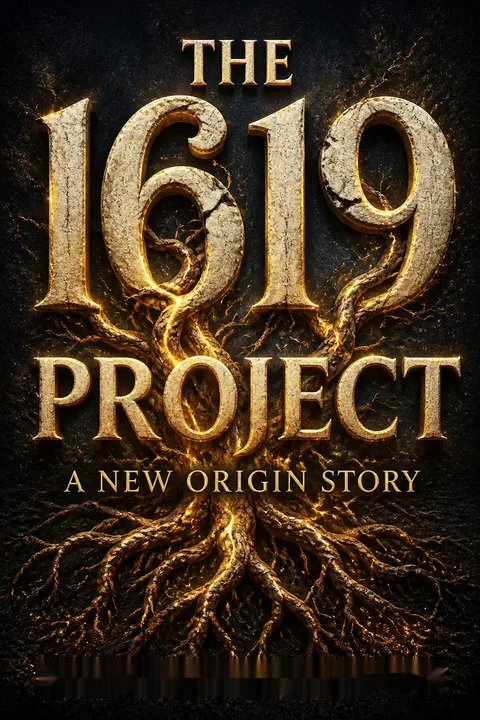


Key Takeaways
Start America's story in 1619 as well as 1776
The frame changes the story. In August 1619, the White Lion brought roughly twenty to thirty captive Africans from Angola to Virginia, where colonists traded for them. Nikole Hannah-Jones uses this arrival as an alternative starting point for understanding the country, not as a claim that slavery began everywhere in the Americas that year. Her father, a Black veteran raised in Mississippi under segregation, flew the American flag because he understood how deeply Black labor and struggle had shaped the nation.
A wider inheritance. The book argues that American identity grew from both the founding language of liberty and the realities of slavery. Starting with 1619 makes the contradiction visible from the beginning, rather than treating it as a detour from an otherwise complete freedom story.
An origin story is a way of organizing attention, not a list of every event that mattered. Beginning in 1619 makes slavery and Black life foundational to the national narrative, while 1776 foregrounds independence and political ideals. The productive move is to read these dates together: one reveals the country’s founding promises, the other the people excluded from them and the labor that sustained the project. No single date can explain a nation, but changing the starting point can expose what a familiar account has trained readers not to see.
Ask who benefits when a nation's history leaves people out
Omission has consequences. Hannah-Jones describes finding Black Americans largely absent from the history she learned, appearing briefly in accounts of slavery and the Civil War, then returning as Martin Luther King Jr. This left the causes of the civil rights struggle unexplained. The gap was measurable: a 2018 report found that only 8 percent of high school seniors identified slavery as the Civil War’s central cause, and fewer than one-third knew an amendment was needed to abolish it.
Memory is contested. The project drew criticism over particular historical interpretations, including slavery’s role in the Revolution. The book presents such debate as part of historical inquiry, while arguing that public memory is shaped by choices about whose evidence and experiences receive attention.
Historical ignorance is not merely missing information. It changes which present-day problems seem understandable, and which remedies appear plausible. When slavery is reduced to a brief prelude to the Civil War, its connection to later institutions becomes difficult to see. The project also usefully exposes how public history differs from professional historical debate. Still, not every omission proves deliberate suppression; limited curricula, inherited habits, and political pressure can all narrow a story. Asking who benefits is a strong investigative question, not a substitute for evaluating evidence.
Black resistance helped build the democracy America claimed to possess
Freedom was fought for. Black Americans did not simply receive liberty from sympathetic white leaders. Enslaved people fled to British forces during the Revolution when they believed this might bring freedom. During the Civil War, about 200,000 Black men served in the Union military. Their actions helped make emancipation a war aim and helped secure the Union victory.
Rights were constructed. After the Civil War, Black activists pressed for citizenship, equal protection, voting rights, and public education. During Reconstruction, Black lawmakers helped establish public school systems across the South. Later civil rights campaigns helped expand legal protections for many groups, including immigrants, women, and people with disabilities. The book recasts Black Americans as central democratic actors, not outsiders asking to be included in someone else’s achievement.
This account treats democracy as an achievement maintained through struggle, rather than a finished inheritance delivered by founders. That distinction matters: rights become durable when people excluded from power organize, make claims, and force institutions to respond. The Reconstruction example also complicates the familiar idea that political reform only travels from powerful lawmakers down to citizens. Black organizers shaped the demands lawmakers eventually enacted. At the same time, celebration of Black democratic leadership should not obscure how often the costs of defending democracy fell disproportionately on Black communities.
Slavery shaped America's Constitution, markets, and management systems
The economy was interconnected. The Constitution protected slavery through provisions concerning representation, the slave trade, fugitive people, and the suppression of revolt. The Three-Fifths Clause counted enslaved people as three-fifths of a person for apportionment, increasing slaveholding states’ political power. Cotton, sugar, and other crops then connected enslaved labor to banks, insurers, textile mills, and international trade. Enslaved people were even used as collateral for loans.
Expansion had another cost. Cotton cultivation required more land, much of it taken from Native nations. The book shows how slavery and Indigenous dispossession helped expand the economy, while remaining distinct histories of coercion. Plantation owners also developed detailed record-keeping and labor-management systems to measure output and control workers.
The chapter’s strongest economic insight is that slavery was not an isolated labor arrangement. It linked state power, private finance, land seizure, and managerial practice. That systems view helps explain why emancipation alone could not erase the institution’s effects: laws and markets had already been organized around extraction. The connection between plantation accounting and later business methods is illuminating, though resemblance should not be mistaken for a single, direct line of influence. Different institutions can share techniques while serving different legal and social conditions.
Race became law when exploitation needed an inheritance system
A legal category hardened. In 1662, Virginia ruled that a child’s enslaved or free status followed the mother. The rule, known as partus sequitur ventrem, departed from English inheritance practice and made enslavement hereditary. It also let white enslavers profit from children born through sexual violence against enslaved women. Laws governing marriage, movement, testimony, and bodily autonomy helped turn racial categories into a system of power rather than a neutral description of human difference.
Control outlasted slavery. Virginia still required marriage-license applicants to identify their race in 2019. Black women activists also developed reproductive justice, a framework encompassing the rights to have children, not to have children, and raise families in safe, supportive conditions.
The legal history shows how institutions can make a political arrangement appear natural. Once a person’s status is assigned at birth and recorded across generations, a system built for profit can masquerade as inherited identity. The example also makes clear that racial rules were gendered: controlling Black women’s sexuality and reproduction helped maintain the labor system. Reproductive justice broadens the question beyond formal access to medical procedures, asking whether people have meaningful control over family life. That framework is powerful, though its application requires attention to different communities’ distinct histories and needs.
Trace policing and punishment to fear of Black freedom
Control had an early blueprint. Slave patrols were organized groups charged with enforcing slave codes, searching quarters, and capturing people who escaped. After the Stono Rebellion in 1739, South Carolina’s 1740 Negro Act restricted enslaved people’s movement, gatherings, food-growing, and literacy. The book traces related methods of surveillance and forced labor through Black Codes, convict leasing, and modern systems of criminalization.
The labels changed. After emancipation, laws against vagrancy and other broadly defined offenses helped arrest Black people and lease their labor to private operators. The chapter argues that modern policing and mass incarceration inherit part of this history, especially the presumption that Black freedom presents a threat requiring control.
This historical genealogy is most persuasive when it identifies recurring functions: monitoring movement, restricting autonomy, and converting social anxiety into punitive authority. It also cautions against treating current institutions as if they appeared without a past. A careful account should distinguish inheritance from identity, however. Contemporary policing is not identical to a slave patrol, and historical links do not explain every officer, policy, or crime pattern. The connection gains force when it specifies which practices persist, how they changed, and whose safety they have been designed to prioritize.
Demand equal protection without assuming self-defense is equally available
Protection has been unequal. Enslaved people were barred from carrying weapons and defending themselves against white violence. Later self-defense laws often turned on whether a person’s fear was considered reasonable. That standard can reflect racial assumptions about who appears dangerous. The book contrasts George Zimmerman’s successful self-defense claim after killing the unarmed Trayvon Martin with Jessie Murray Jr., a Black man who faced a felony-murder charge after a fatal fight with white men who were beating him.
The law still varies. A 2020 U.S. Commission on Civil Rights report found that a homicide was ten times more likely to be deemed justified when the shooter was white and the victim Black than when their races were reversed. The chapter argues that the right to self-defense has never been applied evenly.
Self-defense laws reveal how supposedly neutral legal standards depend on judgments about threat, credibility, and vulnerability. If those judgments are shaped by racial stereotypes, identical actions can be interpreted differently depending on who acts and who is harmed. That insight applies well beyond firearms law: discretion is often where unequal treatment enters a rule that appears universal. A further complication is that expanding access to lethal force can increase danger for everyone. Equal protection requires consistent standards and serious attention to the risks created by the laws themselves.
Read racial progress as a contested cycle, not a smooth climb
Gains met organized resistance. Reconstruction amendments established citizenship and voting rights, but white violence, political compromise, and the withdrawal of federal protection helped dismantle many gains. The civil rights victories of the 1960s likewise existed alongside rising segregation, police violence, and punitive policies. In 2013, the Supreme Court removed a key preclearance requirement from the Voting Rights Act; states then introduced voting restrictions that courts found could target Black voters.
Progress is not automatic. The election of Barack Obama became proof of racial equality for some observers, but the book argues that individual achievement cannot establish that institutions have stopped producing unequal outcomes. Its historical lens tracks advances in rights alongside backlash and retrenchment.
A two-track model of history is more accurate than either a simple triumph narrative or a claim that nothing ever changes. Legal victories can improve lives while leaving economic and institutional arrangements largely intact; backlash can then narrow the gains. This model makes vigilance part of democratic practice rather than evidence of pessimism. Its risk is overemphasizing repetition until every reform looks futile. The useful question is not whether progress is real or false, but which specific gains endure, who benefits, and what protections are needed to prevent their reversal.
Treat Black culture as a foundation of American culture
Creation under constraint. The book traces Black music from spirituals and work songs to jazz, Motown, and hip-hop. These forms grew from community, improvisation, and the need to sustain identity under violent conditions. Black churches likewise served as spaces for worship, mutual aid, education, and political organizing. Their role extended from early independent congregations to the civil rights movement.
Influence is not inclusion. Blackface minstrelsy turned caricatures of Black people into popular entertainment, while Black artists were often excluded from the stages and rewards their innovations helped create. Motown, a Black-owned company, demonstrated the cultural reach of Black artists directing their own work. The book insists that Black creativity is central to the national story, not a decorative contribution to it.
Cultural influence can coexist with exclusion. A society may consume an art form, imitate its style, and praise its performers while denying the originating community equal power or compensation. That distinction clarifies why popularity alone is a poor measure of justice. The book’s account also gives art a role beyond representation: songs, churches, and performance helped people build collective identity and political capacity. The challenge is to celebrate cultural exchange without flattening questions of ownership, consent, and who controls the institutions that turn creativity into wealth.
Look for yesterday's segregation inside today's ordinary institutions
Design can preserve division. In Atlanta, officials routed Interstate 20 to serve as a boundary between Black and white communities. Highways also demolished Black neighborhoods, while resistance to regional public transit limited access to suburban jobs. These patterns were built into roads and housing, not only written into segregation laws.
Health carries history too. Black physician Susan Moore reported dismissive treatment while hospitalized with Covid-19 and died two weeks later. The chapter connects such failures to medical myths about Black bodies, including false beliefs about pain. A 2016 study found that half of surveyed white medical students and residents endorsed at least one false belief about biological differences between Black and white people. The book also uses weathering for the physical toll of sustained stress from racism.
Institutional history often persists through routine decisions: where a road goes, which neighborhood receives investment, whose pain gets taken seriously. These mechanisms can outlast the officials and laws that created them, a form of path dependence in which old choices shape present options. The healthcare and transportation examples illuminate different processes, so they should not be collapsed into one cause. Their shared lesson is narrower and stronger: outcomes that look personal or accidental may be patterned by institutional design, and reform must examine how systems operate in practice.
Rights cannot repay stolen wealth; justice also requires material repair
Freedom began without resources. After slavery, most formerly enslaved people received no land or compensation. President Andrew Johnson reversed the land distribution commonly remembered as forty acres and a mule. Meanwhile, federal homestead programs gave away 246 million acres to more than 1.5 million white families. Later, redlining and unequal access to housing finance restricted Black wealth-building; from 1934 to 1962, white Americans received 98 percent of Federal Housing Administration-insured loans.
The gap compounds. A study cited in the book found that Black families with children held about one cent of wealth for every dollar held by comparable white families. Hannah-Jones argues that civil rights laws did not restore what had been taken and calls for reparations, including direct payments and investment in communities harmed by government policy.
The argument shifts justice from equal treatment in the present to repair for unequal starting conditions created by public policy. That distinction matters because wealth compounds across generations: access to a home, education, or emergency savings can depend on resources accumulated long before a person enters the labor market. Reparations therefore address more than individual prejudice. Any workable program would need transparent eligibility rules, credible measures of harm, and a design that avoids recreating exclusion through bureaucracy. The book’s central challenge is political: whether a society will accept responsibility for harms its institutions helped produce.
Analysis
The 1619 Project is a collaborative historical argument, not a conventional chronological survey. Its essays, reporting, poetry, and fiction assemble a new national origin story around the arrival of captive Africans in Virginia in 1619, then follow connections between slavery, law, political power, culture, and contemporary inequality. This form gives the book unusual explanatory reach: a constitutional clause, a highway route, a medical assumption, and a musical tradition can appear as related parts of a society shaped by racial hierarchy.
Its central intervention is to move Black Americans from the margins of national history into the roles of builders, political thinkers, artists, and persistent democratic actors. That reframing matters both intellectually and emotionally. Hannah-Jones’s account of her father’s flag shows that patriotism can arise from a claim of belonging rooted in Black contribution, not from forgetting national violence. The book also makes a powerful distinction between formal freedom and substantive security, especially in its account of wealth, land, and reparations.
The same breadth creates a methodological risk. A story that traces many institutions to slavery can make historical continuity seem more direct than it is. The strongest claims specify a mechanism, such as racialized property law, organized surveillance, or exclusion from public investment. Other claims require careful separation of an institution’s origin from its later transformation. The text acknowledges that historical interpretation is debated and that its expanded book responds to criticism, which is essential context rather than a reason to dismiss its project.
The date 1619 works best as an organizing lens, not a replacement for 1776 or a claim that one event explains the whole country. Read together, the dates expose a durable contradiction: ideals of freedom have coexisted with practices that restrict who may enjoy them. The book’s lasting contribution is to make that contradiction harder to treat as incidental, and to insist that historical recognition should inform material choices in the present.
Review Summary
The 1619 Project has received mixed reviews, with many praising its comprehensive exploration of Black American history and contributions to the nation. Critics commend the book's well-researched content and engaging writing style. However, some reviewers argue it presents a biased perspective and oversimplifies complex historical issues. The book has sparked controversy, with some viewing it as essential reading for understanding America's racial history, while others criticize its framing of historical events. Despite the polarized reception, most agree the book offers a thought-provoking examination of slavery's lasting impact on American society.
People Also Read





Glossary
origin story
a society's founding accountIn this book, an origin story is a narrative that organizes a society’s past and explains its identity, institutions, and problems. The 1619 Project offers slavery and Black resistance as central starting points for understanding the United States. It does not claim to be the only possible national story; it challenges the familiar account centered almost entirely on the ideals of 1776.
partus sequitur ventrem
status follows the motherA legal doctrine adopted in colonial Virginia in 1662, stating that a child’s enslaved or free status followed the mother. This departed from English inheritance traditions and made slavery hereditary through enslaved women. It enabled enslavers to claim children born to enslaved women, including children fathered by white enslavers, as property.
low-road capitalism
growth through worker insecurityA term used in the book for a particularly harsh form of capitalism marked by weak worker protections, depressed wages, insecurity, and reliance on punishment rather than advancement to motivate labor. The chapter connects this economic model to slavery’s history of extracting value from workers with little power, while distinguishing it from the many forms capitalism can take.
slave patrol
organized enforcement of slave codesA colonial law-enforcement system designed to monitor enslaved people, capture those who escaped, enforce restrictions on movement, and prevent revolt. Patrols searched homes and quarters and used violence to maintain white authority. The book traces some practices and purposes of racial control into later systems, without treating modern policing as identical to slave patrols.
reproductive justice
rights over reproduction and familyA framework developed by Black women activists that includes the right to have children, the right not to have children, and the right to raise children in safe and supportive conditions. It broadens reproductive freedom beyond access to abortion by addressing healthcare, economic conditions, sexual violence, and the capacity to make meaningful choices.
weathering
stress-related physical wearA concept developed by public-health scholar Arline Geronimus to describe the bodily toll of sustained effort to cope with racism and other chronic social stressors. In the book, weathering helps explain why health disparities can persist even among Black people with education or healthcare access. It directs attention from presumed racial biology to social conditions and exposure.
Black liberation theology
Christian theology centered on liberationA theological approach associated with James H. Cone that interprets the Christian gospel from the experience of Black people and other oppressed groups. It treats liberation from racial injustice as central to religious life and challenges churches that accommodate systems of oppression. In the book, it helps explain the Black church’s prophetic criticism and political organizing.
selective hearing
selective use of Black demandsThe practice of treating some Black political demands as representative while ignoring others. The book uses the term for policymakers who cite Black support for tougher punishment while discounting calls for housing, jobs, education, treatment, and investment. The result is a distorted picture of what communities want and a policy response weighted toward surveillance and control.
racial progress
the claimed march toward equalityIn the book, racial progress refers both to genuine gains in rights and to a powerful national narrative that treats those gains as proof of steady movement toward equality. Hannah-Jones and Ibram X. Kendi argue that this story can obscure simultaneous backlash, enduring inequality, and new forms of exclusion. Progress is real, but it is neither automatic nor complete.
FAQ
1. What is The 1619 Project: A New Origin Story by Nikole Hannah-Jones about?
- Reframing American origins: The book argues that 1619, the year enslaved Africans first arrived in the English colonies, marks the true beginning of the United States, centering Black Americans in the nation’s story.
- Comprehensive historical narrative: It explores how slavery and its legacy have shaped every aspect of American society, including politics, economics, law, and culture, from the colonial era to the present.
- Interdisciplinary approach: The project combines essays, journalism, poetry, and fiction by Black writers and scholars to provide a multifaceted understanding of American history.
- Legacy and ongoing impact: It highlights how the consequences of slavery persist today in racial inequality, economic disparities, and social injustice.
2. Why should I read The 1619 Project: A New Origin Story by Nikole Hannah-Jones?
- Uncovering hidden history: The book reveals how mainstream narratives have omitted or distorted the role of slavery and Black Americans, offering a more accurate and inclusive account.
- Connecting past and present: It draws direct lines from historical events to contemporary issues like mass incarceration, voter suppression, and health disparities, deepening understanding of current social dynamics.
- Amplifying Black voices: The project centers Black perspectives and contributions, fostering empathy and recognition of their foundational role in American identity.
- Call to action: It challenges readers to confront uncomfortable truths and consider their role in building a more just society.
3. What are the key takeaways and themes of The 1619 Project: A New Origin Story?
- Black Americans as democracy’s defenders: The book emphasizes that Black Americans have been central to the fight for democracy and equality, often at great personal cost.
- Racial progress is not linear: It challenges the myth of steady racial progress, showing that advances are often met with backlash and new forms of systemic racism.
- Economic exploitation underpins racism: The project links wealth disparities and economic exclusion to the legacy of slavery and discriminatory policies.
- Reparations and justice: It argues that reparations and structural reforms are necessary to address centuries of harm and achieve true equality.
4. How does Nikole Hannah-Jones define the true origin of the United States in The 1619 Project?
- 1619 as foundational year: The arrival of enslaved Africans in Virginia is presented as the nation’s true founding moment, predating the Mayflower and Declaration of Independence.
- Slavery’s central role: The book asserts that slavery was not a side issue but the foundation of American economic, political, and social systems.
- Challenging traditional narratives: This reframing disputes the idea that 1776 and the ideals of liberty were the sole origins of the nation, highlighting contradictions in American history.
- Impact on national identity: It argues that understanding 1619 as the origin point is essential to recognizing Black Americans’ centrality to the country’s development.
5. What are the most important historical events and concepts covered in The 1619 Project: A New Origin Story?
- Arrival of enslaved Africans: The White Lion ship’s arrival in 1619 and the establishment of hereditary slavery through laws like Virginia’s 1662 statute are foundational events.
- Slavery and the American Revolution: The book reveals how the desire to protect slavery influenced the push for independence and shaped early American laws.
- Black resistance and freedom struggles: It documents continuous Black resistance, from slave rebellions to the Civil Rights Movement, challenging narratives of passivity.
- Reconstruction and backlash: The brief period of Black political power after the Civil War and the violent white backlash, including Jim Crow laws and lynching, are explored in depth.
6. How does The 1619 Project by Nikole Hannah-Jones connect slavery to American capitalism and economic inequality?
- Slavery as capitalism’s engine: The book argues that American capitalism was built on the exploitation of enslaved labor, especially in cotton and sugar production.
- Financial systems and property law: Enslaved people were treated as property, used as collateral for loans, and central to the development of American banking and finance.
- Speculation and economic crises: The speculative culture around slavery led to financial bubbles and panics, with long-term consequences for economic stability.
- Legacy of inequality: The structures born from slavery continue to shape wealth distribution, labor relations, and corporate power, contributing to persistent economic disparities.
7. What does The 1619 Project: A New Origin Story say about the evolution of citizenship and voting rights for Black Americans?
- Early exclusion: The Constitution and early laws left Black Americans in a precarious legal status, often denying them citizenship and political rights.
- Activism and legal battles: Black leaders organized conventions and fought for birthright citizenship, culminating in the Fourteenth and Fifteenth Amendments.
- Ongoing disenfranchisement: Despite constitutional guarantees, states used violence, intimidation, and legal barriers to suppress Black voting for decades.
- Modern implications: The book connects historical struggles to contemporary voter suppression efforts and the ongoing fight for full political participation.
8. How does The 1619 Project by Nikole Hannah-Jones address the myth of racial progress in America?
- Progress as a myth: The book argues that the idea of steady racial progress is ahistorical and often used to obscure ongoing racism and inequality.
- Dual narrative: It presents American history as a constant struggle between forces pushing for equity and those maintaining racial injustice.
- Legal victories vs. reality: Despite civil rights laws, systemic barriers like mass incarceration and economic exclusion persist.
- Policy impact: The myth of progress has influenced Supreme Court decisions and public policy, sometimes undermining protections against discrimination.
9. What is the relationship between race, law, and sexual violence in The 1619 Project: A New Origin Story?
- Legal codification of hierarchy: Laws like Virginia’s 1662 statute incentivized the rape of enslaved women and enforced racial and gender oppression.
- Stereotypes and myths: The book discusses harmful stereotypes, such as the “Jezebel,” that justified sexual violence against Black women and girls.
- Resistance and activism: Black women resisted domination through escape, community care, and advocacy for reproductive justice.
- Contemporary relevance: The legacy of sexual violence and racialized policing continues to affect Black women and girls today.
10. How does The 1619 Project by Nikole Hannah-Jones explore the impact of racism on health and medicine?
- Historical medical racism: The book documents unethical medical practices and false beliefs about Black bodies, such as the Tuskegee Syphilis Study.
- Persistent health disparities: It highlights ongoing inequities in disease rates, mortality, and access to care, rooted in systemic racism.
- Bias in medical care: Implicit biases among healthcare providers lead to inadequate pain management and poorer outcomes for Black patients.
- Call for equity: The project advocates for addressing structural racism in healthcare to improve outcomes and rebuild trust.
11. What is the cultural significance of Black music and art in The 1619 Project: A New Origin Story?
- Roots in resistance: Black music, from spirituals to hip-hop, originated as a form of survival, expression, and protest against oppression.
- Shaping American culture: The book shows how Black music and art have profoundly influenced national and global culture, despite frequent appropriation and marginalization.
- Ongoing creativity: Black artists continue to innovate and define American culture, with genres like Motown and hip-hop serving as powerful expressions of identity and resilience.
- Central to national identity: Recognizing Black cultural contributions is essential to understanding America’s heritage.
12. What does The 1619 Project: A New Origin Story by Nikole Hannah-Jones propose about reparations and the future of racial justice?
- Reparations as necessity: The book argues that reparations are a moral and practical requirement to address centuries of unpaid labor and systemic discrimination.
- Federal responsibility: Reparations should be federally funded and administered, with eligibility based on documented descent from enslaved ancestors.
- Comprehensive approach: The project calls for cash payments, enforcement of civil rights, and targeted investments in Black communities to close wealth and opportunity gaps.
- Moral imperative: Confronting and atoning for America’s racial history is presented as essential to building a just and equitable future for all citizens.
Download PDF
Download EPUB
.epub digital book format is ideal for reading ebooks on phones, tablets, and e-readers.








