Key Takeaways
1. Leadership is Influence, Not Position
The true measure of leadership is influence—nothing more, nothing less.
Debunking myths. Many aspiring leaders believe they can't lead without a top position or title, a misconception the author calls the "Position Myth." This belief hinders their potential, as they wait for authority rather than cultivating influence. Leadership is a choice, not a seat, and can be exercised from any level.
Influence is earned. A position grants an opportunity to lead, but true influence must be earned through relationships, results, and developing others. People follow because they want to, not just because they have to. Overestimating the power of a title leads to the "Influence Myth," where one believes a position automatically grants followership.
Lead from anywhere. 99% of leadership happens from the middle of an organization. You don't need to be the CEO to make an impact. By understanding the "Five Levels of Leadership" (Position, Permission, Production, People Development, Personhood), individuals realize that genuine leadership transcends titles and is built on disposition, not just position.
2. Lead Yourself Exceptionally Well
The key to leading yourself well is to learn self-management.
Foundation of leadership. Before you can effectively lead others, you must first lead yourself. If you wouldn't follow yourself, why should anyone else? Self-management involves making critical decisions in key life areas and consistently managing those decisions daily, rather than just making good decisions sporadically.
Credibility through self-management. Your ability to manage yourself makes a profound impression on your leader. If your boss constantly expends energy managing you, you're seen as a drain. Conversely, managing yourself well positions you as someone who maximizes opportunities and leverages personal strengths, making you a trusted asset.
Key areas to self-manage:
- Emotions: Know when to display and when to delay for the team's benefit.
- Time: Value your time as a precious, non-renewable resource.
- Priorities: Focus 80% on strengths, 15% on learning, 5% on other tasks.
- Energy: Identify and protect your peak energy for critical tasks.
- Thinking: Schedule dedicated "think-time" to process ideas and plans.
- Words: Weigh your words carefully; be concise and impactful.
- Personal Life: Ensure your home life is in order, as it impacts all other areas.
3. Navigate the Unique Challenges of Mid-Level Leadership
Your job isn’t to fix the leader; it’s to add value.
Caught in the middle. Leaders in the middle face unique pressures, feeling they have "all power and no power." They possess some authority but are also restricted by those above them. This "Tension Challenge" is influenced by factors like empowerment clarity, initiative balance, organizational environment, job parameters, and the need for appreciation.
Frustration with ineffective leaders. Working under an insecure, visionless, incompetent, selfish, chameleon, political, or controlling leader is a common "Frustration Challenge." The solution isn't to fix them, but to add value to the organization and the leader. This involves building relationships, identifying strengths, complementing weaknesses, and sharing resources.
Multi-hat and ego challenges. Mid-level leaders often wear many "hats," juggling diverse responsibilities and shifting priorities. They must adapt quickly, knowing which role to embody without changing their core personality. The "Ego Challenge" arises from being "hidden in the middle," often not receiving deserved credit. Overcome this by focusing on duties, appreciating your position's value, finding satisfaction in team success, and practicing selfless promotion.
4. Master Leading Up: Lighten Your Leader's Load and Be Prepared
If you want to get ahead, leading up is much better than kissing up.
Lift the burden. Top leaders carry immense responsibility; their final accountability cannot be delegated. As a mid-level leader, your role is to lighten their load, not add to it. This demonstrates teamwork, gratitude, and makes you part of something bigger, inevitably increasing your value and influence.
Practical ways to lift:
- Do your job exceptionally well: Prevent your leader from having to manage your tasks.
- Provide solutions, not just problems: Come with three potential remedies for every issue.
- Tell the truth: Offer honest, constructive feedback, even if it's not what they want to hear.
- Go the second mile: Do more than expected, consistently.
- Stand up for and in for your leader: Support them publicly and represent them effectively.
- Ask how you can help: Proactively seek ways to assist with their priorities.
Be prepared. Your leader's time is precious. Show you value it by investing 10 minutes of preparation for every minute of meeting time. Don't make your boss think for you; bring solutions and ideas to the table. Get to the bottom line quickly and give a return on their investment in you.
5. Master Leading Across: Prioritize Collaboration Over Competition
Great leaders don’t use people so that they can win. They lead people so that they all can win together.
Completing, not competing. While healthy competition can bring out the best in individuals, the goal with peers should be "completing" them, not just "competing" against them. This means fostering an abundance mindset, building trust, sharing ideas, and including others, rather than excluding them or thinking in win-lose terms.
Embrace healthy competition. Healthy competition among teammates can:
- Bring out your best performance.
- Promote honest self-assessment against peers.
- Create camaraderie and stronger bonds.
It's crucial to channel this energy for the corporate win, not personal glory, and know where to draw the line before it becomes personal or destructive.
Avoid office politics. Playing politics—changing your stance or behavior to gain advantage with those in power—is a surefire way to alienate peers and erode trust. Instead, focus on production over politics. Avoid gossip, stay out of petty arguments, stand up for what's right (not just popular), look at all sides of an issue, and don't protect your "turf." Be a "statesman" for your organization, prioritizing the big picture and unselfish efforts.
6. Master Leading Down: Develop and Empower Your Team
When you equip people, you teach them how to do a job. When you develop them, you are helping them to improve as individuals.
Beyond equipping. While equipping teaches job skills, development helps individuals grow personally, acquiring qualities beneficial across life, not just work. This is a long-term process requiring consistent effort, but it yields higher dividends by improving the whole person.
Key development strategies:
- See development as long-term: It's an ongoing process, not a one-time event.
- Discover dreams and desires: Tap into their passions to fuel their energy and growth.
- Lead everyone differently: Tailor your leadership style to individual needs.
- Use organizational goals for individual development: Align personal growth with company objectives for win-win scenarios.
- Help them know themselves: Guide them in recognizing strengths and weaknesses.
- Be ready for hard conversations: Address difficult truths for their growth, even if uncomfortable.
- Celebrate the right wins: Reward strategic achievements that align with development.
- Prepare them for leadership: Mentor them through a "I do it, you watch; you do it, I watch; you do it; you do it and someone else watches" process.
Place people in strength zones. Only 20% of employees work in their strength zones, leading to demoralization and low productivity. Successful leaders identify and place people where they add the most value. This involves discovering true strengths, giving them the right job, and providing world-class training. This not only changes lives for the better but also significantly boosts organizational performance.
7. Model Desired Behavior and Transfer Vision
Leaders need to be what they want to see.
Lead by example. Your behavior, attitude, values, investment, character, work ethic, and growth directly determine the culture, atmosphere, decisions, return, trust, productivity, and potential of your team. If you want your team to embody certain qualities, you must first embody them yourself. Inconsistent identity and actions lead to inconsistent results.
Transferring the vision. As a mid-level leader, you are the crucial interpreter of the top leader's vision. To effectively transfer it and inspire your team, ensure it has:
- Clarity: Make it easy to understand, piece by piece.
- Connection: Link past achievements, present efforts, and future goals.
- Purpose: Explain why the vision matters, not just what it is.
- Goals: Provide measurable steps and a strategy for attainment.
- Challenge: Inspire people to stretch and dedicate themselves.
- Stories: Humanize the vision with relatable narratives of struggle and victory.
- Passion: Your enthusiasm is contagious and fuels commitment.
Cultivate ownership. The goal is to move the vision "from me to we." When your team embraces the vision as their own, they become more dedicated and productive. This wholehearted participation, driven by your modeling and clear communication, is essential for the vision's fulfillment.
8. Cultivate Relational Chemistry and Expand Your Network
People won’t go along with you if they can’t get along with you.
Relationships are foundational. All good leadership is built on relationships. To lead up, across, or down, you must invest in relational chemistry. This means taking responsibility to connect with your leaders, peers, and direct reports, adapting to their personalities while maintaining your integrity.
Building relational chemistry:
- Listen to their heartbeat: Understand what truly matters to them emotionally.
- Know their priorities: Understand their key responsibilities and objectives.
- Catch their enthusiasm: Share in their passions to create a bond.
- Support their vision: Champion their dreams and goals.
- Connect with their interests: Find common ground outside of work.
- Understand their personality: Adapt your style to theirs.
- Earn their trust: Build relational currency through consistent public support and private integrity.
- Work with their weaknesses: Focus on positives and work around negatives.
- Respect their family: Be kind and respectful to those closest to them.
Expand your circle. To expand your influence, you must expand your circle of acquaintances. This involves stepping out of your comfort zone to meet new people beyond your inner circle, expertise, and personal prejudices. A broader network exposes you to new ideas, skills, and opportunities, making you a more valuable asset to your organization and peers.
9. Be a Go-To Player: Deliver Results and Take Initiative
Go-to players are the people who find a way to make things happen no matter what.
Invaluable contributors. Go-to players are consistently competent, responsible, and dependable individuals who produce results regardless of the circumstances. They are invaluable to any organization, especially when pressure is high, resources are scarce, momentum is low, the load is heavy, the leader is absent, or time is limited.
Qualities of a go-to player:
- Produce under pressure: Thrive when the stakes are high.
- Resourceful: Find ways to achieve goals even with limited resources.
- Momentum makers: Drive progress and create energy when others are discouraged.
- Heavy load lifters: Consistently help leaders with heavy workloads, not just when their own is light.
- Step up in absence: Fill leadership vacuums and take responsibility.
- Deliver on time: Get the job done, no matter how tough the situation.
Take initiative. Few things gain a top leader's appreciation more than an employee with a "whatever-it-takes" attitude. This means being willing to tackle tough jobs, work in obscurity, succeed with difficult people, and put yourself on the line. Admitting faults without making excuses and doing more than expected further distinguishes you. By consistently delivering and taking initiative, you build trust and influence with your leaders.
10. Embrace Continuous Growth and Learning
The key to personal development is being more growth oriented than goal oriented.
Growth is paramount. Many people stop growing once they achieve a certain position, suffering from "destination disease." However, leadership is a continuous journey. By making growth your goal, you become wiser, more valuable, and increase your potential. If you're not moving forward as a learner, you're moving backward as a leader.
Benefits of continuous growth:
- Increased credibility: The better you are, the more people listen and respect you.
- Greater value today: Like a growing tree, the more you grow, the more you can produce.
- Higher potential for tomorrow: Learning expands your capacity for future learning and impact.
Daily growth agenda:
- Learn your craft today: Become an expert in your field, starting now.
- Talk your craft today: Engage with peers and superiors to gain new insights and perspectives.
- Practice your craft today: Continuously apply new knowledge, stepping out of your comfort zone to improve.
Invest in yourself. No matter the cost, investing in your growth is an investment in your ability, adaptability, and promotability. It's the only way to ensure you're better tomorrow than you are today, making you a more influential 360-Degree Leader.
11. 360-Degree Leaders are Invaluable Assets
Everything rises and falls on leadership.
Essential at every level. Organizations need leaders at every level, not just at the top. Without effective leaders, vision is lost, decisions are delayed, agendas multiply, conflicts extend, morale plummets, and production is reduced. 360-Degree Leaders fill these gaps, ensuring the organization functions effectively.
Team effectiveness. A leadership team is always more effective than one leader alone. 360-Degree Leaders contribute by:
- Hiring people better than themselves (visionary leaders).
- Shaping people into a cohesive team (wise leaders).
- Empowering their teams (secure leaders).
- Listening to their teams (experienced leaders).
- Understanding that greatness requires more than one individual (productive leaders).
Qualities of 360-Degree Leaders:
- Adaptability: Quickly adjusts to change.
- Discernment: Understands the real issues.
- Perspective: Sees beyond their own viewpoint (up, across, and down).
- Communication: Links all levels of the organization.
- Security: Finds identity in self, not position.
- Servanthood: Does whatever it takes to serve others and the mission.
- Resourcefulness: Finds creative ways to make things happen with less.
- Maturity: Puts the team before self.
- Endurance: Remains consistent in character and competence.
- Countability: Can be counted on when it counts.
12. Top Leaders Must Unleash 360-Degree Leaders
When the top leaders are lid lifters for the leaders in the middle, then those leaders become load lifters for the ones at the top.
Creating a leadership culture. Top leaders have the unique power to cultivate an environment where potential leaders flourish. This requires a shift from merely leading the organization to actively leading, developing, and empowering other leaders. The ultimate goal is to serve the leaders as they, in turn, lead the organization.
The Leader's Daily Dozen for unleashing leaders:
- Value people highly: See them as the most appreciable asset.
- Commit resources to development: Invest in their growth, knowing the cost of inaction is higher.
- Value leadership: Recognize its importance at every level.
- Look for potential leaders: Actively search for "eagles" with key leadership qualities.
- Know and respect your people: Understand their individual needs and aspirations.
- Provide leadership experiences: Delegate leadership functions, not just tasks.
- Reward leadership initiative: Encourage proactive behavior and calculated risks.
- Provide a safe environment: Foster a culture where questions, ideas, and risks are welcomed.
- Grow with your people: Model continuous learning and remove barriers.
- Draw high-potential people into your inner circle: Mentor your best to develop future leaders.
- Commit to developing a leadership team: Recognize that collective leadership is more effective.
- Unleash your leaders to lead: Empower them to take ownership and make decisions.
Legacy of a leader. By becoming a "lid lifter" for mid-level leaders, top leaders enable them to become "load lifters" for the organization. This progression moves from the loneliness of leading alone to the legacy of leading many, ensuring the organization's sustained success and growth beyond any single individual.
Last updated:
Review Summary
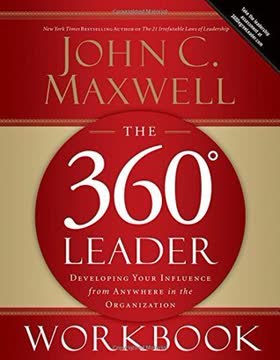
The 360 Degree Leader Workbook by John C. Maxwell receives an overall rating of 4.13 out of 5 stars. Readers praise its practical approach to leading in all directions—up, down, and across organizations. Many find it valuable for middle management and non-leadership roles, emphasizing relationship-building and influence. Some longtime Maxwell readers note repetitiveness, and a few suggest it works best in group settings. The book is consistently recommended for anyone wanting to develop leadership skills regardless of their current position, with particular appreciation for its pragmatic, actionable principles.