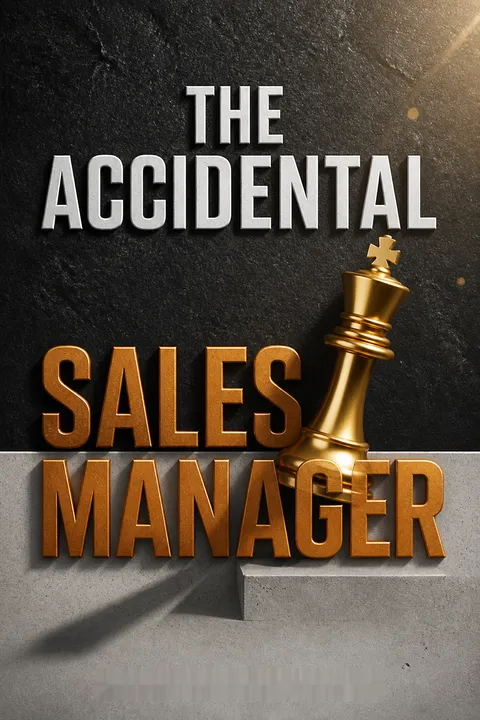


Key Takeaways
Stop making the sales; shape the conditions that let others make them.
The promotion changes the work. Chris Lytle compares sales leadership to fisheries management. His friend, a trout ecologist, cannot control every fish, so his team protects the watershed and habitat that support them. The parallel is direct: a manager cannot personally produce every sale. The manager shapes the people, processes, and working environment that make selling possible. Sales totals are lagging indicators, because the customer decision has already happened. Coaching prospecting, deal progress, and customer understanding gives the manager a chance to influence what happens next.
Build the conditions. A star salesperson can become a novice manager overnight. Individual selling skill does not automatically transfer to developing a team. The work is no longer just closing business, but helping others learn how to do it consistently.
The habitat analogy is useful because it shifts attention from controlling outcomes to improving the conditions that generate them. That is a systems perspective: recurring results depend on repeated interactions among people, incentives, and routines. It also guards against a common managerial trap, where a leader rescues one deal and mistakes personal intervention for organizational capacity. Still, environment is not everything. Market demand, product quality, and company decisions can constrain even a well-led team. The manager's task is to improve what can be influenced, while distinguishing those factors from conditions the team cannot control.
Book coaching time before routine work books your calendar.
Busy is not the same as useful. The Sales Management Trap is Lytle's model for how managers get stuck doing their old sales job and lower-level administrative or firefighting work, while neglecting people development. He calls development Stage 3 tasks: hiring, coaching, training, setting standards, and building capability. Strategic work sits at an even higher level. These tasks create leverage because their benefits spread across the team.
Protect the high-value work. Schedule coaching and field observation before routine demands fill the week. When a salesperson brings a problem, ask them to propose a solution rather than taking the problem over. Clarify with the boss which priorities matter most, and spend time with reps before important customer meetings, when preparation can still change the outcome.
This is a practical response to a familiar design flaw in management jobs: urgent work is visible, while development work pays off less immediately and can be postponed indefinitely. Scheduling reverses that bias by treating coaching as core production rather than an optional extra. The idea also resembles capacity building in education: a teacher who solves every problem for students may keep the class moving, but leaves them dependent. The limitation is that some crises genuinely require direct intervention. The useful distinction is whether a manager is solving an exceptional problem or repeatedly absorbing work that belongs to the team.
Recruit continuously before a vacancy turns urgency into compromise.
Do not wait for an opening. Lytle argues that recruiting is an ongoing management responsibility, not a task to begin after someone leaves. A manager he profiles kept a recruitment ad running year-round and interviewed candidates even when no position was open. That created a deeper pool than the last-minute search for a warm body.
Select for capacity to sell. The book favors traits such as curiosity, intelligence, achievement drive, persistence, and willingness to learn over industry experience alone. It recommends structured interviews, reference checks, customer perspectives, and validated assessments rather than trusting a polished conversation. One cited comparison assigns interviews 14 percent validity and psychometric tests 53 percent, but these figures are not a substitute for judgment. Slow selection reduces costly mismatches; if coaching and clear expectations do not resolve a persistent performance problem, delaying a necessary exit can hurt both sides.
Continuous recruiting treats talent as a pipeline, not an emergency purchase. That is especially sensible in sales, where a vacancy can quietly reduce revenue during training and ramp-up. Structured questions also make candidates easier to compare and can reduce the influence of first impressions. But assessments deserve careful use: a test is only helpful when it has evidence of relevance to the actual role and is interpreted alongside observed behavior. The book's emphasis on drive and persistence should not become a search for a single personality type. Different markets and sales processes reward different combinations of judgment, patience, and assertiveness.
Turn vague wishes into fair standards people can see and meet.
Start with what is happening. A standard is a measurable expectation with consequences, unlike a wish that people become more proactive. Lytle warns against imposing targets without checking the baseline. In one example, corporate demanded 15 face-to-face calls a week even though reps typically made seven or fewer and the business was only 7 percent behind plan. A manager negotiated a more realistic increase to eight, rather than doubling activity without evidence.
Correct small gaps early. Managing the Gap means comparing actual performance with an agreed standard and addressing shortfalls while they are still manageable. Treat discipline as instruction, not merely punishment. Ask what got in the way, agree on a corrective action, and follow up. Like a referee applying graduated penalties, a manager can correct behavior before firing becomes the only remaining consequence.
Standards make expectations discussable instead of personal. A rep can debate whether eight meetings are feasible; it is much harder to act on a manager's vague disappointment. The baseline check is equally important because a target disconnected from current capacity can produce cynicism rather than effort. There is a further risk: once a measure carries consequences, people may optimize the number rather than the outcome. Call counts, for example, can reward low-value visits. Good standards therefore combine observable activity with evidence that the activity advances customer decisions and business results.
Coach with questions, and make bad news safe to tell.
Return ownership to the rep. Coaching helps a salesperson reason through a problem; training gives information or demonstrates a skill. Lytle's exercise asks managers to pose at least seven questions before offering advice. A rep struggling to defend a price might identify the customer's concern, consider evidence of value, and choose a next step without receiving a scripted answer from the boss.
Ask for evidence, not reassurance. One salesperson called a meeting successful after driving more than 200 miles, although no decision or dated next step had emerged. A manager who accepted that label could have entered an imaginary deal in the forecast. Asking what actually happened makes room for a truthful account. The manager's reaction to mistakes and losses determines whether reps report early warning signs or hide them until they become crises.
Questions do more than encourage ownership. They reveal how a salesperson is interpreting the customer, which gives the manager a chance to correct faulty assumptions rather than merely prescribe a tactic. Candor is a performance tool: without accurate information, coaching and forecasting become guesswork. This resembles psychological safety, the shared sense that speaking up will not invite humiliation or retaliation. Safety does not mean lowering standards or avoiding difficult feedback. It means separating a disappointing result from a person's worth, so the team can examine evidence clearly and respond before the problem compounds.
Train in small repetitions, then recognize progress precisely.
Learning needs follow-through. Lytle presents training as a continuing process, not a one-time seminar. The 90/20/8 Rule, cited from trainer Bob Pike, holds that people attend for about 90 minutes, learn for roughly 20, and need involvement every eight minutes to retain more. It is a practical training heuristic, not a universal law. Lytle favors short lessons, discussion, practice, and repetition over a flood of content. His golf example makes the point: one skill practiced between short lessons can be more useful than many corrections delivered all at once.
Achievement fuels motivation. Closing a sale and seeing a customer benefit can motivate more strongly than a pep talk. Recognition helps too, especially when it is specific: identify a measurable contribution rather than offering generic praise. Regular acknowledgment shows people that their work is noticed.
The emphasis on practice and repetition fits what is known about skill acquisition: information becomes usable through retrieval, feedback, and application, not exposure alone. Recognition also works best when it identifies a behavior the person can repeat, rather than flattering an identity. The caution is that short lessons can become fragmented if there is no coherent path from one skill to the next. A manager should connect each practice session to a real sales challenge, then check whether the behavior appeared in the field. Recognition should be credible and distributed fairly, or it can look like favoritism.
Bring business insight to buyers who already know your product.
Product facts are no longer enough. The internet gives buyers access to information before a salesperson arrives. Decisions also involve buying teams, and one stakeholder can block a purchase even when others support it. In that environment, a salesperson must help the buyer understand a business problem, not repeat what is already on a website.
Connect the buyer to the end user. A plastics supplier, for example, could learn how people actually use disposable plates and share that insight with distributors. That turns a product conversation into a discussion about where the distributor might find demand. The book also describes large retailers rotating buyers to discourage personal dependence. In such settings, a useful relationship rests less on social familiarity and more on understanding the buyer's business, constraints, and decision process.
The strongest version of this advice is not simply to bring more data. It is to translate information into a decision the customer can make. That connects consultative selling to information economics: buyers value help that reduces search costs, clarifies trade-offs, or reveals a neglected source of value. The approach also makes the salesperson more resilient when personal relationships are disrupted by turnover. A boundary matters, though. Insight should be relevant and responsibly gathered, not a pretext for overwhelming customers with reports. Expertise earns trust when it makes the buyer's situation clearer, not when it showcases the seller's knowledge.
Forecast commitments, not hope, and inspect the next step.
A prospect must engage. Engagement metrics count prospects who have agreed to a specific next action on the calendar. Lytle separates these prospects from information seekers, who may sound interested but leave the salesperson chasing them. His cited survey found that 54 percent of forecasted deals did not close, and 90 percent did not close when predicted. These figures make optimistic pipeline labels look less like evidence and more like wishful thinking.
Clear out stalled deals. Sales pipeline angioplasty is the process of removing dead opportunities and re-engaging plausible ones so forecasts become more useful. A short email asking whether the salesperson is still on the prospect's radar is one suggested prompt. A proposal, an enthusiastic meeting, or a high probability rating is not a commitment. Ask what the customer agreed to do next, and verify that the date is set.
Calendars offer a more concrete signal than a salesperson's confidence, because a buyer's scheduled action represents at least a small investment of time. This is a form of calibration: forecasts improve when predictions are repeatedly compared with observable outcomes. Yet a scheduled meeting is not proof of intent to buy. It is a leading indicator, not a verdict. Managers should examine the quality of the next step, the customer's role in it, and whether it moves a decision forward. The aim is not to eliminate uncertainty, which sales cannot do, but to keep uncertainty visible instead of disguising it as certainty.
Make sales meetings useful enough that people would choose them.
Replace reporting with participation. Lytle proposes testing meetings with three questions: Would reps attend if attendance were optional? Would they consider the time worth five dollars an hour? Would customers be comfortable watching? If the meeting is mostly a lecture or a public review of missed numbers, it is unlikely to pass. Send an agenda, assign roles, and use discussion, practice, customer stories, or shared problem-solving to draw out the team's experience.
Build a learning community. For an annual meeting, the book suggests small groups where salespeople share lessons learned, successful practices, and unresolved problems. This matters especially for remote reps who may feel that selling is a solitary struggle. End by asking what participants found most useful. People attend the same meeting but do not necessarily take away the same lesson.
A good meeting is an organizational learning mechanism, not a stage for the manager. Peer examples make abstract advice credible, while discussion helps people adapt a practice to different territories and customers. The optional-attendance test is a sharp proxy for value, although attendance alone cannot show whether skills transfer into the field. Meetings need a bridge to action: a behavior to try, a customer to use it with, and a follow-up conversation. The customer-watching test adds an ethical check too. If a sales meeting would embarrass the company in front of buyers, its internal advice may be misaligned with customer value.
Grow revenue by deepening focused accounts, not multiplying calls.
Too many targets dilute effort. Lytle describes a team whose reps made many cold calls but spread attention across hundreds of possible accounts. The proposed remedy was to focus each rep on a smaller, assigned list and return often enough to learn the business and build trust. An account list should guide sustained work, not function as permission to hunt everywhere.
Grow both customer count and account value. The book illustrates a plan to add 5 percent more paying customers each month while increasing average customer spending by 10 percent. Its example projects that the combination can roughly double sales within six months without doubling activity. That is an illustration, not a guarantee. Managers should test the assumptions against their sales cycle, capacity, and customers' real needs before turning the arithmetic into a quota.
Focusing effort on a manageable set of accounts is consistent with the logic of account-based selling: repeated, informed interactions can be more productive than maximizing raw reach. The two-part growth model is valuable because it prevents new-customer acquisition from becoming the only lever. Its arithmetic depends on compounding and on being able to grow existing accounts without damaging trust or retention. Those assumptions deserve scrutiny. Expansion is sustainable when additional purchases solve a genuine customer problem, not when a sales target pressures reps to extract more from accounts regardless of fit.
Analysis
The book's organizing move is to redefine sales management as a shift from individual production to the creation of team capability. That makes its stories unusually functional: the trout ecologist illustrates systems thinking, the overconfident forecast exposes how incentives distort information, and the sales meeting becomes a place to convert isolated experience into shared practice. The practical advice follows from this premise. Managers protect development time, recruit before vacancies, make expectations observable, coach through questions, and judge pipeline claims by customer commitments.
Its strongest insights concern feedback quality. A manager cannot improve what the team hides, and cannot develop a skill that training never asks people to practice. The emphasis on candid reporting, field observation, and small corrective steps is more operational than generic exhortations to inspire. It also links sales outcomes to behaviors a manager can actually influence, without pretending that the final purchase is under managerial control.
The framework has limits. The author's confidence in measurable standards can invite metric gaming if managers confuse activity with value. Calls, meetings, and scheduled next steps are indicators, not the customer outcome itself. Likewise, assessments and hiring traits can create false precision if applied without evidence that they predict performance in a particular sales context. Strong management therefore requires judgment alongside measurement: examine whether a metric is producing better customer decisions, not merely a better report.
The book was published in 2011, and its references to technology and sales training reflect that period. Its central managerial problems remain recognizable, though: information asymmetry has narrowed, buying groups complicate decisions, and remote teams need deliberate ways to learn together. The durable lesson is not that managers should control every activity. It is that they should build a team capable of seeing reality, acting on it, and improving without making the manager the permanent rescuer.
Review Summary
The Accidental Sales Manager receives mixed reviews, with an average rating of 3.91/5. Readers appreciate its modern approach to sales management, practical advice on team leadership, and focus on effective meetings. Some find it particularly useful for new sales managers transitioning from sales roles. Critics note that some advice is generic, and experienced managers may find limited new insights. The book is praised for addressing the challenges of promoting salespeople to management positions and providing valuable tools for sales team improvement. Several reviewers recommend it as a helpful resource for aspiring or new sales managers.
People Also Read







Glossary
The Sales Management Trap
Low-level work crowds out developmentA model describing how newly promoted sales managers can remain absorbed in selling, administration, and day-to-day problem solving instead of developing their teams. These lower-level demands may be necessary, but they consume time that could be spent recruiting, coaching, training, and setting standards. The trap is escaped by deliberately reserving time for work that builds team capability.
Stage 3 tasks
People-development responsibilitiesThe book's term for sales management work focused on developing employees, including recruiting, training, coaching, setting standards, and building performance. These tasks differ from doing sales personally or handling routine operational details. They create leverage because improved skills and judgment can raise the performance of multiple salespeople, rather than producing only one manager's individual sales.
A players
Process-led salespeopleLytle's label for salespeople who guide a sale through a repeatable process rather than simply agreeing to whatever the buyer proposes. They plan, ask questions, protect the time needed for meaningful conversations, and adapt to the individual customer while maintaining a coherent method. The label describes a style of selling, not a claim that only one personality type can succeed.
B players
Buyer-led, inconsistent sellersLytle's label for salespeople who tend to accommodate buyers rather than guide a sale through a practiced process. They may compress a useful meeting to fit a buyer's limited offer of time, avoid difficult questions, or worry more about being liked than helping the customer decide. The book argues that coaching, practice, and accountability can address some of the behaviors associated with this category.
Managing the Gap
Correct shortfalls earlyA method for comparing a salesperson's actual performance with an agreed standard, then addressing the difference before it grows. The manager discusses what caused the shortfall, agrees on a practical corrective action, and checks progress. The goal is an early course correction that teaches and restores performance, rather than waiting until a small deficit becomes a major disciplinary problem.
Productivity Loop
Achievement strengthens motivationA model linking successful work, recognition or reward, and the motivating effect of seeing a customer benefit. A salesperson who closes a sale experiences achievement; recognition can reinforce the effort, while a satisfied customer provides evidence that the work mattered. The model suggests that managers should create opportunities for meaningful success rather than relying mainly on speeches or contests to produce enthusiasm.
Engagement metrics
Count agreed customer next stepsMeasures of how many prospects have agreed to a specific next action, ideally scheduled on a calendar. They are intended to show whether customers are participating in the buying process, rather than merely receiving calls, proposals, or follow-up messages. The book treats these measures as leading indicators of pipeline health, while recognizing that an agreed meeting does not guarantee a sale.
Sales pipeline angioplasty
Remove dead deals from forecastsLytle's metaphor for systematically clearing stalled or implausible opportunities from sales pipelines and re-engaging prospects who may still have a real need. The process aims to improve forecast accuracy, shorten wasted effort, and help salespeople focus on live opportunities. It involves checking for customer participation and a defined next step instead of trusting optimistic labels or unsupported probability estimates.
90/20/8 Rule
Vary instruction with participationA training heuristic attributed in the book to adult educator Bob Pike. It proposes that learners may attend for about 90 minutes, actively learn for roughly 20 minutes, and benefit from being involved in discussion or application about every eight minutes. The rule is offered as a planning aid for interactive sessions, not as a universal measurement of attention or learning.
The Magic E-Mail
Prompt a stalled prospectA brief follow-up technique for a prospect who has stopped responding. The salesperson sends a short message asking whether the conversation remains active, rather than sending another long proposal or making repeated calls without a clear purpose. The aim is to prompt a response, including a no, so the salesperson can either schedule a next step or remove the deal from the forecast.
FAQ
What's "The Accidental Sales Manager" about?
- Overview: "The Accidental Sales Manager" by Chris Lytle is a guide for sales managers who have been promoted from sales roles without formal management training.
- Focus: It emphasizes the transition from being a top salesperson to managing a sales team, highlighting the different skill sets required.
- Structure: The book is structured around practical advice, lessons learned from experienced managers, and strategies to avoid common pitfalls in sales management.
- Goal: The ultimate aim is to help sales managers lead their teams to achieve record profits by focusing on people development and strategic planning.
Why should I read "The Accidental Sales Manager"?
- Practical Advice: The book offers actionable strategies for new sales managers to effectively lead their teams.
- Real-World Examples: It includes insights and stories from successful sales managers, providing relatable and applicable lessons.
- Skill Development: Readers will learn how to transition from sales to management, focusing on coaching, mentoring, and strategic planning.
- Avoiding Pitfalls: The book helps managers avoid common mistakes and traps that can hinder their success and that of their teams.
What are the key takeaways of "The Accidental Sales Manager"?
- Transition Challenges: Understand the challenges of moving from sales to management and how to overcome them.
- Coaching and Mentoring: Emphasize the importance of coaching and mentoring to develop a successful sales team.
- Strategic Planning: Learn to focus on strategic tasks that drive long-term success rather than getting bogged down in daily minutiae.
- Accountability and Standards: Establish clear standards and accountability to ensure team performance aligns with company goals.
What is the "Sales Management Trap" in "The Accidental Sales Manager"?
- Definition: The "Sales Management Trap" is a model that highlights how new sales managers often get stuck in low-level tasks, preventing them from focusing on strategic management.
- Stages: It consists of four stages, with Stage 1 and 2 tasks being non-management and management duties that can consume time and energy.
- Escape Mechanisms: The book provides strategies to escape these traps, such as planning higher-level tasks first and cultivating the right relationships.
- Goal: The aim is to move managers from being trapped in daily tasks to focusing on developing their team and strategic planning.
How does Chris Lytle suggest handling underperforming salespeople?
- Trust Instincts: Act quickly on instincts when a problem is identified, as delaying can worsen the situation.
- Firing as Relief: Understand that firing an underperforming salesperson is often a relief for both the manager and the employee.
- Coaching and Support: Provide coaching and support to help salespeople improve, but recognize when it's time to let go.
- Clear Standards: Set clear performance standards and hold salespeople accountable to them, ensuring they understand expectations.
What are the "Fourteen Lessons You Won't Have to Learn the Hard Way" in the book?
- Trust Instincts: Act on instincts quickly when issues arise.
- Firing Relief: Firing underperformers is often a relief for both parties.
- Rebellion Against Boss: Salespeople may rebel against authority, so inclusiveness is key.
- Share Control: Allow salespeople to buy into decisions to foster commitment and motivation.
What is the "Forgotten Rookie Syndrome" mentioned in the book?
- Definition: The "Forgotten Rookie Syndrome" refers to new sales managers being treated as experienced hands despite being novices in management.
- Promotion Issue: Often, new managers are promoted without adequate training or support, leading to challenges in their new role.
- Lack of Guidance: They may not receive the necessary guidance or mentoring to succeed in management.
- Solution: The book suggests seeking mentorship and focusing on developing management skills to overcome this syndrome.
How does "The Accidental Sales Manager" address motivation?
- Job Clarity: Motivation stems from job clarity and understanding what is expected.
- Achievement: Closing sales and achieving goals are powerful motivators for salespeople.
- Recognition: Regular recognition and praise are essential for maintaining motivation.
- Belief Building: Managers should focus on building belief in their team’s abilities and potential.
What are the best quotes from "The Accidental Sales Manager" and what do they mean?
- "You get paid for doing less of what you got promoted for doing more of." This highlights the paradox of management, where managers must focus on strategic tasks rather than the sales activities that got them promoted.
- "To know and not to DO is not to know." Emphasizes the importance of action and implementation over mere knowledge.
- "Selling is a shared experience that salespeople have all by themselves." Reflects the isolation salespeople can feel and the importance of team support and communication.
- "You can manage a function, but you coach people." Stresses the difference between managing tasks and developing people through coaching.
How does Chris Lytle suggest improving sales meetings?
- Engagement: Ensure meetings are engaging and involve all participants, rather than being one-way lectures.
- Purposeful Agenda: Have a clear agenda with specific objectives and outcomes for each meeting.
- Variety and Interaction: Use different formats, such as guest speakers, debates, and role-playing, to keep meetings fresh and interactive.
- Feedback and Improvement: Regularly seek feedback on meetings to continuously improve their effectiveness and relevance.
What is the "Magic E-Mail" mentioned in the book?
- Purpose: The "Magic E-Mail" is a tool to re-engage prospects who have gone silent or stalled in the sales process.
- Content: It is a simple, two-sentence email that asks if the salesperson is still on the prospect's radar.
- Effectiveness: The email is designed to prompt a quick response, either re-engaging the prospect or allowing the salesperson to move on.
- Usage: It is a practical tactic for clearing out dead deals from the sales pipeline and focusing on active opportunities.
How does "The Accidental Sales Manager" suggest handling change in sales?
- Personal Impact: Recognize that all change is personal and affects individuals at a gut level.
- Denial and Acceptance: Understand that initial reactions to change often involve denial, and acceptance takes time and leadership.
- Involvement: Involve team members in the change process early to reduce resistance and build buy-in.
- Communication: Maintain open communication and provide information to help team members navigate change effectively.
Download PDF
Download EPUB
.epub digital book format is ideal for reading ebooks on phones, tablets, and e-readers.








