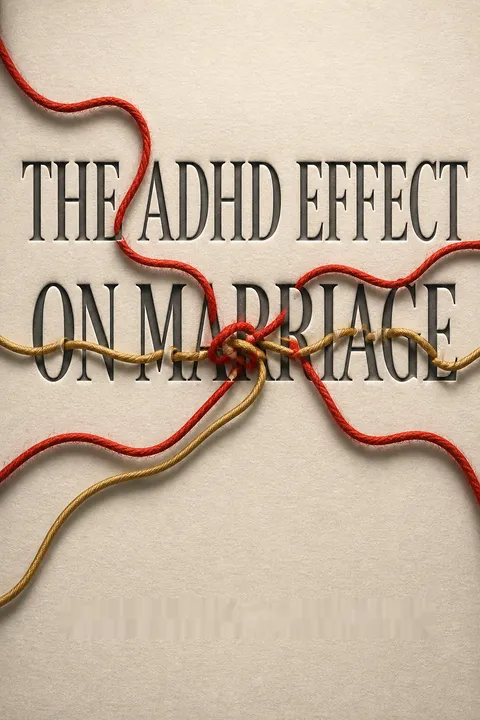


Key Takeaways
ADHD can destabilize a marriage even when neither partner means harm
A shared pattern, not a verdict. Orlov calls the relationship strain produced by ADHD symptoms and each partner’s reactions the ADHD effect. A missed task may be read as indifference, prompting anger or reminders; those responses can trigger retreat, which deepens the original loneliness. The harm is real, but it does not automatically prove that either spouse is uncaring or defective.
Risk is not destiny. The book cites older studies reporting that adults with ADHD were nearly twice as likely to divorce, and that 58 percent of relationships involving at least one partner with ADHD were clinically dysfunctional. These are historical research findings, not a forecast for any couple. Orlov and her husband, once close to divorce, rebuilt their relationship through treatment, changed habits, and deliberate reconnection.
The valuable shift is from judging a person’s character to examining an interaction pattern. A missed obligation can have an executive-function cause and still impose a serious cost on a partner. That distinction makes room for compassion without denying consequences. The cited statistics also deserve context: they reflect older studies and do not establish that ADHD alone causes relationship breakdown. They are best read as a warning to take recurring difficulties seriously, not as a verdict on a couple’s prospects.
Trace the symptom and each partner’s response before assigning blame
A cycle has several links. Orlov describes a symptom-response-response cycle: an ADHD-related difficulty prompts one partner’s reaction, which then shapes the other partner’s next move. For example, distraction may leave one spouse feeling ignored. Repeated criticism can prompt the other to withdraw, making the first spouse feel even more abandoned. The conflict is not explained by the symptom alone or by the reaction alone.
Look for a changeable link. Both partners contribute to the pattern, but not in identical ways. The spouse with ADHD is responsible for addressing symptoms; the other partner is responsible for choosing how to respond and for protecting personal needs. Blame tends to turn spouses into opponents. Naming the sequence instead helps them identify where a different response, treatment, or practical support could interrupt it.
This model resembles a feedback loop: each person’s attempt to cope becomes part of the other person’s environment. It explains why a small event can acquire the force of a recurring relationship crisis. The model is strongest when it preserves differences in responsibility. Mutual influence does not mean equal impact or equal accountability in every case. A useful discussion therefore asks both what each person can change and what safeguards are needed when a repeated behavior causes tangible harm.
Ask what a behavior means before treating it as rejection
The same act can tell different stories. An inattentive spouse may seem to be choosing a computer, hobby, or errand over a partner. Orlov argues that distraction can be mistaken for lack of love, especially after the intense attention of courtship fades. The non-ADHD partner’s loneliness remains valid, but assuming a motive before checking it can add fear and resentment to the original problem.
Get curious, then get specific. Ask neutral questions about what happened and what each person understood, rather than opening with an accusation. The book also warns against diagnosing a spouse from a checklist: ADHD symptoms overlap with other conditions, and professional evaluation should consider personal history and possible coexisting issues. Understanding a different perspective does not require agreeing with it or tolerating every consequence.
Separating observation from interpretation is useful well beyond ADHD. In conflict, a partner often reacts not only to an event but to the story attached to it: a forgotten errand becomes proof of not mattering. Checking the story can lower defensiveness and improve accuracy. Yet repeated behavior also creates legitimate evidence about reliability. Curiosity should open a conversation, not require one partner to dismiss a pattern that remains harmful after its causes are understood.
Replace spouse-management with negotiated ownership and visible systems
Chores carry relationship meaning. When one spouse repeatedly handles bills, childcare, or housework, the issue is not merely an untidy room. The imbalance can communicate that one person is carrying the partnership alone. Orlov calls the resulting parent-child dynamic especially damaging: reminders and criticism make one spouse the manager and the other the managed, eroding respect and romance.
Make responsibility concrete. The book recommends measuring the workload and agreeing on who owns which tasks, rather than relying on vague promises. Its Recipe for Success method uses cards to collect tasks, discuss priorities, assign this week’s work, and mark completed jobs. This makes expectations visible and limits the pile of competing demands. The goal is a workable contribution, not identical speed or identical methods.
Household labor is both practical work and a signal of recognition. Making it visible helps couples distinguish a genuine capacity problem from a disagreement about standards or priorities. External systems can reduce reliance on memory and repeated prompting, but they should not quietly make one partner the permanent project manager. A fair arrangement needs clear ownership, review, and room to renegotiate when workloads or abilities change.
Treat ADHD with more than medication or willpower alone
Use several kinds of support. Orlov’s three-legged stool model combines physical treatment, behavior changes, and strategies for interacting as a couple. Medication may help attention or impulse control, but it does not automatically create reliable routines or repair the effects of years of conflict. Behavioral supports might include reminders, written plans, exercise, or help with tasks that repeatedly overwhelm the household.
Treat the whole picture. A qualified clinician should assess ADHD and possible coexisting conditions rather than relying on a spouse’s guess. Treatment choices belong to the person receiving care and should be made with a medical professional. The non-ADHD partner may also need support for anxiety, depression, chronic stress, or anger. Progress should be judged by meaningful changes in daily life and the relationship, not by the mere fact that treatment has begun.
The model is compelling because it connects clinical care to everyday function. A change in attention matters to a marriage when it helps produce follow-through, safer decisions, or more engaged conversation. The emphasis on experimentation also fits a condition that varies across people. Still, the book’s account of brain chemistry is simplified, and no single treatment is suitable for everyone. Medical decisions require individualized assessment, and relationship improvement should not be promised as an automatic result.
Set firm boundaries without taking over your partner’s life
Anger signals strain. Orlov treats chronic anger as a warning that a person’s needs or sense of self may have been compromised. Venting, humiliation, and verbal abuse do not solve the underlying problem; they tend to intensify defensiveness and withdrawal. The book urges each spouse to take responsibility for personal conduct without assuming responsibility for controlling the other person’s choices.
Define what you need to live well. A personal boundary, in Orlov’s specialized use, is a value or behavior necessary for living as the person one wants to be. It differs from a demand that a spouse change. Respect, for example, can guide how someone speaks and what treatment they will accept. Boundaries make room for support and negotiation, while also clarifying what cannot continue indefinitely.
This distinction helps separate self-respect from control. A boundary describes one’s own limits and actions; a demand tries to govern another adult. The difference matters especially when a partner is exhausted and tempted to compensate for everything. Letting go of control, however, is not the same as tolerating intimidation, abuse, or danger. Where safety is at stake, protection and professional help take priority over preserving a conversational technique or the appearance of mutuality.
Slow difficult conversations until both partners feel understood
Understanding comes before solutions. A learning conversation is a structured exchange in which one partner speaks briefly, the other restates the meaning in their own words, and the speaker corrects misunderstandings before they switch roles. The aim is to discover what an issue means to each person, not to win or immediately fix it. Validation means recognizing that a partner’s feelings and reasoning make sense from that person’s perspective, even without agreement.
Build in a pause. Couples can agree on a neutral verbal cue to stop a familiar argument before it escalates. They can also schedule a short weekly meeting for household plans and difficult topics. These structures accommodate distraction, memory lapses, and shame while reducing the need for repeated reminders. Short turns, written agreements, and genuine listening help keep a conversation from becoming another test of competence.
The method reduces conversational load by making listening observable rather than assumed. Restating a point also reveals where partners are responding to different versions of the same event. This is especially useful when attention or working memory is strained. Validation is not a substitute for decisions, though. Once both perspectives are understood, couples still need explicit agreements, deadlines, and a way to review whether those agreements are working.
Rebuild trust through attention, follow-through, and shared novelty
Trust needs evidence. Grand promises cannot undo a history of inconsistency. Orlov emphasizes repeated, visible actions: showing up, completing agreed tasks, and making time for a partner’s attention. She and her husband began creating a new relationship after years of distress, including a ten-day biking trip in France that gave them shared adventure and a reason to laugh together. New experiences can help couples reconnect, but they do not replace reliable behavior.
Make connection deliberate. The book describes research by psychologist Arthur Aron suggesting that couples can feel closer after doing something new and challenging together; in the cited experiments, activities averaged about seven minutes. Orlov recommends scheduling time together, varying shared activities, and rebuilding physical intimacy gradually. For some couples, ordinary acts such as taking over a meaningful household task communicate love more convincingly than elaborate romance.
Novelty offers a useful counterweight to the narrowing attention of routine: partners see one another in a fresh setting instead of only as co-managers of obligations. But excitement is a catalyst, not a repair plan. Trust depends more heavily on whether behavior becomes dependable over time. The strongest approach pairs enjoyable shared experiences with concrete follow-through, while recognizing that some breaches of trust require explicit agreements, outside support, or firm limits.
Analysis
Orlov’s central contribution is a relational account of adult ADHD. Symptoms matter, but the damage grows through their interpretation and the couple’s repeated responses: distraction can be read as rejection, reminders become criticism, and withdrawal deepens the original loneliness. That framing is more useful than either moral condemnation or the claim that ADHD explains everything. It restores agency to both partners while keeping their responsibilities distinct.
The book also treats practical logistics as emotional evidence. A chore may stand for care, reliability, or shared adulthood; a missed promise may be experienced as abandonment, even if it arose from forgetfulness. This explains why apparently small domestic disputes can become identity-level conflicts. External task systems are not merely organizational tricks. They can make care observable and reduce the exhausting role of one spouse acting as the other’s memory and supervisor.
Its six-part repair path moves from empathy and emotional obstacles toward treatment, communication, personal boundaries, and renewed intimacy. The sequencing matters: asking couples to rekindle romance while anger, overload, or untreated symptoms dominate is likely to feel hollow. Orlov’s own recovery story gives the advice credibility and hope, while also showing that change takes repeated work rather than a single insight.
Some claims need careful framing. The divorce and dysfunction figures are drawn from older studies cited in a 2010 book, so they should not be treated as current population estimates or individual predictions. The book’s dopamine-centered explanation is also a simplified account of a complex condition. Its gendered examples reflect the author’s observed audience and should not be mistaken for universal roles. Finally, shared responsibility must not become false equivalence: ADHD may explain behavior, but it does not erase its impact or excuse abuse. The strongest reading combines compassion with measurable accountability, clinical judgment, and boundaries that protect both partners.
Review Summary
The ADHD Effect on Marriage receives mixed reviews. Many readers find it helpful for understanding ADHD's impact on relationships, offering practical advice and insights. However, critics note its heteronormative focus, repetitive content, and potential to reinforce negative stereotypes. Some praise its empathetic approach and actionable strategies, while others find it outdated or overly simplistic. The book's perspective primarily addresses non-ADHD wives with ADHD husbands, limiting its relevance for diverse relationship dynamics. Overall, readers' experiences vary greatly, reflecting the complex nature of ADHD in relationships.
People Also Read







Glossary
ADHD effect
Relationship strain around ADHDOrlov’s term for the ways ADHD symptoms, and both partners’ responses to them, can disrupt a relationship. It includes practical burdens such as missed tasks, emotional experiences such as loneliness or shame, and recurring interaction patterns such as criticism and withdrawal. The term emphasizes that symptoms affect the couple, not only the person diagnosed.
Symptom-response-response cycle
A repeating interaction loopA pattern in which an ADHD-related symptom prompts one partner’s response, which then prompts a further response from the other. For instance, distraction may be met with repeated reminders, which may lead to retreat and greater loneliness. The concept helps couples examine the full sequence rather than assigning the whole problem to one person.
Three-legged stool
A three-part treatment modelOrlov’s image for effective ADHD treatment in a committed relationship. Its three supports are physical care, including clinician-guided medication or exercise; behavioral changes, such as reminder systems; and strategies for interacting with a partner. The model argues that symptom relief alone may not create new habits or repair relationship patterns.
Learning conversation
A structured listening exchangeA conversation designed to clarify what each partner thinks and feels before trying to solve a disagreement. One person speaks briefly, the listener restates the idea in their own words, and the speaker corrects any misunderstanding. The partners then switch roles. The technique encourages validation, limits interruption, and aims for understanding rather than victory.
Personal boundary
A value guiding one’s conductOrlov defines a personal boundary as a value, characteristic, or behavior a person needs in order to live as the person they wish to be. It guides that person’s choices and clarifies what treatment they can accept. It is distinct from a wish that a partner change, because it is anchored in one’s own actions and limits.
Recipe for Success
A shared household task systemA card-based method for organizing household work. Partners record tasks, discuss and prioritize them together, assign realistic work for the week, and move completed tasks out of the active list. By making plans visible and specific, the system can reduce memory demands, clarify ownership, and prevent every unfinished task from becoming an immediate argument.
Hyperfocus courtship
Intense early romantic attentionThe intense, stimulating attention that a person with ADHD may devote to a new romance. Orlov describes how that focus can fade as the relationship becomes familiar, leaving the other partner feeling suddenly ignored. The concept encourages couples not to treat the change automatically as proof that love has disappeared, while still addressing the need for ongoing connection.
Five Core Concerns
Needs shaping negotiationA negotiation framework by Roger Fisher and Daniel Shapiro that Orlov applies to couples. It names recurring human concerns involving being valued, belonging, freedom to decide, recognized standing, and a meaningful role. The framework helps partners look beneath a surface dispute, such as chores, to the needs that make the dispute emotionally charged.
FAQ
What's The ADHD Effect on Marriage about?
- Focus on ADHD in Relationships: The book examines how ADHD symptoms uniquely impact marriages, creating specific challenges for couples.
- Rebuilding Relationships: It offers a structured approach to understanding these challenges and provides practical steps to strengthen relationships.
- Personal Experiences: Author Melissa Orlov shares her journey and insights, along with real-life stories from other couples, making the content relatable.
Why should I read The ADHD Effect on Marriage?
- Expert Insight: Written by Melissa Orlov, a recognized authority on ADHD and relationships, it offers valuable strategies for couples.
- Hope and Guidance: The book provides hope for couples overwhelmed by ADHD, showing that understanding and treatment can lead to a happier marriage.
- Practical Steps: It outlines specific tools and steps that couples can implement to improve their relationship.
What are the key takeaways of The ADHD Effect on Marriage?
- Understanding ADHD's Impact: Recognizing how symptoms like distractibility affect communication and emotional connection is crucial.
- Empathy and Communication: Cultivating empathy and improving communication techniques are essential for rebuilding trust.
- Structured Approach: The book presents a six-step method focusing on empathy, emotional obstacles, treatment, communication, boundaries, and romance.
What are the best quotes from The ADHD Effect on Marriage and what do they mean?
- Acceptance Over Change: “When individuals in a marriage stop wishing for their partners to change... their marriage can be strengthened.” This emphasizes acceptance and understanding.
- Tangible Effects of ADHD: “ADHD symptoms create real physical, financial, and mental hardship.” This highlights the need for effective treatment and coping strategies.
- Possibility of Change: “You can move past your current unhappiness and create something better than you could have ever dreamed possible.” This serves as a motivational reminder.
How does The ADHD Effect on Marriage define the "ADHD effect"?
- Destructive Patterns: The "ADHD effect" refers to negative patterns in relationships due to ADHD symptoms, leading to misunderstandings.
- Mutual Responses: It highlights how both partners contribute to these patterns, creating a cycle of frustration.
- Awareness and Change: Understanding the ADHD effect is the first step toward breaking these patterns.
What are the six steps to a better relationship outlined in The ADHD Effect on Marriage?
- Cultivating Empathy: Focus on understanding each other's experiences related to ADHD.
- Addressing Obstacle Emotions: Confront emotions like anger and fear that hinder the relationship.
- Getting Treatment: Emphasizes effective treatment, including medication and behavioral strategies.
- Improving Communication: Provides techniques for enhancing communication.
- Setting Boundaries: Establish healthy boundaries to express needs without feeling overwhelmed.
- Reigniting Romance: Encourages finding joy and fun in the relationship again.
How does The ADHD Effect on Marriage suggest improving communication?
- Use Neutral Language: Advises asking questions in a neutral tone to avoid conflicts.
- Weekly Learning Conversations: Regular discussions about feelings can help address ongoing issues.
- Focus on Actions, Not Intentions: Encourages differentiating between actions and intentions for empathy.
What are some common patterns in ADHD marriages described in The ADHD Effect on Marriage?
- Parent-Child Dynamic: One partner often takes on a parental role, leading to resentment.
- Chore Wars: Disagreements over responsibilities can escalate into significant conflicts.
- Blame Game: Couples may fall into a cycle of blaming each other, exacerbating resentment.
How can couples address the "Parent-Child Dynamic" in their relationship?
- Stop Verbal Abuse: Emphasizes that verbal abuse is never acceptable and must be addressed.
- Avoid Nagging: Encourages finding constructive ways to express needs without nagging.
- Encourage Responsibility: ADHD partners should take ownership of their symptoms.
What role does empathy play in The ADHD Effect on Marriage?
- Foundation for Understanding: Empathy is crucial for understanding each other's experiences.
- Improves Communication: Helps couples communicate more effectively, reducing misunderstandings.
- Strengthens Connection: Recognizing and validating feelings can rebuild trust and intimacy.
How does ADHD affect communication in marriage according to The ADHD Effect on Marriage?
- Blurting and Impulsivity: ADHD partners may interrupt, leading to misunderstandings.
- Distraction During Conversations: Struggle to stay focused can leave issues unresolved.
- Need for Validation: Validating each other's feelings fosters a supportive environment.
How can couples reignite romance according to The ADHD Effect on Marriage?
- Engage in New Activities: Trying new activities together can strengthen bonds.
- Focus on Connection: Prioritizing emotional connection over logistics helps rediscover love.
- Schedule Quality Time: Setting aside dedicated time fosters intimacy and connection.
Download PDF
Download EPUB
.epub digital book format is ideal for reading ebooks on phones, tablets, and e-readers.








