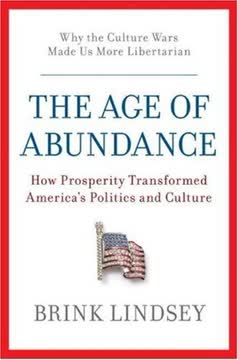
Key Takeaways
1. America's Post-War Leap from Scarcity to Freedom
In the years after World War II, America crossed a great historical threshold.
Breaking scarcity's bonds. Post-World War II America fundamentally redefined the human condition, moving beyond the "realm of necessity" where basic material needs dominated life. Immense productive powers, unleashed by a complex division of labor, shattered age-old bonds of scarcity, making physical survival and security a given for most. This was a new stage of capitalist development, fulfilling Marx's prophecy of a "realm of freedom" not under communism, but through market forces.
Maslow's pyramid ascended. With material needs largely met, Americans began to climb Abraham Maslow's hierarchy of needs. The focus shifted from physiological survival and safety to higher aspirations like love, belonging, self-respect, social status, and ultimately, self-actualization. This unprecedented mass pursuit of personal fulfillment transformed the national psyche, replacing the old struggle for survival with a "feverish and unquenchable desire" for more.
A new human condition. This liberation from material necessity was a fundamental change, rendering many "age-old verities" obsolete. Truths and rules from millennia of subsistence agriculture no longer applied, pushing Americans into uncharted territory. The nation embarked on an exploration of mass affluence, marked by exhilarating discoveries, tragic errors, and a great deal of "blind groping and simple muddling through."
2. The Protestant Ethic's Unintended Cultural Transformation
American capitalism is derided for its superficial banality, yet it has unleashed profound, convulsive social change.
From self-restraint to self-expression. The Gilded Age saw the initial crumbling of stern Protestant morality under the weight of machine-made bounty. The traditional bourgeois ethic, which valued work as its own reward and wealth as a sign of virtue, began to relax. Affluence transformed into a playground for self-assertion and personal fulfillment, with "pecuniary emulation" and "conspicuous consumption" replacing older struggles.
Christianity made consumer-friendly. This shift was actively promoted by figures like Bruce Barton, who reimagined Jesus as "the founder of modern business" and a "superb executive." The Protestant work ethic was reinterpreted to embrace pleasure and consumption, with the message shifting from "Pray, obey, sacrifice thyself" to "Amuse thyself, take care of yourself." This new, permissive commercial culture began to spread, colonizing areas once dominated by religion and family life.
Mass production creates mass consumers. Business leaders realized that increased productivity required increased demand. The idea that "mass production can produce consumers by creating buying power" led to a cultural acceptance of higher wages and shorter hours for workers. This attenuated class conflict, as workers increasingly focused on joining the middle class rather than overthrowing it, defining success as a "continually larger share for labor" within the wage system.
3. The Fifties: Surface Calm, Deep Currents of Change
Beneath the gray flannel moderation and genial civility of the Eisenhower years was a social order in the throes of cultural commotion.
Anxiety beneath affluence. The first generation to experience mass affluence carried fresh memories of depression and war, leading to a "gnawing dread" of hard times' return. This anxiety shaped their pursuit of happiness, leading to a longing for simple, humble pleasures and stability in home and family. The post-war boom saw a mass migration to suburbia, a "crabgrass frontier" offering emancipation from urban congestion and the freedom to raise children in wholesome surroundings.
Domesticity and religious revival. The baby boom and the rise of suburbia fostered a family-centered life, idealized in sitcoms and promoted by the new medium of television. This era also saw a flurry of religious expression, with church membership soaring. However, this revitalized Protestantism was less judgmental and more therapeutic, focused on "peace of mind" rather than "self-restraint." Catholicism and Judaism were also assimilated into a "triple melting pot," creating a generic "faith in faith" that lacked specific dogma but affirmed American values.
Seeds of discontent. Despite the apparent calm, the 1950s harbored significant discontents. African Americans, still excluded from the "classless society" narrative, grew increasingly impatient with Jim Crow. Housewives, confined to domestic roles, felt "miserably unhappy" and yearned for self-realization beyond the home. Meanwhile, a distinctive youth market emerged, fueled by unprecedented prosperity and Dr. Spock's permissive parenting advice, leading to a culture of adolescent rebellion and "teen angst."
4. Two Awakenings: Counterculture vs. Evangelical Revival
Both were animated by gigantic outbursts of spiritual energy, comparable in intensity and influence to Great Awakenings past.
The Aquarian rebellion ignites. The 1960s saw the "ticking calm before the bomb blast" explode into two opposing cultural movements. The counterculture, rooted in Beat bohemianism and youth rebellion, transformed from an apolitical fringe to a passionately engaged mass movement. Fueled by the civil rights struggle's prophetic grandeur and psychedelic drugs' mystical visions, young people, especially college-educated baby boomers, challenged all forms of authority and convention, seeking "radical departures from the status quo."
Evangelicalism's unexpected comeback. Simultaneously, a very different countercultural movement, the evangelical revival, staged an unlikely comeback. Once marginalized and pessimistic, conservative Protestants, particularly in the booming Sunbelt, shed their defeatism and embraced expansion and outreach. Leaders like Oral Roberts and Billy Graham retooled their message, emphasizing "exuberant optimism" and "expect a miracle!" This movement provided a "fighting faith" for Americans alarmed by the counterculture's "mass insanity."
A clash of half-truths. These two awakenings, comparable to past Great Awakenings, inspired the left-right division that persists today. The counterculture embraced the new possibilities of mass affluence but was hostile to the institutions that created them. The evangelicals staunchly defended those institutions but shrank from the social dynamism they unleashed. This created a "messy and confused dialectic," where one side "denounced capitalism but gobbled up its fruits," and the other "cursed the fruits while defending the system that bore them."
5. Romantic Excesses and Their Bitter Harvest
The revolutionary ambitions of the countercultural left had pursued two distinctive but interwoven paths.
Utopian dreams, dystopian realities. The New Left envisioned "participatory democracy" and communal intimacy, while cultural radicals sought psychological transformation through "dropping out." Both paths proved to be dead ends. The political radicals, increasingly extreme and self-defeating, alienated mainstream America with anti-American rhetoric and violence, culminating in the Weathermen's embrace of Manson's atrocities. The communal experiment, lacking clear rules and authority, dissolved into "instability, transiency," and vulnerability to "outsized egos, free riders, and outright predators."
The dark side of liberation. The counterculture's "reckless disregard for the restraint and discipline" needed to make high ideals workable led to widespread turmoil. The idealization of divorce and the flight from marriage contributed to a "catastrophic collapse" of the American family, particularly among black families, with soaring illegitimacy rates. The "growing disdain for drudgery and routine" undermined the work ethic, leading to increased absenteeism, vandalism, and a "large-scale, voluntary withdrawal of young black men from the nation's workforce."
Crime and dependency's rise. The "blind rebelliousness" of the era, coupled with a "naïve faith that repression is the root of all evil," fueled a dramatic surge in crime. Liberal reformers, misdiagnosing the problem as a lack of social restrictions rather than proper socialization, were "unforgivably lax about the administration of justice." This, combined with the "welfare rights" movement encouraging reliance on the dole, led to a "nightmarish expansion of what came to be known as the underclass," where self-destruction and ruinous dependency replaced the promise of self-actualization.
6. Capitalism's Unstoppable Adaptability and Economic Restructuring
Aquarian radicals saw corporate America as the Enemy—materialistic, competitive, repressed, and repressive. Their hostility, however, was not reciprocated.
Commercializing rebellion. Savvy marketers and entrepreneurs realized that "romantic rebellion could be very good for business." Countercultural rhetoric and style were commercialized, with products and advertising pitches reflecting the new spirit of individualism and nonconformity. This "co-optation," though decried by radicals, was the beginning of a broader cultural change, as shifts in consumption patterns were "inextricably connected to deeper, more profound phenomena."
The Information Age dawns. The American economy underwent a "deep-seated restructuring," shifting from physical assets to "intangible ideas and 'human capital'." Manufacturing declined in relative importance, while "knowledge workers" (managers, professionals, technicians) grew to over half the workforce. This "encephalization" of the economy made power less stable, empowering talented entrepreneurs and leading to a "renaissance of entrepreneurship and dizzying technological change."
Deregulation and tax cuts. The stagflation of the 1970s discredited the New Deal's "managerial liberalism," opening the door for libertarian economic policies. Deregulation of industries like airlines and trucking, coupled with significant income tax cuts, aimed to restore competitive vigor. This shift, championed by Ronald Reagan, rejected the notion of "limits to growth" and reaffirmed America's "firm fundamental preference for jostling self-assertion," setting the stage for decades of robust economic expansion.
7. The Great Disruption and the Slow Reconstruction of Social Order
During the Great Disruption, the culture produced many cognitive constructs that obscured from people the consequences of their personal conduct on people close to them.
Unraveling and rebuilding. The "Great Disruption" of the 1960s and 70s saw a serious but temporary deterioration in the moral climate, as norms suited to an earlier way of life became obsolete. This period, marked by the Aquarian awakening's challenge to all hierarchy and authority, weakened basic commitments to law, work, and family. However, the 1990s initiated a "Great Reconstruction," as Americans, using their "inborn capacities for reason and sociability," began repairing frayed social bonds.
Reversal of negative trends. Key social indicators, after decades of decline, began to improve.
- Crime rates: Fell precipitously after peaking in the early 1990s, with violent crime down 37% by 2003, largely due to a 72% jump in incarceration.
- Welfare dependency: Declined sharply after the 1996 welfare reform, which instituted work requirements and benefit caps.
- Family breakdown: The divorce rate dropped 17% from a decade earlier, reaching its lowest point since 1971.
- Birth rates: Recovered from a mid-70s nadir, with the "Echo Boom" bringing total live births back above 4 million annually.
A new middle-class morality. This reconstruction led to a new version of middle-class morality: "more sober" than the "wild and crazy days" but far from old-style starchiness. Core commitments to family, work, and country remained strong, tempered by broad-minded tolerance and a "deep humility about telling others how they should live." This emerging ethos, while not without its flaws, represented a "genuine improvement" in social cohesion.
8. The Rise of the Libertarian Synthesis: An Unloved Compromise
What has emerged, then, in the broad center of American public opinion is a kind of implicit libertarian synthesis, one which reaffirms the core disciplines that underlie and sustain the modern lifestyle while making much greater allowances for variations within that lifestyle.
Accidental centrism. The ideological conflict between the Aquarian left and the evangelical right, though rancorous, proved inconclusive. The outcome was an "implicit libertarian synthesis," a "fiscally conservative, socially liberal" centrism that became culturally and politically dominant. This "unspoken and unloved compromise" was not the result of a self-conscious movement but an accidental by-product of the two opposing forces checking each other.
Ideological realignment. Political parties grew more ideologically consistent, with religious identity increasingly driving party affiliation.
- Republicans: Attracted white evangelicals and traditionalists, emphasizing patriotism, law and order, and free markets.
- Democrats: Became the home for secularists, feminists, and racial minorities, focusing on social justice and cultural acceptance.
This polarization, however, masked a broader centrist bulge in the electorate, where most Americans held nuanced views that defied rigid ideological labels.
Tolerance as a core value. The new middle-class morality embraced liberal attitudes on race and the role of women, now subjects of "overwhelming consensus." While views on homosexuality remained mixed, there was increasing acceptance of equal job opportunities and civil unions. This "nonjudgmental tolerance" became a defining feature, allowing for immense diversity while maintaining social peace, acting as a "wholesome anesthetic that soothes the pain of difference."
9. Hyperpluralism's Blessings and Burdens in Borges's Library
America, it seemed, were remaking their country into something like Borges’s library.
An open society flung wide open. The post-60s era ushered in "exuberant hyperpluralism," where old power structures crumbled and were replaced by a "seething ferment of innovation and differentiation." This was akin to Borges's Library of Babel, a vast collection containing all possibilities, where "sublime genius and arrant nonsense jostled side by side." This explosion of choices, from consumer products to lifestyles, was fueled by deregulation, globalization, and computerization.
The proliferation of subcultures. The new tolerance and suspicion of exclusivist claims to truth gave rise to an "exuberant outpouring of cultural experimentation and subcultural proliferation." From "headbangers, Goths, punks, ravers" to "soccer moms, metrosexuals, buppies," countless new affinity groups and communities emerged, often leveraging the internet and specialized media. This "plenitude" offered richer opportunities for self-realization and status creation, as individuals found niches beyond traditional class structures.
Vulgarity and unreason's toll. This expanded freedom came with a price. The "flood tide of prurience and vulgarity" in pop culture, driven by commercialism and adolescent tastes, led to "immense, seemingly limitless quantities of dross and dreck." Beyond crassness, the "intellectual sloth of superstition and unreason" flourished, with widespread belief in creationism, apocalyptic prophecies, and New Age hokum. This "contempt for truth," particularly in advertising and politics, was a "greater enemy of the truth than lies are," imposing heavy burdens, especially on the less educated.
10. The Enduring Pursuit of Happiness on Freedom's Frontier
Freedom, like Pandora’s box, always besets us with a host of vexing ills. We should recall, though, that Pandora’s box also gave humanity its most cherished blessing. It gave us hope.
Squandered potential and persistent ills. Despite remarkable achievements in complexity, unity, and stability, contemporary American society suffers from "squandered potential." The coarseness of pop culture, the incessant bombardment of advertising, and the "intellectual sloth of superstition" are undeniable vices. The "single greatest failing" is that "far too many people lack the middle-class skills and habits needed to thrive in contemporary life," condemning them to relative unproductiveness and vulnerability to dysfunctional behaviors.
Cultural lag and new opportunities. This failing is largely a "cultural lag," where working-class and underclass cultures remain "maladapted to current circumstances," failing to inculcate long-term planning, networking, and analytical skills. However, the knowledge economy's growing demand for high-skilled workers presents unprecedented opportunities for upward mobility. The "college premium" vigorously encourages human capital development, suggesting that the "golden circle of mass affluence's full promise" can expand further.
Navigating the treacherous landscape. Encouraging beneficent cultural change is a "frightfully difficult question," complicated by immigration and a "parasitical public-education establishment." The decentralized politics of mass affluence, coupled with sensational media and an inattentive electorate, leads to ideological polarization and a "sterile, left-right impasse." Yet, the "libertarian synthesis" offers a robust, if unloved, modus vivendi. The future holds both "glittering prizes" and "looming menace," but the "beauty of the idea of the pursuit of happiness" remains America's central, elastic, and enduring hope.
Last updated: