Plot Summary
Storm and Symbols
In a rain-lashed French village, Father Pascal Cambriel encounters a bloodied, deranged man carving alchemical symbols into his own flesh. The stranger, Klaus Rheinfeld, mutters cryptic Latin and wields a jeweled cruciform dagger, hinting at a secret knowledge and a legacy of pain. This chilling encounter sets the stage for a mystery that will span centuries, as the symbols and the man's madness point to a hidden manuscript and a quest for salvation that will draw in seekers, killers, and the desperate alike.
Rescue in the Night
Ben Hope, a former elite soldier turned specialist in finding lost people, infiltrates a kidnapper's lair in Spain to rescue a mutilated boy. His actions are swift and ruthless, revealing a man haunted by his own demons and driven by a need to save others. The rescue is successful, but the violence and trauma linger, foreshadowing the personal costs of Ben's chosen path and the darkness that follows him.
A Haunted Past
Ben's return to his isolated Irish home reveals a man broken by grief and guilt, cared for only by his loyal housekeeper, Winnie. A mysterious call from the wealthy Sebastian Fairfax offers Ben a new mission: to find the lost alchemist Fulcanelli or, more importantly, a manuscript said to hold the secret to saving Fairfax's dying granddaughter. Ben's initial refusal is overturned by memories of his own lost sister, Ruth, and the hope of redemption.
The Dying Child's Quest
Fairfax's story of his granddaughter's terminal illness and his belief in the alchemical elixir's power to heal her compels Ben to accept the impossible task. The quest is not just for a manuscript, but for hope itself—a hope that Ben, too, desperately needs. The emotional stakes are set: the life of a child, the weight of past failures, and the lure of ancient secrets.
Ghosts and Guilt
Ben's dreams are haunted by the loss of his sister, Ruth, and the guilt that drives him. His relationship with Winnie reveals the depth of his emotional wounds and his inability to let anyone close. The quest for the manuscript becomes intertwined with his need for atonement, making the search as much about inner healing as about external discovery.
Alchemy's Forbidden Legacy
In Oxford, Ben consults Professor Rose, learning of alchemy's secretive history and its persecution by the Church. The Cathars, medieval heretics who believed in spiritual transformation, were exterminated for their beliefs—beliefs that echo the alchemical quest for purity. The connection between alchemy, hidden knowledge, and violent suppression becomes clear, as does the danger of seeking such secrets.
Enemies in the Shadows
Dr. Roberta Ryder, a brilliant but ostracized biologist, pursues alchemical research in Paris, extending the lives of flies with a mysterious formula. Her work attracts ridicule, sabotage, and deadly attention from a secretive organization, Gladius Domini, led by the ruthless Archbishop Usberti. The stakes escalate as Roberta's assistant betrays her, and assassins close in on both her and Ben.
Parisian Pursuits
Ben's investigation leads him through Paris, from Notre Dame's cryptic carvings to encounters with would-be killers. The search for Fulcanelli's manuscript becomes a deadly game, with Ben and Roberta narrowly escaping assassination attempts. Their alliance is forged in danger, as they realize they are both targets of a powerful, fanatical enemy.
Collateral Damage
Inspector Luc Simon's marriage collapses under the strain of his work, while Roberta's world is shattered by betrayal and murder. The disappearance of bodies, the manipulation of evidence, and the indifference of authorities highlight the pervasive reach of Gladius Domini and the isolation of those who challenge it.
The Maverick Scientist
Roberta's experiments hint at the possibility of extending life, but her work is dismissed as quackery. Ben's skepticism is challenged by her results, and their partnership deepens as they share their respective burdens—her professional exile, his haunted past. Together, they pursue the clues left by Fulcanelli, even as the net tightens around them.
Betrayal and Blood
Roberta's assistant, Michel, is revealed as a traitor, sending reports to Gladius Domini. Attempts on their lives intensify, culminating in a deadly confrontation and a narrow escape from a staged train accident. The cost of the quest becomes personal, as trust is shattered and the body count rises.
The Sword of God
Archbishop Usberti's vision of a new holy war is revealed, fueled by alchemical secrets and a network of loyal fanatics. The Inquisitor, Franco Bozza, embodies the organization's brutality, torturing and killing without remorse. The quest for the manuscript is now a battle against a resurgent, militant faith determined to control the power of life and death.
Traps and Escapes
Ben and Roberta are lured into deadly traps, but their resourcefulness and growing trust allow them to survive. The lines between friend and foe blur, as police, criminals, and zealots all pursue their own agendas. The search for Fulcanelli's legacy becomes a race against time and betrayal.
The Train and the River
Ben is nearly killed in a staged car accident on a railway crossing, but Roberta's timely intervention saves him. Their bond is cemented by shared danger, and they become true partners in the quest. The violence escalates, drawing the attention of law enforcement and forcing them into a life on the run.
Unlikely Allies
Inspector Simon, initially an adversary, becomes an uneasy ally as the true threat of Gladius Domini emerges. The search for the manuscript leads Ben and Roberta through a labyrinth of codes, ciphers, and historical riddles, culminating in the discovery that the true treasure is hidden in the landscape itself.
The Inquisitor's Hand
Bozza's sadism claims more victims, and the organization's reach seems unstoppable. Innocents are caught in the crossfire, and the quest for the manuscript becomes a struggle for survival. The darkness at the heart of Gladius Domini is laid bare, as is the personal toll on those who oppose it.
The Manuscript's Trail
The clues left by Fulcanelli, encoded in the ravings of the madman Rheinfeld, lead Ben and Roberta to the House of the Raven. The journey is both physical and psychological, as Ben confronts his own guilt and the possibility of redemption. The manuscript's secrets are revealed to be both profound and perilous.
The Madman's Code
Ben cracks the code hidden in Rheinfeld's notebook, uncovering the location of the Cathar treasure and the true nature of the elixir. The journey takes him deep into the mountains, through hidden chambers and ancient traps, as the line between myth and reality blurs.
The House of the Raven
In a modernist villa built atop ancient secrets, Ben discovers the true legacy of Fulcanelli. The House of the Raven is both a physical place and a symbol of the seeker's journey. Here, Ben faces his greatest challenges—outwitting Bozza, confronting the guardian Antonia, and choosing between power and humility.
The Treasure of the Cathars
Deep within the mountain, Ben finds a hidden church filled with unimaginable wealth and the legendary elixir. The true treasure, however, is wisdom: the warning to use knowledge with humility and to keep silent in the face of temptation. The elixir's power is real, but its use comes with a heavy price.
The Final Confrontation
Returning to Fairfax, Ben discovers the old man's deception—there is no dying child, only a lust for immortality. The final confrontation is violent and cathartic, as Ben destroys the elixir and exposes the corruption at the heart of the quest. The cycle of exploitation and fanaticism is broken, but at great personal cost.
Truth and Redemption
Ben's journey ends not with the discovery of a miracle cure, but with the acceptance of his own humanity and the possibility of love. He and Roberta, both scarred by their experiences, find solace in each other. The true lesson of the alchemist's secret is not the conquest of death, but the embrace of life, forgiveness, and the courage to move forward.
Characters
Ben Hope
Ben Hope is a former elite soldier whose life is defined by loss and the relentless pursuit of redemption. Scarred by the childhood disappearance of his beloved sister Ruth—a trauma for which he blames himself—Ben channels his pain into rescuing others, often at great personal risk. His relationships are marked by distance and self-sabotage, as he fears intimacy and happiness. Ben's psychological complexity is rooted in survivor's guilt, a savior complex, and a deep-seated need to atone for past failures. Throughout the story, he evolves from a lone wolf, emotionally numb and self-destructive, to a man capable of trust, vulnerability, and love, especially through his partnership with Roberta Ryder.
Roberta Ryder
Roberta is a fiercely intelligent American biologist whose career is derailed by her pursuit of alchemical research. Ostracized by the scientific community, she persists in her experiments, driven by curiosity and a belief in the possibility of extending life. Roberta's psychological resilience is tested by betrayal, violence, and the constant threat of death. Her relationship with Ben is transformative, allowing her to move beyond isolation and fear. She is both a catalyst and a mirror for Ben's own journey, embodying the courage to challenge orthodoxy and the strength to survive against overwhelming odds.
Sebastian Fairfax
Fairfax is a powerful, resourceful man whose quest for the elixir of life is driven by a fear of mortality and a desire for control. His supposed love for his granddaughter is revealed as a fabrication, exposing his willingness to exploit others' pain for personal gain. Fairfax represents the dangers of unchecked ambition and the moral corruption that can arise from the pursuit of power. His psychological profile is marked by narcissism, cunning, and a lack of empathy, making him both a formidable adversary and a cautionary figure.
Archbishop Massimiliano Usberti
Usberti is a charismatic and ruthless figure, blending religious zeal with political ambition. His vision of a new holy war and a purified world order is underpinned by a willingness to use any means—torture, murder, manipulation—to achieve his ends. Usberti's psychological makeup is a volatile mix of messianic delusion, authoritarianism, and deep-seated insecurity. He is both a product and a perpetuator of the historical violence associated with religious extremism, serving as a dark mirror to the story's themes of faith and power.
Franco Bozza (The Inquisitor)
Bozza is a sociopath whose pleasure in inflicting pain is matched only by his religious fervor. His history of violence, misogyny, and sexual repression is channeled into his role as the Inquisitor for Gladius Domini. Bozza's psychological profile is defined by a lack of empathy, a need for dominance, and a perverse sense of purpose derived from his faith. He is the story's most terrifying antagonist, representing the ultimate consequence of fanaticism and the dehumanization of others.
Father Pascal Cambriel
Pascal is a gentle, wise figure who provides sanctuary and guidance to Ben and Roberta. His own experiences of war and suffering have deepened his empathy and understanding of human frailty. Pascal's role is that of a confessor and healer, helping Ben confront his guilt and find a measure of peace. He embodies the story's themes of forgiveness, humility, and the redemptive power of trust.
Inspector Luc Simon
Simon is a dedicated police officer whose personal life is unraveling under the weight of his work. Initially an antagonist, he becomes an ally as the true nature of the threat emerges. Simon's psychological struggle is between duty and compassion, cynicism and hope. His interactions with Ben and Roberta force him to confront his own limitations and the moral ambiguities of justice.
Antonia Branzanti
Antonia is Fulcanelli's granddaughter and the keeper of the House of the Raven. Blind but fiercely intelligent, she tests Ben's worthiness and ultimately entrusts him with the elixir. Antonia represents the continuity of wisdom across generations and the importance of humility in the face of great power. Her psychological strength lies in her acceptance of loss and her commitment to protecting knowledge from those who would abuse it.
Klaus Rheinfeld
Rheinfeld is a tragic figure whose obsessive-compulsive disorder and eidetic memory make him both a victim and a key to the mystery. His self-mutilation and cryptic codes are the result of trauma and betrayal, but also a testament to the indelible power of knowledge. Rheinfeld's psychological torment is a warning about the costs of obsession and the fragility of the human mind.
Michel Zardi
Michel is Roberta's assistant, whose loyalty is bought by Gladius Domini. His actions set in motion a chain of violence and mistrust, illustrating the ease with which ordinary people can become complicit in evil. Michel's psychological weakness is his desire for security and recognition, making him susceptible to manipulation and ultimately leading to his downfall.
Plot Devices
Dual Narrative Structure
The novel weaves together multiple storylines—Ben's search for the manuscript, Roberta's scientific experiments, and the machinations of Gladius Domini—creating a tapestry of intersecting motives and revelations. This structure allows for shifting perspectives, building suspense and deepening the emotional impact as characters' paths converge and diverge.
Historical Mysteries and Codes
The use of alchemical symbols, encoded messages, and historical references creates a sense of intellectual challenge and adventure. The gradual deciphering of Rheinfeld's notebook and Fulcanelli's clues mirrors the characters' psychological journeys, as understanding the past becomes a means of shaping the future.
Foreshadowing and Symbolism
The raven, the cruciform dagger, and the House of the Raven serve as symbols of transformation, secrecy, and the duality of knowledge. Foreshadowing is used to build tension, as early encounters and dreams prefigure later revelations and confrontations.
Psychological Realism
The characters' emotional struggles—guilt, grief, ambition, and the longing for connection—are as central to the story as the physical threats they face. The interplay between personal trauma and the quest for meaning elevates the narrative beyond a simple thriller, inviting readers to reflect on the costs and rewards of seeking truth.
Thematic Juxtaposition
The novel explores the tension between rational inquiry and spiritual longing, the dangers of unchecked ambition, and the necessity of humility in the face of the unknown. The juxtaposition of historical atrocities with contemporary fanaticism underscores the cyclical nature of human folly and the enduring relevance of ancient wisdom.
Analysis
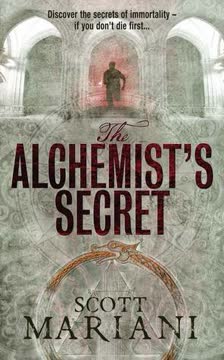
The Alchemist's Secret is more than a fast-paced thriller; it is a meditation on the human desire to transcend mortality and the perils of seeking ultimate answers. Through its intricate plot and psychologically rich characters, the novel interrogates the costs of obsession—whether for immortality, power, or absolution. The alchemical quest, with its promise of transformation, becomes a metaphor for personal growth: true salvation lies not in conquering death, but in embracing life, accepting loss, and finding the courage to love and forgive. The story warns against the dangers of fanaticism, the seduction of easy answers, and the exploitation of others' pain. In the end, the greatest secret is not the elixir itself, but the wisdom to use knowledge with humility and compassion. The novel's enduring lesson is that redemption is possible, not through miracles or hidden formulas, but through honesty, trust, and the willingness to move forward—together.
Last updated: