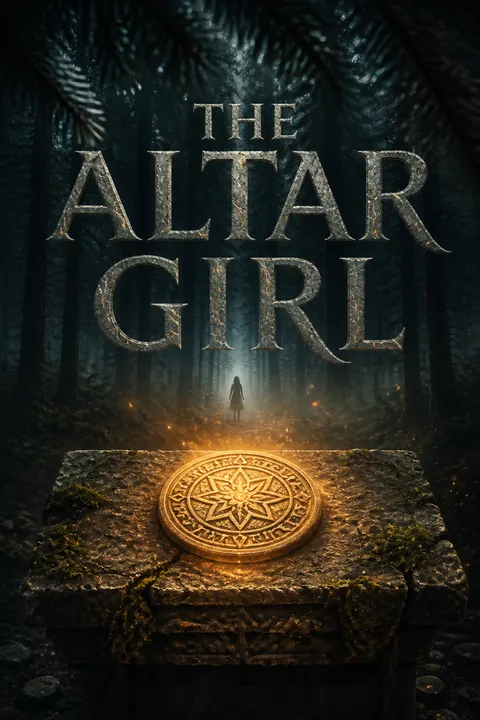


Plot Summary
Midnight Abduction
After returning to New York from her godfather's funeral in Hartford, financial analyst Nadia Tesla is seized a block from home and thrown into a black van. Her captor is Donnie Angel, a dangerous boy from her Ukrainian-American childhood. He says she asked questions at the funeral about the antique dealer's death and business, and now wants to know what she discovered.
Donnie's champagne and false warmth give way to a leg-breaking device laid out beside Nadia's chair. She understands that the police called the death an accident, but her godfather's lifelong fear of stairs makes that explanation suspect. Donnie's insistence that she explain his business turns her private doubts into a fight for survival.
The kidnapping makes investigation bodily before it becomes intellectual. Nadia's professional habit is to turn uncertainty into a model she can inspect, but Donnie strips away the distance that method usually provides. His hospitality is not a disguise for violence so much as its instrument: he uses the familiar rituals of their shared community to make coercion feel almost social. Nadia's first advantage is not physical strength but her ability to notice that his questions imply a hidden business and that her curiosity has already made her dangerous.
Three Nights Alone
The van's threat stirs a memory of Nadia at twelve, when her father leaves her on the Appalachian Trail for a three-day PLAST survival test. He frames toughness as necessary for an immigrant girl expected to compete with men; her brother Marko offers encouragement, then follows their father away.
Nadia builds a fire and lean-to using lessons from her scout leader, Mrs. Chimchak, and spends her first night alone. At dawn, two lost hikers appear. The anxious man carries a gun, while his angry girlfriend complains about the wilderness. Nadia is frightened, but she asks what has happened and learns that the man's brother is badly injured nearby. She abandons the safety of her camp to help them.
The childhood strand explains why Nadia reaches for competence when fear threatens to overwhelm her. Her father presents survival as preparation for a hostile adult world, but the test also reproduces the instability of home, where approval must be earned and weakness invites punishment. Marko's brief kindness offers a different model: protection without humiliation. Nadia's choice to help strangers shows that the training has become more than obedience. She has made its skills her own, and uses them according to a moral judgment her father did not teach.
Champagne and Cleats
As Donnie prepares the device, Nadia remembers their first date when she was thirteen and he was sixteen. He took her to a motel instead of the promised McDonald's, tried to pressure her into sex, then stopped when she firmly refused. Years later, he uses that shared history to make his threat feel like an old grievance.
Nadia tells him the truth about her godfather's fear of stairs, then sees Donnie reach toward the refrigerator. Remembering the survival lessons that kept her calm, she drinks the champagne he offers and waits until his back is turned. She kicks his lower leg hard enough to fracture it, takes a phone in the van, and tricks the driver into stopping. Nadia escapes near the Metropolitan Museum and reaches her apartment.
Nadia's violence is a decisive departure from the deferential role she has learned to perform. She does not overcome fear by becoming fearless; she acts while afraid, after converting attention to Donnie's habits into a narrow opening. The date memory complicates the confrontation because Donnie's conduct was not a simple story of uninterrupted assault: he stopped when she said no, then later weaponized the encounter as if it created a claim on her. Nadia's counterattack rejects his attempt to rewrite an old humiliation as intimacy.
The Poncho Stretcher
Nadia reaches the injured hiker and identifies a spiral fracture in his lower leg. Though the man and his wife initially mock her age, she steadies him, splints the injury with branches and an Ace bandage, then turns her poncho into a stretcher. The hikers carry him toward a ranger station, leaving Nadia alone again. When she returns, an animal has scattered the firewood and extinguished her fire.
She has given away her poncho, used her water, and spent her matches, with two nights still ahead. Searching for a new water source, she notices dew collecting on plants and rigs a simple solar still from her mess-kit bowl, a plastic bag, and a pebble. The discovery gives her a way to endure the dark without drinking unsafe stream water.
This episode tests whether survival means protecting oneself at every cost. Nadia gives away the very equipment her father insisted she preserve, because an injured person takes priority over her own comfort. The consequences are severe, not sentimental: she loses shelter, water, fire, and security. Her response shows the difference between dependence and resourcefulness. She cannot restore what she gave away, so she observes the environment and adapts. The natural world that frightened her at dusk becomes a source of practical knowledge.
Initials in Burgundy
Back in Hartford, Nadia asks her childhood friend Roxy Stashinski to help her enter the dead dealer's house. Roxy reveals that her uncle had stopped renting the adjoining home and was storing furniture there, evidence his finances may have changed.
Nadia finds no business records, but discovers a burgundy notebook with the initials DP written beside the date of death. She suspects the letters may be Ukrainian initials, then visits her former father-in-law, Danilo Rus, who denies having an appointment with his brother and hints that DP might mean something else.
Their argument exposes old resentment over Nadia's marriage and her husband's death. Nadia next visits her mother, who identifies DP as a possible reference to Displaced Persons, refugees like herself, Nadia's father, and the godfather.
The investigation advances through domestic spaces where every clue carries emotional cost. Nadia's analytical method works, but she is not detached: she hides the notebook from Roxy, provokes Rus, and enters her mother's home hoping for more than information. The initials open a history that her family has deliberately kept closed. Their silence is not mere forgetfulness. It protects painful memories, but also leaves Nadia without a shared account of the past, making every clue feel like both evidence and accusation.
The Motherland's Bargain
On the drive to the Easter basket blessing, Nadia's mother explains how NKVD agents pressured displaced Ukrainians in postwar camps to return to the Soviet Union. They used threats against relatives, blackmail, and false assurances, while Western authorities failed to understand what was happening.
Her warning that Nadia should not investigate her father's past adds a second mystery to the godfather's suspicious death. Meanwhile, the childhood Nadia manages the next stage of her test by collecting dew, then wakes to an SOS flashed through the trees.
Before she can investigate, Marko arrives with water, matches, and food he bought in town. He persuades her that accepting supplies is not cheating, and his praise for helping the injured hiker gives her something she has rarely received at home: approval without a condition attached.
The two strands connect historical coercion with Nadia's learned difficulty accepting help. Her mother's account shows how fear can be engineered through family bonds, a tactic that will later return in the present. Marko offers the counterexample. He does not rescue Nadia by taking the test from her; he gives her enough to continue and lets her retain ownership of her effort. His practical generosity exposes how thoroughly the family has confused self-reliance with isolation.
The Razor Blade's Ledger
Nadia reunites with Mrs. Chimchak, the elderly PLAST leader who also kept the godfather's books. The mentor welcomes her warmly and confirms that the antique dealer's spending rose sharply after a trip to Crimea: he acquired a Cadillac, traveled abroad, dressed extravagantly, and ate at an expensive steakhouse, despite modest declared earnings.
Mrs. Chimchak insists he could not have gone down his basement stairs on the rainy night he died, since she had brought him wine earlier that afternoon.
A plane-ticket receipt names the Black Sea Trading Company as payer. Father Yuri later confirms community rumors that the godfather was importing art and antiquities through dubious contacts in Ukraine. He urges Nadia to stop, but she is now convinced the death and the new business are connected.
Mrs. Chimchak's records turn an impression of changed fortune into a concrete discrepancy: visible spending cannot be reconciled with reported income. Nadia's training as an analyst becomes useful, but the case is not solved by numbers alone. The receipt and the mentor's memory connect commerce to migration history, while Father Yuri shows that the community has noticed the trade without openly confronting it. Nadia gains validation, but also inherits a dangerous responsibility from those who will not speak plainly.
Easter Under Watch
Nadia attends the Easter basket blessing with her mother, hoping to find Marko and talk privately. Instead, she finds Donnie there on crutches, charming her mother and pretending his business is legitimate.
He tells a story about a friend and two dogs drowning, then points out how fortunate Nadia is to have her mother and brother alive nearby. She reads the tale as a threat and leaves before the crowd can delay her.
At a rest stop, Paul Obon calls with news about the Black Sea Trading Company: its former owner, Boris Takarov, was a Soviet intelligence officer posted among displaced people after the war, and his sons now face rumors of criminal connections. Nadia concludes that Donnie has found what he wanted, but still lacks the truth about her godfather's death.
The public religious ceremony offers Donnie cover: his performance of belonging lets him threaten Nadia without appearing to threaten anyone. The scene also reverses her expectation that community rituals are safe simply because they are familiar. Her mother's presence makes the threat effective, but the insight Nadia draws afterward is more measured: Donnie may need her only while she can lead him to hidden goods. The history of Takarov raises the stakes from local smuggling to a longer network of state coercion and private profit.
The Warehouse Lease
Nadia returns to Marko's strip club and presses him about his connection to the godfather. He admits he provided security for one midnight delivery to a wealthy Avon estate, but dodges questions about why he visited the dealer on the day he died.
When Nadia asks whether he killed him, Marko breaks down over an older wound: six years earlier, she punched him after finding him taking their mother's jewelry. Unable to apologize, she leaves. A call to Mrs. Chimchak yields a warehouse lease on Ledyard Street, with only weeks remaining.
The same conversation links Takarov to her own wartime repatriation and near execution after she escaped back to Europe. Nadia understands that the godfather's Crimean dealings reach far beyond the furniture stored in his house.
Nadia's investigation repeatedly collides with the people she most wants to understand. Marko's refusal to answer about the delivery looks like concealment, but his tears redirect the scene toward the injury Nadia caused him. Her inability to apologize reveals how family habits survive even when their original authority is gone. The warehouse clue renews the external plot, while Mrs. Chimchak's account enlarges the moral scale: Takarov's power once rested on manipulating refugees' hope for their families.
A Crate in Avon
Nadia watches the Ledyard Street warehouse from a nearby camper roof as Donnie and several men load a crate into a delivery truck. She follows the convoy to a fortified Avon estate and slips through the vineyard.
Inside, she sees the recipient admire a large icon of a knight fighting a dragon, confirming that the shipment contains valuable religious art. A guard spots Nadia, and she knocks him down with a rock before taking his handgun. Donnie discusses waiting for Marko and shovels with an associate, making Nadia fear that her brother is walking into a trap.
She cannot reach him. The convoy leaves for Hartford, and Nadia follows to a cemetery where a fresh grave has been dug. Its space is too small for Marko. The men seize her before she can call for help.
Nadia's professional curiosity has become physical trespass. She does not merely infer that the antiques are valuable; she risks injury to see a shipment arrive and observes the object being received. The gun gives her a sense of power, but her hesitation to use it shows that carrying a weapon has not made her a killer. At the cemetery, her mistaken belief that Marko is the intended victim gives way to a more intimate danger: the empty grave is sized for her.
The Last Night's Captors
As Nadia waits alone through the final night of her childhood test, fever weakens her. Her father checks on her, sees that she is ill, but leaves her to finish because she says she wants to earn the badge. Later, two strangers enter the camp and carry her away through a storm.
Nadia wakes on the man's shoulder and realizes they are not rescuers. When she tries to attack, the man throws her down and his companion raises a foot to strike her. Marko, hidden inside a hollow tree trunk, bursts out and hits the man with a branch.
The woman stabs Marko, but Nadia kills the lantern and helps create the opening for her brother to subdue both captors. He carries her to a ranger station; she is hospitalized with a high fever, and Marko receives stitches.
The childhood danger turns the survival test from a controlled ordeal into an actual emergency. Nadia's father mistakes endurance for strength and leaves her vulnerable, while Marko's concealed presence supplies the care her family cannot openly express. Her attempted attack fails, but she still contributes by extinguishing the lantern at the critical moment. The scene revises the meaning of the test: independence is not the ability to endure every danger alone, but the ability to act and accept rescue when another person arrives.
The Grave Was Hers
In the cemetery hut, Nadia discovers that the apparently frail man is Danilo Rus, who has been pretending to suffer from Parkinson's disease. Rus admits he became his brother's silent partner in the antique operation, while Donnie explains that Nadia's questions led him back to Rus and the missing inventory.
Rus denies killing his brother and says the death was an accident, then orders Nadia's execution over his resentment about his dead son. Donnie's men hold her as Rus tightens a belt around her neck.
To survive, Nadia invents a hidden bonus shipment: a valuable nativity painting concealed beneath a cheap print, supposedly stored in her New York building. The story makes Donnie doubt Rus's account of the goods. That hesitation buys time until Marko bursts in with armed associates and a shovel.
Nadia survives by applying the same skill that once helped her analyze companies: she gives a plausible account enough specific structure to make it difficult to dismiss. Her invented painting is not a clever escape in itself; it works because Donnie and Rus already distrust one another. The scene also exposes the difference between their forms of power. Rus relies on grievance and force, while Donnie calculates risk. Nadia cannot control either man, but she can manipulate the uncertainty between them.
Marko Brings the Shovel
Marko and two armed associates overpower Donnie's men, disarm them, and hold the group until state police arrive. Nadia later learns that Marko had her followed because he suspected her investigation and Donnie's presence were connected; he had been trying to protect her without telling her.
Police begin a larger inquiry into the antiquities operation, with the FBI expected to assist. Marko confirms that he visited the godfather only to collect overdue payment for the security job, and that the old man was alive when he left.
Nadia accepts his account and drops her theory that Marko was involved in the death. Still, their relationship remains raw. When he tells her he will always protect her, he also insists that she should leave him alone.
The rescue resolves the immediate threat without repairing the sibling bond by force. Marko's men and his connection to law enforcement bring the state's authority into a world Nadia had insisted should remain inside the Ukrainian community. His protective surveillance is both care and control, repeating a family pattern in which love is expressed through action rather than explanation. Nadia's belief that he did not kill the godfather is a reasoned judgment, but the emotional cost remains: she still cannot assume that being saved means being welcomed.
The Name Hope
Nadia returns to Mrs. Chimchak with the case's outcome. In the mentor's desk she notices a journal marked with handwriting matching the DP initials in the godfather's calendar. Mrs. Chimchak confirms she planted the clue to draw Nadia back, then admits she killed the antique dealer.
Decades earlier, he had worked as a Soviet agent and exposed Stefan, her beloved Ukrainian resistance fighter, to the NKVD. After Takarov later coerced the dealer into the antiquities trade, Mrs. Chimchak used the chance to avenge Stefan. She takes cyanide rather than face institutional care.
That night Nadia meets Marko for Easter breakfast and tells him the truth. She apologizes for punching him years earlier. Marko accepts without words, then revives their childhood ritual of asking her name and what it means. Nadia leaves understanding it as hope.
The final revelation makes the mystery a struggle over who gets to own the past. Mrs. Chimchak's revenge is understandable within her history, but it is still a deliberate killing that she cannot reconcile with her identity as an American. Her death prevents a conventional legal resolution and leaves Nadia carrying both truth and grief. The closing exchange with Marko offers a smaller, more durable repair: not absolution for every family injury, but recognition that the bond survived them. Nadia's name becomes a claim she can make for herself.
Analysis
The novel builds its mystery around a double investigation. Nadia is trying to determine how her godfather died, but every clue also asks what kind of family and community she has returned to. Her professional method offers a discipline for reading contradictions: income does not match spending, a death does not match a known phobia, and a calendar entry resists its first interpretation. Yet the book repeatedly shows the limits of inference. Nadia misreads Marko's silence, mistakes Donnie's threat for an immediate plan against her family, and must revise her theory as new evidence arrives. Her intelligence matters most when paired with the humility to change her mind.
The childhood survival strand gives that process emotional depth. Nadia's father teaches toughness through fear and conditional approval, while Marko teaches it through companionship, food, and protection. The distinction becomes central to the adult plot. Nadia survives not by becoming invulnerable, but by choosing when to act alone, when to trust another person, and when to admit that she has caused harm. Her apology to Marko is therefore a more important resolution than a clean restoration of family life. It breaks a pattern in which actions carry consequences but words of remorse are treated as weakness.
The historical plot complicates inherited identity without reducing it to victimhood. The Displaced Persons camps were shaped by coercion, betrayal, and the failure of supposedly protective powers. Those histories do not excuse every later choice, but they explain why silence, secrecy, and loyalty hold such force in the community. Mrs. Chimchak's revenge answers one old betrayal with another death, leaving Nadia to choose between private allegiance and lawful truth. The final movement toward reconciliation does not erase that moral fracture. It suggests instead that hope is an action: telling the truth, accepting responsibility, and continuing to care for someone whose wounds are not yet healed.
Review Summary
The Altar Girl receives mixed reviews, with ratings ranging from 2 to 5 stars. Readers appreciate the Ukrainian cultural insights and historical context, particularly regarding displaced persons after World War II. Many find the protagonist, Nadia Tesla, compelling and the mystery intriguing. However, some criticize the writing style, character development, and plot pacing. The book is noted as a prequel to the Nadia Tesla series, with several reviewers recommending it as an introduction to the series. Overall, readers find it an engaging, if sometimes flawed, exploration of Ukrainian-American identity and family secrets.
People Also Read






Characters
Nadia Tesla
Analyst turned investigatorNadia is a Ukrainian-American financial analyst whose fluency with numbers, suspicion of easy explanations, and sharp self-awareness make her an instinctive investigator. Her professional confidence masks a childhood shaped by volatile parents, conditional approval, and a brother who became her most dependable source of care. She is observant but not invulnerable: fear can narrow her judgment, and guilt can keep her from saying what she means. Nadia's attachment to her heritage is complicated by years spent trying to escape its expectations. Her moral instinct to help others, her appetite for evidence, and her longing for family all pull her toward risks she knows she should avoid.
Marko Tesla
Protective older brotherMarko is Nadia's older brother, a motorcycle builder and bar owner whose rough manner conceals a deep, enduring loyalty to her. He learned to protect Nadia during their unstable childhood, often using humor or practical help where their parents offered criticism. Their bond is damaged by an act of violence Nadia regrets, and Marko's pride makes him more likely to withdraw than explain his hurt. He values Ukrainian language and culture, but his adult life also reflects improvisation and risk. Marko's care is unmistakable in what he does, even when his words insist that Nadia should keep away.
Mrs. Chimchak
PLAST mentor and bookkeeperMrs. Chimchak, known to generations of scouts as the Razor Blade, is a disciplined PLAST leader who teaches survival skills with a soldier's precision. She is also an accountant for small Ukrainian businesses and a keeper of memories most community members would rather leave unspoken. Her manner is stern, observant, and unexpectedly tender toward Nadia, whom she regards as a gifted young woman. Years of wartime displacement have made her fiercely committed to self-reliance and Ukrainian identity. Beneath her practical instruction lies a deep attachment to the people and history she has spent a lifetime protecting.
Donnie Angel
Criminal from Nadia's pastDonnie, born Bohdan Angelovich, grew up in Nadia's Ukrainian-American community and became its notorious bad seed. He is charming when charm serves him, attentive to old grievances, and skilled at making threats sound like private jokes. His criminal life has not erased his hunger for recognition or his nostalgia for communal rituals. Donnie's relationship with Nadia mixes genuine familiarity with entitlement and menace; he remembers their adolescent encounter and uses the past to manipulate her. He is calculating, but his vanity and need for belonging sometimes show through the polished performance.
Roxy Stashinski
Nadia's childhood confidanteRoxy is the godfather's niece and Nadia's childhood friend, a socially confident woman whose old affection for Nadia survived years of estrangement. Their friendship was strained by adolescence, changing loyalties, and Nadia's marriage into Roxy's family. Roxy is frank, practical, and willing to challenge Nadia when she believes she is taking reckless risks. Her responsibilities as a wife and mother coexist with financial pressures and memories of the Ukrainian community that raised her.
Nadia's mother
Conditional family anchorNadia's mother is clever, proud, and skilled at turning affection into a negotiation. She measures family loyalty through appearances and material support, yet her sharp social instincts coexist with knowledge of a painful refugee history she has rarely shared. Her relationship with Nadia is full of competition, resentment, and old moments of protection. She is neither simply cruel nor reliably nurturing, which leaves Nadia unsure whether a kindness is genuine, strategic, or both.
Danilo Rus
Estranged former father-in-lawDanilo Rus is Nadia's former father-in-law and the godfather's brother. A proud, embittered elder, he holds Nadia responsible for the death of his son and rarely hides his contempt for her. His physical frailty and rigid sense of family authority complicate the menace of his presence. Rus's memories of his brother are shaped by both kinship and old judgments, making him a source of information Nadia needs but cannot trust easily.
The godfather
Antique dealer and family friendNadia's godfather is an isolated antique dealer whose expertise and generosity made him a familiar figure in the Ukrainian-American community. He offered Nadia warmth during childhood and maintained relationships with several people who later become essential to her inquiry. His private habits, guarded business dealings, and complicated past are largely unknown to his goddaughter. Nadia's grief is sharpened by the years she allowed their relationship to drift.
Father Yuri
Pragmatic parish priestFather Yuri is the Ukrainian Catholic priest who once trusted Nadia as his altar girl. Jovial, food-loving, and unexpectedly enthusiastic about sports cars, he balances warmth with a clear sense of danger. He knows how tightly information travels through the community and warns Nadia when her questions threaten her safety. His faith does not make him naïve: he understands that institutions, including the church, have practical needs and human weaknesses.
Nadia's father
Harsh immigrant patriarchNadia's father is a demanding Ukrainian immigrant who believes hardship is the price of survival and prepares his children accordingly. He pushes Nadia to excel and treats emotional weakness as a liability, even when his methods frighten her. His belief in toughness reflects his own history and expectations for an immigrant family, but it leaves Nadia and Marko vigilant rather than secure.
Paul Obon
Ukrainian history sourcePaul Obon runs a Ukrainian bookstore in New York and serves as Nadia's trusted source on community history. He researches the Black Sea Trading Company and explains the postwar intelligence networks that may intersect with its business. His caution underscores the scale of the danger Nadia is approaching.
Boris Takarov
Crimean business connectionBoris Takarov is a former Soviet foreign service officer who later controls the Crimean company that pays for the godfather's travel. His history in postwar Europe and his business connections make him an important link between the refugee camps and the antique trade. Others describe him as persuasive and difficult to read.
Stefan
Mrs. Chimchak's lost loveStefan was a young Ukrainian resistance fighter whom Mrs. Chimchak loved during the war. His commitment to an independent Ukraine and his courage shaped her memories of the conflict. Though he is absent from Nadia's life, his story gives the older woman's past its deepest emotional weight.
Plot Devices
The PLAST survival test
Childhood survival blueprintAt twelve, Nadia must spend three days alone in the Appalachian Trail with a restricted kit and no direct help from her father or brother. The test introduces practical skills such as fire building, first aid, navigation, and gathering water. Its sharper purpose is emotional: it teaches Nadia to act under fear, while Marko's later interventions reveal that genuine resilience can include accepting help. Adult Nadia repeatedly draws on these memories when Donnie threatens her.
The DP initials
A clue across languagesThe godfather's calendar contains the letters DP beside the date of his death. Nadia initially reads them as possible Ukrainian initials because the Cyrillic letter that resembles P can represent an R. Her mother's account of Displaced Persons camps broadens the interpretation, while the godfather's old ties to those camps make the notation a route into concealed history. The clue's meaning shifts as Nadia learns more about language, memory, and what the community has chosen not to discuss.
Antique shipments
Local crime's hidden economyThe godfather's sudden increase in spending, a paid trip to Crimea, a warehouse lease, and Marko's account of a midnight delivery gradually establish an illicit trade in art and antiquities. Nadia follows the evidence from domestic records to the Ledyard Street warehouse and then to a wealthy estate in Avon. The objects make the historical network materially present: paintings and icons travel through contemporary criminal channels, while the old refugee connections determine who can move them.
Easter basket blessing
Community as cover and pressureThe Ukrainian Catholic Easter ritual gathers Nadia's family and Donnie in a crowded public hall. For Nadia's mother, the event is a chance to display a united family; for Donnie, it offers a respectable setting in which to approach Nadia and threaten her indirectly. The ceremony also embodies the community Nadia has both escaped and missed. Its familiar customs cannot guarantee safety, but they reveal how belonging can be used as protection, performance, and leverage.
Survival memories
Past skills under pressureThe childhood narrative runs alongside Nadia's present investigation, showing the origins of habits she later relies on. Her fire-making, first-aid, observation, and calm under stress are learned in the woods, while Marko's practical kindness establishes a model of care that her parents rarely provide. The parallel does not make adult danger feel like a simple repeat of childhood. Instead, it reveals that Nadia's competence grew out of fear, but her moral choices, especially helping strangers, belong to her.
FAQ
Synopsis & Basic Details
What is The Altar Girl about?
- Kidnapping sparks investigation: Nadia Tesla, a financial analyst, is kidnapped by a figure from her past, Donnie Angel, who demands information about her godfather's business, leading her to suspect his death was not accidental.
- Past and present collide: Nadia's investigation uncovers a complex web of secrets involving her family's history, a smuggling operation, and a dangerous criminal network, forcing her to confront her past and present.
- Personal journey of discovery: The story follows Nadia's journey as she uses her analytical skills and resilience to navigate threats, uncover the truth, and ultimately confront her own motivations and the impact of her actions.
Why should I read The Altar Girl?
- Intricate plot and suspense: The novel offers a compelling blend of mystery, suspense, and action, keeping readers engaged with its twists and turns as Nadia uncovers a complex criminal network.
- Exploration of complex themes: The story delves into themes of identity, loyalty, betrayal, and the enduring strength of family ties, providing a thought-provoking and emotionally resonant experience.
- Strong and relatable protagonist: Nadia Tesla is a well-developed and relatable character whose journey of self-discovery and resilience will resonate with readers, making her a compelling and memorable protagonist.
What is the background of The Altar Girl?
- Ukrainian-American community: The story is set within the context of a Ukrainian-American community in Hartford, Connecticut, exploring the cultural heritage and traditions of its members.
- Post-World War II history: The narrative delves into the history of Displaced Persons camps in Europe after World War II, revealing the struggles and secrets of Ukrainian refugees.
- Criminal underworld: The plot involves a criminal network with connections to the Russian mafia and a smuggling operation, highlighting the dangerous world of organized crime and its impact on individuals and communities.
What are the most memorable quotes in The Altar Girl?
- "We go way back, Nadia. Be good. Don't make me hurt you even more than I got to.": This quote, spoken by Donnie Angel, establishes the menacing tone of the story and foreshadows the danger Nadia faces.
- "If the devil's powerless, send him a woman.": This quote, attributed to Donnie Angel's father, reveals a misogynistic worldview and hints at the manipulative nature of some characters.
- "You're lucky then. I don't miss my old man in any way at all. I'm glad the bastard's dead.": This quote from Donnie Angel reveals his deep-seated resentment and lack of familial connection, highlighting his troubled past.
What writing style, narrative choices, and literary techniques does Orest Stelmach use?
- First-person perspective: The story is told from Nadia's point of view, allowing readers to experience her thoughts, emotions, and analytical process, creating a sense of intimacy and immediacy.
- Non-linear timeline: The narrative incorporates flashbacks to Nadia's childhood, providing context for her character and highlighting the formative experiences that shaped her resilience and determination.
- Foreshadowing and symbolism: Stelmach uses subtle foreshadowing and recurring symbols to create suspense and deepen the thematic exploration of the story, enhancing the reader's engagement and understanding.
Hidden Details & Subtle Connections
What are some minor details that add significant meaning?
- Donnie's cleats: Donnie's wearing of golf cleats during Nadia's abduction foreshadows his violent intentions and the physical threat he poses, contrasting with his seemingly casual demeanor.
- The black egg: The black egg in Nadia's mother's Easter basket symbolizes the darkness and secrets within her family, hinting at the complex and often troubled relationships among them.
- The "Tryzub" sticker: The Tryzub sticker on Donnie's car, a Ukrainian national symbol, reveals a hidden connection to his heritage and a potential motive for his interest in Nadia's godfather.
What are some subtle foreshadowing and callbacks?
- The survival test: Nadia's childhood survival test foreshadows her ability to endure and overcome the challenges she faces as an adult, highlighting her resilience and resourcefulness.
- The Grantmoor Motel: The mention of the Grantmoor Motel, where Nadia had a traumatic experience with Donnie as a teenager, foreshadows their dangerous reunion and the power dynamics at play.
- The black cow: Donnie's mention of a "black cow" (a birch beer float) foreshadows his later reference to a "black soul" wearing a white shirt, connecting seemingly random details to a larger theme of deception.
What are some unexpected character connections?
- Mrs. Chimchak and Takarov: The revelation that Mrs. Chimchak was targeted by Takarov, the man who had my godfather working for him, reveals a shared history and a connection to the past that adds depth to the story.
- Marko and the delivery: Marko's involvement in providing security for my godfather's delivery reveals a hidden connection to the criminal underworld and a potential motive for his actions.
- Rus and the NKVD: The revelation that Rus was a former NKVD agent and a silent partner in my godfather's business adds a layer of complexity to his character and his motivations.
Who are the most significant supporting characters?
- Mrs. Chimchak: As Nadia's childhood mentor and a former Ukrainian resistance fighter, Mrs. Chimchak provides crucial insights into the past and serves as a source of wisdom and guidance.
- Marko: Nadia's brother, despite their strained relationship, plays a pivotal role in her journey, ultimately coming to her rescue and demonstrating the enduring strength of their bond.
- Paul Obon: As Nadia's friend and a source of information on Ukrainian history and culture, Obon provides crucial context and helps her understand the complexities of her family's past.
Psychological, Emotional, & Relational Analysis
What are some unspoken motivations of the characters?
- Nadia's need for control: Nadia's analytical approach and desire to uncover the truth stem from a need to control her environment and make sense of the chaos in her life, a result of her traumatic childhood.
- Donnie's desire for validation: Donnie's actions are driven by a need for validation and recognition, stemming from his troubled past and a desire to prove himself, even through criminal means.
- Rus's thirst for revenge: Rus's bitterness and hatred towards Nadia are fueled by his grief over his son's death and a desire for revenge, leading him to become a willing participant in the criminal network.
What psychological complexities do the characters exhibit?
- Nadia's internal conflict: Nadia struggles with her desire for independence and her need for familial connection, highlighting the complexities of her identity as a first-generation Ukrainian-American.
- Donnie's sociopathic tendencies: Donnie's charm and charisma mask his sociopathic tendencies, revealing a lack of empathy and a willingness to use violence to achieve his goals.
- Rus's self-deception: Rus's belief that he is a victim and his justification of his actions reveal a deep-seated self-deception and an inability to confront his own flaws.
What are the major emotional turning points?
- Nadia's abduction: Nadia's abduction forces her to confront her fears and rely on her analytical skills, marking a turning point in her journey of self-discovery and resilience.
- The revelation of family secrets: The discovery of her family's past and her godfather's involvement in illegal activities forces Nadia to question her assumptions about loyalty and trust.
- Marko's rescue: Marko's unexpected heroism and willingness to protect Nadia mark a turning point in their relationship, highlighting the enduring strength of their bond and the potential for redemption.
How do relationship dynamics evolve?
- Nadia and Marko: Their relationship evolves from strained and distant to one of mutual respect and understanding, as they learn to rely on each other and reconcile their differences.
- Nadia and her mother: Their relationship remains complex and fraught with tension, highlighting the challenges of familial bonds and the impact of past traumas on the present.
- Nadia and Donnie: Their relationship evolves from a shared past to a dangerous confrontation, revealing the depths of Donnie's depravity and Nadia's determination to survive.
Interpretation & Debate
Which parts of the story remain ambiguous or open-ended?
- The extent of the criminal network: The full scope of the criminal network and the identities of all those involved remain ambiguous, leaving room for speculation and further exploration.
- The true nature of Rus's motivations: While Rus's desire for revenge is clear, the extent of his involvement in the criminal network and his true motivations remain open to interpretation.
- The long-term impact on Nadia: The story leaves open the question of how Nadia's experiences will shape her future and her relationships, allowing readers to imagine her continued journey of self-discovery.
What are some debatable, controversial scenes or moments in The Altar Girl?
- Nadia's violence against Donnie: Nadia's decision to break Donnie's leg can be seen as both an act of self-defense and a morally ambiguous choice, sparking debate about the use of violence.
- Nadia's relationship with her family: Nadia's complex and often strained relationships with her mother and brother raise questions about the nature of familial bonds and the challenges of forgiveness.
- Mrs. Chimchak's actions: Mrs. Chimchak's decision to take her own life and her manipulation of Nadia's investigation raise questions about the morality of her actions and the impact of her past traumas.
The Altar Girl Ending Explained: How It Ends & What It Means
- Nadia's survival and growth: Nadia survives her ordeal, demonstrating her resilience and resourcefulness, and emerges with a renewed sense of purpose and a deeper understanding of herself and her family.
- The power of familial bonds: The ending highlights the enduring strength of familial bonds, as Nadia and Marko reconcile their differences and demonstrate their willingness to protect each other.
- The complexities of the past: The story concludes with a recognition of the complexities of the past and the importance of understanding one's heritage to shape a better future, leaving readers with a sense of hope and determination.
Nadia Tesla Series

Download PDF
Download EPUB
.epub digital book format is ideal for reading ebooks on phones, tablets, and e-readers.








