

Key Takeaways
Treat anxiety as a whole-person problem, not a single faulty thought.
Anxiety has several layers. Ordinary anxiety becomes a disorder when it is unusually intense, persists, or interferes with daily life. The book distinguishes panic attacks, agoraphobia, social and specific phobias, generalized anxiety, obsessive-compulsive disorder, and trauma-related symptoms. Susan wakes in panic; Cindy avoids public places, Steve fears speaking at work, and Mike repeatedly checks whether he hit someone. Their problems look different, but anxiety can affect the body, behavior, and interpretation at once.
Build a broad response. The workbook links physical health, avoidance, self-talk, feelings, relationships, self-esteem, and personal meaning. It also recognizes that medical conditions and substances can mimic or aggravate anxiety. A clinician can help clarify what is happening and identify appropriate care; a diagnosis is a guide, not a verdict about character.
What's valuable is the refusal to reduce anxiety to either biology or biography. The same symptom can arise through several interacting routes, so an intervention should match the person rather than the label alone. This breadth also guards against shame: panic is not a moral failure, and checking is not evidence of madness. The caution is that a broad model can tempt readers to treat every possible cause as equally likely. Assessment should narrow possibilities rather than encourage endless searching for a hidden explanation.
A panic attack is an alarm, then fear of the alarm fuels it.
The body sounds an alarm. Panic activates the fight-or-flight response, producing sensations such as a racing heart, tight breathing, trembling, dizziness, or sweating. These sensations are frightening, but panic itself does not establish that a heart attack, suffocation, or loss of control is occurring. A second step often intensifies the episode: a person interprets the sensations as proof of catastrophe, becomes more afraid, and notices the sensations even more.
Interrupt the escalation. Bourne recommends learning to recognize early symptoms, slow the breath from the abdomen, relax tense muscles, and use steady coping statements rather than fighting the reaction. A person might remind themselves that the sensations are uncomfortable and temporary, then focus on a concrete task. New or unusual physical symptoms still deserve medical evaluation, especially before assuming anxiety is the cause.
The chapter gives panic a memorable mechanism: an ordinary protective response becomes terrifying when its sensations are read as evidence of imminent disaster. That distinction creates room for action without requiring the person to enjoy or instantly eliminate the sensations. It also explains why reassurance alone may fail if attention remains fixed on the body. The useful nuance is that bodily symptoms have multiple possible causes. A non-catastrophic interpretation is helpful after appropriate assessment, not a substitute for it.
Undo phobias by approaching what you avoid in manageable steps.
Avoidance preserves fear. Leaving a feared situation brings immediate relief, which can teach the brain to avoid it again. The workbook proposes gradual exposure: divide a feared activity into small steps, practice imagining them while relaxed, then try them in real life. Someone afraid of grocery stores might first stand near the entrance, then enter briefly, then buy one item, and gradually shop alone.
Advance at a workable pace. A trusted support person can accompany early attempts, while the person facing the fear decides when a step is manageable. If anxiety becomes overwhelming, a temporary retreat followed by another attempt can be more useful than forcing a long, frightening exposure. The book reports high recovery rates for agoraphobia with adequate treatment, but progress varies. The point is not to rush; it is to gather repeated experience that the feared situation can be handled.
Exposure turns recovery into learning by experience rather than argument. Avoidance offers short-term relief, but it prevents the person from discovering what happens when the situation is faced. Breaking exposure into steps makes that learning more tolerable and gives the learner a measure of control. The method is especially persuasive because its progress is observable. Its limit is equally important: exposure should be planned around genuine safety and individual capacity, not used as a test of toughness.
Lower your baseline arousal before demanding courage from yourself.
Practice calm outside crises. Bourne treats relaxation and wellness as foundations for other skills. Abdominal breathing can slow a shallow, rapid pattern; progressive muscle relaxation alternates tensing and releasing muscle groups; meditation trains attention to settle. Regular physical activity can help discharge tension, while planned rest, recreation, and relationships interrupt a life organized around constant demands.
Reduce avoidable strain. The book also recommends reviewing caffeine, nicotine, sugar, salt, and highly processed foods, and noticing whether particular foods worsen symptoms. Its nutritional claims and supplement advice reflect the book's era, so they should not replace medical guidance or be treated as proven cures. The durable lesson is to observe how sleep, stimulants, activity, and daily pace affect the individual, then make modest, sustainable changes rather than attempting a total lifestyle overhaul.
The practical strength here is sequencing. A person who is exhausted, tense, and rushing through the day may have less room to use cognitive or exposure skills. Rest and physical care can create that room. The workbook's attention to pacing is particularly useful because relaxation is not simply a technique performed for twenty minutes; it also concerns how the rest of the day is structured. Nutrition deserves more caution: personal observation can guide discussion, but broad claims about supplements or food-related causes need reliable clinical support.
Challenge the story attached to sensations, not sensations alone.
Notice the inner commentary. Self-talk is the running interpretation a person gives events. Bourne highlights four recurring voices: the Worrier predicts catastrophe, the Critic attacks personal worth, the Victim declares change impossible, and the Perfectionist imposes relentless standards. A pounding heart might trigger the Worrier's fear of disaster; a setback in exposure might prompt the Victim to conclude that progress is impossible.
Replace distortion with inquiry. The workbook asks readers to write down upsetting thoughts, identify patterns such as catastrophizing or all-or-nothing thinking, and test claims against evidence. Instead of treating a feared outcome as certain, ask how likely it is, what the worst outcome would actually mean, and what coping options exist. A more balanced response need not pretend everything is fine. It should be believable enough to help the person take the next useful step.
This method shifts attention from arguing with emotion to examining the interpretation that shapes it. Written records can reveal how quickly a prediction becomes accepted as fact, particularly when anxiety narrows attention to danger. The named inner voices make recurring patterns easier to spot without defining the whole person by them. A constructive limit is that not every thought needs debating. In a crisis, grounding, support, or practical action may be more useful than filling out a worksheet.
Express feelings and needs before silence hardens into resentment.
Feelings need recognition. Bourne argues that some anxious people learned to suppress feelings, especially anger, in order to remain pleasing or avoid conflict. Tension, vague anxiety, and low mood may sometimes signal that an emotion or need has gone unacknowledged. The workbook suggests slowing down, noticing bodily cues, naming the feeling, and expressing it through conversation, writing, or another safe outlet.
Ask directly. Assertiveness means stating what is wanted or unwanted while respecting the other person. Instead of accusing someone of being inconsiderate, a person can describe the behavior, name its effect, and make a specific request. This is not a claim that all anxiety is hidden anger, or that every feeling should be acted upon. It is a way to improve self-understanding and reduce the strain created by chronic silence.
The connection between emotional expression and anxiety is most useful as an invitation to investigate, not as a universal explanation. People can feel anxious for many reasons, and anger is not secretly behind every panic episode. Still, a person who habitually suppresses needs may accumulate avoidable interpersonal stress. Assertive communication gives emotion a path into the relationship without turning it into blame. The distinction between expressing a feeling and demanding that another person fix it is central to keeping this skill respectful.
Build self-worth by meeting needs, not earning approval.
Practice caring for yourself. The workbook links low self-esteem with childhood experiences such as criticism, neglect, rejection, abuse, or overprotection, while recognizing that histories differ. It uses the term inner child for the vulnerable, playful, and feeling part of the self that may carry old pain. Bourne suggests responding to this part with care rather than contempt, and treating insecurity as a signal to ask what support is needed.
Let relationships support, not replace, self-respect. The book encourages readers to identify unmet needs, cultivate trusted friendships, set boundaries, and take small steps toward personal goals. It describes co-dependency as organizing one's identity around pleasing, rescuing, or managing others while neglecting one's own needs. These ideas are not a diagnosis of every close relationship. They are prompts to ask whether care flows both ways and whether the person's own life has room to grow.
The inner-child idea gives a compassionate frame to old patterns without requiring the adult to remain defined by childhood. Its practical value lies in translating self-esteem into behavior: rest, boundaries, help-seeking, and achievable goals. The framework can be meaningful even for readers who do not take the metaphor literally. Its risk is over-attributing present difficulty to parents or treating remembered childhood explanations as certain. Self-compassion is strongest when it supports present choices rather than replacing careful assessment.
Use treatment as a toolkit, with clinicians guiding medication and trauma work.
Match help to the problem. The workbook describes cognitive-behavioral strategies as central, while acknowledging that professional support, medication, or group treatment may be appropriate. For obsessive-compulsive disorder, it discusses exposure and response prevention: approaching a trigger while refraining from the ritual that usually reduces anxiety. For trauma-related fears, it recommends psychotherapy rather than trying to force painful memories to surface alone.
Treat medication as a clinical decision. The book reviews tranquilizers, antidepressants, and other medicines, noting both symptom relief and possible drawbacks such as side effects, dependence, or symptom return after stopping. Its medication information reflects an older edition and is not a prescribing guide. Anyone considering medication, changing a dose, or stopping a drug should discuss this with a qualified clinician. Severe impairment, suspected medical causes, or trauma symptoms are reasons to seek professional assessment, not tests of self-reliance.
The workbook's most responsible treatment message is that self-help and professional care can work together. Skills practice provides agency, while clinicians can assess risk, distinguish overlapping conditions, and supervise treatments with medical consequences. The discussion of obsessive-compulsive rituals is especially clear: relief from a ritual can keep the cycle alive, so treatment addresses both the trigger and the response. Medication advice ages quickly, however. Current decisions belong with a clinician who can consider present evidence, other conditions, and the person's preferences.
Give recovery direction beyond symptom control.
Ask what matters next. Bourne observes that symptom relief may not resolve a deeper sense of being stuck or directionless. The workbook asks readers to consider meaningful work, education, relationships, creativity, service, health, and spiritual life, then turn a broad purpose into near-term actions. For example, a person who wants a different career might first consult a counselor, explore options, and identify training requirements.
Let purpose remain personal. The book presents spirituality as an optional source of meaning, support, and guidance, not a requirement for recovery. A sense of purpose can be religious, creative, relational, or practical. It should not become another perfectionistic demand. Anxiety does not prove that someone has failed to live meaningfully, and a meaningful goal does not substitute for treatment. The useful question is whether recovery can make room for a life the person values.
Purpose broadens the definition of progress from feeling less anxious to being able to participate in valued life. That shift can help someone choose goals that matter even while symptoms remain. The book's spiritual language may resonate deeply with some readers and not at all with others; its strongest version leaves that choice open. Meaning should be discovered rather than prescribed. A life can be worthwhile without a grand mission, and small acts of connection or creativity may be enough to restore direction.
Analysis
The book's enduring contribution is its insistence that anxiety recovery is not one trick. It combines bodily regulation, cognitive work, exposure, emotional expression, communication, self-care, and, for some readers, purpose or spirituality. The four opening cases make this breadth concrete: panic, agoraphobic avoidance, social fear, and compulsive checking differ in form, yet each involves distress that has begun to restrict ordinary life. The workbook's practical architecture is its strength. Readers are asked to practice, record, and repeat skills rather than wait for insight alone.
Its framework also needs historical context. This is a 1990s edition using DSM-IV categories and medication guidance that should not direct current treatment. Its broad claims about stress, childhood, diet, supplements, and biological imbalance are not equally well established. In particular, readers should not conclude that anxiety is caused by repressed anger, a nutritional deficiency, or a hidden childhood event without careful assessment. The source itself emphasizes that multiple causes can interact, and that is the more defensible principle.
The book's strongest practical recommendations remain gradual exposure for avoidance, cognitive examination of catastrophic interpretations, and consistent practice of relaxation and activity. Contemporary care can build on these while tailoring treatment to diagnosis, medical history, access, and preference. Medication is neither a failure nor a universal solution. Trauma work, especially memory-focused work, belongs with a qualified professional. Spirituality and life purpose may support some people, but they are personal options, not clinical requirements.
The most useful way to read the workbook is as a menu for collaborative experimentation. Choose strategies tied to a clearly defined problem, track whether they help, and revise with professional guidance when symptoms are severe, confusing, or persistent. Its central humane message is that anxiety is workable, but recovery is active, individual, and not always solitary.
Review Summary
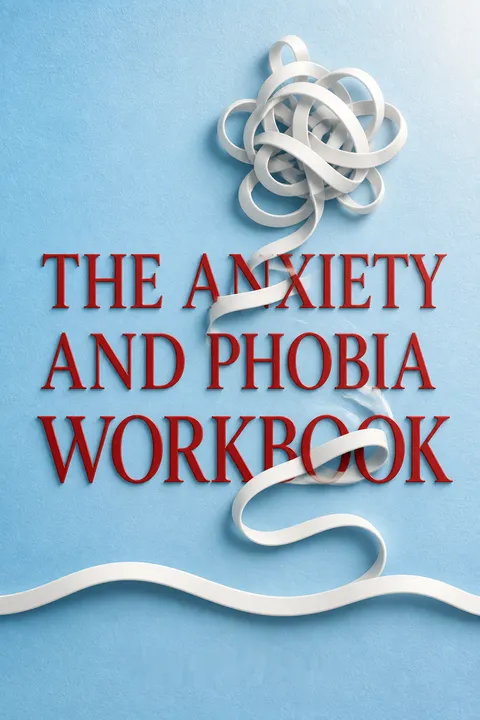
The Anxiety & Phobia Workbook receives mostly positive reviews for its comprehensive approach to anxiety management. Readers appreciate its practical exercises, holistic strategies, and informative content on various anxiety disorders. Many find it life-changing and helpful for understanding and coping with anxiety. However, some criticize outdated information, repetitive content, and potentially alienating language. The book's emphasis on self-help techniques and its coverage of topics like relaxation, nutrition, and meditation are frequently praised. While not universally liked, it's generally considered a valuable resource for those dealing with anxiety and phobias.
People Also Read






Glossary
Anticipatory anxiety
Fear before a feared situationAnxiety that builds while a person imagines or expects a feared event or situation. It can range from ordinary worry to intense anticipatory panic. In phobias, anticipating a situation may produce distress even before the person encounters it, and repeated avoidance can preserve that fear.
Imagery desensitization
Practicing feared scenes in imaginationA gradual practice in which a person imagines steps in a feared situation while relaxed. The person moves from easier scenes to more challenging ones, returning to a calming scene if anxiety becomes too strong. It can prepare someone for real-life exposure or, in some cases, reduce fear on its own.
Real-life desensitization
Gradual exposure in real situationsA structured approach to phobias that involves entering avoided situations in manageable steps. A hierarchy orders steps from less to more challenging, such as approaching a store before shopping inside. Repeated practice helps replace avoidance with experience of coping; support people may assist at the beginning.
Exposure and response prevention
Face triggers without ritualsA behavioral treatment for obsessive-compulsive symptoms. The person gradually encounters situations or thoughts that trigger anxiety, while resisting the ritual or checking behavior that normally brings short-term relief. With planned practice, the person learns that anxiety can be endured without completing the compulsion.
Relaxation response
A body state opposing stress arousalThe book uses this term for a state of reduced physiological activation associated with practices such as deep breathing, progressive muscle relaxation, and meditation. It describes changes including slower breathing and heart rate, reduced muscle tension, and less active analytical thinking. Regular practice is intended to make relaxation more accessible.
Inner child
The self's childlike, feeling partA therapeutic metaphor for the part of a person associated with playfulness, spontaneity, emotional needs, and possible pain carried from childhood. The workbook uses the concept to encourage self-nurturing: responding to insecurity or fear with care rather than criticism. It is a framework for reflection, not a separate person or a diagnosis.
Secondary gains
Benefits that maintain a problemThe book uses this term for conscious or unconscious advantages that may make change harder, even when a condition causes distress. Examples offered include receiving care, avoiding unwanted responsibilities, or preserving a relationship pattern. Considering such possibilities is intended to clarify ambivalence, not to imply that a person chooses or is responsible for an anxiety disorder.
FAQ
What’s The Anxiety and Phobia Workbook by Edmund J. Bourne about?
- Comprehensive self-help guide: The workbook offers a step-by-step program for managing anxiety disorders, panic attacks, and phobias, using a variety of therapeutic techniques.
- Holistic approach: It integrates physical, emotional, behavioral, mental, interpersonal, and spiritual factors to address the root causes of anxiety.
- Practical exercises: Includes exercises like relaxation techniques, cognitive restructuring, and desensitization methods to empower readers to manage their anxiety.
Why should I read The Anxiety and Phobia Workbook by Edmund J. Bourne?
- Proven effectiveness: Based on cognitive-behavioral therapy (CBT), the workbook provides evidence-based strategies for significant mental health improvements.
- Empowerment through self-help: Encourages readers to actively participate in their recovery with tools and techniques that can be practiced independently.
- Wide applicability: Suitable for anyone experiencing anxiety, from mild to severe cases, covering various disorders like panic disorder and social phobia.
What are the key takeaways of The Anxiety and Phobia Workbook by Edmund J. Bourne?
- Understanding anxiety disorders: Offers clear explanations of different anxiety disorders, their symptoms, and underlying causes.
- Importance of relaxation: Emphasizes regular practice of relaxation techniques like abdominal breathing to manage anxiety.
- Coping strategies: Provides strategies for managing panic attacks and anxiety symptoms, empowering readers to handle anxiety-provoking situations.
What specific methods are recommended in The Anxiety and Phobia Workbook by Edmund J. Bourne?
- Abdominal breathing: Encourages deep breathing from the abdomen to reduce anxiety and panic symptoms.
- Progressive muscle relaxation: Involves tensing and relaxing muscle groups to promote relaxation and awareness of physical tension.
- Imagery desensitization: Allows individuals to confront fears in a controlled setting, reducing anxiety through gradual exposure.
How does The Anxiety and Phobia Workbook by Edmund J. Bourne address panic attacks?
- Understanding panic attacks: Explains the physiological and psychological components, emphasizing that they are natural responses to perceived threats.
- Coping techniques: Offers strategies like calming breath exercises and positive self-talk to manage panic attacks.
- Deflating the danger: Encourages challenging catastrophic thoughts to diminish fear and anxiety during panic episodes.
What are the best quotes from The Anxiety and Phobia Workbook by Edmund J. Bourne and what do they mean?
- "An anxious mind cannot exist in a relaxed body.": Highlights the importance of physical relaxation in reducing mental anxiety.
- "This feeling isn't comfortable or pleasant, but I can accept it.": Encourages acceptance of anxiety symptoms to cope more effectively.
- "I can handle these sensations.": Promotes self-efficacy and confidence in managing anxiety.
How can I implement the strategies from The Anxiety and Phobia Workbook by Edmund J. Bourne in my daily life?
- Daily practice: Commit to relaxation techniques like abdominal breathing for at least 20 minutes daily for consistent benefits.
- Set realistic goals: Use tools like the Weekly Practice Record to outline goals and track progress, maintaining motivation.
- Incorporate coping strategies: Actively use strategies during anxiety moments, such as positive self-talk or visualizing peaceful scenes.
What role does physical exercise play in The Anxiety and Phobia Workbook by Edmund J. Bourne?
- Reduces anxiety symptoms: Regular exercise helps metabolize excess adrenaline and reduce muscle tension.
- Improves overall well-being: Enhances physical health, boosts mood, and increases energy levels, contributing to anxiety alleviation.
- Encourages routine: Provides structure and predictability, serving as a healthy outlet for stress and frustration.
How does The Anxiety and Phobia Workbook by Edmund J. Bourne suggest dealing with underlying emotional issues?
- Identifying suppressed feelings: Encourages recognizing and expressing emotions like anger to alleviate anxiety.
- Developing assertiveness: Provides strategies for improving assertiveness, enhancing relationships, and reducing anxiety.
- Building self-esteem: Emphasizes self-acceptance and nurturing one's inner child to reduce feelings of inadequacy.
How can I track my progress while using The Anxiety and Phobia Workbook by Edmund J. Bourne?
- Weekly Practice Record: Monitor daily exercises and coping strategies to stay accountable and assess progress.
- Panic Attack Record: Keep a record of panic attacks to identify patterns and develop management strategies.
- Self-assessment: Regularly evaluate anxiety levels to gain insight into recovery and highlight focus areas.
How does The Anxiety and Phobia Workbook by Edmund J. Bourne address nutrition?
- Impact of diet on anxiety: Discusses how foods like caffeine and sugar can exacerbate anxiety symptoms.
- Dietary guidelines: Recommends reducing processed foods and increasing whole foods for mental well-being.
- Supplements for anxiety: Suggests supplements like B vitamins and magnesium to support brain health and emotional regulation.
What role does spirituality play in The Anxiety and Phobia Workbook by Edmund J. Bourne?
- Connection to a Higher Power: Encourages developing a relationship with a Higher Power for emotional support.
- Meaning and purpose: Finding meaning in life can alleviate anxiety and despair, providing hope.
- Inner peace: Spiritual practices like meditation foster inner peace and reduce anxiety through mindfulness.
About the Author
Other books by Edmund J. Bourne
Download PDF
Download EPUB
.epub digital book format is ideal for reading ebooks on phones, tablets, and e-readers.








