



Plot Summary
Prologue
As a girl in the western capital, Gyokuyou3 learned to smile when her half-brother’s18 children mocked her as the daughter of a concubine. Her father, an old man with more authority than tenderness, saw her filthy and grinning among the jeering children and promised to make her first in the nation.
She clung to his belief that she must never lose hope, even after he sent her away to the rear palace. The memory reveals the courage beneath the Empress’s3 easy laughter, and the old family wound that still shapes her choices.
Gyokuyou’s smile begins as a survival tactic. She uses it to deny her tormentors the satisfaction of seeing her hurt, then turns it into a private discipline that keeps hope alive. Her father’s promise gives the child a sense of exceptional purpose, but it also ties her future to his ambitions. The prologue therefore complicates the adult Empress’s warmth: cheerfulness is not innocence or ignorance. It is a practiced form of agency, developed in a family where affection and political usefulness are difficult to separate.
A Mountain of Go
Maomao,1 an apothecary living with her coworkers Yao6 and En'en,7 finds a tower of Go books sent by her estranged father, the strategist Lakan.4 En'en7 recognizes their value and offers to help sell them, while Yao6 insists Maomao1 join her on a shopping trip for skin care. Yao6 is recovering from severe poisoning, so Maomao1 steers their errands toward food and cosmetics that will not worsen her health.
At a makeup shop, the owner and a new supplier quarrel over rice powder that feels wrong. Maomao1 tests it by cooking the powder into flatbread and suspects the previous supplier had secretly mixed in toxic material. The girls leave with safer products as thunder breaks over the city.
This opening makes Maomao’s practical knowledge inseparable from care, even when she resists admitting she cares. She treats the books as potential income for medicines, and Yao’s recovery as a problem of diet, skin, and daily comfort rather than sentiment. En’en’s willingness to pay for the book also marks a small change in Maomao’s social life: she accepts a colleague as a friend by trusting her judgment. The cosmetics dispute extends the book’s central investigative method into commerce. Material evidence, tested rather than assumed, exposes how a market can conceal danger behind beauty and familiar routines.
The Boardroom Craze
Jinshi2 discovers that Lakan’s Go book has spread through the capital so quickly that officials and guards are neglecting their work to play. A frightened bureaucrat’s copy of the tournament notice gives Jinshi2 his first glimpse of the craze’s scale. Then a report arrives: locusts have destroyed much of a western rice harvest.
Jinshi2 examines the damage and realizes that the insects may threaten future crops as well as the current one. The workload on his desk is already overwhelming, so he accepts Basen’s11 suggestion to recruit Basen’s11 gifted but reclusive older brother, Baryou,10 to sort and manage the paperwork. Baryou’s10 competence clears room for Jinshi2 to act, while the Go tournament offers a possible lever for negotiating with Lakan.4
The book’s two public disturbances, Go fever and crop failure, reveal different forms of collective appetite. Go gives people an inexpensive pleasure, while locusts consume food without limit. Jinshi must respond to both as matters of governance, not private curiosity. His decision to bring Baryou into the office also exposes the cost of his conscientiousness: he has been treating every task as his personal responsibility, even when the state has specialists who should handle it. Delegation is not merely a convenience here. It is the first condition that lets Jinshi observe a crisis rather than drown in its paperwork.
A Theater for Lakan
Maamei,9 Basen11 and Baryou’s10 politically sharp older sister, helps Jinshi2 return improperly assigned duties to the officials who had pushed them onto his desk. She also spots a chance to use the Argent Theatre, closed after the White Lady’s performances, as a venue for Lakan’s4 tournament.
Jinshi2 offers Lakan4 the theatre and street access in return for taking back his share of the work. Lakan4 agrees when Maamei9 proposes that Maomao1 and her adoptive grandfather, the physician Luomen,5 attend in case anyone needs medical help.
The tournament is more than Lakan’s4 latest whim: his Go book preserves games with Maomao’s1 late mother, and the public event extends his attempt to honor her memory. Jinshi2 gets his venue, but Lakan’s4 motive remains private.
Maamei changes the political texture of the story. Where Jinshi tends to absorb obligations in the name of duty, she treats bureaucracy as a contest over who has the authority to refuse. Her proposal works because it gives each participant something concrete: Lakan gets a real public venue, Jinshi restores work to its proper owners, and the theatre receives a supervised reopening. Yet the exchange is not purely transactional. Lakan’s attachment to the games with Maomao’s mother gives the tournament a grief-struck purpose he cannot easily explain. Public entertainment becomes the form his private memorial can take.
Thunder Identifies the Brother
Lakan asks Luomen to investigate a young woman’s accusation against one of three identical soldier brothers. Their influential father insists no trial should proceed until the culprit is identified. Maomao joins Luomen as a recorder, while Lihaku, a soldier who knows the brothers, warns that they rarely protect one another. Each brother gives an alibi for the evening a thunderstorm struck.
Back at the medical office, Luomen places their locations on a map and asks which sound came first: lightning, thunder, or the evening bell. Because sound takes time to travel, the order differs by location. Maomao and Yao compare the testimony and find the middle brother’s account places him near the frightened girl, not at home as he claimed.
The investigation turns an ordinary weather memory into evidence. The thunderclap matters because Maomao, Yao, and En’en experienced it firsthand, while the bell provides a second sound whose timing can be compared across the city. Luomen’s method depends on patiently assembling testimony rather than forcing a confession. Lihaku’s observation about the brothers’ mutual hostility supplies the psychological premise: their stories need not be coordinated. The result is a form of justice grounded in shared, mundane perception. The storm did not simply frighten the girl; its sound left a trace that the brothers could not tailor to their false locations.
Eggs Beneath the Fields
Jinshi2 travels with Gaoshun,12 Basen,11 and a small guard detail to a village where locusts have stripped the rice fields, eaten leaves, and damaged clothing and buildings. The headman describes three days of fighting the swarm, then shows the bodies piled beyond the village.
Jinshi2 examines the insects himself and cuts them open. Their swollen abdomens contain eggs, evidence that the surviving locusts are preparing another generation. The swarm has already taken the harvest; leaving its eggs in the soil could doom the next one.
Jinshi2 orders the affected ground burned. His inspection also changes his view of the crisis: reports about lost grain were not enough, because the village’s immediate survival depended on what the dead insects still carried.
Jinshi’s choice to dissect the insects marks a shift from administrative oversight to embodied responsibility. He acts as he imagines Maomao would, accepting the unpleasant work rather than delegating the crucial observation. The discovery of eggs changes the time scale of the emergency: the disaster is not an event that ended when the swarm passed, but a reproductive process already reaching toward spring. His order to burn land places public survival above the value of a single damaged village’s fields. The episode also shows Jinshi learning to use observation as a form of leadership, not simply as a source of information.
The Wind's Trail
A basket of locusts arrives at the medical office, forcing Maomao1 to measure their weight, wings, legs, color, and eggs. Yao6 helps despite her disgust, and En’en7 stays close to her. Lahan8 examines the figures and separates the brown, short-winged locusts from the green local insects. He notes that nearby villages show no comparable damage, then lays a string along the seasonal wind’s direction on a map.
The swarm could have ridden the wind much farther than the insects could fly alone, with earlier damage likely occurring along the route from the northwest. Yao6 identifies Hokuaren in that direction. Maomao1 recognizes the possible reach of the finding, but the investigation establishes a path, not a motive or a confirmed political threat.
The locusts become evidence of movement rather than merely symbols of destruction. Maomao’s measurements make the insects legible as a population with differing physical traits; Lahan then supplies the geographic model that connects those traits to wind and distance. Their collaboration joins empirical detail to logistical imagination. The possibility that the swarm crossed regions complicates the usual boundary between natural disaster and political concern, but the text preserves uncertainty: direction alone does not prove deliberate action. Maomao’s unease arises precisely because the data has become meaningful beyond her expertise, a reminder that technical knowledge can reveal consequences its discoverer cannot control.
Sweetness With a Price
Maamei’s9 redistribution of work gives Jinshi2 time to return to the locust problem and question officials who had refused responsibility. In his residence, the Emperor13 and Jinshi2 discuss the recent popularity of sweet imported wine. Jinshi2 recalls Maomao’s1 earlier warning that acidic wine can dissolve lead from a cup, making the drink taste sweeter while poisoning the drinker.
The memory links the fashionable wine to the banned whitening powder, which contained toxic metals and may now be finding another route into the marketplace. Jinshi2 resolves to investigate the sellers and asks the Emperor13 to lend him the Go Sage17 as a tutor. The request is not simply about gaming: Jinshi2 intends to prepare for a match with Lakan.4
The wine plot shows how a ban can alter the route of a poison without ending its circulation. Lead does not announce itself as danger; it improves a bad drink’s flavor and therefore rewards the very behavior that harms customers. Jinshi’s recollection depends on Maomao’s earlier testing, making private service knowledge consequential to public policy. His discussion with the Emperor also balances intimacy and statecraft: they can speak candidly, but Jinshi’s request for the Go Sage converts a personal rivalry into a formal wager. He is learning to mobilize relationships and expertise instead of relying only on endurance.
Friends Draw a Line
Maomao1 tests a new wound balm by cutting her own arm, but Yao6 catches her and objects to the repeated injuries. En’en7 understands the experiment, yet Yao6 insists that even useful research has limits when it harms someone she cares about.
Her spontaneous claim of friendship surprises all three women, briefly exposing how much their shared meals and work have changed their relationship. Later, Yao6 brings Maomao1 the medical office’s schedule and asks whether the western family around Empress Gyokuyou3 can be trusted.
En’en7 reports renewed troop conscription in the west, and Yao6 worries that the Empress3 may be treated as a tool of her relatives. Maomao1 refuses to judge Gyokuyou3 by her family, but admits she knows little about her father’s intentions.
Yao’s objection is a small but significant ethical intervention. Maomao treats her own body as available experimental material because she can control the dose and observe the result, but Yao insists that self-direction does not erase the relational cost of injury. Their new friendship is made visible through a boundary, not a confession: Yao accepts the risk of sounding presumptuous in order to protect Maomao. The later political conversation extends that same concern outward. Yao understands what it means to be used by family, so she recognizes the danger in Gyokuyou’s position even before Maomao can assess the western court.
A Letter From Home
As Gyokuyou3 prepares for the postponed garden party, her ladies-in-waiting try to choose clothes and ornaments suitable for her new rank as Empress.3 A letter arrives from her eldest half-brother,18 whose children once mocked her as a foreign-born concubine’s daughter.
He proposes sending his daughter into the rear palace. The enclosed portrait shows a girl with Gyokuyou’s3 red hair and green eyes, making the political resemblance impossible to miss.
Gyokuyou3 tears up the portrait rather than welcome a niece whom her brother18 may intend to use as a rival or instrument. She hides her agitation behind the smile that protected her as a child, but Hongniang sees the strain. The family’s old cruelty now carries the force of a present court maneuver.
The letter collapses childhood humiliation into adult political calculation. Gyokuyou’s half-brother once treated her ancestry as a defect; now he appears willing to use a girl who resembles her to advance his own position. The resemblance turns identity into a political resource that can be copied, displayed, and placed near the throne. Gyokuyou’s refusal to accept the portrait is an act of resistance, but it also reveals the limits of her habitual composure. The smile that once deprived bullies of an easy victory cannot by itself settle what her brother intends. Her attendants’ concern gives private fear a witness.
Salt at the Garden Party
While the palace’s physicians attend the garden party, Maomao1 and Yao6 handle the medical office and its less glamorous chores. Yao6 avoids her uncle among the officials, and En’en7 shields her from his matchmaking plans.
During the banquet recess, Maomao1 finds Lihaku16 and several soldiers rinsing their mouths after eating an unusually salty soup and patterned boiled eggs. The men fear the meal was poisoned, but Maomao1 sees no immediate signs of illness and suspects clumped salt rather than a toxin.
The complaint nevertheless stays with her. The garden party is also the occasion when Gyokuyou3 wears a new silver hair stick with a crystal-like centerpiece. When its ornament later appears damaged and returned among gifts, the bad-tasting eggs become an important clue.
This section lets ordinary discomfort become investigative evidence. The soldiers’ complaint sounds almost comic beside the court’s political anxieties, yet taste registers a material irregularity that Maomao cannot dismiss. Her cautious diagnosis matters: she neither declares poisoning nor ignores the possibility. The garden party’s hierarchy is present in the difference between the officials’ meal and the Emperor’s, while the hair ornament gives the banquet a second, more intimate mystery. The mundane details of food, seating, and changing clothes later matter because danger in the palace often travels through routine rather than overt attack.
The Crystal Was Salt
Gyokuyou3 summons Maomao1 after a silver hair stick returns from the garden party clouded and missing its centerpiece, making the Empress3 fear that someone has reached her with a threat. Maomao1 shakes the ornament and finds a grain of salt. She recognizes the centerpiece as one of the salt crystals she once made for Gyokuyou.3
The crystal would dissolve in water, while sulfur from boiled eggs would tarnish the silver. The hair stick had likely fallen into the egg pot while Gyokuyou3 changed clothes, though Maomao1 cannot establish exactly who recovered and returned it. Haku-u14 suspects Koku-u15 used the damaged ornament to warn Gyokuyou3 against trusting her relatives too easily. The Empress3 asks Maomao1 to consider returning to her service.
The apparent threat is dismantled through chemistry, but not entirely through certainty. Maomao can explain the physical damage: salt dissolves, and sulfur tarnishes silver. She cannot prove who found the stick or why it was returned in such a troubling state. That gap keeps the political question alive after the material mystery is solved. Haku-u’s suspicion reflects a protective worldview shaped by the western family’s history, while Gyokuyou’s instinct is to preserve trust. Maomao is caught between these positions, and her reluctance to become the Empress’s attendant is no longer just professional preference. It would mean entering a conflict whose participants do not agree on what protection requires.
The Square Fills With Go
Lakan’s4 tournament opens in the square outside the Argent Theatre, drawing far more players and spectators than its organizers expected. Maomao1 is sent from the medical office to help Luomen,5 while Yao6 and En’en7 volunteer despite their scheduled time off.
They treat scrapes, chills, and overexcited competitors as the contest spills beyond the theatre. Jinshi2 enters in a mask and wins his first match; against a former professional, he appears to be losing until he removes the mask and his beauty unsettles his opponent.
The mistake that follows gives Jinshi2 the win. Meanwhile, Maamei9 and Baryou10 keep Jinshi’s2 office functioning while he takes a rare break, and Lakan4 works unusually hard to make his tournament succeed. Jinshi’s2 victories bring him closer to the match he wants.
The tournament turns an elite game into a public event by giving ordinary people room to play, watch, eat, and recover from minor mishaps. Its crowded, makeshift setting contrasts with the controlled spaces of the palace, yet the same institutions remain present through soldiers, physicians, and officials. Jinshi’s use of his beauty is a tactical choice, not an accidental spectacle; he knows the face that once helped him navigate the rear palace can also destabilize an opponent. Maamei and Baryou’s work behind the scenes makes his brief freedom possible, exposing how much his public role depends on less visible labor.
A Game Interrupted
On the tournament’s second day, Jinshi2 reaches Lakan’s4 stage and begins the serious match he has engineered through weeks of preparation. Maomao1 recognizes that the pastries delivered for the strategist contain a trace of alcohol, likely worsening the effects of Lakan’s4 fatigue after days of games and an unusual workload.
Before the contest can finish, Bowen,19 father of the three soldier brothers, charges into the theatre with two sons and a package containing two severed fingers. He says his middle son has disappeared and blames Luomen5 for the earlier investigation. The crowd is dismissed, the game is suspended, and Maomao1 notices darkened nails on the fingers. Lakan4 falls asleep at the board as the adults turn from Go to the missing man.
The interruption forces two kinds of unfinished business into the same room. Jinshi’s carefully staged contest rests on fatigue, distraction, and a calculated advantage, while Bowen’s arrival brings physical evidence of violence that cannot be managed as a game. The fingers shift attention from public spectacle to the body, where poisoning and identity may leave traces. Maomao’s observations begin before she knows the full story, preserving her characteristic method: notice first, interpret later. Lakan’s collapse also exposes the human cost of his tournament. The strategist who seemed to control the event is vulnerable to exhaustion, while the people around him must decide what deserves attention now.
Three Brothers, One Body
Maomao studies the severed fingers and sees nail discoloration consistent with lead poisoning. She links it to the cheap sweet wine the eldest brother drank, likely made palatable with lead from the banned cosmetic trade.
Luomen confirms that the missing fingers do not belong to the middle brother, and Maomao realizes the surviving brothers have been switching identities. The eldest had been sick and unstable; during a confrontation, he fell, struck his head, and died.
His brothers buried him, cut off his fingers, and staged his disappearance so the middle brother could take his place and the family’s accusations might fall on someone else. Under pressure, they blame each other and reveal the cover-up. Their father, who cannot reliably distinguish his identical sons, learns how thoroughly he failed to know them.
The mystery joins two earlier investigations, the cosmetic poison and the triplets’ assault case, through the overlooked effects of lead. A substance used to disguise danger in wine has altered the eldest brother’s health and behavior, while the family’s resemblance provides a means to disguise identity. The brothers’ plan depends on their father’s inability to tell them apart, but their shared face does not produce shared loyalty. Their accusations expose a household in which privilege has protected misconduct without creating trust. Maomao’s deduction is rigorous, yet the resolution offers little satisfaction: the truth arrives through death, concealment, and a family already practiced in evading accountability.
Lakan Loses, Then Gives
Several days later, Jinshi2 and Lakan4 resume their interrupted game. In the interval, the Go Sage17 has trained Jinshi2 bluntly, teaching him that sound opening patterns cannot compensate for weak improvisation. Jinshi2 still builds a strong lead, but Lakan4 overtakes him and wins by two points.
Instead of simply leaving, Lakan4 analyzes Jinshi’s2 mistakes, a rare sign that he considers the match worth studying. Lahan8 explains that the tournament and book preserve Lakan’s4 games with Maomao’s1 late mother, whose skill he cannot replace but hopes others might echo.
Lakan4 then leaves a military strategy board in Jinshi’s2 office, addressing the troop concerns Jinshi2 had struggled to advance. He repays Jinshi2 not with a victory, but with attention and useful counsel.
Jinshi’s loss distinguishes competence from genius without reducing the match to humiliation. He has prepared seriously and played well, but Lakan’s ability to recover from a difficult position exceeds his opponent’s command of patterns. The postgame analysis matters more than the score: Lakan gives Jinshi the kind of attention he rarely offers, turning defeat into a form of recognition. Lahan’s account reframes the tournament as an attempt to preserve a relationship through records, not to recreate it exactly. The military board extends that memorial impulse into practical life. Lakan cannot restore the past, but he can help shape the future.
Jinshi Chooses His Mark
Jinshi2 summons Maomao1 to a private meeting with the Emperor13 and Gyokuyou,3 surrounding them with medicines and a carefully chosen wine. He explains that political factions are courting him through marriage and that attempts have been made on his life. If the Emperor13 dies, Jinshi2 could be pressed toward the throne, so he asks to receive a name that would remove him from the imperial line.
The Emperor13 refuses to accept the request easily and strikes him. Jinshi2 then burns Gyokuyou’s3 crest into his own side, pledging that he will never threaten her or the Crown Prince. Maomao1 treats the wound while Gyokuyou3 realizes the gesture binds Jinshi2 to her. Jinshi2 uses the injury to argue that his future wife must be someone he trusts completely.
Jinshi’s request is both political strategy and an attempt to claim authorship over a life defined by succession. He does not merely deny ambition; he makes his body carry the promise that his words alone cannot secure. The brand transforms Gyokuyou’s emblem from a sign of rank into a mark of chosen allegiance, although its violent permanence leaves the gesture ethically troubling. Maomao’s practical response, cooling and treating the burn, keeps the scene grounded in bodily consequence even as the nobles debate the throne. Jinshi’s marriage implication complicates his self-sacrifice: he offers protection, but also tries to make Maomao responsible for the future he has chosen.
Epilogue
After returning to her residence, Gyokuyou3 sees her own crest in the rooms Jinshi2 has left behind and considers what his promise means. Her half-brother Gyoku-ou18 believes himself righteous, yet his plans may endanger her and her children even if he thinks he is protecting the family.
Gyokuyou3 no longer relies on the girl’s smile to survive him. She crushes his letter beneath her foot and accepts that he may call her disloyal. Her children matter more than his approval, and she is prepared to resist whatever he does next.
The epilogue returns Gyokuyou to the childhood conflict that opened the book, but changes the available response. As a child, she could only smile at cruelty and wait for her father’s protection. As an Empress and mother, she can name the danger and choose defiance, even if her brother believes his conduct virtuous. Her decision does not resolve the political threat; it establishes her willingness to meet it. The crushed letter is a compact reversal of the family’s old hierarchy: Gyokuyou no longer lets another person’s judgment define the limits of her action.
Analysis
Volume 8 repeatedly asks what can be known from the body when people, institutions, or families conceal their intentions. Maomao1 reads powder by touch and taste, locusts by their wings and eggs, a hair ornament by its chemical changes, and a dead man’s history through his fingernails. Her investigations are not feats of intuition detached from evidence. They depend on careful tests, comparison, and the willingness to revise an attractive first explanation. Luomen’s5 work with the thunder and bell follows the same principle: small observations become powerful when placed in the right structure.
The book also treats poison as a social process. Lead enters cosmetics, then may pass into wine; a forbidden substance does not disappear simply because officials prohibit it. Its movement follows need, profit, and the desire to preserve beauty or make an unappealing drink saleable. The poisoned triplet case makes that circulation intimate. The eldest brother’s illness becomes part of a family cover-up, while privilege helps the surviving brothers imagine that identity itself can be rearranged to avoid consequences.
Against this concealment, the novel places forms of care that are practical rather than sentimental. Yao6 objects to Maomao’s1 self-injury; En’en7 cooks around Yao’s6 illness; Luomen5 asks questions instead of imposing conclusions; Maamei9 redistributes work so Jinshi2 can act. These people care by noticing a limit and changing what they do. Yet care can also become control. Haku-u’s14 vigilance, Gyokuyou’s3 relatives’ ambitions, and Jinshi’s2 final claim on Maomao1 all raise the question of whether protection respects the person being protected.
Go supplies the volume’s governing image of strategy: a board can preserve a relationship, invite a public community, or become a contest for political freedom. Lakan’s4 memorial tournament cannot recreate the woman he lost, but it can carry her play into the future. Jinshi2 loses the match yet gains recognition and counsel. His final choice tries to free him from the throne, though he makes that choice through a permanent wound and pulls Maomao1 into its consequences. The ending offers agency, but not an uncomplicated escape from power.
Review Summary
The Apothecary Diaries receives high praise from readers, with an average rating of 4.55/5. Fans love the slow-burn romance between Jinshi and Maomao, with many expressing shock and excitement over Jinshi's dramatic actions in pursuit of Maomao. Readers appreciate the series' handling of gender and sexuality, as well as the engaging mysteries and political intrigue. Some criticize Maomao's obliviousness and the serial nature of the story. Overall, fans are captivated by the characters, setting, and plot twists, eagerly anticipating future volumes.
Characters
Maomao
Palace apothecary and sleuthMaomao is a sharp-eyed apothecary whose curiosity about medicines, poisons, and bodily evidence often outweighs her interest in social convention. Raised in the pleasure district and trained by the physician Luomen5, she approaches people as carefully as she approaches a new substance: observe, test, and avoid conclusions unsupported by evidence. She dislikes being drawn into court politics, yet her knowledge repeatedly makes her useful to people with power. Beneath her guarded manner, she is learning to accept friendship and responsibility without surrendering her independence. Her bond with Yao6 and En’en7 grows through shared meals, work, and the uncomfortable fact that they care what happens to her.
Jinshi
The Emperor's younger brotherJinshi is an unusually beautiful imperial official whose polished manner hides a demanding sense of responsibility. He has spent years managing court duties while trying to keep his status from defining every relationship around him. His interest in Maomao1 is persistent, but he is increasingly forced to consider what care means when the other person resists being managed. Jinshi is neither a natural specialist nor a simple courtly ornament: he studies, strategizes, and learns to use authority more deliberately. His friendship with the Emperor13 gives him room for candor, while his loyalty to the royal household continually tests his desire for a life of his own.
Empress Gyokuyou
The smiling EmpressGyokuyou is the Emperor’s13 wife, a mother, and a woman who learned early to meet humiliation with a smile. Her warmth is genuine, but it is also a practiced defense formed in a family that treated her birth as a weakness. She enjoys novelty and mischief, qualities that survive the restrictions of her new position, and she values the attendants who have stood beside her for years. Gyokuyou must balance affection with political caution, especially when relatives and court factions see her as a route to influence. Her strength lies less in hardness than in her ability to remain humane without confusing kindness with helplessness.
Lakan
The eccentric strategistLakan is a senior military strategist, a formidable Go player, and a man whose unusual habits make him difficult to approach. He sees the world through patterns other people may miss, but struggles with ordinary social distinctions and routines. His apparent laziness conceals a mind capable of rapid strategic insight. Lakan’s affections are narrow and intense: family, games, and the rare people who meet him as genuine equals matter more to him than status or wealth. His relationship with Maomao1 is marked by a painful distance, while his attachment to the past shapes the way he preserves memory through records and play.
Luomen
Maomao's physician fatherLuomen is Maomao’s1 adoptive father and a gifted physician whose calm, precise reasoning can make complicated evidence feel simple. Once a eunuch in the rear palace, he now serves in the medical profession despite the lasting injury to his leg. He teaches through observation and questions rather than display, inviting Maomao1 to reach conclusions instead of handing them to her. His compassion is not weakness; it is a disciplined refusal to treat people as disposable, even when their conduct disgusts him. Maomao1 reveres him, and his example helps define her own mixture of skepticism, technical care, and reluctance to judge before she knows enough.
Yao
Maomao's earnest coworkerYao is a young medical assistant whose sheltered upbringing has not prevented her from becoming perceptive and determined. She cares about her appearance, enjoys good food, and can be headstrong, but her vanity does not make her shallow. Recovery from a serious illness has made her more attentive to limits, and she is willing to work through fear when someone needs help. Yao’s affection for En’en7 is complicated by their mistress-and-attendant relationship, while her developing friendship with Maomao1 gives her a peer she can challenge directly. She has experienced being treated as someone else’s instrument, which sharpens her concern about power and family.
En'en
Yao's devoted attendantEn’en serves Yao6 with fierce devotion and helps in the medical office, where her practical knowledge and exceptional memory make her a capable partner to Maomao1. She is a skilled cook who pays close attention to nutrition, comfort, and detail. Her attachment to Yao6 can become possessive, especially when she imagines anyone might harm or compete for her mistress’s attention. Beneath that intensity, En’en is observant and can cooperate without needing recognition. Her friendship with Maomao1 develops through trade, shared work, and a growing willingness to treat the apothecary as part of their small household.
Lahan
Lakan's calculating adopted sonLahan is Lakan’s4 adopted son and nephew, a small, sharp-minded man who treats numbers and commerce as sources of pleasure. He organizes side ventures to manage expenses and is skilled at turning an eccentric idea into a workable enterprise. His tendency to calculate every advantage makes him useful and exasperating in equal measure. Lahan understands his adoptive father4 better than most people do, though he does not always share or endorse his motives. His relationship with Maomao1 is shaped by family ties she would rather ignore and by his persistent ability to offer rewards she genuinely wants.
Maamei
The Ma family's political mindMaamei is Gaoshun’s12 daughter and the older sister of Basen11 and Baryou10. A mother with a commanding presence, she is practical, politically perceptive, and far more capable than the court’s assumptions about women allow her to demonstrate officially. She recognizes when authority is being exploited and knows how to return an obligation to its proper owner. Maamei is blunt with her brothers and protective toward Jinshi2, though she does not flatter him or indulge his tendency to overwork. Her competence combines negotiation, household intelligence, and an understanding of how personal relationships shape public decisions.
Baryou
The reclusive civil servantBaryou is Gaoshun’s12 eldest son and Basen’s11 older brother, a frail scholar whose ability with paperwork and administration far exceeds his physical stamina. He passed the civil service examination but struggled to keep a position because of poor health and difficulty navigating colleagues. Baryou is not indifferent to other people; he is simply more comfortable with documents and systems than with unpredictable social demands. Behind a screen or beside his sister Maamei9, he can work with remarkable focus. His quiet effectiveness exposes the waste of a court that notices his awkwardness before it recognizes his talent.
Basen
Jinshi's formidable bodyguardBasen is Jinshi’s2 attendant and bodyguard, a serious soldier whose strength and endurance can outstrip his judgment. He takes threats to Jinshi2 personally and tends to react before he has gathered all the facts. His devotion is genuine, but his physical confidence contrasts with his awkwardness around romance and social nuance. Basen respects hierarchy and hard work, which can make him easy for his sister Maamei9 to tease or correct. His relationship with Jinshi2 combines loyalty with the difficult task of learning when protection means restraint rather than force.
Gaoshun
The Emperor's trusted attendantGaoshun is a seasoned soldier and attendant who serves the Emperor13 and has long advised Jinshi2. He is measured, observant, and skilled at anticipating what his superiors need without making a display of his own judgment. As Basen11 and Baryou’s10 father, he understands how differently his children are suited to service. Gaoshun’s quiet competence stands in contrast to Basen’s11 directness and Baryou’s10 social withdrawal. His loyalty is practical rather than theatrical, grounded in years of responsibility and in the ability to keep a demanding household functioning.
The Emperor
A ruler balancing family and stateThe Emperor is an energetic ruler with a playful side that appears most freely around Jinshi2 and the people he trusts. He must weigh personal affection against the stability of the succession, while also managing the influence of powerful relatives and officials. He enjoys games and informal company, but those moments do not erase the authority he carries. His bond with Jinshi2 is intimate and complicated, shaped by an old wager and by competing ideas about duty. He can be warm, teasing, and politically cautious, yet the demands of the throne limit how freely he can answer a family member’s wishes.
Haku-u
Gyokuyou's vigilant attendantHaku-u is one of three sisters from Gyokuyou’s3 western household and an experienced attendant who takes her duties seriously. Reserved and observant, she treats protection as active vigilance rather than mere obedience. Her long familiarity with Gyokuyou3 gives her a deep investment in the Empress’s3 safety, while the political history of the west has made her wary of relatives who appear benevolent. Haku-u does not readily reveal her feelings, which can make her seem severe, but her restraint grows from loyalty and fear of what may happen if the people around Gyokuyou3 underestimate danger.
Koku-u
A western-born lady-in-waitingKoku-u is one of Gyokuyou’s3 three sister attendants, younger than Haku-u14 and older than Seki-u. She belongs to the close-knit western group whose members share a history and a protective concern for the Empress3. Koku-u is less fully seen than her sisters, but her presence matters because Gyokuyou’s3 household contains people with differing ideas about caution and trust. Like the other women who came with Gyokuyou3, she must navigate the distance between private loyalty and the public expectations placed on an Empress’s3 staff.
Lihaku
The candid soldierLihaku is an outgoing soldier whose friendliness can make him seem less perceptive than he is. He has a strong sense of fairness, performs well under orders, and speaks plainly even in the presence of high-ranking people. His familiarity with Maomao1 leads others to trust his observations, especially when a case depends on people’s habits rather than formal records. Lihaku admires Pairin of the Verdigris House and hopes to earn enough to change his circumstances. His warmth gives the story moments of humor, but his directness also supplies useful insight when more guarded officials hesitate.
The Go Sage
The Emperor's Go instructorThe Go Sage is the Emperor’s13 instructor and one of the strongest players in the country. He teaches without cushioning criticism, but his bluntness is purposeful: he expects students to improve rather than preserve their pride. He understands that strategy depends on circumstance, psychology, and preparation beyond the board. His advice to Jinshi2 reveals a pragmatic streak beneath his cultivated manner. The Sage also recognizes the difference between teaching a pattern and teaching a person to respond when the pattern breaks.
Gyoku-ou
Gyokuyou's ambitious half-brotherGyoku-ou is Gyokuyou’s3 much older half-brother and a powerful figure in the western capital. He believes strongly in his own judgment and appears convinced that his plans serve a proper purpose. That certainty makes him difficult to assess: he may not think of himself as cruel even when his actions place pressure on others. His relationship with Gyokuyou3 carries the weight of their unequal childhood and his contempt for her maternal background. He represents the way family authority can become political power without losing its intimate, personal force.
Bowen
The triplets' influential fatherBowen is a high-ranking official and father to three soldier sons who look so alike that even he struggles to distinguish them. He has used his position to protect his children from consequences, believing paternal authority can contain their misconduct. His confidence in that role exceeds his knowledge of who his sons are. Bowen’s presence shows how privilege can preserve a family’s reputation while weakening its ability to face the truth.
Tianyu
A young medical office physicianTianyu is a young physician who works alongside Maomao1, Yao6, and En’en7. He is earnest and eager to be liked, but his attempts to win En’en’s7 attention often meet with practical reminders about unfinished work. He provides a view of the medical office’s younger staff and the ordinary social awkwardness that exists beyond palace intrigue. His professional interest is genuine, even when his judgment about courtship is less well developed.
Plot Devices
Lakan's Go book
A memorial becomes a tournamentLakan’s book collects games of Go and their analysis, giving Maomao1 an unwanted stack of valuable copies and the capital a new public obsession. Its circulation creates the practical crisis that leads Jinshi2 to negotiate with Lakan4, and its tournament opens the Argent Theatre to a crowd of players. Later, Lahan8 explains that the records preserve games Lakan4 played with Maomao’s1 mother. The device therefore connects commerce, public entertainment, political bargaining, and private grief without reducing the book to a simple prop.
The thunder and bell
Sound becomes an alibi mapDuring the assault investigation, each brother recalls the flash of lightning, the thunderclap, and the evening bell in a different order. Because light arrives before sound and sounds travel over distance, the timing helps locate where each man was standing. Luomen5 maps their claims, and Maomao1 recognizes that one account fits the shopping district near the young woman rather than the brother’s home. An ordinary storm becomes reliable evidence because several witnesses remember it independently.
Lead in the marketplace
A sweet taste hides poisonLead can dissolve into acidic wine and make it taste sweeter, while lead-bearing face powder offers a possible source for adulterants after cosmetics are banned. Maomao1 has already warned Jinshi2 about a lead cup, and the makeup shop dispute establishes the danger of poorly documented white powders. Later, signs in a drinker’s nails and changes in health connect the wine to a family mystery. The device shows that regulation can redirect hazardous materials rather than make them vanish.
The salt crystal hair stick
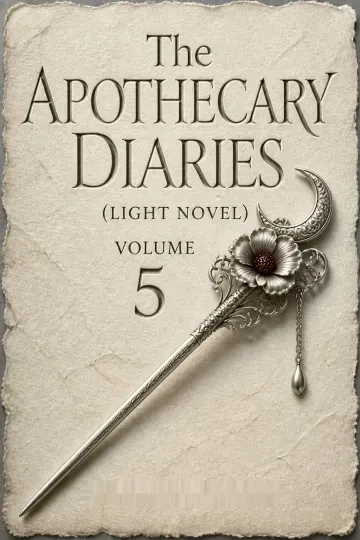
A false threat starts a court inquiryMaomao1 once made attractive crystals from salt and gave them to Gyokuyou3. One is set into a silver hair ornament for the garden party. When the ornament returns clouded and empty, its appearance suggests both theft and poison. Maomao1 discovers that the salt dissolved in the egg pot and sulfur from the boiled eggs darkened the silver. The physical explanation dispels part of the fear, but uncertainty about who returned the damaged ornament leaves the Empress’s3 political anxieties unresolved.
The seasonal wind
A swarm leaves a regional trailMaomao1 measures the locusts’ physical traits, separating local insects from brown, short-winged ones that appear to have traveled farther. Lahan8 combines her data with the direction of the seasonal wind and the absence of damage in nearby villages. The resulting map suggests that the swarm crossed a considerable distance from the northwest, with Hokuaren lying along that direction. The inference broadens a local crop disaster into a regional concern, while stopping short of proving that anyone deliberately caused it.
FAQ
Synopsis & Basic Details
What is The Apothecary Diaries (Light Novel): Volume 8 about?
- Palace intrigue and medical mysteries: The volume follows Maomao, a sharp-witted apothecary's daughter serving in the imperial rear palace, as her unique skills draw her deeper into the court's hidden dangers and complex power dynamics.
- Survival and hidden truths: Maomao navigates a world of beautiful but often desperate women, manipulative officials, and subtle threats, using her knowledge of poisons and human nature to solve mysteries and protect herself and others.
- Character growth and shifting relationships: The narrative explores Maomao's reluctant rise from a low-ranking servant to a trusted attendant, her evolving, complicated relationship with the enigmatic official Jinshi, and the human stories behind the palace's glittering facade.
Why should I read The Apothecary Diaries (Light Novel): Volume 8?
- Intricate mysteries and clever deductions: The volume presents several compelling puzzles, from suspicious deaths and illnesses to coded messages and hidden motives, all unraveled through Maomao's keen observation and scientific approach.
- Rich world-building and character depth: Readers are immersed in the detailed setting of the imperial rear palace, exploring its social hierarchy, customs, and the psychological toll it takes on its inhabitants, revealing complex motivations and hidden vulnerabilities.
- Unique protagonist and dynamic relationships: Maomao's pragmatic, often cynical perspective offers a refreshing contrast to the courtly world, and her interactions with characters like the beautiful but vexing Jinshi provide both tension and unexpected moments of connection.
What is the background of The Apothecary Diaries (Light Novel): Volume 8?
- Imperial court setting: The story takes place within the "rear palace" (hougong), the secluded residence of the Emperor's consorts, ladies-in-waiting, and eunuchs, reflecting a historical system where women were confined and ranked according to their favor and ability to produce heirs.
- Political and social hierarchy: The narrative is deeply influenced by the rigid social structure of the palace and the wider empire, where status is determined by birth, connection, and proximity to the Emperor, creating an environment ripe for power struggles and manipulation.
- Cultural context of medicine and beauty: The volume incorporates traditional East Asian medical practices, herbal remedies, and the cultural significance of appearance (like pale skin and small feet), contrasting scientific knowledge with superstition and highlighting the dangerous lengths people go for beauty or perceived health.
What are the most memorable quotes in The Apothecary Diaries (Light Novel): Volume 8?
- "There was no toxin so terrifying as a woman's smile.": This early observation by Maomao encapsulates the pervasive theme of hidden danger and manipulation beneath the surface beauty of the rear palace, highlighting the social toxicity she perceives.
- "Ignorance is a sin.": Spoken by Consort Gyokuyou regarding the poisonous face powder, this line underscores the volume's emphasis on knowledge as protection and the fatal consequences of willful blindness or lack of understanding in the palace environment.
- "Because human beings can likewise become medicinal ingredients.": Maomao's blunt explanation for why her father forbade her from touching dead bodies reveals her unique, unsettling perspective on the world, blurring the lines between life, death, and scientific utility.
What writing style, narrative choices, and literary techniques does Natsu Hyuuga use?
- First-person perspective (Maomao): The story is primarily told through Maomao's pragmatic, detached, and often cynical internal monologue, providing a unique lens through which to view the opulent and dangerous palace world.
- Mystery and deduction focus: The narrative structure often presents a problem or rumor, then follows Maomao's step-by-step investigation, observation, and logical deduction to uncover the truth, mimicking a detective story format within the historical setting.
- Contrast and juxtaposition: Hyuuga frequently contrasts the glittering beauty of the palace with its underlying squalor, danger, and human suffering, and juxtaposes Maomao's blunt, scientific realism with the court's superstitions and elaborate social rituals.
Hidden Details & Subtle Connections
What are some minor details that add significant meaning?
- Maomao's self-inflicted scars: The existing analysis mentions her scars are perceived as abuse, but the text reveals Maomao caused them herself through poison experiments ("Maomao had done all of it to herself"), adding a layer to her dedication to medicine and her willingness to harm herself for knowledge, contrasting with the pity others feel.
- The specific method of climbing the wall: The detail about the protruding bricks at the corner of the outer wall, potentially used by builders, provides a rational explanation for Princess Fuyou's seemingly supernatural "floating" and highlights Maomao's meticulous observation of the environment ("a series of projections at one corner where the walls met").
- The wheat stalks and layered wine: The presence of wheat stalks used as straws and the observation of two different colored wine stains on the pillow in the attempted suicide scene are crucial, subtle clues that allow Maomao to deduce the method of poisoning and the courtesan's survival strategy ("two types of wine would have slightly different densities... the courtesan would use her straw to drink only from the lower layer").
What are some subtle foreshadowing and callbacks?
- Rhododendron branch as a warning tool: Maomao's use of a rhododendron branch to leave her initial warning message is subtly echoed when she later uses a rhododendron branch and leaf to explain the concept of localized plant poisons to Jinshi and Gyokuyou, linking her past actions to her current role as an advisor ("She plucked off a leaf and put it in her mouth... setting the branch on the table").
- The eunuch's hand rash and the colored fire: The eunuch's rash and the description of the fire changing colors foreshadow the explanation that certain substances, like those on the wooden slips he burned, can cause both skin irritation and colored flames, demystifying the perceived "curse" and linking it to chemical properties ("If this stuff gets on bare skin, a rash can result... The color of the fire changed").
- Ah-Duo's "milk-sibling" bond and the Emperor's younger brother: The repeated mentions of Ah-Duo being the Emperor's milk-sibling and her connection to the Emperor's younger brother subtly build towards Maomao's later, speculative theory about a potential infant switch, connecting seemingly disparate characters and events ("Ah-Duo, the Pure Consort... had in fact borne him a son at one time... she had been the Emperor's consort since before his accession... she had known him since they nursed together").
What are some unexpected character connections?
- Maomao's father as the banished court doctor, Luomen: The revelation that Maomao's adoptive father, the apothecary from the red-light district, is the disgraced former chief physician of the court, Luomen, provides a significant and unexpected link between Maomao's background, her skills, and a past palace tragedy ("The court doctor, Luomen, banished... Maomao's father and the chief physician at the time—was blamed for this tremendous failure").
- Fengming's family connection to beekeeping and honey: The detail that Fengming's family are beekeepers unexpectedly connects her to the honey that poisoned Ah-Duo's child, providing a plausible source for the specific toxin and linking her personal history to the central mystery ("Lady Fengming's family are beekeepers... Honey from a poisonous flower would at least have the virtue of being, well, poisonous").
- Ah-Duo's resemblance to Jinshi: Maomao's observation that Ah-Duo, the stoic, somewhat mannish consort, resembles Jinshi ("It must have been Jinshi") is a subtle character connection that fuels Maomao's speculative theory about their potential familial relationship (uncle/nephew) and adds another layer to Jinshi's ambiguous identity.
Who are the most significant supporting characters?
- Gaoshun: Beyond being Jinshi's aide, Gaoshun serves as a crucial bridge between Jinshi and Maomao, often interpreting Jinshi's intentions, facilitating Maomao's requests (like accessing archives), and providing a grounding presence for both, highlighting his quiet competence and loyalty ("Gaoshun, serious and diligent, never did have a sense of humor at the right times... Gaoshun, more solicitous than he first appeared, pulled out a chair").
- Hongniang: As the head lady-in-waiting for Gyokuyou, Hongniang acts as Maomao's immediate superior and mentor, teaching her palace etiquette, protecting her from the other ladies' judgment, and demonstrating a pragmatic kindness that contrasts with the cruelty found elsewhere, showcasing the importance of supportive relationships within the hierarchy ("Hongniang was kind enough to try to find little tasks for Maomao to do... Hongniang, meanwhile, busied herself with attempting to correct Maomao's occasional lapses").
- Fengming: The chief lady-in-waiting to Ah-Duo is pivotal to the volume's central mystery, embodying extreme loyalty and tragic guilt. Her actions, driven by a desire to protect her mistress from a painful truth, reveal the destructive potential of devotion and the hidden suffering within the palace ("Fengming, her face taut... burned with a deep hostility... In her place there was only a woman wracked with regret").
Psychological, Emotional, & Relational Analysis
What are some unspoken motivations of the characters?
- Jinshi's fascination with Maomao's indifference: Jinshi is clearly motivated by more than just Maomao's utility; her lack of typical female reactions to his beauty intrigues and perhaps validates him, suggesting a deeper need for genuine connection or reaction beyond superficial adoration ("She wasn't the only one who showed no special desire for him, but she was the first to regard him as though she were looking at a worm... he found the girl's reaction intriguing. He felt like a child with a brand-new toy").
- Lihua's passive will to die: Consort Lihua's initial refusal to eat and her whispered question, "Why didn't you just let me die?", reveal a deep emotional despair following the loss of her son and the Emperor's neglect, suggesting her physical wasting was compounded by a psychological surrender ("Lihua appeared to be losing the will to live").
- Fengming's guilt and protective drive: Fengming's actions, including attempting to eliminate Lishu and ultimately taking her own life, are driven by overwhelming guilt over her unwitting role in Ah-Duo's child's death and a fierce, desperate desire to protect her mistress from ever learning the painful truth ("The last thing you wanted was for your mistress to find out... So you tried to get Consort Lishu out of the picture").
What psychological complexities do the characters exhibit?
- Maomao's detachment and hidden empathy: Maomao presents a facade of cold pragmatism and scientific detachment, even towards her own body (self-experimentation), but her actions, like nursing Lihua back to health or offering Fengming a way out, reveal a deep, though often hidden, empathy and sense of justice ("Maomao could be cold, reticent, and unsentimental, but for some reason the women had always doted on her... Maomao might not show much emotion, but she had a warm heart").
- Jinshi's dual persona and vulnerability: Jinshi maintains a public image of ethereal, charming perfection, but privately exhibits petulance, frustration, and insecurity, particularly around Maomao, suggesting the immense psychological burden of his role and appearance ("His alluring smile had been replaced by the pout of a petulant boy... Jinshi suddenly lacked his normal sparkle, a cloud seeming to hang over him").
- Lishu's naivete and manipulation: Consort Lishu's childlike demeanor and inability to perceive the malice of her own attendants highlight her psychological vulnerability and the ease with which she is manipulated, underscoring the dangers of being sheltered and trusting in the ruthless palace environment ("The callow Lishu was at the mercy of her serving women... So sheltered, Lishu was. So blind to the world around her").
What are the major emotional turning points?
- Maomao's outburst at Lihua's attendants: Maomao's rare display of explosive anger towards Lihua's ladies-in-waiting, culminating in her smearing powder on one's face, marks a significant emotional turning point where her hidden frustration and genuine concern for Lihua break through her usual composure ("Maomao was well and truly angry now... 'Me? I'm just giving an idiot her due.'").
- Jinshi's reaction to Maomao's return with Lihaku: Jinshi's uncharacteristic sulking and petulance upon learning Maomao returned from her leave with Lihaku, rather than relying on him, reveals a surprising emotional investment in her and a vulnerability beneath his usual control ("He looked positively sullen... 'You're telling me I lost out to that? That I was bested by a bauble some hack felt obliged to give you?'").
- Fengming's confession and regret: Fengming's breakdown and confession to Maomao, revealing the depth of her guilt and sorrow over Ah-Duo's child's death, is a powerful emotional climax for her character, shifting her from a villainous figure to a tragic one ("In her place there was only a woman wracked with regret... 'Lady Ah-Duo said something to me, back then... And yet I could hear Lady Ah-Duo crying every night.'").
How do relationship dynamics evolve?
- Maomao and Jinshi's complex bond: Their relationship deepens from one of master and reluctant servant to a complicated mix of mutual intrigue, reliance, and subtle emotional friction, marked by Jinshi's increasing fascination and Maomao's grudging acceptance (and occasional exasperation) of his presence ("Maomao had increasingly found herself oddly unsure how to feel about this man, Jinshi... He was staring fixedly at Maomao. She was getting a bad feeling about it").
- Maomao and Gyokuyou's ladies-in-waiting: Initially viewed with pity and distance due to her perceived history and role as food taster, Maomao gradually earns the respect and affection of Gyokuyou's core ladies (Hongniang, Yinghua, Guiyuan, Ailan) through her competence and unexpected moments of kindness, evolving into a genuine camaraderie ("The other ladies-in-waiting had had, with much fear and trembling, to check the food themselves, so they frankly must have been grateful for Maomao's arrival... They remind me of the girls from the brothels").
- Maomao and Gaoshun's quiet understanding: Gaoshun becomes a reliable, almost protective figure for Maomao, facilitating her requests and subtly mediating her interactions with Jinshi. Their relationship is built on quiet respect and mutual understanding, contrasting with the more volatile dynamic between Maomao and Jinshi ("Gaoshun's taciturn nature and often expressionless face could have made him seem unapproachable, but Maomao actually rather liked it... Perhaps I might ask you to stop regarding Master Jinshi in the same manner in which you might look at a worm").
Interpretation & Debate
Which parts of the story remain ambiguous or open-ended?
- The true nature of Jinshi's identity: While heavily implied throughout the series, Jinshi's exact relationship to the Emperor and the Imperial family remains officially unstated, leaving his ambiguous status and the reasons for his role as a eunuch open to interpretation and speculation ("Maybe he was the son of the Emperor or something, but then why become a eunuch?").
- The extent of Ah-Duo's knowledge about the infant switch: Maomao's theory about Ah-Duo potentially switching her infant son with the Emperor's younger brother is presented as speculation, leaving it ambiguous whether Ah-Duo was a knowing participant or if the switch was orchestrated by others (like Luomen) without her full understanding ("What if they were switched?... An outrageous fantasy").
- The future of Maomao's relationship with Jinshi: The ending sees Maomao dismissed from the palace and reuniting with Jinshi in the pleasure district, with Jinshi suggesting he could "buy" her. This leaves the nature of their future relationship and whether Maomao will return to the palace deliberately open-ended ("How about if I bought you?... It wouldn't be so bad, to work at the rear palace again").
What are some debatable, controversial scenes or moments in The Apothecary Diaries (Light Novel): Volume 8?
- Maomao's self-experimentation with poisons: Maomao's practice of deliberately ingesting poisons to build immunity is presented factually but is inherently controversial, raising ethical questions about self-harm and the pursuit of knowledge, challenging conventional notions of self-preservation ("Maomao had done all of it to herself... She would take small doses of poison to inure herself to them, and had been known to let herself be bitten by venomous snakes").
- The attendants' deliberate cruelty towards Lishu: The actions of Consort Lishu's ladies-in-waiting, who manipulate and potentially endanger her (e.g., switching her food, allowing her to wear clashing outfits), are presented as a form of psychological abuse and power play, sparking debate about the extent of their malice versus misguided loyalty ("The callow Lishu was at the mercy of her serving women... they had betrayed that trust to humiliate their mistress").
- Maomao's proposal to Fengming: Maomao's suggestion to Fengming that she commit suicide to protect Ah-Duo's secret is a morally complex and controversial moment, forcing the reader to confront the harsh realities of the palace and the difficult choices characters face when trapped by circumstance ("Maomao knew what a terrible thing she was saying. That it amounted to asking another woman to die. But it was the only thing she could think of").
The Apothecary Diaries (Light Novel): Volume 8 Ending Explained: How It Ends & What It Means
- Dismissal and return to origins: The volume ends with Maomao being formally dismissed from the rear palace as part of a mass discharge related to the Fengming scandal, despite her value and desire to stay. She returns to her home in the red-light district, seemingly back where she started, highlighting the arbitrary nature of power and status in the palace ("So I'm to be let go... She returned to the red-light district, resuming her old life").
- Reunion and shifting power dynamics: Maomao unexpectedly encounters Jinshi at a banquet in the pleasure district, where their roles are reversed (she is "entertainment," he is a guest). Jinshi's suggestion that he could "buy" her signifies a potential new path for Maomao, offering a way back into his orbit outside the formal palace structure, while also highlighting the transactional nature
Synopsis & Basic Details
What is The Apothecary Diaries (Light Novel): Volume 8 about?
- Palace intrigue and medical mysteries: The volume follows Maomao, a sharp-witted apothecary's daughter serving in the imperial rear palace, as her unique skills draw her deeper into the court's hidden dangers and complex power dynamics.
- Survival and hidden truths: Maomao navigates a world of beautiful but often desperate women, manipulative officials, and subtle threats, using her knowledge of poisons and human nature to solve mysteries and protect herself and others.
- Character growth and shifting relationships: The narrative explores Maomao's reluctant rise from a low-ranking servant to a trusted attendant, her evolving, complicated relationship with the enigmatic official Jinshi, and the human stories behind the palace's glittering facade.
Why should I read The Apothecary Diaries (Light Novel): Volume 8?
- Intricate mysteries and clever deductions: The volume presents several compelling puzzles, from suspicious deaths and illnesses to coded messages and hidden motives, all unraveled through Maomao's keen observation and scientific approach.
- Rich world-building and character depth: Readers are immersed in the detailed setting of the imperial rear palace, exploring its social hierarchy, customs, and the psychological toll it takes on its inhabitants, revealing complex motivations and hidden vulnerabilities.
- Unique protagonist and dynamic relationships: Maomao's pragmatic, often cynical perspective offers a refreshing contrast to the courtly world, and her interactions with characters like the beautiful but vexing Jinshi provide both tension and unexpected moments of connection.
What is the background of The Apothecary Diaries (Light Novel): Volume 8?
- Imperial court setting: The story takes place within
薬屋のひとりごと [Kusuriya no Hitorigoto] (Light Novel) Series Series


About the Author
Other books by Natsu Hyuuga


Download PDF
Download EPUB
.epub digital book format is ideal for reading ebooks on phones, tablets, and e-readers.








