

Plot Summary
Ivory Castle Aftermath
Pia surveys the ruined battlefield after the rescue of her cousin Altara from Castle Ivory. Altara has shot Zale, the Boneweaver king, with an arrow that breaks the curse on his heart; the magic then pulls them both through a temporary entrance to the legendary Eternal Forest. No one can reopen it.
As the survivors prepare to return to Levu, the goddess Cholnayak warns Pia that her lost magic must be recovered or it will endanger everyone around her. Pia stops hiding from the shame of her exile and decides to return to the capital to tell her grandmother what happened. Malika, Rani, Geravie, and priestess Keshmi join her, while the missing couple must find their own way out.
The opening makes absence an active force: the rescued princess is suddenly unreachable, while the surviving group must choose what to do without her. Pia's decision matters because the divine rebuke converts private shame into public responsibility. Her powerlessness is not framed as a simple deficiency; it has become an unresolved danger that she can no longer evade. The battle's victory is therefore provisional. The group has defeated the immediate captors, but the disappearance of Altara and Zale opens a larger crisis, and Pia's return to the capital begins a parallel test of whether a disgraced heir can still act for her people.
The Forest's New Queen
Altara lands in the Eternal Forest as a smoke-veiled wraith, emptied by the torture she has endured and wishing she could disappear. A golden pixie stops her from eating poisonous berries and guides her to water. When a spreading darkness called the Fear threatens the pixies, Altara refuses to flee and destroys it with arrows formed from her shadow.
The forest's dark inhabitants then gather, treating the killer of their former terror as their new ruler. Altara orders them to release the pixies and kills a goblin who challenges her. Carried to a decaying castle, she discovers fae prisoners chained in its underground cells. Their captors call them her consorts, but Altara instead drains the chains' magic and frees them.
Altara's first acts in the Forest are ethically clearer than her inner life: numbness makes self-preservation meaningless, but she still intervenes when the pixies are threatened. The paradox is important. Her capacity to protect survives before her capacity to feel, and the violent court mistakes that protective force for a desire to rule by cruelty. Freeing the chained fae gives her a first deliberate use for power beyond destruction. The scene also establishes that her magic does not merely injure or heal in familiar terms; it can consume hostile enchantment. Her new sovereignty is therefore both a refuge from vulnerability and a test of what she will do with force.
A Throne Not Rescue
Altara sits on the castle's obsidian throne while her new subjects watch her closely. When armed human raiders arrive to protest the release of the fae and threaten her, she wounds their leader but discovers her summoned daggers are missing their marks. One raider cuts her arm before Pox Sully, a self-appointed swordsman, kills him.
Zale then strides into the hall, drawn by the bond between them, and declares his claim on his wife. Altara refuses him, fearing that her trauma has made her unfit for the closeness he wants. When Pox raises his weapon against Zale, the king kills him and leaves. His arrival has not rescued Altara from the forest; it has forced her to confront both her desire for him and the damaged trust she has in herself.
The missed daggers make Altara's loss of control visible in the one domain she had trusted. Her throne can command a court, but it cannot restore the reliable aim that once defined her. Zale's arrival intensifies rather than solves the problem because his certainty about their bond meets her fear of intimacy after violation. Pox's death further complicates rescue: Zale protects her, yet does so through the violence that makes his devotion frightening. The scene refuses an easy distinction between safety and possession. Altara must decide whether accepting care can coexist with retaining authority over her body and choices.
Blood Beneath the Moons
Zale leaves food, clean water, and flowers for Altara, tending to needs she has stopped noticing. She wakes as he touches her, recoils, and watches him retreat. Seeking another distraction, she attends the nine witches' rite to Agnolthi. The witches show her a vision of the Boneweaver Bow, then sacrifice a willing male wolf and channel his power into her.
The next morning, Altara finds the pixie who once saved her stabbed by goblins. The sight recalls her own torture, and she cannot heal the pixie's fatal wounds. She gathers lightning around herself and sets out to punish the killers, while the new power inside her turns the witches' ceremony from spectacle into a consequence she cannot ignore.
Zale's gifts offer a form of care that asks for no immediate reward, but Altara's reflexive retreat shows how trauma can make gentleness feel as threatening as force. The ritual then confuses her further by making power arrive through another creature's death, even though the wolf volunteered. Her response to the murdered pixie draws a firm moral line through the dark court's permissiveness: Altara may be numb, but she recognizes cruelty when it repeats the shape of her own helplessness. The Boneweaver Bow vision plants a larger quest, while the sacrifice shows that accepting strength without understanding its cost may deepen rather than relieve her distress.
Desire and the Dark
Zale appears outside the castle carrying the severed heads of the goblins who killed the pixie. Grief and anger overwhelm Altara, and she kisses him before either can explain what they feel. Their first encounter lets Zale draw the wolf's excess power out of her, but afterward Altara panics at the intimacy and runs back to the castle.
When he returns, she admits that the bond hurts and sends him away, insisting she must face her wounds herself. Soon a creature embodying despair tries to draw her into its darkness. Altara summons the memory of her mother and sister, then drives her power into its heart and destroys it. Her magic releases the witches and beast-people from the enchantment that kept them in altered forms.
The sequence separates bodily desire from emotional readiness without treating either as false. Altara's longing is real, but so is the alarm that follows when intimacy makes her feel exposed. Zale's restraint after her refusal gives that boundary practical weight, even as he remains convinced they belong together. The encounter with despair marks a different form of agency: rather than using numbness to survive pain, Altara retrieves relationships that anchor her sense of self and acts from them. Her victory frees an entire population, turning a private recovery into political consequence. Yet it does not erase trauma; it gives her a way to move while carrying it.
A Debt Reclaims Zale
After Altara defeats despair, Magrin explains that the witches regard her as Agnolthi's future high priestess and give her a robe woven with their blood. Ulanna, an Old One trapped for centuries in serpent form, tells Altara that the freed beasts are Zale's distant kin. Before Altara can leave, Wobbles rushes back with news that carnal fae have taken Zale.
The fae claim an old debt: Zale once used their queen Odeelia as a Vayashi, a partner who could help contain his power, and owes her service. Altara recognizes that her earlier rejection left him vulnerable to the claim. She mounts the witch's monstrous mare Neera and follows the golden thread connecting them, determined to recover him herself.
Altara's new court gives her belonging, but the debt that takes Zale exposes how past arrangements can retain power long after their emotional meaning has changed. Odeelia's claim is not merely romantic rivalry; it is an enforceable obligation built around Zale's need to regulate dangerous magic. Altara's decision to pursue him marks a shift from wishing the bond away to accepting responsibility for what it asks of her. That choice does not erase her earlier refusal, nor does it make her obligated to surrender herself. Instead, she moves toward Zale because she now distinguishes chosen attachment from the coercive contracts that have governed both their lives.
The Queen's One-Month Bargain
At Odeelia's court, Altara finds Zale seated beside the queen, bound by a promise of ten years' service. Odeelia offers Altara another man and claims Zale for herself; Altara refuses and agrees to play by the court's rules. During the first test, Odeelia probes the star-soul bond and sends a fae to touch Zale. Zale cuts off the man's hand, then kills four guards who threaten Altara.
The pair realize they can exploit the carnal fae's susceptibility to desire. Altara and Zale intensify the court's collective arousal, slip away to join their powers, and return to bargain. Altara offers a blood oath to bring Zale back in one month, concealing her plan to find Fangar as a substitute for the old debt.
Odeelia's court treats sexuality as social currency, but Altara and Zale turn that system against its ruler by controlling the desire it usually uses to control others. Their tactic is not a clean moral victory: the guards die, and the bargain preserves the threat of future service. Still, the episode changes their partnership. Altara acts publicly for Zale, while Zale follows her strategic lead instead of claiming authority over her. Their plan depends on mutual recognition, not simply the fated bond. The blood oath's loophole also brings Altara's political intelligence into focus: she knows that a contract can be obeyed literally while its original purpose is undermined.
Homecoming's Broken Wreath
On Tiger Island, Rani returns to her hometown with Pia and their companions, hoping to see her family. Her twin brothers warn her that Yulara's family wants revenge for Vasi, the boy Rani accidentally killed when her magic broke loose. Yulara appears wearing a marriage necklace, confirming that she has married someone else; her father throws down and cuts apart Rani's old betrothal wreath.
Rani leaves under threat of violence, supported by Malika, Pia, and Kai. Pia's group then reaches Lota City, where her mother and grandmother receive her before the full court. The queen publicly brands Pia disgraced and powerless, rejects her warning about the danger on Boneweaver Island, and orders her friends and the Old Ones imprisoned.
Rani and Pia return to their homes carrying different forms of guilt, and neither home offers uncomplicated belonging. Rani accepts the consequences of Vasi's death, but the broken wreath makes clear that the community has turned grief into permanent exclusion. Pia's family treats her loss of magic as proof that she no longer belongs in the royal line. These confrontations show how institutions convert a single failure into an identity: murderer, powerless princess, enemy. The friends' support matters because it interrupts that verdict, even when it cannot reverse the families' decisions. Their journey to seek help instead exposes them to the same punitive systems they hoped to persuade.
Owls Bring the Reaper
In the Eternal Forest, Altara and Zale reach a parliament of owls. Altara heals an owl's ruined wing by taking its injuries into her own body, and the grateful messenger agrees to carry word to her sister Saraya. The owls also deliver a warning: the Reaper, the ancient power that cursed Zale, has returned, and demons have taken control of Quartz.
Saraya and her mate have escaped the demon court, but their father remains in danger. Meanwhile, Pia's mother interrogates her about the Old Ones and the Reaper, reveals that Zale's father once served him, and dismisses Pia's warning as naïveté. She throws Pia into the Pit, a lightless punishment, while Altara and Zale find a way back toward Lota Island.
The owl encounter links Altara's private healing ability to the increasingly fragile political world. She can repair another being only by accepting its wound herself, a concrete model of care that is powerful but costly. The Reaper's return reframes Zale's curse as part of an unfinished war, not an isolated affliction. At the same time, Pia's interrogation shows how inherited suspicion blocks the very alliance the crisis requires: her mother interprets evidence through the Boneweavers' old allegiance. The two storylines converge under pressure, with Altara learning that her family is threatened while Pia is punished for trying to warn that same family.
A Goddess Names Her
As Zale and Altara approach Lota Island, archers fire on them because the Boneweavers are forbidden there. Altara's aunt Rahana refuses to recognize her family claim, but a group of Agnolthi's acolytes kneels to her. The goddess herself then appears and appoints Altara high priestess of the Order of Yasani. At the palace, Queen Cheshni insults her and Zale, and Altara senses a hostile force inside the queen.
She shoots Cheshni with an arrow of void magic, drawing out the Reaper's corruption; the shock damages the palace and exposes Altara to the court as the apparent attacker. Her great-aunt Parsha intervenes, preventing her imprisonment. Zale and Altara then break through the damaged dungeon and reunite with Malika, Rani, Atax, and Kai.
Agnolthi's appointment gives Altara sacred authority, but it does not make her politically safe. She must use that authority immediately in a way that looks like violence against the queen, because the court has no shared framework for recognizing the corruption she detects. The scene makes institutional legitimacy contingent on witnesses and interpretation, not merely on divine selection. Parsha's intervention supplies a human counterweight to the court's fear, while Altara's rescue of her friends turns her new status into action. The episode also sets up the central ambiguity of her gift: removing evil can save someone, but the method may appear indistinguishable from an attack.
The Moot Rewrites Fate
At the Priestess Moot, the high priestesses determine that Altara's arrow injured no one and removed a dark force from Cheshni, so she is cleared. They confirm that the queen's court had concealed the Reaper's influence and prepare defenses after Pia reports the demon attack. Pia is summoned from the Pit and tells the Moot that the goddess Umali appeared to her, naming Saraya as her high priestess.
The council strips Pia of her name and royal titles, then offers her a choice between service to Cholnayak's White Widows and service in Xalya's army. Pia chooses the army and becomes Pia Xalya. After the hearing, the priestesses warn Altara that Zale remains mystically connected to the Reaper despite the curse being broken.
The Moot provides a rare alternative to the queen's unilateral punishment: several institutions must hear evidence and decide together. That procedure restores Altara's standing, but it does not restore Pia's title or the life she expected. Pia's choice of military service turns punishment into a self-directed vocation, although the choice remains constrained by the council's terms. Her new name marks a rupture from family authority and a claim to agency at once. The warning about Zale's remaining connection prevents the hearing from becoming a simple victory. Political repair has begun, but the deepest danger is embedded in the bond that once seemed to promise only love.
Two Marks, One Storm
Altara and Zale decide to merge their magic through their bond. Their union produces matching celestial marks, a butterfly on Zale and a tiger on Altara, and gives each access to the other's power. Around the same time, Rani, still unable to forgive herself for Vasi's death, enters Cholnayak's order as a White Widow. She accepts a life of service and renunciation, while Malika grieves the separation.
Altara visits Cheshni and sees that the queen is dying, then enters her memories and learns that her mother left Ellythia because a prophecy foretold the birth of daughters needed to oppose a coming evil. The new marks strengthen Altara and Zale, but the priestesses' warning about Zale's link to the Reaper remains unresolved.
The matching marks make the couple's bond reciprocal rather than merely fated: each receives power from the other, and neither remains only a source or vessel. That reciprocity is crucial given their histories of coercion and injury. Rani's decision moves in the opposite direction, toward a disciplined renunciation of attachment as a response to guilt she cannot yet release. The story does not present either choice as universally correct; each character seeks a structure that can contain pain. Altara's discovery of the prophecy gives her mother's departure a purpose, but it also burdens her with an inherited role. Personal intimacy and public destiny are now inseparable.
The Reaper Takes the Kings
As the Reaper approaches, he reaches Zale and his brothers near Agnolthi's temple and drags them out of the city. Wobbles crumbles to dust as the Reaper restores the brothers' old obedience, leaving them cold and without conscience. He orders them to secure the islands and tests their submission by sending them to Queen Cheshni.
Zale enters her chambers with Atax, Kai, and Raen and kills her, then signals the Reaper that the task is complete. At the same time, Rani is beginning her life among the White Widows. Altara returns to the palace and finds the Old Ones missing; her bond with Zale gives her no answer, only a growing sense that something terrible has happened.
The Reaper's control is especially devastating because it does not invent a new Zale; it revives the habits his father and the Reaper cultivated before Altara restored his conscience. The brothers' conditioning makes obedience feel like destiny, and the Reaper exploits that history as efficiently as he uses magic. Wobbles's destruction removes the small companion who had helped Zale identify emotions, leaving him without even that fragile internal guide. Cheshni's murder is therefore both a political strike and a demonstration that the couple's new bond cannot protect Zale from external control. Altara's missing connection turns emotional intimacy into an alarm system that can register danger but not prevent it.
A Mate Walks Into Darkness
Whole-Feather returns with Saraya's message: she has escaped with her mate, but Altara and Saraya's father was taken to the demon court and killed. Before Altara can absorb the news, the palace's death bell announces Cheshni's death. She follows the bond toward the palace grounds, where the Reaper appears with Zale and his brothers under his control.
Altara attacks, but Zale catches her arrows and insists that he must obey the Reaper. When Pia and the others recognize that the brothers are enthralled, Altara still chooses to cross the distance and take Zale's hand, believing their bond may reach him where force cannot. The Reaper welcomes her into his company, leaving her friends and the capital behind.
Altara's choice is not a triumph over the Reaper; it is a decision made under catastrophic uncertainty. Her father is dead, her grandmother has died, and the person she trusts most is being used against her. The bond that once offered comfort now becomes the reason she approaches a danger everyone else fears. That choice holds both courage and risk: she acts from love, but the Reaper can exploit precisely that attachment. Pia's refusal to mistake Zale's behavior for free allegiance preserves a crucial distinction between the man and the control imposed on him. The ending leaves Altara's loyalty and political duty in direct conflict.
Xalya Calls for War
When the Reaper and the enthralled Old Ones disappear with Altara, the palace defenses fail and panic spreads through the courtyard. Malika hurls fire toward the empty space, while Rani and the temple acolytes help restore the city's protective dome. Pia understands that the enemy has not merely arrived at Ellythia's borders; it has taken people who had been fighting beside them and turned them into weapons.
Her mother claims that she had predicted the danger, but there is no time to settle old arguments. The goddess Xalya appears carrying battle weapons and demands that Pia decide what comes next. Pia joins her in naming the only remaining course: Ellythia must go to war.
The ending converts the novel's intimate conflicts into an immediate military crisis without resolving the intimate ones. Pia, stripped of royal identity but newly committed to service, becomes the character positioned to respond while Altara is absent and Zale is compromised. Xalya's demand makes leadership a present-tense obligation rather than a reward for status. The threat is unusually painful because its instruments are familiar allies, not anonymous monsters. That reversal tests whether the remaining characters can defend their home without reducing the controlled to their captor's will. The book closes on mobilization, leaving the question of whether love can reach Zale unanswered and making war the consequence of that uncertainty.
Analysis
The novel's central question is not whether love can heal trauma, but whether intimacy can remain ethical when both partners have been shaped by coercion. Altara's attraction to Zale does not cancel her fear, and her repeated refusals are not obstacles for him to overcome so much as boundaries he must learn to respect. Zale's new conscience similarly does not instantly make him gentle: he remains capable of lethal action, and his growth appears in the moments when he listens, waits, and accepts another person's authority.
Magic gives these psychological conflicts material form. Altara's power absorbs wounds and hostile enchantments, but that capacity makes care costly. Healing is neither effortless benevolence nor a guarantee of recovery; she can take suffering into herself, yet cannot reverse every death or release herself from grief by force. The paired marks later make magical exchange reciprocal, a counter-image to the Reaper's imposed obedience. The contrast between the golden thread and the black tether clarifies the book's moral distinction: connection may bind, but its meaning depends on whether it permits choice.
The parallel arcs resist a single model of recovery. Pia turns punishment into military service, while Rani chooses a religious life after her guilt overwhelms her ability to imagine a future with her friends. Malika's anger keeps injustice visible, even as her desire for Atax makes vulnerability unavoidable. These choices do not resolve their histories; they show how people construct forms of agency from circumstances they did not choose.
Finally, the political order mirrors the personal one. Royal authority, family loyalty, priestly procedure, and ancient bargains all claim to protect people, yet each can also punish, conceal, or control them. The Reaper's return reveals that defeating a curse is not enough when its institutions and habits survive. By ending with Altara beside an enthralled Zale and Pia preparing for war, the book makes love both a source of courage and a strategic vulnerability, leaving the next conflict grounded in the characters' hardest unresolved choice.
People Also Read




Characters
Altara
The wounded storm princessAltara is a Lota princess raised in Lobrathia, trained to fight and to use magic that absorbs injuries and illness. She is brave, sharp-witted, and often physically confident, but she has learned to treat pain as something to outlast rather than something she can safely share. Her experiences with torture make closeness difficult, even when she desires it. She is also inclined to act before she has fully understood the cost of her power, especially when someone vulnerable is in danger. Her relationships with Pia, Saraya, and Zale pull her toward different forms of belonging: family duty, chosen companionship, and a bond that unsettles her independence.
Zale
The cursed Boneweaver kingZale is a warrior king of the Old Ones whose emotional life has been suppressed by a curse since infancy. His reflexes favor force, possession, and swift judgment, habits shaped by a brutal father and a childhood organized around combat. The return of feeling leaves him overwhelmed, though he begins to recognize emotions through his shell-made companion Wobbles. He is fiercely devoted to Altara and wants to protect her, but that devotion can become controlling when fear and desire take over. His strongest relationships are with his brothers, whom he regards as family and fellow survivors, and with Altara, whose magic and presence challenge the isolation he has mistaken for strength.
Pia
The exiled Lota princessPia is Altara's cousin and a princess whose magic disappeared after an accident injured her betrothed. She carries shame about the harm she caused and expects her family to measure her by that failure. Yet she is perceptive about people and increasingly willing to speak when silence would be safer. Her friendships with Malika and Rani give her a chosen family that the court cannot easily revoke. Pia's instincts combine caution with a stubborn sense of responsibility, which draws her back toward the political world that exiled her. She seeks a way to be useful without pretending that her past or her loss of power has vanished.
Rani
The grieving silk heiressRani is a young woman from a wealthy silk-making family, once betrothed to her childhood companion Yulara. She is gentle, observant, and deeply affected by the accidental death of Vasi, a boy killed when she lost control of her magic. Her compassion is not naïveté; she notices suffering in others because she knows how easily one mistake can become a person's entire reputation. Rani offers quiet steadiness to Pia and Malika, while Kai's uncomplicated company gives her a rare respite from judgment. Her struggle is not simply to be forgiven by others, but to imagine a future in which she does not have to punish herself forever.
Malika
The fierce village exileMalika is a fierce young woman from Levu who was exiled after having a relationship with a man who concealed that he was married. She uses anger as armor and is quick to challenge authority, particularly when it threatens her friends. Her bluntness can make her seem fearless, but she is alert to the cost of betrayal and deeply protective of people who are being treated unjustly. Her attraction to Atax frustrates her because desire risks making her vulnerable, especially after a past relationship was shaped by deception. Malika's loyalty to Pia and Rani is active, physical, and often irreverent; she gives their more restrained instincts the force to become action.
Atax
The lion-hearted commanderAtax is an Old One warrior and one of Zale's closest companions. In lion form he is a formidable fighter, while in human form he is teasing, confident, and quick to provoke Malika. His humor often masks a soldier's readiness to respond to danger. He understands loyalty as a practical commitment, not a sentiment, and he stands beside Zale without hesitation. Malika's refusal to be intimidated by him attracts him, though their rivalry gives both a way to approach intimacy without admitting how much they care.
Kai
The gentle feral warriorKai is a white-haired Old One whose eager curiosity makes him seem almost boyish beside his lethal skill as a warrior. He treats animals with reverence, prays over hunted prey, and offers comfort without demanding explanations. His past includes brutal training that he survived by preserving small acts of tenderness, such as planting flowers for the children he was forced to fight. He becomes a steady presence for Rani, meeting her grief with patience rather than judgment. Kai's contrast between innocence and violence makes him difficult to reduce to either.
Raen
The Boneweaver sorcererRaen is the Old Ones' sorcerer-priest, a measured and capable figure who often acts as a counterweight to his more impulsive brothers. He uses water magic and healing, and his experience gives him a long view of the dangers surrounding Zale. Raen shares the brothers' history of violence and training, but he has also tried to preserve rituals of care and remembrance. His steadiness is valuable to the group precisely because it is not invulnerability; he knows the Old Ones can be captured and harmed.
Wobbles
The shell-made companionWobbles is a small creature assembled from shell fragments and Boneweaver magic. At first he communicates through gestures, but he develops a voice and begins identifying the emotions Zale cannot yet name. His simple observations offer the king a practical vocabulary for unfamiliar feelings, while his loyalty extends to Altara and the others. Wobbles is comic without being merely decorative: his presence makes emotional change legible in a world where strength is more commonly measured by fighting.
Geravie
The formidable old nurseGeravie is Altara's former nursemaid, an elderly woman with a sharp tongue, formidable magic, and a lasting sense of responsibility for the young women she helped raise. She speaks plainly even to royalty and offers care through practical action as often as through affection. Her history with the Lota family lets her see the difference between a person's position and their character. Geravie is a dependable anchor for Pia, Altara, Malika, and Rani, though her confidence cannot protect them from every loss.
Keshmi
The lore-keeper priestessKeshmi is one of the elderly twin priestesses of Agnolthi, skilled in lore and demanding forms of magic such as interworld scrying. She is thoughtful rather than flashy, and her knowledge often gives the younger characters a way to understand events that would otherwise seem arbitrary. Her magical work can exact a physical price, as shown when she collapses after reaching across worlds. Keshmi's role combines scholarship with service, and she treats spiritual authority as a responsibility rather than a claim to obedience.
Magrin
The witch of the dark courtMagrin first appears as an aged witch serving the former ruler of the dark castle. She is wary, practical, and attentive to the shifting power around her. Her loyalty grows from what a ruler does, not simply from titles: she watches Altara protect the pixies and free the prisoners. Magrin holds knowledge of Agnolthi's order and the old magic of the forest, and she becomes a guide to Altara's unfamiliar responsibilities. Her sharpness and restraint suggest a dangerous past beneath her careful manner.
Ulanna
The serpent-born Old OneUlanna is an intelligent, speaking king cobra who watches over the dark court and remembers more history than most of its inhabitants. She approaches Altara with caution but recognizes courage and power when she sees them. Her pride is paired with a strong sense of obligation, and her knowledge of the Old Ones helps Altara understand the community surrounding her. Ulanna's relationship with her mate and her people gives her a perspective on loyalty that is older and less sentimental than human court custom.
Odeelia
The carnal fae queenOdeelia rules a court that treats appetite, beauty, and sexual power as instruments of politics. She is ancient, perceptive, and adept at using debts and desire to make others serve her interests. Her history with Zale gives her leverage over him, and she regards that leverage as a right rather than a temporary arrangement. Odeelia is not simply a jealous rival; she is a sovereign whose court's customs let her turn intimacy into obligation. Her confidence depends on believing that every bond can be tested, negotiated, or owned.
The Reaper
The returning conquerorThe Reaper is an ancient, immensely powerful enemy who seeks dominion over the Continent and commands the subterranean demons. His history is bound to the Old Ones through their fathers and their childhood training, and he understands how to turn that inherited violence into an army. His presence is marked by corrupted magic, fear, and the ability to impose obedience. He regards people as instruments in a campaign that began long before the current crisis, making him dangerous not only for what he can destroy but for how he can commandeer the loyalties of others.
Queen Cheshni
The embittered Lota queenCheshni is the elderly queen of Ellythia and matriarch of the Lota family. She rules through severity, public judgment, and an insistence that royal duty outranks private desire. The departure of her daughter Yasani became a lasting wound, shaping how she treats the family left behind. Cheshni's suspicion of the Boneweavers is rooted in old political histories, but her certainty can make her slow to hear warnings that do not fit her expectations. Her authority is formidable, though age and grief have narrowed the person beneath the crown.
Rahana
The guarded crown princessRahana is Yasani's younger sister and the crown princess of Ellythia. She is disciplined, suspicious, and proud of her reputation as someone who knows what is happening in her kingdom. Her fierce need for control grew from a deep fear of betrayal after her sister left. Rahana can be an effective strategist, but she often mistakes secrecy for security and suspicion for insight. Her relationship with Altara is burdened by a family rupture that predates Altara's birth.
Saraya
Altara's capable elder sisterSaraya is Altara's older sister, confident and capable in unfamiliar situations. Though she is absent for much of the story, news of her choices and circumstances shapes Altara's understanding of the danger spreading across the Continent. Saraya represents the family bond Altara misses most, and the two sisters remain emotionally connected despite distance and crisis. Her composure contrasts with Altara's more impulsive responses, while both inherit the consequences of their mother's difficult choice.
Yulara
Rani's first loveYulara was Rani's childhood companion and betrothed. Strong, graceful, and once deeply devoted to Rani, she belongs to a family that judges Rani harshly after Vasi's death. Her presence makes Rani confront the life she lost, as well as the possibility that love can be real and still fail to survive a community's demands.
Fangar
Altara's Daanav husbandFangar is a marine demon and one of the men Altara was married to under the political and magical arrangements surrounding her earlier journey. His attack on Levu gives Malika and her people reason to hate him. Although he is absent from most of the action here, Altara's complicated marital history makes him relevant to the bargain she plans with Odeelia.
Pox Sully
The opportunistic swordsmanPox arrives at Altara's dark court presenting himself as a skilled swordsman willing to serve her. He is opportunistic and quick to flatter power, but his confidence turns to aggression when he mistakes Altara's damaged magic for weakness. His brief presence tests the difference between loyalty offered for advantage and protection grounded in genuine care.
Agnolthi
The wild witch-goddessAgnolthi is the goddess of wild power and the patron of the order that bears her name. She appears rarely, but her authority changes the political standing of those she chooses to recognize. Her nature encompasses both destructive force and healing, refusing a simple opposition between darkness and goodness. For Altara, Agnolthi's presence makes spiritual inheritance a direct obligation, not merely a source of prestige.
Cholnayak
The goddess of deathCholnayak is the widow goddess, associated with death, time, and the care of those who have reached the end of life. She confronts Pia when the young princess has spent too long avoiding her responsibilities. Her severe manner makes her warnings difficult to dismiss, even when her methods are frightening.
Xalya
The goddess of warXalya is the goddess of war and the divine patron of Ellythia's military order. Her followers train as disciplined soldiers, and her appearance carries the authority of a commander ready for battle. She represents a path of service grounded in action, which becomes especially significant to Pia after the court removes her royal status.
Plot Devices
The star-soul bond
A living mate's tetherAltara and Zale are born from the same star, and a golden thread connects them across distance and danger. The bond allows them to sense one another, share magic, and communicate beyond ordinary speech. It intensifies attraction but does not erase fear, disagreement, or the need for consent. Its importance changes as the couple move from resisting the connection to choosing what it means for them. The Reaper's ability to exploit Zale's older magical ties also demonstrates that a bond can be both a source of intimacy and a point of vulnerability.
Altara's consuming magic
Turns corruption into strengthAltara's power has long appeared to be healing, because she can take injuries and illness into herself. In the Eternal Forest she discovers a wider function: her magic can draw in hostile enchantments and neutralize them. It frees the fae from their chains, breaks the hold on the forest's Old Ones, and removes the Reaper's influence from Queen Cheshni. The ability is not effortless or morally simple. Altara must endure pain and unfamiliar power, and she cannot always reverse the harm she encounters. It makes her an unusually effective defender while exposing her to whatever she absorbs.
The Eternal Forest
A realm that chooses passageThe Eternal Forest is a shifting world reached through rare, unstable openings. Its landscapes move from luminous woods to dead forests, and its inhabitants include pixies, witches, fae, beasts, and the Old Ones. The realm responds to power and appears to have purposes of its own, drawing Altara and Zale together and holding the displaced Old Ones until their enchantment is undone. It also makes travel dependent on more than navigation: the pair can leave only after meeting the forest's needs. The setting turns a separation into a political and moral journey, not simply a test of survival.
Wobbles
Names Zale's new feelingsWobbles is a shell creature created by the magic surrounding Zale's cursed heart. As Zale's emotions return, Wobbles begins speaking and identifying feelings such as grief, fear, comfort, and pride. This gives Zale a small, practical vocabulary for experiences he has never had to understand. Wobbles also carries information between characters and provides moments of humor without reducing the seriousness of Zale's change. His role shows that emotional awareness can begin with recognition: before Zale can respond differently, someone must help him notice what is happening inside him.
The Reaper's curse
A leash beneath the curseThe Reaper placed a shadow over Zale's heart when he was an infant, removing his conscience and preparing him as a weapon. Altara's arrow breaks that curse, restoring Zale's capacity to feel, but the Reaper's older magical connection remains. The distinction matters: curing the visible spell does not undo the relationship of control behind it. The Reaper can later use that link to seize Zale and his brothers and suppress their moral awareness again. The device makes the book's central romantic bond vulnerable to an opposing bond built through coercion and inherited obedience.
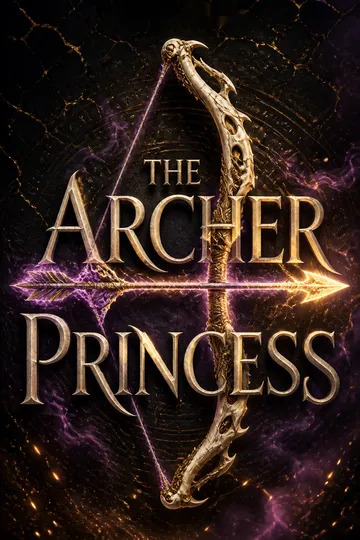
The Archer Princess Series





Download PDF
Download EPUB
.epub digital book format is ideal for reading ebooks on phones, tablets, and e-readers.








