

Key Takeaways
Build the conditions for flow instead of waiting for inspiration
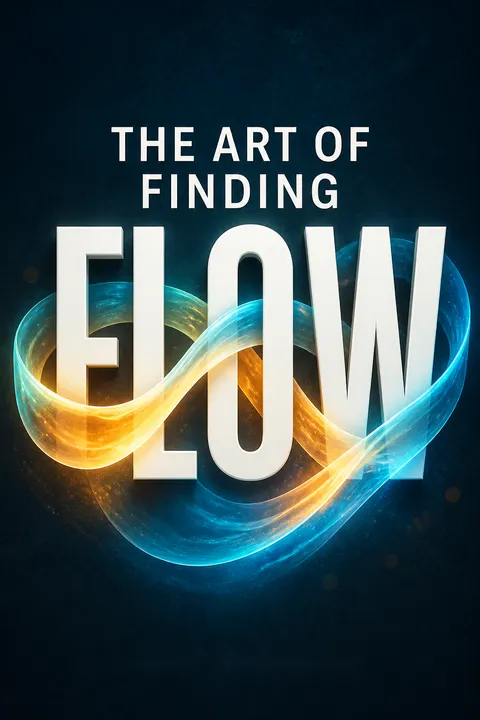
Flow is trainable. Flow is a state of deep absorption: attention gathers around one activity, effort feels more natural, and unrelated concerns recede. The author recalls finding it during long-distance swimming, where repeated strokes and practiced technique left room for calm concentration even as his body worked hard. Similar immersion appeared later in music and writing. The point is not that flow belongs only to athletes or artists, but that practice and suitable conditions can make it more accessible.
More than productivity. Flow can improve output, but the book treats engagement and satisfaction as the deeper rewards. Its promise of entering flow at will is best understood as control over the conditions, not a guarantee that the state can be summoned on command. Interruptions, fatigue, and unpredictable demands still matter.
The most useful shift is from treating inspiration as a mysterious visitor to treating attention as something that can be prepared for. That framing supports agency without requiring a person to blame themselves whenever concentration fails. Flow research is also useful as a description of experience, not a promise of perfect control: the same routine can help one day and fail the next. A practical test is whether the setup makes focused work more likely, not whether it produces a dramatic trance.
Choose a challenge that stretches skill without overwhelming it
Find the workable edge. Flow is most likely when a task is demanding enough to hold attention but still seems achievable with the skills available. Easy data entry can become tedious once it is familiar. A novice pianist tackling an exceptionally difficult composition on an unrealistic deadline may feel defeated instead. Boredom and anxiety pull attention away in opposite directions, so neither makes a good launchpad for absorption.
Adjust the task. If work feels too easy, add a game-like constraint, such as a time target or a score to beat. If it feels too difficult, divide it into smaller parts and choose one manageable piece. The aim is not to avoid effort. It is to find effort that feels purposeful rather than futile.
This balance resembles the logic of skill acquisition: practice works best when the learner is challenged enough to notice errors, yet able to respond constructively. The book's useful contribution is to treat task design as adjustable rather than fixed. A role, assignment, or hobby can often be reshaped through smaller milestones or added constraints. The caution is that perceived difficulty is personal and can change with fatigue, support, or stakes, so the right level needs revisiting rather than being set once.
Give each session a clear goal and a personally meaningful reason
Know the destination. A clear, bounded objective helps direct attention and makes it easier to recognize progress. The book recommends shaping goals so they are specific, measurable, attainable, relevant, and time-bound. A student might define a session around mastering a set of concepts instead of vaguely deciding to study. A feedback signal, such as a completed practice set, helps show whether the effort is working.
Know why it matters. The author distinguishes intrinsic motivation, doing an activity because it is satisfying in itself, from extrinsic motivation, acting for an outside reward such as money or praise. The book connects intrinsic motivation to autonomy, competence, and relatedness: choice, a sense of capability, and connection to others. These qualities can make engagement easier to sustain.
Clear goals reduce ambiguity, while meaningful reasons help explain why attention should stay with the task. Together, they connect planning with motivation rather than treating a to-do list as sufficient fuel. The three needs named here also offer a diagnostic: a task may feel deadening because it allows no choice, seems beyond reach, or feels disconnected from anyone or anything valued. Not every necessary task can become intrinsically rewarding, however. A personally chosen purpose can help without making tedious work enjoyable.
Use a repeatable start ritual when your energy is strongest
Cue concentration. A pre-flow routine is a short sequence that signals the mind to prepare for focused work. It could include setting up materials, taking a walk, or doing a breathing exercise. Repeating the sequence can make the transition into a task more familiar, much as an athlete's warm-up prepares attention as well as the body.
Work with your rhythms. The book advises tracking when alertness and concentration rise or fade, rather than assuming everyone has the same ideal schedule. It discusses the basic rest-activity cycle, a recurring pattern of alertness and fatigue that it describes as roughly 90 minutes on average, while emphasizing that timing varies. It also urges attention to sleep and other forms of rest, including mental, emotional, sensory, social, creative, physical, and spiritual rest.
Rituals are valuable because they reduce the number of decisions required at the moment of starting. This is a small but concrete form of environmental design: a cue makes the intended behavior easier to begin. Energy tracking adds a useful individual check against rigid productivity advice. Biological rhythms can inform scheduling, but a roughly 90-minute pattern should not become another universal rule. The more reliable evidence in a person's own routine is whether attention and energy repeatedly change at a similar point.
Remove attention thieves before they fragment your work
Protect the runway. Distractions can come from outside, such as phones, email, noise, and interruptions, or from inside, such as worry, self-doubt, and fear of making mistakes. The book recommends reducing preventable interruptions before starting: silence notifications, close unnecessary programs, prepare supplies, and tell others when uninterrupted time is needed.
Stop switching tasks. What people call multitasking is usually rapid switching between activities, which breaks concentration and makes it harder to regain momentum. Choose one task for a defined stretch and write down stray thoughts rather than following them immediately. Fear and perfectionism can also divert attention. Naming a worry, checking its evidence, and treating an imperfect result as revisable can make the task feel less threatening.
The central insight is that focus is not only an inner virtue. It depends on the surroundings and on how often attention is asked to change direction. This makes distraction management less about moral toughness and more about designing fewer interruptions into a work period. Internal worries are harder to switch off than phone alerts, and some require support beyond productivity tactics. Still, recording a concern or testing a harsh self-judgment can create enough distance to return attention to the immediate task.
Let focus, not a kitchen timer, determine when to pause
Follow attention's pace. The Flowtime Technique is a way to track work and breaks without imposing fixed session lengths. Choose one task, note the start time, and work until attention fades or a break is needed. Record when the session ends, rest until ready to begin again, and log the break. Repeating this practice can reveal how long different activities hold attention and how much recovery they require.
Why not a rigid timer? The book contrasts this approach with the Pomodoro technique, which commonly uses 25-minute work periods and five-minute breaks. Such intervals can help with getting started, but a timer may interrupt a person who is already absorbed. Flowtime is intended to preserve momentum, not to encourage endless work. A break remains appropriate when concentration or energy has run down.
The method turns time tracking into observation rather than command. That distinction matters because standardized intervals are convenient, but attention does not always follow a tidy schedule. A personal log can reveal whether a task needs shorter bursts, longer stretches, or different recovery. The tradeoff is that waiting for focus to fade can make breaks easy to postpone, especially in demanding work cultures. A flexible method works best when it includes genuine stopping cues, not just permission to continue.
Use visible feedback to replace vague self-criticism with adjustment
Make progress legible. A feedback loop is a way to check, during an activity, whether actions are moving toward the intended goal. The signal can be a distance, a completed section, or another practical milestone. For marathon training, for instance, a runner could track weekly distance and pace, then adapt the plan when a target proves unrealistic.
Let evidence guide the next move. When progress is visible, a person can make a useful correction instead of interpreting every difficulty as proof of failure. A writer might set a modest word target, check whether it fits the available time, and revise it based on experience. The book argues that this can quiet the inner critic and support confidence. Feedback should describe performance clearly enough to guide action, rather than merely label it good or bad.
Feedback converts a vague question, am I doing well, into a more answerable one, what is happening and what adjustment follows? That is useful in learning, where mistakes are information rather than verdicts. A good measure should track progress toward the actual aim, not just what is easy to count. Word totals, for example, reveal pace but not necessarily quality. Combining a simple metric with judgment keeps the loop informative without letting the metric become the mission.
Treat partial immersion as useful flow, not an all-or-nothing state
Flow has degrees. The author calls a fuller experience macro flow: deep absorption, reduced self-consciousness, and a changed sense of time. Microflow is a lighter form that can occur when some helpful conditions are present but others are missing. A person may be engaged and productive despite lacking an ideal work time or a perfectly clear mission.
Notice the signs. Common clues include actions feeling more natural, a sense of control, enjoyment, narrowed attention, less concern about others' judgments, reduced awareness of time, and clarity about the immediate goal. The author suggests that several appearing together indicate a likely flow experience. They are practical clues, not a clinical test, and their intensity can vary across activities and people.
The spectrum model usefully reduces perfectionism about the conditions for concentration. If every session is judged against an ideal peak experience, ordinary but valuable engagement can seem like failure. Recognizing partial immersion gives people a more realistic way to notice what helps. At the same time, the signs are subjective and can overlap with intense concentration that is not especially healthy or productive. The relevant question is not only whether attention narrowed, but whether the experience served the person's chosen purpose.
Practice focused attention in ordinary activities, not only important work
Train attention in small doses. The book proposes practicing focus through activities that do not depend on having a perfect workday. Read a long article slowly, then summarize its argument. Listen to a short talk and recall its main points. Try a five-senses mindfulness drill, a brief breathing routine, or an hour away from screens. Each exercise asks attention to stay with one thing instead of scanning for the next stimulus.
Build competence deliberately. Physical activities can also teach focus, but repetition should reinforce sound technique rather than mistakes. Paying attention to individual movements can reveal habits that need correction. The underlying idea is practice: focused listening, reading, movement, and reflection develop familiarity with sustained attention, making it easier to approach demanding tasks without expecting concentration to appear fully formed.
These exercises broaden the definition of productivity practice. Careful listening or reading may not produce an immediate work artifact, yet both require resisting the impulse to skim, interrupt, or drift. That makes them useful rehearsal for tasks demanding sustained attention. The exercises are deliberately varied, so a reader can choose one that fits their circumstances. Their value should be judged by whether they make attention more available in daily life, not by treating every quiet moment as training that must be optimized.
Deep absorption has costs, so protect awareness and safety
Attention has a blind side. Flow can make nearby events less noticeable. At work, someone may mistake an absorbed colleague's silence for disregard. At home, ignoring the environment could be more serious if an urgent problem arises. The book also discusses a possible relationship between flow, dopamine, and compulsive pursuit of intense experiences, while acknowledging that the connection is not fully understood.
Stay engaged with context. The author recommends practicing self-awareness and emotional self-management alongside concentration. Simple mindfulness activities, such as walking meditation, active listening, or slow breathing, can help a person attend deliberately to their surroundings and reactions. Flow should support a meaningful activity, not become a reason to neglect health, obligations, or reasonable safety precautions.
The warning matters because the same narrowing of attention that makes flow powerful can also hide relevant information. This is especially important in settings where awareness of other people, equipment, or changing conditions is part of the task. The book appropriately presents addiction-related mechanisms as a concern rather than settled proof. A practical boundary is to distinguish chosen immersion from compulsive escape: if focused activity repeatedly displaces basic needs or responsibilities, its apparent productivity may be masking a cost.
Analysis
The book's central achievement is practical demystification. It turns flow from a romantic story about inspiration into a set of conditions readers can inspect: challenge, skill, purpose, motivation, attention, recovery, and feedback. Its most memorable move is to treat both the task and its context as adjustable. A dull task can be made more demanding; an overwhelming project can be divided; a noisy workspace can be changed where possible. This makes the framework adaptable across work, learning, sport, and leisure.
The strongest qualification is hidden in the phrase at will. A person can improve the odds of immersion but cannot fully command it. Interruptions, caregiving, workplace demands, health, and emotion are not always controllable. The book sometimes makes individual preparation sound more powerful than structural constraints allow. Its own emphasis on environment and rest points toward a more balanced conclusion: agency includes changing conditions where possible and accepting limits where it is not.
The framework also benefits from distinguishing focused engagement from valuable work. A person can concentrate intensely on an unimportant goal, or enjoy a flow-like state while neglecting a more urgent obligation. Clear purpose and feedback help, but the quality of the objective still matters. Similarly, measures such as word counts or time logs are useful proxies, not complete accounts of learning or craft.
The concept of microflow is a notable corrective to all-or-nothing thinking. It gives readers a way to value partial engagement rather than wait for a flawless setup. Taken together, the book offers a usable practice: prepare attention, calibrate difficulty, make progress visible, and review whether the resulting absorption serves a worthwhile aim. Its best promise is not perfect control, but greater skill in arranging the conditions under which meaningful concentration can occur.
People Also Read






Glossary
Flow
deep task absorptionA state of concentrated engagement in which attention is absorbed by an activity and distractions recede. The book associates flow with a clear objective, a challenge suited to the person's skills, confidence in making progress, and ongoing feedback. It can feel rewarding in itself and may support creativity, learning, and performance.
Microflow
lighter flow experienceA partial form of flow that occurs when some helpful conditions are present but others are missing. Engagement or concentration may be less intense or shorter than in a fuller experience, yet the activity can still feel absorbing and rewarding. The term challenges the idea that flow is either completely present or absent.
Macro flow
fuller flow experienceThe book's term for a comprehensive flow experience, marked by strong absorption, reduced self-consciousness, and a distorted sense of time. It describes the more intense form of flow in which the activity occupies attention so fully that unrelated surroundings and concerns largely disappear.
Flowtime Technique
flexible work and break trackingA method for recording work sessions and breaks without setting fixed durations in advance. The person selects one task, notes when work begins, stops when focus fades or a break is needed, and records the session and break lengths. Repeated records can reveal personal patterns of attention and recovery.
basic rest-activity cycle (BRAC)
recurring alertness and fatigue patternA cycle of changing alertness and tiredness discussed as one influence on focus and energy during waking work. The book describes an average cycle of about 90 minutes, while noting that its timing and duration vary among people. It recommends observing personal changes in concentration rather than assuming a universal schedule.
intrinsic motivation
motivation from inherent satisfactionMotivation to do an activity because the activity itself feels interesting, satisfying, or worthwhile, rather than mainly to obtain an external reward or avoid punishment. The book connects it with autonomy, competence, and relatedness: having some choice, feeling capable, and experiencing connection with other people or a shared purpose.
amygdala hijack
threat response overriding reflectionA term associated in the book with psychologist Daniel Goleman, describing an emotional response in which perceived threat rapidly prompts action and can crowd out measured reasoning. The book uses it to explain how fear, stress, or anxiety can redirect attention away from a task and make focused engagement harder.
S.M.A.R.T. goal
structured goal-setting checklistA framework for making an objective Specific, Measurable, Attainable, Relevant, and Time-Bound. The book uses these criteria to clarify what a person intends to accomplish, how progress will be assessed, whether the goal fits current ability, why it matters, and when it should be completed.






Download PDF
Download EPUB
.epub digital book format is ideal for reading ebooks on phones, tablets, and e-readers.








