

Key Takeaways
Influence begins with the person people choose to trust, not your pitch
A surprising invitation. Marcus Drake, an ambitious new MBA, expects success to come from business knowledge and persuasive ability. His grandmother gives him something better: several days with billionaire Bobby Gold, whom she once cared for as a child. Bobby distinguishes persuasion, the techniques used to win a particular agreement, from influence, the broader ability to affect what people think or do. A leader cannot appoint themselves influential. Buyers and followers decide whether to trust and follow them. The part Marcus controls is who he becomes.
Character in motion. Bobby describes painful experiences, including family conflict, a fractured friendship, and the loss of a child. His point is not that hardship automatically improves anyone, but that a person's response to it shapes their character. Influence, in this view, grows through repeated choices, not a clever line delivered at the right moment.
The distinction shifts leadership from performance to credibility. Research on trust in organizations similarly finds that perceived integrity and competence shape whether people accept direction, especially when outcomes are uncertain. The book's emphasis on personal formation also makes influence less like a switch and more like a reputation accumulated across interactions. Still, being trusted is not identical to being right. A charismatic person can earn confidence without deserving it, so influence is healthiest when others retain real freedom to question, verify, and refuse.
Keep the line in the water instead of chasing every buyer
Pressure drives people away. Bobby compares aggressive selling to hunting: the target senses pursuit and tries to escape. Fishing, his alternative, means creating a relationship and giving the other person room to choose. He explains the idea through Marcus's recent car purchase. One salesperson pushed so relentlessly that Marcus bought from a less forceful competitor, despite having initially considered both cars.
Match the moment. Bobby's advice is to recognize that not everyone is ready to buy or follow now. A young adult may have little need for life insurance, but their circumstances can change. Rather than arguing them into a purchase, a salesperson can stay in touch, look for people who are ready, offer something that genuinely fits, and present it in a way that feels respectful. The metaphor's four parts are opportunity, timing, an appealing offer, and its presentation.
This model connects naturally to autonomy-supportive communication: people are more receptive when they feel free to make a decision rather than cornered into one. It also encourages patience and reduces the desperation that can distort judgment. The metaphor has an ethical edge, though. Describing a person as bait or a fish can quietly turn relationship-building into a tactic. The useful test is whether the other person gains clear information and can decline without penalty. Patience should protect choice, not disguise manipulation.
Treat small dishonesties as warnings that trust needs repair
A lie before the meeting. During a prospective investment meeting, Bobby's team hears the CFO tell an assistant to claim that a business package was already mailed, even though he had forgotten to send it. Bobby sees this small deception as relevant to a much larger decision: whether to invest $50 million. The financial projections may look strong, but he cannot confidently rely on information from someone willing to lie when the truth is inconvenient.
Repair the cracks. Bobby calls integrity a whole, consistent way of living, not a claim that a person never makes mistakes. He uses the image of small flaws in a structure: they are manageable when noticed and repaired, but dangerous when ignored. Leaders need not appear perfect. They do need to acknowledge errors and correct them, because trust depends on whether people can believe what they say.
The story makes a powerful case for treating ordinary conduct as evidence about future reliability. In practice, however, one lie is a warning signal, not a complete character assessment. A sound investment decision would also verify records, test assumptions, and create accountability. Ethical judgment and due diligence work best together: values indicate what deserves scrutiny, while evidence establishes what is true. The chapter's strongest practical point is not to demand flawlessness, but to make correction visible before a minor breach becomes a pattern.
Ask what can improve after a setback, not only why it hurt
Choose a useful question. Baseball manager Tom Martin teaches Marcus to respond to failure by looking for what can be done next, rather than becoming trapped in self-pity. A strong hitter may fail to reach base roughly 65 times out of 100. If each missed opportunity becomes proof of personal inadequacy, the next attempt grows harder. Martin instead encourages players to look for a constructive lesson and a better path forward.
Words shape expectations. He tells Marcus about Carlos Menendez, a gifted hitter whose slump worsened under a manager who berated him. Martin rebuilt the player's confidence with repeated encouragement. The story illustrates the book's claim that leaders' words affect both their own thinking and the people around them. Optimism here is a chosen way of interpreting difficulty, not a guarantee that difficulty disappears.
The reframing resembles cognitive reappraisal, a technique in which people change how they interpret an event to change their emotional response. It can support persistence by separating a bad result from a permanent verdict on ability. The caution is that optimism can become denial if it blocks honest diagnosis or makes people feel responsible for circumstances beyond their control. A resilient leader combines hope with accurate feedback: name the setback, identify what can be changed, and avoid turning criticism into humiliation.
Show interest in people's lives before asking for their business
People want to be noticed. Bobby recalls asking his uncle Walt, a successful tractor salesman, why customers chose him. Walt's answer was that they liked him. Bobby connects likability not just to friendliness, but to taking other people's interests seriously. At the ballpark, he makes a point of speaking with staff about their families and lives, rather than using every encounter to inspect their work.
Curiosity changes conversations. Bobby's teenage daughter notices a similar effect at a local coffee shop. After she begins asking customers about their jobs, families, and routines, her daily tips rise from about $25 to nearly $75 on many days. The lesson is to be genuinely curious, not merely to perform charm. People are more likely to trust someone who treats them as individuals instead of as transactions.
The example anticipates a basic finding in interpersonal communication: responsive listening helps people feel understood, which can strengthen rapport and cooperation. It also offers a useful distinction between being entertaining and being attentive. Yet the rise in tips does not prove that every question was welcome or that curiosity alone caused the change. The ethical difference lies in motive and reciprocity. Interest becomes relationship-building when it is sincere, appropriately paced, and not simply a technique for extracting money or compliance.
Pair sound character with real competence to earn durable followership
Two tests of a leader. Bobby asks Marcus to name what he values in a leader. Marcus lists qualities including honesty, fairness, courage, vision, listening, and communication. Bobby sorts such qualities into character and skills. In an exercise he has used with executives, he says roughly 70 to 80 percent of the qualities people name are character traits.
Neither half is enough. A principled person without the skills to guide a team may be admirable but ineffective. A highly capable person without character may win short-term results, then lose trust. Bobby argues that leadership and sales depend on both: people need reason to believe a leader can do the work and reason to believe that leader will act fairly. The practical task is to develop technical ability without treating character as someone else's concern.
The pairing is stronger than the familiar habit of treating leadership as either charisma or expertise. Organizational trust often rests on judgments of both ability and benevolence, alongside integrity. The book's percentage, however, comes from an informal exercise, not a controlled study, and the categories can blur: listening is a skill shaped by values, while fairness requires judgment as well as intention. The exercise is useful as a prompt, not as proof that character always matters more than competence in every role.
Make excellence a seven-part practice, not a polished public image
A wider standard. Businessman Paul Diamond describes excellence as ongoing development across seven areas: physical appearance, emotional health, intellectual growth, spiritual depth, relationships, financial success, and charitable giving. His examples range from dressing with care to reading challenging books, making time for family and friends, and seeking counseling or vacations to maintain emotional health. Excellence is not simply wealth or a flawless image; it is attention to the parts of life that influence how a person shows up.
Model the details. Diamond says he picks up scraps of paper in his own properties rather than leaving every small task to employees. The action signals that standards apply to leaders too. He also argues that financial success can increase a person's reach, while giving can direct that reach toward others. Money, he stresses, does not guarantee lasting respect.
The seven areas resist a narrow definition of success as income or job title. The emphasis on rest, learning, relationships, and service also fits a broader view of sustainable performance: people operate within social and emotional lives, not as isolated productivity machines. But this model carries assumptions about what a good life should include, especially in its treatment of spirituality and appearance. Excellence should be adapted to personal values and material circumstances, not used to shame people who lack time, health, money, or access.
Turn earned influence into opportunity beyond your own circle
The story comes full circle. Bobby's wealth is not presented only as a private reward. He funds small loans for people in South America and Africa, helping them buy equipment or animals to start businesses. His final gift to Marcus grows from a relationship that began years earlier, when Marcus's grandmother cared for Bobby during a difficult childhood. After Marcus's brother sends Bobby the business plan, Bobby gives Marcus $50,000 to begin and offers to invest another $500,000 for a 40 percent stake if the venture gets underway.
Influence carries obligations. Bobby asks Marcus to use future wealth to help others. The ending turns the mentorship into a chain: care once given to Bobby becomes opportunity for Marcus, who is urged to pass opportunity onward. The book's measure of influence is therefore not only whom a person can persuade, but what their access makes possible for people with less of it.
This ending links leadership to stewardship: influence is not merely status but a capacity to shape who gets resources and a chance to act. The microloan example emphasizes agency, since recipients gain tools to build livelihoods rather than only receiving aid. Still, philanthropy does not automatically make wealth ethical, and investment terms can distribute power unevenly. A serious account of generosity therefore asks not just how much is given, but who sets priorities, who bears risk, and whether recipients retain control over their choices.
Analysis
The book is a business parable built around a simple transformation: Marcus begins as a talented, self-assured graduate who believes success will follow from ambition and business knowledge. His grandmother's connection to Bobby Gold gives him access to a mentor, but the lessons steadily redirect his attention from technique to character. The narrative makes the four principles memorable by attaching them to distinct scenes: a CFO's lie, a manager's response to a slump, an owner's conversations with stadium workers, and a wealthy entrepreneur's standards across life. The final gift closes the plot by turning influence into a responsibility passed from one person to another.
Its central distinction between persuasion and influence is valuable because it places the recipient's agency at the center. A seller can make a case, but a buyer decides whether to trust it. The fishing metaphor makes that insight practical by discouraging pressure and emphasizing timing, fit, and patience. The four principles also reinforce one another: integrity makes trust plausible, optimism helps people imagine a future, attention builds relationships, and excellence signals care in action.
The parable is not evidence that these traits reliably produce billionaire-level success. Its characters and events are fictional, and its claims about business outcomes are presented as lessons rather than tested findings. It also risks overstating personal influence: strong character cannot erase unequal access, market conditions, or luck. Some advice, especially about presentation and positivity, can be misused to reward conformity or silence legitimate criticism. The strongest reading avoids those extremes. Treat the principles as standards for responsible conduct, not a formula for controlling outcomes. Influence becomes worthwhile when competence supports promises, honesty survives inconvenience, optimism leaves room for facts, and generosity expands other people's choices rather than merely enhancing the benefactor's reputation.
Review Summary
The Art of Influence receives mostly positive reviews, praised for its concise yet impactful message. Readers appreciate the parable format and four golden rules of influence: integrity, positive attitude, prioritizing others' interests, and pursuing excellence. Many find the book's principles applicable beyond business, enhancing personal relationships and character development. Some critics argue it oversimplifies success and ignores systemic barriers. Overall, reviewers recommend it as a quick, inspiring read for those seeking to improve their leadership and influence skills.
People Also Read



Glossary
Influence
Chosen capacity to affect othersThe book distinguishes influence from techniques for persuading someone in a single exchange. Influence is a person's capacity to shape another's thoughts, beliefs, or actions, but the other person decides whether to grant that capacity. It grows from the influencer's character, competence, and conduct over time.
Four Golden Rules of Influence
Four standards for leadershipThe book's named model for becoming someone others are willing to follow or buy from. Its standards concern trustworthy conduct, a constructive response to setbacks, serious attention to other people's interests, and high standards across work and life. Together, they frame influence as a product of personal development rather than a set of persuasion tricks.
Fishing or hunting
Pressure versus patient influenceA metaphor contrasting aggressive pursuit with a less coercive approach to selling and leadership. Hunting represents pressure that can make people withdraw. Fishing means finding a suitable opportunity, respecting the other person's readiness, offering something appealing, and presenting it well while allowing the person to choose.
undivided integrity
Consistency between values and conductThe book's term for integrity as a whole, dependable way of living rather than a good reputation in selected settings. Small acts of dishonesty matter because they create doubt about which version of a person others will encounter. Mistakes do not make integrity impossible, but they should be acknowledged and corrected.
seven areas of excellence
Whole-life growth categoriesPaul Diamond's framework for pursuing excellence in physical appearance, emotional health, intellectual growth, spiritual depth, relationships, financial success, and charitable giving. The categories broaden success beyond money or professional achievement, emphasizing personal wellbeing, social ties, continued learning, and contribution to others.
FAQ
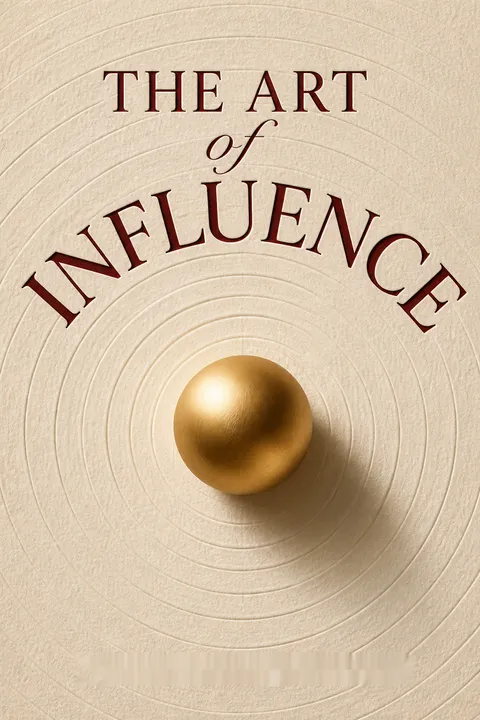
What is "The Art of Influence" by Chris Widener about?
- Modern Parable on Influence: The book is a business parable that follows Marcus Drake, a young MBA graduate, as he learns the true art of influence from billionaire Bobby Gold and other successful leaders.
- Focus on Personal Transformation: It emphasizes that real influence is not about manipulation or persuasion techniques, but about who you become as a person.
- Four Golden Rules: The narrative is structured around four core principles—integrity, positive attitude, valuing others, and excellence—that are essential for becoming a person of influence.
- Practical and Relatable: Through engaging storytelling and real-world examples, the book provides actionable advice for anyone seeking to lead, sell, or make a difference.
Why should I read "The Art of Influence" by Chris Widener?
- Timeless Leadership Lessons: The book distills complex ideas about influence and leadership into simple, memorable rules that can be applied in any area of life.
- Story-Driven Learning: The parable format makes the lessons engaging and easy to remember, as you follow Marcus’s journey and personal growth.
- Applicable to All Roles: Whether you’re a business leader, salesperson, parent, or community member, the principles are universally relevant.
- Focus on Character: Unlike many business books, it prioritizes character and personal development over mere tactics or strategies.
What are the key takeaways from "The Art of Influence" by Chris Widener?
- Influence Begins with You: True influence is about personal transformation and becoming the kind of person others want to follow or do business with.
- Four Golden Rules: The book’s core is the Four Golden Rules of Influence: live with undivided integrity, always demonstrate a positive attitude, consider others’ interests more important than your own, and never settle for less than excellence.
- Relationships Matter Most: Success in business and life is built on healthy, genuine relationships, not just skills or technical knowledge.
- Long-Term Impact: Influence is about making a lasting, positive impact on others, not just achieving short-term wins.
Who are the main characters in "The Art of Influence" by Chris Widener, and what roles do they play?
- Marcus Drake: The protagonist, a recent MBA graduate eager to achieve business success and learn the secrets of influence.
- Bobby Gold: A flamboyant billionaire and master influencer who mentors Marcus, sharing his life lessons and the Four Golden Rules.
- Beatrice (Grandma): Marcus’s grandmother, who arranges the life-changing mentorship with Bobby Gold, highlighting the power of personal connections.
- Supporting Influencers: Other key figures include Tom Martin (baseball manager) and Paul Diamond (real estate mogul), who each embody and teach one of the Golden Rules.
What is Chris Widener’s definition of "influence" in "The Art of Influence"?
- Influence vs. Persuasion: Widener distinguishes influence as the ability to change another person’s thoughts, beliefs, or actions through who you are, not just what you do or say.
- Gift from Others: Influence is described as a gift that others give you—they choose to be influenced by you based on your character and actions.
- Core of Leadership and Sales: Influence is presented as the essential competency for both leadership and sales, more important than technical skills or persuasive tactics.
- Personal Transformation: The book stresses that influence is rooted in personal growth and authenticity, not manipulation.
What are the Four Golden Rules of Influence in "The Art of Influence" by Chris Widener?
- Live a Life of Undivided Integrity: Always be honest and consistent; integrity is the foundation of trust and influence.
- Always Demonstrate a Positive Attitude: Optimism attracts people and inspires them to follow; your attitude shapes your influence.
- Consider Other People’s Interests as More Important Than Your Own: Genuine care for others builds likability and strong relationships, which are key to influence.
- Don’t Settle for Anything Less Than Excellence: Strive for excellence in all areas of life; people are drawn to and influenced by those who set high standards.
How does "The Art of Influence" by Chris Widener differentiate between persuasion and influence?
- Persuasion is Technique: Persuasion is about convincing others through arguments, presentations, or tactics—what you do to people.
- Influence is Identity: Influence is about who you are and how you live; it’s about attracting others to your way of thinking by example.
- Long-Term vs. Short-Term: Persuasion may win short-term compliance, but influence creates lasting change and loyalty.
- Relational Approach: Influence is rooted in relationships and trust, while persuasion can sometimes feel manipulative or transactional.
What practical advice does "The Art of Influence" by Chris Widener offer for building influence?
- Work on Yourself First: Focus on developing your character and skills, as people are influenced by who you are.
- Be Consistent and Trustworthy: Small lapses in integrity can undermine your influence; always strive for wholeness and honesty.
- Adopt a Positive Mindset: Use positive words and attitudes to inspire yourself and others, especially in challenging times.
- Prioritize Others: Show genuine interest in people’s lives and needs, making them feel valued and understood.
- Pursue Excellence: Pay attention to details and set high standards in every area, from appearance to emotional health to charitable giving.
How does "The Art of Influence" by Chris Widener use stories and examples to teach its lessons?
- Mentorship Journey: The book follows Marcus’s real-life experiences with Bobby Gold and other leaders, making abstract principles concrete.
- Relatable Scenarios: Everyday business and life situations—like sales meetings, leadership challenges, and personal setbacks—are used to illustrate each Golden Rule.
- Memorable Analogies: Concepts like "fishing vs. hunting" are used to explain the difference between influence and persuasion in a vivid, memorable way.
- Role Models: Each supporting character embodies a specific principle, showing how it works in practice.
What are some of the best quotes from "The Art of Influence" by Chris Widener, and what do they mean?
- "Influence is a gift that others give to you." – Influence can’t be forced; it’s earned through character and trust.
- "Live a life of undivided integrity." – Consistency and honesty are non-negotiable for lasting influence.
- "People do business with people they like." – Relationships and likability are more important than products or prices.
- "Don’t settle for anything less than excellence." – Excellence attracts others and sets you apart as a leader.
How can the Four Golden Rules from "The Art of Influence" by Chris Widener be applied in daily life or business?
- Integrity in Small Things: Be honest even in minor matters; your reputation is built on everyday actions.
- Positive Attitude at Work: Encourage colleagues, focus on solutions, and use uplifting language to foster a productive environment.
- Value Others’ Interests: Listen actively, ask about people’s lives, and look for ways to help others succeed.
- Pursue Excellence Everywhere: Set high standards for yourself in appearance, learning, relationships, and giving, inspiring others to do the same.
What makes "The Art of Influence" by Chris Widener different from other books on leadership and influence?
- Character Over Technique: Unlike many books that focus on persuasion tactics, this book centers on personal transformation and character as the source of influence.
- Storytelling Approach: The parable format makes the lessons accessible, memorable, and enjoyable to read.
- Universal Principles: The Four Golden Rules are simple, timeless, and applicable to any area of life, not just business.
- Emphasis on Giving Back: The book highlights the importance of using influence and success to help others and make a positive impact on the world.
About the Author

Download PDF
Download EPUB
.epub digital book format is ideal for reading ebooks on phones, tablets, and e-readers.








