

Key Takeaways
Turn procrastination into output by keeping useful decoys below daunting priorities
Make avoidance useful. Structured procrastination is Perry’s name for getting worthwhile work done as a way of avoiding a task that feels even more urgent or important. The trick is to keep several meaningful projects below the intimidating one, so avoiding the top task does not mean doing nothing. Perry recalls playing Ping-Pong and talking with students instead of grading papers, and earning a reputation as an unusually engaged resident fellow.
Choose the decoy carefully. Perry argues that simply reducing commitments can backfire: when only the hardest tasks remain, procrastination may become inactivity. The strategy works best when the top task seems pressing but is not truly catastrophic, while the alternatives are useful enough to justify doing. It is a way to redirect avoidance, not a claim that every delay is productive.
The useful distinction is between procrastination as pure escape and procrastination as misdirected effort. The second can be redirected by arranging tasks so that avoidance still produces value, much like designing a workspace that makes the desired action easier to reach. The strategy also explains why self-condemnation can be counterproductive: shame consumes attention without improving the task structure. Its limit matters, though. A tactic built around apparently urgent decoys is unsafe when real deadlines, health, or other people’s needs are at stake.
Trade perfect fantasies for adequate first drafts before panic takes over
Name the hidden standard. Perry describes perfectionism not as a record of flawless work, but as an imagined performance so excellent that beginning feels risky. He illustrates this with a manuscript review: instead of starting, he considers researching every cited source and setting up remote library access. The elaborate preparation feeds the fantasy of a stellar report while postponing the ordinary work of reading and writing.
Use task triage. This is Perry’s term for judging how much quality a task actually requires. Ask whether a perfect result would be much more useful than an adequate one, whether perfection is realistic, and what the difference would mean to others. A good-enough report written now may serve its purpose better than a theoretically brilliant one delivered late.
The key move is to separate the standard a task needs from the standard that would flatter its creator. That distinction is valuable wherever evaluation feels personal, because an imagined perfect result can protect someone from the discomfort of producing a visible, imperfect one. A practical safeguard is to define the minimum acceptable result before starting. Still, adequacy is not universal: a casual review and a safety-critical decision do not deserve the same threshold. Triage requires judgment, not automatic lowering of standards.
Make progress visible, even when your first wins are almost embarrassingly small
Build momentum on paper. Perry’s daily to-do list is less a reminder system than a way to see completed actions. He includes simple morning routines, so the day begins with several visible checkmarks before harder work starts. The small wins matter because they let a procrastinator experience being an accomplisher rather than viewing the whole day through its unfinished projects.
Break the intimidating task apart. A large report or household job can be divided into small, concrete steps, with safeguards against predictable distractions. Perry suggests listing actions to avoid as well as actions to take, such as postponing a tempting Web search. Writing the list the night before helps because the morning is a poor time to negotiate with the part of oneself that wants to go back to sleep.
A visible record of progress changes the feedback available to someone whose attention is fixed on what remains undone. This resembles a basic principle of behavioral design: make progress legible, not merely measurable in retrospect. Breaking work into steps also reduces the ambiguity that makes a task feel larger than it is. The danger is turning the list into a scoreboard of trivialities. Small entries should create momentum toward a meaningful deliverable, rather than allowing a day full of checkmarks to disguise avoidance of the work that matters.
Choose your morning soundtrack before your mood chooses it for you
Preselect the cue. Perry treats music as a practical way to shift the mood that can keep a procrastinator stuck. When someone feels low, they may reach for music that matches the gloom, even if it deepens it. His proposed workaround is to choose energizing songs in advance, when choosing feels easier, and arrange for the music to start before the day’s inertia takes hold.
Give effort an endpoint. Music can also help someone begin a large job without promising to finish it all at once. Perry suggests using the length of a playlist as a limited work session, such as spending one album’s worth of time on a messy garage. The point is not to find the objectively best song. It is to use sound and rhythm as a nudge toward action.
This advice treats mood as part of the environment rather than a private feeling that must be conquered through argument. A preselected cue can reduce the number of choices required at the moment motivation is weakest. The bounded work session is similarly useful because it replaces an open-ended demand with a manageable interval. Music is not a treatment for serious depression, and Perry acknowledges that some cases require professional help. Its promise is more modest: it can make starting feel less effortful on an ordinary difficult morning.
Put interruptions between yourself and the internet’s endless side roads
Design an exit. Perry sees computers as both deadline accelerators and distraction machines. Email makes it easy to postpone a reply indefinitely, while Web links can lead from a practical search into hours of unrelated browsing. His experience with email folders and starred messages is cautionary: moving important mail out of sight can create another neglected pile rather than solving the problem.
Interrupt the spell. Instead of trusting willpower to stop a browsing session, arrange an interruption before it begins. Perry suggests logging on when hunger, a planned commitment, or another natural break is approaching. An alarm can serve the same purpose; unplugging a laptop can make its battery the limit. These tactics acknowledge a simple fact of his experience: stopping once absorbed is harder than setting a boundary in advance.
The deeper principle is to place friction at the point where attention tends to disappear. A time limit or planned interruption functions as a small commitment device, shifting control from the distracted moment to the more deliberate one that came before it. Perry’s failed mail-management experiments also illustrate why a tool can improve appearances without changing behavior: an inbox can look cleaner while the underlying obligation remains untouched. External limits help most when paired with a clear next action, so the interruption returns the user to work rather than simply ending the browsing session.
Organize unfinished work where your eyes naturally return
Fit the system to the worker. Perry calls himself a horizontal organizer: someone who needs unfinished projects visible on a desk or screen because filing them away makes them easy to forget. He contrasts this with vertical organizers, who comfortably store papers in folders and retrieve them when needed. The distinction is about what makes work accessible, not about one kind of person being inherently neat or capable.
Make visibility orderly. Perry compares the disadvantage of a horizontal organizer to a left-handed person using furniture designed for right-handed people. He imagines a large rotating surface that would keep many active projects in sight while giving each a place. The comic proposal points toward a serious practical idea: a useful system should make unfinished work easy to resume, rather than merely making a desk look tidy.
This is an early argument for person-environment fit: organization should be judged by whether it supports retrieval and follow-through, not whether it resembles a conventional office. The visible desk acts as an external memory, keeping unfinished intentions available without requiring a separate search. That benefit has a cost, since too many visible projects can compete for attention and create visual overload. The useful question is not whether everything should be filed or displayed, but which items need to stay perceptually available and which can safely leave the active field.
Borrow a collaborator’s momentum, then contribute in ways that matter
Let another person set the pace. Perry describes collaborators who turn an appealing idea into scheduled work. His friend Ken Taylor pushed their proposed philosophy radio program from an idea through funding, a pilot, and conversations with stations. Perry was ready to give up after early rejection; Taylor kept pursuing the project until it became a regular broadcast.
Make the partnership fair. A reliable collaborator can function like an alarm that is difficult to ignore, creating meetings and shared commitments that make delay harder. Perry also recognizes the risk of letting the more organized person carry everything. He recommends noticing and appreciating their effort, and taking on useful contributions that might otherwise be neglected. Collaboration is not a license to free-ride; complementary strengths should benefit both people and the project.
Shared work can transform intention into a social obligation, giving a project structure that private resolve often lacks. The example also shows that persistence need not be evenly distributed at every moment for a partnership to work. But an asymmetry that is productive once can become exploitation if one person repeatedly supplies the planning and follow-through. Clear roles, visible appreciation, and concrete contributions protect the relationship. The best collaborator is not simply a human productivity device, but someone whose strengths combine with others’ contributions to make a project possible.
Wait when reality may erase the task, not merely to dodge it
Let uncertainty resolve. Some assignments change while they wait. Perry describes postponing a reference letter until it was actually requested, only to learn that the applicant’s process no longer required it. Acting immediately might have meant writing and updating a letter that was never used. Other tasks become easier when someone with relevant knowledge offers advice, or when colleagues supply material that makes a decision simpler.
Do not manufacture a crisis. Delay can be useful when it allows new information to arrive or reveals that the task is unnecessary. It is less defensible when someone else is left waiting or forced to absorb the work. Perry distinguishes this from deliberately withholding action to make another person take over. The test is whether waiting has a plausible benefit beyond avoiding discomfort, and whether the cost of delay falls unfairly on someone else.
This is a case for preserving options when action is costly and the situation may change. In decision-making, waiting can have value when new information is likely to arrive and delay does not create serious harm. But that logic needs a boundary: the mere possibility that a task will disappear is not enough to justify leaving others exposed to uncertainty. A useful check is to identify what information is expected, when it should arrive, and who bears the cost of waiting. Without those answers, strategic patience can become a flattering name for avoidance.
Own the cost of delay without turning a flaw into an identity
Reject the shame spiral. Perry argues that people are not perfectly rational decision-makers. They contain competing wants: comfort may beat duty in the morning, curiosity may beat email, and a treat may beat a health plan. Seeing this conflict more honestly can reduce the self-loathing that makes work harder, while leaving room to use lists, alarms, music, and collaborators as practical supports.
Keep responsibility in view. Perry does not present procrastination as a hidden virtue. He notes that delayed grades, neglected messages, and unfinished shared tasks can irritate or harm other people. He also describes delaying a request after feeling interrupted, not to complete useful work but to resist being directed. Accepting oneself is not an excuse for that kind of retaliation. The aim is a more workable life, not a moral makeover that renames every cost as a benefit.
Perry’s humane account challenges the fantasy that good choices always follow from knowing what is best. It makes room for self-management through surroundings and relationships, rather than treating every lapse as a failure of character. That shift can support accountability because a person who is not busy defending against shame can look more clearly at consequences. The balance is delicate: self-acceptance can reduce needless suffering, but it should not erase obligations to other people. The most useful question is both compassionate and concrete: what structure would make the next responsible action more likely?
Analysis
Perry’s central contribution is not a cure for procrastination but a change in what counts as useful action. He challenges the ideal of a person who calmly identifies the best task and performs it. Instead, people contain competing motives, and action often comes through indirect routes: an avoided deadline creates energy for lesser tasks, a collaborator supplies structure, or a visible checklist makes progress feel real. This is a psychologically plausible account of self-management because it begins with actual behavior rather than an imagined, perfectly disciplined self.
The book is most persuasive when it separates productive displacement from damaging delay. Its suggestions work when the avoided task is not truly urgent, the substitute is worthwhile, and other people are not paying the price. Its comic tone makes that distinction easier to hear, but the reader still has to make it. A postponed commitment can quietly transfer labor or uncertainty to someone else, and the fact that the procrastinator is busy does not settle whether the delay is fair.
The framework also exposes a design problem. Conventional productivity advice often assumes that reminders, folders, and priority rankings work for everyone. Perry instead asks how a particular person actually notices, avoids, and resumes tasks. A messy desk may be a retrieval system for one worker and a distraction field for another. This is a useful shift from moral judgment to functional diagnosis: what makes the next meaningful action visible and feasible?
The book’s limits are part of its honesty. Structured procrastination may help people who can redirect their effort, but persistent impairment, severe distress, or responsibilities with real consequences require more than clever self-deception. Its durable message is narrower and more humane: stop demanding that motivation arrive in a respectable form. Arrange tasks, cues, and collaborators so that even imperfect motivation can produce something worthwhile, while remaining answerable for what the delay costs.
Review Summary
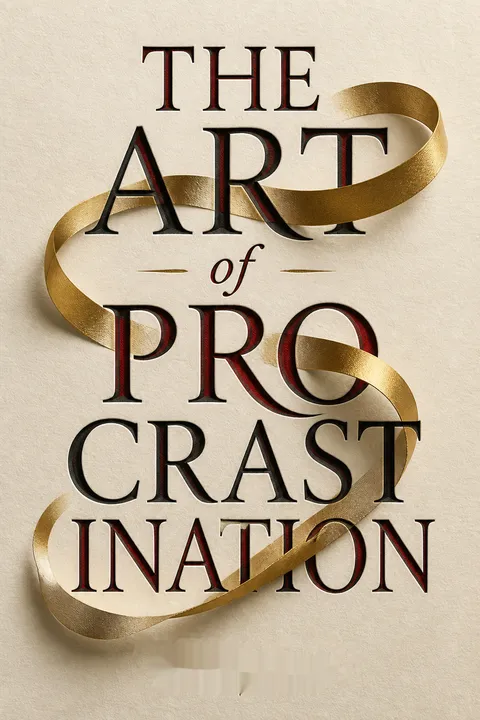
The Art of Procrastination is a humorous and insightful book that resonates with many readers. It offers a unique perspective on procrastination, suggesting that it can be structured and even productive. While some found it reassuring and helpful, others criticized it as justifying laziness. The book's short length and conversational tone were generally appreciated. Many readers related to the author's experiences and found the concept of "structured procrastination" intriguing. Overall, it's seen as a light, entertaining read that may not solve procrastination but can alleviate guilt.
People Also Read

Glossary
Structured procrastination
Productive avoidanceA strategy in which a person postpones a task that seems especially important by working on other worthwhile tasks. It relies on arranging projects so that avoiding the most daunting one still produces useful work. Perry presents it as a way to redirect procrastination, not as proof that delay is harmless or that every procrastinator will benefit.
Task triage
Choosing an adequate standardPerry’s method for deciding how much effort a task deserves. At the point of accepting work, the person weighs the added value of a perfect result against an adequate one, the likelihood of achieving perfection, and the consequences for others. The purpose is to replace an imagined ideal with a defensible standard that makes starting possible.
Horizontal organizer
Needs projects in viewPerry’s label for someone who relies on unfinished work remaining visible on a desk or computer screen. Filing a project away may make it effectively disappear, even if it can technically be found later. The term describes a mismatch between a person’s retrieval habits and conventional filing systems, not a general inability to organize.
Right-parenthesis deficit disorder
Digressions left unfinishedPerry’s humorous name for a conversational habit he attributes to his collaborator David Israel: beginning nested qualifications and objections without bringing the thought to a clear close. Perry says they work together because he follows the most promising thread and ignores the rest. The phrase is a comic description, not a clinical diagnosis.
Akrasia
Acting against better judgmentA philosophical term for acting contrary to what one believes one ought to do. Perry uses the ancient puzzle of akrasia to question the picture of people as consistently rational decision-makers. Procrastination makes the puzzle familiar: someone can judge a task important and still choose comfort, distraction, or a different activity.
Anticontrol procrastination
Delay as resistancePerry’s description of postponing a request to demonstrate that another person does not control one’s actions. Unlike structured procrastination, this delay may not produce useful work and can simply extend a conflict. Perry treats it as immature and distinguishes it from postponement that redirects effort toward worthwhile tasks.
FAQ
What's "The Art of Procrastination" about?
- Overview: "The Art of Procrastination" by John R. Perry is a humorous and insightful exploration of procrastination, particularly focusing on how it can be structured to become a productive trait.
- Structured Procrastination: The book introduces the concept of "structured procrastination," where one uses the act of delaying important tasks to accomplish other, less critical tasks.
- Philosophical Approach: Perry, a philosopher, uses philosophical insights to delve into the nature of procrastination, offering a unique perspective on how it can be managed.
- Self-Help Elements: While it is not a traditional self-help book, it provides practical advice and strategies for procrastinators to feel better about themselves and improve productivity.
Why should I read "The Art of Procrastination"?
- Relatable Content: If you struggle with procrastination, this book offers a relatable and often humorous take on the subject, making it an enjoyable read.
- Practical Advice: It provides practical strategies for turning procrastination into a productive habit, which can be beneficial for personal and professional growth.
- Philosophical Insights: The book offers philosophical insights into human behavior, making it appealing to those interested in understanding the deeper reasons behind procrastination.
- Positive Perspective: It encourages readers to view procrastination in a positive light, reducing guilt and promoting self-acceptance.
What are the key takeaways of "The Art of Procrastination"?
- Structured Procrastination: The main takeaway is the concept of structured procrastination, which involves using procrastination to accomplish less important tasks while avoiding more critical ones.
- Self-Deception Skills: Procrastinators often have excellent self-deception skills, which can be harnessed to offset the negative effects of procrastination.
- Task Triage: The book suggests breaking down tasks into smaller, manageable parts and prioritizing them to reduce the pressure of perfectionism.
- Collaboration Benefits: Collaborating with non-procrastinators can help procrastinators stay on track and accomplish more.
What is "structured procrastination" according to John R. Perry?
- Definition: Structured procrastination is the art of using procrastination to one's advantage by completing less important tasks as a way of avoiding more critical ones.
- Task Hierarchy: It involves creating a hierarchy of tasks, where the most urgent tasks are at the top, but less critical tasks are still worthwhile and get done as a form of avoidance.
- Self-Deception: The method relies on self-deception, where procrastinators convince themselves that the less important tasks are urgent, thus motivating them to complete them.
- Productivity Boost: This approach can lead to increased productivity, as procrastinators end up accomplishing a lot by not doing the most important tasks.
How does John R. Perry address perfectionism in "The Art of Procrastination"?
- Perfectionism and Procrastination: Perry suggests that perfectionism often leads to procrastination because the fear of not completing a task perfectly can prevent starting it.
- Fantasy of Perfection: Procrastinators may fantasize about doing tasks perfectly, which can be paralyzing and lead to delays.
- Task Triage: He recommends task triage, where tasks are evaluated for their necessity of perfection, allowing procrastinators to give themselves permission to do an adequate job.
- Breaking the Cycle: By accepting that not all tasks require perfection, procrastinators can break the cycle and start tasks sooner.
What role do to-do lists play in "The Art of Procrastination"?
- Psychological Lift: To-do lists provide procrastinators with a psychological lift by allowing them to check off tasks, creating a sense of accomplishment.
- Breaking Tasks Down: Perry advises breaking tasks into smaller, manageable parts to make them less daunting and easier to start.
- Daily Routine: He suggests creating a daily to-do list that includes even mundane tasks to build momentum and encourage productivity.
- Defensive Planning: The book recommends planning for potential distractions and including reminders to avoid them on the to-do list.
How does "The Art of Procrastination" suggest using music to combat procrastination?
- Mood Booster: Music can be a powerful tool to boost mood and motivation, helping procrastinators get started on tasks.
- Rhythm and Energy: Upbeat songs with a good rhythm can energize procrastinators and help them overcome inertia.
- Playlist Strategy: Perry suggests creating playlists of energizing songs to accompany tasks, making them more enjoyable and less daunting.
- Avoiding the Blues: He warns against listening to music that matches a low mood, as it can reinforce procrastination rather than combat it.
What are the challenges of email and web surfing for procrastinators, according to John R. Perry?
- Email Overload: Email can be overwhelming for procrastinators, leading to piles of unanswered messages and guilt.
- Web Surfing Temptation: The internet offers endless distractions, making it easy for procrastinators to waste time on irrelevant content.
- Interruptions: Perry suggests using natural interruptions, like hunger or bathroom breaks, to limit web surfing sessions.
- Alarm Clocks: Setting alarms can help break the spell of endless browsing and bring procrastinators back to their tasks.
How does John R. Perry view horizontal organization in "The Art of Procrastination"?
- Horizontal vs. Vertical: Perry identifies himself as a horizontal organizer, preferring to spread tasks out rather than filing them away.
- Situational Handicap: He compares horizontal organization to being left-handed in a right-handed world, suggesting it's a situational disadvantage.
- Lazy Susan Solution: Perry humorously proposes a large lazy Susan for his office to keep tasks visible and organized.
- Acceptance: He encourages acceptance of horizontal organization as a valid method, despite societal preferences for vertical organization.
What are the fringe benefits of procrastination mentioned in "The Art of Procrastination"?
- Task Disappearance: Sometimes tasks disappear on their own, either because they become irrelevant or someone else completes them.
- Guilt-Free Time: Procrastination can lead to guilt-free time when tasks are no longer necessary, providing unexpected leisure.
- Learning Opportunities: Delaying tasks can lead to learning new information or gaining insights that improve task completion.
- Natural Resolution: Some problems resolve themselves over time, making immediate action unnecessary.
How does John R. Perry suggest collaborating with non-procrastinators?
- Complementary Skills: Collaborating with non-procrastinators can help procrastinators stay on track and benefit from their partners' discipline.
- Shared Responsibility: Non-procrastinators can take the lead on tasks, providing structure and deadlines that procrastinators might struggle to impose on themselves.
- Motivation Boost: The presence of a non-procrastinator can motivate procrastinators to contribute and meet shared goals.
- Balanced Partnership: Procrastinators can offer creativity and flexibility, while non-procrastinators provide organization and follow-through.
What are some of the best quotes from "The Art of Procrastination" and what do they mean?
- Mark Twain's Quote: "Never put off until tomorrow what you can do the day after tomorrow." This humorous take on procrastination suggests embracing delay as a natural part of life.
- Aristotle's Rational Animal: Perry challenges the idea that humans are purely rational, suggesting that our actions are often driven by competing desires and whims.
- Hayek's Spontaneous Organization: Perry draws a parallel between societal organization and individual productivity, suggesting that spontaneous actions can lead to unexpected achievements.
- Self-Acceptance: Throughout the book, Perry emphasizes accepting procrastination as a part of oneself, reducing guilt and promoting self-compassion.
Download PDF
Download EPUB
.epub digital book format is ideal for reading ebooks on phones, tablets, and e-readers.








