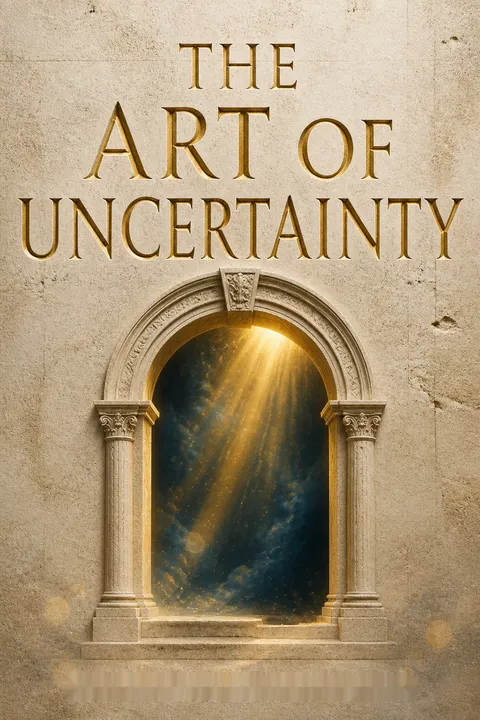


Key Takeaways
Step beyond the familiar when comfort starts shrinking your life
Growth begins at the edge. Jones opens with sparrows learning to fly. Three fledglings launch from the ledge; the smallest hesitates, then follows. The image captures his central claim: growth requires entering situations whose outcome cannot be guaranteed. His own version comes at Disneyland, where he avoids unfamiliar rides until he tries Space Mountain and discovers an exhilaration unavailable on the rides he already knows.
Risk needs discernment. The point is not to chase danger. It is to notice when the familiar has become a hiding place. Jones calls the inner pull toward development a divine urge, and recommends curiosity, questions, and small acts of exploration as ways to answer it.
What's useful here is the distinction between discomfort and danger. Learning, career change, and honest conversation often feel threatening because they unsettle familiar roles, not because they are inherently unsafe. Behavioral research on novelty and learning supports the value of exploration, while also showing that challenge works best when it is manageable. The fledgling image could be misread as a command to leap without preparation. A more durable reading is to approach the edge with curiosity, support, and enough caution to learn from the landing.
Meet fear directly, then decide whether it signals danger or change
Fear often forecasts loss. Jones recalls racing through a dark ravine as a boy, frightened by noises and imagined threats, yet arriving home unharmed. Adult uncertainty can reactivate the same alarm, especially when a job, relationship, reputation, or sense of control feels at risk. Fear may also hide beneath anger, jealousy, worry, or resentment, making it harder to recognize.
Look before you run. Jones describes escaping through alcohol, food, shopping, and other distractions, only to find the original fear waiting afterward. His alternative is to pause, identify what loss the fear anticipates, and choose a response rather than react automatically. Fear can carry useful information, but it does not have to dictate the next move.
This approach resembles exposure-based therapies, which reduce avoidance by helping people encounter feared situations gradually and safely. Naming the feared outcome can also separate a concrete problem from a vivid prediction. The important qualification is that fear is not always an illusion: it can alert someone to genuine danger, exploitation, or a medical concern. The practical task is therefore not to silence fear or assume it is false, but to examine its evidence, seek help when needed, and act proportionately.
Expect change, and stop asking temporary forms to stay forever
Everything formed changes. The book's Law of Impermanence is the principle that people, conditions, emotions, possessions, and relationships do not remain fixed. Jones recalls losing a beloved dog, grieving his daughter growing up, and enduring a relationship and career after their vitality had faded. Different changes bring different kinds of pain, but clinging to an old state can add struggle to the loss itself.
Allow the process its time. Jones compares life to a river: resisting its current is futile, but trying to force it faster is futile too. His spiritual view distinguishes changing forms from an enduring Life or Source beneath them. Readers need not share that theology to use the practical insight: acknowledge what is happening, grieve what matters, and avoid demanding that change follow a preferred schedule.
The chapter's strongest insight is that acceptance and approval are not the same. Recognizing reality can reduce the extra distress created by arguing with what has already happened, a distinction also found in acceptance-based therapy. Yet grief should not be reduced to a choice to resist; mourning is part of attachment, not a personal failure. The river image is most helpful when it supports adaptation, not passivity. Some changes can be challenged, delayed, or repaired, while others require care and time to integrate.
Release what has ended before it occupies the space for what is next
Letting go has timing. Jones tells of a trapeze student who held on too long and injured the catcher. His point is that release can be necessary, but timing matters. A widower named Stan wanted a new relationship after his wife had died, yet their photographs filled his home, her clothes remained in the closet, and he still wore his wedding ring. After he worked through the attachment, he later found a new partner.
Stories can preserve old identities. Jones warns that retelling old injuries or future worries can keep them psychologically active. He uses a ritual in which retreat participants write down a story they are ready to release, then bury the paper. The ritual makes an invisible decision tangible, though release need not mean forgetting or excusing harm.
The account of Stan shows how physical surroundings can express emotional unavailability, and how a concrete ritual can help mark a transition. This connects with research on environmental cues and memory: objects can repeatedly reactivate associations. But letting go should not become a demand to clear belongings or stop grieving on someone else's timetable. In traumatic or abusive situations, telling the story may be necessary for support, safety, and justice. The useful question is whether a story helps someone understand and act, or merely traps attention in repetition.
Look beneath inherited labels to find the work only you can do
Potential is not a credential. Jones presents Pure Potentiality as an underlying spiritual field of possibilities, already available rather than earned from outside. He contrasts object-referral, seeking fulfillment in possessions or approval, with Self-referral, looking inward to a deeper source of worth. His examples include music students who abandoned their abilities because they believed they were too old, too young, or otherwise unsuited to learn.
Question the labels. Gender expectations, judgments about talent, and other people's opinions can narrow what someone believes possible. Jones calls a person's distinctive expression their song, whether it is music, teaching, craft, or another contribution. The practical challenge is to test inherited definitions against lived interest and ability, then give that capacity a chance to develop.
The chapter's emphasis on identity is valuable because labels can become self-fulfilling limits. Social psychology describes how expectations influence performance and opportunity, especially when people internalize judgments about who belongs in a field. Still, not every label is merely restrictive: identities can also provide community, language, and protection. Nor does inward confidence remove barriers such as cost, discrimination, or lack of training. The strongest application is not to reject every outside judgment, but to distinguish useful feedback from inherited assumptions that foreclose exploration.
Notice the need beneath a habit before trying to replace it
Habit energy pulls automatically. Jones borrows a Zen story of a rider who cannot say where he is going because the horse is running the journey. Habit energy is repeated behavior that becomes nearly involuntary. A friend illustrates the pattern: across decades, he repeatedly entered painful relationships with different partners, recognizing the cycle only when Jones pointed it out.
Trace the behavior backward. Jones suggests observing what happens just before a habit: the feeling, thought, and belief that help trigger it. He argues that habits may serve an unseen need, such as escaping painful feelings, and that they can be redirected through conscious practice. Change takes time. For compulsive behavior or addiction, the book also encourages seeking qualified support rather than relying on willpower alone.
This analysis anticipates modern models of habit, which emphasize cues, repetition, and rewards rather than character flaws. Asking what a behavior does for someone can reveal whether it offers comfort, stimulation, or temporary escape, making a replacement more realistic. The book's spiritual framing may help readers feel less identified with a habit, but its claim that habits arise from beliefs can be too simple. Biology, trauma, social conditions, and dependence can all matter. Self-observation is a starting point, not a substitute for treatment.
Commit past the point where enthusiasm stops being convenient
Interest fades under pressure. Jones recounts climbing a steep rock with a neighbor. Halfway up, he looked down and wanted to quit; his companion urged him on, and the summit revealed a view and an easier path down that he would have missed. The experience changed his image of his own capacity. Jones distinguishes interest, which depends on favorable circumstances, from commitment, which continues through difficulty.
Put effort behind purpose. His three P's are persistence, repeating useful action; perseverance, maintaining a chosen direction; and passion, the energy that gives the effort meaning. He also names a no-zone-layer, a lethargic mode of drifting through routines without deliberate engagement. Commitment, in this account, is a way of moving out of that drift and into purposeful action.
The climb illustrates a familiar feature of motivation: people often judge a challenge from the discomfort of the middle, before they can see its payoff. A declared commitment can help bridge that gap, especially when paired with encouragement or accountability. However, persistence is not always wisdom. A goal may become harmful, unrealistic, or no longer worth its cost. The valuable distinction is between abandoning a worthwhile effort at the first discomfort and revising a commitment in response to new evidence.
Let patient repetition carry you farther than rushed effort
Growth has its own pace. In a martial arts parable, a student asks how quickly he can earn a black belt. The teacher says ten years, then doubles the estimate when the student insists on practicing all day to hurry the process. Jones uses the story to challenge impatience: trying to force learning can undermine the attention and consistency that make it possible.
Advance by small increments. He connects patience with kaizen, a method of improvement through small, steady steps. His father applied a similar principle to gardening and everyday chores, treating careful progress as part of the work rather than an obstacle to finishing. Jones also uses the image of a small lamp illuminating only the next few feet: a person can move forward without seeing the entire route.
The argument fits what is known about skill acquisition: durable learning requires practice, feedback, and recovery, not merely longer hours. Small steps also reduce the psychological cost of beginning and make progress easier to observe. Patience, however, should not become an excuse for indefinite waiting. A sound process pairs modest action with regular review, so persistence can be adjusted when the method is ineffective. The lamp metaphor captures this balance: limited visibility need not prevent movement, but each step should still be checked against the direction chosen.
Choose the attitude you bring, instead of waiting for conditions to improve
Perspective shapes experience. Jones describes watching a window cleaner work high above the ground on a hot day, singing cheerfully while suspended outside his hotel room. The scene makes him reconsider the assumption that happiness must wait for a better job or easier circumstances. He calls optimistic and pessimistic outlooks opti-mystic and pessi-mystic, respectively, emphasizing that attention changes what a person notices and how they approach the day.
Practice attention deliberately. Gratitude is his main exercise: record three distinct things to appreciate each day, then revisit earlier entries. Jones argues that attitude influences relationships and well-being, and that small adjustments can redirect a life. His claim is not that every condition is controllable, but that the response to a condition remains an important choice.
The window cleaner is a memorable counterexample to the idea that circumstances alone determine mood. Positive psychology likewise studies how gratitude practices can shift attention toward sources of support and satisfaction. The caution is that an inward focus on attitude can turn into blame when people face poverty, illness, discrimination, or unsafe work. Optimism is not a remedy for structural problems. Its most defensible role is to widen the range of perceived responses while preserving a clear view of external constraints.
Keep abundance moving through giving, receiving, and meaningful work
Abundance is not a possession. Jones distinguishes abundance, an available supply of possibility, from prosperity, its visible expression in material life. His bucket metaphor makes the point: the well is not the limiting factor; a person's beliefs about worth and possibility shape the size of the bucket they bring. He also argues that a job is a channel for support, not the ultimate source of a person's good.
Keep energy circulating. The Law of Giving and Receiving describes an ongoing exchange: accept help, use resources, and pass some value onward. Jones compares it with the body's need to take in and release energy. He warns that fear of scarcity can make people cling too tightly, while generosity and receptivity can strengthen relationships and participation in community.
The circulation model offers a useful corrective to treating prosperity as accumulation alone. Relationships, care, knowledge, and money all depend on exchange. At the same time, the book's metaphor should not be mistaken for an economic law: generosity does not guarantee future wealth, and many people face genuine scarcity despite strong self-worth. A balanced reading separates the ethical value of giving from claims about material outcomes. Receiving matters too, because refusing support can isolate people and place an unnecessary burden on independence.
Set a direction, listen inward, and choose again when needed
Choice is continuous. Jones argues that doing nothing is still a choice, because it leaves the existing course undisturbed. He calls intuition a Divine GPS, an inner sense that can help orient decisions when facts alone do not settle the question. His advice is to notice bodily and emotional signals, ask what a choice serves, and remain willing to correct course rather than treating a mistake as final.
Give attention a destination. A road-trip story makes the distinction between wanting to reach Miami and actually directing a journey there: the travelers become distracted and end up in Chicago. Jones uses this to define intention as the direction one chooses and attention as the focus that keeps actions aligned with it. A vision supplies a destination, not a guarantee of the route.
This combination of intention and revision resembles adaptive decision-making: establish a goal, act, gather feedback, and update. Intuition can contribute valuable pattern recognition, particularly when a person has experience in a domain. Yet gut feelings can also encode bias, anxiety, or incomplete information. The strongest version of the book's advice is to treat intuition as a signal to investigate, not an unquestionable instruction. Deliberate choices benefit from both reflective judgment and a willingness to change direction when evidence changes.
Return your attention to the present, where your next response is available
Mindfulness reunites attention and action. Jones defines mindful living as remembering to be present with what is happening, rather than being absorbed in the past or future. He invites readers to notice their breathing, slow it deliberately, and experience ordinary activities with full attention. A piano player listens to the silence between notes; the image suggests that pauses, not just actions, give experience shape.
Notice what is already here. Mindfulness also means encountering people and conditions without rushing to judge them, and recognizing everyday supports before they disappear. Jones frames this as a spiritual awareness of connection and purpose. Even without adopting that belief, the practice can make a meal, conversation, or difficult moment more vivid and offer a little space between an emotion and a response.
The closing practice grounds the book's broad spiritual language in a concrete skill: returning attention to breath and immediate experience. Mindfulness research links such training with improved attention regulation and, for some people, reduced stress, though results vary and practice is not a cure-all. The book's claims about divine oneness remain matters of faith rather than scientific findings. Its most widely accessible invitation is simpler: pause long enough to notice what is occurring, what matters, and what action is actually available now.
Analysis
The book is a story-rich guide to spiritual self-development, organized as a progression from facing uncertainty to acting within it. Its recurring images do much of the teaching: fledglings leaving a ledge, a rider carried by habit, a river that cannot be frozen, a small lamp showing the next step. These stories translate abstractions into scenes readers can recall when a choice feels risky. The central proposition is that uncertainty is not a malfunction in life but the condition in which growth, choice, and creation occur.
The book's most practical contributions are its repeated invitations to observe before reacting, to identify the belief or fear beneath a pattern, and to turn intention into sustained action. It treats mindfulness less as a retreat from ordinary life than as a way to inhabit work, relationships, and change more deliberately. Its sequence also matters: release, patience, commitment, and attention are presented as mutually reinforcing capacities, not isolated tricks.
The metaphysical framework is also the book's main limitation. Claims that the universe affirms beliefs, guarantees success, or supplies abundance are spiritual propositions, not demonstrated causal laws. Taken literally, they risk making people responsible for hardships produced by illness, discrimination, economic conditions, or chance. The most constructive interpretation translates these claims into psychological mechanisms: expectations guide attention, repeated behavior shapes outcomes, and beliefs can influence what people attempt. That translation preserves agency without confusing agency with total control.
The book is therefore strongest as a practice of orientation, not prediction. It does not provide a reliable map of what will happen; it offers habits for meeting what happens with curiosity, discernment, and persistence. Its enduring question is not whether uncertainty can be eliminated, but whether a person can remain open and purposeful while the outcome is still unknown.
Review Summary
The Art of Uncertainty receives mixed reviews. Some readers find it inspiring and life-changing, praising its practical advice on embracing uncertainty and living mindfully. Others criticize it as repetitive, overly religious, and lacking depth. Many appreciate the mindfulness exercises and quotes, but some find the writing style preachy. The book's approach to uncertainty and change resonates with some readers, while others feel it oversimplifies complex issues. Overall, it seems to be most helpful for those seeking spiritual guidance and comfort in uncertain times.
People Also Read







Glossary
Law of Impermanence
Everything formed changesJones's name for the principle that all changing forms eventually alter or end. It applies to relationships, possessions, emotions, work, health, and the body. He argues that suffering grows when people demand permanence from temporary conditions or try to force change before its time.
Pure Potentiality
Unformed possibilityA spiritual concept used for the field of possibility that exists before an idea or possibility takes a particular form. Jones presents it as inherent in human beings through their connection with the Source. Attention, thought, and action are described as ways people give expression to possibilities.
Yes factor
Beliefs shape outcomesJones's term for a metaphysical version of cause and effect: the creative universe is said to affirm a person's deepest beliefs, whether those beliefs are hopeful or limiting. In practical psychological terms, beliefs can also influence attention, choices, persistence, and behavior, which may reinforce expected outcomes.
habit energy
Automatic behavioral momentumA term Jones draws from Buddhist teaching for the force of repeated behavior that can operate with little conscious attention. Like a horse carrying its rider, habit energy can pull a person toward constructive or harmful patterns. Mindful observation helps reveal its triggers and makes redirection possible.
no-zone-layer
Passive mental driftJones's label for a state of low awareness in which a person moves through routine without much purpose, creativity, or deliberate choice. He associates it with lethargy, resignation, and habitual distraction. Commitment and conscious action are presented as ways to move out of this state.
Divine GPS
Inner guidance systemJones's metaphor for intuition, understood as an internal source of direction available during uncertain decisions. He describes it as a felt signal rather than a detailed verbal plan. The metaphor encourages attention to inner impressions, while responsible choices still require judgment and consideration of relevant facts.
object-referral
Seeking fulfillment outsideA term used to describe looking to external things, people, status, or conditions as the source of lasting fulfillment. Jones contrasts this with Self-referral. In his account, external sources may provide temporary satisfaction, but enduring worth and spiritual connection are found within.
Self-referral
Seeking fulfillment withinA term for grounding identity and fulfillment in the inner Self, which Jones understands as connected with the spiritual Source. It contrasts with object-referral, the search for completion through external approval or possessions. The concept is a spiritual orientation, not a claim that material needs are unimportant.
Law of Giving and Receiving
Resources circulate through exchangeJones's name for the principle that healthy life depends on an ongoing cycle of receiving, using, and releasing energy or resources. He applies it to the body, relationships, work, and money. Generosity and receptivity are treated as complementary parts of participation in abundance.
FAQ
What's "The Art of Uncertainty" about?
- Exploring Uncertainty: "The Art of Uncertainty" by Dennis Merritt Jones is about embracing the unknown aspects of life and finding joy in the mystery rather than fearing it.
- Living in the Mystery: The book encourages readers to live fully in the present moment, appreciating the mystery of life and the potential it holds.
- Personal Growth: It offers guidance on how to grow spiritually and emotionally by stepping out of comfort zones and into the unknown.
- Practical Advice: Through various chapters, the book provides practical advice and mindfulness practices to help readers navigate uncertainty with confidence and purpose.
Why should I read "The Art of Uncertainty"?
- Embrace Change: The book helps readers understand and embrace change as a natural and necessary part of life.
- Find Inner Peace: It offers tools to find inner peace and joy amidst life's uncertainties, making it a valuable read for those seeking personal growth.
- Practical Tools: With mindfulness practices and real-life examples, the book provides practical tools to apply its teachings in everyday life.
- Inspiration and Motivation: Dennis Merritt Jones inspires readers to live a life of purpose and meaning, encouraging them to explore their full potential.
What are the key takeaways of "The Art of Uncertainty"?
- Embrace Uncertainty: Embracing uncertainty is essential for personal growth and discovering new possibilities in life.
- Mindfulness and Presence: Practicing mindfulness and being present in the moment can lead to a deeper understanding of oneself and the world.
- Power of Choice: Conscious choices shape our destiny, and being aware of our choices can lead to a more fulfilling life.
- Abundance and Gratitude: Recognizing abundance and practicing gratitude can transform our perspective and enhance our experience of life.
How does Dennis Merritt Jones define uncertainty in the book?
- Natural Part of Life: Uncertainty is presented as a natural and inevitable part of life that should be embraced rather than feared.
- Opportunity for Growth: It is seen as an opportunity for personal and spiritual growth, pushing individuals to explore beyond their comfort zones.
- Mystery of Life: Uncertainty is linked to the mystery of life, which holds infinite possibilities and potential for those willing to explore it.
- Invitation to Explore: The book encourages readers to view uncertainty as an invitation to explore new paths and experiences.
What are the best quotes from "The Art of Uncertainty" and what do they mean?
- "Come to the edge, he said. They came. He pushed them and they flew." This quote emphasizes the idea of taking risks and stepping into the unknown to discover one's potential.
- "The universe conspires for our infinitude of good." It suggests that the universe supports our growth and abundance, encouraging a positive outlook on life.
- "Failure is not an option; everyone has to succeed." This quote highlights the idea that every experience, even perceived failures, contributes to our success and growth.
- "Your vision will become clear only when you can look into your own heart." It underscores the importance of self-reflection and understanding one's true desires and purpose.
How does "The Art of Uncertainty" suggest handling fear?
- Face Fear Directly: The book advises facing fear directly rather than avoiding it, as understanding fear can lead to personal growth.
- Dance with Fear: It suggests learning to "dance" with fear, meaning to engage with it and understand its origins and messages.
- Fear as a Messenger: Fear is seen as a messenger that can provide valuable insights into our attachments and areas needing growth.
- Mindful Practices: The book offers mindfulness practices to help manage fear and transform it into a tool for self-discovery.
What role does mindfulness play in "The Art of Uncertainty"?
- Present Moment Awareness: Mindfulness is about being fully present in the current moment, which is crucial for embracing uncertainty.
- Connection with Spirit: It involves connecting with one's spiritual beliefs and experiencing life as a sacred moment.
- Mindfulness Practices: The book includes specific mindfulness practices to help readers apply its teachings and live more consciously.
- Pathway to Peace: Mindfulness is presented as a pathway to inner peace and understanding, helping individuals navigate life's uncertainties.
How does Dennis Merritt Jones address the concept of abundance in the book?
- Abundance as a Principle: Abundance is described as a universal principle that is always available and not something to be acquired.
- Alignment with Abundance: The book encourages aligning with the principle of abundance to experience prosperity and fulfillment.
- Giving and Receiving: It emphasizes the importance of the law of giving and receiving to keep abundance flowing in one's life.
- Mindset of Plenty: Readers are encouraged to adopt a mindset of plenty, recognizing the abundance already present in their lives.
What is the significance of choice in "The Art of Uncertainty"?
- Engine of Evolution: Choice is described as the engine of our evolution, determining the direction of our lives.
- Conscious Choices: Making conscious choices leads to conscious evolution and a more fulfilling life.
- Responsibility and Power: The book highlights the responsibility and power that come with making choices, encouraging readers to choose wisely.
- Impact on Destiny: Choices shape our destiny, and being aware of them can lead to a more intentional and purposeful life.
How does "The Art of Uncertainty" suggest setting intentions?
- Vision as a Compass: Setting intentions is likened to having a vision that acts as a compass, guiding one's life journey.
- Attention and Intention: The book emphasizes the importance of paying attention to one's intentions to achieve desired outcomes.
- Focus and Discipline: It encourages focusing and disciplining the mind to stay aligned with one's intentions and goals.
- Creating a Vision: Readers are guided to create a vision for their lives, which helps navigate the uncertainties of life with purpose.
What are the mindfulness practices recommended in "The Art of Uncertainty"?
- Breathing Exercises: The book includes breathing exercises to anchor oneself in the present moment and calm the mind.
- Gratitude Journals: Keeping a gratitude journal is recommended to cultivate an attitude of gratitude and recognize abundance.
- Mindful Eating: Practicing mindful eating to appreciate the source and energy of food is suggested as a way to connect with the present.
- Daily Observations: Observing daily thoughts and actions mindfully helps in becoming more aware of one's choices and intentions.
How does "The Art of Uncertainty" address the concept of failure?
- Redefining Failure: Failure is redefined as a part of the success process, with each failure being a step towards success.
- Learning Opportunities: The book encourages viewing failures as learning opportunities that contribute to personal growth.
- Success Principle: It emphasizes that the universe operates on a success principle, where every experience contributes to eventual success.
- Perspective Shift: Readers are encouraged to shift their perspective on failure, seeing it as a necessary and valuable part of the journey.
Download PDF
Download EPUB
.epub digital book format is ideal for reading ebooks on phones, tablets, and e-readers.








