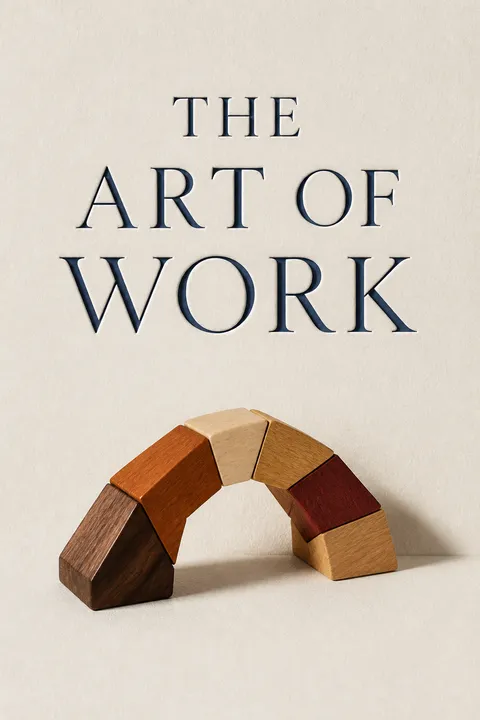


Key Takeaways
Treat a calling as a path revealed by disruption, not a perfect plan.
Plans can break open. Jeff Goins presents a calling as work that becomes visible through a life already in motion, not a career plan delivered in a flash of certainty. Garrett Miller was five when a brain tumor left him blind, mute, and unable to walk. Meeting a blind cyclist gave him a reason to try riding again. A year after surgery, Garrett crossed a triathlon finish line with his father running beside him. Their crisis did not come with a lesson attached; their response helped shape what came next.
Begin with what is here. The Millers chose to focus on what Garrett could do, rather than on the life they had expected. Goins argues that work with meaning often emerges through such unexpected turns, as people adapt and contribute from the circumstances they actually face.
The account is powerful because it distinguishes meaning-making from control: the Millers could not choose the illness, but they could shape their response. Psychology often describes this as adaptive meaning-making, the attempt to integrate a disruptive event into a life story. That process can support resilience, but it is not automatic, and suffering should not be romanticized as a necessary gift. Some losses remain losses. The useful lesson is not that tragedy secretly happens for a reason, but that people can build purpose without pretending the hardship was fair or beneficial.
Mine your history for patterns, then test what you find through action.
Notice repeated clues. Jody Noland saw the impact of a dying friend’s letters to his children. After his death, she began helping people write letters of love and affirmation. Her path also drew on earlier experience: at IBM, she had learned to notice and name other people’s strengths. What seemed like separate chapters of work and grief became connected through a talent she had taken for granted.
Make the pattern visible. Goins recommends writing down significant life events, then looking for recurring interests, abilities, and concerns. He also suggests asking people who know you well what they see you doing unusually well. The point is not to decode a destiny from a timeline. It is to find a clue worth acting on, then learn from the response.
This approach resembles narrative identity, the way people organize memories into a story that gives their lives coherence. A written timeline can make recurring themes easier to notice, and other people can reveal strengths that feel ordinary from the inside. But memory is selective: once a pattern is suspected, past events can be reshaped to fit it. Treat the pattern as a hypothesis, not proof. A small experiment, such as volunteering or taking on a project, can test whether the apparent theme brings energy and value in practice.
Build an apprenticeship from people already shaping your skills.
Learning is social. Ginny Phang faced pregnancy alone after her family and partner rejected her decision to keep the baby. Her aunt gave her practical support; later, a friend suggested she train as a doula, a birth coach who supports families through labor. Ginny tried the work and discovered that helping mothers felt natural. A roommate later helped with childcare and business tasks. Her route into a career came through several people, not one perfect mentor.
Recognize informal teachers. Goins calls this an accidental apprenticeship: learning through unexpected people, jobs, and opportunities rather than through a formal master-student arrangement. He points to artist Ellen Frank’s atelier, where interns learn by working alongside experienced artists, and to the German model of combining vocational study with paid work.
The chapter corrects the myth of the self-made professional. Skill depends on access to people who can offer feedback, opportunity, and encouragement, often in different combinations. This connects with social capital: relationships transmit not just advice, but introductions and practical resources. The concept also invites a useful caution. Mentors are not automatically wise, and unequal relationships can become exploitative. A productive apprenticeship includes real learning, clear expectations, and room for the learner to develop beyond the teacher’s own path.
Practice at the edge of your ability, not merely where it feels good.
Effort needs direction. Goins contrasts Stephanie Fisher, whose repeated American Idol auditions did not overcome weak singing, with Colbie Caillat, who was rejected twice before later building a music career. The difference, he suggests, was not simply persistence. Researcher K. Anders Ericsson’s term deliberate practice refers to focused training on specific weaknesses, with feedback and tasks difficult enough to expose errors. It is different from repeating what already feels comfortable.
Test the work honestly. Web designer Martyn Chamberlin had first developed an eye for composition and color through painting. After trying web design, he read, searched for solutions, and kept working through problems. Practice helped him develop a skill, while trying the work helped him discover whether he wanted to keep doing it.
The distinction between repetition and targeted practice is valuable: hours alone do not guarantee improvement if a person receives no feedback or keeps avoiding weak spots. Research on expertise supports the role of structured practice, though the popular ten-thousand-hour shorthand should not be treated as a universal recipe. Progress also depends on the task, instruction, and opportunity available. Further, difficulty can signal growth, but it can also signal poor fit, bad teaching, or exhaustion. Challenge is evidence to interpret, not a command to ignore every limit.
Trade the dramatic leap for small steps that build a bridge.
Move before certainty. Ben and Kristy Carlson moved their family to Burundi after years of work in South Africa. They did not arrive with a complete business plan for their coffee venture. They learned the language and local context, then began building Long Miles Coffee Project, seeking better outcomes for farmers through direct trade. The opportunity became clearer through engagement, not through a perfect forecast.
Make the next step useful. Goins argues that people often delay because they want a guarantee before beginning. A bridge offers a better image than a leap: each step brings new information while limiting the need to predict the entire route. The Carlsons’ decision was still risky, but it followed experience, research, and a reason beyond personal comfort. They aimed to combine what they cared about with a need they could address.
This is close to an experimental approach to career decisions: take steps that produce information while keeping the cost of being wrong manageable. It is more realistic than waiting for certainty, and safer than treating every bold impulse as a mandate to resign or relocate. The availability of a bridge, however, depends on resources. Savings, family responsibilities, health, and local opportunities shape what risks people can take. Small steps are not a substitute for structural support, but they can help distinguish a promising direction from an attractive fantasy.
Use failure to change direction, not to declare the whole pursuit doomed.
Rejection can redirect. Matt McWilliams expected to become a golf professional, but wrist pain ended that plan. Working at a golf course introduced him to online marketing, a skill he later developed into a business. He was fired from jobs along the way, including after his success had made him difficult to work with. Those setbacks redirected him toward work better suited to his abilities and values.
Pivot with evidence. Goins uses the business pivot as a model for changing course without abandoning the larger aim of meaningful work. Groupon, for example, grew out of a struggling website called The Point, whose founders shifted toward group discounts when the original idea could not sustain the company. A failed plan can disclose an unmet need or a better use for skills, if the person studies what happened.
The pivot is useful because it reframes a career as an adaptive process rather than a single irreversible bet. In entrepreneurship, changing a product after learning from customers can preserve the underlying problem-solving effort while revising the method. Yet failure is not always a hidden gift: poor timing, discrimination, illness, or bad luck can close doors without offering a clear lesson. The disciplined response is neither blind persistence nor automatic surrender. It is to ask what the evidence says, what remains valuable, and what can be changed.
Combine several kinds of work into a life that fits your real priorities.
Work has more than one shape. Goins draws on Charles Handy’s portfolio life, a way of viewing a working life as a mix rather than a single job title. Handy’s categories include paid work, work done at home, learning, and service to others. Goins extends the idea to a person’s whole life: work, home, play, and purpose. These activities may support one another even when only some provide income.
Design the mix deliberately. Jody Maberry studied finance, worked as a park ranger, and later used business skills and park experience to support park leaders through consulting and a podcast. His calling did not disappear when he left the ranger job. The portfolio perspective can help someone recognize how apparently separate roles and interests contribute to a larger direction.
A portfolio model fits a world where identities and livelihoods are often more varied than one occupational label suggests. It can also protect people from tying self-worth to a single employer or title. Its risk is making every moment productive: care, rest, and play can be treated as investments in work rather than valuable parts of life on their own. A sustainable portfolio needs boundaries, not just variety. The question is not how to monetize every interest, but how to arrange obligations and pursuits without letting income erase the rest.
Let mastery serve the work, not your appetite for recognition.
Do good work for its own sake. Goins describes mastery not as fame or rank, but as sustained effort to do work well and make something useful. He draws on psychologist Mihaly Csikszentmihalyi’s concept of flow, a state in which a task is challenging but still within reach of a person’s developing skills. Too little challenge can bring boredom; too much can create anxiety.
Ask what the work is for. A musician in the book became more successful after shifting attention from fame toward practical goals, including more time with family and greater financial freedom. The broader argument is that income and recognition may follow good work, but they are poor substitutes for choosing what the work should accomplish.
Flow offers a useful way to diagnose work: engagement often grows when challenge and competence are in productive balance. The emphasis on serving the work also pushes against status chasing, which can keep goals permanently out of reach. Still, intrinsic purpose does not pay every bill, and meaningful work can be underpaid or poorly organized. A humane account of mastery must include material conditions, fair compensation, and the worker’s health. Craft matters, but no ideal of excellence justifies chronic overwork or exploitation.
Make your calling a whole life, shared with others and passed onward.
The work includes people. Ed Cathey had been a physical therapist before serving as a chaplain at a rescue mission. When he found a frail man unable to rise from the ground, he carried him inside for care. Ed later named the men he had helped as the work he was proudest of. His contribution was not a job title so much as a pattern of care.
Leave room for unfinished work. The book argues that a calling continues through relationships and other people’s efforts. The fictional music teacher in Mr. Holland’s Opus discovers that generations of students became the lasting work he had not recognized. Goins also warns against letting a project consume family life. A life’s work can matter deeply without being completed by one person.
This closing idea shifts legacy away from monuments and toward transmission: skills, care, and institutions can continue through people who were supported or taught. It also offers a counterweight to achievement culture, where visible output can eclipse the relationships that make a life livable. Legacy need not be a grand project, and it should not become another demand to optimize every relationship for impact. Ordinary presence has value without a measurable return. The strongest version of this claim treats work and life as connected, while refusing to make either a rival to the other.
Analysis
The book’s central move is to replace the career-choice question, What single job fits me, with a longer inquiry: What pattern of work, relationships, and contribution is emerging across my life? Its stories give that claim emotional force. Garrett’s recovery, Ginny’s route into birth work, and Ed’s service show people responding to circumstances they did not design. The seven-part path from awareness through legacy is best read as a recurring set of tasks, not a ladder that everyone climbs in order.
That distinction matters because the book’s practical advice can otherwise sound more certain than life permits. A timeline may reveal a theme, but it cannot prove destiny. Practice can test aptitude and commitment, but effort alone cannot overcome every constraint. Failure can prompt a productive pivot, yet many failures are simply costly. The book is strongest when it asks readers to act, observe, and revise, rather than interpreting every hardship as a hidden invitation.
Its most durable contribution is joining vocation to community. Mentors, family members, colleagues, and beneficiaries are not background characters in an individual success story. They shape which opportunities become possible, and they help determine whether work is valuable beyond the worker’s own identity. The portfolio idea extends this insight by allowing paid work, care, learning, recreation, and service to coexist without forcing them into one title.
The approach is especially useful for people with room to experiment, but it should not become a moral ranking in which meaningful work is superior to secure work. Economic stability, caregiving, and health may properly limit risk. Nor must everyone find one grand calling. A satisfying life can involve several modest commitments rather than a single grand vocation. The book’s framework is most humane when treated as permission to notice, test, and revise, not as pressure to turn every life event into a personal mission.
Review Summary
The Art of Work received mixed reviews. Many readers found it inspiring and life-changing, praising Goins' writing style and practical advice on finding one's calling. They appreciated the real-life examples and actionable steps provided. However, some critics felt the book lacked originality, relied too heavily on anecdotes, and contained repetitive ideas. Several reviewers noted the Christian overtones, while others found the content superficial or poorly organized. Despite the criticisms, many readers recommended the book for those seeking purpose in their work and life.
People Also Read






Glossary
Calling
Life’s meaningful workGoins uses calling to mean more than a job or career. It is a life direction that draws together a person’s abilities, interests, experiences, and contribution to others. It is discovered through attention and action, can change shape over time, and includes relationships and the kind of person the work helps someone become.
Accidental apprenticeship
Learning through unexpected guidesAn informal process of learning from people, jobs, and opportunities that were not arranged as a formal apprenticeship. A person may gain encouragement from one mentor, technical skill from another, and practical experience from a job. The learner’s task is to notice what each encounter can teach and apply it to developing a craft.
Deliberate practice
Focused, feedback-driven trainingA form of practice associated in the book with psychologist K. Anders Ericsson. It involves focused work on specific aspects of a skill, with feedback and tasks that stretch current ability. It differs from casually repeating familiar activities. The book presents it as a route to improvement, while emphasizing that practice must be sustained and appropriately challenging.
Portfolio life
A life of varied workA way of understanding a person’s work as a collection of different activities rather than one occupation. Drawing on Charles Handy, the book includes paid work, household responsibilities, learning, and service. Goins broadens the idea to encompass work, home, play, and purpose, allowing varied roles to contribute to a coherent life.
Flow
Focused challenge and skillA mental state described by psychologist Mihaly Csikszentmihalyi in which a person is absorbed in a task whose challenge is well matched to their abilities. If the task is too easy, boredom can result; if it exceeds current ability, anxiety can rise. The book uses flow to explain how engaging work can develop through meaningful challenge.
FAQ
What's "The Art of Work" about?
- Discovering Your Calling: "The Art of Work" by Jeff Goins is about finding and pursuing your life's calling. It emphasizes that a calling is not just a job but a journey that involves discovering what you were meant to do.
- Framework for Vocation: The book provides a framework for discerning your calling, developing mastery, and maximizing your impact in the world.
- Stories and Examples: Through stories of everyday people, Goins illustrates the process of finding one's calling and the common themes that emerge in these journeys.
Why should I read "The Art of Work"?
- Practical Guidance: The book offers practical steps and insights for those feeling stuck or uncertain about their life's direction.
- Inspiration and Motivation: It provides inspiration through real-life stories of individuals who have successfully navigated their paths to meaningful work.
- Self-Discovery: Reading it can help you better understand your own passions and how to align them with your work.
What are the key takeaways of "The Art of Work"?
- Calling as a Journey: Your calling is a lifelong journey, not a single moment or decision.
- Importance of Community: Success stories are often stories of community; mentors and guides play a crucial role.
- Embrace Failure: Failure is not an obstacle but a stepping stone to success, teaching valuable lessons along the way.
How does Jeff Goins define a "calling"?
- More Than a Job: A calling is more than just a job; it's the reason you were born, a vocation that aligns with your deepest desires.
- Combination of Passion and Need: It is where your deep gladness meets the world's deep need, as described by Frederick Buechner.
- Evolving Process: A calling evolves over time and involves continuous growth and adaptation.
What is the "Accidental Apprenticeship" concept in "The Art of Work"?
- Unexpected Mentorship: Accidental apprenticeships are informal mentoring relationships that occur naturally and unexpectedly.
- Learning from Life: These apprenticeships involve learning from the people and experiences around you, even if they aren't formal mentors.
- Preparation for Calling: They prepare you for your calling by providing guidance, knowledge, and experience.
How does "The Art of Work" suggest handling failure?
- View as a Teacher: Failure should be seen as a teacher that provides clarity on how things must be done.
- Pivoting Strategy: Use failure as an opportunity to pivot and change direction, rather than pushing through obstacles.
- Part of the Process: Accept that failure is a natural part of the journey toward finding and fulfilling your calling.
What is the "Portfolio Life" concept in "The Art of Work"?
- Multiple Roles: A portfolio life involves embracing multiple roles and interests rather than focusing on a single career.
- Integration of Work and Life: It integrates work, home, play, and purpose into a cohesive life strategy.
- Adaptability: This approach allows for adaptability and resilience in a rapidly changing world.
What are some of the best quotes from "The Art of Work" and what do they mean?
- "Every story of success is, in fact, a story of community." This highlights the importance of relationships and mentorship in achieving success.
- "A calling is not some carefully crafted plan. It’s what’s left when the plan goes horribly wrong." This suggests that true purpose often emerges from unexpected challenges and failures.
- "Life is not a support system for your work; your work is a support system for your life." This emphasizes the importance of balancing work with life and relationships.
How does Jeff Goins suggest discovering your calling?
- Listen to Your Life: Pay attention to the patterns and themes in your life that indicate your passions and strengths.
- Seek Mentors: Engage with mentors and guides who can provide insight and support on your journey.
- Take Action: Begin with small, intentional steps and be open to where they lead, rather than waiting for a perfect plan.
What role does community play in "The Art of Work"?
- Support and Guidance: Community provides the support and guidance necessary to navigate the journey of finding your calling.
- Shared Experiences: Engaging with others allows for shared experiences and learning from their successes and failures.
- Encouragement and Accountability: A strong community offers encouragement and holds you accountable to your goals and aspirations.
How does "The Art of Work" address the concept of legacy?
- Beyond Personal Success: Legacy is about the impact you leave on others and the world, not just personal achievements.
- Life's Work: Your calling is your life's work, encompassing all aspects of your life, including relationships and contributions to society.
- Continuous Journey: Legacy is built over a lifetime and involves ongoing growth and giving back to others.
What practical steps does "The Art of Work" offer for pursuing a calling?
- Create a Timeline: Plot significant life events to identify patterns and themes that point to your calling.
- Design an Apprenticeship: Identify mentors and learning opportunities in your current environment.
- Practice Deliberately: Engage in intentional practice to develop skills and discern your true passions.
About the Author

Download PDF
Download EPUB
.epub digital book format is ideal for reading ebooks on phones, tablets, and e-readers.








