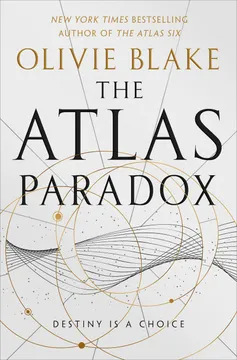


Plot Summary
Gideon Finds the Wards
Gideon Drake travels the shared dream realms with Max, his black dog, passing through a burning landscape that shifts with the minds around him. He remembers meeting Nico de Varona at university, then follows the dream paths toward the Alexandrian Society, where Nico is confined behind telepathic wards. Gideon has entered the defenses repeatedly, each time enduring a different psychic ordeal.
This time he reaches Nico with a discovery: he believes he is close to finding Libby Rhodes, the physicist who disappeared a year earlier. Nico has spent that year searching for her while trapped inside the Society’s manor. Gideon’s news gives their grief a direction, but the wards and the missing woman remain between them and any proof.
Gideon’s dreamwalking makes uncertainty physical: memory, dream, and waking life share borders he cannot always distinguish. His decision to keep entering the Society’s wards turns that instability into a form of loyalty. Nico’s confinement gives the opening its pressure, while Libby’s absence becomes a presence that shapes every later relationship. Gideon’s restrained optimism contrasts with the Society’s promise of power. He does not claim to have solved the mystery; he offers a fragile lead, enough to keep Nico moving.
Five Initiation Mirrors
Nearly a year after the six candidates entered the manor, five initiates sit for a ritual that projects an opponent drawn from each participant’s own perception. Nico spars with a version of Reina Mori and appears to regard her as predictable.
Reina’s projection of Parisa Kamali ends in a knife attack, exposing the fear beneath Reina’s guardedness. Tristan faces an imagined Libby, first struggling against his guilt and then discovering that, near death, he can perceive time and magic as manipulable structures.
Callum confronts a merciless version of himself and admits that his empathic power hurts him. Parisa’s confrontation with Tristan yields little action, but the ceremony leaves her suspicious that the Society is studying the initiates rather than testing them.
The ritual’s projections are not reliable portraits of the people they imitate. They reveal the projector’s assumptions, which makes the ceremony an instrument of self-exposure disguised as evaluation. Each initiate’s weakness is relational: Reina feels unseen, Tristan is bound to Libby’s absence, Callum cannot escape his own contempt, and Parisa distrusts any system she cannot read. The ceremony also changes the group’s balance. With Libby missing, the others have lost the member who once pressed them to consider consequences, and their isolated reactions replace collective judgment.
Libby Wakes in 1989
Libby Rhodes wakes in a furnished room Ezra Fowler has prepared to keep her contained. Her former boyfriend has left her food and soft bedding, but the window is an illusion and the door is secured by wards tailored to frustrate her magic.
Exhaustion and a strange dampening force make escape seem impossible, so she sleeps for long stretches and rehearses conversations with the friends she has lost. In a dream, Gideon reaches her by taking the shape of someone she remembers, then urges her to change her surroundings.
Libby follows the idea on instinct. When Ezra enters, she attacks him, unleashes a powerful burst of magic, and destroys part of the building. She escapes into Los Angeles, where a newspaper date reveals she is stranded in 1989.
Libby’s confinement works through more than locked doors. Ezra has arranged a space that invites her to mistake comfort for care, while the dampening wards make her doubt her own capacity. Her escape begins only after she stops treating her exhaustion as evidence of helplessness. The date on the newspaper turns a personal betrayal into a temporal crisis: Libby is not merely separated from her friends, she has been removed from their historical moment. Gideon’s dream contact suggests connection can cross that distance, but it cannot yet bring her home.
Death Unlocks Tristan
After the initiation, Tristan asks Nico to bring him close to death so he can reproduce the altered perception that surfaced in his fight with Libby’s projection. The first attempts fail, and the repeated strain begins to wear down both men.
Tristan explains that his father’s violence once left him terrified of drowning, and that his strange perception first emerged when he was a child being held over the Thames. Nico finally attacks him while he is asleep, intending to make the danger believable.
Tristan sees the force moving through the room and redirects it instead of letting it strike him. He can now alter matter through its smallest components, a power that may extend beyond ordinary physics. He blames Nico for making the breakthrough possible and for making Libby’s return his responsibility.
Tristan’s ability is inseparable from the conditions that shaped it. Danger interrupts the self-protective habits he developed around his father, allowing him to perceive a reality he cannot reach through calm study. Nico’s intervention is ethically precarious, but it also reflects his belief that trust can survive risk. Their experiment turns violence into a form of collaboration, though not a comfortable one. Tristan’s power offers new agency while making his childhood fear newly relevant: his greatest capacity appears when he feels his life is about to be taken from him.
The Library Has Eyes
Reina pursues creation myths in the Society’s archives, hoping to understand how life begins and whether her naturalism can create it. The library supplies some texts but rejects others, including material about the origins of gods.
Reina suspects its choices are deliberate, and Callum confirms that the archives have given him private information about the initiates. He and Reina test whether her power can strengthen his ability to influence a person, then use that partnership to retrieve a dossier on Atlas Blakely.
The file sharpens Reina’s suspicion that she and the others are being shaped for a purpose. Callum, who has spent weeks drinking and avoiding research, becomes interested despite himself. Their investigation binds them together while leaving the archives’ motives unresolved.
Reina and Callum approach the same mystery from opposite directions. She treats nature and the archive as systems with patterns to uncover; he reads the private fractures of the people who operate them. Their cooperation works because each supplies a form of access the other lacks, but neither trusts the source of that access. The library’s refusals imply that knowledge is not simply stored but selectively granted. Its sentience raises a harder question than whether the Society is manipulating them: perhaps the institution itself is participating in their development.
The Prince in the Tower
Parisa’s visits to Dalton Ellery’s subconscious reveal a younger, animated version of him confined within a mental castle. She tests whether the figure remembers her, and he insists that someone is watching him and that he needs help escaping. Separately, Gideon accepts a dangerous favor connected to his mother, Eilif, and enters the same elaborate mental landscape with Max.
A telepath attacks him as he tries to reach the tower where the Prince is held. Gideon bends the dream environment to his will, escaping the assault and reaching the captive figure, but he wakes without knowing whether the rescue worked. Parisa later learns that Dalton separated and animated his own ambition, then asked Atlas to contain it inside his mind.
Dalton’s inner prison literalizes a conflict he tried to solve by subtraction. He treated ambition as a detachable flaw, but the animated Prince possesses memory, desire, and an independent sense of injury. The attempt to control a person by isolating the parts judged dangerous therefore creates another person who can resist control. Gideon’s dream abilities make him suited to the rescue, yet his attempt is also driven by loyalty to Nico and a promise to Eilif. The episode blurs the boundary between magic as psychological image and magic as an independent life.
Ezra Builds a Counter-Society
Ezra Fowler gathers international allies, including Forum leader Nothazai, corporate powerbroker James Wessex, and Professor J. Araña, whose birth name is Belen Jiménez. He claims Atlas’s plans threaten the world and offers the group access to secrets from the Society’s archives.
His strategy is to capture the current initiates and use their knowledge to expose the Society. Ezra’s certainty conceals a personal history with Atlas: decades earlier, the two were friends who imagined changing the institution from within.
Belen’s own history begins in 1989, when Libby befriends her at a Los Angeles magical college and recruits her to research ley lines. Their trust grows, but Libby withholds her true identity and purpose, setting the conditions for a later rupture.
Ezra’s coalition is a political mirror of the Society, not its clean opposite. Both groups promise access to knowledge, but Ezra’s allies bring competing motives, from public reform to profit and state power. His private attachment to Atlas compromises the objectivity he claims to possess. Belen’s connection to Libby gives the broad conflict a human scale: research and trust are entangled with unequal power, and a person can be harmed by a cause even when its stated purpose is justice. Ezra’s certainty makes these contradictions easier for him to ignore.
The Gala Becomes a Trap
Atlas invites the initiates to the Society’s annual gala, where Forum members are also present. Parisa agrees to attend as Atlas’s eyes and ears, wary that guests may be testing the cohort. Callum confronts Atlas about the guilt attached to his past, while Ezra arrives under a concealment illusion and tries to challenge Atlas without exposing himself.
Later, Tristan and Nico leave the manor and encounter attackers who seem to have anticipated their movements. Callum compels a captured witch to reveal that Adrian Caine, Tristan’s criminal father, ordered a hit on Tristan. The Forum is also tracking the initiates for apprehension. The group now faces two threats: the Society’s hidden agenda and the outside forces Ezra has helped mobilize.
The gala makes secrecy visible as a form of power. Its guests mingle under the Society’s hospitality, but the initiates cannot tell whether they are being welcomed, watched, or targeted. The murder requirement that once defined their selection has given way to a wider network of violence, and the group’s private rivalries leave them poorly coordinated. Tristan’s father’s involvement personalizes the danger, while the Forum’s pursuit complicates any simple opposition between elite secrecy and public accountability. Everyone claims to be preventing harm, yet each faction turns people into instruments.
A Door to Other Worlds
Atlas explains why he has watched Tristan’s emerging power so closely. Dalton’s research concerns the origins of the universe, Reina may be able to generate a primordial spark, and Tristan can perceive the structure of matter and time.
Atlas believes their combined abilities could reveal or open a path to other universes. Tristan recoils when Atlas assumes a familiarity rooted in shared depression and emotional damage, but the scale of the question holds his attention.
Later, as Tristan and Nico work to locate Libby, Atlas’s proposal becomes more than an abstract theory: the group could use its power to alter reality itself. Tristan eventually returns to Atlas and agrees to pursue the project, choosing the Society’s dangerous research over the uncertain life waiting outside.
Atlas’s proposal turns academic specialization into a collective technology. Each initiate’s power becomes a necessary component, so the Society’s selection process begins to look less like recognition of talent and more like assembly of a machine. Tristan’s interest is real, but it is sharpened by his need to prove that his capacity belongs to him rather than to his trauma. Atlas sees the power and the wound together, then mistakes that insight for intimacy. The multiverse promises escape from a painful world, yet it also risks repeating the same desire to impose a preferred order.
Callanish Reveals the Future
Tristan and Nico travel to Scotland after tracing strange electromagnetic activity to Callanish Circle. Tristan uses his new perception to project across time and finds Libby in 1990, where she has been researching ley lines with Belen.
He tells her that the Nevada desert will host a massive, unexplained explosion in May, one powerful enough to send her back to her own era. The event appears to be a perfect fusion reaction, a form of energy only Libby and a few of her former collaborators could produce.
Before they can continue, attackers assault Tristan and Nico. The pair escape by combining Nico’s force magic with Tristan’s manipulation of matter, leaving the encounter with a possible route home for Libby and a fresh warning that someone is hunting them.
Callanish turns a scientific clue into a moral forecast. The aurora Tristan sees is not merely evidence of energy; it is a message from a future Libby has not yet chosen to make. His account gives her a way home but also forces her to confront the costs that the event may carry. The reunion is intimate and incomplete, because Tristan can reach her only through a projection and time is pressing on both sides. Their escape demonstrates a new partnership, but the attack reminds them that knowledge can expose its users as readily as it empowers them.
Libby and Belen Break
At LARCMA, Libby hides her future origins while working with Belen, a student studying chemistry and heat conversion. Belen helps her investigate ley lines as a possible power source, and their friendship becomes intimate.
Libby is searching for a route back to 2020, but she cannot explain the time travel, the Society, or Ezra’s betrayal without risking the trust she has built. When Tristan reaches her at Callanish, Belen hears enough to demand the truth.
Libby admits she came from the future and that the energy source they sought may require a devastating explosion. Belen has just lost her grandmother and sees Libby’s secrecy as exploitation. She leaves Libby alone among the stones, ending both their collaboration and their brief tenderness.
Libby’s deception grows from survival, but its effects are not erased by good intentions. Belen has given time, labor, and affection to a project whose real purpose she was not allowed to judge. Their conflict exposes a familiar asymmetry: the person with the greater power defines what counts as necessary, while the person with less power bears the cost. Libby is also confronting a choice that cannot be outsourced to Belen’s approval. The ending of their partnership leaves her with greater agency and less comfort, a combination that makes the next decision possible.
Belen Turns Her Anger
Over the decades after Libby leaves her in 1990, Belen becomes a prominent environmental researcher and activist, then grows disillusioned as governments and institutions absorb her warnings without changing course. She takes the name Professor J.
Araña and eventually joins Ezra’s coalition, carrying valuable research and a deep anger at powerful people who benefit from delay. At the Society gala, she confronts Atlas and finds no satisfying villain behind the institution, only a tired man who cannot undo its structure.
The encounter strips away her hope that one decisive enemy can be removed. Belen responds by turning toward more radical tactics, using money and scientific knowledge to support resistance movements. Her choices make Ezra’s coalition more effective, but also more volatile.
Belen’s life complicates the fantasy that correct information automatically produces justice. She spends years documenting danger and watching institutions convert urgency into manageable procedure. Her radicalization is not presented as a simple triumph; it emerges from exhaustion, grief, and the repeated experience of being heard without being answered. Meeting Atlas disappoints her because a person is smaller than the system she wants to confront. That disappointment does not end her struggle. It changes its methods, raising the question of whether resistance can remain ethical when every lawful channel has become a way to postpone change.
Libby Chooses the Blast
After Belen leaves, Libby stops waiting for a safe answer. She takes a security job at the Wessex Corporation’s Nevada testing site, where she can reach the machinery and energy needed for the reaction Tristan described.
The blast will be dangerous, but Libby believes she can control it well enough to avoid immediate deaths. She no longer treats her return as a matter of fate or permission. Instead, she chooses to use her own power, accepting that refusing the choice would leave Ezra’s intervention in control of her life.
Libby triggers an evacuation, alters the site’s safeguards, and channels a stellar-scale fusion reaction through herself. The explosion creates the route back to her era, though the consequences of that act remain unknown.
Libby’s decision is neither a clean victory nor a simple surrender to destiny. The future event Tristan identified becomes real because she chooses to enact it, which makes prediction part of the causal chain rather than a force outside it. Her choice also differs from Ezra’s: he acted on her behalf and called that protection, while she claims the risk for herself. Yet agency does not absolve her of consequences. The scene leaves the ethical question open: can a person reclaim a stolen life without placing others in danger, especially when the available means are catastrophic?
The Cohort Splits
As the fellowship year ends, the five remaining initiates gather without Atlas or Dalton to decide what happens next. Parisa warns that the Forum will expect them to return to familiar homes and proposes that they disperse to unexpected locations, using their different specialties to frustrate pursuit.
Reina accepts the plan, while Nico tries to turn the departure into a goodbye and receives little warmth in return. Tristan stays with Atlas to pursue the multiverse research.
Callum and Reina, who have formed an uneasy working alliance, head toward Adrian Caine’s criminal network. Parisa leaves for Paris, and Nico travels there as well, hoping to meet Gideon. Their separation is strategic, but it also exposes how little trust the cohort has managed to preserve.
The departure tests whether shared danger has created a community or merely a temporary arrangement. Nico’s wish for a farewell reveals how much he needs the others, while their briskness shows that not everyone experiences the fellowship as belonging. Parisa’s plan makes dispersal a tactic, not a cure for conflict. Tristan’s choice to remain with Atlas is especially consequential: he accepts a project that may transform the world without knowing whether the others will participate. The group leaves the manor with separate purposes, carrying the possibility of collaboration but no guarantee of it.
Parisa Chooses Dalton’s Hunger
Parisa continues exploring Dalton’s subconscious and learns that Atlas once contained an animated portion of Dalton’s ambition inside a mental fortress. She recognizes that this fragment is not merely a thought or memory but a distinct, thinking presence. After the fellowship ends, Parisa meets Dalton in Paris and finds him changed, his once orderly mind now crowded by the energy he tried to suppress.
He wants access to the other physicists and to Reina’s power, not merely to finish his research but to reach other existing worlds. Parisa understands the danger in wanting everything, yet agrees to help investigate the Forum and pursue the work. Her decision keeps her close to the very appetite Atlas tried to control.
Parisa’s attachment to Dalton is also an attraction to unresolved knowledge. His fractured mind gives her an intimacy no ordinary social performance can offer, but that intimacy cannot be separated from the risks of his research. The Prince represents the limits of self-editing: a person cannot remove ambition without changing the structure that gives the self direction. Parisa sees the danger and proceeds anyway. Her choice challenges the idea that insight protects someone from desire. She can diagnose the peril with precision and still decide that curiosity, connection, and power are worth pursuing.
Callum Reaches Adrian Caine
After leaving the Society, Reina is cornered in London by attackers connected to the pursuit of Tristan. Callum arrives and uses his empathic influence to disable two assailants, then steers the surviving witch toward Adrian Caine, Tristan’s father.
Callum’s plan is partly practical and partly personal: he wants to understand the threat against Tristan and to use his own power after spending months treating it as a curse. Reina follows despite being exhausted and angry that Callum has taken control of the encounter.
Together they enter Adrian’s criminal base and confront the man who ordered his son’s death. The visit brings Callum’s emotional abilities into open use and places Reina beside a danger she once hoped to avoid by staying among books.
Callum’s intervention marks a shift from self-punishment toward deliberate use of his ability. He remains morally ambiguous: his power can remove another person’s capacity to choose, even when he uses it to prevent immediate violence. Reina’s presence is equally complicated. She wants a world altered but resists becoming visible within it, so Callum’s action forces her out of protected abstraction. Their alliance is not built on tenderness or shared certainty. It is a negotiated willingness to act, and its instability mirrors the larger question of whether power can be used without reproducing the coercion it opposes.
Ezra Faces Libby Again
Libby’s fusion explosion returns her to the Society’s era, where Ezra has come to confront Atlas. Ezra still insists that Atlas must be stopped, but he falters when Atlas names the people placed in danger by Ezra’s campaign and forces him to face the damage caused by turning the initiates into targets.
Their argument reveals how much Ezra’s mission has been bound to his old friendship with Atlas and to his refusal to accept that his choices may have made matters worse. Libby enters the room, burned and carrying the force of her return. Ezra cannot bring himself to kill her. Libby, now acting on her own judgment, blasts him with magic, ending the threat he created and leaving her own moral burden unresolved.
The confrontation strips Ezra’s mission of its protective language. He has called himself a rescuer, but his methods have exposed Libby and the initiates to danger while keeping him from acknowledging his attachment to Atlas. Libby’s return breaks the logic of his control: she is no longer an object to be hidden for a future he imagines. Her attack is an act of survival and judgment, but it does not restore the trust or time that Ezra took from her. The scene refuses easy absolution for either of them.
Nico Meets Gideon in Paris
Nico reaches Paris expecting to reconnect with Gideon, but an attack interrupts them almost immediately. Gideon and Nico fight together against trained medeians, combining dream-born ingenuity, physical skill, and Nico’s force magic to survive.
After the last attacker falls, Gideon kisses Nico, finally making his feelings explicit; Nico answers by drawing him back in. A transport opens nearby. Libby appears, injured and covered in ash and blood, after finding her way back from the past.
She approaches Nico with urgent news, then collapses into Gideon’s arms before she can explain. The story ends with Libby alive among the people who spent a year searching for her, but with her return, their unresolved dangers and divided plans still waiting.
The ending gives the novel an emotional arrival without granting it a stable resolution. Gideon and Nico’s kiss converts years of mutual care into a chosen relationship, while Libby’s sudden return reopens the bond that has organized Nico’s grief and Tristan’s guilt. Her collapse prevents reunion from becoming closure. The Paris fight also shows that the cohort’s dispersal has not ended the threat surrounding them. The final image holds relief and uncertainty together: Libby is home, but the people waiting for her have changed, and the world they return to remains contested.
Analysis
The novel makes knowledge feel less like a prize than an appetite with institutional consequences. The Society promises access to the archives, but its initiation ritual exposes the recruits to one another while possibly letting the library study them in return. The mystery is therefore not simply who controls knowledge, but whether knowledge itself can acquire agency through the systems built to preserve it.
The initiates respond to power through their characteristic defenses. Tristan tries to convert fear into control; Libby weighs consequences until she is forced to act alone; Nico treats risk as a problem that trust can solve; Reina protects herself from being used by refusing to be seen; Parisa studies people before they can surprise her; Callum turns pain into detachment. These strategies keep each person functioning, but the Society’s pressure makes them collide. Libby’s absence removes a shared moral reference point, leaving the others to mistake their private coping styles for sufficient judgment.
The book also questions whether prediction cancels freedom. Tristan identifies the explosion that can return Libby, but his knowledge does not make the choice for her. The future becomes real because Libby decides to create it. That paradox echoes the novel’s broader treatment of power: a capacity may be inherited or discovered, but its meaning comes from what its holder chooses to do with it. Yet choice does not erase responsibility. Libby’s return saves her from Ezra’s control while carrying costs she cannot fully know.
Finally, the opposing institutions are deliberately imperfect. The Society hoards knowledge while claiming to steward it; the Forum seeks distribution but depends on money, politics, and coercive force. Neither secrecy nor transparency automatically produces justice. The story’s unresolved ending leaves the cohort facing a harder task than gaining power: deciding who should be allowed to use it, and how to prevent their own need for meaning from becoming another form of domination.
Review Summary
Reviews for The Atlas Paradox are polarizing, averaging 3.49/5. Fans praise its sardonic characters, dark academia atmosphere, and compelling character dynamics, particularly enjoying shifting alliances and emotional complexity. Critics frequently cite a lack of plot progression, with many noting that meaningful events only occur in the final pages. Common complaints include underdeveloped character arcs, excessive theoretical discussions, and pacing issues typical of middle-book syndrome. Libby Rhodes emerges as a fan favorite, while ships like NicoGideon and NicoLibby spark passionate debate among readers.
People Also Read


Characters
Libby Rhodes
The displaced physicistLibby is a gifted physicist whose analytical rigor is matched by anxious self-doubt. The death of her sister Katherine taught her to search for explanations and to distrust the possibility that life is simply unfair. Among the Society’s initiates, she often acts as a moral check, asking what their experiments might cost other people. Her relationships with Nico, Tristan, and Ezra each draw out a different part of her: intellectual rivalry, vulnerable attachment, and the danger of confusing care with control. Libby’s habit of worrying can make her cautious, but it also makes her attentive to consequences that more confident people overlook.
Tristan Caine
The reluctant time-seerTristan is an illusion-trained physicist with a guarded temperament and a hunger to be more powerful than his father’s judgment allows. His childhood was shaped by violence, leaving him suspicious of tenderness and prone to mistake vulnerability for weakness. As Libby’s former fiancé, he carries unfinished feeling into the Society, where his antagonism toward Callum and tentative trust in Nico complicate his loyalties. Tristan’s dry hostility is a defense against being read or pitied. Beneath it is a sharp observer whose unusual perception makes him question what counts as reality, evidence, and personal agency.
Nico de Varona
The restless physicistNico is an inventive physicist whose magic manipulates force and matter. He approaches danger with enthusiasm, humor, and a confidence that can look like recklessness, but his impulses are rooted in loyalty. His friendships with Gideon and Libby give him a sense of home; their absence leaves him less certain of who he is. Nico is unusually skilled at reading other people’s needs, even when he resists admitting his own. He values action over contemplation and tends to treat problems as invitations to experiment, a strength that can also put himself and his companions at risk.
Gideon Drake
The dream-walking friendGideon is a rare traveler through the collective dream realms, where his uncertain boundary between sleep and waking gives him unusual freedom. He presents as a person with narcolepsy, but his apparent vulnerability conceals a resilient imagination and a talent for surviving psychological danger. Gideon is gentle without being passive, and his steadiness makes him a counterweight to Nico’s restless energy. His closest relationships are built from small habits, shared jokes, and quiet reliability. He often doubts his own importance, even as the people around him rely on his willingness to cross dangerous mental terrain.
Parisa Kamali
The watchful telepathParisa is a powerful telepath who can read motives with unnerving precision and is accustomed to managing how others perceive her. She treats beauty as a form of leverage rather than proof of intimacy, and often approaches relationships as experiments in control. Her cynicism protects her from disappointment, but it also makes genuine attachment difficult to recognize. Parisa is curious about minds that resist easy interpretation, especially Dalton’s, and she is drawn to the Society’s mysteries as much as to its promises. Her intelligence is both a weapon and a source of isolation, since knowing what people conceal does not guarantee she understands what they need.
Reina Mori
The living naturalistReina is a naturalist whose connection to the living world is so profound that plants seem to address her directly. She is reserved, observant, and wary of being treated as a resource by people who value her power more than her personhood. Her childhood taught her that family recognition can be conditional, so she learned to protect herself through distance and self-sufficiency. Nico’s friendship unsettles that strategy because she trusts him more than she wants to admit. Reina’s intellectual interest in life, myth, and origins reflects a deeper question about whether power obligates its possessor to act.
Callum Nova
The burdened empathCallum is an empath whose ability to alter or absorb emotion makes him perceptive and dangerous, but also physically and psychologically costly. He hides discomfort behind wit, detachment, and conspicuous self-indulgence. Callum expects people to leave or disappoint him, so he often uses their feelings before they can use his. His relationship with Tristan reveals the vulnerability beneath that strategy, while his uneasy partnership with Reina gives his intelligence a practical direction. Callum’s central contradiction is that he claims not to care, yet his attention to other people’s pain is constant.
Atlas Blakely
The Society’s caretakerAtlas oversees the Alexandrian Society and its formidable archives, balancing institutional authority with a private sense of guilt. He is controlled, articulate, and adept at reading what people want, often offering them just enough truth to keep them moving in his preferred direction. His interest in the initiates is intellectual as well as personal: he sees their abilities as pieces in a larger theory. Atlas is neither a simple guardian nor an obvious villain. He believes knowledge has obligations, yet his willingness to pursue it raises questions about who gets to decide what others should risk.
Ezra Fowler
The ex who predicts disasterEzra is a traveler through time and Libby’s former partner. He is awkward in social settings and haunted by a childhood catastrophe in which survival became tangled with guilt. His desire to prevent a future disaster gives him a strong sense of purpose, but certainty makes him capable of treating other people’s choices as obstacles. Ezra’s history with Atlas gives their conflict the intimacy of an old friendship turned ideological. He wants to save the world, yet struggles to recognize when fear has transformed protection into control.
Dalton Ellery
The Society’s animatorDalton is a researcher and animator whose magic can give form and limited sentience to what should be inert. He is orderly, reserved, and accustomed to keeping his inner life carefully managed. His research into the origins of existence reflects a fascination with what can emerge from apparent nothingness. Dalton’s relationship with Parisa is shaped by mutual curiosity and unequal vulnerability: she can enter minds, while he tries to control what she finds there. His work raises questions about whether a person can separate ambition from the rest of the self.
Belen Jiménez
The uncompromising researcherBelen is a chemist and heat-conversion specialist Libby meets while stranded in 1989. She combines intellectual ambition with a strong awareness of how environmental harm falls unevenly across the world. Her grandmother and family responsibilities shape the choices she makes about education and work. Belen is warm enough to offer trust, but perceptive enough to notice when someone is withholding the truth. Her commitment to practical change makes her a moral counterpoint to Libby’s urgent personal need to return home.
Eilif
Gideon’s dangerous motherEilif is Gideon’s finfolk mother, connected to criminal networks and accustomed to treating relationships as transactions. She can provide access and information, but rarely without an obligation attached. Gideon wants her approval less than he wants to believe she might care for him, and that uncertainty shapes how he responds to her requests. Her presence links the dream realms to a more predatory magical world beyond the Society.
Adrian Caine
Tristan’s criminal fatherAdrian is the head of a magical criminal syndicate and Tristan’s estranged father. His history of violence has shaped Tristan’s fear, anger, and distrust of authority. Adrian’s power is not only physical or criminal; it lies in the way his past behavior continues to govern his son’s expectations. He represents a form of family loyalty that can become indistinguishable from coercion.
James Wessex
The corporate powerbrokerJames Wessex is a wealthy medeian industrialist whose corporation develops magical technology, including energy and weapons research. His resources make him an influential presence in both academic and political settings. To Tristan, who once worked for him, Wessex represents the point where scientific possibility meets private ownership and profit.
Nothazai
The Forum’s organizerNothazai leads the Forum, an organization that opposes the Society’s secrecy and claims to favor wider access to knowledge. He is a skilled organizer who builds networks across institutions and governments. His belief in transparency brings him into conflict with the Society, although the Forum’s own resources and alliances complicate its claim to egalitarianism.
Max
Gideon’s loyal companionMax is Gideon’s black dog and roommate, a steady presence in both ordinary life and Gideon’s dream travels. He accompanies Gideon through dangerous mental landscapes and offers a wordless measure of companionship.
Plot Devices
The Alexandrian Archives
Knowledge with a gatekeeperThe Society’s library contains extraordinary knowledge, but it does not grant every request. Its selections appear deliberate, and Callum discovers that it has gathered information about the initiates. Reina suspects the archive is sentient, while Parisa investigates whether it observes and predicts their behavior. The archive therefore functions as both the Society’s greatest resource and a possible participant in its experiments. Access is never neutral: each initiate must contribute research and may have to pay a personal or magical cost for what the library reveals.
The Initiation Ritual
A mirror disguised as a testThe Society projects each initiate against an imagined version of another cohort member, shaped by the initiate’s own perception. The ritual produces no conventional winner, yet it exposes the projector’s assumptions, fears, and habits. It also gives the Society an opportunity to observe how the initiates respond under emotional pressure. Its consequences extend beyond the ceremony: Tristan discovers a new dimension of his power when his imagined opponent nearly kills him, and Parisa begins to suspect that the exercise serves someone other than the participants.
The Dream Realms
A road through shared mindsThe dream realms are a collective subconscious that Gideon can traverse more freely than most people. They let him search for Libby and reach her while she is displaced in time, but dreams are unstable and can be shaped by fear, memory, or another person’s magic. Gideon can suffer within them, though lasting injury depends on what happens to his waking body. The realms also provide a route into Dalton’s mental fortress, where an animated part of Dalton exists as a distinct presence.
Tristan’s Quantum Sight
Reality reduced to moving partsTristan’s power emerges when danger changes the way he perceives time and matter. He sees magical forces and physical objects as structures that can be redirected, rearranged, or transformed. Nico’s risky experiments help him access this ability outside the initiation ritual. Tristan’s new sight makes him central to Atlas’s theory about other worlds, but it also binds his power to the fear and trauma that first unlocked it.
The Fusion Reaction
A dangerous road through timeLibby and Nico’s earlier experiments establish that a vast energy release can open a passage through time and space. Tristan identifies the later Nevada explosion as a perfect fusion reaction, powerful enough to return Libby from 1990 to her own era. Ley lines and the Callanish stone circle help the characters locate unusual energy, but the final source is Libby’s own magic. Her return requires her to choose an act that may have lasting consequences for people beyond herself.
Download PDF
Download EPUB
.epub digital book format is ideal for reading ebooks on phones, tablets, and e-readers.








