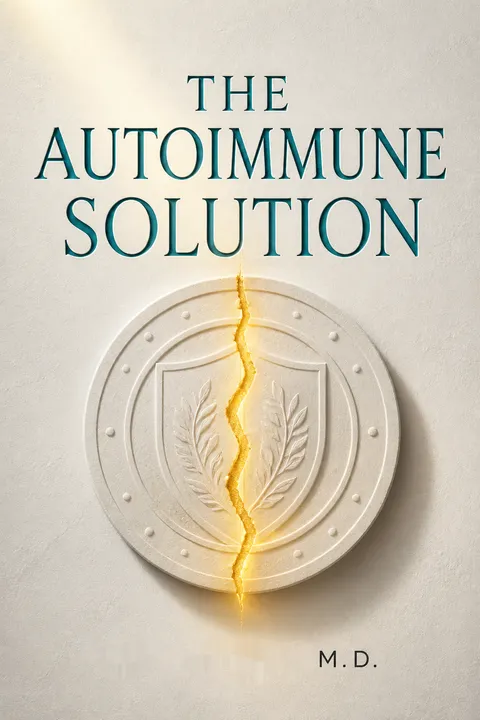


Key Takeaways
Treat autoimmune illness as a whole-system problem, not an isolated organ failure
A broader frame. Myers argues that autoimmune conditions affecting different organs may share interacting influences, including diet, gut function, infections, environmental exposures, and stress. Her functional-medicine program, The Myers Way, addresses four areas: gut health, potentially inflammatory foods, toxins, and infections plus stress. She contrasts this with care organized around the affected organ, while acknowledging that her approach does not cure autoimmune disease.
A personal origin. Myers developed Graves' disease during medical school, experienced serious liver complications while taking a prescribed drug, and eventually underwent thyroid ablation. Years later, dietary and lifestyle changes improved many of her symptoms. Her experience motivates the book's promise of greater agency, but it is a personal account, not proof that the same program reverses other people's diseases.
What's valuable here is the insistence that a patient is more than the organ named in a diagnosis. Sleep, nutrition, medication effects, and social stress can shape health and deserve attention alongside disease-specific treatment. The systems perspective is useful for generating questions and coordinating care. Its weakness is that a broad model can make almost any symptom seem to confirm the same explanation. A whole-person view works best when it adds careful investigation to established care, rather than treating a single lifestyle program as a universal substitute.
Treat genes as vulnerability, not destiny or a personal 75% lifestyle score
Risk has context. Myers uses the autoimmune spectrum to describe a proposed continuum from mild inflammatory symptoms and risk factors to diagnosed autoimmune disease. She cites twin research to say that genetics accounts for about 25 percent of autoimmune risk and the environment for the rest. Her point is that family history does not make illness inevitable, and choices around food, stress, and exposures may matter.
A useful caution. The book's percentages should not be read as an exact breakdown of any one person's illness. Heritability is a population-level measure, not a claim that an individual can control the other 75 percent. The symptom tracker may help someone notice patterns, but its score is not a validated diagnostic test and cannot establish autoimmune disease or predict who will develop it.
The distinction between genetic susceptibility and inevitability is empowering without requiring denial of biology. It resembles the broader idea of gene-environment interaction: inherited traits can affect response to surroundings, while surroundings can influence health. But a heritability estimate is not a pie chart of personal responsibility. The book's framing risks making people feel that illness reflects a failure to manage lifestyle, especially when many causes remain uncertain or outside individual control. The strongest use of this model is as a reason to investigate modifiable risks, not as a promise of control.
Use gut repair as a hypothesis to investigate, not a universal cure
The proposed link. Myers emphasizes that the gut contains substantial immune activity and argues that a damaged intestinal barrier can expose the immune system to substances it would normally encounter differently. She calls increased intestinal permeability leaky gut. Her gut-healing framework is the 4Rs: remove irritants and infections, restore digestive support, reinoculate with beneficial bacteria, and repair the intestinal lining.
A patient's story. Shenna, a patient with lupus, described a history of antibiotics, digestive symptoms, and other possible gut stressors. Myers interpreted these as clues to investigate, then reported that Shenna improved after following the program. The story illustrates how a detailed health history can surface useful questions. It cannot show that her early feeding, antibiotics, or suspected infections caused lupus, or that the same sequence applies to other patients.
The gut and immune system do interact, and the microbiome is an active area of research. Asking about digestion, medication history, and food patterns can make a clinical conversation more complete. The important distinction is between a plausible mechanism and a proven explanation for a particular disease. Intestinal permeability is a biological phenomenon, but the book often extends it into a broad diagnosis that supposedly explains many unrelated symptoms. A careful approach tests specific, treatable conditions rather than assuming that gut repair alone will reverse autoimmunity.
Test a short, structured elimination diet instead of endlessly guessing
A strict trial. The book's 30-day plan removes gluten, grains, legumes, dairy, eggs, nuts, seeds, nightshades, added sugar, alcohol, and caffeine, along with highly processed foods. It centers meals on meat or seafood, vegetables, fruit, and selected fats. Myers argues that some foods can provoke inflammation or worsen gut symptoms, including in people without celiac disease.
Observe, then reassess. Marshall, a patient with ulcerative colitis who ate a grain-heavy vegetarian diet, is presented as improving after changing his food choices. The program encourages symptom tracking and cautious food reintroduction after the initial month. Because the plan excludes many food groups, readers should seek qualified guidance, particularly for children, pregnancy, or nutritional concerns. Anyone being evaluated for celiac disease should discuss testing before removing gluten.
A time-limited, well-recorded food trial can be more informative than vague dietary suspicion. In principle, changing one variable at a time and tracking symptoms helps distinguish a repeatable response from coincidence. Myers' plan changes many variables simultaneously, however, so improvement would not identify which change mattered. The broad exclusions also impose cost, effort, and nutritional tradeoffs. The useful principle is structured observation, not assuming that every listed food is harmful to everyone or that diet replaces appropriate treatment for inflammatory bowel disease or other diagnoses.
Reduce practical exposures without turning every household choice into a threat
Start with manageable changes. Myers argues that cumulative exposure to chemicals, metals, and mold may burden health. She cites an early study in which nine people had an average of 91 detected industrial chemicals or other substances, then recommends four basic steps: improve indoor air filtration, filter water, choose cleaner food when feasible, and gradually replace personal-care products.
Prioritize, do not panic. Claire, a patient with fibromyalgia, felt overwhelmed when she first heard how many possible exposures Myers considered. The suggested response was to begin with a few changes, such as air and water filters, rather than trying to remake her entire home at once. Myers also discusses specialized testing and detoxification, but these should not be treated as routine solutions without a clear medical reason and professional oversight.
Reducing avoidable exposure can be sensible, especially when a source is known and a safer alternative is practical. Environmental health also highlights an important distinction: identifying a chemical is not the same as proving that a person's exposure caused disease. The book sometimes moves quickly from detection to autoimmune causation, although dose, route, and evidence matter. Its most useful advice is the low-drama version: address clear hazards, make affordable substitutions, and avoid letting speculative risks create fear, expense, or isolation.
Look for infections when evidence points there, not whenever symptoms persist
Possible immune triggers. Myers discusses infections such as Epstein-Barr virus, herpes viruses, Lyme disease, and certain bacteria as possible contributors to autoimmune activity. She describes proposed mechanisms including molecular mimicry, where immune defenses against an infection may also react to similar-looking body tissue, and bystander activation, where nearby tissue is caught in an immune response. Jasmine, a patient with Graves' disease, had a high Epstein-Barr viral load in the testing Myers reports.
A positive test needs context. The book recommends considering infection testing when progress stalls or a patient's history raises concern. It also recognizes that antibodies to Epstein-Barr are widespread. A past infection or positive antibody result alone does not show that an infection is active or driving current symptoms. Diagnosis and treatment, including any use of antibiotics or antivirals, belong with a qualified clinician.
Infections can trigger immune responses, and the mechanisms described are legitimate questions in immunology. The challenge is moving from population-level association to an explanation for one person's illness. A common past infection can be present in healthy people, so test results need to be interpreted alongside symptoms and established diagnostic criteria. This is a useful investigative framework when applied selectively. It becomes misleading if every unexplained flare is treated as evidence of a hidden pathogen or if supplements and antimicrobial treatment replace diagnosis.
Make stress recovery part of care, without blaming patients for being sick
Stress affects the body. Myers describes stress as physical as well as emotional: poor sleep, intense exercise, illness, and difficult life events can all challenge the body. She distinguishes short-lived stress from persistent or recurring stress and argues that stress can affect immune activity, sleep, and weight. Jasmine, managing work pressures and family challenges, added therapy and tango classes to her routine while continuing her diet and medical care.
Choose a repeatable reset. The book suggests finding at least 15 minutes for a daily activity that leaves a person calmer or more energized. Options include walking, meditation, music, conversation, and counseling. Its zebra analogy contrasts an animal's immediate response to danger with a person's tendency to keep worrying afterward. The practical lesson is to create recovery time, not to assume that relaxation alone treats an autoimmune disease.
Stress and immune function influence one another, and routines that support sleep, movement, and emotional regulation can improve quality of life. Jasmine's example also shows how practical, enjoyable activities may be easier to sustain than an abstract command to relax. Still, stress is not a moral failure, and illness cannot be reduced to a patient's attitude. The book's specific account of stress hormones is more certain than the science warrants in every case. Stress management belongs beside medical care, not in place of it.
Keep clinicians involved, and never change prescribed treatment without them
Build a care partnership. Myers advises patients to prepare questions, bring a trusted person to appointments, keep copies of laboratory results, and track symptoms over time. She encourages respectful but direct conversations with doctors, including discussions about supplements and any dietary changes. She also recognizes that some people may need a functional-medicine practitioner for more complex cases.
Protect against abrupt changes. The book explicitly warns readers not to stop essential prescription medications without consulting their health-care provider. This matters because its success stories describe patients reducing or stopping medication, but those outcomes are not a safe template for self-directed changes. For example, people taking thyroid hormone after thyroid ablation may need it permanently. Medication decisions should reflect diagnosis, risks, test results, and clinician supervision.
The practical tools here support shared decision-making: patients who arrive organized can use limited appointment time more effectively and notice changes across visits. The book's criticism of conventional medicine can encourage useful questions, but it sometimes sets lifestyle care against medication as if they were rivals. In many autoimmune diseases, proven medication can prevent serious damage even when symptoms improve. A productive partnership keeps both possibilities in view, shares information about supplements and diet, and treats medication changes as clinical decisions rather than proof of personal resolve.
Meal prep and social support make the 30-day trial more doable
Design for daily life. The program includes a 30-day meal plan, recipes, advance-preparation advice, restaurant strategies, and a seafood option for readers who do not eat meat. Myers recommends planning meals, keeping suitable food available while traveling, and asking family or friends for support. She also describes setting boundaries when others pressure someone to eat foods they are avoiding.
Stories can motivate, not guarantee. The book's patient accounts include Susan, whose pain reportedly improved, and Myers' father, who lost weight and had improved test results after adopting the diet. Such stories help explain why patients may persist through a demanding change. They do not establish how often the program works or whether it caused each outcome. Tracking symptoms and discussing objective results with clinicians makes a personal trial more informative.
Behavioral design matters: meals prepared ahead, clear options at restaurants, and supportive companions reduce the effort required to follow a new routine. That is a more durable strategy than relying on willpower or treating every lapse as failure. The book's community emphasis can also reduce the loneliness of chronic illness. The necessary counterweight is flexibility. A demanding protocol should be judged by health, feasibility, and nutritional adequacy, not by perfect compliance or testimonials alone.
Analysis
The Autoimmune Solution is part memoir, part popular medical explanation, part elimination-diet guide, and part patient-success anthology. Its organizing claim is that autoimmune illness can be approached by reducing inflammatory pressures across connected systems rather than focusing only on the organ named in a diagnosis. Myers gives this claim a memorable four-part structure: gut health, food, environmental exposures, and infections plus stress. Her own Graves' disease story supplies emotional authority, while cases such as Shenna, Jasmine, and Marshall make the protocol feel concrete.
The book's strongest contribution is practical and relational. It asks patients to keep records, prepare questions, examine routines, and seek care that takes their full history seriously. It also recognizes the emotional cost of chronic illness and offers ways to make dietary changes more manageable. These are valuable even when a proposed biological explanation is uncertain.
The central limitation is a mismatch between confidence and evidence. The narrative often treats plausible mechanisms, observational associations, clinical anecdotes, and established medical findings as if they had equal explanatory force. Broad claims about universal gluten harm, leaky gut as a prerequisite for autoimmunity, toxins as drivers of individual disease, or the ability of this protocol to reverse many conditions go beyond what the presented anecdotes can establish. The symptom tracker is not a diagnostic instrument, and a restrictive diet cannot establish causation merely because someone feels better on it.
A careful reader can preserve the book's useful question, which is what modifiable factors might be worsening symptoms, without accepting its certainty about the answers. The safest translation is to use food, sleep, stress management, and environmental improvements as possible complements to disease-specific care, then assess outcomes with clinicians. Medication should not be stopped or reduced independently. This distinction keeps the book's empowering message while avoiding its most consequential risk: mistaking a hopeful framework for a proven cure.
Review Summary
The Autoimmune Solution receives mixed reviews. Some readers find it informative and life-changing, praising its comprehensive approach to autoimmune disorders. Others criticize it as alarmist and overly restrictive, noting the difficulty of implementing the diet and lifestyle changes. The book's strengths include explaining autoimmune diseases and offering a potential solution, while weaknesses include an overwhelming amount of information and the author's repetitive use of "The Myers Way." Many readers appreciate the recipes and meal plans, but some find the overall approach unrealistic and anxiety-inducing.
People Also Read







Glossary
The Myers Way
Four-pillar lifestyle programAmy Myers' named program for people with autoimmune conditions or inflammatory symptoms. It combines gut-focused care, avoidance of foods she considers inflammatory, reduction of environmental exposures, and attention to infections and stress. The book presents it as a long-term way of living and claims it can relieve symptoms, but the program is not established as a cure for autoimmune disease.
autoimmune spectrum
Proposed continuum of riskMyers' term for a proposed continuum ranging from mild symptoms and risk factors associated with inflammation to diagnosed autoimmune disease. In this model, family history, symptoms, diet, stress, and exposures help estimate a person's position. The book's symptom tracker is a self-assessment aid, not a validated diagnostic test or a reliable prediction of future disease.
4Rs
Four-part gut protocolA gut-health framework used in the book: remove potential irritants and infections, restore digestive support, reinoculate with beneficial bacteria, and repair the intestinal lining. Myers describes the steps as overlapping and includes them in her broader program. The framework organizes possible interventions, but it does not show that gut dysfunction causes every autoimmune condition.
leaky gut
Increased intestinal permeabilityThe book's accessible term for a gut barrier that allows substances to pass through more readily than expected. Myers argues that food particles, microbes, or toxins crossing this barrier can provoke immune activity and contribute to autoimmune disease. Increased intestinal permeability is a biological research topic, but the book applies the term broadly to symptoms that do not by themselves diagnose it.
molecular mimicry
Immune confusion between look-alikesA proposed immune mechanism in which a response to a foreign substance, such as part of a virus or food protein, also reacts to similar-looking molecules in the body's own tissues. Myers uses this idea to explain how infections or gluten might contribute to autoimmune reactions. Similarity can suggest a mechanism, but it does not alone prove that a particular exposure caused an individual's disease.
tolerance of self
Immune restraint toward body tissueThe immune system's capacity to avoid attacking the body's own cells and tissues while responding to genuine threats. Myers uses loss of this tolerance to explain autoimmune disease and connects it to immune regulation and chronic inflammation. Supporting immune health is a broad goal in the book, but the term does not imply that lifestyle changes can reliably switch off autoimmunity.
About the Author
Download PDF
Download EPUB
.epub digital book format is ideal for reading ebooks on phones, tablets, and e-readers.








