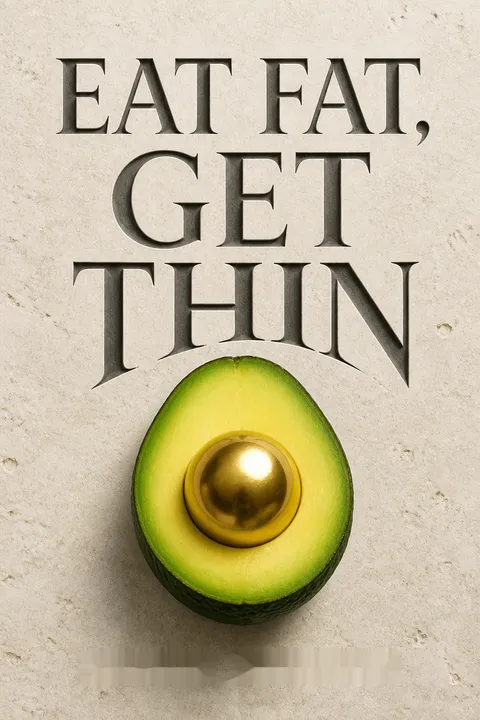


Key Takeaways
Eat more whole-food fats, and stop replacing them with refined carbs.
The historical reversal. Hyman argues that low-fat advice helped push people toward refined flour, sugar, and packaged foods marketed as healthy. The 1992 US Food Guide Pyramid placed bread, rice, and pasta at its base, while fats were to be used sparingly. Manufacturers followed with low-fat products, often adding sugar to improve their taste. Hyman cites annual US consumption of 152 pounds of sugar and 146 pounds of flour per person as signs of a food environment built around refined carbohydrates.
The proposed correction. The book’s central claim is not that every fatty food is beneficial, but that suitable fats can make meals more satisfying while reducing reliance on refined carbs. It recommends replacing highly processed foods with whole foods, including vegetables, nuts, seeds, olive oil, and, for those who eat them, quality fish and animal foods.
What's persuasive is the focus on what replaced fat, rather than on a nutrient in isolation. A low-fat label can conceal a sugary, highly processed product, while olive oil on vegetables belongs to a very different eating pattern. Still, the historical rise of obesity alongside low-fat guidance does not prove that the guidance alone caused it. The most durable lesson is narrower and stronger: scrutinize the foods that fill the gap when a nutrient is removed, and judge the overall pattern rather than the label.
A calorie's source shapes hunger, insulin, and how readily energy is stored.
More than calorie arithmetic. Hyman challenges the idea that weight is controlled simply by counting calories in and calories out. In his metabolic model, food affects hunger, hormones, and energy use as well as supplying energy. He argues that refined carbohydrates can raise insulin, a hormone that helps regulate blood sugar and encourages energy storage, while fats generally produce a smaller insulin response and can make meals more filling.
Evidence, with limits. The book describes a small 1977 hospital study in which ten men with obesity ate diets with the same calories but different proportions of fat and carbohydrates. During the higher-fat phase, they lost more weight and had improved blood sugar and triglyceride measures. Hyman also cites studies suggesting that higher-fat diets can increase energy expenditure. These findings support testing food composition, but do not show that calories or total intake are irrelevant.
The useful insight is that appetite and energy expenditure are biological responses, not fixed entries in a ledger. Sleep, food texture, processing, and palatability can all influence how much someone eats, so food quality can matter without disproving energy balance. The distinction is important: a diet may make a calorie deficit easier to sustain, but it does not make energy conservation disappear. The strongest version of Hyman's argument is about changing the conditions that shape eating, rather than claiming that calorie intake no longer matters.
Choose fats by type and processing, not by the word fat.
Four different categories. The book separates dietary fats into saturated, monounsaturated, polyunsaturated, and trans fats. It treats these as chemically and biologically distinct, not interchangeable. Its practical preferences include extra virgin olive oil, avocados, nuts, and seeds; omega-3-rich fish such as sardines and salmon; and unprocessed foods rather than industrially formulated fats. It singles out trans fats, often found in partially hydrogenated oils, as especially harmful.
Source and handling matter. Hyman warns that refined seed oils can be damaged by heat and oxidation, and that modern diets may contain too much omega-6 relative to omega-3 fat. He recommends obtaining fats from whole foods and avoiding repeatedly heated or highly refined oils. His caution about omega-6 oils is stronger than the evidence warrants as a blanket rule, but the distinction between whole foods, industrial processing, and trans fats remains central to the book's approach.
This classification corrects a common category error: a nutrient name can cover substances with different structures, sources, and effects. The same reasoning applies to carbohydrates, where beans, vegetables, and sweetened drinks are not equivalent. However, omega-6 fats are essential nutrients, and their presence alone does not make a food harmful. The more defensible practical focus is limiting heavily processed foods and avoiding trans fats, while choosing a varied diet that includes sources of unsaturated fat.
Assess heart risk across the whole pattern, not one cholesterol number.
Look beyond total cholesterol. Hyman argues that triglycerides, HDL, inflammation, blood sugar, and the number and size of LDL particles can provide more context than total cholesterol alone. He explains LDL particles with a simple contrast: small, dense particles are treated as more concerning than larger, less dense ones. In the book's account, sugar and refined carbohydrates can worsen triglycerides and HDL and promote a less favorable LDL pattern.
Do not self-treat from a book. Hyman questions the use of statins for people at low risk and emphasizes lifestyle changes. Yet the book's discussion should not be taken as a reason to stop prescribed medication or dismiss an elevated LDL result. Cardiovascular risk depends on an individual's history and clinical measures, and dietary changes can affect people differently. Medication decisions belong in a conversation with a qualified clinician.
A fuller risk picture is valuable because a single laboratory value rarely captures an entire person's health. At the same time, the book underplays how strong the evidence is that LDL cholesterol contributes causally to cardiovascular disease. Particle size and triglycerides can refine risk assessment, but they do not erase the importance of LDL. The sound approach is neither to panic over one number nor to disregard it. Risk markers need interpretation in context, especially when a medication has been prescribed.
Treat nutrition studies as clues, not final verdicts.
Study design changes the claim. Hyman points out that observational studies can show that two things occur together, but they cannot by themselves establish that one caused the other. Food questionnaires depend on memory, and people who eat one way may differ in exercise, smoking, income, or other habits. He calls this the healthy user effect: health-conscious people often make several beneficial choices at once, making it difficult to isolate the effect of a single food.
Use several kinds of evidence. Randomized trials can better test cause and effect, but they too may be short, small, or difficult to apply to everyday life. Hyman criticizes Ancel Keys's early diet-heart argument for drawing conclusions from selected country comparisons. His broader advice is to examine methods, participants, funding, and the actual comparison diet instead of accepting a headline as proof.
This is one of the book's most useful habits of mind, particularly in a field where a new food study can produce a new villain by lunchtime. But methodological skepticism must apply evenly. A small controlled trial cannot settle a decades-long health question, and a conflict of interest does not automatically invalidate a result. Confidence grows when different methods, populations, and biological explanations point in the same direction. The goal is calibrated judgment, not replacing one nutrition orthodoxy with another.
Use the 21-day reset to learn, then personalize your eating.
A structured trial. Hyman presents the Eat Fat, Get Thin Plan as a 21-day reset. It removes added sugars and artificial sweeteners, processed foods, refined oils, grains, beans, gluten, and most dairy, while allowing grass-fed butter or ghee. Meals center on nonstarchy vegetables, protein, and selected fats. The plan also includes movement, sleep, hydration, and preparation before the first day.
A starting point, not a verdict. More than 1,000 people took part in the author's beta program. He reports average losses of 7.1 pounds and a 69 percent drop in participants' average symptom-quiz scores. These were program results, not proof from a controlled comparison. After the reset, Hyman recommends reintroducing foods gradually and monitoring responses. People using insulin or blood pressure medication should consult their clinician before making major dietary changes, since their needs may shift.
The experiment format is more useful than a permanent rule: it gives someone a defined period, a baseline, and a way to notice changes. But testimonials and before-and-after measurements cannot establish which part of a complex program produced an effect. Removing several food groups at once also makes it difficult to identify a single trigger. A careful trial should track specific outcomes and account for medical needs. For people with diabetes or cardiovascular conditions, clinician involvement is not a formality.
Build long-term meals around plants, good fats, and quality protein.
A flexible middle ground. Hyman's Pegan Diet combines principles he sees in both Paleo and vegan eating: whole, minimally processed foods, abundant vegetables, and fewer refined carbohydrates. He suggests that nonstarchy vegetables fill about half to three-quarters of the plate, with moderate portions of nuts, seeds, low-glycemic fruit, and protein. Fish is encouraged; those who eat meat are advised to choose sustainably raised, higher-quality sources. The framework also allows some whole grains and beans for people who tolerate them.
Reintroduce and observe. After the 21-day plan, Hyman suggests adding foods back one at a time and watching for changes in digestion, cravings, energy, symptoms, and weight. He also acknowledges that people vary in their tolerance for carbohydrates and animal foods. For those who avoid animal products, the book emphasizes planning for nutrients such as vitamin B12 and long-chain omega-3 fats.
The framework's strength is that it shifts attention from dietary identity to food quality and personal fit. It leaves room for plant-based and omnivorous versions instead of insisting that one camp must defeat the other. Its main limitation is that the proposed proportions and exclusions are not universal prescriptions. A well-planned plant-forward diet can work without high animal-fat intake, and individual health conditions matter. The practical test is whether a pattern is nutritionally adequate, sustainable, and compatible with a person's health and values.
Make cooking and preparation easier than the processed-food default.
Change the kitchen first. The book treats meal planning and cooking as part of the health strategy, not as extra credit. Hyman recommends clearing out foods that do not fit the plan, stocking basic ingredients, and choosing meals for the week before hunger and time pressure take over. Simple combinations, such as greens, vegetables, a protein, and olive oil, can make home cooking practical without elaborate recipes.
A family learns by doing. Hyman recounts visiting a financially stressed South Carolina family whose members did not know how to prepare basic meals. He showed them how to chop and cook vegetables and make dishes such as chili from scratch. He reports that the family initially lost a combined 18 pounds in five days. The story's central point is practical: skills, tools, and access can change what feels possible.
The kitchen story works because it replaces blame with instruction. Food choice is shaped by time, money, skills, and availability, not simply by motivation. Planning can reduce the number of decisions made under pressure, while cooking builds familiarity with ingredients and portion sizes. Yet a cooking lesson cannot by itself solve a food desert or financial hardship. A useful health strategy needs to respect those constraints and offer realistic, affordable options rather than implying that every household can shop and cook in the same way.
Protect medication safety while changing food, movement, and sleep.
Health is not just a menu. Hyman pairs dietary change with daily movement, sleep, and deliberate relaxation. The program suggests at least 30 minutes of activity, aiming for seven to eight hours of sleep, and using practices such as walking, stretching, or breathing exercises to manage stress. The point is that appetite, energy, and health are affected by routines beyond food.
Make changes safely. The book warns that blood sugar and blood pressure may fall quickly when someone changes their diet, especially if they use medication. Hyman advises checking with a health professional and monitoring these measures rather than adjusting medication alone. This caution is especially important because the plan changes several things at once. A food program is not a substitute for individualized medical care.
The broader view is valuable: sleep loss and stress can make dietary intentions harder to maintain, while regular activity supports health even when it does not produce dramatic weight loss. The medication warning is the most important safety instruction in the program. By contrast, not every specific supplement or relaxation technique mentioned in the book has equally strong support. Readers can preserve the core routine, movement, adequate sleep, and clinical follow-up, without assuming that every proposed add-on is necessary.
Analysis
Eat Fat, Get Thin is a nutrition argument wrapped in a personal reversal story. Hyman once followed low-fat advice, then concluded that the foods substituted for fat, especially sugar and refined carbohydrates, deserved more attention. That shift gives the book its strongest through-line: stop treating nutrients as isolated villains, examine what people actually eat, and make satisfying whole foods easier to choose. Its most useful practical contributions are a short, structured eating experiment, an emphasis on vegetables and minimally processed food, and a recognition that cooking skills and kitchen access shape behavior.
The book is also a case study in how scientific skepticism can become selective. It rightly distinguishes association from causation and asks readers to examine study design, funding, and comparison diets. But it sometimes presents a contested interpretation of evidence as settled fact, particularly when it claims that saturated fat is harmless, that refined carbohydrates explain most cardiovascular risk, or that conventional LDL measures have little value. Modern cardiovascular evidence supports a more qualified account: the type of fat replacing saturated fat matters, dietary patterns matter, and LDL remains a causal risk factor even though other markers provide useful context. Rejecting simplistic low-fat advice does not require rejecting energy balance or established lipid evidence.
The program's restrictions may help some people reduce highly processed foods and identify personal responses, but its reported beta results and patient stories cannot establish that the plan itself caused every outcome. Removing many foods at once also makes individual sensitivities difficult to isolate. The book is best read as an invitation to improve food quality and notice how a pattern affects health, not as proof that one high-fat diet suits everyone. Its most responsible message is to personalize changes, monitor relevant measures, and work with clinicians when medication or chronic disease is involved.
Review Summary
Eat Fat, Get Thin presents a controversial approach to nutrition, advocating for increased consumption of healthy fats. Reviews are mixed, with some praising the book's informative content and potential health benefits, while others criticize its complexity, expense, and reliance on supplements. Many readers appreciate the scientific explanations but find the diet plan impractical or difficult to follow. Some question the author's motives, noting product recommendations and potential conflicts of interest. Overall, the book challenges conventional dietary wisdom but receives varied responses regarding its effectiveness and feasibility.
People Also Read






Glossary
Diabesity
Blood sugar-related disease spectrumHyman's umbrella term for problems he connects to impaired blood sugar and insulin regulation. He uses it to describe a continuum that includes excess abdominal fat, insulin resistance, prediabetes, and type 2 diabetes. It is a framing term in the book, not a separate formal medical diagnosis.
Nutritionism
Nutrient-first view of foodA way of thinking about food that breaks it into individual nutrients, such as particular fats or vitamins, and studies those components apart from the foods and dietary patterns in which people consume them. Hyman argues that this can obscure how ingredients interact in whole foods and real meals.
Nutrigenomics
Food effects on gene activityThe study of how nutrients and other features of diet interact with gene activity and biological processes. Hyman uses the term to describe his view that food provides signals affecting metabolism, inflammation, and other functions. It concerns gene expression and diet interactions, not a claim that food changes a person's inherited DNA sequence.
Functional Medicine
Root-cause systems approachThe clinical approach Hyman describes as investigating interacting contributors to health problems, including diet, environment, genes, hormones, and gut function. Rather than focusing only on a diagnosis or isolated symptom, it seeks underlying imbalances and uses individualized assessment. The book presents it as a framework for personalized care.
Pegan Diet
Paleo and vegan principles combinedHyman's flexible eating framework combines features of Paleo and vegan diets. It emphasizes vegetables and minimally processed foods, limits sugar and refined grains, and includes healthy fats. It allows moderate amounts of selected grains and beans, and optional sustainably raised animal foods, while encouraging people to notice how particular foods affect them.
keto-adaptation
Greater reliance on fat for fuelThe process described in the book in which the body becomes more able to use fat and ketones for energy after carbohydrate intake is reduced. Hyman presents this as a period of adjustment that can affect exercise and energy. The term does not mean that every person needs to follow a ketogenic diet.
resistant starch
Starch fermented by gut microbesA type of starch that largely resists digestion in the small intestine and is fermented by gut microbes. Hyman describes it as a prebiotic food source that can support beneficial bacteria and produce short-chain fatty acids. Examples in the book include unmodified potato starch and cooked, cooled potatoes or rice.
PGX
Viscous supplemental fiberA branded fiber supplement that Hyman describes as a blend of konjac-root glucomannan and seaweed fibers. In the program, it is taken before meals with water. The book presents it as a way to slow carbohydrate absorption, promote fullness, and support blood sugar control; those effects should not be assumed for every user.
FLC syndrome
Author's symptom-tracking labelHyman's informal name for a cluster of symptoms he calls feeling like crap. His questionnaire asks people to rate symptoms involving digestion, energy, mood, sleep, joints, skin, and other areas. The score is used in the book to compare self-reported symptoms before and after the 21-day plan; it is not a clinical diagnosis.
healthy user effect
Lifestyle confounding in health studiesA source of bias in observational research: people who choose one food or health practice may also exercise more, smoke less, or follow other health-promoting behaviors. Those differences can make a food appear responsible for an outcome when the broader lifestyle, or a combination of factors, may explain the association.
PREDIMED
Mediterranean diet cardiovascular trialA large study discussed in the book that compared Mediterranean-style dietary interventions with a reduced-fat control approach among people at elevated cardiovascular risk. One intervention emphasized extra virgin olive oil, and another emphasized nuts. Hyman cites its reduced cardiovascular events as support for a whole dietary pattern rich in unsaturated fats, not proof that dietary fat alone prevents disease.
The A TO Z Weight Loss Study
Trial comparing four weight-loss dietsA year-long randomized study of 311 overweight, postmenopausal women that compared the Atkins, Zone, Ornish, and LEARN diets. Hyman highlights the greater weight loss in the Atkins group as support for lower-carbohydrate, higher-fat eating. The trial compared complete diet programs, so its results cannot isolate dietary fat as the sole cause of differences.
FAQ
What's Eat Fat, Get Thin about?
- Focus on Dietary Fat: Eat Fat, Get Thin by Mark Hyman argues that healthy fats are crucial for weight loss and overall health, challenging the belief that dietary fat leads to obesity and heart disease.
- Reversing Chronic Diseases: The book presents evidence that a high-fat diet can prevent and reverse chronic diseases like heart disease, diabetes, and dementia.
- Personal Health Journey: Dr. Hyman shares personal and patient experiences to illustrate the transformative effects of a high-fat, low-carb diet.
Why should I read Eat Fat, Get Thin?
- Debunking Myths: The book provides a thorough examination of myths surrounding dietary fat, encouraging readers to rethink their approach to eating fat.
- Practical Guidance: It offers a clear, actionable plan to reset metabolism and improve health, making it easy to implement dietary changes.
- Real-Life Success Stories: Testimonials from successful participants provide motivation and encouragement for readers.
What are the key takeaways of Eat Fat, Get Thin?
- Eat More Healthy Fats: Incorporating healthy fats into your diet can lead to weight loss and improved health.
- Understanding Carbohydrate Intolerance: The book highlights carbohydrate intolerance's role in weight gain and chronic disease.
- Holistic Approach to Health: Dr. Hyman advocates for a comprehensive approach, including diet and lifestyle changes, rooted in Functional Medicine.
What is the Eat Fat, Get Thin plan?
- 21-Day Reset Program: A structured program designed to reset metabolism and improve health, including dietary guidelines and recipes.
- Focus on Whole Foods: Emphasizes whole, unprocessed foods, particularly healthy fats, while eliminating refined carbs and sugars.
- Transition to Long-Term Eating: After 21 days, the plan offers options for a sustainable long-term diet, known as the Pegan Diet.
What types of fats should I include in my diet according to Eat Fat, Get Thin?
- Healthy Saturated Fats: Encourages consumption from sources like coconut oil and grass-fed butter.
- Monounsaturated Fats: Highlights benefits from olive oil, avocados, and nuts for heart health and reduced inflammation.
- Omega-3 Fatty Acids: Emphasizes anti-inflammatory properties and brain health benefits from fish and flaxseeds.
How does Eat Fat, Get Thin address the issue of cholesterol?
- Cholesterol Misconceptions: Clarifies that dietary cholesterol does not significantly impact blood cholesterol levels.
- Focus on Particle Size: Emphasizes understanding LDL particle size rather than total cholesterol levels.
- Dietary Changes Impact Cholesterol: Suggests a high-fat diet can improve cholesterol profiles by increasing HDL and changing LDL particle size.
What are the common misconceptions about fat that Eat Fat, Get Thin addresses?
- Fat Makes You Fat: Challenges the idea that eating fat leads to weight gain, arguing that "eating fat makes you thin" with a low-carb diet.
- All Fats Are Bad: Dispels the myth that all fats are harmful, emphasizing the need to differentiate between healthy and unhealthy fats.
- Low-Fat Diets Are Healthier: Presents evidence that high-fat diets can be more effective for weight loss and disease prevention.
What role do carbohydrates play in the Eat Fat, Get Thin program?
- Carbohydrate Intolerance: Introduces the concept, which can lead to weight gain and metabolic issues.
- Reducing Refined Carbs: Encourages eliminating refined carbs and sugars to stabilize blood sugar and reduce cravings.
- Moderation of Healthy Carbs: Allows gradual reintroduction of healthy carbs based on individual tolerance after 21 days.
How does Eat Fat, Get Thin suggest I change my eating habits?
- Kitchen Makeover: Recommends removing unhealthy foods and stocking up on healthy options.
- Mindset Shift: Emphasizes changing your mindset about fat and food, tackling fears and misconceptions.
- Focus on Whole Foods: Promotes a diet rich in whole, unprocessed foods, particularly healthy fats.
What are some success stories from the Eat Fat, Get Thin program?
- Dramatic Health Improvements: Participants experienced significant health improvements, such as weight loss and reduced medication use.
- Increased Energy and Well-Being: Reported increased energy levels and improved overall well-being.
- Reversal of Chronic Conditions: Highlighted reversal of conditions like type 2 diabetes and high blood pressure through dietary changes.
What are the best quotes from Eat Fat, Get Thin and what do they mean?
- "There is no such thing as junk food. There is junk, and there is food.": Emphasizes distinguishing between nourishing foods and processed items.
- "Dietary fat is the ultimate cravings killer.": Highlights that healthy fats stabilize blood sugar and reduce cravings.
- "Health is the most basic human right, and it has been taken from us.": Calls for reclaiming health through informed dietary choices.
What is the Pegan Diet mentioned in Eat Fat, Get Thin?
- Combination of Paleo and Vegan: Combines principles from both diets, focusing on whole, unprocessed foods.
- Emphasis on Plant-Based Foods: Encourages high intake of vegetables, fruits, nuts, and seeds.
- Long-Term Sustainability: Designed to be a lifelong eating plan promoting health and well-being without strict restrictions.
About the Author
Other books by Mark Hyman




Download PDF
Download EPUB
.epub digital book format is ideal for reading ebooks on phones, tablets, and e-readers.








